ART

Some find their voices late in life. I learned late that art plays best when authentic and fearless.

The problem for artists like me is humiliation. It sulks in corners—the nasty spirit-clown who plots to pounce whenever someone dares delirium-dance with luminant dervishes of light and truth.

Malevolent forces slash folks like us with scalpels. One person wrote to inform me I was a “moron.” A girl wrote, “You’re a Narcissist!”  after other readers engaged with clever and affirming words. Her hiss rings in my ears where it’s echoed for days. It drives me mad. Who knows except her why words, my words, offend?

She won’t say. Towers of wonderful words written by lovers to lift us higher collapse to ruins. Adulation falls hard.

Bad words.

Moron. 

Narcissist.

Zingers, that’s sure. Controversial persons speaking their minds are morons and narcissists, it seems.

The word that cut deepest during my most sensitive time was “Incompetent”. A teen, I cringed to hear the word or see it in print. Of course I knew in my heart it was true.

I couldn’t do anything right. Dad made plain I lacked common sense. He marveled aloud how an intelligent son could be so damned dumb about the simplest things.

I wasted years learning how automobiles and packaging machinery worked so that no fool would ever again accuse me of incompetence. I designed tooling to make run-flat wheels for military vehicles, developed the first tear-spout coffee lids, designed machines to scour the lumen areas of laparoscopic medical instruments, invented machinery to place seal-caps on orange-juice cartons to keep people safe from tampering lunatics….

None of it mattered. I fought to bring life to every idea I had. It seems now like millions (billions?) around the world have used derivatives of my designs. Is the world a better place? 

The people I worked with never stopped calling me incompetent. Dull designers second-guessed the details of daring ideas. My strategy collapsed. Dad was right all along—no common sense. 

I learned life-changing lessons from therapists. A woman named Jane taught me that humiliation destroys authenticity. It forces victims to submit to hostiles. It damages souls by changing the way life is experienced. Humiliation is cruelty cast by cretins to crush the craft of those they hate.

Artists who endure humiliation are ripped apart. The choice is to embrace the uniqueness humiliation imposes or be made miserable by it forever. It’s a bad choice but survivors must choose. 

Fear of humiliation drives people to suppress self-discovery and throw away authenticity. To fight back degrades art. Resistance is futile, isn’t it? The damage is done, right?  It’s better to rescue ruined souls by rendering art that crawls however wretchedly toward redemption as best it can.  

According to Jane, fear of humiliation traps sensitive souls in bubble-prisons of fear where some choose to meet life’s challenges with magical thinking divorced from whatever resonates with who they really are.  

Besides crippling humiliation, artists sometimes stumble because they are confused about the difference between who and what they are. Confusion leads some to critical crossroads where they choose the one path that leads to the unraveling of their art and the artistry of others.

It’s true.


What is Who?  

Who is the soulful essence of anything that lives. It’s an emotional place where feelings run free. It circulates inside the stomach, the heart, and under the skin where no one can see.  

The who-self, Jane explained, doesn’t change except slowly—pushed along and shape-shifted by experience and suffering (especially suffering), but also by peak experiences, which empower the happy memories humans hold for hope in hard times.

What is What?

What is a little word that stands for the big things others use to judge us, right?

What is your job? What do you do? What clothes do you wear? What cars do you drive? What people do you hang out with?

CEOs of corporations are defined by others according to their role; what they do; by their title. Any CEO who looks into a mirror and sees a CEO staring back is looking at their what-self, right?

Everyone kind of knows what they are and what they do. If not, others will tell them. It’s not hard.

Knowing what they are is not going to help artists who want to know who they are. It is difficult to know who one is. It requires self-knowledge to create art that is true to oneself. I don’t know how anyone accomplishes it without counselors to guide them. 

Creating authentic art that flows from the hidden, inner places of the heart happens when people understand who they are and are able to love enough to embrace without shame the emotions they feel at their core about anything at all.

It’s amazing to discover how many artists are miserable because they tie themselves into knots to believe and behave and feel whatever is the way they think others will accept. Some fight for money and power to enhance what they are—perhaps to elevate their status relative to others.

Only slaves, cynics, the brainwashed, and politicians say and do every stupid thing pushed on them by churches, schools, governments, families, focus groups, and voters.

Art manufactured by business-people who don’t know who they are is a blight on culture, especially American culture. Music, movies, and books published in the USA are sometimes formula-pieces designed to comfort, not challenge, as many paying customers as possible. Art can be inauthentic and mind-blurring—created by cynics. 

Art, much of it, is created for money and what it can buy. Whatever it is, commercial art seems to rob many Americans of their intelligence, their judgement, their history, culture, and soul. It plays the public for suckers. Fake art seems powerful enough to destroy, at least right now, people’s ability to understand and value life as it is lived, especially in the faraway places where strangers wander. 

Has wicked art wrecked desire for something better? Does it gall good judgement? Extinguishing love and the sensuality of living diminishes creativity and the craving that pushes explorers forward into uncharted waters where floating terrors hide beneath the waves. 

Commercial art separates some from God. It kills the thrill of running at the edge of what we know—away from safe places where boredom rots everyone from within. Sometimes it masquerades as avant-garde but delivers diversions from authenticity because no one who understands gives it birth. 


What is my art?

Well, I think people know by now.

I’m a pontificator.


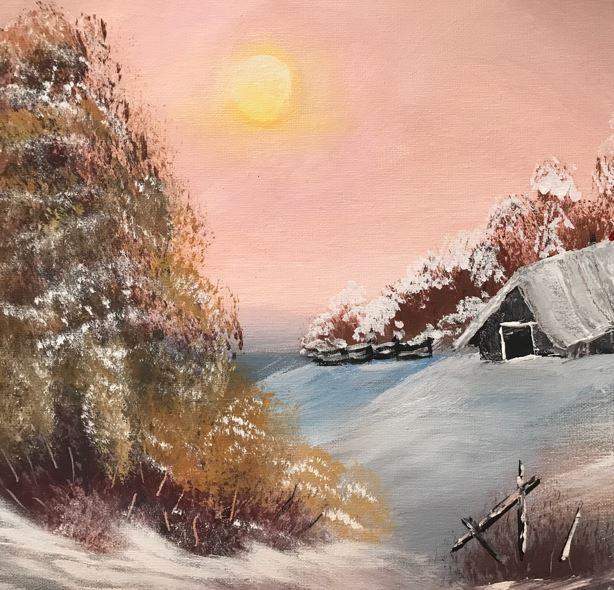
(The canvasses in this essay are paintings by Bevy Mae, my love, life; wife of 30 years who crafted them during classes by the late, great, gentle painter Bob Ross who died on 4 July 1995 at age 52—before he became famous—just so readers know.)

Billy Lee


For me, pontificating is an art form that frees me to say things, important things, that would otherwise go unsaid. I create compelling explanations for phenomena and subjects, which experts might say I know almost nothing about.

Credentialed people say I write about subjects I know nothing about.

My question to skeptics: What does anyone really know?

We hear experts implore the ignorant to follow the science.

It’s kind of self-serving, is it not?

Scientists are Guilds of Gods & Goddesses of the Universe. Atheism is the price of admission to an exclusive club—a cabal of proud, hard-driven, group-thinking science-idolaters, who risk Hell if mythologies of the ignorant turn true.

Science is populated by elites who speak the language of mathematics—an impossible way to reason for 95% of the 7.8 billion people alive today.

How will any disadvantaged person be heard? What chance is there that wisdom buried deep inside the mud-pile of humanity will catch the attention of anyone able to amplify it? 

Who can express anything they know at their core if the price of being heard is a PhD in physics, mathematics, economics, history, or military science? —accolades beyond the reach of nearly every person alive no matter how intelligent.

What chance do the acolytes of Donald Trump have against the “Evil Empire,” which occupied for 20 years an Afghanistan some Americans assumed was forever lost inside a simulation of 9th century A.D.?
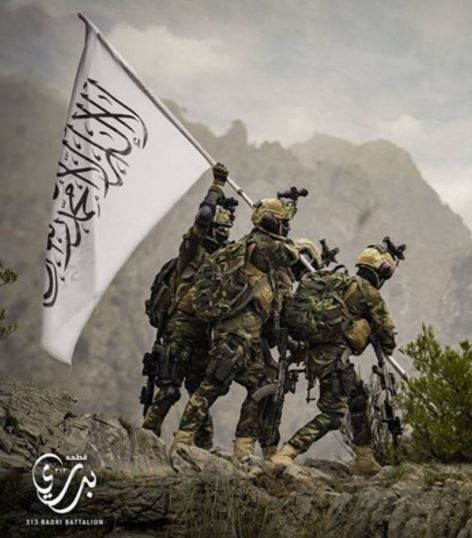

22 August 2021: Taliban fighters raise their flag in a scene reminiscent of Iwo Jima. Equipment, weapons, and uniforms are captured American property.  Planners with PhDs are flying commercial jets, helicopters, and cargo planes into Kabul Airfield today, as I write, to evacuate eggheads who war-planned in vain to prevent imaginations floating inside the Dark Ages from outwitting them on the far side of the moon—Afghanistan. 

Everyone has heard of at least a few people in history who lived and spoke at the edges of their cultures—Galileo, Jesus, Spartacus, Geronimo, Che Guevara, et.al.— who endured torture and execution, right? Before arrest, legends from the ancient past were pursued, taunted, and slimed by close-minded, biased people who misunderstood most everything they stood for.

Some warriors, like Che Guevara, were themselves writers and poets. Even the Greek warrior Homer wrote epic poems like the Iliad and the Odyssey. It was 750 BC, nearly 3,000 years ago. People continue to read Homer to this day. 

Who disagrees?

What is it like for social media writers when random persons confront them with insults, threats, and obscenities? What do unpaid writers and artists on social media go through to express their truth; their vision of right and wrong?

What does WRITING FREE feel like? 

I can speak only for myself.

Although trained by the USA, I am not a warrior. I don’t believe in war. I hate everything about it except the thrill of the kill, which first experienced is not easily shaken and sometimes grows to become the living nightmare PTSD.

The video game industry thrives on role-playing kill games. Hunters keep their consciences clear by killing animals. They like it. 

I shot a rabbit once. I was nine. Grandpa slipped a deer-slug into the chamber. When the rabbit ran I raised my rifle without thinking and blew the bunny in half, head to tail. Dad hung the remains from the branch of a tree. To this day I don’t know why they did it.  

It makes me sick to think about. I haven’t hunted since and never will. 

I’ve had the experience of watching people die. It’s a horror no person should experience but nearly everyone who has family is forced to live through at least once. Bevy Mae sopped with towels blood where her father dropped when his heart stopped. Why God put her through it is something I don’t yet understand. 

Since my public profile has risen, some have made efforts to insult and intimidate me—presumably to shut me down by making me afraid to publish. I really don’t know why some do what they do.

The USA is a free country with protected speech. On Quora, the rule is BNBR (Be Nice Be Respectful). Many people are not able to restrain themselves to the confines of civility. I am always shocked to learn that some who are educated enough to put sentences together become ignorant, rude, and profane when responding to unfamiliar points of view. It’s a jolt I never get used to.  

For me, working toward truth means drilling down into caverns of thought sometimes strange and unfamiliar. 

Happily, Quora permits writers to block intimidators and stalkers—necessary sometimes to keep readers from being disturbed by profanities and lies. 

I know that some who harass are professional provocateurs. But others might be lunatics with guns. It’s impossible to know for sure. It makes posting on controversial issues a little scary.

I’m timid but being harassed daily by bullies has strengthened me. I’m less afraid now than ever. Maybe it’s because I’m desensitized. I can no longer distinguish serious threats from crazy-talk.

Anyway, for the record, a few comments which disturbed me in the past follow this essay. People who don’t write on public forums like Quora might like to know what folks who do write endure daily.

I took the time to abbreviate obscenities to assuage sensitive eyes. Some comments are edited. The identities of commenters are vaporized to protect them from uninvited embarrassment. 

Billy Lee


Note from the Editors: The edited comments listed below are examples of aggressive speech that our leader Billy Lee reads everyday and sometimes deletes to maintain normalcy beneath his Quora posts. 

Happily, most people post positive comments. 

As readers work their way through this sample of insanities, please keep in mind that nothing in them is true. Some commenters seem to misunderstand what they read in Billy Lee’s posts; others are unwilling or unable to write truthfully when they get worked up by ideas they dislike. 

TheBillyLeePontificator Editorial Board


Here we go:


For guys with no parallels you sure use a lot of plurals. Maybe see a shrink and get back to us? 


You are one dumb S. O. B. Wrong on all points except one.  You sound like you like the Taliban and dislike Israel.  Hiroshima is what turned the war for our benefit. To say Israel’s defense experts are no match to ours shows your stupidity. Especially those in charge under the Biden administration. You have no knowledge of history and perhaps should shut your pie-hole. Do you think Biden’s cut and run will be better than Obama’s?


What universe are you in? Have you ever been in any conflict? Not acknowledging a disaster tells everyone your bias. 


Literally, Fox News is doing a segment on UAPs and how they violate the laws of physics. While you think you understand the real physics of this simulation. You don’t or you’d understand how the crafts do work. 


You are incoherent. Coward.


You support Communism and radical Islamism? Why does socialist Cuba need the big Satan of Communism to thrive?


Afghanistan is similar to Benghazi. Biden ordered US flags at our embassy burned. Some think Biden was on vacation at Camp David. Poppy fields will end up in Chinese hands where it will be sent to America as illicit drugs. America’s days as a freedom loving nation are drawing to a close.


You’re celebrating slaughter and enslavement. Afghanistan is heading back to the 7th century. Al Qaeda will reestablish itself under the protection of Taliban fanatics. 


Your answer is fairly ignorant. Afghanistan was taken over by the f***k**g Taliban. The Taliban are terrorists  who tried to genocide all Christians and Jews from the middle east during Obama’s campaign. 


Your post is about the worst rationalization for the greatest foreign policy debacle in 50 years. The blood of any Americans who fail to get out will hang solely on this administration. 


Your response was ridiculous… you never answered the question but instead stated a bunch of crap nonsense that wouldn’t reach anyone. Go ahead and continue spreading crap ideas on here. You suck Billy… truely


People of all walks of life HAVE A RIGHT TO STAY AWAY FROM GROUPS THEY DO NOT WANT TO ASSOCIATE WITH. People with good wages should have gated communities. Your writing shows great naivety. PEOPLE DECIDE WHO THEY ASSOCIATE WITH. THANKFULLY ITS NOT YOU. ALL THIS TALK OF PEOPLE LIVING TOGETHER IN HARMONY THROWS PERSONAL RIGHTS OUT THE DOOR!  LOOKS LIKE YOU SPEND A LOT OF TIME IN HAIGHT-ASHBURY. GET SOME SOPHISTICATION  Your talk of everyone living together and loving each other SHOWS YOUR BIGOTRY!


The US biggest mistake was being too nice, AND of course electing Biden was a mistake. We should have wiped out the Taliban before we exited. The world is full of people if they went missing the world would be a better for everyone. The Taliban are like Covid.


How many groups are you going to spam today? I get that you’re lonely, but imaginary internet points are not the solution. 


No one gives two sheets about Crapistan. 


Give me a break! What an asinine answer. That’s the dimmest first line of an answer I’ve read in a while. Laughable really. 


The problem are the Generals. They do not take responsibility. Fix the problem or resign. 


Seriously, after reading your covid article — you are too far gone.  you are not a deep thinker you are a programmed ideologue. You should not pretend to be something you are not. 


You are a joke. Now you deflect to gun violence and mysogyny  while 12 YEAR OLD GIRLS ARE BEING GANG RAPED.  Seriously, what is wrong with you?

You are the typical America hating, big government will solve all your problems, irrational progressive. You have lost all perspective. 


Bullshit. You use history to justify gang rapes of 12 year olds. Keep an open mind? Are you serious? We have girls being raped and you want to justify that? we are not going to get everyone out and our ill conceived withdrawal is going to result in the untold suffering of every woman in that country. You have lost all perspective due to political bias. 

Are you even reading the links I sent you? 


Under this administration America is no more. You should be mourning the country. 


You should really rethink your position and delete that utterly ridiculous post. 


You are being deliberately blind and obtuse. You are blinded by ideology with your head in the sand. 


WTF? Seriously you are going to argue in nonsense hypotheticals? For someone who considers themselves a deep thinker this should be well beneath you. 


We are seeing the killing of Christians for having Bible apps on their phones. Allies suffer fates worse than death. 


Comon now Donny Downer…


I dare say a refresher in economics is in order. Bezos being rich doesn’t make others poor. If you understood money at all you’d know that. 


Your whole screed is a vengeance fantasy. What you call for is a return to mass extreme poverty, just so “the rich” can be thrown in jail. 


Constant churning out of spike protein in your organs. You will start to sicken and die and it will be blamed on non-jabbers or some other fairy tale crap by the psychopaths making $$$$. Nuremburg trials are coming to the monsters who have perpetuated this hoax. Congratulations, fearful chumps it has only ever been a Flu (a coronavirus).


Gods Book of Revelation describes how he will level out everything on this planet at the next Great World War. 


barbaric? how about we stop cutting the ends of babies penis’s…


The person who wrote the above lines is a deluded paranoid. He/she states that this virus might even eradicate humanity, i.e. in his/her opinion this virus should be worse than both cholera and black plague, as they didn’t eradicate humanity. I could write much more to ridicule this feeble mind, but he/she isn’t worth my time. 


Hysterical nonsense. We co-evolve with viruses. What will really happen is that parts of the viral genome will be incorporated into ours, we will develop mass (herd) immunity with and without vaccines, and life goes on. 

How do I stop getting “Answers” from this guy?


So really, I don’t understand your point.


This is totally political, not only is it political, but it’s your opinion on politics, not historical in any way either, just your opinion.

I suggest reading our guidelines page before posting again, thanks. 


It’s staggering that anyone could believe socialism is an effective system after the death and destruction that it’s caused.

It sounds  like you need to learn more about it. 


Nothing personal, and I agree with you in principle, but buddy, you are nuts. 


New double-blind study from Israel. Ivermectin works. Why are they keeping an effective, cheap and SAFE drug from us? Oh yeah, Big Pharma needs to make billions while we’re dying. Got it. 


Amazing but unsurprising that you managed to highlight the Trump administration as guilty of “warping democracies” as you related your idealistic Socialist, cultural-Marxist treatise. Trump was nominated for a Nobel Prize after proctoring multiple peace treaties. Your vision reads like a laundry list of 5th grade desires for equity vs. equality, the idealism tainted by equal doses Greta Thunberg angst and SJW woke preening.

Lord, mercy.


I think that me flapping my arms so fast that I fly is more likely than even half of what you described becoming reality. 


Not as prescient as calling yourself a pontificator


I understand your point and can even relate with it. 

I, too, have suffered greatly with this feeling of absolute terror, an irrational fear of anything that seems menacing, a paralyzing scare that impedes advancements in life. 

Lucky for me, I overcame it when I was a child, about eight years old. Until then, I would spend days in bed, fearing death and even more horrifying destines than death. 

May you overcome it soon!

All the best!


OK… I think readers get the idea. Thank you to everyone for reading and commenting.

Billy Lee

HALLOWEEN REVISION

WHERE IN THE WORLD IS IT DARK CONSTANTLY?


During my high school years, I was an Explorer Scout. My troopmates were spelunkers.

On weekends the guys drove from Arlington, Virginia into the hills of West Virginia to look for hollows where the presence of solitary trees sometimes signaled the openings to caves. We off-roaded from whatever lonely lane we were on at the time to navigate through wild terrain where we parked our vehicles and equipment as close to the cave entrances as possible.

We used gray powder to light our headlamps. A water drip made the powder give off gas that burned bright, clean, and complete—no noxious residue.

After an hour or so the powder turned into lumpy, useless ash. To keep lamps burning while remaining oriented, every caver dumped their used-up powder on cave floors exactly where they stood before measuring a new charge.

We always looked for virgin caves that had never been explored. Little gray clumps of depleted calcium carbide cast onto floors created dead giveaways that someone had explored the cave before us.

A clean cave meant we were first; we were going to see things below that no humans had ever seen.

The risk of course was getting disoriented in a labyrinth that only we knew existed. In those days, cell phones were not invented. Calling 911 was not a thing. Should we get turned around—if we exhausted the calcium carbide supply—no outsider would learn we were lost, maybe for days.

Without the aid of an unseemly mix of water and gray powder to produce acetylene light, we risked being entombed alongside stalactites and stalagmites deep inside corridors of ruthless darkness that robbed the senses of time and place. No one would be alerting anyone at all about our predicament.

Families would have no idea where to start a rescue. West Virginia was a big place.

Think about it.

Until a search party discovers their cars, isn’t it reasonable to assume that the lost will quickly abandon hope that anyone will find the entrance to the labyrinth that ensnared them? If searchers got lucky and stumbled onto the hole, without lamps and experience how would they navigate a maze that might zig-zag for miles beneath the earth?

Only luck provides any chance at all that the lost will one day reunite with families and loved ones. The risk of dying—forever un-located within a chartless tangle of passages and dead-ends—is real.


As stupid luck would have it, during one adventure we lost our way. We crawled on our bellies for, I don’t know, 10 minutes or so before the cave floor opened beneath us and we were able to stand up enough to stoop.
 
Hunched over and bending forward we struggled to find openings, made selections, and for an hour picked our way though narrow forests of stalagmite columns and their shadows until we found the end, which was a concealed passage into a room; a large room that we nearly missed.
 
The scoutmaster pushed each scout into the passage one at a time. It wasn’t long before the entire troop was through and milling around inside the chamber.
 
A few minutes passed before the scoutmaster directed our attention upward. Everyone looked. In the lights and shades of bobbing headlamps, no one saw a ceiling.
 

The room was gargantuan.

Perhaps intimidated by its immensity, the scoutmaster decided it might be getting close to the time when the troop should pull back. The clock was ticking, after all.

We had explored a long time; the trek back to the entrance promised challenges. It is easier for a cavern to seduce a caver into its depths than for a caver to retrace their steps to make a happy extraction. For one thing, caves look different on the way out than they look on the way in. It is not unusual to become directionally untethered.


When the scoutmaster groped to locate the path we used to enter the orifice, he couldn’t find it. It turned out that dozens of unnoticed openings beckoned in the expanse of walls all around.

In the glare of dancing headlamps, the array of passages became tangled knots that no one could untie. The openings looked the same but each passage searched became disturbingly unfamiliar and unnavigable.

I began to panic.

The scoutmaster ordered everyone to return to the center of the chamber; to extinguish our headlamps to conserve carbide. He ordered everyone to calm down. He would pick a route at random to find the way out himself.

A lengthy search for the entrance might become necessary—I won’t be gone long, don’t worry, the scoutmaster said. …lots of unknowns…makes it hard to know exactly how long….

He clutched the troop’s bag of calcium carbide. He always carried it. It was his responsibility to keep the powder dry and safe; to prevent someone less careful, less experienced, from losing it.

With any luck at all he would return to rescue everyone before nightfall, he promised. The carbide in our lamps would last until he returned. Conserve it, he warned. Emergencies only!

The scoutmaster hugged me and a few others. He hurried some goodbyes and vanished—into the abyss.

He needn’t have worried. I was nearly out of carbide; we all were. The gray powder would become gold to be hoarded.


Darkness in a cave hundreds of feet below ground is nothing like what people experience above. My mother had read somewhere that spelunkers wear watches with radium dials that glow in the dark. I was wearing one she bought me as a gift for my trip.

“You will always know what time it is no matter how dark it gets in those cold caves,” she said. She wrapped her arms around me and rubbed my face with her cheek.

After the scoutmaster left and we extinguished all our lamps, I discovered that my timepiece didn’t work like it should. No one’s did. Not one scout could make out even the faintest trace of a glow on their dials.

An older guy said that caves suck light out of darkness like drains suck water out of bathtubs. He didn’t explain. We waved our hands before our faces but couldn’t see them.

Like an ocean wave, panic struck again; it almost knocked me off my feet.

I decided that the best way to escape fear was to sleep. I dropped to my hands and knees and slithered through the dark until I found folds in a wall. I curled my body like a snake against the hard surface.

The cave’s silence roared in my ears like a pounding train that quieted only when I started shaking like a branch in a storm and dropped somehow into a darker place.

My bones filled with ice; I slipped deeper. I wrapped myself in my arms as the floor of the cave pushed its full weight into me and in time crushed my soul.


My season stranded in hell lasted a year, it seems. The search crew didn’t find the scoutmaster. A few others were missing. Everyone must have died, they said, except me.

I was the last.

No one survived.

“A cave rat ate a few, bones and all,” one guy said. 

Rescuers said terrible things. They sent me home to be with mother for what turned out to be a few days. I don’t remember any of it.


I don’t mind solitary confinement. I’ve been caged for 48 years.

I’m used to it. Somehow it doesn’t seem that long. Besides, food tastes better here than the rotten mess I ate in the cave to stay alive. It’s a taste and smell I don’t forget.

Someone put a bulb in the cell that can’t be switched off. It’s bright. The light drives me insane. It really does.

It’s protected by a metal cage. I feel its heat but can’t touch it because the sadistic bastards chained me to the floor—for screaming constantly, they said.

I so want to be with mother to tell her how enraged I am about the watch she gave that didn’t work. When I inform the staff, they refuse to look at me. For a year I didn’t know what time it was. I told them. I told them all. They know about it but don’t care. They say I’m crazy because of her.

Mother doesn’t visit. She never did. The staff said she died. They convinced me to believe unspeakable things.

“He did something wicked,” prosecutors said. “He used a bone-saw, for the love of God.”

Nothing they say is true. I know that now.


Not one word!

Who does bad things they don’t remember?

NO ONE!!!

Who believes it?

They make you hate. I see it on their faces.

I will snap these chains someday, I know it.


I have a plan.

A wonderful plan. 

Guards help.

It happens on Halloween night.

They break the chains.

Put your light on.

Listen carefully….

Boots are shuffling on lawns like dead leaves falling on the wind…

studying doors…

searching for final solutions.

Smash the bulb!

You’ll see.

It hurts in the dark and the cold. People do things—terrible things—to make it stop.

They shake like branches in a storm. They fill bones with ice and push down to the darkest places.

They control what’s true.

They understand everything.

Soon, so will you.

Truth becomes the trap…

Spells enchant…

fragile hopes collapse…

They watch you rot in that cave where everyone dies but one…

…and laugh.

HaHahahaha…!

Slither to the walls like snakes and find the hard folds.

Pray for sleep that cannot come.

Control truth. 

You’re one of us, now. 

The truth couldn’t be more clear.  

Hell is forever.

Billy Lee


NOTE FROM THE EDITORS: The essay, Halloween Revision, is a fictional work based on events experienced by Billy Lee—an Explorer Scout in a troop of spelunkers who got lost in a cave in West Virginia during the 1960s. The rescue is based on other events about which Billy Lee may or may not have direct knowledge. Billy Lee published a version of this story to answer the Quora question: Where in the world is it dark constantly?


GOOSE LAKE

ESSAY CONTAINS ADULT CONTENT

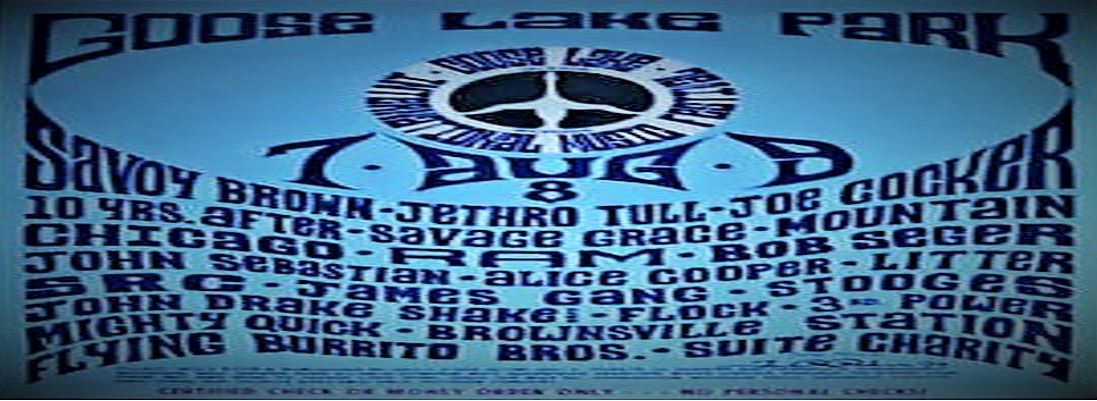
The 300,000 people who attended the Goose Lake International Music Festival on the east side of Leoni Township in Michigan during August 7-9, 1970 were mostly middle-class college dropouts like myself.


I dropped out in June—two courses short of a degree—to evade being shipped to southeast Asia to kill “gooks”. The university ROTC program trained future officers to lead Army combat platoons—destination Vietnam.  After hearing horror stories from returning GIs during advanced infantry training at Fort Riley, Kansas, I was having none of it.

Who calls air-strikes on kids younger than themselves they don’t know, have never met, and who did nothing wrong—other than look different? Who deserves to be torched alive with fire jellies called napalm and chemically seared by burn agents like white phosphorus? Nothing any military professor taught at the university convinced me that waging war for no good reason was the way honorable people earned a living.

I wasn’t going to make a career out of killing people. I wasn’t going to spend five minutes destroying farms, livestock, and families to test the nation’s weapon-systems on human beings. 

Read Being Hated to learn what my options were. 

I made a decision certain to impact the future. Resigning my officer’s commission in the United States Army would shut doors; I had no idea at the time how many.  Attending a music concert with new found friends who were unschooled in military discipline seemed like a good idea. My mother, working alongside the Navy pilot she married, bred and raised me for military life. It seemed that now might be the right time to learn another way.  

At Goose Lake almost no one brought cameras.  None in my group knew anyone except possibly their parents who owned movie cameras.  In 1970, only rich folks owned color movie cameras with sound; still-pics were what ordinary parents took of their kids, mostly in black and white. Color cameras and film were expensive back in the day. Most movie-camera brands lacked sound. 

It was a different time.

The photo and video records of the Goose Lake International Music Festival are almost non-existent as far as any web search done by me can tell. What video and pics remain are grainy, mostly black and white, and frankly depressing as hell, many of them. 

No one showed up to produce a movie like they had at Woodstock in August 1969, the previous year.  Woodstock, the Movie (edited by Martin Scorsese and Thelma Schoonmaker) rolled into theaters across the USA in March 1970.

A whole lot of folks from Michigan decided to recreate the Woodstock Music Festival experience at Goose Lake. Within five months of Woodstock’s movie release, they managed to turn the fantasy viewed by most in theaters into a real-life, real-time spectacle for well over a quarter-million people.


Goose Lake was wild.  

Note:  (Click map to enlarge in new window) Billy Lee and friends camped in Sunmeadow, he thinks. It could have been Strawberry Meadow. It might have been somewhere close to Layalot. One thing Billy Lee remembers for sure… he couldn’t find the beach. Stoned Beach sounded great but he was wasted and couldn’t find it. He might have used a good map; he doesn’t remember seeing one until he searched the web for this essay—almost 50 years after.  He says he thinks he remembers that promoters forced folks to buy entry tokens to get maps. Billy Lee claims he can’t remember buying tokens or even how he found the concert grounds or exactly how he managed to get in.  He has no memory of the drive home. The Editorial Board

My new, radical friends brought to Goose Lake no change of clothes, no food, and no dope. They didn’t want to get busted by the pigs; everyone figured if we got hungry, food-stands would sell hot dogs to help get us through. We brought pocket change and pup-tents, nothing more. The way things went down, money (we called it “bread“) became the one thing we didn’t need. 

We would require real bread—the kind people eat; readers will learn that some folks—like my group of friends—nearly starved at Goose Lake. 

The concert turned out to be completely free once we worked our way inside. A fuzzy memory says we might have snuck in (like tens-of-thousands of others) through cuts in the barb-topped, chain-link fence erected to encircle the grounds and control the crowds.

I don’t remember anyone having money at the time to actually purchase $15 entry tokens, which have become collector items worth more now than then. ($15 in 1970 was equivalent to about $125 today.)

I remember the Goose Lake International Music Festival as a vivid technicolor freedom party.


Click pics, like this map, to enlarge for viewing.

In five days (we arrived early; stayed late), I learned more about anarchy—good and bad—than I learned during the following two years protesting the Vietnam war in the streets and the copy rooms of Joint Issue, the “underground” antiwar newspaper my closest friends published. 

Goose Lake became for me the trip of a lifetime. This essay is an attempt to remember what I can before memories fade and go missing forever. 

The first lesson learned was that people in America—white people who looked like me—used and were addicted, some of them, to heroin. I didn’t see anyone use heroin before Goose Lake.

Come to think of it, I don’t remember black people at Goose Lake, either. Through the lenses of today, the event might have seemed to the uninitiated like a gathering of white-supremacist men. Women attended, sure, but they made up not much more than a highly-desired minority—maybe 30%. 

Heroin was what blacks ingested—that’s what white folks told themselves, anyway. It was the crack-cocaine of the 1960s and 70s. Whites didn’t do “hard” drugs—not according to news reports, which naive suburban kids who smoked weed suspected might mostly be sort of true but maybe not. 

A black kid I worked with at Arlington National Cemetery trimming gravestones during summer confessed he tried it. He said heroin was so good he promised Jesus then and there he would never touch it again; he knew right away that if he shot it twice he would be toast—a lifelong addict with no hope of rescue this side of heaven. 

What he shared was pretty much all I knew about a “hard” drug everybody heard of but no one used.


Admission tokens cost $15 and came in all colors, including red (not shown). Because fences topped with barbed-wire blocked entry, folks who didn’t buy tokens wire-cut their way in.

At Goose Lake we arrived early. My friends sat on a slope looking down onto a dirt parking lot. Cars, buses, and campers rolled-in like waves on a brown ocean. Dust hung in the air.

One car weaved; the driver seemed unable to negotiate a simple parking space. The car crawled almost to a stop when the driver-side door swung open; a guy in a white tee-shirt slow-motioned out the door—would he puke? As the car continued to inch forward, he plopped face down. Dust kicked up. His head hit hard. 

The car rolled until it struck the back of a parked car. The door on the passenger-side jerked open. A girl leaned out; she fell like a sack of flour into the dirt.

The couple had finally made it to Goose Lake from wherever they came. Wrecked on heroin (or worse), they lay on the dusty lot for a while before dudes who wanted their blocked parking space got involved.

Maybe the couple ended up at the medical tent; maybe they recovered. I never learned what happened to them.

Things started moving faster; it was all anyone could do to keep up. As the festival revved—when security broke down, which as far as I could tell was before we got there, before the gates opened—pushers sold heroin in open markets to anyone who wanted to try; many did.

By the end of the festival, dealers were passing heroin free to anyone because they feared the gauntlet of police waiting outside the gates would arrest them on the way out. Festival goers heard that pigs were lined up at every exit and highway on-ramp to take revenge for being overwhelmed by the crowds.

When the time came for the festival to end, some people would be terrified to leave. 

The folks who owned the food stands stupidly closed them the first night. Hungry people broke them down and took everything. By morning when my group went for breakfast, every concession stand was rubble. We wouldn’t eat again for three days. 

As we stood around in shock wondering where to get food, semi-trucks rolled in loaded with tens-of-thousands of freezer-bags full of freshly harvested marijuana. Farmers from who knows where made Goose Lake a free pot zone. They tossed bags of grass from the back of their trailers for hours. 

Someone brought papers. We rolled joints and stuffed them into empty cigarette packs—about 30 joints to a pack. For the rest of the festival we chain-smoked dope morning, noon, and nighty-nite-nite. Never before or since would I ingest as much THC.

Michigan grass is green and fresh; when lit, it smells like freedom. The farmers at Goose Lake brought their best weed and gave it away. I never understood why. Smoking weed was supposed to induce “the munchies.” I learned that you forget about hunger when you’re high enough. 

At night I dreamed vivid dreams, not about sex, as was my habit during youth, but about baked potatoes piled high with butter and sour cream; steaks bleeding blood on the inside but burned black and crunchy on the outside coated with A1 sauce and spicy mustard; fresh cooked beans steamed in oil with lots of salt…

Dreaming about food made me feel joyful; glad to be alive. I knew I would eat these foods again and soon; I would ravage them with the appreciation deprivation provides. It is good to go without sometimes. It really is. Anyway, an unlimited stash of free dope lifted my spirits. 


The music performed was uneven. Some groups came prepared to play; others, not so much. Music became a less interesting part of the festival, at least for me. A girlfriend who traveled with another group wandered around until she found me. She asked if I might try some mescaline someone gave her.

She said she wasn’t sure what it really was; it might be acid mixed with sedative; it might really be mescaline—an extract of peyote; all she knew for sure was that whoever gave her the pills promised it was mescaline. 

I said, “Fine. Let’s drop some tabs an hour or so before the band Chicago performs. We’ll get off as the music starts.”

The night was going to be black and warm with a sky full of stars . My girlfriend promised to stop by my tent after the music started. She’d be high; we’d watch and listen together. I said, OK. 

Night fell. I remember seeing light flash in streaks off gold trombones. Trumpets spit bursts of photons in all directions. The stage sat far away but was brightly lit. I saw sparkles of color flying off the edges of every item that shimmered.

I possessed the eye-sight of a predatory bird in flight. The music played crisp and clear. Percussive sounds splashed like warm rain across my face. I wanted to cry but amazement overwhelmed me.  

My girlfriend showed up more or less on time and began to sway. I looked at her body, which I saw clearly through her dress with x-ray vision. My soul ached with desire. When I touched her she placed a hand on mine. Her dark eyes dilated—as I knew mine had. She leaned forward. “Want to?” she said. “I can’t believe how wet I am.”

We moved into the tent where she lifted her dress and wrapped her legs around me. I buried myself inside. We breathed heavy and made desperate sounds, which before mescaline we didn’t make.

Orgasm was intense. It took my entire existence. It lasted a lifetime inside a tent with its front flap open to the stars, music pouring in, and my newest friends nearby. 

She, darling comrade whose name I’ve since forgot (God, forgive me), said something I won’t forget. “Billy!” she breathed. “I felt your orgasm—inside me. I felt it!” 

Outside the tent, I stretched and yelled a grateful shout. One of the girls in my group poked her head out of the tent beside ours. “You shout after you ball? You are maximally stupid!

The drug lasted. I wasn’t sure I would come down. Everything everyone said and did seemed to emerge somehow from an ocean of pearl-stones; miracles floated in the air like soap bubbles. I loved my mother—Gaia Earth—and everyone she carried with me, which included the girl in the next tent who called me stupid.  

Without thinking or knowing what she had done, the other girl popped the biggest bubble of the most mystical moment of my life. It didn’t matter until decades later when memories were all I had left. Only then did my heart ache when I discovered I could no longer bring up the names of anyone I knew at Goose Lake. I forgot them all. 


I saw bad things.

Iggy Pop of the Stooges performed after; he tried to bum the crowd by pivoting his play into a Pandora’s mess. While some started to flip-out and boo, I disassociated myself from the chaos. I witnessed bummer-terror sweep through the throng in the same way an entomologist might watch ants at war.

It was fascinating; entertaining, really. I floated like a prehistoric bird above the fray—superior to mortal sapiens who suffer in every way; I remained untouched by the vagaries of silly human cruelty. 


A tall, thin kid got scared. He freaked-out. His acid trip went terribly wrong when he walked into a campfire where his ankles burned. I remember swarms of embers scattering like fireflies; he clawed the air howling like a wolf. A few folks managed to rescue and drag him flailing and kicking to the medics. He became a screaming madman. What happened later, I didn’t learn. 

People built a mud pit, or something like it, near the stage. I heard folks say that a lot of people, mostly guys, were throwing themselves naked into the goo and wrestling in a huge pile. A girl in our group was there and ran back to tell us, “Guys are raping girls in that pit!”

No one believed her. No one went down to the stage area to check. The crowd was dense. You had to push and shove and step over people to get anywhere. Most folks like myself weren’t up for it. 

The next day around noon, the Chief of Police walked into the crowd. He chose to wear coat-and-tie to conceal his identity. In that mass of half-naked, un-washed hippie-freaks, he stood out like a bulldog in a china shop.

A line of kids formed behind him. It grew to be hundreds as he made his rounds to inspect festival conditions and assess the level of lawlessness. The kids behaved like happy third-graders as they started chanting and singing. Some offered the bulldog dope. They thought they might “turn him on” to “our side”.  

I think the Chief was surprised to get out of the park validated and unharmed. Had there been an incident, it’s hard to know now what his back-up plan might be. He had an army of thousands outside the park. Maybe undercover cops dressed like hippies watched his back.

Who knows?

After a few days, we started to starve. Someone noticed field corn growing across a nearby road outside the fence. It’s fed mostly to pigs but we thought, hey, we’re starving. It’s corn. How bad can it be?

Someone said, “The corn isn’t ours. We can’t take it.” 

“Bullshit,” someone said. In minutes one of our own left to cut through the wire barricade; he returned carrying a few dozen ears, which we threw—husks and all—on the coals of our campfire. With mouths watering like sprinklers, we were able to remember to retrieve the corn before it burned.

We shucked and ate. It’s true what people say. Anything edible tastes good when you’re starving. I thought at the time that it was the best tasting corn of my life. To think that farmers fed it to pigs! The world starves, but American pigs eat like royalty.

I haven’t eaten field corn since. 

On the last day a farmer drove into the campgrounds with a semi-trailer stuffed with raw potatoes. Soon, our group had all the potatoes we could carry.

It was the first time I ate raw potatoes. We had run out of wood for the fire. The potatoes were free like everything else but unwashed. We brushed off the dirt. They tasted great.


When we decided to leave, the crowds had thinned. We fully expected to be arrested. We got rid of our dope, which was worth hundreds-of-dollars outside the festival. Today it would be thousands-of-dollars.

We left it behind for the cops. I wonder what they did with it. Concert goers left behind an enormous stash worth, I don’t know, maybe millions. No one will ever know. Anyone who knew told no one as far as I’m aware.

We left without incident. The cops disappeared; they let us leave. They arrested nearly 200 people we learned later. I didn’t see any of it.

When I got home and the drugs wore off, I got scared. My stomach caught fire; I thought I was losing my mind. I couldn’t shake the fear. It occurred to me that I was going to have to kill myself. 

I went to an emergency room doctor I knew who gave me a week’s supply of valium. I took it for three days. When I stopped, I felt fine. 

My biggest regret is that I didn’t visit the lake. It was there, somewhere, but I never saw it or swam in it. The crowds were huge. A trip to the Goose Lake beach wasn’t worth the hassle, my friends decided. If we went and left our stuff, someone might cop our dope. It was better to groove by our tents and dig the music whenever musicians decided to play.


Is there a better way to end an essay than to provide readers with a pleasant, commemorative link?  Click below to view a Facebook video from another perspective. 

Remembering the Goose Lake Music Festival by Magic Bus

Billy Lee

YOU’RE FIRED!

The words “You’re fired!” are among the most painful I’ve ever heard.

I’ve lost a lot of jobs during my life, so the pain has accumulated to the point where I would rather die than re-live my life—unless I could arrange things so that no person would ever have the power to drive a stake into my heart, because that’s what being “let go” feels like.

I never followed Trump‘s television show The Apprentice because hearing the punch line “You’re Fired!” always felt like a hard slap to the face. Watching young men and women suck up to a powerful boss who gut-punches all but one was never harmless entertainment. Not for me, anyway.


The number of people fired during the Trump administration is staggering. How many of these 24 high-power individuals can anyone identify? They are the tip of a mammoth iceberg of graft, corruption, incompetence, ignorance, and suffering. Who disagrees?

I’ve fired people. I understand why our president won’t do it in real life. He always assigns the task to an underling, right? The White House employment line churns like a stormy ocean but the president stays above the froth.

Firing someone is more painful than being fired because it stays with you forever. It’s not something you can overcome by getting a better job, for example. You can’t take it back. I’ve always wondered whether I might have found a kinder way to address the problems I thought firing others solved.

Those who read my essays might remember that I managed some restaurants when I was in college. Back then finding good help was hard, because everyone worked.

I needed a cook really bad. A roly-poly guy with a sweet face applied for the job. He explained that he was a slow learner, but he would try to become the best cook he could.

After three days, I realized that he was slow, like he said. He would never be able to keep up; he lacked the intelligence to memorize the menu and prepare the food properly.

I called him into my office.

“Ruby,” I said. “I don’t see how we’re going to be able to make this work. I’m sorry, but I have to let you go.”

He said, “Mr. Lee, I understand. Uh, you gave me a chance. Uh… uh, it didn’t work out. It’s happened before. It’s not your fault.  Uh, don’t feel bad. I’m to blame. I’m slow, uh… that’s all.”

He offered his hand, pivoted, and walked out. He had obviously memorized his exit speech. I put my face in my hands and sobbed.

It was clear that Ruby suffered from a disability of some kind. My need for a cook blinded me. Until he recited his sentences, I didn’t see it. No matter how hard he tried he was never going to make it in a world that demanded quick wits and fast problem solving.

What made me cry was that he wasn’t going to give up. It seemed like no reversal mattered. Success would forever elude him, but he had just enough resources and determination to pick himself up, give his speech, shake hands, and strive to find the next opportunity.

Ruby was willing to fight against the odds to become a hamburger cook. He took great pains not to traumatize managers, including me, who inevitably would be forced to fire him to protect their bottom line. In his effort to spare my feelings he failed—like he probably failed at everything he tried.

I felt sick to my stomach. I felt remorse. Ruby gave everything he had. Nothing worked. Something wasn’t right. There was nothing I could do.

It’s been decades. My heart aches. I wonder if by some miracle Ruby ever made his dream come true. I’ll never know.

At the time, I managed two restaurants. Because I was a student at the university, assistant managers and other responsible employees helped me to keep operations running smooth.

At the second store a couple of waitresses complained that a busboy I hired was stealing tips.

I called the kid into my office. “Are you stealing?” I asked. The boy immediately began emptying his pockets. His pockets were deep. He dumped big handfuls of quarters and dimes on my desk. I didn’t say a word. When the last dime dropped, he ran out of the store. We never saw him again.

It felt good. The waitresses didn’t seem to mind either.

I hired a rather attractive waitress at the first store. She had the annoying habit of talking too much to other waitresses. She was loud, and it irritated me. After a couple of months, I started to hate her because she didn’t seem to feel an urgency to follow through on the things I asked. I felt disrespected.

One day she said something that rubbed me the wrong way. I called her back to my office and fired her in almost the same way Trump would years later on his TV show. I was cold and matter of fact. “You talk too much and don’t do what you’re told,” I said. “You’re fired!”

The girl broke down and began wailing. “How will I get money for my trip to Europe this summer?” she begged.

I would be in Italy that summer myself to visit family living in Naples at the time. I had no idea until that moment that her job was a means to an admirable end.

A wave of nausea swept over me. I was making a terrible mistake. It seemed somehow impossible to backtrack. I’d played my hand. From now on things could never be good between us. “It’s time to leave,” I told her.

She went to court over it, but the owners of the restaurant knew the judge, so nothing happened. I feel like a worm when I remember this act of needless cruelty.


Big Boy Restaurants were among the first in a wave of fast-food chains to capture the hearts and pocketbooks of a public too busy to cook home meals in the 1960s. The Big Boy Slim Jim sandwich remains one of my all-time favorites.

I hired a cook who caught on fast. “I’ve been been vacationing in Florida,” he answered when I asked about his tan.

After a few weeks the owner approached to tell me the cook had pulled him aside to explain that I was a terrible manager who should be fired. The cook expressed his belief that he was the best choice to replace me.

I said to the owner, “That’s interesting. He is a good cook and smart enough probably. Maybe he could help out at another store.”

The owner looked at me like I was crazy. “Are you out of your mind?” he said. “This guy is trying to get you fired so he can take your job in this store—a store you manage!  What are you going to do about it?”

“I don’t know,” I said.  “Maybe I can start training him in other parts of the job and someday he will know enough to help us.”

“No!” the owner said. “You are going to fire that back-stabbing son-of-a-bitch. When I come in here next week, he’s gone, understand?”

When the new cook came in for his shift, I asked him to walk outside with me. I said, “The owner tells me you think I’m incompetent.”  The guy threw up his hands like he was being arrested for something and said, “I screwed up. You’re right. Fire me! No hard feelings, OK?” He wheeled around and disappeared down the street.

I felt surprise and relief. I didn’t fire him. He fired himself.  I think I remember someone telling me he hitchhiked back to Florida.

Well, this essay is supposed to be about me being fired, not me firing others so let’s get on with it.

I was an athlete in high school. I played football and baseball. I was an All Star third baseman. In football I played tight end. Because my dad was the commander of a Navy jet-helicopter squadron in Key West, we lived on the Florida island during my eighth-grade year and the first half of ninth grade.

Key West High School had a good reputation, because it graduated several big-time athletes back then—George Mira and Boog Powell are the two I remember because they had younger brothers who were close to me in age. We called Boog’s brother “Boob.” He took the joke with grace and good humor. Athletics was a big deal.

Toward the end of the fall season, our freshman football team lost an important game. In the locker room the coach dressed down the team to the point of being profane and abusive.

He was more than unfair. I felt degraded. We played our hearts out. I piped up to defend my friends, “Maybe if you knew how to coach, we would have won!”

The coach turned purple. “Billy Lee, you will never play sports again at Key West High School. You are done.”

I cried on the bus ride home. I reminded the coach about how good I was at baseball. He had seen me play during an All-Star contest between the civilian and Navy leagues. He knew I was good.

He remained stoic and unmoved. Fortunately for me, the Navy promoted my dad and we moved to Arlington, Virginia where he led some group at the Pentagon not known to the public. I would play sports again, after all.


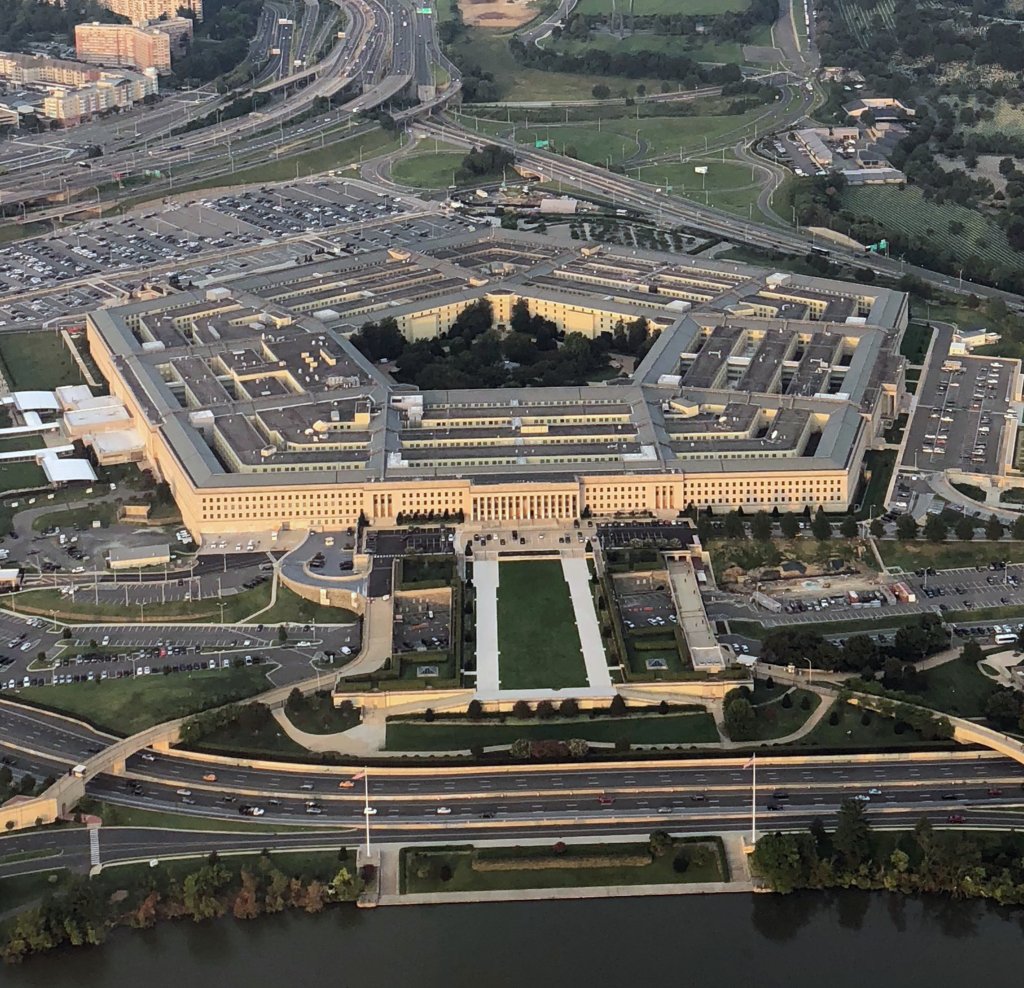
More is under the Pentagon than above. It’s a big place, which I was fortunate to visit and tour—under supervision, of course. My dad worked several years within a labyrinth whose mission was to protect and defend the United States of America.

Unfortunately for me I missed out on a season of baseball. Ninth graders went to junior-high; my new school didn’t field a baseball team. When high school try-outs finally came, a year later, I made the JV team.

The suburban schools outside Washington DC were big.  A thousand tenth grade boys tried out. Eighteen made the cut. I thought, This is great. I’m back on track.

Then, disaster. It got cold in northern Virginia. I was used to playing in the heat of the deep south. My legs and arms seemed to stiffen-up in the frigid temperature, and I endured a terrible scrimmage. I made costly errors and went hitless. The coaches announced after practice that they had agreed to bring three varsity players down to JV to give them more playing time. Three JV players would be cut.

The names of the final “final roster” would be posted in the gym. Anyone whose name wasn’t on the list was cut. The decisions were final. There would be no discussions, no negotiations.

I must have looked at the roster a dozen times before I could accept that my name wasn’t on it. I told my dad on the ride home from practice. Visibly shaken, all he could manage was a barely audible, “oh.”

I experienced my first nervous breakdown. It lasted a few months. I told my mother that I was terrified all the time. It never stopped. She confessed that she had a breakdown when she was younger, but in time she got through it.


In ninth grade I lived in Key West, where my dad defended America against Soviet subs with a squadron of jet-helicopters during the Cuban Missile Crisis. My mother stands next to me. When my athletic dreams unraveled the following year, I had a nervous breakdown. Mom led me safely through to the other side of hell. After aging she suffered memory loss, but she remained a happy, optimistic person to the end of her life.

It made me feel good to know that my mother understood. I waited for healing. Eventually, I got better.

Dad was promoted again. The president sent him to Paris to represent the United States Navy at NATO.  The French planned to withdraw.  Dad tried but was unable to change their minds. A year later he would lead war games in the Mediterranean Sea for an ineffective coalition of nations called SEATO (now disbanded), and the family would follow him to Naples, Italy.

But my senior year would be spent in France. It would be a welcome change from the Washington DC suburbs, which to this day I associate with “fear and loathing“—bad mental health.

It’s hard to believe, but I did get fired from high school—in Paris of all places.

My girlfriend’s dad was Secretary of the Embassy in Paris. Sandy attended a French high school and spoke fluent French. It made getting around easy because not only was she connected and accepted everywhere, but she also made a gifted translator. I had no communication problems when we explored the twenty or so arrondissements together.

Because I went to the school for military-dependents (populated mostly by Army kids) I couldn’t invite Sandy to our senior prom. It was a school rule, a stupid rule, but that was the Army way in those days.

Someone got the bright idea to hook me up with the ranking General’s daughter—a sweet girl, but I didn’t know her. Because I already had a girlfriend who I sort of loved, I had no interest in the arrangement with the General’s daughter.

I made some stupid decisions that involved selling sleeping pills that were freely available (at nominal cost without a prescription) in the French drugstores (les pharmacies) near our house. I sold the pills to friends to raise money for Paris prom expenses, which I expected to be, well, excessive. It turned out that the pills were illegal on American military property, which included the high school.

A big kid I didn’t know bought three and started running around the campus yelling to everybody that he was high on LSD—a kind of joke, I guess. Anyway, the Defense Intelligence Agency (DIA) locked down the school, did a sweep, and found discarded pill wrappers.

After a number of interrogations, they got to the truth and had to decide how to handle me and two other kids who had nothing to do with anything except that they “confessed” to buying one pill each.

One of the kids was the only black at the school. It didn’t help at all that his dad was an enlisted man—his dad was not, sadly, the highest-ranking Naval officer in Paris, like mine. He and his family were put on the first flight out of Paris. His family was uprooted over a sleeping pill. 

The verdict was that I would not attend the last week of classes but would receive a diploma and be allowed to go to the graduation ceremonies—including the after-party.

The senior prom was off-limits. It was my punishment. The Army would send a West Point cadet (from the academy famous for its overlook of the Hudson River fifty miles north of New York City) to accompany the General’s daughter.

For me, the punishment was a reward. Yes, I was expelled from high school, but I was going to graduate, and I didn’t have to hang around during the last week of classes. I was free.


Sandy’s civilian high school reserved the Eiffel Tower for their prom. No one had a problem with me being her guest. Yes, the tower was amazing.  After the celebration, we club-hopped through Paris night spots with the money I had made, which the DIA didn’t bother to confiscate.

As for my own high school graduation party, school-rules didn’t permit Sandy to be there.  It took place on a large estate, which was romantically lit and well-attended.

A beautiful girl I had seen at school but not yet met walked-up to introduce herself, and somehow, we found a way to make love behind a grove of trees in the backyard. Until then, I hadn’t understood how much comfort some women are able to provide to a man who seeks reassurance.

Sometimes I wish I’d run off with the girl like she said she wanted, but her dad was an enlisted man. I couldn’t see a way to make things work. In those days officer families and enlisted families didn’t mix. It was like segregation of the races, kind of.

Speaking of race, as I told readers, the Army sent the black kid who had nothin’ to do with nothin’ and his whole family back to the states on the first plane out of Paris. They forbade him to graduate or visit parties. I thought his punishment was outlandishly unfair, but it was the 1960s.  Most high-powered white people hated black people at the time. It’s the way things were back then.

It wasn’t possible for me to set things right.

This essay is getting kind of long, isn’t it?  Maybe I should write a Section-Deux someday to cover the horrors I suffered as an adult working at a dozen companies for 35 years.

No?

Ok.

Here is a summary, then:

After returning to the states and entering University I got myself fired from the Army Officer program (ROTC) a few weeks before I was scheduled to receive an officer’s commission.

My mistake was to speak a few lines over a microphone and loudspeakers to about 15,000 fellow college students who were protesting against the Vietnam War. Although I received a wild ovation (people jumped up and down, screamed in my ears, and hugged me) it didn’t go over well at headquarters. It ended my military career.

The Lieutenant Colonel who fired me was a good enough guy. He gave me a failing grade in Foreign Relations—the last class requirement for an officer’s commission. As a result, my military record was spotless. I was too dumb to be an infantry officer. That’s all.

After being released by the Army—like every other civilian guy—I became subject to the military draft.  It was a lottery system designed to determine who would be inducted.

I drew a low number, which the colonel must have known, because it was based on date-of-birth— information in my personnel file he possessed. A low draft number meant that I had no way out. A grunt tour in the agent-orange saturated undergrowth of Vietnam was certain.

Unknown to the colonel, a friend of mine sat on the draft board. By the grace of God and help from my friend (he was an uncle, actually), the Army never called.

After he retired the colonel became a player in township politics. By all accounts he did good things for his community. Years later I ran into him from time to time when shopping. He always smiled and asked how things were going. He seemed surprised to learn that things were going well.

I did get fired from my first three jobs out of college. One company told me to my face that they couldn’t retain employees who opposed the military, which is what a four week long investigation into my background by their crack investigators had uncovered.


Fortune 500 companies closed their doors to millions of young Americans whose crime was protesting an undeclared, genocidal war at the end of the world: the Vietnam War. The Vietnamese lost every battle and suffered millions of casualties. They won the war. Who can argue with success?  I often wonder how much better-off America and Vietnam would be if the people who were smart enough to resist a cruel and senseless war had been allowed to take their place in leadership when the fighting ended. No one will ever know. 

After three investigations and three firings by Fortune 500 companies over a short period of two years, I suffered catastrophic depression. I couldn’t muster the energy to look for work. I decided to return to the University to upgrade my skills, while I underwent counseling.

I took a part time job as a busboy for an upscale restaurant. The tips were fantastic. At a company Christmas party, my beautiful (and fearless) wife acted “inappropriately” according to a complaint by the owner’s wife; when I returned to work her husband fired me. In those days, men were responsible for the behavior of their wives.

I got a better job, and life went on.  I sharpened my skills, started a family, and garnered engineering-design experience. After several years, a packaging-machine builder hired me to investigate cost overruns on their flagship machine line.  I discovered a kick-back scheme by top execs that involved powerful suppliers. The CEO quit to avoid arrest, and I was fired to provide cover for those who had no intention of quitting.

The upside was that I received the most lucrative severance package of my career.

I don’t feel good about it, because justice wasn’t served. It rarely is, right?  I wanted to stay alive, protect my family, and not get blacklisted in my profession (engineering), which would render me unable to earn a living. My only option was cowardice, and that’s what I chose.

Life would continue, but I learned how power and fear twist justice in the world of plundering by civilians. It was an eye-opener, for sure.

The highest paid job I ever held required that I work seven days a week. I made a ridiculous amount of money, but under the pressure of too many hours and unreasonable demands from our biggest client, General Motors, my supervisor started drinking more than usual. I told him he was an alcoholic. We argued, and he fired me. He told me he couldn’t work with someone who thought he was a drunk.

The lowest paid job was Bible-study leader at church. It paid exactly nothing. I sat on a planning council with other leaders where we discussed things. The “elders” revealed that they intended to sever their ties to the national denomination, because they didn’t think the denominational leaders had punished sufficiently a pastor who had presided over his daughter’s wedding to her girlfriend.

The elders seemed to possess a morbid hatred of Christian heretics who favored gay people. They intended to join another, more conservative denomination to set things right.

I told the leaders they were stupid; it was a bad move that would have bad consequences. I was right, but the bad consequences were directed at me—personally. They disbanded my Bible group, barred me from leadership, and forced me to shut down my website for six weeks.

Eventually, many shunned me. I got a lucky opportunity to resign my membership without the misfortune of being excommunicated. It’s complicated, but the part of the story that I can repeat is told on this site. Click the link or look it up. I was able to leave in good standing, which was an answered prayer—in my grateful opinion.

The week after we decided to leave, my wife and I found a church with lovely people who were, many of them, crazy conservative, but we didn’t care. They talked to us and treated us nice. Nice goes a long way with us both. My wife made and continues to make a lot of new friends.

God does only good things, I learned.

It’s true.

My work experiences weren’t always negative. I cooperated with the FBI on some important investigations involving national security.  I invented or helped to invent products used by everyone everywhere—including the first tear-spout coffee lids and tamper-resistant caps for juice cartons (for which I received $1,000 and a patent).

I also helped design and tool the first generation of run-flat wheels used on Hummer combat vehicles. I kind of got trapped on that one. I vowed I would never apply my talents to warfare but I did—I was a single parent raising a family of kids at the time. For their sake I couldn’t quit. 

As the highest paid union worker at the factory, my career would be toast if I wasn’t on board.  I used state-of the-art design software to solve many production problems. Everything that anyone designed went through me for corrections and approvals.

Company executives invited the press and directed me to appear on a television news show to demonstrate an important production technique that made the wheels possible. The execs were soon in deep trouble with the FBI over what turned out to be a national security screw-up; the program was, after all, classified.

The damage was done, but the FBI didn’t interview me. The FBI didn’t want certain people to know, because I happened to be working with them on another more important investigation that they wanted to keep secret.

I was able to retire at age 60, which to my way of thinking wasn’t soon enough. In all the years I worked, I never spent more than five-and-a-half years at any one company.

I get called frequently with job offers, but I turn them down.  A few years ago a company I worked for early in my career called to offer a lucrative three-month assignment, which I accepted.

Once rehired they kept extending my quit date. I put my foot down and gave them a date certain. The company put a person near my office to facilitate my every move to make sure they got the last ounce of production from me before I returned to retired life.

On the last day, they honored me with a luncheon party.

I bought a lot of things with the money they paid me including a stair-climber for my wife, a new car, a garage rebuild, a new concrete driveway and sidewalks front and back, and landscaping. What my wife and I didn’t spend went in the bank. It is amazing what five months of work can buy, I thought when everything was finished.

I was glad I went back to work but decided I would never do it again. The time to pontificate would never be more right.

What is the lesson from all this self-disclosure?


As my hero Doug Flutie once said, “Each person makes their own way in this world.”  Who disagrees?

Anyone who can think understands that no life can be explained within an encyclopedia, nor a book—even a long one. People who think know that accomplished people are complex, but so are the less accomplished.

Even a simple dog or cat—a pet—has a complicated life, which becomes apparent to anyone who takes the time to write it all down. Try it, any skeptic who doubts the truth about the complexity of living beings.

Even after decades of blunders, any bloke who is able to hide beneath their thick skull an undamaged and flexible brain should be able—if they reflect on their experiences and are lucky, as I was—to make sense enough sometimes to pass on to others what they’ve learned, both good and bad.

My process is called PONTIFICATION

It’s what I do.  

The people I most want to rescue are the ones I love. True to those who pursue authentic lives passionately lived, these are the kind of folks who generally resist pontificators.

Oh, well.

My life unfolded for whatever reasons the way it did, and I’m OK with it.

What choices did I have? 

I ask those I’ve hurt to forgive me.

No one wants to die evil. With the help of Jesus, people can be forgiven, can’t they? Who believes it?

Despite all evidence to the contrary—may God help me—I always have.

In another life someone said, YOU’RE FIRED!  over and over. It gave me nightmares.

PTSD.

Hell, it was me who said it, sometimes.

…forgive them. They are clueless…  is what Christ said before they killed him. He held no grudges. He defended those who hurt him most. 

Billy Lee


NOTE FROM THE EDITORIAL BOARD: 

Billy Lee’s account, You’re Fired! contains omissions of events, some of which are included in other essays on this site. A few details are arranged in non-sequential order.

The full story about Billy Lee’s separation from the army is known only to the author and the army; Billy Lee simplified the narrative. (No harm to truth intended or done.)

We advise readers to refer to other essays on this website to fill in gaps and resolve contradictions.

WE THE EDITORS changed some of the names to protect anonymity.

MYSTERIES

People ask a lot of questions, don’t they?

Some are simple to answer, but people who have missed their opportunity to be broadly educated sometimes can’t separate the simple queries from the hard.  I’m in that group, more times than not.

I rummaged through an old safe the other day.  I found its key tucked away and forgotten in the back of a drawer in an antique desk. I asked myself: what might be in that old safe?  Why not take a look?  What harm could there be in searching a dusty safe for forgotten objects?

I found old papers and school reports. I found Christmas and birthday greetings and expired credit cards.  I found a rectangular tin-foil-wrapped object pressed flat and smooth and a quarter-inch thick — a pamphlet of some kind, perhaps.

I would unwrap it later.

I reviewed a report card from the seventh grade. It held up well during the past 58 years. My geography teacher wrote a comment that caught me by surprise. “Billy Lee is a thinker,” he wrote next to the “A” he gave me.

I remembered back.  Mr. Holden drove a taxi-cab nights to make ends meet. Memories flooded in.

He complained that teachers weren’t paid enough. Between taxi fares, he read books. He recited titles and authors, but I knew I would never read them. The writers’ names were unfamiliar — foreign, some of them, which I couldn’t remember or pronounce; the titles? — incomprehensible.

How could anyone read books whose content was unconnected to anything they knew or were able to understand?  I couldn’t. I was sure of it.

I found a letter from a girl I once loved.  She explained why we could no longer be together.  Despite all my wonderful qualities, I was needy, she explained. I needed to turn my needs into wants by finding others to fill in the gaps she couldn’t.

It was odd, I thought. I didn’t realize how technically expert was her craft the first time I read her note. Who knows? Maybe today she is a famous author who writes under a pen-name. Stranger things have happened in the history of literature, right?

The writer of Jane Eyre comes to mind. Charlotte Brontë published her novel under the name of Currer Bell.  I always thought a writer of her depth might have come up with a better name.  I did, and I’m not half the writer Charlotte was. People have to admit, Billy Lee has a nice ring, no?

Lately, I’ve been writing answers to questions on Quora to which no one can possibly know the answers.  I call them mystery questions.

Many of the questions remind me of the sailor’s dilemma where a seaman finds himself stranded and adrift on a raft in a vast ocean of swells during a raging monsoon. The man clings to a few pieces of wood and prays to God for deliverance.

He asks God why was he born when it is clear that his life is going to end in terror, alone on a raft in a bottomless sea with no chance of rescue. If God by some miracle answers his prayer; if God saves him and the storm clears, the sun will bake him alive; eventually the sharks will eat him.

Why? Why? Why?

What sin did he commit that drove him to his fate? What decisions did he make that were ill-advised and unwise?

What might he have done differently to avoid the horrid end he knows will befall him in the few moments that remain before his strength is sapped and he loses his grip on the last piece of wood, which will disintegrate once he’s sucked beneath the churn.

Well, one answer that comes to mind is this: he didn’t plan for his birth; once born he didn’t plan for his death. He never really believed that he was doomed to a lonely, fearful death — the destiny of all living creatures; humans are no exception.

The answer to his cry for answers is that there are no answers. No one avoids losing everything they love. It is every person’s fate. No scheme, no matter how cleverly constructed, avoids it.

And yet the sailor begs God. He shakes his fist and screams against the gale: God, why did you forget me?  Why my pointless life?  Why did I suffer to the very end? 

Amen.

Here are six mysteries I will struggle to explain.


Mystery 1What caused or initiated the Big Bang, if there was nothing before it?

95% of the mass and energy of the universe that theories and observations say must be “out there”, no one has been able to find, right?

Does anyone anywhere know anything at all about what the universe is or how it works?

The big bang is a verbal “analogy” used to help folks visualize what a few theorists have worked out mathematically to explain a lot of observations that otherwise make no sense.

Here is the hard part: the mathematics is also an analogy; it isn’t real; it’s just numbers. Mathematics cannot make a model that reflects fundamental realities without simplifying a lot of important stuff — and no one as yet knows what the missing stuff is that human speculation and observation is overlooking.

We all know it’s true.

Mathematics is a way of reasoning — like language but minus its ambiguities and textures. An argument can be made that mathematics and language are not adequate to the challenge of describing reality.

Humans seem to be lost in a mystery of existence from which they will never be rescued. They lack certain fundamental tools that they must someday discover and develop to give them any chance at all to climb out of a very dark hole of ignorance.

It might be possible to understand the cosmos — if the secrets of consciousness are unraveled. Consciousness is the magic-water in the desert of ignorance which — when found, understood, and imbibed — could quench the thirst-to-know that every thinking person suffers. That is my hope, anyway.

Consciousness might be fundamental and foundational. Most people won’t accept it, but almost every brilliant person who has thought the problem through seems to have written that it must be so.

Start with this: Why Something, Not Nothing?

Then this:

Sensing the Universe

Then this:

Conscious-Life


Mystery 2Assuming we can completely separate religion and faith from pure science and fact, then speaking from a purely scientific point-of-view, what form would life after death take?

The consciousness that people experience today is the consciousness they will experience after death if consciousness is the fundamental foundation of all reality.

Conscious life-forms plug into universal consciousness like televisions plug into the cable network. TVs come and go, but the cable network is forever broadcasting. The conscious experience it creates appears in the televisions that are connected to it and can be observed on their screens by independent observers.

The reality of television comes from its fundamental foundation, which is a broadcasting system — in this analogy. As long as a television is plugged in and turned on somewhere, the reality of the cable network will continue.

Consciousness does not belong to the TV, but is experienced by it. When the TV “dies”, this consciousness will continue to be experienced by other TVs. The unplugged television will never miss it, and the consciousness it shared with other televisions will never die.

This view of reality has been described in analogous ways by Erwin Schrödinger, John Von Neumann, John Archibald Wheeler, and other brilliant physicists.

Conscious-Life


Mystery 3How is DNA a natural code?

DNA is a reservoir of bases that RNA draws from to build sequences that are processed in RNA-built structures called ribosomes. From them polypeptide “necklaces” are fashioned which are folded by Golgi structures into proteins. Proteins become the tissues of the body and the catalysts of cell metabolism, right?

In humans, 10% of DNA is used to make the templates of proteins (2%) and catalysts called polymerases (8%). The rest (90%) is not used as far as anyone knows today.

A lot of extraneous chemical structures play at the edges of DNA to influence what is expressed and what is suppressed. It’s called epigenetics and is an active field of research.

DNA is neither a code nor a cipher. It’s not that simple. A lot more is going on that scientists know about and which scientists know nothing about. For example, proteins exist in the body for which no DNA sequencing has been found in the genome. It’s called dark DNA.

NO CODE


Mystery 4 If the expansion of the Universe is accelerating, won’t it reach infinite speeds?  What does an expanding universe mean after the heat death of the universe?

The universe is expanding like a balloon that is being inflated by the force of something that exists inside it, which no one understands. I’ve heard mainstream physicists say that they believe this expansion is uniform and accelerating; it will lead to a “Big Rip.”

The Big Rip will tear apart everything — including atoms and parts of atoms. Energy will dissipate and the universe will flat-line and disappear. It will be as if the universe never existed when the process is complete. Space, time, energy, and matter ripped to shreds will leave nothing behind.

I’ve always thought that the accelerated expansion of the universe is caused by the gravitational tug of trillions of parallel universes that surround our own like a swarm of fireflies. Accelerated expansion is evidence for massive parallel universes, it seems to me.

As seductive as this idea is, no one is proposing it as a serious explanation for the observations of expansion. I don’t know why, but suspect that many of the smartest people don’t think the parallel worlds model clears up enough of the mysteries in the cosmos to be worth pursuing.

Neither does the Big Rip model. It can be argued that the “rip” model explains nothing. It describes what happens when everything is driven apart by an unknown force to its logical conclusion. Somehow, the description doesn’t seem helpful. It doesn’t answer the biggest question of all: how did everything start in the first place?

How did we get here? Where are we? Is anyone in charge? Will the universe live and die without the benefit of any living thing — any conscious life, including itself — understanding the why and how of it all?

How can something on the scale of a universe exist and then cease to exist whose mysteries were forever out of reach — impossible for conscious-life to grasp or comprehend?


Mystery 5How could the precursors to the origin of life move or assemble with intent? At what point would this intent become actual life?

Anyone who says they understand how the precursors of life assemble is telling fibs, because no one has any idea how life started. I’ve heard convoluted conjectures about how clays, for example, might have got life started, but they are unconvincing and not reproducible, at least to my way of thinking.

Based on evidence in ancient rocks it seems more likely that comets and asteroids carried prokaryotic cells to Earth. These cells are thousands of times smaller than the eukaryotic cells that are the building blocks of all animals and plants.

Because these cells are small and are, internally, a disorganized mess (no organelles, no nuclei, tiny amounts of RNA & DNA mixed together like scrambled eggs along with everything else they contain),  it seems reasonable that prokaryotes could be abundant in the universe and have existed since the first generation of stars and planets.

These cell types were firmly established on Earth (a third generation star) by Earth-Year one-billion. Oxygen didn’t exist, nor did oceans. Some geologists believe Earth was bone-dry at its start.

Now comes the really hard part to understand. It took two-billion years for these tiny cells to branch-off into the much larger and more tightly organized cells called eukaryotes. During that time an onslaught of ice-balls from the outer reaches of the solar-system created a deluge of water on both Mars and Earth. 

Earth — having 2.65 times the gravity of Mars and a magnetosphere (which Mars lost when its iron-nickel core froze) — was able to hold onto both its atmosphere and its oceans.

Oceans are probably the incubators where highly unlikely events occurred that made humans possible. Cells grew in size and complexity. Some engulfed prokaryotic granules that became the mitochondria that every eukaryotic cell uses like mechanical batteries to add the energy necessary for big cells to survive.

Somehow these big cells learned how to use sunlight for power. Photosynthesis released oxygen, which poisoned almost every other kind of living cell on the planet. The survivors, the remnant, took another billion-and-a-half years to become space-exploring civilizations of highly intelligent animals who call themselves humans.

It’s a process that, because of its duration and a number of sporadic near-extinctions, seems unlikely to have happened at all, but here everyone is on Earth to prove that the impossible is possible.

Although I agree with Freeman Dyson that prokaryotic life is going to be found to be pervasive in the hundreds-of-thousands of methane-and-water ice-balls in the outer reaches of the solar system (called the Kuiper Belt), it seems unlikely that the much larger eukaryotic cells (or the animals and plants that evolved from them) will ever be found anywhere else but on mother Earth.

It’s possible that intelligent life has evolved in some other place, but the odds are small enough that by the time humans suffer their inevitable extinction it seems unlikely that they will have found and identified beyond Earth any non-prokaryotic life at all.

FINDING LIFE IN THE UNIVERSE


And now, at last, the final mystery. Mystery number six.

Who forgot what it is?

Remember the foil wrapped object found in the old safe?  What was inside, anyway?

Any guesses?


I took the shiny object to my wife, Bevy Mae, and we carefully peeled away the foil to reveal the contents within.

And of course, dear reader, you guessed right.  A stack of money is a wonder to behold.  It makes living feel real good, at least for a while. A sufficiently large amount provides the freedom to buy any old thing at all.

Will we buy a sailboat and take our thrills from a roiling ocean?

We don’t know.

Billy Lee

EMERGENCY

Talking heads on MSNBC are calling the latest political developments involving the president a national emergency.

What’s going on?

The president nominated and the GOP is about to confirm a young conservative judge to sit on the Supreme Court who will make abortion illegal in all fifty states.

Everyone knows it’s coming.


The man’s name is Brett Kavanaugh. He seems to be a partisan hack — an ideologue who lacks common sense — but he’s smart and highly educated in conservative jurisprudence. Everybody says so, right?

He worked hard for Kenneth Starr to impeach President Clinton for lying to Congress about what at the time seemed to be a consensual extra-marital affair. Does anyone remember?

Ok, so what?

Well, the president who nominated him is a nut-job himself who can’t tell the truth, because he doesn’t know right from wrong; he has a mental disorder that renders him delusional, paranoid, and vindictive.

It’s in all the latest books, right?  Trump’s First YearFire and FuryUnhingedFearThe Truth About Trump,  etc. etc. — a bunch of best sellers published during the Donald’s first 595 days as president.

Trump sold folks a fiction that Barry Obama somehow misplaced his birth certificate — if found, it would prove he was a Kenyan usurper.  As a candidate for president, Donny said that he had hired investigators to find the missing piece of paper. To this day, the president suspects that the document found was a forgery.

But he’s moved on, he says. Why don’t we?

Ok. So what?

[Note from the Editorial Board: On 6 October 2018, Donald Trump signed-off on the Senate’s confirmation of Kavanaugh to serve on the Supreme Court of the United States of America.]

Trump introduced and elevated to super-stardom a very young man, Kim Jong-Un of North Korea. He enabled the kid to keep his atomic toys and to more effectively work to reunite his country with the south. The process of reunification is going on behind the scenes as I write.

Ok. So what?

A former CIA chief called the Korean summit, treasonous. The CIA chief no longer appears on TV. The president stripped his security clearance. He slapped him, somehow, off the public radar.

Ok. So what?

Some in the president’s inner circle have been indicted and pled guilty to more charges than anyone can name or count. The president replaces the unfaithful; turnover churns; life goes on.

Ok. So what?

A rotten, no-good coward — OK, someday they might make him/her a hero like they did John McCain — wrote an anonymous letter to the New York Times. The Times turned it into an “editorial”.  The mole (or lion) works with a cabal of fellow travelers (or saviors of the Republic) inside the White House to unravel the president and disable his agenda.

Who wants to bet it was his Chief of Staff, John Kelly?  Not me.

Ok. So what?

Christians meet daily to pray with the president to give him victory over his enemies, presumably. If the president falls, the vice-president Mike Pence will hold him up; he’ll carry-on the fight.

Ok. So what?

Tweeters, like myself, are being overrun by hoards of follower-bots.  They aren’t real.

I look at who they follow  — to make sure they are fake — then block them. (They seem to follow each other and a few other souls who actually are real — like me.)  If I didn’t block, I’d have thousands of fake followers.


Note from the Editorial Board:  No, the @BillyLeePontif on Twitter is not a hybrid form of artificial intelligenceBilly Lee is not an “AI BOT”, nor was he created by us. He was never sort-of-fake nor will he ever be. The Editors


“They” plan to make me and others like me unwilling and unsuspecting nodes in a huge network, which will light-up like a wildfire of California Christmas trees before the midterms to sway public voting through intimidation, threats, false tweets, and fake activity orchestrated by who? — public relations firms?  — foreign governments?  — trumpletonian hate groups? — Christian evangelists?  — or all four groups working together (with Israel, of course) to finally conquer the world and secure the Holy Land for the Jewish refugees who still live there? 

Is there anyone in Hell who knows what is going on and wants to tell someone?

Does anyone care?

Ok. So what?

I can’t be rambling. I don’t want to sound like a badly coded bot . I’ll lose my audience, correct?

Let’s get to it.

What is this emergency I am writing about, anyway?

It’s abortion. Only white supremacists, sycophants. and clowns in the president’s follower-base will stay behind to give him the time of day if he turns his heels to support a woman’s right to end her pregnancy.  It’s that simple.

Can anyone make an argument for the president should he change his mind as he sometimes does to support the right of women to secure abortions?  — because legal, free, and safe abortion was his position for years. Does anyone remember?

Does his head of yellow straw lose its luster if he betrays his pledge to capture and kill pregnancy-options in the USA?

Who knows?

Ok. Probably not.

Time to move on.

My hunch is that most people reading this essay do not remember living in the United States when abortion was against the law. They are too young.

I remember.

I remember the first time the word “abortion” appeared in a nationally syndicated magazine. I was in seventh grade. The word, which snuck its way into an issue of LIFE Magazine, created a sensation. Flood gates opened. Every news-outlet covered the story. For months, it was the only subject sophisticated people talked about.

I didn’t learn what the word meant until I was older and found an unabridged dictionary that defined it. After reading the definition, I still didn’t understand the word. In the United States of the 1950s and 1960s, many subjects remained off-limits and off-airways. When it came to sex and abortion, they were mysteries to children, certainly, but also to adults.

After the cultural revolution of the 1960s (which changed everything), it seems impossible for young people to believe that their country could be as naive as the USA once was. Young folks can’t imagine that the United States was a nation of mostly sheep who believed everything they read in books and magazines and everything they heard on the radio and watched on television.

It was a country with a vigorous right-wing press, but progressive views were scrupulously suppressed. No one explained what communism or socialism was, except to say that they were bad systems which existed in countries that wanted to destroy us. It was a time when citizens took everything their leaders said as absolute truth.

Believe it.

In 1968,  I was a college sophomore who owned a convertible and a lot of spending money. At a party one night in early spring a beautiful girl I had met a few times came onto me. She boldly asked if I wanted to go upstairs and have sex with her.

I thought, I can’t make it with this beautiful girl unless I’m clean. I have to go back to the dorm and take a shower first. I told her, and she agreed to wait. After returning we went upstairs and made love.

I was slightly drunk and kind of scared — it seemed unnatural to be pursued by a pretty girl who had never shown interest in me before — but I went ahead and then it was over.  I drove home and forgot about it.

The next weekend Alexa (not her real name, of course) called on the phone to tell me she was pregnant. I thought, wow! — now I can marry a beautiful woman. That’s a good outcome!

I asked her not to be afraid. I would take care of everything. Of course I would marry her and we would raise the child together. She could finish her education; I’d pay for it, and then I’d finish school after — while she took her turn caring for our child.

Suddenly she started crying. ”Oh Billy Lee” she sobbed. ”You are so honest and so kind. I can’t lie to you — I just can’t.” 

”What are you talking about, Alexa?”

”The guy who made me pregnant is the drummer in the band at the club where I work. He hates me now and won’t speak to me.” 

”You work at a club? What club?”

Well, enough voyeurism. The short version is she worked at a strip club where she was a go-go dancer employed by the band.

Ok. So what?

Well, the reason I’m writing this essay is to give people a picture of what getting an abortion was like fifty years ago when terminating a pregnancy was a crime in every state. It’s not clear that abortions will work in exactly the same way next year when the country circles back to once again make abortions illegal.

Drugs are available today that weren’t before. For less than twenty dollars a pregnant girl can purchase pills on the internet that will end her pregnancy. She can use bit-coin or other underground currencies to completely hide the transaction forever behind the most sophisticated encryption that organized-crime can devise.

She can ask her boyfriend to watch certain videos on the dark web. Voila!  After an hour of viewing and the purchase of a few implements, he’s an abortion doctor.

When he’s ready, the termination of his girlfriend’s pregnancy will start its eternal journey down that rutted road to distant and forgotten memories.

In the 1960s, it was more difficult. Alexa set up a meeting with three doctors in an old house somewhere. She asked, and I tagged along. They signed some forms, which claimed that her life would be in danger if she carried her pregnancy to term.  I drove Alexa to Maryland where we spent a week at the house of one of my dad’s friends who was in Europe at the time.

Alexa made an appointment at Johns Hopkins University Hospital, which was known to be a safe place where the doctors performed the procedure for women whose lives were in danger. Yes, it was expensive.

Her friends chipped in $600 — about $3,000 in today’s money. Though the hospital accepted her as a patient, the problem was that they wanted Alexa to return in three months. The abortion scheduling was crowded — booked solid.  Alexa would be six months pregnant before it became her turn on the schedule.

Alexa and I decided to spend the week we had set aside for the hospital visit to go out each night to party in the Georgetown clubs in Washington DC — we ended up dancing and drinking away every dime of the money we had collected from her friends. Nightly, we returned to our borrowed house to make love with no worries about pregnancy.

It was liberating to love a beautiful woman unafraid of consequences.

I learned later that some in the neighborhood noticed the young couple coming and going at late hours from the house of their friend; they complained, but nothing came of it.

At week’s end we returned to our university where Alexa went to work on her friends to gather the money she needed for the final appointment. The school year would be over by then. Summer break was on its way.  When she left on her second trip to DC three months later, she took the bus.

She knew what to do. She no longer needed me. The dress rehearsal was over. It wasn’t necessary for anyone to accompany her, she said.

I guess I don’t blame her.

As it happened, I became one of eighteen young men at the university who the government accepted into the army-officer training program that year. Over five-thousand applied in a futile effort to stay in school after the government ended draft deferments for college students — to better supply warm bodies to the killing fields in southeast Asia.

The army scheduled my training to start that summer in Georgia at Fort Benning.  I couldn’t have been with Alexa, even if she wanted me, which she didn’t. In training, recruits were isolated in those days. Even a telephone call was impossible.

It turned out that it would be three-and-a-half years before I saw Alexa again. We ran into each other outside a steak house. She invited me to go inside and have something to eat.

She told me she owned a successful dance studio in Detroit. She looked amazing. She really did. She was happy. A good life lay ahead of her that would be full of all the good things that money from her business would buy.

I was dirty and unkempt. Again, I needed a shower, except worse. My clothes were rags, really.  I explained that my military training didn’t end well.  I became an anti-war protestor who spent maybe way too much time in the streets and the city parks. Someone put my car on blocks one night and stripped it of its MAG wheels and everything else of value.

I had no car.

I helped my friends organize demonstrations; I wrote unpaid copy for an anti-war newspaper.  After resigning a pending officer’s commission (with the full support and encouragement of the Army) I dropped out of the university to fight the good fight against the Vietnam war and racism. I bussed tables a few hours a week in the same restaurant I once managed. Financially, I wasn’t doing well.

Alexa interrupted; she touched me on the arm and leaned-in to thank me for helping her that one time years ago when she needed a friend she could trust.

I felt unworthy. I felt shame. She was too good for me. This time in her expensive clothes and me in my filthy jeans, it was obvious to us both.

She paid for my meal and said good-by for the last time.

My wonderful life would come later.

Billy Lee

BALANCE

I grew up in a Navy family. Maybe it makes me a “Navy brat” to some.  I really don’t care. Military families pay a high price. They move frequently, for one thing. 

Dad was a naval aviator who, among other assignments, commanded in succession two squadrons of anti-submarine jet-helicopters — one squadron in Rhode Island, one in Key West. People who know me or who have read certain essays on this blog are aware.

Dad fought within and alongside the National Security Agency to defend our country. The United States created the NSA after World War II to monitor international shipping. The global fleet of tankers and cargo boats has grown to nearly 52,000. The USA is fortunate to possess high-tech sensors that can see nuclear bombs aboard ships. It’s one of many capabilities that keeps our country safe.

The NSA has been led by a succession of Navy Admirals, and Army and Air Force Generals. Today, the NSA is led by an Army General of Japanese descent. While others were interned, his dad worked for US intelligence during the last world war, it seems, so the president trusts him. He trusts him enough that in May 2018, he assigned him to lead the National Security Agency, the Central Security Service and the U.S. Cyber Command.

Now might be a good time to inform readers that I don’t now nor have I ever had a security clearance. I am a civilian pontificator who resigned (with a little help from an Army Lieutenant Colonel) a pending infantry officer’s commission decades ago, because I believed the Vietnam War was an atrocity. I had no appetite for the killing I would be ordered to perform to successfully engage in a war that for me at least made no sense.

What I have now is the experience of living with and around military and civilian intelligence officers during the first twenty-two years of my life. I lived near and was friends with the daughter of the man who discovered the missiles on Cuba that led to the Cuban Missile Crisis. My dad became a significant player in that crisis. So I’m providing a unique perspective that other civilians might not have.

I suggested in a recent essay (47 TONS) that Japan is well on its way to becoming a threat to human survival should their chain of 6,852 remote islands fall into the hands of a cabal of wrong-headed leaders. The Japanese have accumulated 47 tons of bomb-grade plutonium from their fast-reactor programs. They are producing an additional eight tons per year.

A softball sized clump of about fourteen pounds is more than enough to make one unsophisticated atomic bomb. A state-of-the-art bomb can be made from a baseball sized clump weighing nine pounds.

Do the math.

The Japanese have other capabilities that should terrify anyone who might make the mistake to oppose them. They have a complex of labs they call RIKEN that span the islands. A deputy director hung himself at work a few years ago. The signs that something might be wrong at these labs are in plain view for anyone who bothers to look.

They have sophisticated missile and space programs called JAXA.  

To their credit, NHK television has complained to the American public about the challenges Japan suffers from possessing and producing too much plutonium. Right now the USA seems to be preoccupied with Russia, Korea, and China. Russia says they have stealthy, multi-warhead nuclear missiles that can hurtle through the atmosphere at almost three miles per second.

Moscow is about 5,000 miles from Washington DC, or 2,000 seconds away — 33 minutes. Thirty-three minutes seems like a long time, but some are forgetting about the 300,000 Russians who live in Cuba, most assigned to the submarine and air bases Russia built and maintains there.

Cuba is 1,100 miles from Washington DC, which is a seven minute trip should Russia position their missiles inside Cuba’s jungled mountains. Again, seven minutes seems like a lot of time. The problem is, the missiles are stealthy; we can’t see them; even if we could, the United States has nothing that can shoot them down. They fly too fast.

News reports are currently downplaying the importance and extent of Russian progress in missile technology. The expression on Trump’s face after he came out of his two hour meeting with Vladimir Putin spoke volumes. Our sophisticated media can’t conceal for long that our country is in a deep hole. The situation for our side isn’t good.

Hillary Clinton mentioned another threat from Russia during the 2016 presidential debates. Her revelation was a national security screw-up of ginormous proportions, which the press let slide.

Everyone remembers Clinton calling DT,  Putin’s Puppet. No one seems to remember her warning that unmanned Russian drones were sitting in the sands off our coasts.

US intelligence believes these drone submarines carry poisons — possibly plutonium, which will be released during a conflict.

I was living in Key West during the Cuban missile-crisis. My dad chased a nuclear-armed sub out of waters near Cuba. He almost started a war, but he spoke Russian and was able to make himself understood —  the USA meant business.

He thought, as did everyone at the time, that we had caught Russia in the middle of its first installation of nuclear missiles on the island. The missiles weren’t yet armed; they posed no immediate threat.

Years later the Russians revealed that the missiles seen in the CIA photo-shoot were second generation. The first generation stood already buried — locked and loaded. Had an incident ignited an exchange of fire, Florida and Cuba would be distant memories to this day.

The incident involving my dad is retold, with a few perhaps intentional mistakes to protect national security, by Oliver Stone in his remarkable book, The Untold History of the United States. Oliver Stone was a warrior — a veteran of the Vietnam war. He has credentials that go beyond his opus of award-winning films, screen-plays, and books.

I’m not going to name names, but USA companies have milked the defense department for decades. They’ve dragged their feet to keep projects funded and on-going — why don’t we all figure this out together? — to maximize profits and bonuses for executives who in turn give money to senators and congress-folks who …  well … only dummies are unable to figure it out, right?

Corruption is called corruption because it corrodes; what corrodes destroys. That’s the pickle-barrel the USA is in, and it could be the reason DT is kissing the behinds of the folks who developed high-speed, stealth missile technology, first.

Donald Trump might be trying to buy time for our side. In the meantime our leaders are playing parts in a charade of good cops / bad cops to de-escalate an existential threat to our country until balance can be restored.

To write it so a child can understand: the balance of power has shifted away from the United States. Our enemies are saying that the USA no longer holds the advantages we once enjoyed. If we mess-up, and even if we don’t, we could wake up one morning — those of us who survive — to see our country reduced to a smoking ruin of radioactive waste.

OK. That’s one view of what’s going on. It’s my personal view — at least today. No one else has said it, so that’s why I published. It’s something to consider. Maybe tomorrow, more information will come out. I’ll change my mind. Who knows?

There are other explanations for why DT  behaved in Singapore and Helsinki like a traitor according to one of our recent CIA chiefs, John O. Brennan.  By the way, I’m 70 years old — two years younger than DT.  I’ve never heard a CIA director call any president a traitor.

EDITORS NOTE: On August 15, 2018 the president announced that he had stripped Brennan of his security clearance on July 26. Like FBI Director Comey before him, Brennan learned his bad news from television reports. The man who served six presidents and gathered the intelligence to conduct the raid that took down Osama Bin Laden wasn’t offered the courtesy of an e-mail or phone call. Instead, DT called him ”erratic”and slandered him by insisting that he couldn’t be trusted with the nation’s secrets.  

Meanwhile, former senior advisor Omarosa Manigault called Donald Trump ”unhinged” and a ”racist.” Omarosa is married to Pastor John Allen Newman of Jacksonville, Florida and is herself a Baptist minister who served as a chaplain in the California State Military Reserve before joining the Trump Administration. 

I’m not sure, but I think I once witnessed a cartel of intelligence officers assassinate one of our presidents. They sat on the Warren Commission, if anyone is curious about who they were.

One of the members was a fired CIA chief with a grudge. I was a teenager then. What did I know? — only what the commission spoon-fed me and every other American. Enough said.

We’ll never know the truth about the Kennedy assassination. Most people in the intelligence community disliked him, but so did a lot of other people including Cubans, Russians, and organized crime. All the people who know the truth or think they do are now dead or dying.

So, to get back to other explanations:  Some think DT was groomed over decades by Russian oligarchs allied with Russia and Israel. To keep him in line they provided him with a wife who was born when he was a 24-year-old skirt-chaser. He had to wait, but the wait was worth it, for him at least.

She was the daughter of a member of the communist party from a region of Yugoslavia that would later be renamed, Slovenia. She was a model unafraid to pose nude. Who doesn’t know the story?

She Germanized her name to be more in line with DT, who came from a powerful family headed by a German billionaire. His dad was once reported by some in media to be the wealthiest American — at least for a few years. He’s notorious for building segregated housing in Queens with government money during the second world war. Enough said.

Is DT’s wife a Russian sleeper agent?  Of course not.  The thought alone is preposterous, right?

Another theory some have put forward to explain DT is that he is a racist and delusional old man in the beginning stages of bona-fide dementia; perhaps Alzheimer’s disease.  It’s a little early for dementia, but I knew a woman who was diagnosed in her thirties. It took two years for Alzheimer’s to claim her.

DT’s White House physician said no; the president will live to be 200 years old if he adjusts his eating habits a little. He’s as sharp as they come — a stable genius.

DT attended a private military academy during high school.  There were two reasons young men went to military academies in those days; I remember well. One was because they were either in trouble with the law or unmanageable at home. A private academy kept them out of the house and helped maintain a peaceful lifestyle for the parents. The other reason was to avoid going to integrated schools where blacks were beginning to be introduced into mainstream civilian life. 

A college suite-mate of mine bragged that he avoided school with Negroes by attending a private military academy. He also thought Martin Luther King was a communist. I’m sure readers know the type. He graduated in criminal justice and went on to become the head of a police department in a northern state.

We’ve all met people like him, whether we know it or don’t — tall, good-looking, and bad to the bone. The war-resisters, the fighters for racial justice, the men and women of conscience who cared about right and wrong were systematically identified by conservative corporate leaders and kept away from both power and the best jobs at Fortune 500 companies.

A major company in Milwaukee hired me after I graduated. They investigated and learned that I had resigned my officer’s commission to protest the Vietnam War. The background investigation took four weeks. When it was complete, their top investigator fired me.

It was my first job in industry. I learned quick to omit any mention about my anti-war past and to avoid companies that employed investigators. It seemed obvious to me that I would be unable to make a good living otherwise.

The hammer that hit me hits everyone who resists the bad people. It’s the price the poor sometimes pay for standing against the wealthy and speaking truth to power. It’s capitalism’s unseen collateral damage.

I fear for the young people starting their careers today. A trail of internet evidence exposes every free thinking American to the prejudices of the corporate elites who want docile employees who shut up and do what they’re told, no questions asked.

My regret is that, looking back, it seems like I might have had a lot to give, but nobody wanted it; no one felt they needed it.  If the truth is told, everyone is expendable and replaceable, right? How many times have the powerful said so to the powerless? 

The lives that matter are the lives of the billionaires who rule over us all and call it freedom. I learned that white supremacists (racists) in America can achieve the highest levels of success and be admired by almost everyone who knows them.

It’s true.

But back to the intelligence assessments: Today a Russian woman was arrested who is accused of having established a channel of communication with the GOP through the NRA (National Rifle Association). The Russians planned to launder money through the NRA, according to the allegation.

The Russian agent, Mariia Butina, is now being held without bond, because she is a flight risk. She was having an “affair” with  “U.S. Person 1” to gain access “to an extensive network of U.S. persons in positions to influence political activities in the United States” according to her indictment.

Why?

Well, it gets worse in the indictment, but I don’t want my essay to go off into the weeds. People will hear all about it soon enough. Take my word. It’s bad. Who knows what else the Russians planned to better enable them to manipulate hundreds-of-thousands of paranoid, Hillary-hating-Rambos who practice their shooting skills every week at firing ranges across America?

Use imagination for a moment.  Imagine that instead of Trump, it was Clinton who won the election. The “deplorables” were ready for revolution, weren’t they?  Remember how they attacked vote-counting centers after Al Gore carried Florida in the year 2000?

The GOP intimidated the Supreme Court to halt a constitutionally mandated recount of state voting that was beginning to turn against them. The Constitution of the United States makes voting the exclusive province of state governments, does it not? Look it up. The Supreme Court had no constitutional standing. It’s why the majority opinion took care to restrict its ruling; it was not to be used as precedent for any future rulings from any bench in America, ever.  Right?

Who knows better how to incite and fund revolutions than the KGB agents who took down the Russian state and now own and run it as a personal fiefdom?

Lock her up! Lock her up! GOP delegates screamed as they voted to make Donald Trump their standard bearer in 2016.

The citizens of the United States would have been in a second civil war right now, because the DT confederates were planning to insist that Hillary stole a rigged election, right?  Does anyone remember? DT was preparing to lead a revolution against America with Russian help. It sounds crazy, doesn’t it?

Maybe Russia planned only to destabilize America. Like the Japanese at Pearl Harbor they didn’t plan for a lopsided victory. The Japanese had no plan to occupy Hawaii. They ran like frightened sharks and hoped we wouldn’t catch them. It took four years, but eventually we came, we saw their lovely islands, and we conquered.

Veni, vidi, vici.

Japan will remain in our vise-grip until the end of time. That was the plan, anyway, when their leaders signed the terms of unconditional surrender in 1945.

Some say that DT harbors a secret desire to become a dictator. He admires strong men and wants to be one. He owned a professional wrestling league and a football team for a reason, maybe.

It’s counter-intuitive, but we might have lost our country to destabilization and revolution had Hillary won the Electoral College.  We have now a chance to save ourselves. We have to take that chance.

( Editors’ Note: Hillary garnered 65,853,516 popular votes to Trump’s 62,984,825.  ”Third party” candidates took  close to 8 million.  Ms. Clinton’s margin over Trump in the popular vote was 2,868,691. Hillary won the most votes of any candidate; Trump lost the popular contest by almost eleven million votes. He received 46% of the popular vote. Hillary and the third party candidates received 54% — a margin of 8%. )

People who played ball with the Russians (like the NRA) to take down the “deep state” might want to consider that they risk being arrested someday for treason, because they aided and abetted our enemies who attacked and continue to attack our elections, a foundation stone of American liberty.

The deplorables sometimes behave like fascist bullies, don’t they? They have pretty much proved who they are over the past two years, haven’t they? Read their twitter feeds, anyone who doesn’t believe it.

They claim to be Christians who love military assault rifles. How’s that for crazy? No one who survives being shot by an AR-15 ever fully recovers.

According to polls, deplorables seem to be about forty-percent of the voting population. It’s disgraceful what they post on social media. They’ve brought the USA into a bad place.

To any Trumpletonians who might be reading this essay, here are some things to learn and remember. There is no “deep state.” White supremacy is a lie. Muslims, Negros, Mexicans, gay men and women, and progressives are people who are owed respect, because they are made in the image of God, if for no other reason. They mean you no harm.

Walls make the best prisons.

Be kind to strangers, even on Twitter. You might be tweeting to angels, unawares.

DT will not be president forever.

It’s true.

Billy Lee