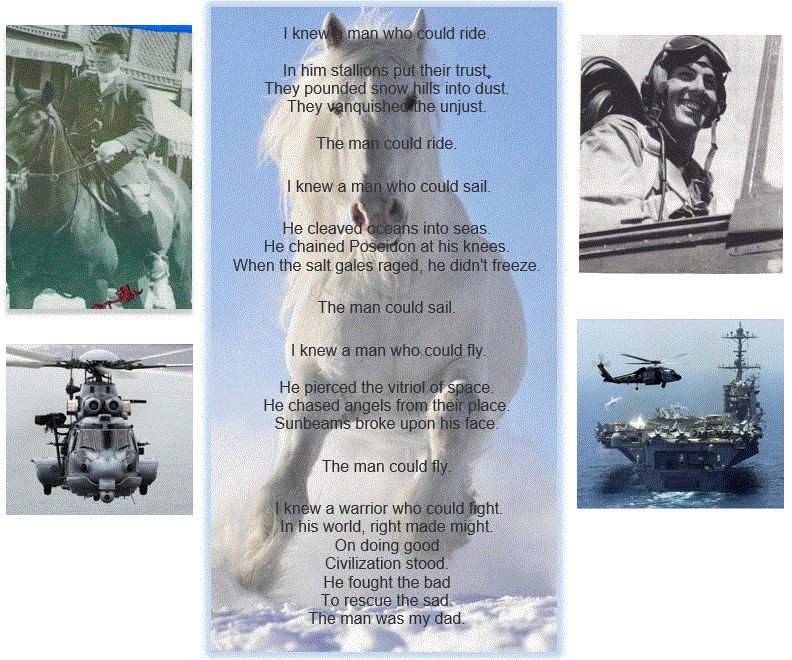
In his world, right made might. On doing good, Civilization stood.
. . . . .
Click pics to enhance text for reading.The Editors
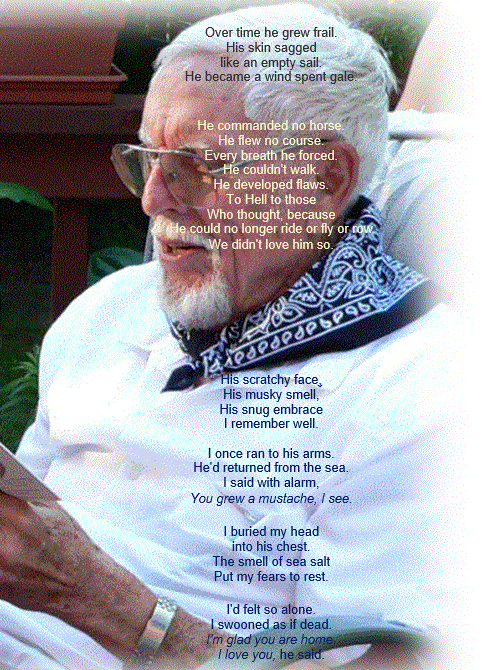
Captain Bryce Lee (USN) on his 85th birthday.Billy Lee read a version of his poem, Warrior, to his father at his party. Bryce never said he liked it. The Billy Lee Editorial Board
Bryce Lee helped stand-up the National Security Agency in the 1950s when the agency helped track atom bomb materials and components loaded aboard foreign ships.
He played a prominent role during the Cuban Missile Crisis when he led an anti-submarine jet-helicopter squadron based near the confrontation.
Because of their sensitive nature, some of the Captain’s accomplishments will never be known outside of government.
Bryce spoke Russian and French. In his mind, integrity was the most important quality a person could have. He did well for a farm boy from Michigan.
Bryce Lee passed peacefully at home with family present a few days before his 91st birthday in 2011.
The Billy Lee Editorial Board
In his world, right made might. On doing good, Civilization stood.
In 1958 when I was a fourth grader our family moved to Quonset Point, Rhode Island where my dad was soon promoted to lead HS-11, one of the Navy jet-helicopter squadrons defending the east coast from attack by Russian submarines.
We moved to Quonset Point with some trepidation because Hoskins Park — the housing project for military families in those days (now sold, redeveloped, and renamed Wickford Point) — had a long waiting list; we didn’t know where we would live or if we could afford off-base housing.
As it turned out, we got a lucky break. A Navy Lieutenant — who was a Negro — moved his family into Hoskins Park. Some white officers found out and decided their families weren’t going to live in non-segregated housing. As a result, vacancies popped-up, and we got in; we moved-in next door to the Negro officer and his family.
In 1958, my family moved to Quonset Point, Rhode Island. Inexpensive on-base housing was overcrowded. We didn’t know where we would live, or if we could afford to live anywhere.
Lieutenant Brown, his wife and two daughters, lived in the two-story, condo-style apartment on the other side of a thin concrete wall from us.
Despite the custom that white and black families didn’t fraternize in those days, eventually I had encounters, conversations, and interactions with all the members of the Brown family.
Over time, I came to understand how traumatized they were, each in their own way, living in a country that, basically, isolated and mistreated them.
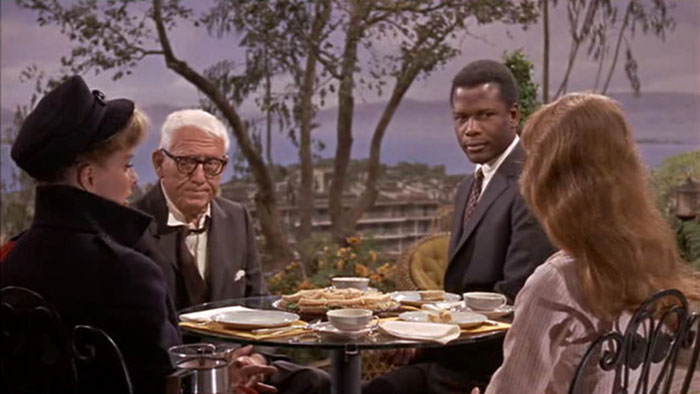
My parents accepted an invitation to the Brown’s for dinner — an event that had all the drama of the movie, Guess Who’s Coming to Dinner, released nine years later, in 1967.
One encounter involved my parents. The Browns invited them for dinner to get acquainted, and after agonizing about it, Mom and Dad accepted. I think Dad wanted to check them out; to make sure his kids would be “safe” living next door.
After the meal, Dad reported that the Lieutenant’s wife, Jean (Alston), was a good cook, but he couldn’t shake a queasy feeling in his stomach, which spoiled his appetite. He had never interacted with negroes, except servants(everyone called black people negroes in the 1950s); he certainly had not eaten food at the same table. And, unlike my dad, Mr. Brown was a graduate of the Naval Academy.
In that sense, the lieutenant kind of outranked him. According to dad, Academy graduates favored one another and worked hard to help each other achieve promotions. They put non-Academy graduates (like dad) to great disadvantage in the competition for rank, which was fierce inside the Navy.
A black Academy graduate presented a dilemma. Brown was a graduate of the elite Naval Academy with all its privileges and protections; at the same time, he belonged to a race that was, to put it politely, undervalued both by the Navy and the country at large. It was unfamiliar terrain for dad and made him uncomfortable. I remember my parents writing a thank-you note to the Brown’s for their hospitality but as far as I know, they didn’t return an invitation.
Another incident occurred a few weeks later that changed the way I thought about people and what they sometimes go through. It happened on a day when my fourth-grade teacher decided to punish me for violation of good-citizenship. I sassed her, she claimed, because I insisted — in a loud voice before classmates — she couldn’t tell me what to do!She wasn’t my parent!
In my mind, it made sense. To show how wrong I was, she kept me after school to clean the blackboard. She forced me to practice my reading. I left school an hour late.
When I arrived home, I saw Billie — Lieutenant Brown’s sixth-grade daughter — standing on her porch a few feet from ours, crying, and shifting back and forth on her feet in a puddle of — I took a second look to be sure — her own pee. I couldn’t believe it; I didn’t know what to say or do. I ran inside our condo to tell mom.
I wish I could say that Mom brought Billie into our place, helped her clean-up, and gave her a secure place to wait until her mom got home with a key. But mother did nothing like that. Instead, she became animated and began to marvel about how such an embarrassing calamity could befall a sweet girl like Billie. I became annoyed. Why didn’t she ask us? I interrupted. We would have let her use our bathroom!
Maybe she was afraid to ask, mom said. Maybe she was afraid we would say, no.
So afraid she let her stomach burst? I yelled.
1957. Daisy Bates tries to enter Central High in Little Rock, Arkansas. President Eisenhower sent the 101st Airborne Division to rescue her and eight other students from angry whites. It was the following year that our family moved to Quonset Point, Rhode Island.
Some weeks after, I stood alone in the playground behind our building when Billie walked up. We didn’t speak but sat down together on the ground to draw pictures in the gray clay beneath us — clay the housing complex we shared was built on.
It didn’t seem right to sit with someone and not talk but I couldn’t think of anything to say. Billie was a couple of years older. We had little in common, it seemed. We concentrated for a while, in silence, on our art.
Then, she looked up. She fixed her eyes on mine. I didn’t look away. I tried to hold her gaze. Finally, she whispered. She said simply, I hate being colored.
I felt the blood drain from my face. Hate was a bad word. We didn’t use the word hate in our family.
To hear Billie whisper, hate, about herself — hate about something she had no control over or responsibility for, which she couldn’t change, wish away, or escape — upended my internal world. In that moment, the ground shifted beneath my feet.
Somehow, hearing her speak those words — and the mental image I had created in my memory of the day she danced in a pool of her own urine — conflated in my mind. As Billie waded ankle-deep in her own bodily fluids, I heard her screaming. I hate being colored!!! I hate it!! I hate it!I hate it.
In my imagination, I took my place beside her. I raged against God and all the earth for making her colored; for allowing white people to be so insensitive, so mean, so un-caring, so ill-tempered, so prejudiced.
—————
Billie’s father supervised a motor-pool near, but outside, the Quonset Point military base. According to friends of my mom, he was some kind of gas-station attendant. One warm day, he saw me playing outside and asked if I wanted to take a ride with him in his new convertible. I said sure.
He said he wanted to show me something. He was in charge of something and wanted to show me what it was. He wanted to show me what he did.At his work.
I thought, this is a crazy request. After all, I didn’t know what my own dad did. He’d never taken me to work or showed me anything having to do with what he was about when he wasn’t home.
So, I climbed into Mr. Brown’s convertible, top down, and off we went. It turned out that he was good at small talk. I listened happily to his resonant voice and enjoyed the sun and warm breezes as we rambled along. We passed through some old guard shacks, a few barbed-wire-topped chain-link fences, and entered an area so remote and wild, it was hard to believe we were still in Rhode Island.
We drove through a dense grove of trees and up onto a hill. Mr. Brown slowed the car and stopped. The sun blazed into the open convertible. Look, he said. He frowned, then nudged my shoulder and pointed. Look down there.
There were more military vehicles under Navy Lieutenant Brown’s command than I imagined there were cars in the entire world. This photo of a military motor-pool in a western state reminds me of what I saw in Rhode Island.
Below us for as far as my eyes could see, in a valley that stretched to the very edge of Earth, sat thousands of green and gray trucks and jeeps; armored personnel carriers and tanks; military vehicles of every stripe and size, all neatly parked in long straight lines. As a naive fourth grader, I found the view hard to take in. There lay spread below us more vehicles than I imagined existed in the entire world.
It was the second time a member of the Brown family stunned me. I was speechless. Then I said, you’re in charge of all of those trucks? Navy Lieutenant Brown smiled, sadly, I thought, then looked at me like Billie had.
I am, he said.
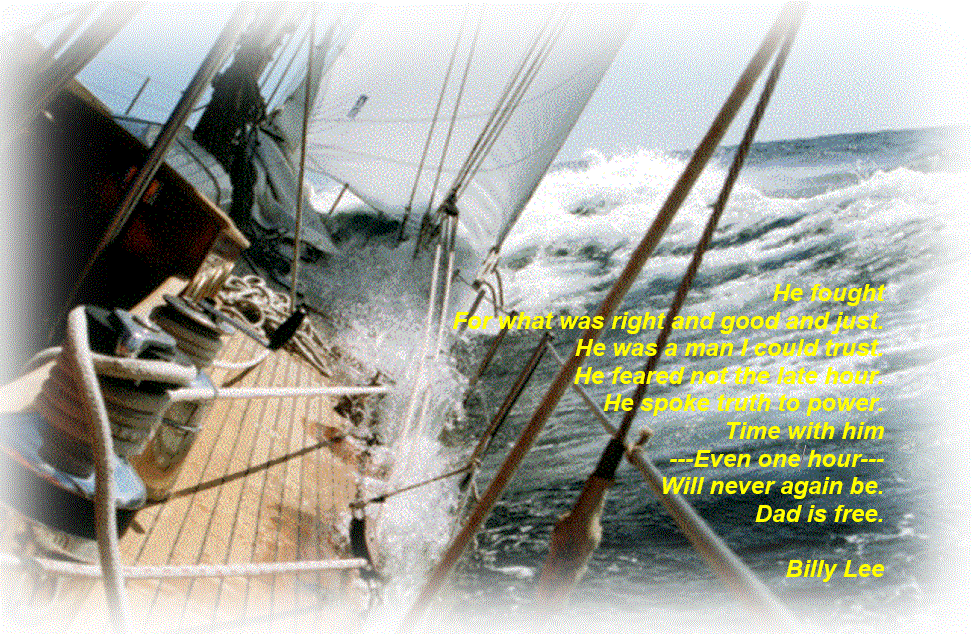
Billy Lee
Editor’s Postscript: This story is grounded in the memories of a fourth grader of events that occurred almost sixty years ago. The make of Mr. Brown’s car and the nature of the installation visited may or may not be accurate.
After writing this article, Billy Lee learned that Mr. Brown, sadly, passed away on May 22, 2012, at age 85 from cancer. After reading old press releases, he discovered that historian Robert J. Schneller had published a book in 2005 about Mr. Brown’s experiences at the Naval Academy called Breaking the Color Barrier. In 1949, it turns out, Midshipman Brown became the school’s first black graduate.
Unknown to Billy Lee, Wesley Brown had become an historical figure. Billy Lee has asked the Editors to add biographical notes to his post.
In 1958, neither Billy Lee nor Mr. Brown’s neighbors knew that the young Naval officer owned the distinction of being the first black midshipman to graduate from the Naval Academy. In the racial climate of the 1950’s, an achievement like Mr. Brown’s would have been seen as the exception that proved the rule: Negroes were inferior. It would have been bad taste in polite society to call attention to Lieutenant Brown’s achievement.
None of Wesley’s neighbors, Billy Lee recalls, had any idea of the hell he went through to become a Naval officer. In any event, white people in 1958 were so blinded by racism that they would have thought, had they known: Wesley’s accomplishment was of no consequence; it was not worth mentioning or even thinking about.
It’s hard to believe now, but white Americans in 1958 didn’t know their country had a race problem.
Wesley Brown was the first black graduate of the Naval Academy. Because no white midshipmen would share a room with him, he lived alone during the four years it took to earn his engineering degree. When classmates blocked his admission to the academy choir, Wesley joined the cross-country track team where future President and upperclassman, Jimmy Carter, befriended him.
Wesley Brown became the first black American to survive the racial hazing at the Naval Academy and graduate. I knew him to be a happy person with a charitable attitude toward all people. He was a kind and gentle neighbor who, during the year of 1958, made me feel good each time I saw or spent time with him.
His wife, Jean (Alston), led our church choir and taught me to sing. We did a television show under her direction. His daughter, Willetta (Billie), transformed my view of the world with a single sentence. I read somewhere that Carol, the youngest daughter, did well in life.
After our families parted ways, Wesley’s family grew to include sons. Eventually, Wesley Brown and Jean divorced; Wesley married Crystal Malone in 1963. He rose to the rank of Lieutenant Commander before retiring in 1969 to pursue other interests.
As my story tells, it was racism in the Navy that made it possible for me to know the Browns. Midshipman Wesley Brown changed America for the better. He suffered to accomplish it, but he kept his pain to himself and his closest friends.
I am proud to say that once, I knew Wesley Brown and he knew me.
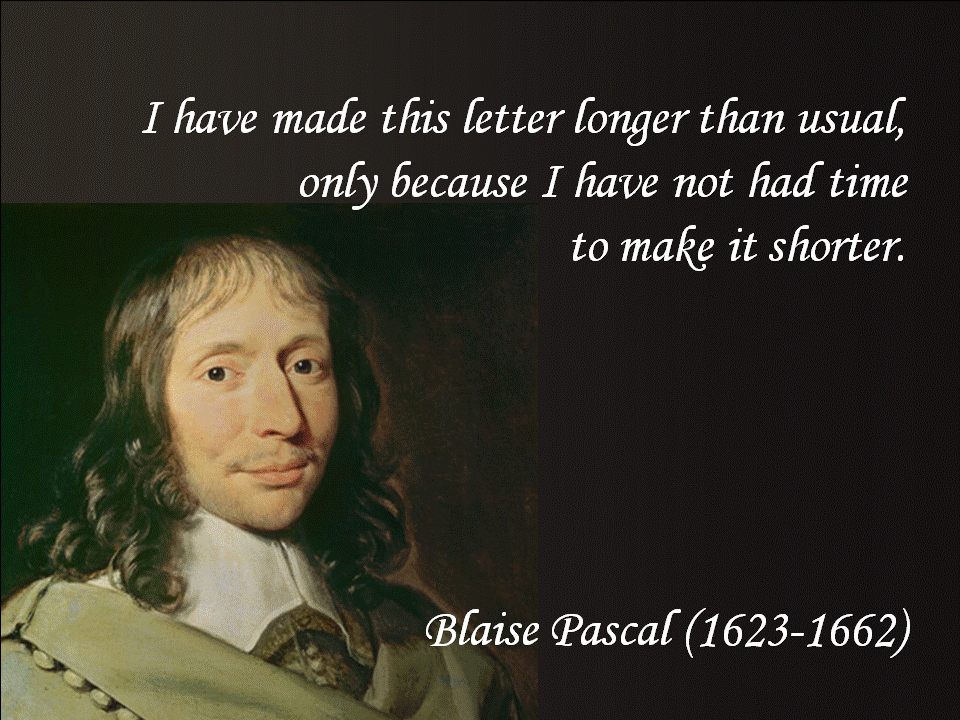
Blaise Pascal was a man who suffered terribly his entire life until he died at age 39 from a metastasized stomach cancer. His mother died when he was 3 years old; his father when he was 28.
For those who aren’t familiar with his life, let me point out that he was French, raised by his sisters, educated by his father, and very involved in the religious controversies of his time (1623-1662). He was an inventor and mathematician of the highest order. His sufferings — his physical ailments and psychological agonies — are legendary.
I won’t burden people with the details of his life — historians and biographers have written many books to help folks understand this tragic man, if anyone is interested. What I want to do is share, in English, some of the clever things he wrote during his short life and provide a link to his books, if anyone is interested in reading further.
Most of the quotations in this essay were first published some years after his death, gleaned from scraps of paper found among his personal belongings. Had they been published during his lifetime, he might have become even more controversial than he actually was. The added stress of additional criticism from contemporaries might have shortened his life even more.
Blaise Pascal had what modern people would call a negative attitude toward groups like the Jesuits and possibly the Catholic Church, which declared five tenets of his Calvinist-style religious order, the Jansenists, heresy when he was 30 years old and still grieving for his lost father. But mostly, he had a negative attitude toward other people and himself, all of whom he considered to be hopelessly wicked.
Sensitive individuals who suffer like Pascal did, it seems to me, find it more natural than others who live easier lives to think that the world is a hostile place populated by selfish and uncaring people in need of a savior.
Pascal is reported to have said, Sickness is the natural state of Christians. He spoke his dying words in a moment of sublime clarity amid a chaos of physical suffering. He whispered helplessly, May God never abandon me.
Pascal solved several previously intractable problems associated with cycloids.
Below are some samples of Pascal’s thoughts, which I found interesting and a little sad when first I read them many years ago. His ”pensees” seem to be his way of making sense of a world that held no comfortable place for him to lay his head; a world devoid of a mother’s touch to reassure him; a world lacking the medicines and psychological insights he needed to find the peace, freedom from pain, and the joy for living so many of us in the modern world freely pursue.
Blaise Pascal was oppressed by the heightened discernment of a brilliant mind smothered by relentless suffering. His intelligence (contemporaries called him a prodigy) enabled this sensitive man to articulate his suffering through the lens of Christian philosophy, which he adopted as his own.
Here are some of his thoughts:
Myself at twenty is no longer me.
Christian piety destroys the self. Human civility conceals and suppresses it.
It is a bad sign when someone is seen producing outward results as soon as he is converted.
Sleep, you say, is the image of death; for my part I say that it is rather the image of life.
We are standing on sand; the earth will be dissolved, and we will fall as we look up at the heavens.
Life is nothing but a perpetual illusion; there is nothing but mutual deception and flattery. No one talks about us in our presence as he would in our absence.
Man is nothing but disguise, falsehood and hypocrisy…. He does not want to be told the truth.
Each rung of fortune’s ladder which brings us up in the world takes us further from the truth, because people are more wary of offending those whose friendship is most useful and enmity most dangerous. A prince can be the laughing-stock of Europe and the only one to know nothing about it.
Is it not true that we hate the truth and those who tell it to us, and we want them to be deceived to our advantage, and want to be esteemed by them as other than we actually are?
It is no doubt an evil to be full of faults, but it is a still greater evil to be full of them and unwilling to recognize them, since this entails the further evil of deliberate self-delusion.
The most unreasonable things in the world become the most reasonable because men are so unbalanced. What could be less reasonable than to choose a ruler of a state the eldest son of a queen?
When we have heard only one side, we are always biased in its favor.
To the church: There is no need to be a theologian to see that their only heresy lies in the fact that they oppose you.
It is false zeal to preserve truth at the expense of charity.
Humiliations dispose us to be humble.
It is better not to fast and feel humiliated by it than to fast and be self-satisfied.
God can bring good out of evil, but without God we bring evil out of good.
God will create an inwardly pure Church, to confound…the inward impiety of the proud Pharisees. …. For, although they are not accepted by God, whom they cannot deceive, they are accepted by men, whom they do deceive.
We all act like God in passing judgments.
Do small things as if they were great, because of the majesty of Christ, who does them in us and lives our life; and great things as if they were small and easy, because of his almighty power.
They do both good works and bad to please the world and show that they are not wholly Christ’s, for they are ashamed to be.
Jesus was abandoned to face the wrath of God alone. Jesus is alone on earth, not merely with no one to feel and share his agony, but with no one even to know of it.
Silence is the worst form of persecution.
No one is allowed to write well anymore.
You brand my slightest deceptions as atrocious, while excusing them in yourselves as the [(way of your church)].
Would God have created the world in order to damn it? Would he ask so much of such feeble people?
Persecution is the clearest sign of piety.
Which is harder, to be born or to rise again? That what has never been should be, or that what has been should be once more?
All faith rests on miracles.
How happy I should be if…someone took pity on my foolishness, and was kind enough to save me from it in spite of myself.
We must make no mistake about ourselves: we are as much automaton as mind.
You would soon have faith if you gave up a life of pleasure.
We never do evil so fully and cheerfully as when we do it out of conscience.
The proper function of power is to protect.
If everyone knew what others said about him, there would not be four friends in the world.
Fear not, provided you are afraid, but if you are not afraid, be fearful.
God hides himself. He has left men to their blindness, from which they can escape only through Jesus Christ.
I marvel at the boldness with which these people presume to speak of God.
It is an appalling thing to feel all one possesses drain away.
Who has more cause to fear hell, someone who does not know whether there is a hell, but is certain to be damned if there is, or someone who is completely convinced that there is a hell, and hopes to be saved if there is?
Truth is so obscure nowadays and untruth so well established that unless we love the truth we shall never recognize it.
“Yet I have left me seven thousand.” I love these worshippers who are unknown to the world, and even to the prophets.
We never love anyone, only their qualities.
Must one kill to destroy evildoers? That is making two evildoers in place of one. Overcome evil with good.
We are nothing but lies, duplicity, contradiction, and we hide and disguise ourselves from ourselves.
As I write down my thought it sometimes escapes me, but that reminds me of my weakness, which I am always forgetting….
Man’s sensitivity to little things and insensitivity to the greatest things are marks of a strange disorder.
It is a fearful blindness to lead an evil life while believing in God.
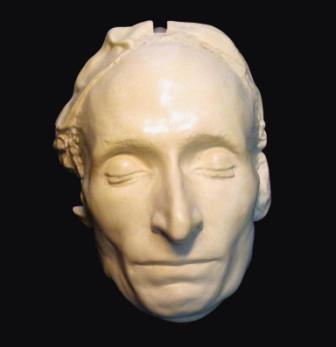
Pascal’s death mask.
That’s enough for now.
Blaise, I pray you have found the happiness in Heaven that eluded you on Earth.
Aging is taking a toll on me. I had warning. Mom and Dad lost everything as they aged. It wasn’t what they expected.
Billy Lee celebrates another year closer to death.
They imagined they’d lose some friends, have health issues, lose some mobility. They didn’t expect to lose their entire family, all their friends and all their power. They lost their beauty, their charisma, their common sense and, finally, their minds.
Dad’s 85th birthday. Within eight years both he and mom died.
One thing my dad tried was to keep his losses to himself. On some level he wanted to spare his children the fear of knowing; on another level he may have believed a positive attitude would lift up those people around him still left. But in the end futility seized him. He could no longer play golf or read or drive a car. He got depressed and took pills to keep going. Aphasia robbed his ability to speak.
My mom was devoted to my dad. Whatever he said or didn’t say was fine with her. She developed a brain disease that took her memories, short term and long, but she remembered Dad to the end. She never stopped asking where he went and when was he coming home.
Dad, 48 hours before he died.
My journey down this tunnel to hell is just beginning. My kids want me to go quietly without complaint — no whimpering, no crying, no embarrassing emotional displays or theatrical grand-standing, like I do in my blog — whatever.
I’m not built that way.
Billy Lee
Click here for Final Thoughts before life is gone for good…
After looking into the history that archaeologists think they know of the time around Horemheb, it seems to me that a compelling narrative of the Exodus and Horemheb can be constructed consistent with what is known from archaeology and written historical records including (and especially) the Bible, since it is the one and only account of the Exodus that exists today, I’m told.
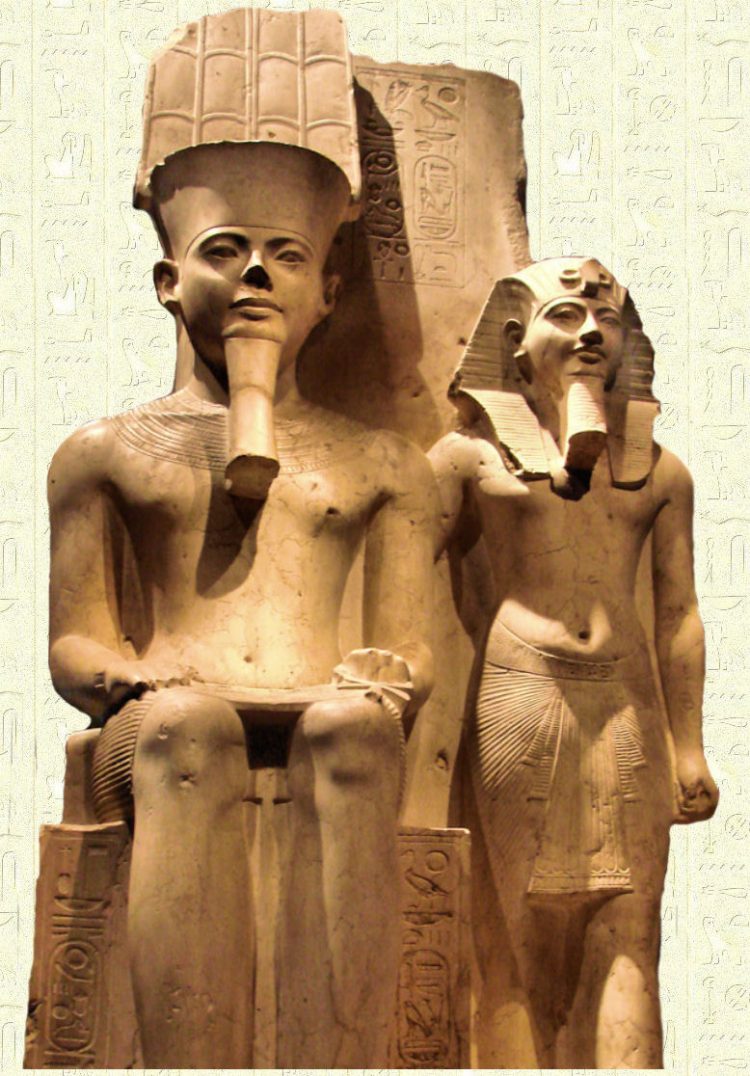
Pharaoh Horemheb with Amun-Ra, the king of the gods, standing beside him.
So here is my version of events.
The Son of Ra, Amun, Loves Horemheb
After comparing the dates Egyptologists have assigned to the reigns of the pharaohs with the date of Moses’s birth worked out by rabbinical scholars, it seems to me that Horemheb could have been the Exodus pharaoh.
But in a search of the Internet and other sources, I found that most historians don’t believe the Exodus occurred, and among other researchers, few say the Exodus pharaoh was Horemheb. Some claim he was Ramesses II; some, Thutmosis III; others speculate about other pharaohs; but very few have said, as far as I can tell, that he was Horemheb.
According to most Egyptologists, Horemheb ruled from 1319 to 1292 BCE. Some Rabbis claim that Moses was born in 1391 and, according to the Bible record, confronted Pharaoh eighty years later in 1311 — eight years after Horemheb took power.
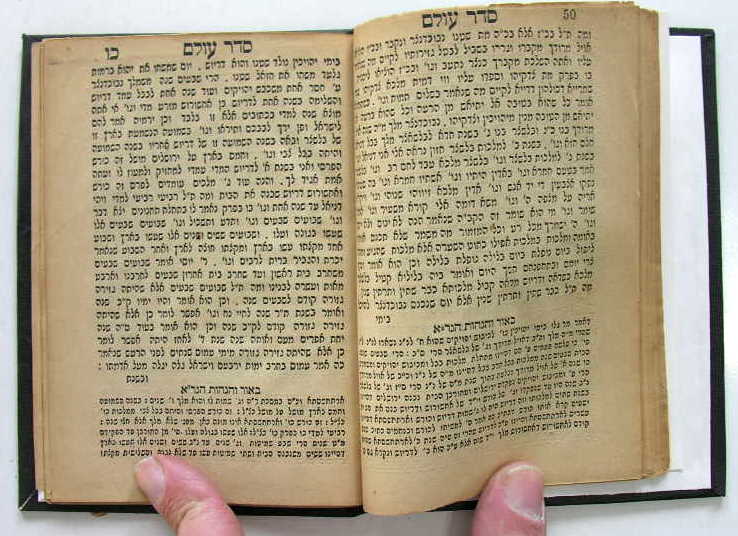
Seder Olam (sequence of world events -lit. World Order)
Rabbinic Judaism uses the Seder Olam (World Order) from the 2nd century CE to date Biblical events. According to the Seder Olam, 832 BCE is the date Solomon started construction of the first temple. 1311 BCE is the date of the Exodus.
The interval agrees closely with the 480-year period described in I Kings, 6:1. More importantly, the date 1311 BCE places Moses and the Exodus squarely in the reign of Horemheb if the chronology of modern Egyptologists is accepted.
To be fair, a few fundamentalist millennial Christian sources place the start of temple construction at 1000 BCE but this date strains credulity, because it was established to fit the theory of millennialism where history is divided into seven one-thousand year “days.” History is almost never as precise or the calendar that clean, even when written by God.
Historians have established that, before he was pharaoh, Horemheb commanded the Egyptian army under Pharaohs Tutankhamun and Ay. After he became pharaoh and lost the army (as described in the Exodus story of the Bible; see a summary below), an angry Horemheb enlisted his allies, the polytheistic priests and their cults, to erase the history of the “monotheist” former pharaoh, Akhenaten, his allies, and family members.
One of those family members was Akhenaten’s adopted cousin, Moses (see next section, The Exodus Story), who Horemheb blamed for bringing Egypt to ruin.
Historians agree that during his reign Horemheb intensified a damnatio memoriae (campaign to strike from memory) against the former pharaoh, Akhenaten. The campaign was initiated by Akhenaten’s son, Tutankhamun, and the pharaohs that followed — Smenkhkare, Neferneferuaten and Ay.
These pharaohs during the years 1334-1319 BCE reversed many — but not all — of Akhenaten’s reforms, because they thought the reforms created uncertainty and turmoil over the status of the priesthood and the gods, which to them seemed essential to the economy and stability of Egypt.
But Horemheb took the reversal to another level — restoring order by turning back all of Akhenaten’s reforms and re-establishing traditional polytheism throughout the whole of Egypt.
Ipuwer Papyrus
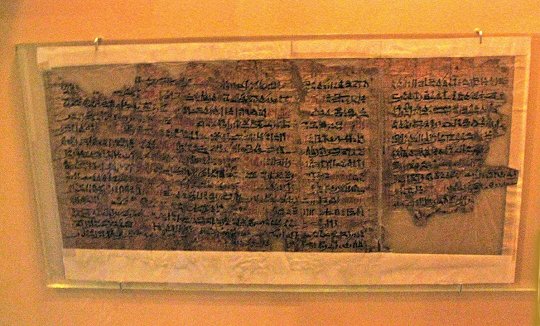
The surviving copy of the Ipuwer Papyrus — housed in the Netherlands at the Dutch National Museum of Antiquities and dating to the 19th dynasty (13th century BCE) — may actually describe the conditions in Egypt during the Amarna/post-Amarna period before and after Horemheb took power. It may have been during this period that the Hebrews, led by Moses, lobbied Horemheb to let them leave Egypt for their ancestral lands in Canaan.
The Exodus Story
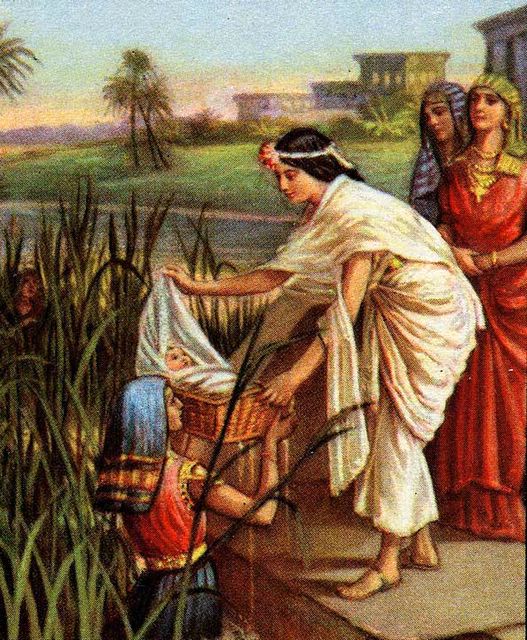
Pharaoh Thutmose IV died around 1390 BCE leaving a very young son, Amenhotep III, to become pharaoh. To fashion the story to fit the Bible narrative, that same year a teenage daughter of Thutmose IV, possibly Princess Tiaa, found Moses floating in a basket on the Nile River. She brought Moses into the palace to be a playmate for her brother, the new pharaoh.
The sister of the deceased Thutmose IV located Moses’s mother, Jochebed, and brought her into the palace to wet-nurse Moses. Soon after, Princess Tiaa adopted Moses and raised him as her son.
Through this arrangement Tiaa’s much younger brother, the new Pharaoh Amenhotep III, became Moses’s uncle, though they were about the same age. Perhaps the two grew up together and were close — more like brothers than uncle/nephew.
The influence of religion on the Thutmose family by Moses’s mother — a monotheistic Jewish woman — might have been considerable. No one can know for sure, but what followed — the eventual embrace of monotheism by Amenhotep III’s son, Amenhotep IV (who later changed his name to Akhenaten) — might be understood as having evolved under her influence.
Jochebed may have continued to live within the pharaoh’s household for many years assisting Princess Tiaa to raise her own son and through him influencing Tiaa’s grandson, Akhenaten, who would become the famous founder of Egyptian monotheism. Jochabed’s influence could make sense out of the history that followed.
According to this version of events, when Moses was forty years old, in 1351 BCE, Amenhotep III died. Amenhotep IV (his son and young cousin to Moses) became pharaoh.
Moses fled Egypt, according to the Bible to avoid trial for killing an overseer. But, because he was the adopted son of the prior pharaoh’s older sister, Moses may have worried that his cousin, Amenhotep IV, (or more likely, his aides) considered him a rival for power.
A few years later, Amenhotep IV changed his name to Akhenaten to reflect his revolutionary belief in a single creator god he called Aten, the Sun Orb. He then suppressed the existing polytheistic cults.
Akhenaten built a new city, Amarna, to honor Aten. This move toward a form of monotheism turned Egyptian society upside down and angered the priests who depended on polytheism for their economic well-being.
Pharaoh Akhenaten — formerly Amenhotep IV
In 1335 BCE Akhenaten died, and Moses at age 56 returned to Egypt. He found Egypt in chaos and rebellion due to outrage by the priests and their acolytes over the move away from polytheism.
During the next 15 years Moses lived among the Hebrews and by age 70 had become their de-facto leader. Horemheb meanwhile became pharaoh.
By age 80 Moses was challenging Horemheb to let the Hebrews leave Egypt. Eventually, Horemheb did — issuing a directive, according to the Bible, that the general population provide the Hebrews with gold and silver when they left.
Horemheb’s plan may have been to trap Moses and the Hebrews against the marshes in the Sea of Reeds and annihilate them to recover their newly acquired wealth to re-stock the depleted Egyptian treasury.
But during the Exodus of 1311 BCE an unexpected inundation (the famous Red Sea flood in the Bible account) cost Horemheb his army and his plans to destroy the fleeing Hebrews. The Hebrews escaped, so Horemheb, encouraged by the priests, turned his fury against the Amarna cults and ramped up the ongoing damnatio memoriae started by Tutankhamun against his father, the former Pharaoh Akhenaten, and his allies.
I should mention that although the Egyptians closely watched, recorded, and forecast the yearly inundations of the Nile, unexpected floods sometimes did occur in the Delta region through which the Exodus may have taken place.
Pharaoh Ramesses II
When Horemheb died leaving no heir, the Ramesses family seized power. Ramesses I, Seti I and Ramesses II spent the next forty years continuing the damnatio by finishing the demolition of the town of Amarna and its temples, destroying steles, and grinding down glyphs and cartouches that referred to anyone associated with the heretical Amarna one-god movement.
They also sent armies into Canaan to hunt down Moses and the Hebrews in the territory that both Moses and Joseph — who died 59 years before Moses’s birth — had claimed was the eternal homeland given to the Hebrews by God.
[Those readers unfamiliar with Joseph’s bio are advised to read his story in Genesis chapters 37-50. Billy Lee claims that it’s the most interesting passage from world literature he’s ever read. THE EDITORS]
Unknown to the pharaohs, Moses and the Hebrews decided to stay away from Canaan. Instead, according to the Bible, they found a source of water and hid themselves in the vast Sinai wasteland where they believed their pursuers were less likely to look.
The pharaohs sent at least three armies into Canaan to hunt them down. Unable to find Moses, they marched north to search in Syria where the Hittites ambushed them.
As a result, the Egyptians conducted a number of military campaigns against the Hittites. The most reliably verified and documented of the conflicts occurred in 1274 BCE, led by Pharaoh Ramesses II. This war financially exhausted and militarily weakened both sides.
Forty years after the Exodus (and just three years after the Ramesses II incursion into Syria) in 1271 BCE, Moses died. Egypt had by then already withdrawn from Syria and Canaan. The time would never be more right.
According to the Bible, Joshua (Moses’s successor) walked the Hebrews out of their Sinai desert hiding place and entered the land of Canaan.
Twelve years later in 1259 BCE — sixteen years after the end of hostilities between the Syrian Hittites and Egypt and fifty-two years after the Exodus — Egypt signed the famous peace treaty of Kadesh with the Hittites. The peace treaty — concluded between Egyptian Pharaoh Ramesses II and the Hittite King Hattusili III — is the oldest surviving treaty in existence.
It diminished the most dangerous existential threat to the new Israel by making less likely Egypt’s return to wage war either in Syria or Canaan. Egypt desired a lasting peace in order to rebuild its society and military and to restore its wealth.
The desire for peace didn’t last. By 1208 BCE (fifty years later), Egypt was aware that the hated Hebrews had returned to Canaan where they were building fortified towns and cities.
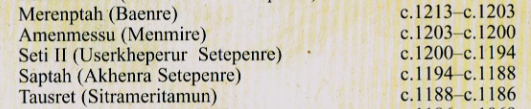
Ramesses’ son, the aging Merenptah, decided to finish his family’s vendetta and go into Canaan to do battle with the fledgling Israel. According to the “Merneptah Stele” (found by Flinders Petrie and housed in the Cairo Museum), he “destroyed Israel’s seed” such that “they were no more.”
History and the Bible agree that Merenptah exaggerated his assessment.
On this stele Merneptah claims that he destroyed Israel.
It is interesting to note that Merneptah’s inscriptions describing Israel’s destruction were carved on the back of a stelae that once belonged to Amenhotep III, Moses’ “uncle” and childhood companion. Merenptah simply turned it around and used it as his own.
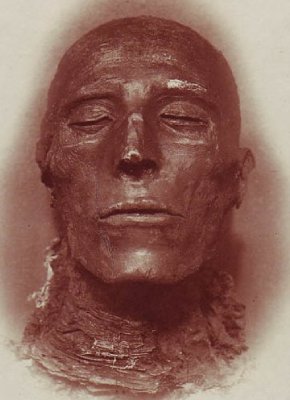
It is fascinating (perhaps macabre) to recall — in light of the Bible account of the Passover and the killing of the first-born by the Angel of Death — that tomb examiners found the fetus of Horemheb’s son and heir-apparent inside his wife’s mummified body. Horemheb had no heir, and the Ramesses’ family was able to take power.
No records of Moses or the Exodus itself, in hieroglyphs or Egyptian script, have been found.