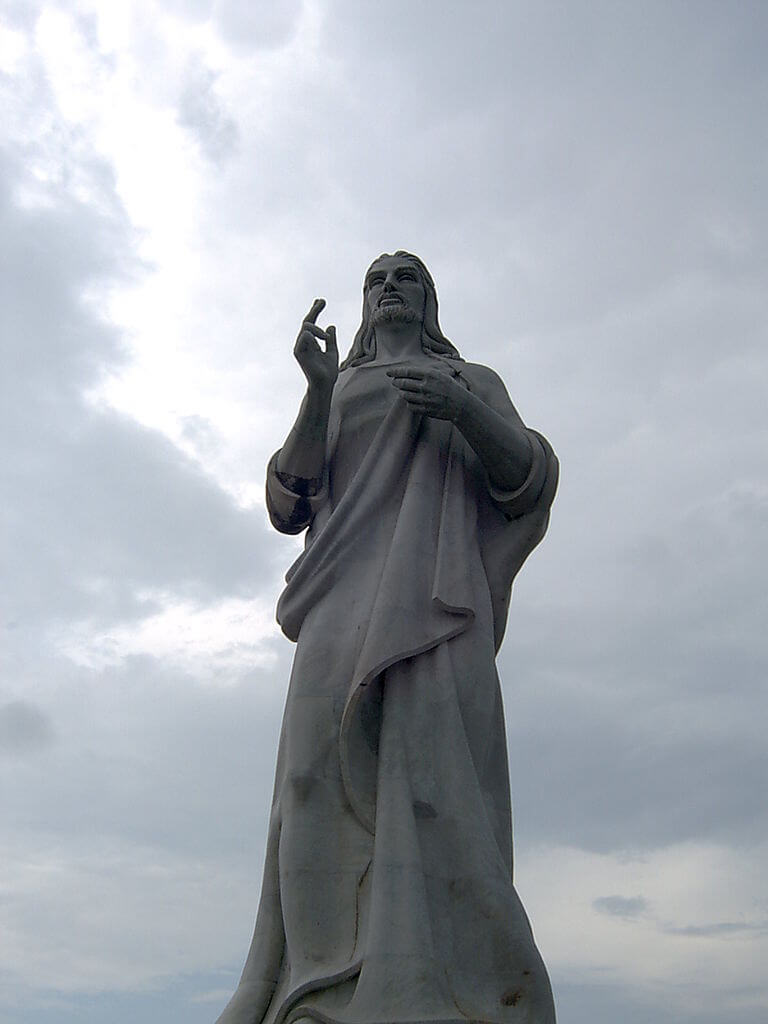
The gifted female artist promised to build the monument using only the finest Carrara marble, quarried in Italy. It would stand sixty-six feet high and be mounted atop a marble platform ten feet tall. Its several sections, when assembled, would weigh 320 tons.
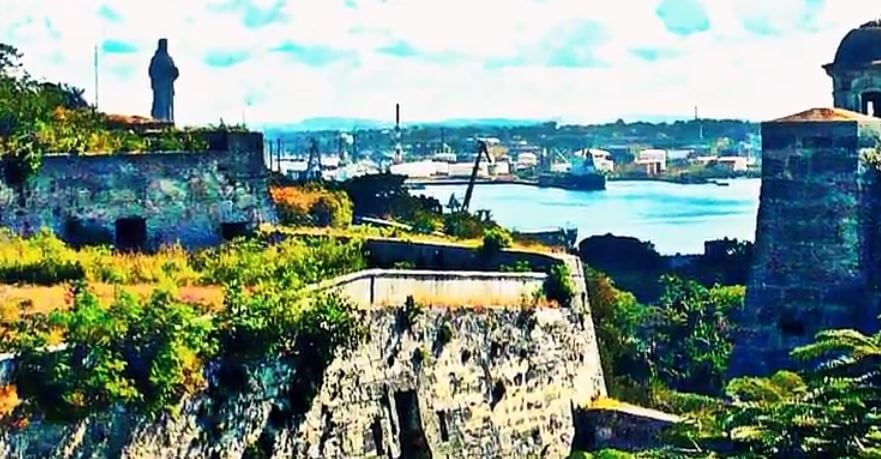
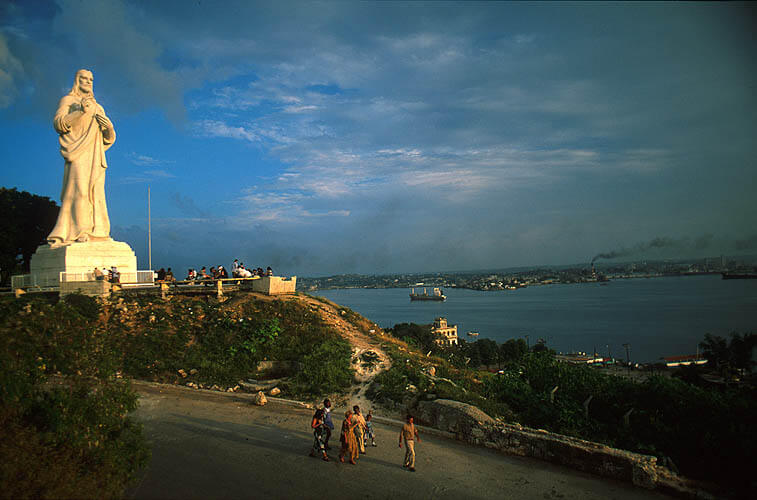
The committee selected a site on La Cabana Hill in the suburb of Casa Blanca. From a vantage point 260 feet above Havana Harbor, Christ Jesus would view the entire bay, the entrance to the harbor, and the city itself across the water.
The faithful of Havana could look across the bay toward the statue — blazing white under the Havana sun — and know in their hearts that Jesus loved them and watched over them.
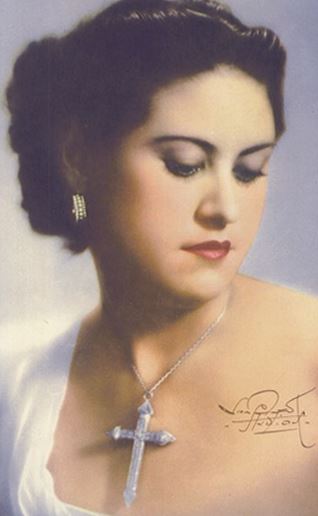
Marta Fernandez Batista commissioned the Statue of Christ overlooking Havana Harbor.
It took nearly three years of hard work in both Italy and Cuba, but on Christmas day 1958 Marta dedicated the statue for the people of Cuba. From now on Jesus would defend them from every danger, including the danger posed by the brutal Communists against whom her husband’s army — with America’s help — battled valiantly on the eastern side of the island.
Marta didn’t know (how could she?) that six days after the dedication ceremony, she and her husband would find themselves scrambling into a convoy of planes to fly off the island with hundreds of their closest friends — fleeing for their lives — because guerilla soldiers had somehow overrun Santa Clara, her husband’s last line of defense.
The dirty unshaven mostly black soldiers, who belonged to the devil himself — Che Guevara — were poised to swarm into the city like the fire-ants every Christian knew they were.
Marta and her husband escaped the island after a New Years Eve party made famous in the 1974 classic movie, The Godfather Part Two, which featured Al Pacino. They took expensive art and the Cuban treasury with them, but left behind a 1.2 billion dollar debt as well as a history of annual deficits in the hundreds-of millions for the new government to repay.
In the meantime, while the Batista entourage continued to orchestrate its exile, during a freak storm, lightning struck Marta’s beloved statue of Jesus. Its head disintegrated some say and crashed to the ground.
Sculptress Jilma Madera constructed the Christ in the Harbor statue. Some have claimed that she modeled the face after her own.
It was just as well that Marta didn’t see it happen. She had worked so hard to bring this gift of God’s love to the citizens of Havana. The new government — it wouldn’t become a Communist government for a few more years — cleaned up the mess and rebuilt Jesus to his former glory.
As time went on, the powerful Batista family lived out its patriarch’s remaining years in various countries until Fulgencio died of a heart attack at age 72 in Marbella, Spain in 1973.
Marta moved to America where she lived quietly among the upscale and connected of Palm Springs, Florida. She continued giving to charity, the Church, and even hospitals until she too died, in 2006, from the complications of Alzheimer’s disease.
By all reports Marta was a beautiful Catholic, a Christian, a woman who loved Jesus. But she married a man who John Kennedy once said had run the most repressive and corrupt régime that South America had ever seen.
Havana, under Batista, became a modern-day Sodom and Gomorrah. Sicilian Americans in crime syndicates (years later people started calling these groups, the Mafia) operated profitable casinos, as well as gambling, pornography, and prostitution franchises.
In those days, despite American investment (Americans owned three-fourths of pretty much every category of the economy, including land) dissatisfaction ran deep. Universities became hotbeds of discontent, protests, and demonstrations. Trade unions, the press, teachers, agricultural workers, priests, doctors, and lawyers vented their collective outrage at “yanqui” unfairness and domination.
The entire country, 90% of it anyway, congealed in disgust for the goons who ran everything; who stole the island’s wealth in a seemingly endless orgy of greed. Disgust turned to fear when thugs began a regimen of assassination and torture to keep dissenters in check.
Fidel Castro led a movement against the Batista cartel that included almost every person on the island.
Eventually, Fidel Castro, a brilliant attorney and son of a prominent land owner, stepped up to coordinate the opposition, which had become so complex and unwieldy that it was almost impossible to track, let alone direct. He hired a savvy Argentine physician, Ernesto (Che) Guevara, to help him. As time went on they became close friends and made history together.
After the Batista family and their closest friends fled the island, Castro arrested the men who carried out the assassinations and torture of civilians. The new government executed several hundred for capital crimes. It sentenced hundreds more to long prison terms.
Fidel then broke up his own family’s estate by distributing its land to his family’s employees. This generous act set the tone and example for the program of island-wide agrarian reform which followed.
Christ in the Harbor of Havana, Cuba
The elites in the United States were not impressed. They orchestrated a program of assassinations, sabotage, bombings, quarantine, and isolation against the island that included poisoning its agricultural exports and burning and sinking the ships of its trading partners.
The USA established an embargo so effective that some international companies lobbied Congress to make humanitarian changes, which they did.
The USA embargo continues to the present day despite resumption of full diplomatic relations between the two countries this year.
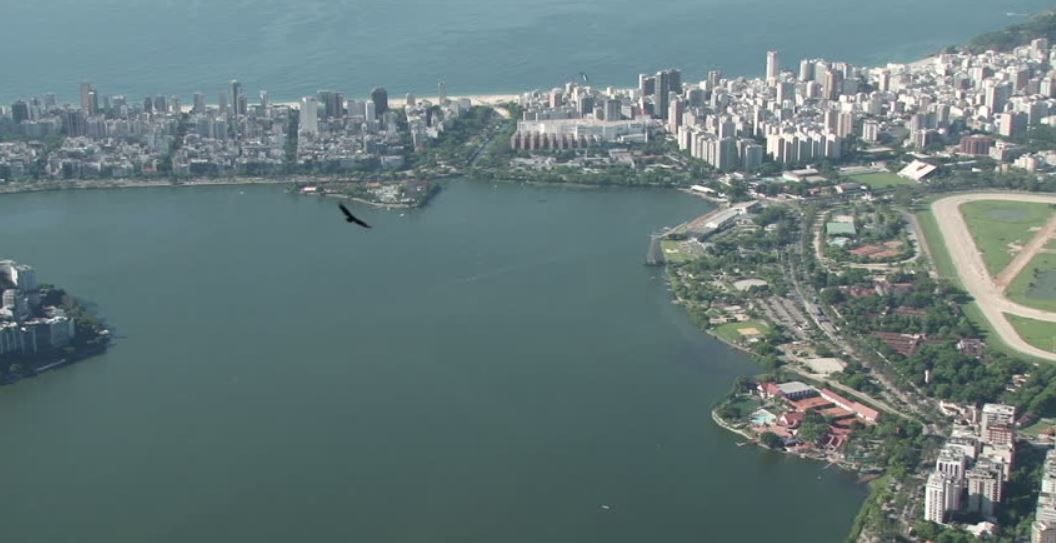
View of Havana Bay from the statue of Jesus. Click pic to view.
The decades-long barbarity of the war against Cuba by the United States shocked the modern world. Many observers (outside the United States) continue to wonder how well Cuba might have done had it not endured decades of ”dirty tricks” to undermine its vision.
Some of the methods used to destabilize the island have made it into the public domain where observers have labeled them ”diabolical.” The history of USA-Cuba relations continues to alarm people around the world. Folks wonder if the United States will ever change. They wonder if the empire to the north can change.
A few of the excesses of the fifty-five year war against Cuba are enumerated in my essay, Hey, Guevara.
But to conclude our story…
As for Marta’s statue of Jesus, it continues to guard Havana Bay to this very day. Despite fifty-five years of relentless attack from what is arguably the most militarized and corrupt nation ever, the island of Cuba and its statue of Jesus still stand.
Miguel Angel Asturias won the Nobel Prize for Literature in 1967 during my freshman year at college. I must have been chasing girls the day of the announcement. I just don’t remember him. Until a few months ago, I didn’t know who he was.
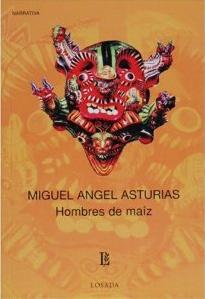
While doing research on the Cuban Revolution and its leaders for recent blog-posts, Miguel’s name kept popping up here and there in various contexts, so I decided to learn more about the author by trying to take an inside-the-cover peek into his signature book, Men of Maize, on Amazon.com.
Was Asturias really that good that he could win a Nobel prize? What did he write about?
Miguel Angel Asturias, I’d already learned, was born in Guatemala and wrote in Spanish — a language I didn’t read or speak. I was able to find some English translations of his books on-line, but they seemed to be scarce and out-of-print.
On Amazon.com, Men of Maize(Hombres de Maiz) cost $50 — in used condition, of course. “Like-new” copies priced-out at over a hundred dollars. The titles didn’t feature Amazon’s inside-the-cover functionality either, so my free peek inside-the-cover strategy just wasn’t going to work.
Other books by Asturias were also unavailable in English, although a beat-up library copy of Strong Wind (Viento Fuerte) turned up on-line for sale at ten bucks. I decided to buy it and then search through libraries on-line for Men of Maize. It turned out that a solitary university library, which happened to be located nearby, owned a solitary English language copy, so I drove over to check it out.
Miguel Angel Asturias; born 19 Oct 1899; died 9 June 1974
According to the inside cover, the library acquired the book in 1993, the same year Hombres de Maiz was translated into English and incorporated into UNESCO’s World Heritage historical book collection. It had been forty-four years since it was first published, in Spanish. The librarian — who must have jumped out of her chair to place the order — probably thought the book would become a big hit among the institution’s forty-thousand English readers.
Sure enough, according to the book’s ledger, someone or other had already borrowed the award-winning novel five times: June 1996; February 1997; February 2001; July 2003; July 2009. And now a sixth borrower was stepping up to the plate — that would be me — to end the book’s most recent six-year no-hitter. Unless the forty-thousand folks who used the student library were reading it in Spanish, Corn Men wasn’t doing so good, not where I lived, anyway; not in English.
How does a critically acclaimed once-upon-a-time international best-seller written by a Nobel Prize winning author (unavailable in USA bookstores) generate a paltry six library reads in twenty-two years at a major university library that is also serving the public? I don’t know.
I took the book home to study it. Here is the opening sentence: Gasper[pronounced Jasper, like the blood-stone] Ilom lets them steal the sleep from the eyes of the land of Ilom. Ok, not sure what this is about, I’ll keep reading. Gasper Ilom lets them hack away the eyelids of the land of Ilom with axes…Huh? Gasper Ilom lets them scorch the leafy eyelashes of the land of Ilom with fires that turn the moon to furious red…Mmm. Keep reading. Keep reading. OK. End of page one. Gasper stretched himself out,…bound in sleep and in death by the snake of six-hundred-thousand coils of mud, moon, forests, rainstorms, mountains, lakes, birds, and echoes that pounded his bones until they turned to a black frijol paste dripping from the depths of the night.
Gerald Martin, translator.
Page one, I soon learned, was the weakest page in the book. On page two and beyond, the novel began to rise into a tour de force, a masterpiece, which had been lovingly captured and transformed into English by translator, Gerald Martin.
Asturias, I discovered, wrote in a style that critics would later call magic realism. It’s the style of One Hundred Years of Solitude, by Gabriel Garcia Marquez (Gabo), which also won a Nobel Prize and is required reading in many university literature programs. Gabo published his book in Argentina during the same year that Asturias won his Nobel Prize (1967).
For those familiar with Gabo’s book, it’s use of language is shallow compared to that of Asturias — though it is a fun and light-hearted read; I would say it is more entertaining to average readers interested in plot over word-play and character development. Gabo referred to his book as a kind of inside joke written for friends.
Whatever style anyone chooses to label Corn Men, Miguel Asturias was clearly a genius who knew unusual stuff, and he could write. That’s my view, anyway. His writing stands alone. Critics have compared him to Keats and Joyce, but I say, no. Those authors can sometimes depress the reader with their pedantic displays.
Not Miguel. He was humble, brilliant, knowledgeable, and direct. He didn’t grandstand. He didn’t show-off. He painted with a preternatural palette to portray ways of being which were lucid and compelling; and fabulously unusual. His writing sometimes took my breath away, because it was original, unpredictable, and paradigm-shattering.
Only Shakespeare himself rewires the brains of his readers like Asturias, I thought. Yes, references to Mayan culture might be arcane. But they didn’t impede the flow of the story or obscure its meaning. They simply provided rivulets to explore for those readers who might like to learn more than they know.
Popol Vuh is Mayan scripture. It contains accounts of creation, ancestry, history, and cosmology. It even references a great flood.
My interest in Corn Men, after reading it, has less to do with the story itself, or its backstory, than with its use of language — though all of it is incredible. For example, the Guatemalan writer — a Sorbonne trained ethnologist and bonafide expert in Maya culture — spent forty years transcribing and translating into Spanish the Mayan “bible”, Popol Vuh (Book of the People). His knowledge of Mayan culture saturates the novel.
Miguel Angel Asturias lived and breathed Guatemala, which for him sheltered a personal treasure-cache of Maya ruins, history, legends, culture, writings, and artifacts. Asturias was in love with all of it.
Guatemala should be of interest to all Americans, as well, because it is central to recent US history. In 1954 Guatemala became the second of several modern democracies the United States chose to overthrow. (The first was Iran, in 1953.)
Encouraged by the easy success of its military takeovers, the USA used Guatemala as a base of operations to try again, in 1961, to seize control of Cuba, but its Bay of Pigs invasion (modeled after its strategy in Guatemala), failed.
The USA was undeterred by miscalculation. It learned from its mistakes, made tweaks in its planning and, by the middle 1960s, began overthrowing governments in the Americas and around the world to further its economic and strategic interests.
Like falling dominoes, countries like Chile, Nicaragua, Panama, South Vietnam, and Iraq (there were others) fell to USA backed military coups and takeovers, until President Obama put a stop to it all in 2008. (Two exceptions continue to be Afghanistan and Syria, where takeover planning and operations are ongoing.)
Editors Note:As of 25 May 2018 destabilization of countries the USA dislikes seems to have resumed as a cornerstone of its foreign policy, which is to dominate all countries on the earth. The policy is called strategic strangulation; it’s like waterboarding except that it’s inflicted on countries; it’s being applied against Cuba, North Korea, Iran, Venezuela, Brazil, Turkey, and many others — which some readers won’t have any trouble identifying. Readers should keep in mind that everything changed when the GOP and its Russian-Israeli backers seized power in the manipulated and rigged election of November 2016. Billy Lee published this essay during the final years of the Obama presidency.
Current problems in socialist democracies like Brazil, Columbia, and Venezuela appear (on the day of this writing) to be the work of wealthy power-brokers working outside the influence of traditional government agencies long associated with destabilization programs; the CIA and its labyrinth of agricultural-aid programs seem to be playing historically minor roles at the present time.
Jacobo Arbenz, Guatemalan President, 1951-1954
Not so in 1954. Back then USA proxies overpowered the popularly elected Guatemalan President, Jacobo Arbenz and forced him to stand naked before reporters before they put him on an airplane and threw him out.
They then stripped another prominent Guatemalan, our writer Miguel Angel Asturias, of his citizenship and expelled him (along with hundreds of his friends and acquaintances) from the country he loved.
Soon, over one-hundred thousand citizens fled to neighboring countries, after they learned that the military government was “disappearing” opponents — a terrifying practice that would spread to other USA backed dictatorships, like Argentina, in the decades to come.
Miguel’s exile (to Argentina and Chile) lasted eight years during which the United States transformed Guatemala into a training ground and staging area for CIA backed militias tasked to, among other things, protect dictators allied with American businesses, hunt down and kill leftist revolutionaries (one of them, Che Guevara), and capsize popularly elected socialist governments, like those in Chile and Nicaragua.
Maya Pyramid in the city of Tikal, Guatemala
As I said before, my interest in Corn Men lies beyond its compelling story and backstory. Yes, it is a novel about the indigenous Indians of Guatemala, who believed their skin was made of corn. Yes, it describes the marginalization and suppression of a native people by modern hi-tech agribusiness, which viewed corn as nothing more than a crop that could be sold.
Corn could not be one’s personal identity, the northern white-men of agribusiness insisted. Corn did not, could not, envelop, protect, and nurture ones soul.
According to the leaders of big agribusiness, corn was something to eat, nothing more. The Mayan Indians knew better. Corn was sacred. Corn was people. They were made from it.
Corn Men don’t remember.
Cross-cultural differences as wide as these, though fascinating, always seem to lead toward tragedy. On the book’s final page, in the epilogue, in the last paragraph, at the last sentence, Asturias shows us the horrific result: a degraded world where corn men become ants. They work on utopian ant farms harvesting kernels of corn. The glory and the magic of living inside skin made of corn has been flayed away.
The thrill of being Corn Men, the joy of being a fruit-like part of the earth, is not even remembered. From now on, corn men are worker ants. It becomes all about the work. It’s all about producing corn, selling corn, eating corn, buying corn, maybe even popping corn. It’s no longer about being corn.
Or is it?
Gerald Martin, the translator, thought Asturias may have intended the last paragraph to show that in the distant future the Indians would actually triumph; their descendants would win their fight to be corn people by establishing a kind of worker’s paradise; a communal corn-based utopia; a society based, presumably, on communism, where they would toil like joyful ants.
Who knows? Asturias never said. His ending remains ambiguous, open to interpretation and discussion. Good literature is like that, it seems.
The dilemmas which Asturias described are thought provoking for sure, but what made me love Corn Men was Miguel’s way with language; the way he used language to paint the surreal internal realities of the many indigenous persons he described. The literary techniques and devices he employed to craft the landscapes, animals, people, and action in Corn Men are complex, varied, and thrilling to encounter and embrace, at least for me.
To my mind, Miguel’ s prose is amazing, wondrous, dense, and sophisticated. Gerald Martin, his translator, preserved and amplified it all in a resplendent English version in 1993, which is the one I read.
Below are my personal picks of phrases from the book, Corn Men, (my proletarian version of the title) to give flavor to uninitiated readers; to acquaint them with the astonishing author, Asturias. And, as always, please, feel free to click on the links in this post to learn more.
Billy Lee
What follows are assorted tidbits from a few chapters in the 1993 Gerald Martin translation of Hombres de Maiz, by Miguel Angel Asturias, first published in 1949. Billy Lee hopes these vivid constructs will stimulate interest in the book for all those folks who like to write and read.The Editorial Board
…rabbits…turned into stars…
…word of the earth turned to flame by the sun almost set fire to the maize-leaf ears of the yellow rabbits in the sky…that planted themselves in the sky, turned into stars, and faded into the water like reflections with ears.
…rivers stagnant with wakefulness…
…he was swallowed by a toothless half moon which sucked him from the air, without biting him, like a small fish.
…ground sticky with cold…
…fingernails heavy as shotgun slugs…
…liquor…the water of war…
Gasper grew older as he talked…
His head fell to the ground like a flowerpot with buds of tiny thoughts.
His thoughts passed out of his ears…
…her hair combed by Gaspar’s teeth…
She shrank back like a blind hen.
A handful of sunflower seeds in her entrails.
…river that…rots…for wanting to sleep…
…river that sleeps as it flows and opens its eyes in the pools and rots for wanting to sleep…
…the earth that falls from the stars…
…creamy skies and butter rivers running low…
…shadow hard as the walls…
…gun fully loaded with seeds of darkness…
…skin like old bark, his hair sticking out over his forehead like the tip of a sucked mango…
…dog dyed red with ringworm…
…face the color of vinegar scum…
…shadowy corpses scattering handfuls of maize down from the sky in torrents of rain…
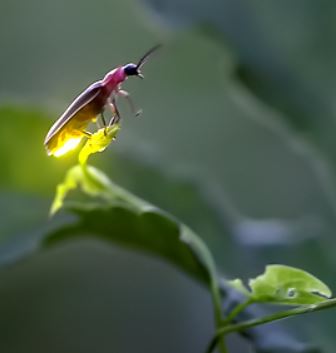
…firefly wizards…
…firefly wizards, who dwelt in tents of virgin doeskin…
…the mud gets more wrinkled year by year, like an aging face…
…sound of his breathing like water falling on porous earth…
…meat contorted in the fire as though the animals had come back to life and were being burned alive…
…boiling fat made rain bubbles in the tortilla dishes…
…men and women trembling like the leaves smacked by machetes.
…saffron colored mountains bathed in turpentine down to the valleys…
…baked puff-pastry faces…
…white root poison…
…sob chilled his nostrils…
…old fool…afraid of everything…
…his fears were just that, the tremors of an old fool who, because of his age, was starting to be afraid of everything.
…crawling children and warm legs…
Candy rosaries like sugared cartridge belts around young bosoms.
…a swarm of locusts on fire…like golden hailstones with wings…
…skeleton light of fireflies…
…deer like lunar sawdust in the fragile light…
…jaw trembling like a loose horseshoe…
…darkness streamed out of the anthills…
…everything was on fire…like the light at the beginning of the world…
…everything was on fire, without giving off either flame, smoke, or any smell of burning. The candle glow of the fireflies streamed down from his hat, behind his ears, over the collar of his embroidered shirt, over his shoulders, up the sleeves of his jacket, down the backs of his hairy hands, between his fingers, like frozen sweat, like the light at the beginning of the world, a brightness in which everything could be seen…
Without saying a word he started bleeding away inside.
…as his voice turned flesh and blood in the cartilage of his nose, mid sobs and thick snuffles…
Senor Tomas, who sat on his leather stool and sucked in his tears, with his back to the door…
…the fire followed on behind with a rush, like a shaggy dog wagging its tail of smoke at him.
…it’s dangerous to contradict what lunatics or lovers say…
Roads of white earth are like the bones of all roads that fall dead at night. …They remain unburied to give passage to souls in torment…
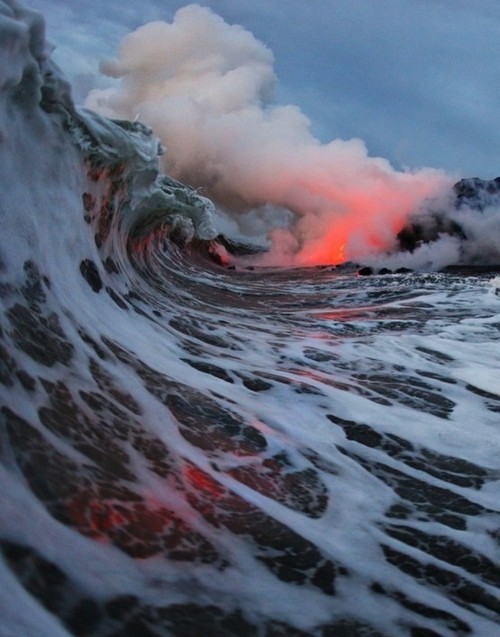
…fire is like water when it flows…
Fire is like water when it flows, no one can cut it off.
…smoke swirling like milk…
…his sigh dropped from the tip of his spurs like tears, almost like words.
…wrapped in their ponchos like mummies…
…the earth was a huge nipple…
The sun, blear-eyed, could hardly see.
Stones from agave slings hummed through the razor-sharp air in the sun-toasted silence of the ripened fields…
Through the tattered lip his incisors, like two enormous nose drips, thrust forward a ridge of cold laughter.
…gums nailed down with stumps…
Madmen and children speak the truth.
…spines…hidden like jaguars…
…sarespino bushes, which by day seem to keep their spines hidden, like jaguars, and bring them out as it grows dark to wound those who pass by.
…echo of the bells that toll for the dead down in the town until they make everyone dizzy, tilan-tilon, tilan-tilon…
The hands of those who snap the maize plant so the cob will finish ripening are like the hands that break the sound of bells in two, so the dead person will ripen.
…the running of the rats, real persons to judge from the noise they made, as though they were moving furniture, were the last things she heard.
…lighter sneezed sparks as the flint struck the steel.
…sparks that sailed…like little partridge eyes to set alight the gold-starched clothes of dry sun and dry moon, dry salt and dry star, of the maize-fields.
…flowers like doomed flags crawling with insects…
…darkness in the clear light of liquor, a luminous liquid which coats everything inside you black as you swallow it, dresses you in mourning inside.
…spurs speaking to the stallion in telegraphic, star-like language.
Death is the dark betrayal of the liquor of life.
Two thin burned legs inside a petticoat of ash, a head with no ears and a small lock of hair, also of ash, and a few curled fingernails, was all that could be lifted from the ground where Vaca Manuela Machojon had fallen.
The waters of the river would cheep at the edges of the pools, like little chicks.
…speaking as though he were killing lice with his teeth…
…her soul…pleading for relief…
…her soul bulging out of her aged, deep-set eyes, pleading mutely for relief…
…tidal waves of weeping that makes everything salty, because tears are salty, because man is made salty by weeping from the moment he is born…
…jasmine-colored teeth…
…a body that goes out of tune, my son, is no good anymore for this life…
…its blood of red citrus juice bathed the moon…
…the madman’s vision is like a mirror broken inside him and in the pieces he sees what he saw whole before.
…he turned his head with the eyes of a boiled crab…
Musus tried to control his horse, sitting up like a flea in the stirrups, buttocks-battered by the trot.
…hoofs echoed like pewter-pots…
…his eyes were fixed on a long serpent of trees which seemed to be crawling between the mountains with the sound of thunder.
Don Chalo…bellowed at him with his mouth open up to his eyes, and such force of lungs that the sound even poured out of his nose.
The sonorous blood clots of his laughter could not be heard, but it was joyful paint that splashed over his face…
…clotting blood of the red moon…
…the thick clotting blood of the red moon…
…dark forest which stank of horses…
…you could hear something like the boiling fizz of water produced by the stubborn flight of insects…
…flea-bitten nag which paid no heed to word or spur once it became stuck to the ground with the glue of weariness and the thin gum of darkness that was half a dream.
…his ears hummed as though he’d been dosed with quinine…
…silver-coin necklaces of clear water and mountains of leaves that woke at each disturbance, each gust of wind with the clamor of a swarm of locusts sandpapering the air.
…carpets of dry pine needles, rivulets which the shine of the moon turned into navigable rivers of white honey along bare hillsides surrounded by pine groves…
The stallion tossed its head as it felt the splash of large drops of white moon.
…sprinkle of limy light…
Pine cones like the bodies of tiny motionless birds, sacrificed birds petrified with terror on the ever convulsing branches.
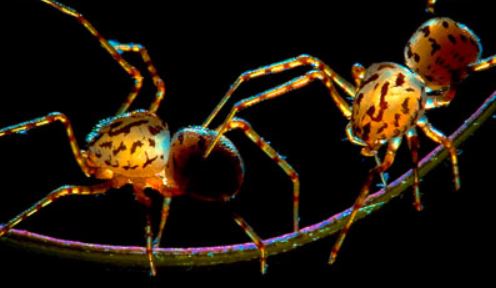
…hands…like spiders….
The hands of the second lieutenant looked like scuffling spiders beneath the play of lights and shadows.
The light and shade had awoken the itching of the mange between his fingers.
Air and earth, as the riders advanced, seemed to be folded in dark and luminous pleats, blinking, and the stones and black spinebushes gave grasshopper leaps.
…the brightness that was coming at them now, gropingly, mid a beautiful darkness, seemed more like a star in the sky forgotten there since the beginning of the world.
…they could hear the tinkling of stones as they sang beneath the horses’ hoofs.
The rocks, faintly orange in color, were reflected in the film of moon and water that covered them like the surface of a mirror…
…meteors falling with their tendons bleeding light…
…the collapse of a vegetable being which no longer has the will to resist the onrush of the wind.
They literally merged their necks with the necks of their horses, to offer the least resistance, and because contact with living, sweating animals which smelled like sacks of salt afforded them the vague security of companionship in the midst of danger.
…that man whose pale blue eyes shown like crystals of fire…
…squirrels…chewed on cheerful thoughts…
…distant howling of coyotes in lunar syrup, squirrels gnawing with laughter as they chewed on cheerful thoughts…
The moon had fallen with its slow decaying light in a convex sky weepy with night dew.
Suffocating suphur fumes in which diseases seemed to float…
…whiplashing of the fierce wind…armed with razor leaves.
Black wasps smelling of hot cane liquor fleeing from honeycombs the color of excrement sown in the earth, half honeycomb, half ant’s nest.
Little streams of weeping, like brown sugar water, ran through the dust of the roads on his cheeks.
…it grows chill, like the fur of a dead animal, at night.
I picked you up and brought you back to life by blowing on you like a fire when all that’s left is a spark.
…fireflies played at little candles in the darkness. If only Goyo Yic could have seen just one of those small greenish lights, the color of hope, which lit up his pockmarked face, dry and expressionless as cow dung.
…sticks sounded like snapping guitar strings on the docile backs of the oxen…
To hear them speak was better than charity now, in his solitude, when to hear a voice in his house he had to talk to himself, and it’s not the same at all when you talk to yourself, it’s a human voice, sure, but it’s the voice of a madman.
…people…made from hillside earth…
People from the highlands smelling of wool, crags, and black poplars. People from the coast stinking of salt and sea sweat. People from the east, made of hillside earth, giving off an odor of tobacco, dry cheese, yucca paste and corn starch, and people from the north smelling of drizzle, mockingbird cages, and boiled water.
The blind man heard the sky palpitate like some feathered creature, and a strange itching troubled his groin and nipples, as if his sweat were eating away his courage as acid corrodes metal.
…time, which passes without us noticing: as we always have time, we don’t realize we’re always short of it, was how Culebro explained it to him.
…knees deadened from so much kneeling, hands dripping the white smallpox from the candles they held in bundles…
What color is weeping? he cried, stretched out on the ground, and in the same cry, with the very ache of his weeping, he replied, It’s the color of white rum!
White copal, which is the mysterious white brother to rubber, the black brother, the darkness that jumps.
…a woman who is truly loved cannot be seen…
A woman who is truly loved cannot be seen, she is the flower of the amate, seen only by the blind, the flower of blind men, men blinded by love, blinded by faith, blinded by life.
…let himself be bathed, one of those moonlit nights when everything looks just as it does by day, in the tree milk that flows down from the machete cuts in the bark of the moon, that light of copal the wizards cook in receptacles of dream and oblivion.
The woman made a sound of splintering teeth, grinding them, and of bones straining in their joints, stretching out, curling up, crushing her face with tears, which interlocked the sorrow of sinfulness to her placid smile of contentment.
Che Guevara and Fidel Castro, more than any other two people, were responsible for throwing the Mafia out of Cuba in 1959. White (i.e.non-black) gangsters ran Cuba, some may recall. Watch the second Godfather movie, anyone who doesn’t believe it.
Cuban attorney Fidel Castro and Argentine physician Che Guevara expelled organized-crime bosses from Cuba in 1959. The 1974 movie The Godfather Part Two featuring Al Pacino conveyed some of the dangers these men faced and had to overcome, not only in 1959 but for years after when the CIA and organized-crime joined forces on behalf of the United States to kill them both and undo their revolution.
Race relations were terrible. One-third of Cuba’s six-million people were non-white, poor, and disenfranchised. Beaches were whites-only. Restaurants, clubs, casinos, hotels, and other businesses were off-limits to black families.
Castro racially integrated the Revolution by asking blacks to play prominent roles, which some did — like the military commanders Juan Almeida Bosque and Calixto Garcia. Non-whites made up one-half of the volunteer-soldiers in the Revolutionary Army. Cuba became the first predominately non-black country in the Western Hemisphere to include black people in leadership.
Juan Almeida Bosque stands next to Che Guevara. Juan Almeida was a Havana-born freedom fighter (and popular song-writer) who rose to the rank of General in the Cuban Army. He died on 11 September 2009 at age 82 of heart failure.
In the United States, the civil-rights movement lagged Cuba’s by many years. It was five years after the Cuban Revolution before black Americans got legislation to guarantee their right to move freely in public spaces and to vote. Some think our elites pushed the USA toward racial-integration to undercut propaganda advantages the issue provided the new Cuban government within the international community.
The move toward integration in the USA stalled after James Earl Ray assassinated Martin Luther King on April 4, 1968. One hundred and twenty-five cities erupted into racial violence during that summer. Today, 47 years later, large swaths of the United States of America remain largely segregated. Florida is the most egregious example. Florida owns the distinction for being home to the largest number of white Cuban refugees. It also protects the largest number of racially gated communities in the USA.
But Che had a different attitude than the present-day leaders of the state of Florida. According to historian Jon Lee Anderson, Che Guevara surrounded himself with peasants and black people. He embraced racial, social and intellectual diversity and never let go of this fundamental principle of equality, which undergirded the Cuban Revolution.
Che Guevara, the Cuban doctor-poet, is the one person besides Fidel Castro whose leadership made the Cuban victory possible. An argument can be made — were it not for Che, the Mafia would still run things in Cuba and be stronger internationally than it is now.
It’s possible that without Che and the Cuban Revolution, our elites would not have felt the same urgency to address the problem of racial segregation in the USA, and we would be even more divided today than we still are. It’s possible that the feudal-system in the Americas practiced during the past century would have remained in place.
Anyway, the Cuban Revolution succeeded and the rest, as they say, is history.
”Che” as a child. Ernesto Guevara’s parents were members of Argentina’s ”royal” class.
Ernesto Guevara spent the first twenty-five years of his life preparing for a career in medicine. He traveled the Americas and networked extensively. Through family connections and his personal charisma, Che was able to meet and interact with anyone he chose from the most exalted public figures to the most downtrodden peasants.
Who was Che Guevara? Most Americans have no clue because they don’t read about Che, and television doesn’t do shows about him.
People point out that Che is better known and understood outside the United States. The reason is this: Che thought that the answer to why the people of Cuba, the Caribbean, Central America, and South America were destitute was because powerful people — many of them, citizens of the USA — impoverished poor people on purpose to enrich themselves. It was a simple idea, unacceptable to our elites.
Greed is an easy concept to understand and compelling to anyone who thinks about it for very long. It’s an idea our leaders don’t want ordinary people in the USA to think about too much. The memory of Che Guevara will never be celebrated inside the United States as it is in some other places in the world. In fact, our media has successfully trained most people to forget all about him.
Billionaires, like some members of the Kennedy family, sensed that Che was right (and said so), but they also knew from the inside what it took to create wealth. They understood both the technical and political sides of wealth-creation. Generating and accumulating vast wealth is a complicated, fragile, and sacred process, apparently.
Revolution, they were sure, would screw things up big time.
It took energy, planning and cunning to protect fortunes from governments, but it could be done because governments can be bought for a price. On the other hand, it seemed to the wealthy that protecting their empires from communists, if they ever took over, might be impossible.
Communists believed wealth should be created cooperatively and then shared. It was a point of view opposite to that of our elites who believed wealth was best created by individuals motivated by profit. Riches were to be accumulated to purchase privileges, advantages, and the material pleasures of life for individuals, not society as a whole.
Joseph and Rose Kennedy pose in the lobby of the Colonial Hotel in 1940. Joseph was Ambassador to the Court of Saint James (the United Kingdom). His 23 year old son John would become our 35th President; his 15 year old Bobby would become Attorney General. Ernesto Guevara, 12 at the time, and Fidel Castro, 14, would grow up to confront John Kennedy** and his brother Bobby in the nuclear show-down known as the Cuban Missile Crisis.
The hatred some rich-folks felt for men and women who thought like Che Guevara was visceral. Ted Kennedy described in his book True Compass how his dad Joseph P. Kennedy, Sr. — who made his fortune in movies, then liquor imports — hated communists with a passion that seemed at times unreasonable bordering on insane.
Many wealthy individuals feared that someone who possessed the trustworthiness of a doctor — a physician, for example, who had healthy hair, white teeth and the sparkle of truth in his eyes — might persuade ignorant people to believe pretty much anything.
Che Guevara was that kind of person — a gorgeous communist who believed that any economic system that prevailed because rich people dominated and hurt poor people was an abomination;an evil, which led to a kind of hell-on-earth for just-plain-folks.
Che was dangerous, they decided; truly dangerous.
Che Guevara was a yerba mate tea-drinker.
It’s probably correct to suggest that folks in the USA know very little about Ernesto Guevara Lynch de la Serna because no one in leadership wants to feed Americans information about Che that can be easily understood and digested. Our billionaires would rather we forget all about Ernesto Guevara. I get that.
But a lot of time has passed. Yes, some old people are still left who knew Che. But most who knew him are now dead. Che has passed into the lore of ancient history, he really has.
The United States and Cuba established full diplomatic relations on July 1, 2015. The war between them and us is over. Yes, there are the details of making peace, like the embargo, yet to be unwound. But the war is over, it really is.
Are there hard feelings about how things turned out? Yes, of course there are; on both sides. Some wounds may never heal. War is like that. It’s cruel.
It’s sad that so many got hurt on both sides. But it’s time, we all know it, to allow ourselves to understand better this historical figure, this man, Che Guevara; who he was, what he did, what he stood for, and what he believed.
What follows is a bullet-list of facts we collected about ”Che.” Some facts, encountered for the first time, might surprise some people. Let’s hang onto our hats and keep an open mind. We are all adults here. We can handle the truth if we take the time to breathe deeply and not give in to fear or hate.
[For readers who may want to learn more about modern day Cuba from someone who travels there, click on this link. The Editorial Board]
Che Guevara with his second wife Aleida March. Aleida was an urban guerilla who worked as a courier for the Cuban Revolution. Batista’s secret police referred to her as ”Scarface.” An informer told them she had dog-bite wounds on her face.
Che was a human being — like everyone else. The difference is, he was a rare version of a human being; unusual and unique. His mother and his father, his wives and children have all insisted, Che was special. Aleida, his widow, said he was a perfect man. The people who would eventually murder him hoped to ensure that the world would never see another like him, perhaps to the end of time.
So let’s get started. These glimpses into the personality and skill-set that was ”Che” Ernesto Guevara Lynch de la Serna are in no particular order.
Cuban ”Nico” Antonio Lopez gave Guevara his nickname: ”Che.”
— Ernesto Guevara’s close friend — known to many as the happy Cuban, ”Nico” Antonio Lopez — gave Ernesto his nickname because he thought it was funny that Ernesto always asked for people’s attention by calling out, che! — a Paraquayan Guarani word, which means something like hey you! or better translated perhaps, hey, bro!
It should be mentioned that Nico — ebullient and larger than life — made the initial landing with Che and eighty other fighters near Cabo Cruz lighthouse, which marked the beginning of the military phase of the Cuban Revolution.
During the following week, Batista’s army hunted down and killed 60 members of the landing party. Che, who was shot in the neck, found refuge in a cave. Nico did not survive. Two years later, Che led the survivors and the peasant army he helped build into Havana. The revolution was won.
— Che once worked as a professional photographer. He covered the Second Pan American games in Mexico City in 1955 for Agencia Latina, the Argentine international news agency at the time.
— Che, during his med-school years, flew glider-planes to relax with his uncle Jorge de la Serna.
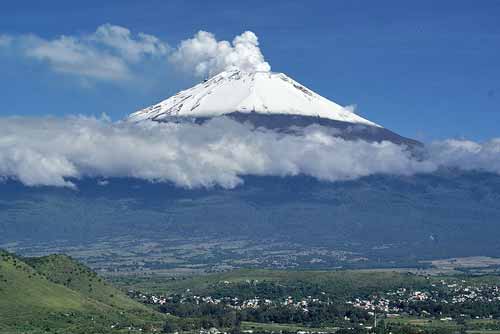
Che climbed Mexico’s Mt. Popocatepetl three times. He planted the flag of Argentina at its summit in 1956. He was 28 years old.
— Che was an accomplished mountain climber. He climbed Mexico’s Mount Popocatepetl (altitude: 17,900 ft.), three times. He planted the Argentinian national flag at its summit in 1956. He was twenty-eight years old.
— Che, it seems, could walk a tight-rope. He wasn’t afraid of heights, anyway, or of taking risks. A photo exists of him crossing high above a river-chasm spanned only by a connected series of drainage-pipes.
— Che traveled extensively. He took three trips on different routes from south to north through the Americas by horse, motorized-bicycle, motorcycle, truck, bus, train, boat, raft, commercial tanker, cargo-ship, and airplane before his 25th birthday. He even hitch-hiked when necessary.
The hopeless poverty of the common people he met shocked him. Eventually, he would vow to do something to try to change the unfair way things were administered by people of wealth who he also met and spent time with during his journeys.
— Che’s first traveling adventure was during the winter of 1951 at age 22, when he took a job as ship’s nurse and traveled 5,000 miles by tanker along the east-coast (the Atlantic side) of South America making stops along the way from a port in Patagonia in the south to the tiny island nation of Curacao in the north near the coast of Venezuela.
— Che, during extended trips in 1952 and again in 1953, explored the Amazon, Inca and Mayan ruins, and Machu Picchu. He toured copper and titanium mines and visited remote, hard to find leper-colonies where he sometimes stayed for weeks to provide sufferers with needed medical attention.
Che loved archaeology and anthropology almost as much as medicine. He visited Machu Picchu in Peru several times as well as other Inca and Mayan sites. He wrote and published articles in magazines about what he learned.
— Che wrote daily in his diaries and journals for many years. He left behind an extensive and introspective record of his internal world as he developed his point of view and his place in history.
— Che published his first magazine article before age 23. Later, he published research in medical journals.
University of Buenos-Aires Medical School where Che graduated April 11, 1953 at age 25. He specialized in allergy-medicine and pediatrics.
— After graduating from medical school at the University of Buenos-Aires in Argentina, Che completed his internship in Mexico at the Mexico City General Hospital where he worked in the Department of Immunology. He also worked as a researcher at the nearby Pediatric Hospital.
— Che’s second love after medicine was archaeology; he was an expert in the Mayan and Incan civilizations. He visited Palenque and scoured sites at Chichen Itza and Uxmal, which he wrote about extensively. He published articles describing the dig-sites he visited.
— Che vacationed in Miami, Florida for three weeks during his twenties.
— Che was a talented writer and poet. He published several best-selling books during his lifetime. He also authored several unpublished works, which some hope will be published after Fidel Castro and his brother Raul retire from politics.
— Che visited Guatemala in 1954 and witnessed first-hand the CIA overthrow of its popularly elected government. CIA seizure of media enabled it to create in Guatemala an Orwellian aura of inevitability, which disturbed Che and depressed him.
Not to stray too far afield, but psy-ops in Guatemala should be of interest to US citizens for the simple reason that they were coordinated by CIA field officer David Atlee Phillips—later accused by discredited writers and some agency insiders of meeting with Alpha 66 founder Antonio Veciana Blanch and double-agent Lee Harvey Oswald to discuss details of possible assassination plots against both Fidel Castro and John Kennedy.
Anyway, CIA contractors, in a final humiliation, forced the popular President Jacob Arbenz to strip naked in front of reporters before they expelled him from the country. Sickened by the incident, Che wrote: The United States is the enemy of humanity.
— Che’s mom and dad were both members of Argentinian ”royal” families.
Che read constantly from an early age. Released CIA documents noted the depth and diversity of his literary interests.
— According to released CIA documents, Che was unusually well-read, especially in politics, history, philosophy, geography, medicine and psychology. A favorite book was the classic Argentine masterpiece ”El Gaucho Martin Fierro” by Jose Hernandez, published in 1872.
— After high school, Che read the entire 25 volume Contemporary History of the Modern World.
— Che spoke French and Spanish. He had an easy familiarity with English, though he refused to be interviewed using it. He also picked up a limited ability in Swahili, the lingua franca of Africa’s Great Lakes region, when he spent time there on assignment for Cuba. And the Soviet Union provided Che with a tutor who helped him become more proficient in Russian.
— Che was a skilled rugby player and coach. He founded and edited the short-lived (eleven issues) rugby magazine, Tackle.
— Che was a tournament-playing chess enthusiast.
— Che spent his high school years in Cordoba, Argentina, where his family belonged to the exclusive Lawn Tennis Club where Che learned to swim and play tennis.
— Che was a good golfer.
— Che passed a certification exam in civil engineering during high school. His first job after graduating was as a ”soils specialist.” He analyzed soils for road building companies.
— Che’s asthma enabled him to avoid Argentina’s military draft.
— In 1956, Fidel Castro — the well-connected Cuban attorney who belonged to a wealthy land-owning family — shared a cell in a Mexican prison with Che that lasted a month. Fidel and Che — close acquaintances before — bonded; they suffered together as political prisoners.
— After Castro’s release, Che and Calixto Garcia (a black freedom-fighter who would rise to the rank of Brigadier General in the Cuban defense forces) remained in prison for another month.
Che’s uncle, the Argentine ambassador to Cuba, wanted to use his influence to free his nephew but Che refused the help until Mexico agreed to release his friend. In a case of truth-is-stranger-than-fiction, Fidel paid for the two men’s release with funds he unwittingly received from the CIA.
— Fidel soon realized that Guevara could be far more than the physician-poet he had hired to care for his men. On 12 July 1957, Fidel asked Ernesto to command the army he was building. His decision to promote Che created the momentum necessary to secure victory for the Cuban Revolution.
This colorized photo shows a showered and cleaned-up Che following his triumphant entry into Havana, Cuba in January, 1959. He was thirty years old.
— Che was directly responsible for the success of the Cuban Revolution in this way: on 29 December 1958, his battle-group (the Eighth Column) ambushed and de-railed a key armored supply train loaded with weapons, munitions and troop reinforcements belonging to General Fulgencio Batista’s national army. Che and his guerilla fighters then took the city of Santa Clara, which was defended by a force more than ten times the size of their own.
This unexpected loss scared the Cuban dictator who fled the country two days later on New Years Eve (taking an entourage of over two-hundred people and the entire Cuban treasury with him).
On 2 January 1959, Che and his soldiers walked into Havana with their captured weapons and took control of government buildings and military bases without firing a shot. They seized a government that was 1.2 billion dollars in debt and running huge yearly deficits due in part to looting by Batista’s cartel.
— Che published the classic book Guerrilla Warfare in 1961. John Kennedy immediately read it. Based on what he learned, he organized a few weeks later the Green Berets from units of the 77th Special Forces Group, which he renamed the 7th Special Forces Group.
— Che married twice. He fathered one child by his first wife, four by his second.
— After the revolution, Che became the object of a CIA manhunt. Che continued to travel freely because of a disguise he designed that fooled even Fidel Castro and his closest advisors.
— Che felt that Cuba’s relationship with the Soviet Union was one-sided. The Soviets didn’t provide the support in personnel and financial aid needed to offset the international embargo coordinated against Cuba by the United States. Che complained, and it created a flap between the two governments.
— After the Revolution, the new government lowered the age requirement for ministerial service from 35 to 30 and granted Cuban citizenship to Che (who was 30 and Argentinian) so he could legally hold a number of administrative posts. One of the most important was Minister of the Cuban banking system — a position he earned by his reputation for integrity.
Fidel once said that Che Guevara was honest to a fault. True to his reputation, the first thing Dr. Guevara did as Central Bank Administrator was halt the scheduled construction of a new Central Bank complex and use the money saved to build a badly-needed hospital.
— Che, after visiting the Soviet Union, expressed outrage to confidants about the lavish lifestyles of the Russian leaders.
— When Cuba went to rationing after the United States impeded its right to buy food, Che insisted that his family receive the same food-coupons as every other family in Cuba. Despite his efforts, Russian officials later admitted that they smuggled food to his wife, Aleida, when he traveled outside the country.
— Che wrote privately to the Cuban minister of sugar, Orlando Borrego, that he believed — based on his observations of Russian society while visiting there — that the Soviet Union would fall back into Capitalism one day.
— Che returned all gifts showered on him and his family by foreign leaders while serving in Cuba’s ministries. Although the Cuban government provided him with a car, he used it for official duties only. He insisted his family use public transportation.
— When Che entered Havana for the first time, he wore a cast on one of his elbows; he broke it ten days earlier after falling off a wall in the city of Cabaiguan, one of the many towns that fell to his forces before the decisive battle of Santa Clara, which ended the military phase of the revolution.
Che drank yerba mate, a tea popular in Argentina.
— Although Che is often portrayed as a cigar-smoker, and sometimes posed with cigars, he suffered from chronic and severe asthma. He rarely smoked, or drank alcohol, because his health would not permit it.
During the most dangerous phase of the fighting when Che wasn’t sure each day whether he would live or die he did smoke according to at least one credible historian. When victory came, he was hospitalized for pulmonary distress and spent several months recuperating.
— Che was allergic to seafood.
— Che’s favorite beverage was yerba mate, a caffeinated drink brewed from the leaves and twigs of a rainforest tree in the holly family. Popular in Argentina, it was thought to have medicinal properties at the time. Che may have used it to treat his asthma.
— Che was a good swimmer. He used vigorous swimming to help strengthen his lungs.
— The Cuban government gave Che an airplane and a personal pilot to use for government business. He often flew the plane himself because he loved to fly.
— Che taught French to the current president of Cuba, Raul Castro, during their time in the Sierra Maestra, before the Revolution was won.
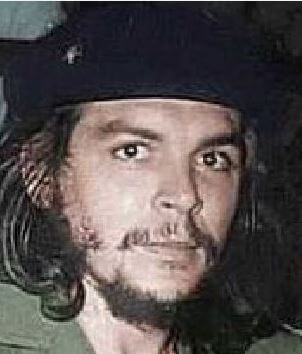
— Alberto Korda took the iconic photo above of Che (by which the world now identifies him) on March 5, 1960. It followed the state memorial service for the one-hundred people who died in the terrorist attack on the French freighter La Coubre in Havana Harbor the previous day. Two-hundred people were severely injured.)
Because Americans were napalming sugar-cane fields and sugar refineries to wreck the Cuban economy (one plane had been shot down and the pilot, an American, captured), Fidel Castro in his address to the mourners blamed the CIA for the attack on the French ship while Che Guevara stood next to him wearing the iconic expression on his face that became his brand.
Neither man knew at the time that in 13 months the United States would escalate the conflict by conducting a full-scale military assault on the island of Cuba at the Bay of Pigs.
The CIA continued to attack Cuban shipping through 1964 before international outrage over the killing of the captain and two crew members of a misidentified Spanish freighter — it was also set on fire and almost sunk — brought sufficient pressure on the agency to change its policies.
Che Guevara — a few hours before they killed him.
— In 1967, an 1800 man Bolivian Ranger Force trained in Guatemala by the USA hunted down Che in Bolivia and captured him. A small unit from this force tortured him by firing a half-dozen rounds into his legs, then executed him.
Those who murdered Che reported that he measured 5’8″ and weighed 155 pounds. These numbers are widely repeated on the Internet. The killers cut off his hands and sent them to Fidel Castro, then hid his body among six of his fighters in an unmarked grave. Some have wondered if truth was one of their core-values.
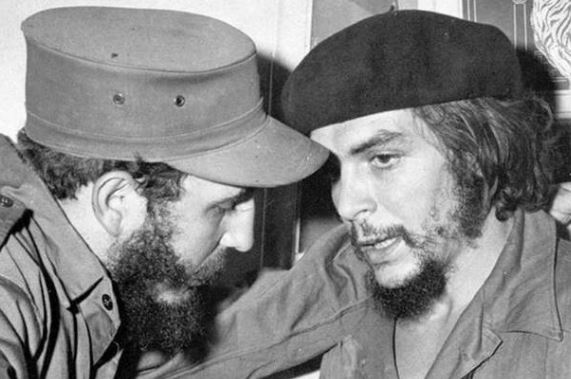
According to the killers, Che would have been seven inches shorter than Fidel, which doesn’t seem to match-up with the many photos of the two men together, including the lead photo in this essay. Based on photos I’ve reviewed, Che appears to be 4 to 5 inches shorter than Fidel, who was 6’3″. After reviewing photographs, my opinion is that Che was 5’10”.
Why Che’s executioners would misrepresent his height is anybody’s guess.
— The woman who fed Che a bowl of soup before his execution, Julia Cortez, said this about his appearance: He was an extraordinarily handsome man. He wasn’t the man depicted to us: black, ugly, evil. His eyebrows, his nose, his mouth — all of his features were perfect.
— Captain Gary Prado of Bolivia asked Che: Why didn’t you give up? Why didn’t you disband your unit and go home when you had the chance? Che answered: Where would I go?
According to Prado, that was Che’s dilemma in Bolivia. He was isolated, shunned by the international community of nations, and trapped. He had no place else to go.
Neill W. MacCaulay, Citadel graduate, Korean War Veteran, and trainer of the Cuban expeditionary force led by Fidel Castro.
— Fidel Castro hired a number of American Korean War veterans — among them Neill W. MacCaulay and Miguel Sanchez — to train his expeditionary force. In 1956, MacCaulay evaluated Che, writing that he was an ”excellent” marksman with ”excellent” discipline, leadership abilities, and physical endurance. The only negative: Che smiled a lot, which MacCaulay felt was an inappropriate facial expression for a guerrilla warrior.
— Neill W. MacCaulay, Jr. entered Havana at Che’s side in his moment of total victory. Years later he would teach Latin-American history at the University of Florida as professor-emeritus. Before he passed in 2007, Professor MacCaulay said in a filmed interview: Che’s troops knew what they were doing. They knew they had a good commander. They had Che, who was top of the line. They trusted him.
As for the victory parade into Havana, Neill said, We were received as liberators; celebrated; I mean people ran out with bottles of rum. People went wild.
— Six years and ten months after the Revolution on 3 October 1965, Che Guevara resigned his post as Minister, his rank of Commander, and his Cuban citizenship. He severed all ties to Castro and the country of Cuba. He followed the lead of every country in the Western Hemisphere except Mexico, which alone among countries resisted pressure from the United States to sever relations. Che turned his back on the protection offered by Castro and the Soviet Union.
No one to my knowledge knows for sure why Che made this break. What we do know is that Castro read Che’s confidential resignation letter on Cuban radio and television, perhaps without Che’s consent, and that two years later almost to the day — October 9, 1967 — Che lay dead in a Bolivian school house.
— Before the Revolution, Che’s fellow ”boot-camp” trainees, in a peer-review conducted by MacCaulay, agreed unanimously that Che possessed the skills and talents required to lead effectively at the highest level. His subsequent performance in the Cuban Revolution confirmed their judgment and propelled Che Guevara into the ranks of legendary warriors like Spartacus and Geronimo, who lost their lives fighting for hopeless causes and changed the world.
Billy Lee
Post Script: Cuba buriedChe Guevara with full military honors on 17 October 1997 after his remains and the remains of six of his fighters were discovered in Bolivia and returned to Santa Clara, the site of the battle he conducted to win the Cuban Revolution. Che’s wife, Aleida, and his children — at the sides Raul and Fidel Castro — grieved in a more private ceremony three month’s earlier in July.
Although the CIA had an agent present and trained and equipped — in Guatemala, of all places — the Bolivian Special Forces unit that killed Guevara, the agency has always insisted it tried to save Che’s life. The President of Bolivia at the time, Rene Barrientos, demanded Che’s execution; it was Bolivia’s war, the CIA argued, and not their call.
They were powerless to save him.
On April 27, 1969, Rene Barrientos died in a helicopter crash. The Editorial Board
Ernesto ”Che” GuevaraSean Connery
— Some say that Sean Connery parodied Che’s personality and adopted one of his ”looks” to create the movie character, James Bond, in the 1960s movie-series.*
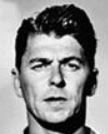
Ronald before.Ronald after.
No one ever suggested that Ronald Reagan used plastic surgery to make himself appear more Che-like. But look at Ronald’s before and after pictures. You decide.
* We investigated the assertion that Sean Connery’s James Bond is a caricature of Che Guevara. It turns out Billy Lee said this, and maybe a couple of his imaginary friends. The Editorial Board
Billy Lee’s Acknowledgement: The most important source of information for this essay was Jon Lee Anderson‘s Che Guevara, a Revolutionary Life, published in 1997. The New York Times called it, the complete and definitive biography of Che Guevara.
I cut the disturbing cover off the book in order to read it (it scared me), and willed myself to peer through the negative colors its author used to paint Che’s portrait on its 780 pages. I believe I found the truth Anderson buried there.
Billy Lee
John F. Kennedy, 35th President of the United States. Here is a link to the quote below.
** October 24, 1963 I believe that there is no country in the world…where economic colonization, humiliation and exploitation were worse than in Cuba, in part owing to my country’s policies…. In the matter of the Batista regime, I am in agreement with the first Cuban revolutionaries. That is perfectly clear.
… In any case, the nations of Latin America are not going to attain justice and progress…through communist subversion. They won’t get there by…a Marxist dictatorship.
U.S. President John F. Kennedy
35th President of the United States Assassinated November 22, 1963
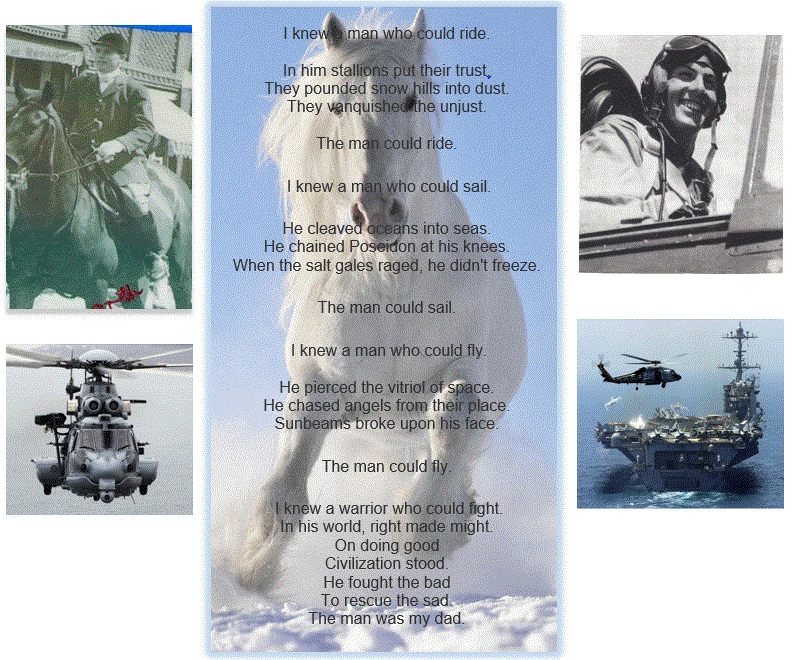
In his world, right made might. On doing good, Civilization stood.
. . . . .
Click pics to enhance text for reading.The Editors
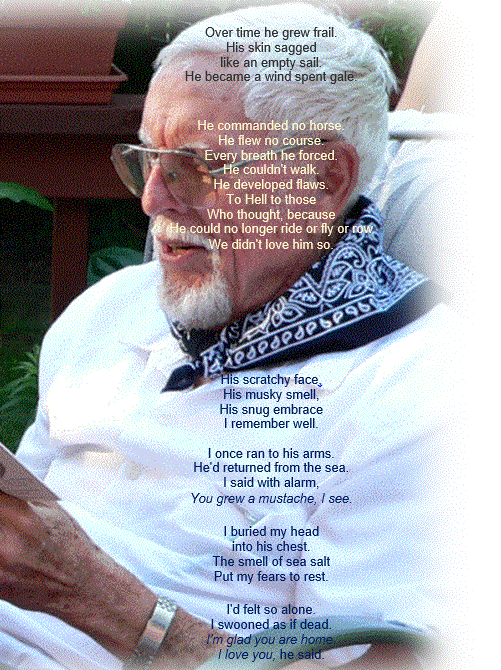
Captain Bryce Lee (USN) on his 85th birthday.Billy Lee read a version of his poem, Warrior, to his father at his party. Bryce never said he liked it. The Billy Lee Editorial Board
Bryce Lee helped stand-up the National Security Agency in the 1950s when the agency helped track atom bomb materials and components loaded aboard foreign ships.
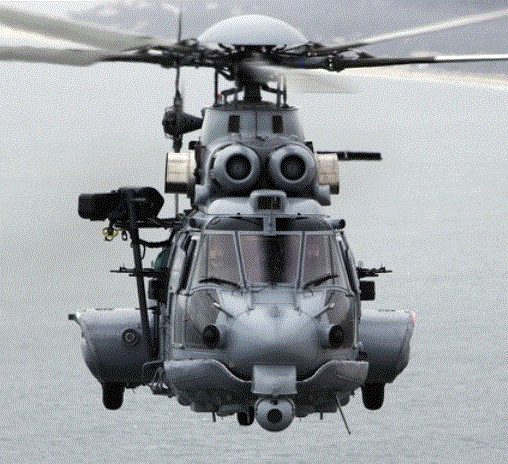
He played a prominent role during the Cuban Missile Crisis when he led an anti-submarine jet-helicopter squadron based near the confrontation.
Because of their sensitive nature, some of the Captain’s accomplishments will never be known outside of government.
Bryce spoke Russian and French. In his mind, integrity was the most important quality a person could have. He did well for a farm boy from Michigan.
Bryce Lee passed peacefully at home with family present a few days before his 91st birthday in 2011.
The Billy Lee Editorial Board
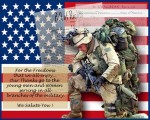
In his world, right made might. On doing good, Civilization stood.