BLAISE PASCAL: THOUGHTS


blaise-pascal-with-quote1


Blaise Pascal was a man who suffered terribly his entire life until he died at age 39 from a metastasized stomach cancer. His mother died when he was 3 years old; his father when he was 28.

For those who aren’t familiar with his life, let me point out that he was French, raised by his sisters, educated by his father, and very involved in the religious controversies of his time (1623-1662).  He was an inventor and mathematician of the highest order. His sufferings — his physical ailments and psychological agonies — are legendary.

I won’t burden people with the details of his life — historians and biographers have written many books to help folks understand this tragic man, if anyone is interested. What I want to do is share, in English, some of the clever things he wrote during his short life and provide a link to his books, if anyone is interested in reading further.

Most of the quotations in this essay were first published some years after his death, gleaned from scraps of paper found among his personal belongings. Had they been published during his lifetime, he might have become even more controversial than he actually was. The added stress of additional criticism from contemporaries might have shortened his life even more.

Blaise Pascal had what modern people would call a negative attitude toward groups like the Jesuits and possibly the Catholic Church, which declared five tenets of his Calvinist-style religious order, the Jansenists, heresy when he was 30 years old and still grieving for his lost father. But mostly, he had a negative attitude toward other people and himself, all of whom he considered to be hopelessly wicked.

Sensitive individuals who suffer like Pascal did, it seems to me, find it more natural than others who live easier lives to think that the world is a hostile place populated by selfish and uncaring people in need of a savior.

Pascal is reported to have said, Sickness is the natural state of Christians. He spoke his dying words in a moment of sublime clarity amid a chaos of physical suffering. He whispered helplessly, May God never abandon me.


cycloid pascal
Pascal solved several previously intractable problems associated with cycloids

Below are some samples of Pascal’s thoughts, which I found interesting and a little sad when first I read them many years ago. His ”pensees” seem to be his way of making sense of a world that held no comfortable place for him to lay his head; a world devoid of a mother’s touch to reassure him; a world lacking the medicines and psychological insights he needed to find the peace, freedom from pain, and the joy for living so many of us in the modern world freely pursue.

Blaise Pascal was oppressed by the heightened discernment of a brilliant mind smothered by relentless suffering. His intelligence (contemporaries called him a prodigy) enabled this sensitive man to articulate his suffering through the lens of Christian philosophy, which he adopted as his own.

Here are some of his thoughts:


Myself at twenty is no longer me.

Christian piety destroys the self. Human civility conceals and suppresses it.

It is a bad sign when someone is seen producing outward results as soon as he is converted. 

Sleep, you say, is the image of death; for my part I say that it is rather the image of life.

We are standing on sand; the earth will be dissolved, and we will fall as we look up at the heavens.

Life is nothing but a perpetual illusion; there is nothing but mutual deception and flattery. No one talks about us in our presence as he would in our absence.

Man is nothing but disguise, falsehood and hypocrisy….  He does not want to be told the truth.

Each rung of fortune’s ladder which brings us up in the world takes us further from the truth, because people are more wary of offending those whose friendship is most useful and enmity most dangerous. A prince can be the laughing-stock of Europe and the only one to know nothing about it.

Is it not true that we hate the truth and those who tell it to us, and we want them to be deceived to our advantage, and want to be esteemed by them as other than we actually are?

It is no doubt an evil to be full of faults, but it is a still greater evil to be full of them and unwilling to recognize them, since this entails the further evil of deliberate self-delusion.

The most unreasonable things in the world become the most reasonable because men are so unbalanced. What could be less reasonable than to choose a ruler of a state the eldest son of a queen?

When we have heard only one side, we are always biased in its favor.

To the church: There is no need to be a theologian to see that their only heresy lies in the fact that they oppose you.

It is false zeal to preserve truth at the expense of charity.

Humiliations dispose us to be humble.

It is better not to fast and feel humiliated by it than to fast and be self-satisfied.

God can bring good out of evil, but without God we bring evil out of good.

God will create an inwardly pure Church, to confound…the inward impiety of the proud Pharisees.  …. For, although they are not accepted by God, whom they cannot deceive, they are accepted by men, whom they do deceive.

We all act like God in passing judgments.

Do small things as if they were great, because of the majesty of Christ, who does them in us and lives our life; and great things as if they were small and easy, because of his almighty power.

They do both good works and bad to please the world and show that they are not wholly Christ’s, for they are ashamed to be.

Jesus was abandoned to face the wrath of God alone. Jesus is alone on earth, not merely with no one to feel and share his agony, but with no one even to know of it.

Silence is the worst form of persecution.

No one is allowed to write well anymore.

You brand my slightest deceptions as atrocious, while excusing them in yourselves as the [(way of your church)].

Would God have created the world in order to damn it? Would he ask so much of such feeble people?

Persecution is the clearest sign of piety.

Which is harder, to be born or to rise again? That what has never been should be, or that what has been should be once more?

All faith rests on miracles.

How happy I should be if…someone took pity on my foolishness, and was kind enough to save me from it in spite of myself.

We must make no mistake about ourselves: we are as much automaton as mind.

You would soon have faith if you gave up a life of pleasure.

We never do evil so fully and cheerfully as when we do it out of conscience.

The proper function of power is to protect.

If everyone knew what others said about him, there would not be four friends in the world.

Fear not, provided you are afraid, but if you are not afraid, be fearful.

God hides himself. He has left men to their blindness, from which they can escape only through Jesus Christ.

I marvel at the boldness with which these people presume to speak of God.

It is an appalling thing to feel all one possesses drain away.

Who has more cause to fear hell, someone who does not know whether there is a hell, but is certain to be damned if there is, or someone who is completely convinced that there is a hell, and hopes to be saved if there is?

Truth is so obscure nowadays and untruth so well established that unless we love the truth we shall never recognize it.

“Yet I have left me seven thousand.”  I love these worshippers who are unknown to the world, and even to the prophets.

We never love anyone, only their qualities.

Must one kill to destroy evildoers? That is making two evildoers in place of one.  Overcome evil with good.

We are nothing but lies, duplicity, contradiction, and we hide and disguise ourselves from ourselves.

As I write down my thought it sometimes escapes me, but that reminds me of my weakness, which I am always forgetting….

Man’s sensitivity to little things and insensitivity to the greatest things are marks of a strange disorder.

It is a fearful blindness to lead an evil life while believing in God.


pascal death mask
Pascal’s death mask.

That’s enough for now.

Blaise, I pray you have found the happiness in Heaven that eluded you on Earth.

Blaise Pascal.  Amazon.com

Billy Lee

DIGITIZING HISTORY

UPDATE:  July 12, 2014  East Village Other joins Digital Project.  Read latest news here.

From 1950 to 1980, before the personal computer revolution and the birth of the Internet, a vigorous and pervasive paper media flourished in America. The underground press — as it was called then — included not only thousands of newspapers, but literary gazettes and alternative periodicals.

Hippie Rescues Drowning Child. Michigan legend, Denny Preston, illustrated this famous cover from the Underground Press.

Historian Ken Wachsberger is now working with libraries and publishers to find, rehabilitate, and digitize hundreds of underground publications that otherwise will be lost to history as they decay to dust in closets and basements across America.

Not on my watch, Kenny has pledged.

Historian Ken Wachsberger, Digitizing our History Project
Historian Ken Wachsberger is the Director of the Digitizing our History Project

Digitizing Underground, Alternative and Literary Publications from a Legendary Era

The task is enormous.  [ click on link above to see how big ] The number of publications is in the thousands.

The underground press got its energy from  millions of people who opposed war during a period when the United States raged racist wars in countries like Korea, Vietnam, and Cambodia. Countless men and women of conscience opposed segregation in America; they dedicated big chunks of their lives to helping our country come to grips with its sordid racial past.

The underground press injected energy into a cultural revolution that brought hope to women, gays, racial minorities, the poor, the disadvantaged, and the physically and mentally challenged.

During the thirty years between 1950 and 1980 the underground press brought a fresh point of view, which changed not only America but the world. The earth became a better place to live for hundreds of millions of people who had been burdened and locked-out by discrimination and prejudice —  the ravages of war and scarcity — brought by the greed and power of men, mostly, who didn’t give a care about who they hurt.

Insider Histories, Amazon.com

Today it seems like if it’s not on the internet, people think it never happened. If a PDF, Word file, blog, or web-site doesn’t write about it — or a YouTube video doesn’t feature it, people give up looking for records from past that exist only in the memories of folks too old to understand the internet enough to preserve their experience for the folks who will come after.

The risk to everyone — to the people who lived and suffered these changes — is that everything the smartest generation learned and accomplished will be forgotten.

Civilization will slide back into old the habits and ways that have wrecked society after society over the entire history of humankind. The politics of exclusion will push back the politics of inclusion. Peace will give way to war. Open and free-living will give way to gated communities and a fortress mentality.

The lessons learned from the struggle to save America will be lost, and our country will have to relearn them, at great loss to our national momentum toward a better life for all. Should totalitarianism take root, freedom will disappear, forever.

It’s a risk every thinking person is wise to take seriously.

The project to digitize the legendary past is big and important.  I am grateful to Ken Wachsberger and his team for the effort they are making to save our history when so many seem ready to put it behind at great peril to future generations.

Billy Lee

CIVILIZATION AND INEQUALITY


divestiture 3


If the United States divested the wealth of the 100,000 wealthiest Americans but allowed divested persons to keep one million dollars to sustain themselves, what could it do with the money?

The question deserves an answer.

The answer may surprise people. Some say the United States could completely pay off the national debt of 17.4 trillion dollars and run the government at current spending levels (5.6 trillion dollars per year) for the next five years.  Taxes on everyone, including the wealthy could be completely eliminated for half a decade — until 2020.


divestiture 1
Tools of a typical tax accountant: calculator; complicated forms; toy blocks.

As a practical matter, the United States can’t divest 100,000 of its wealthiest citizens — not without crashing the economy. And, sadly, information about wealth and its distribution is frustratingly opaque. Economists can’t trust what they think they know.

Nevertheless, the United States can put in place tax policies that lift the burdens of filing and paying taxes from the backs of the vast majority of citizens. It can easily pay for things like education, health care, research, and retirement while stimulating economic investment and growth. And it can protect our freedoms and egalitarian way of life from individuals who have sequestered an unreasonable share of our resources. (Read Capitalism and Income Inequality elsewhere on this site.)


invisible hand
This is the visible hand.

The wealthy, and those who support them, tell us that the closer a civilization resembles the natural order of things — that is, a state with the least amount of government possible — the better off that civilization will be. The invisible hand of free markets will enhance the destinies of all. Free markets, fewer taxes, fewer regulations — policies like these take the brakes off the economy and improve everyone’s lives.

Since we all plan to be wealthy someday, what could possibly be wrong with reasoning like that?


bullying 2
Bullies rule on unregulated playgrounds.

Well, for one thing, it ignores why folks create civilizations in the first place. In the eons before civilization, humans made little progress. Think of an unregulated school yard or imagine a jungle with no rules. What always happens? Bullies and predators end up running everything. The meek and the fragile have to hide or be eaten. Whatever ideas or contributions they might make to enhance the quality of life get lost.

It’s been like this in jungles and on playgrounds for as long as jungles and playgrounds have existed. It’s never going to change. It’s why folks need playground teachers and yes, civilization. With civilization we can organize ourselves. We can make rules to protect the weak and improve the lives of both predators and prey.


Civilization 1
For Genghis Khan, civilization was all about him.

We know from history, it’s the powerful who create civilizations to protect their advantages. For thousands of years bullies in expensive garb have run the show on every continent on Earth.


constitution
Our nation’s founders said that all people were created equal before God.

Two-hundred-and-forty years ago something new came along. Our ancestors won a revolution. They organized a civilization that would eventually empower the powerless and give voice to the weak.

Yes, they codified slavery, because what else could they do? Africans had been slaves in America for a hundred years already. For a hundred-and-fifty years two-thirds of whites had come to America as indentured servants, a temporary form of slavery that ended, typically, after seven years of servitude.

The habits of history weighed heavily on our founders, and being unsure of their steps, they gave-in to the pressures of greed to better form the consensus that would permit the birth of something new in the world. And guess what? Our new-born civilization grew up, matured and ninety years later ended slavery in the United States of America.

Earth needed a new way — a way based on the dignity of people, their rights before God, their need to be free from humiliation by others more powerful and crafty than themselves. They needed a new kind of civilization, and our founders found a way to build it, blemished and imperfect as it was.

It took time; it didn’t happen overnight. I was twenty years old before black folks got the right to shop freely; to buy a soda in a drugstore; to buy a house; to get a loan. Maybe two-hundred years seems like a long time for a constitutional republic to get serious about freedom for individuals and families. It is a long time. We might as well admit it.


American flag
The flag should stand for what is right, just, and fair. It is the symbol of our civilization.

Today, as the civilization we built slides into the shadows of an unregulated jungle, people need to stand up and shout, No! This can’t be right.  In a civilization built by hundreds of millions, we can’t let a few thousand of the most clever humans sequester twenty-five percent of the wealth. It’s an unreasonable reward for cleverness, and it’s unfair.

Why did our ancestors build the civilization we call America? Why did they take hundreds of years to shape and change our way of governance?

It’s because they intended to make America succeed for everybody. I’d like to believe that they didn’t want it looted and plundered by the powerful. They didn’t intend for average people to be “gated” out of the desirable places to live, or for the disadvantaged poor to be locked away to rot deep inside our inner cities.

We still have work to do. The work falls on each generation to make the world a fairer, safer, more loving place for every person who lives and breathes.
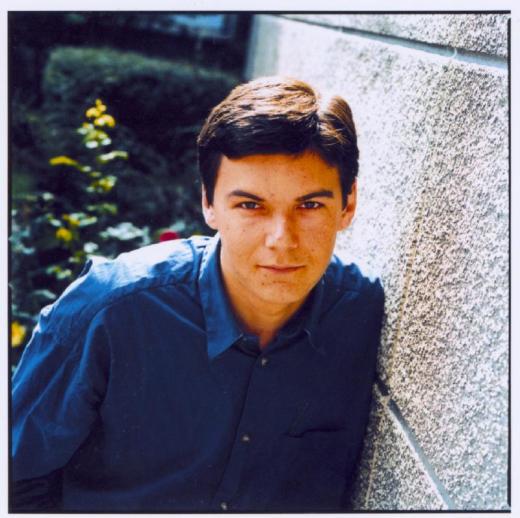

Thomas Piketty
Thomas Piketty was an instructor of economics at MIT during the 1990s; he is the founder, Paris School of Economics; Director, Department of Social Sciences, Ecole Normale Supérieure; and Director of Studies, École des Hautes Études en Sciences Sociales.

Fortunately, America has allies around the world ready and able to help do what’s right, if we only listen. One is Thomas Piketty, the French economist.

In March, 2014 he published in America his critically acclaimed Capital in the Twenty-First Century. It is a sweeping account of the rising inequality in our world, according to New Yorker Magazine’s John Cassidy.

I’m excited about this book. Many reviewers say it’s important. It is the culmination of years of research by a brilliant scholar. It presents, I’m told, a paradigm shift in thinking about the problems economies have delivering fairness to average people.

If Piketty’s book strengthens the courage of economists in the United States to speak openly about the touchy subject of inequality, he will have done our country and its people an enormous favor.


image
Gold jewelry and coins held in an overseas bank.

The United States, though proud of its wealth, seems to go to great lengths to under-report it. It’s primary focus is to collect taxes, I guess.

Assets not subject to taxation hold little interest for government accountants. The Feds limit their count to households and tell us that our total wealth is 54 trillion dollars. Other economists say it is higher — maybe as much as 188 trillion; they include in their tally many assets not normally taxed.

The subject of how wealthy America really is — who holds the wealth and in what amounts — is murky at best. According to John Cassidy, Thomas Piketty’s call for households to declare their net worth and be taxed on it will provide the reliable statistics needed to un-muddy the waters and enable policy makers to fashion the sound and fair tax policies required to protect the benefits of civilization for everyone.

Billy Lee

Post Script: Billy Lee advocates for a standard of maximum personal-incomes and estate-sizes established by the United Nations as ratios pegged to each country’s minimum wage. Violations would be treated as felonies by international courts.

Billy Lee’s proposal and some of its economic and moral advantages are described in the article, Capitalism and Income Inequality.
The Editorial Board