From 1950 to 1980, before the personal computer revolution and the birth of the Internet, a vigorous and pervasive paper media flourished in America. The underground press — as it was called then — included not only thousands of newspapers, but literary gazettes and alternative periodicals.
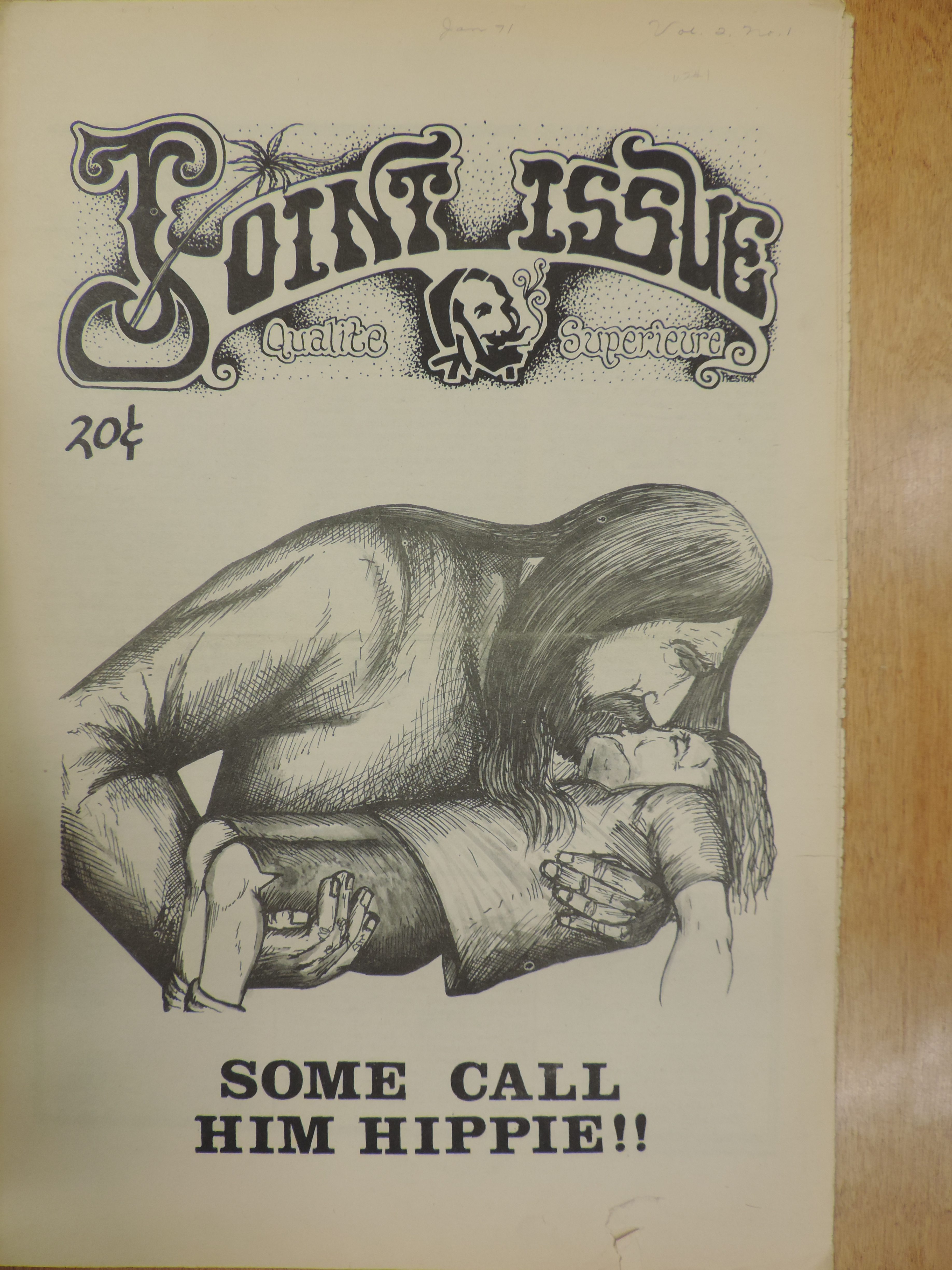
Hippie Rescues Drowning Child. Michigan legend, Denny Preston, illustrated this famous cover from the Underground Press.
Historian Ken Wachsberger is now working with libraries and publishers to find, rehabilitate, and digitize hundreds of underground publications that otherwise will be lost to history as they decay to dust in closets and basements across America.
Not on my watch, Kenny has pledged.
Historian Ken Wachsberger is the Director of the Digitizing our History Project
The task is enormous. [ click on link above to see how big ] The number of publications is in the thousands.
The underground press got its energy from millions of people who opposed war during a period when the United States raged racist wars in countries like Korea, Vietnam, and Cambodia. Countless men and women of conscience opposed segregation in America; they dedicated big chunks of their lives to helping our country come to grips with its sordid racial past.
The underground press injected energy into a cultural revolution that brought hope to women, gays, racial minorities, the poor, the disadvantaged, and the physically and mentally challenged.
During the thirty years between 1950 and 1980 the underground press brought a fresh point of view, which changed not only America but the world. The earth became a better place to live for hundreds of millions of people who had been burdened and locked-out by discrimination and prejudice — the ravages of war and scarcity — brought by the greed and power of men, mostly, who didn’t give a care about who they hurt.
Today it seems like if it’s not on the internet, people think it never happened. If a PDF, Word file, blog, or web-site doesn’t write about it — or a YouTube video doesn’t feature it, people give up looking for records from past that exist only in the memories of folks too old to understand the internet enough to preserve their experience for the folks who will come after.
The risk to everyone — to the people who lived and suffered these changes — is that everything the smartest generation learned and accomplished will be forgotten.
Civilization will slide back into old the habits and ways that have wrecked society after society over the entire history of humankind. The politics of exclusion will push back the politics of inclusion. Peace will give way to war. Open and free-living will give way to gated communities and a fortress mentality.
The lessons learned from the struggle to save America will be lost, and our country will have to relearn them, at great loss to our national momentum toward a better life for all. Should totalitarianism take root, freedom will disappear, forever.
It’s a risk every thinking person is wise to take seriously.
The project to digitize the legendary past is big and important. I am grateful to Ken Wachsberger and his team for the effort they are making to save our history when so many seem ready to put it behind at great peril to future generations.
The question is simple: If circumstances conspired to take away cars and licenses so no one could drive again, would anyone feel free?
Can folks feel free, or happy, in a land without cars?
Maybe I would. I couldn’t bum rides or hitchhike, true. But if no one could drive; if everyone’s cars were taken, public transportation might improve, right? You know — planes, trains, and buses — how would anyone feel?
Speaking for myself, I think I might get sad and depressed. Thinking about not being able to come and go when I want, of having to depend on public transportation to venture anywhere more than a few miles from home makes me sick to my stomach. Freedom to travel on my own terms is a big part of what it takes for me to feel free and, yes, happy.
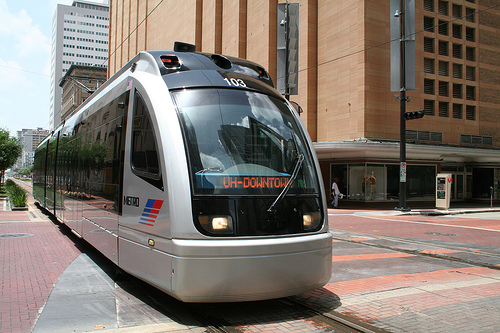
If the only way to travel to another town was by train, how would people feel?
So why torment myself with thoughts about something that’s never going to happen? What’s the point?
In truth, many people don’t drive, especially in large metro areas like New York City, for example. Not driving is a choice. In theory at least, New Yorkers can buy cars and move to the suburbs. Knowing they can drive if they choose makes not driving not so bad, at least for most.
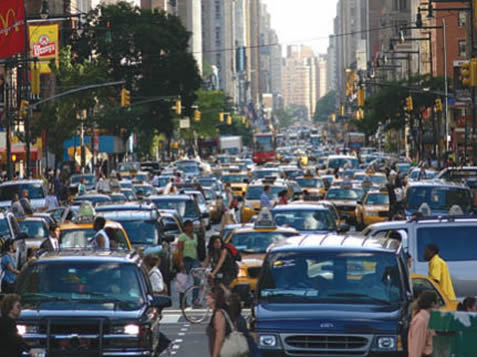
In New York City, most people don’t drive.
Here’s my point. Someone is always telling us we are free, because we can vote for our leaders and start businesses; even keep the profits. No one can be arrested without cause. If arrested, all have the guarantee of due process and the presumption of innocence under the Constitution. Everyone can own guns and fire them in their backyards.
Is it possible that whoever they are might be right?
What good is declaring independence, if no one can drive?
Think about it.
80% of citizens don’t vote regularly. 98% don’t own businesses unless franchises and pyramid-schemes like Amway count; then it’s 10%.
Few citizens are ever arrested, much less charged with a crime. And most folks — those who aren’t psychopaths — take no pleasure disturbing neighbors by firing rifle rounds in their backyards. In general most don’t participate in the privileges that define freedom. People don’t feel their freedoms most of the time.
But here’s something else to think about: 95% drive cars.
Isn’t it cars that give the feeling of being free? Take away cars and no one has the same carefree feeling– no matter what the Constitution guarantees or profs teach in school or university.
People can go into the back yard and fire a hundred rounds from an assault rifle. All that will happen is their ears start to ring and their neighbors hate them.
It’s cars that give us the feeling we’re free.
The thrill of freedom comes from stepping on the accelerator of a favorite car and feeling Earth slide away below us. Freedom is the feeling that anyone can come-and-go on their own terms whenever they want.
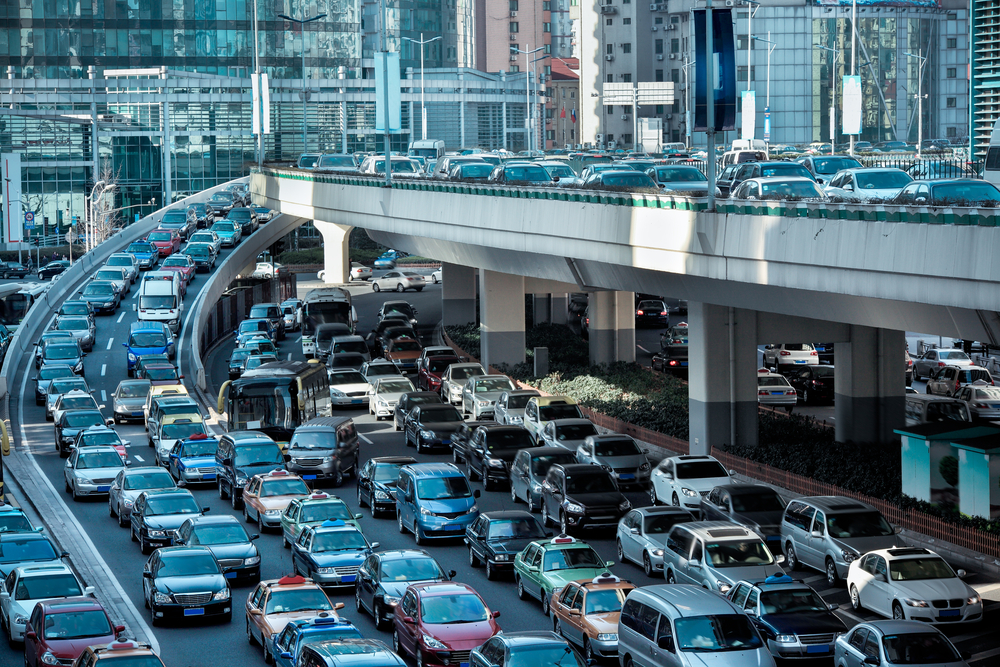
Traffic slowdowns and stand-stills are an assault on freedom.
Many Americans seem not to grasp that the right to drive is being methodically and relentlessly stripped away. In cities and towns across America, congestion on streets is presenting a clear and present danger to our way of life; it’s diminishing the freedom to travel under our own power; under our own direction, which is what everyone wants to enjoy.
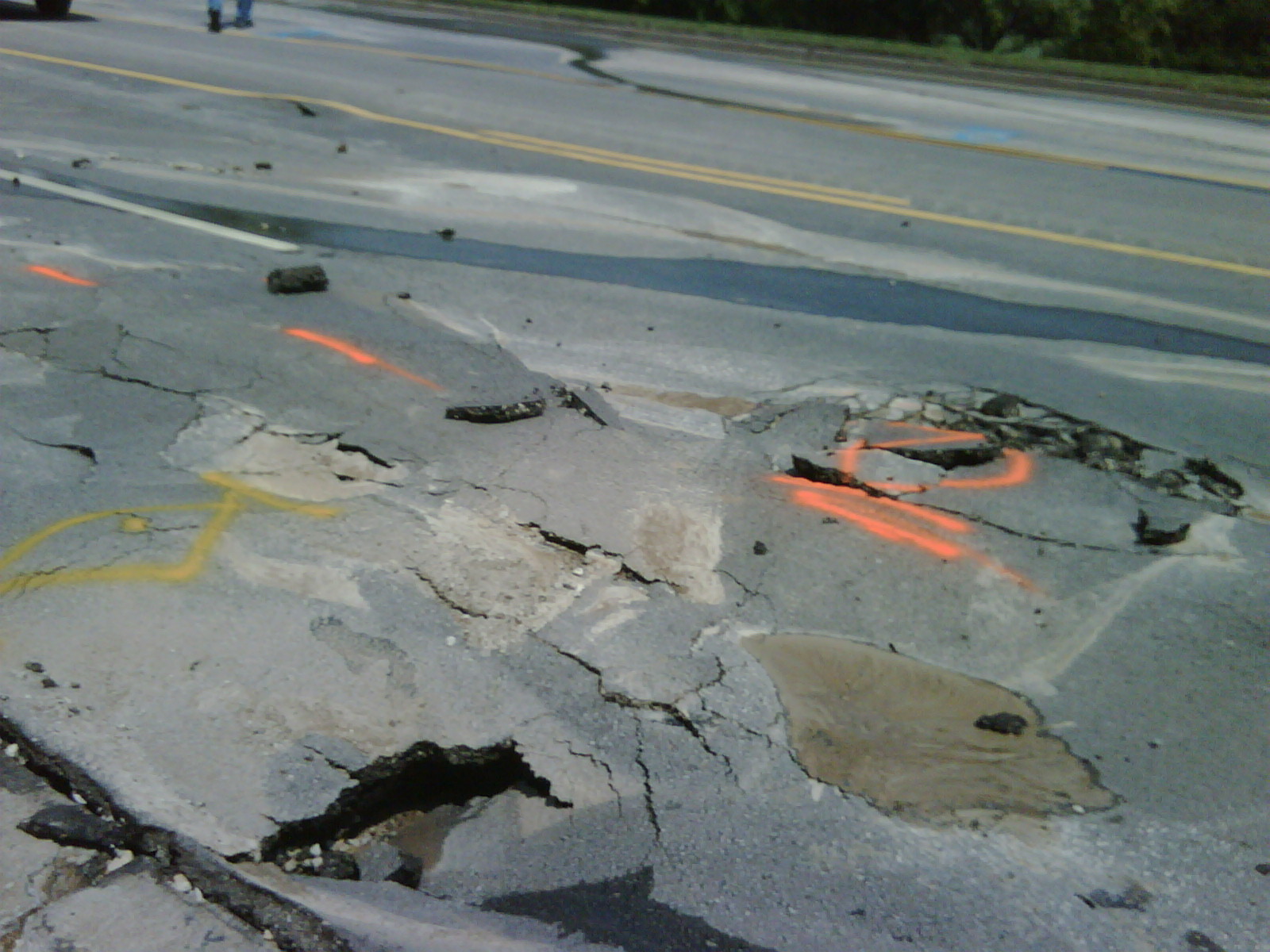
Lousy roads, poorly planned road construction, neglected road repair, deteriorated bridges and tunnels — all assault freedom and degrade our quality of life.
Bad streets are an affront to freedom. Right?
It seems obvious that four-hour waits in line to vote wrecks freedom, because waits discourage voting, the foundational process of any democracy. But four-hour commutes, traffic slowdowns and standstills are just as disruptive. They break the efficiency of our lives and muffle the nation’s economy.
The folks who run America seem to care little about voting or roads. Americans might want to step up to put pressure on politicians to make driving free and unencumbered — make freedom on the road the number-one national priority.
Driving free must be first-in-line; it is our most heartfelt and defining freedom.
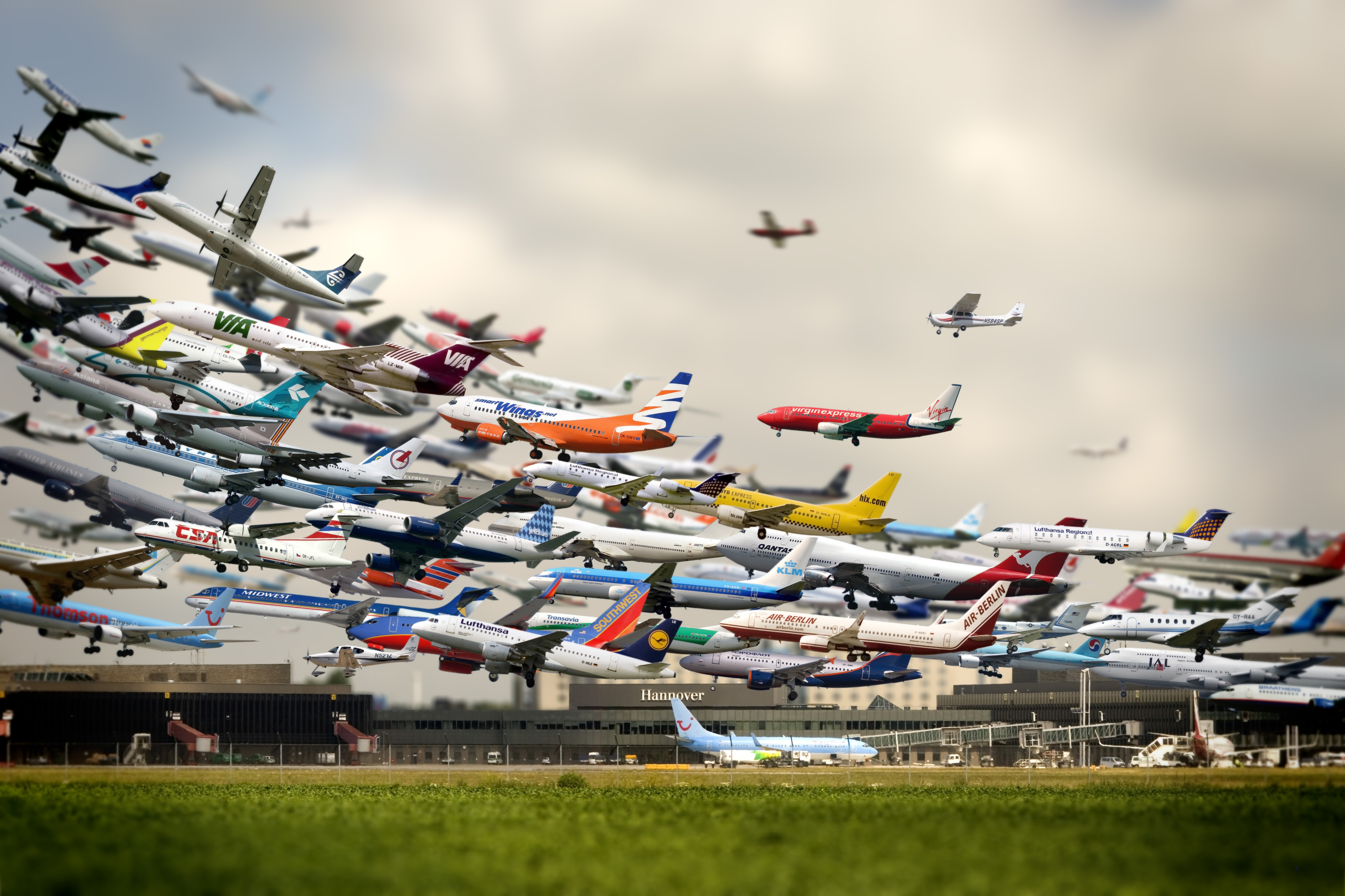
In computer-controlled aircraft, passengers are only along for the ride.
I learned that a few companies have already designed aircraft to take the place of cars. In the years prior to 911, I toured a number of these firms to learn firsthand how they implemented computer software to organize their engineering drawings, bills-of-materials, and tech-specs for vendors.
The plan, then, was to unleash at the right time a new era of transportation options for the general public that included light aircraft.
These companies were designing planes to fly on autopilot along pre-established routes in the sky. They took advantage of the three dimensions of space the same way city planners use tall buildings to create more working space.
The idea was to eliminate congestion and speed traffic by stacking routes and putting computers in charge of flying instead of pilots.
The view is great — when the sky is clear, and no one has to get out to stretch their legs.
It all seemed like a good idea at the time. But the events of 911 changed planners’ views of what it might mean to put hundreds-of-thousands — maybe millions — of flying vehicles in the airspace above America — even if the craft were flying on autopilot under the guidance of computers.
Had 911 not happened, the plans were that by now on any given day at any given time people who looked up to the sky would see and hear hundreds, maybe thousands, of high-flying aircraft buzzing to and fro 24/7.
Computer-controlled aircraft flying on 3D highways are a transportation-option, which is available for implementation when the time is right.
This high-flying, high-tech solution to highway congestion though shelved for now sits yellowing in the dark closet of national transportation options. It can be implemented when the time is right in the same way as the internet and personal-computer. But when it’s implemented, it will pose big problems.
3D highways in the sky populated by hundreds-of-thousands of computer-guided light-aircraft will have the same effect on travelers as if they were set on automated conveyor belts and whisked hither and yon.
The thrill that comes from commanding a piece of machinery and directing it to go where we decide will be gone. The feeling of empowerment and freedom experienced in cars will evaporate.
Because — you know what’s coming, right? If computers can direct the flights of millions of aircraft in three-dimensional space, they can do the same to cars on two-dimensional roads. And soon, very soon, they will.
Yes, it’s pretty. But if no one is flying it, does anyone care?
Because of over-population and the inevitable congestion it brings, the time may come when people will no longer be permitted to experience the freedom of a fast car on an empty road.
Our ancestors rode horses, after all. Most people have long-since adapted to the disappearance of the horse. Perhaps people will adapt. Circumstances will force grandchildren of today’s parents to go to private tracks to experience the lost joy of driving a car.
Riding in a computer-controlled helicopter, airplane, or other flying craft might become the norm for future travelers. People will be passengers — not drivers or pilots or navigators — for the duration of their trips. People will become dependent on another technology they don’t understand and can’t control.
We are likely to become a nation of flying and driving sheep who graze in a huge three-dimensional sheep-pen.
Will freedom ring? Will people feel the thrill that comes from directing the path of complex machines that run like wild horses? Will they feel the power that comes from being free?
Will children of the future experience the exhilarating freedom enjoyed by their parents during their season of control when no one felt threatened by a vice-grip embrace of an artificial-intelligence that is hovering ominously on the horizon?
No one knows why humans like music. Dopamine floods our brains when we hear patterns of sound, that’s all. Scientists are conducting research.
April 1, 2014: Scientists in Jefferson City, Missouri discovered lab mice could play saxophones sold on Amazon.
One surprise for me at least was to learn some animals enjoy music. It should resonate with their heartbeats and play at natural, species-specific pitches and timbres.
It takes effort to create music animals like. They won’t pay for it. Even pets—most anyway—don’t self-identify as music lovers.
The Prairie Dog Three, currently on tour in Utah & New Mexico.
As far as I know, only one species takes time to create tools to play music: homo sapiens. Yes, animals like gibbons, birds, whales, insects—even dogs next door—make noises that sound suspiciously like music to most humans. Research is ongoing.
Some philosophers say music is not something that can exist in the universe apart from conscious life. Music seems to require minds to produce and at least one semi-conscious mind to like.
Sensations of pleasure initiated by vibrations of air entering ears is the result of auditory hallucinations created by brains. Air molecules bounce off structures, which stimulate brains to manufacture mysterious qualia called sound, which in turn unleashes avalanches of chemical (emotional) reactions within the body.
Many parts of the brain are involved in music appreciation. Researchers report visual, tactile, olfactory, and gustatory areas of the brain are woke by music. Research continues—sometimes with focus on definitions of peculiar words like olfactory and gustatory.
3D image of musical sound. Sound doesn’t look like what sound sounds like. …mmm…ahhh…
There seems to be no similarity between simple vibrations entering ears and complex, textured mental experience conjured by music. It might be sad for some readers to learn when Universe ends, it takes music with it.
Thomas Edison placed phonograph he patented on his head. He thus invented world’s first hearing-aid.
Most people did not hear much music before the invention of the phonograph in 1877. What music they heard was played mostly by itinerant flute musicians and occasional wood-nymphs on tambourine.
It took decades for the phonograph to become enough widespread to impact the listening habits of average people. As music technology evolved to become pervasive, its mystery inspired some scientists to try to figure out just what the hell was going on.
Simon Cowell stops cotton-candy from dribbling out his ears. Simon’s television career revealed he is unable to evaluate musical talent.
Current research suggests that as many as 4% of humans do not enjoy music. Whatever process is not going on in their heads, it seems inherited. Some simply lack genetic coding required to process musical pleasures. If all life mimicked these unfortunates, music would cease to exist.
Some make claim folks would not miss it. Music is not necessary for survival, they insist. Humans have lived on Earth for maybe millions of years without any but the most primitive forms.
Young Grandma. Note bulky headphones popular 50 years ago.
That might be. But irrepressible popularity during past 50 years in all parts of the world is proof. People like music. It’s going nowhere.
Here’s some music to help persuade skeptics:
Billy Lee
Update: 5 July 2016: When Billy Lee wrote this essay two years ago, he was naive; he didn’t know about the dark side of music. Recently he learned that music has been used by intelligence agencies since the 1980s to torture people.
Imagine being forced to listen to old sound tracks from the Lawrence Welk Show over and over. It’s a sordid, terrifying prospect. Billy Lee didn’t want to soil his essay by discussing it.
Alex Ross’s article in the 4 July 2016 issue of the New Yorker Magazine ripped open the underbelly of this stinking carcass of evil. Ross titled his essay, The Sounds of Hate.
Since then, links to the essay have been retitled to When Music is Violence. No one at The Pontificator knows why print version and Internet version titled differently.
If might makes right, America is the most righteous nation to ever exist.
Most Americans — if asked before 911 — would say that nothing is wrong with America. America is where everyone wants to be. People risk everything to come here. End of story. And by the way, if you don’t like it, leave.
The attitude of most Americans before September 11, 2001 was to willfully and blissfully ignore the many blunders for which the United States is renowned in the rest of the watching world.
These screw-ups include but are not limited to:
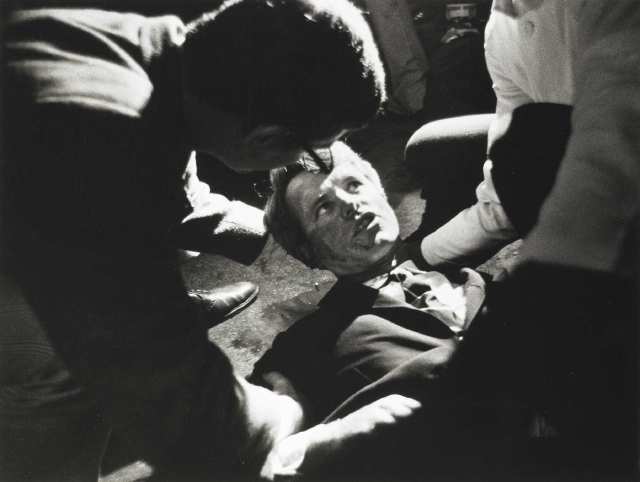
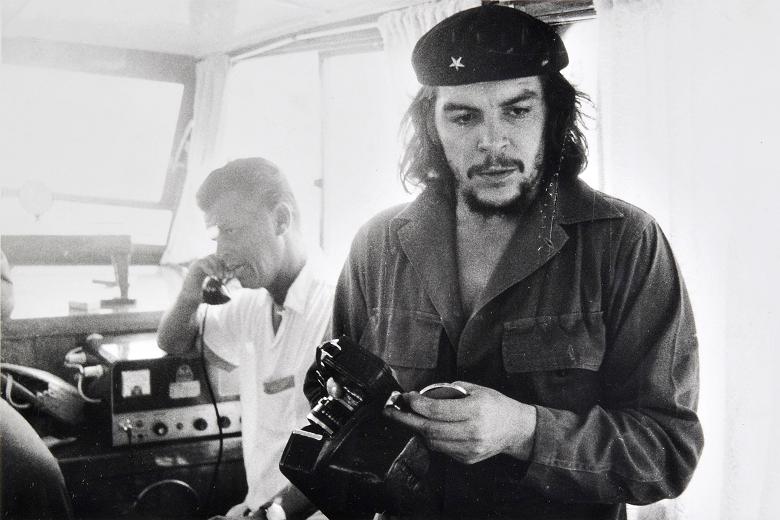
Codifying slavery in our Constitution (Article IV, Sec. 2)Southern States fighting the Civil War to preserve slavery.Conducting genocidal wars against native Americans.Depriving Negroes of their freedom after fighting a bloody civil war to give them their freedom.Permitting our country to slide into a Great Depression while doing almost nothing to fix it. (Free coffee and donuts?)Dropping atomic bombs on Japanese cities.Killing 20% of the population during a senseless war in Korea.Allowing gangsters to run our cities.Unleashing a bloodbath of assassinations against politicians and entertainers in the nineteen-sixties and seventies.Executing foreign leaders (among them, Che Guevara, pictured above) while launching Bay-of-Pigs style military operations against small countries like Cuba, Nicaragua, Guatemala, and Chile.Conducting a genocidal war in Vietnam — simply to test a new generation of weapons. Jane Fonda, pictured above, was among the first who said it wasn’t right.Exploiting migrant agricultural workers.Overturning sixty years of tax law in the 1980s to allow undemocratic concentrations of wealth.
In 2001 Americans believed these idiocies lay in our past; our distant past. They were symptomatic of nothing; not worth noticing, analyzing or fixing. They had nothing to do with now. Nothing was going on now that we needed to fret about or repair. Like Alfred E. Neuman of Mad Magazine, Americans could say, What, me worry?
World Trade Center Twin Towers.
In 2001 the Twin Towers came down. Buried in the rubble lay two-hundred billion dollars of 99.997% pure gold ingot (allegedly recovered).
The oil-rich Bush family‘s first reaction was to take the world to war. The ramp-up was egged on by profiteers, as war always is. And Wall Street insiders, under the cover of the War on Terror, began to deploy contrived financial instruments like bundled sub-primemortgage derivatives (which obfuscated risk) to better suck dry the deep pools of the world’s wealth unaware.
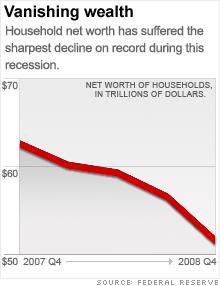
Blunders came fast and furious. By 2008 the leaders of the United States had made so many mistakes they created a financial meltdown. Millions of people lost their homes and jobs. The middle class lost fifty-five percent of its accumulated wealth — much of it in retirement accounts. The situation became dire, causing some people to believe God was punishing the USA for its sins.
Before he made his Nobel Prize winning run for the presidency, Barack Obama’s pastor was Jeremiah Wright. During the early years of Obama’s term, hundreds of retired Chicago police officers set up a perimeter defense around Jeremiah’s church each week to protect congregants from death threats. Obama eventually resigned his membership to protect from harm his friends-in-Christ. It worked. Over the years the threats decreased; the church survived.
People decided to turn around and do the unthinkable: elect the nation’s first black president. His pastor, Jeremiah Wright, screamed, the chickens have come home to roost, on all the news shows. Some people thought, maybe Barack Obama can calm down our angry God.
But as of 2014 — six years after the near-fatal financial meltdown — the USA continues to hover on the precipice of a Soviet Union style collapse.
It’s time to ask the question: Is something wrong with America? And maybe one more: Is somethingwrong with Americans?
Before we ask or answer questions like these, perhaps we should ask an even larger question. Is America a place where people have any chance at all to do well over time?
It might be that geography and geology on this side of the globe are not suitable for civilization or sustained human activity. Whoever lives on this side — whatever their values or culture — may, in the long run, not matter.
Historically, large populations of humans have been unable to establish themselves for long periods on our hemisphere.Hurricane Irene, 1999
The Americas have been inhospitable to humankind. Looking back over the eons, a case can be made — due to earthquakes, volcanoes, meteor hits, frequent ice ages, predatory animals, mosquito and insect bred diseases, droughts, floods, wild fires and hurricanes — that large populations of humans have simply not been able to establish themselves on our hemisphere for long periods; nor will they, ever.
This disturbing graphic is one artist’s depiction of volcanic eruptions 100 miles southeast of Yosemite National Park — now a hundred years overdue.
The United States endures, on average, a thousand tornadoes each year. This number is greater than all the tornadoes that occur in the rest of the world added together.
It wasn’t until 1920 that the population in North America reached a hundred million people. It is conceivable — under reasonably imagined scenarios — that the population of North America will soon collapse.
Some geologists believe the mammoth super volcano buried beneath Yellowstone National Park will erupt someday — perhaps soon. If they are right, surviving humans will have to start over.
Coastal shelf off Los Angeles, California
Other geologists believe seismic activity in the west may one day cause the loss of sizable portions of our continental shelf, perhaps precipitating a cataclysmic flood. Earthquakes in the Cascadia subduction zone have wiped-out huge swaths of our Pacific Northwest forty-one times during the past ten-thousand years. The next earthquake/tsunami is a hundred-and seven years overdue.
It is often said California is the eighth largest economy in the world. Should California or the Pacific Northwest slide into the Pacific Ocean, it would be hard for the rest of North America to keep going.
In addition to the deaths of forty million people, intensive seismic activity and floods could destroy California’s four civilian nuclear reactors (one active, but all storing dangerous quantities of radioactive waste) and the military’s nuclear sites, nuclear powered ships, and submarines. High-level radioactive waste would then pollute the Pacific Ocean and our coastal areas for many thousands of years (much like the disaster now unfolding in Fukushima, Japan).
The question of whether our continent is suitable to support an advanced civilization for more than a few hundred years remains to be answered. It’s not clear to me that it can.
But let’s return to the original question: Is something wrong with America?
Why does a country with our values do bad things? Why so much inequality, crime and perversion? Why so much addiction, pervasive drug use, bullying, child abuse, domestic violence and murder?
Why generational wars, gated communities, blighted inner cities, militias, and political extremism? Why concentration of wealth for the few and debt and despair for the many? Why the increase in home schools and private academies in a nation whose founding virtue was public education for every citizen?
Why so much hatred directed against a people whose only crime was hating slavery, Jim Crow segregation, and the current hardships of discrimination in hiring, housing, health care, and policing?
Why can’t black people, for example, catch a break after everything they’ve put up with, from lynchings to (for one black man, at least) being ridiculed on national television for mispronouncing correct answers on Jeopardy?
When we ask questions like these, it seems clear (to me at least) that something sinister is wrecking havoc on our dreams and aspirations. Something fundamental about the way we think and problem-solve is not serving us well.
Europeans like to point out that Americans solve problems by selecting and working through all the wrong solutions first. It’s what makes us so sure we’re right, when we finally stumble on the correct solution.
But how about another view? We live in a country where powerful people once owned slaves. Industrial tycoons operated private militias to control restless employees.
We live in a country where an entitled, strong-willed aristocracy has ruled for centuries a population who believes itself to be free; a democracy.
Old habits of thought and action have been handed down from each generation to the next on both sides.
The powerful and wealthy have learned they can hire spokesmen (like Rush Limbaugh and Tom Brokaw, for example) to play on the fears, aspirations, and assumptions of common people to better confuse and seduce them into serving their interests. This manipulation of one class of people by another has led to a schizophrenic dynamic, which is one of the reasons people in other countries and cultures think Americans are crazy.
Possible future if we don’t secure our democracy.
The lunacy will not end anytime soon. It seems our country is determined to follow its aristocracy wherever it leads. History is full of examples of elites who — deluded, depraved, and out of touch — led their civilizations into the abyss. It’s why our ancestors invented democracy — so cliques of wealthy, well-connected power-trippers couldn’t harm us.
Alas, democracy is not a form of government the elites of the world favor. And we may have lost our democracy a long time ago. Perhaps we never had one. We simply imagined we did, because our rulers told us so.
Billy Lee
Post Script — 19 October 2017 — from the EDITORS:Nineteen months after the publication of this essay, Americans elected a self-proclaimed billionaire and entertainer who was unvetted as to his physical and mental health; unvetted as to his financial status; unvetted in his foreign entanglements; and who lacked any experience whatever in the art of politics.
He lost the popular election by eleven million votes to Hillary Clinton (3M votes) and third-party candidates (8M votes).
Bernie Sanders, Jill Stein, Gary Johnson, and Evan McMullen garnered the lion’s share of third-party voting.
The new president blamed his 11 million vote deficit on illegal voting by immigrants. He is now being investigated by the Justice Department and committees in both the Senate and the House of Representatives for conspiring with foreign powers to rig the outcome.
He didn’t serve in the military, yet threatens to take America to war against Korea and Iran. Something is wrong with this picture. He is dismantling health-care and unleashing immigration pit-bulls like ICE on a population of young people who have no memory of having ever lived outside the United States.
It seems like an angry, racist pit-bull is loose in the china-shop. Maybe Billy Lee is right. If so, the United States is screwed. It really is. When this nightmare is over, a lot of broken glass is going to be lying around that everyone will somehow have to clean-up.
The good news? America has a way of surviving catastrophes of its own making. We’re good at managing unnatural disasters that we inflict on ourselves. Maybe to some the chances seem this time to be as low as one in a million.
Jim Carey said in the movie Dumb and Dumber, one in a million means we still have a chance. We might survive the mess of a failed presidency. It’s possible. Who knows? Many are ready to sit on the sidelines to “wait and see” what happens.
During WWII, millions boarded trains in Europe to travel to God knows where. What’s the worst that can happen? many thought to themselves as they watched German soldiers with dogs push families into rail cars.
Maybe waiting to see what happens is not the best strategy for survival..
THE EDITORIAL BOARD
Note: On Tuesday September 24 2019 the House of Representatives opened an impeachment inquiry against Donald Trump.
When I was 4 years old, our family lived in Japan.
I have a vivid memory of a dark night when the maid took my brother and me out for a rendezvous with our parents. We stood on concrete steps outside a brick building waiting for them to show up.
The neon sign emitted a bright glow of colors. I’d never seen anything like it.
Beneath the starless sky, almost at eye level, a neon sign emitted a glow of colors. I’d never seen anything like it. I asked our Japanese maid what it was. It’s television, she said.
The year was 1952. Four years earlier, the first television stations in the United States started to broadcast. But Japan then was a primitive, conquered country. It would be years before television arrived. Our maid didn’t know what she was looking at. Neither did I. For me televisions continued to be bright neon signs for quite some time.
True regular commercial television network programming did not begin in the U.S. until 1948. During that year legendary conductor Arturo Toscanini made his first of ten TV appearances conducting the NBC Symphony Orchestra;Texaco Star Theater, starring comedian Milton Berle, became television’s first hit show. Since the 1950s, television has been the main medium for molding public opinion.
[Not to digress into weeds that might choke a winding river, but during World War II, Italian composer Arturo Toscanini’s daughter Wally Castelbarco (friend to Russian-born actress Marianned Pistohlkors) and Allen Dulles (CIA director, 1953-1961) engaged in a ”forbidden” sexual affair in Bern, Switzerland (check the correct location and dates). President Kennedy fired Dulles after the failed 1961 Bay of Pigs invasion of Cuba. Following Kennedy’s murder in 1963, Allen Dulles sat on the Warren Commission. He died from complications of flu in 1969. Wally is the woman at the far left standing next to her parents.]
Like almost everyone else in America, our family missed the first seven years of broadcast television, including Toscanini’s series. I was born in San Diego in 1948, the year commercial television made its debut. At the time, Americans owned 45,000 television sets — three-quarters of them in the New York City area. (Americans owned 44 million radios.) In San Diego, what few televisions there were lay locked, most of them, behind laboratory doors.
Mom and Dad didn’t buy our first television until 1955. I was seven. By then we were living in Bethesda, Maryland where Dad worked for the National Security Agency. At the time, no one knew the NSA existed. It was television, many years later, that brought the secret agency to the public’s attention.
Touching the television could get you sent to your room, or worse.
Our first television looked a lot like the one pictured above. It was a magical box that, at first, we were not allowed to touch. Touching the television got us sent to our rooms, or worse. Dad delivered a painful nip with his finger to the back of any hand that dared to touch the keen knobs that controlled the TV’s mysterious features. But eventually, especially when Dad wasn’t around, the rest of the family, myself included, became adept at the controls.
The television-set broadcast two channels crisp and clear and one channel with a lot of “snow.” The picture was always black and white, and the stations went dead after 11:30 PM. Of course, we were all in bed well before then. Our parents wouldn’t dream of staying up later. They worked, after all.
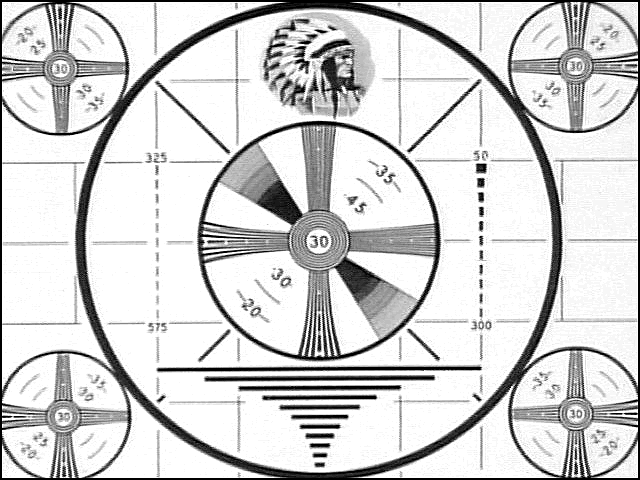
After 11:30 PM each television station would display a graphic like the ones below and issue forth a loud hum or ringing noise. Sometimes I got up way too early and would observe these mysterious symbols and their humming on all three channels. They reminded me of what we might see and hear if Russia attacked us with atomic rockets.
After hours, mysterious symbols hummed on all three channels.
Our favorite shows were on early Saturday morning. In addition to cartoons like Mighty Mouse, we watched The Lone Ranger, the Howdy Doody Show, Buffalo Bill, and Captain Kangaroo.
On weekdays after school, we rushed home to watch the Mickey Mouse Club starring Annette Funicello. I loved Annette completely. She was the only female Mouseketeer to have boobs.
Annette Funicello
Next to Marilyn Monroe — who everybody knew about but no one had ever seen (she wasn’t allowed on television) — Annette Funicello was the most desirable female on planet Earth at that time. But, by fourth grade, a terrible tragedy struck. Though not reported by television or newspapers (kids didn’t read newspapers, anyway), every child somehow learned that Annette had died from bubblegum asphyxiation — a tragedy to rival the Kennedy assassination years later.
Much later — in college during the 1960s — we learned Annette Funicello didn’t die. Media reported that she was alive and well and living somewhere in California.
The knowledge helped to ameliorate the pain of other deaths that were reported in the newspapers and on television back then — John and Bobby Kennedy; Martin Luther King; Malcolm X; Otis Redding; Jimi Hendrix; Janis Joplin; Marilyn Monroe; Che Guevara — and many others. Maybe it was possible, just possible — we hoped against hope — someday, someway — we would learn that these unusual people didn’t die, either.
By my third-grade year, the biggest event in everyone’s lives was the night Elvis Presley appeared on television for the first time — on the Ed Sullivan Show. Everyone — adults and kids alike — dropped everything to see Elvis. Words cannot express how huge this event was in the history of America. Those who didn’t have a television went out and found one. The entire country watched.
Everyone knew about the controversial movements Elvis Presley made with his legs and hips — they were reported in all the magazines and newspapers — but no one could imagine what these moves actuallylooked like. We needed television to show us.
Elvis Presley, 1956
And what did television do? In a spectacle that would be repeated again and again for decades after, television dropped the ball and disappointed its huge viewing audience. The camera focused on Presley’s face and upper body. No one saw his infamous lower-body machinations. After all the psychic energy invested by everyone to finally learn the secrets of this unusual man’s success, television left us wondering.
Elvis sang a song that night we had all heard many times before on the radio: Hound Dog. Seeing the song performed — not just hearing it, like on the radio — was exciting enough to make most everyone forget about what they had missed.
You ain’t nothing but a hound dog — cryin’ all the time. You ain’t nothing but a hound dog — cryin’ all the time. You ain’t never caught a rabbit, and you ain’t no friend of mine. When they said you was high class, well that was just a lie. When they said you was high class, well that was just a lie. You ain’t never caught a rabbit, and you ain’t no friend of mine.
No one who experienced the magic of his television appearance could imagine in their darkest nightmare that someday Elvis would die, too.
On a brighter note: advertising revenue for the show set an all-time record; viewership set an all-time high. It seemed clear to all that television was here to stay.
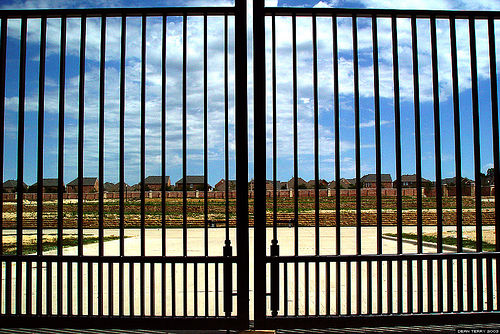
The word community sounds egalitarian to most people. And gated? No word yields a fairer portion of safety to airy openness in the image it conveys to the mind.
Gated community near Orlando, Florida.
Florida is a land flowing with gates and communities. It is a Promised Land of sun, leisure, warm pools, and exclusivity. For the past month Bevy Mae and me have been vacationing inside this paradise at a house in one such community near Naples, Florida. It took three references, photo ID, and all cash up front to get in here.
We are grateful for our good fortune. And we are in a really safe place. But when thinking about the state of affairs which has excluded as many as 94% of all Americans from the possibility of living here — if only for a few weeks — it makes me sick to my stomach.
Of course, if you don’t live here, you can’t be here — not even to drive through.
The compound we live in is huge. While biking in it the other day I was amazed to stumble on anothergated community inside ours. It’s blessed by God with a lake and huge houses.
What’s strange is the gated occupants of our community aren’t allowed in their gated community even though their community is inside our community. Apparently, there are layers of gated-ness. I never knew that.
As teenager, I lived two years in Key West, Florida. It was before Civil Rights Act of 1964. It was totally segregated there. The only Negro I ever saw was our maid.
Our housekeeper was an articulate thirty-year-old woman and really beautiful. I liked her a lot and talked with her every chance I got, usually about politics. From her, I learned how difficult life was for black people in Key West at that time — and maybe as important, that a lot of Negroes actually lived on the island. Never knew that, either. Somehow, they managed to keep an extremely low profile.
She said she supported the incumbent Democrat for Congress who was then running against an upstart Republican — a young guy always on the radio complaining about how rich his opponent was. She liked the Democrat, she said, because he once bought park benches for her neighborhood.
At Key West High School, the powers-that-be were considering the admission of a black kid from a “good” family. His dad was an officer in the U.S. Navy. Over lunch in the school cafeteria, I made the mistake of saying I saw nothing wrong with going to school with “Negroes” (as polite people referred to them).
“What!” some kid yelled. “You want to eat with niggers?” Soon a crowd gathered. I stood my ground, and no one beat me up. The South was changing, I guess, but only a little.
One thing Key West didn’t have back then — no town did in those days — was gated communities. We had a military base that was gated — I lived on it — but the gates were for security against the hated Communists. We didn’t have terrorists or any other sort of enemies of the state. All that was to come later.
After World War II, the South and some parts of the North enforced segregation with a civilian militia called the Ku Klux Klan. It was a quasi-religious/military-style organization self-tasked with extra-judicial punishments of Negroes who violated the unwritten codes of the South.
I know something about it. My grandfather belonged to the Klan for some years, which he said he regretted. He told me things. Everyone he knew then was in the Klan, and yes, they did things they believed righteous but weren’t.
If a black family bought a house in a white neighborhood, the militia would burn it down. Sometimes, so as not to smoke-damage nearby homes, the KKK bombed the house; or if white children lived close by, they might burn a cross in the front yard to scare occupants into leaving.
Lynchings — common after the First World War — were, by the 1950s, less common.
After dozens of documented actions against Negroes — and perhaps hundreds or thousands of undocumented ones — white neighborhoods did not need gates, or walls, or fences to remain segregated.
Eventually, after years of separation, white people who lived in these communities came to believe — many of them — that black people chose not to live next to them, because they preferred “their own kind.”
Terrorism? It didn’t exist in the United States of America in those days. First time I heard the word was in college. Terrorism, then, was always directed at Israel, for some reason, almost always by Palestinians. Reasons why were never clear.
I don’t know what white people say today is the reason black people don’t live in gated communities of Florida. I haven’t vacationed here long enough to learn.
I would bet that in some town somewhere in this huge state a black family probably lives in a gated community. Maybe more than one, right? I can imagine people pointing to those folks as proof of my being uncharitable to the good people of Florida and to people everywhere who live in these spaces.
But it seems plain to me — fifty years after Congress, the President and the Supreme Court declared segregated housing illegal — black people don’t live in these desirable places.
Why is that?
I don’t know.
I met a black man down here the other day. He told me he had been a Marine who helped liberate Kuwait during the first Gulf War.
Inside the shadows of the lanai next door lurks a loquacious parrot. Bevy Mae and me can’t see him, but we know he’s in there, because he talks — a lot.
We want to meet him. But we are visitors on vacation, and it doesn’t seem quite right to walk up to the neighbor’s front door and announce, “Hi, we’re the neighbors from up north. Can we see your talking parrot?”
It seems a little forward, like something kids might do, right?
Every morning the parrot wakes us up with cries of “Lisa!” and “Chuck, Chuck!” When Chuck and Lisa don’t come running (and so far they haven’t) he can throw a bit of a hissy-fit and bang his cage like a tin can. Sometimes he hurls what sounds like obscenities.
I don’t want our neighbors — who I’ve met by the way; sweet folks from South America — to imagine that my wife and I don’t anything but adore their bird. We really do.
The parrot has an astounding repertoire of words and phrases that are nothing short of amazing. His Burt Lancaster accents and phraseology make me believe he may have been in the movies.
We will keep you posted on all the cute things he says and does.
4:30PM The talking parrot was well behaved this afternoon. He said the following: