CONFESSING UNDER TORTURE


How do I write a confession when I don't know how to write?
How do I write a confession when I don’t know how to write?

I was tortured. I confessed to everything.  As I write I am unsure I have courage enough to publish. For one thing, odds seem good I may have actually done some version of the shameful things I confessed.

Shame is a powerful motivator. It drives a person to hide, to cover-up, to deny, to forget. It can induce a form of stress psychologists call cognitive dissonance. The chasm between what I think I am and what my tormentors tell me I am becomes too wide. The personality begins to unravel.


fear 2
N-no.  M-my eye doesn’t itch.

Fear, on the other hand, drives a person to act, to survive, to do whatever it takes to reach safety.

Or it can induce a state of paralysis.

Either way, fear intensifies cognitive dissonance to a level where the accused becomes intolerant. Dissonance becomes painful. The sufferer must find release. One way is to confess — confess and become compliant.


I'm sorry regret anguish


This dynamic works well when a person believes they’ve done wrong, and not so well when they don’t. Inducing fear to intensify shame is one thing torturers do. When managed skillfully, guilty people confess their crimes. The innocent don’t — most times, anyway.

It’s why torture works. Confessing reduces shame through cathartic admission of guilt. And it offers hope of freeing the confessor from further physical discomfort.

If torture is not overly arduous, an accused person has a chance to resist with enough vigor to establish their innocence.


crazy man 2
”You stole my contacts,” Wild-Man said.

I’m not going to detail what authorities did to get me to write a four-page signed confession. But the gist is, they threw a psychotic arrestee into my cell. First thing he did was grab my shoes and hurl them against the wall. (The authorities had told me to tie them together to use as a pillow.)

Wild-Man accused me of stealing his contact lenses. I looked him in the eyes and told him as carefully and with as much love as I could muster, it was good he came to my area because now we could look for his contact lenses together.

We spent the next twenty-five minutes on our hands and knees searching every square inch of my tiny cell.


confession legal pad


When the authorities realized I had taken control of Wild-Man, they came into the cell and led him away. After a few minutes passed, a uniformed woman brought me a legal pad and asked me to write my confession.

Unsure of what was coming next, I sat on the cold floor and started to write. Forty-five minutes later on page three I began spilling my guts; I confessed to everything I thought they thought I did.


one girls confession


Many unnerving things occurred after I “confessed.” As I struggled to sleep, someone slammed a steel door over and again to keep me awake. Someone pumped bone chilling cold into my cell. The frigid air made me shake and induced arthritic pain which pains me to this day.

After a night of no sleep someone served a breakfast of curdled milk and soggy hamburger.

Eventually a judge released me. I learned then that the city newspaper had published parts of my confession on its editorial page.


bad puppy dog regret shame anguish
I was doing OK, until they fed me bad hamburger.

I decided to fully cooperate with the various authorities who handled me during the following months or years, whatever it was going to be. After pleading guilty, a judge noted that I had no priors, so he sentenced me to probation and community service.

I worked hard. Case workers reported I was remorseful and repentant. They added, I was cooperative and helpful. During community service, people I served reported I was conscientious. I fixed their broken things. I looked for novel ways to help needy people who relied on folks in trouble to assist them for no fee.

After community service, authorities expunged my crime from public records. The judge set aside my guilty plea. Torturers said they would protect my anonymity as long as I remained the model citizen I always was before my arrest.

Best of all, they will confirm if asked that I have not committed even a single crime since. Their modification of my behavior is a complete success.

Billy Lee

AIR TRAVEL SAFETY

Airlines spend serious money to convince consumers flying is safe. Not only is flying safe, they insist, but it is way more safe than driving.


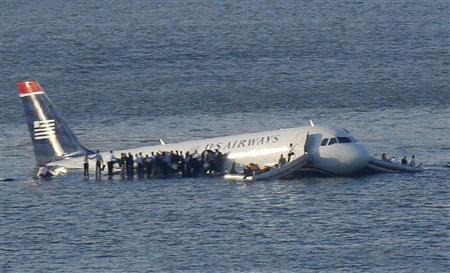
The Miracle on the Hudson improved airline mortality statistics, because no one died. (78 were injured)

Why is it, then — every time some folks board planes, settle into the seat, place the tray-table up and the seat-back in the upright position, hear the engines ignite and roar, and feel the pull of the plane against their backs — hands begin to sweat, the heart pounds, guts squirm, and minds start screaming helpless, desperate questions: What if  they’re wrong? What if I die? Why didn’t I take the car?

If anyone is like me, they enter a car to go somewhere five or six times a day. In other words, people participate in driving events thousands of times a year. Is it really possible that boarding a plane thousands of times a year is safer than driving? Many humans would die from heart attacks alone, if they did such a thing.

Even if anyone has two or three car accidents per year, it is unlikely that someone will die. In fact, stats reveal that one auto-related death occurs per 100 million driving miles.  It amounts to 3.4 million hours of driving.

It’s equivalent to one driver navigating their vehicle 390 years continuously — 24/7 — without a break.  Does anyone believe an airplane of any kind at all can fly that many years accident-free? When it crashes, hundreds of passengers die. It’s not so hard to figure out. 

When airplanes, helicopters, and jets crash, it is unlikely anyone will survive. An aircraft must fly perfectly or people die, more times than not.

Not so with cars.


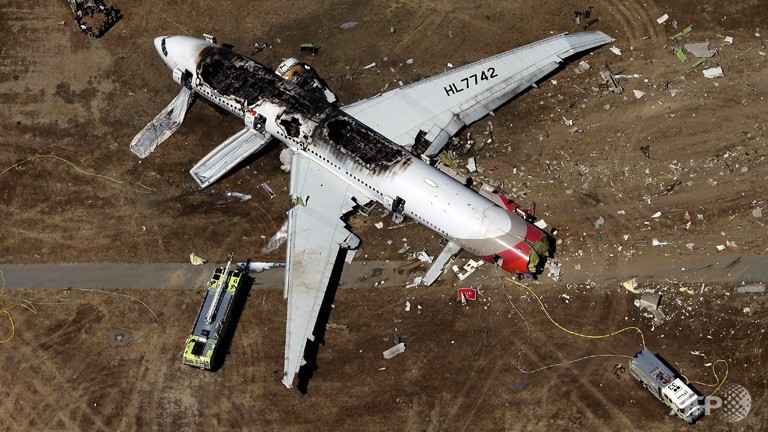
asiana plane crash San Francisco Boeing 777
This accident in San Francisco had little effect on mortality statistics for the Boeing 777, because only three people died. (181 were injured)

It’s probably un-helpful to spout a bunch of numbers and ratios and statistics to prove the obvious. People in panic-mode don’t do well with numbers, anyway.

But let me make this observation: smart people in the airline industry are serving up a mess of misleading statistics to get the flying public to underestimate the risks of boarding an airplane.

Guess what? Airlines perform this charade to separate the traveling public from its money. Is anyone surprised?

The only way flying will ever be safer than driving is if folks fly as few times a year as possible. All the favorable statistics airlines like to quote rest on this simple premise: If people fly less, they are less likely to die.

People get into planes fewer times than into cars. Therefore flying is safer than driving. Cogito ergo sum. Quod erat demonstrandum.


Challenger_breakup_cabin shuttle disaster
Arrow points to intact flight-cabin during Challenger disaster.

Remembering the Space Shuttle program may bring the point into sharper focus. As the public knows now, the government discontinued the space-shuttle after observers pointed out that it was unreasonably dangerous to the astronauts.

At first the program seemed safe. Then an accident took a dozen lives. Afterward, it was safe again. Then another accident. More deaths.

Soon it became obvious. Every thirty flights the program was going to lose an entire crew. A way to improve the odds couldn’t be found. The program was scrapped.

The government threw up its hands and said: Let private companies handle the space program. Look at the great job they are doing for the airlines.

Billy Lee

ON AGING

Aging is taking a toll on me. I had warning. Mom and Dad lost everything as they aged. It wasn’t what they expected.


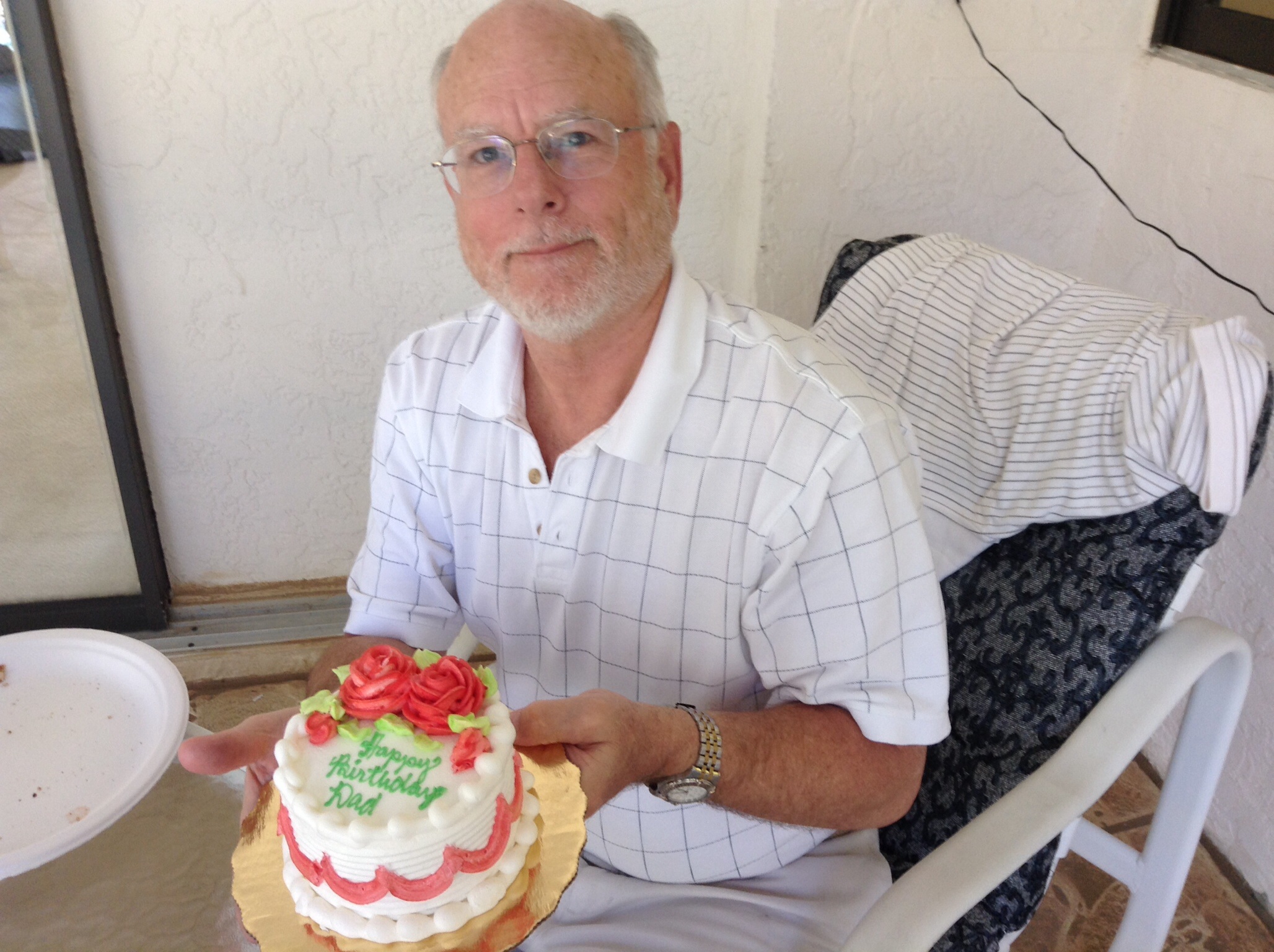
Billy Lee celebrates another year closer to death.

They imagined they’d lose some friends, have health issues, lose some mobility. They didn’t expect to lose their entire family, all their friends and all their power. They lost their beauty, their charisma, their common sense and, finally, their minds.


Mom & Dad open a present
Dad’s 85th birthday. Within eight years both he and mom died.

One thing my dad tried was to keep his losses to himself. On some level he wanted to spare his children the fear of knowing; on another level he may have believed a positive attitude would lift up those people around him still left. But in the end futility seized him. He could no longer play golf or read or drive a car. He got depressed and took pills to keep going. Aphasia robbed his ability to speak.

My mom was devoted to my dad. Whatever he said or didn’t say was fine with her. She developed a brain disease that took her memories, short term and long, but she remembered Dad to the end. She never stopped asking where he went and when was he coming home.


grandpa dad clack two days before he died
Dad, 48 hours before he died.

My journey down this tunnel to hell is just beginning. My kids want me to go quietly without complaint — no whimpering, no crying, no embarrassing emotional displays or theatrical grand-standing, like I do in my blog — whatever.

I’m not built that way.

Billy Lee

Click here for Final Thoughts before life is gone for good…