FLYING BLIND

It’s possible to fly blind and survive. It’s possible to fly a twin-engine Beechcraft through a wicked storm without instruments; without communication; find the airfield, locate an empty runway, and land safely.

It’s possible to feel the air disappear beneath your wings and freefall — even tumble — thousands of feet, time after time, dozens of times, recover the aircraft, and keep on flying.

It’s possible for clouds to be impenetrable, lightning to be relentless and unceasing, rain to be thick as waterfalls — with a vomiting passenger in the seat next to you — and keep your wits, keep your senses, keep your fear in check, keep your focus, and keep flying.
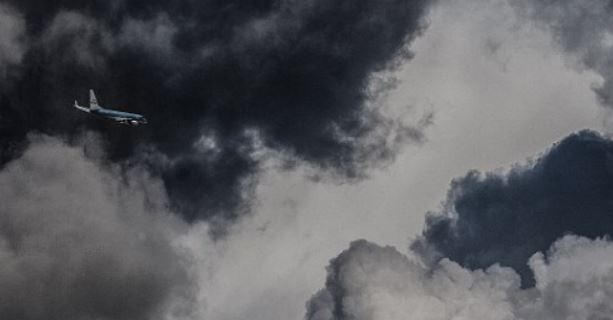


Anything is possible during a storm when all is lost except training and skills and the belief that you really are the best pilot in the Navy — when you know deep in your gut that this storm, which forecasters managed to miss, is not how it’s going to end for you or the high-ranking government official sitting in the seat next who hates to fly; who hitched a ride, who chose you, because he trusted you to get him to his meeting with the president, or whoever it was, in one piece.

It’s not possible to stay dry however. During this flight my dad, the pilot, sweat through his clothes. When I met him after his ten minute drive home from the airfield, I asked him, how did you get so wet?  His hair and face looked like he just stepped out of the shower. His flight-suit was dark with sweat; water dripped from his cuffs; even his shoes squeaked from pooling sweat around his feet.

I had a rough flight, he said. The worst flight of my life. I got overheated. Never sweat like this, ever. I’m ok. We made it. No problems.

Dad left it at that. But a week later, his passenger came to our house for dinner. He told the whole story. He said Dad saved his life during that flight. No one in the Navy was a better pilot, he insisted, and I believed him.  

It was 1964; I was a high school sophomore living at home in Arlington, Virginia near the nation’s capitol. It was the year when Barry Goldwater, the darling of the lunatic fringe of the Republican Party, ran for president. He lost everywhere except Alabama, Georgia, Louisiana, Mississippi, South Carolina and Arizona — his home state. (Today — a lifetime later — lunatics are mainstream; go figure.)

In 1964, the American Nazi Party — led by retired Navy Commander Lincoln Rockwell — owned a field next to our neighborhood where it maintained a barracks and its national headquarters.

Rockwell’s few dozen men were heavily armed; we heard they used German Shepherds to keep gawkers away, but we never saw any when me and my friends snuck onto the property to fire bottle rockets at the barracks. One time a trooper in black boots and tee-shirt walked up on us and clicked the bolt on his rifle. We ran like hell to get away. He didn’t squeeze the trigger. We didn’t trespass again, either.

One time, we visited the Nazi offices and barracks on a dare. A guard let us into the headquarters. I was amazed at how much red color there was. The carpeting on the floors, the walls — even the carpeting on the ceilings — all was red.

It was quiet inside, like a church; even tranquil. One of the men invited us to take some pamphlets from a table in the foyer. We took some, but I don’t remember reading anything but a few of the headings. The content — what little I scanned — seemed ignorant. The Nazis despised Jews and Negroes. What else was new?

A few years later someone on a roof at a strip mall near our house fired a shot at Rockwell. He was leaving the laundromat where he washed his clothes, of all things.

I always bought pop-sickles and candy a few doors down at the Seven-Eleven. It didn’t seem particularly remarkable to learn in 1967 as I started my sophomore year at college that someone assassinated the Nazi commander a mere half-mile from my house.

But to get back to my essay…

Dad crashed a couple of planes during his time in the Navy; it seemed like every pilot screwed up sometime in those early days during World War II and a little after. 

During one accident Dad and another pilot collided over a town in Florida. Dad had to bail; he was flying low; his parachute opened immediately; he swung three times as he hung suspended beneath; he hit the ground hard. Except for bruises, he was fine. The other pilot tumbled into the ground and was killed.

The Navy court-martialed my dad, which came as a shock; an official inquiry followed; it lasted a few months, and, in the end, Dad had to take the stand and testify; he was terrified the whole time, my grandfather told me.

Dad confirmed it; he was never more scared before or after, he confessed many years later. The Navy cleared Dad of wrong-doing; he lived to fly another day — with a clean record — which is all he wanted to do anyway since as a boy he first saw an airplane fly over his farm.

Flying was freedom. It was so clear. He hated working in the mud and manure of a farm; if he could fly, he could escape — like the pilots who flew over his farm, he would be free. He would find a way.

It took planning and luck, but he made it. He took a train from Detroit to Chicago; he managed to sign up for the Navy flight program five minutes before the deadline. The rest is history.

Dad rose rapidly in the ranks of both Naval Aviation and Navy intelligence; more specifically the National Security Agency (NSA), which in those days tracked ships, mostly. Early on, the Navy taught him to speak Russian; much later, they taught him French, but it was too late. He never became fluent.

People who know how I write, must by now realize that this essay is going somewhere amazing; somewhere they don’t expect. Have patience. Keep reading.

Dad was a leader with strong views about what made for good leadership. He believed in taking care of his men; he believed in meting out justice to misbehaving officers and enlisted men in the same way — no favoritism to officers.

Military justice doesn’t work the same way as civilian justice. People who have served in the Navy know that commanders can throw their people in the “brig” for any reason — or no reason.

Commanders have absolute power, which they must have if they are to lead an effective fighting force that obeys orders under combat duress and the threat of death. Dad punished officers in the same way he disciplined the men.

(Editor’s note: women didn’t serve in fighting units until the 1990s.)

But Dad had another belief about power that people who have never wielded it don’t understand. To lead disparate and rebellious people — which large groups of humans tend to be — it is essential to keep them guessing; to keep them off guard; to keep them off-balance; and most important, to keep them uninformed. Never tell subordinates anything they don’t have an absolute need to know. Make everyone unsure of what they think they know and what they think they don’t know.

How does this work in practice? Why is it effective?

My uncle Dean told me a story about a time when Dad took him to visit the anti-submarine, jet-helicopter squadron he commanded in Key West, Florida. It was dark — about nine o’clock at night (2100 hours they say in the Navy). 

Dad parked his car outside the guard shack; he and Dean got out and walked past the guard. The guard motioned them through with a salute and a smile.

According to my uncle, Dad whirled around and stormed the guard. He stood toe to toe, in his face, and dressed him down. You will demand identification from anyone who passes this point, sailor!  He pointed at my uncle. This man, here, he might be a spy. You put the security of the most important squadron of fighters on this island at risk. Report to my office tomorrow morning — 1000 hours.

Yes sir! the guard said.

Dad took Uncle Dean into the hangar and showed him anti-submarine jet-helicopters. He took him aboard his favorite and showed him the complicated arrays of instruments and armaments then available to the armed forces.

Gages and dials, buttons and levers, advanced screens and switches covered the cockpit ceiling, its floor and doors and front panels. Belts and canisters and other incomprehensible items filled every available nook and cranny. There was no empty space, anywhere.

Dean got quite a show, I can tell you, because Dad took me on the same tour. My thought after seeing how the Navy fights was, how does anyone learn all this complicated stuff, let alone fly these monstrous beasts, which slay the Russian sub-dragons?

Anyway, the tour ended after ten or fifteen minutes, and the two men left the hangar to return to the car and begin the drive home. We lived on the base less than two miles from the squadron. Dad and Dean walked along laughing about something, when the guard stopped them. May I see your identification, gentlemen? he said calmly.

Once again, Dad spun on his heels. What? Are you blind? Am I not the commander of this squadron? Do you not see me every day? You checked Dean, here, ten minutes ago. He is a guest. Leave us alone and show respect. Return to post.

Sir… yes sir!  the guard shouted.

Later, Dean asked dad. You ordered this sailor to always ask for ID. Later, when he did exactly as you asked, you humiliated him. Why?

When you’re in charge, Dad said, the men have to know. You keep them guessing. You keep them off-balance. You force them to determine in their own minds what they believe you expect from them. Everything works better that way.

Yeah, it’s weird. But I think he might have understood something important. I’ve known other powerful men who operate the same way. I’ve worked for some.

Our newly elected president seems to share this view of power. Disinformation seems to be his modus operandi.

Another sacrosanct principle of leadership is not sharing information with “the help.” No one will ever see the tax returns, balance sheets, income statements, or health records of the newly elected president.

It’s called flying blind. Everyone flies blind except the pilot. He’s trained. He knows what to do. The world might seem to be falling apart all around. But with any luck at all, the pilot will land the plane — safely.

There is one thing that my dad once did that has been erased from history by disinformation. In the must-read book by Oliver Stone, The Untold History of the United States, Mr. Stone tells a story about an incident during the Cuban missile crisis that almost led to nuclear war. Here is an excerpt:

On October 27 [1962] an incident occurred that Schlesinger accurately described as ”not only the most dangerous moment of the Cold War. It was the most dangerous moment in human history.” A navy group led by the carrier USS Randolph began dropping depth charges near a Soviet B-59 submarine sent to protect the other Soviet ships approaching Cuba. Those inside the U.S. destroyers were unaware that the Soviet sub was carrying nuclear weapons. Soviet signals officer Vadim Orlov described the scene: ”The depth charges [sic] exploded right next to the hull.”

Get the book to read a harrowing account of the hours of hell Russian men inside the sub endured. Some officers passed out. The bottom line is this: the submarine’s commanding officer gave an order to launch a nuclear missile, but the communist political officer on board, Vasili Arkhipov, overruled him.  According to Oliver Stone, Arkhipov refused to launch, single handedly preventing nuclear war.
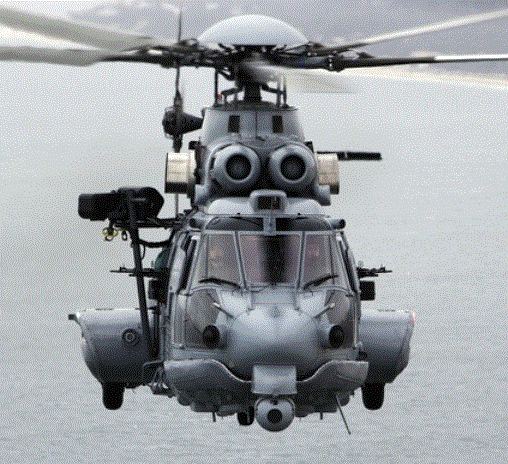


I can tell readers that the only weapons of war we had in Key West capable of chasing nuclear subs and dropping depth charges with the accuracy described in the book was Sikorsky anti-submarine jet-helicopters, which were under the command of my dad. They used new communication technologies called spread spectrum communications. The Russians were unable to jam USA crosstalk or track the trajectories of our most lethal weapons.  

The Russians were flying blind, and it hurt them, big-time. These secret technologies have since become the foundation of modern communications used by satellites, cell phones, and GPS. 

One pilot in the Navy had both the nerve and skill to deploy depth charges onto a nuclear submarine without risk of a direct hit, which would have released poisons. Only one had access to intelligence about Russian subs in the area — intelligence no one but a few senior officers shared. 

He was the one pilot in theater who was not flying blind. He happened to be an NSA officer, yes. He knew the rules of engagement on both sides. He spoke Russian. He trusted his training and skills. He could chase a Russian nuclear sub out of Cuban waters and turn the confrontation in our favor.

It’s what he did.

Enough said.

Researchers told Oliver Stone that we were flying blind; it was only luck and a Russian political operative who prevented a nuclear war during the Cuban missile crisis of 1962. So, he wrote it down.

What else could he do? He wasn’t there. I was. I lived with one of the key players. We ate breakfast and dinner together almost every single day.

Maybe most on the aircraft carrier USS Randolph and its escort ships were sailing blind, like Stone suggested; maybe most of the pilots were flying blind; but not everyone. Maybe, sometimes, people get lucky.

That’s what Dad believed. He always said, people make their own luck.

Practice, preparation, persistence, plus perception based on the best intelligence; the best equipment; the best technology — there is nothing lucky or blind about any of it.

Add a little patriotism.

It’s why we win.

Billy Lee

ELEPHANT ON THE ISLAND

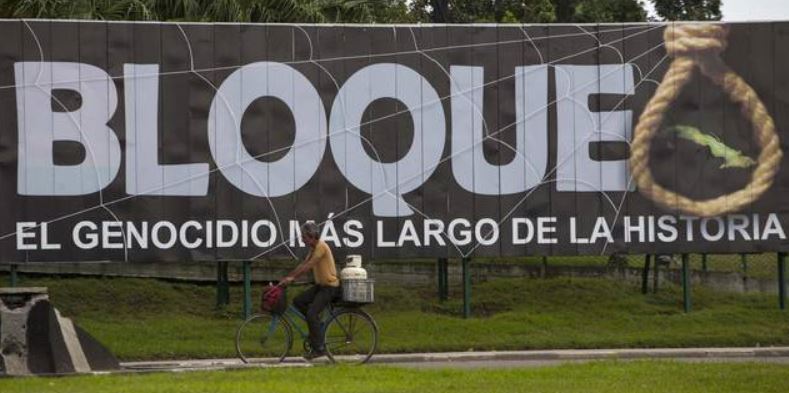
When President Barack Obama visited Cuba in March 2016, the USA-imposed blockade or embargo or quarantine or whatever-else one wants to call it was the elephant on the island. It was the elephant in the room at every meeting between our officials (who numbered close to twelve-hundred) and theirs. We owe Cuba a huge apology. Of course, we didn’t offer one. 


This billboard can be found in various places on the island of Cuba. In English it might be interpreted this way: The USA-organized embargo is the longest-lived genocide in world history. They intended to lynch us, but look; the noose is empty; Cuba swims free, beyond the yank of their rope.


Yes, Cubans once-upon-a-time tried to protect themselves from our overwhelming military power; our subversion; our unrelenting sabotage; our many plots to undermine and demoralize the Cuban revolutionary movement, which had overturned the Batista cartel and drove its Mafia friends off the island way back in 1959, a long time ago. We didn’t like it when the Cubans turned to the Soviet Union for help to defend themselves.

Let’s face some facts: It was 6 million of them against 220 million of us. It wasn’t going to be a fair fight. The Cubans were going to lose, and they knew it. 


El Encanto in 1955 Cuba
Terrorists fire-bombed El Encanto (a Havana department store) in 1961, just four days before the CIA-organized (and financed) Bay of Pigs invasion. This pic is from 1955.

Fifteen months after the revolution, in March 1960, someone blew-up a French ship in the Havana Harbor, which killed and wounded hundreds of civilians. Cuban police arrested a suspect who, it turned out, was an American with ties to organized-crime and CIA operatives; his team managed to infiltrate harbor-security, police said. 

Strange people started flying airplanes over the island on a daily basis to bomb sugar refineries and drop napalm on sugar cane fields. The Cubans managed to shoot down one aircraft and rescue the pilot. He turned out to be an American. Authorities blamed the CIA.

Then, just a few days before the Bay of Pigs invasion, terrorists bombed and burnt to the ground El Encanto, one of Havana’s upscale department stores.    


El Encanto department store after fire Cuba
The destruction of El Encanto was part of an extensive campaign to destabilize the island of Cuba. A few days after the terrorist attack, the Bay of Pigs invasion began. The USA public would learn years later that the invasion force had been organized, trained, and paid for by the CIA. The invaders killed and wounded 5,000 Cuban citizens before they exhausted their ammunition and surrendered to Fidel Castro, who led the island’s defenders.

Cubans had no clear idea, even as late as April 1961, that the USA was systematically destabilizing the island and had already finalized plans to invade Cuba and assassinate its leaders. 

A few days after the El Encanto firebombing, the invasion-force launched its assault — on Monday, April 17. It included close air-support, a squadron of B-26 bombers, and ships standing off-shore. The assault would come to be called the Bay of Pigs fiasco, mostly because the invaders ran out of ammunition and were forced to surrender.

Fidel himself led the island’s defense; Soviet intelligence informed him a few days in advance of the exact time and place; by some miracle related to our own incompetence, Fidel and his Cuban fighters repulsed the invasion. 

Castro’s Cubans managed to capture 1,200 invaders, mostly CIA-trained expatriates, who they later traded for medicine. Afterwards, they begged the Soviet Union to get more involved, because they believed the USA would attack again. Maybe the next time the USA would send more ammo and a bigger air-force, and Cuban defenses wouldn’t hold up.

Our government wasn’t too happy about the deal Cuba made with the USSR. The Soviets took advantage of Cuba’s weakness, Che Guevara would later claim. Che told Fidel and the Soviets that the deal was one-sided and not good for Cuba.

The alliance between Cuba and the Russians almost started a nuclear war, because the Soviets insisted on putting nuclear missiles on the island and basing nuclear-tipped submarines in Cuba’s harbors.

The Russians believed that the island could not be successfully defended against a full-on USA invasion using conventional weapons alone. Had a nuclear-missile exchange occurred, neither Florida nor Cuba would be habitable places even today, fifty-four years later. Millions of Cubans and Americans would have died.

Fortunately, deals were made and tensions de-escalated. The Soviets loaded up their weapons and took them home.

For the United States the fight was just beginning. Although the USA promised the Soviet Union that it would not militarily invade Cuba again (rendering nuclear defense unnecessary), it did not promise anything about an embargo. The United States talked and threatened every country in the Western Hemisphere into imposing one. The only country that refused was Mexico.


Cuba frozen in time
The USA-led embargo has turned Cuba into a land frozen in time; a time-capsule from the 1950s, which has transformed the island into one of the world’s most sought after tourist destinations. Travel restrictions by the USA make visits by Americans difficult, but not impossible. 

The embargo has never ended. It has lasted fifty-four years and turned Cuba into a time-capsule from the 1950s, which in one of the great ironies of world history has propelled Cuba into an elite group of the most-in-demand tourist attractions of modern times.

The Cubans have complained vociferously about the embargo at the United Nations, but they have never fought back in kind; even after we poisoned their sugar; even after we sunk the ships of their trading partners; even after the Bay of Pigs invasion, when we killed and wounded five-thousand Cuban citizens; all they asked was to be left alone.

Che Guevara resigned his Cuban citizenship in October 1965 and left the island never to return. He hoped to inspire revolutions closer to Argentina, his native country, but he also may have believed that his departure would help to take USA pressure off the Cuban people. It didn’t work.

A fifteen-hundred man force trained by the CIA in Guatemala hunted down the beloved hero of the Cuban revolution, shot him in the legs a few times just to hurt him, then they executed him. They cut off his hands and sent them to Fidel Castro. A CIA agent who witnessed the murder has been quoted as saying that Che never cried out in pain before he died. He died as brave as he lived, without fear, the agent said. 

Cuba refused to even consider assassinating our leaders, even as we worked overtime in every depraved way we could think of to assassinate theirs; the assassination plots against Fidel Castro are in the public record and make a wicked read, if anyone wants to look them up. 

People who visit Cuba will tell anyone who will listen that the Cubans are a friendly, peace-loving people who were brutalized by a ruthless cartel in alliance with powerful crime syndicates; crime syndicates which would years later come to be called the Mafia.

Everyone on the island (90%, anyway) joined in the effort to get rid of the thugs who were abusing the population on a daily basis. People who fought the Batista family and his cartel and were unlucky enough to be captured were routinely tortured, some to their deaths.


Soroa waterfall, Pinar del Rio, Cuba 2
The island of Cuba is a kind of unspoiled paradise. May God bless and protect Cuba as the haters try to keep our fight with them going and going and going.

What kind of country keeps an embargo going for 54 years against another country that is no longer a threat?

The only threat Cuba poses to our billionaires is the example it has set; the lessons it has taught the world that it really is possible to create wealth cooperatively and share it; it really is possible to survive an assault by the most militarized and corrupt nation on planet Earth; it really is possible to choose a different path — a path that doesn’t involve capitulation to cartels and billionaires.

Is Cuba perfect? No; not even close. Of course they aren’t perfect. No nation, no individual, no organization that is shunned and impoverished for fifty-four years by a country as powerful and connected as the United States has any chance at all. How would anyone of us in the USA turn out if the full power the United States turned against us?

I will tell you. If you are lucky enough to survive, as Cuba has, you could turn old and sad. Maybe bitter. We have hurt the Cubans far more than they ever hurt us.

It’s time for this fight to be over. It’s time to make amends. Dispatching on Good Friday four men in their seventies to belch out songs about sex with girls before a modestly attended concert crowd isn’t a good way to start.

It’s time for us to say we are sorry, and mean it. It’s time to be friends. It’s clear to visitors that the Cuban people have in their hearts the desire to forgive us.

I believe that many Cubans want to forge their own path without their vision being twisted by the fear of subversion by U.S. spies and agents. They want to have fun and to be our friends; someday — hopefully sooner rather than later — they will.

Billy Lee

KILLING FRENZY

You have heard that it was said to the men of old, ‘You shall not kill; and whoever kills shall be liable to judgment.’ 
Jesus

The wars of Israel were the only ‘holy wars’ in history… there can be no more wars of faith. The only way to overcome our enemy is by loving him.
Dietrich Bonhoeffer

Those who have waged war in obedience to the divine command (or in conformity with His laws) have represented…the wisdom of government and… put to death wicked men; such persons have by no means violated the commandment, ‘Thou shalt not kill.’
Saint Augustine


drone strike
The United States deploys drones like the Scan Eagle and the Predator (which can dispatch Hellfire missiles) to kill people by remote control anywhere in the world.

Readers might notice that the quotes by the three Christians cited above the picture don’t agree about murder. Killing is a moral controversy.

The subject is even more contentious between leaders of religions outside Christianity. It’s a strange thing. In the United States where Christianity is mainstream, pastors sometimes lead the charge toward war; some endorse capital punishment, so it’s confusing.

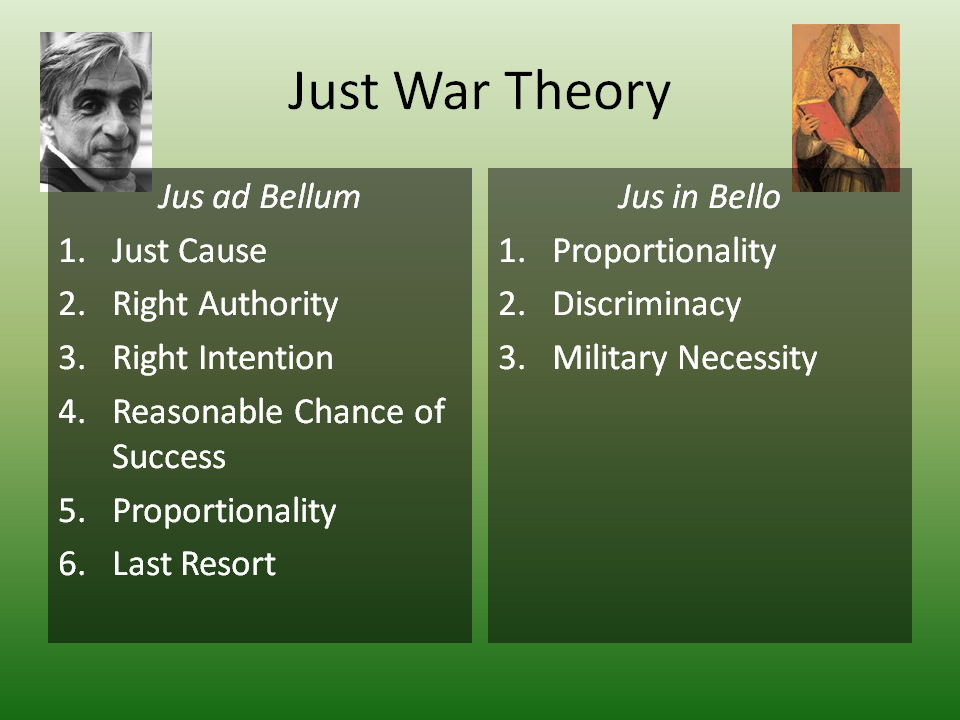
Can killing people be a good thing? The Catholic Church developed Just War doctrines to permit good people to kill the wicked under certain carefully crafted conditions such as proportionality, just cause, and last resort.


just war


From my point of view, ideas of Just War fall under the umbrellas of self-justification, rationalization, and delusion. Will anyone admit the obvious? All countries are ruled by elites, and the USA is no exception.

Elites get to be elite through in-fighting, war, intrigue, and politics. They are, for the most part, desensitized to violence. The morality of religion is of no use to them except when it helps to consolidate and enhance their prestige and power. If a philosophy like Just War helps to alleviate the guilt feelings of soldiers they order into combat, they are fine with it.

Elites are, by process and definition, really good at fighting to maximize their advantages. Over time elites become a law unto themselves and develop their world view and their reasons for doing things, which are usually not well-understood by the average people who serve them.


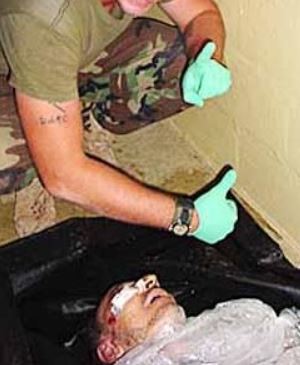
abu gharib
Who wants to take on people who can really hurt them?

In most places, people go-along with their elites to get along. It’s less stressful and much safer to pretend that average people’s best interests are at the heart of decisions made by the wealthy and the powerful — especially as they negotiate deals, wage wars, and craft treaties. 

Who wants to take-on people who can really hurt them should they ever choose to?

For their part, our elites tolerate religion, because in the United States at least Christianity seems to encourage citizens to be docile and compliant. Preachers and pastors encourage their flocks to turn the other cheek and obey authorities.

Christian evangelicals don’t challenge military power, and they generally oppose government policies designed to curb the power of individuals who accumulate vast wealth. Some encourage gun ownership and participation in wars — confusing non-Christians who might be under the impression that Jesus advocated pacifism and non-violence.

In the United States, the wealthy have built a powerful military and have used it to kill many millions of people during the past seventy-five years (the modern era).  Much of the killing has occurred during periods when the United States did not formally declare war.

A lot of the killing has taken place under continuing resolutions like the Gulf of Tonkin resolution, which helped to justify the long war in Vietnam.

Another is the AUMF (Authorization for Use of Military Force) — passed by Congress on September 14, 2001 — which provided the legal authority for the United States to use military power in perpetuity against any individual, group, or country who dared threaten it. 

Only Barbara Lee of California voted “no“.


Joint session of Congress 2
Only Barbara Lee (no relation to Billy Lee) of California voted against AUMF, the perpetual war resolution of 14 September 2001. President George W. Bush signed it into law on September 18.

Congressional consent is no longer required to wage war. Military force is now forever justified whenever and wherever the United States is threatened. The Congressional authorization of 2001 makes it easier for the USA to kill people, including American citizens living out of country.

One estimate by The Hill — a news organization whose on-line stories are widely read by members of Congress — places the number of killings by USA drones operating outside of war zones since 2001 at 2,400.

TheBillyLeePontificator.com could not independently confirm the estimate, which one of its editors characterized as “bordering on the ridiculous.”

It defies common sense that high numbers of assassinations of civilians could occur outside of warzones without arousing a profound backlash by people of goodwill, she insisted.

Is she right? Does anyone outside of government really know?

History seems to say it’s possible. Over the years the USA has invaded and tried to overthrow many countries, often under the pretext of retrieving businesses that were seized by their host countries.

In most places, the United States has succeeded — temporarily — like in Iran in 1953 where it secured natural gas and oil reserves; in Guatemala in 1954 when it took back the nationalized United Fruit Company; and in Chile in 1973 when it repossessed certain mines that were producing strategic metals.

The problem for most countries is that after the USA retrieves its property it moves in to take over the country, usually behind the scenes using native-born (and ruthless) dictators loyal to the United States.


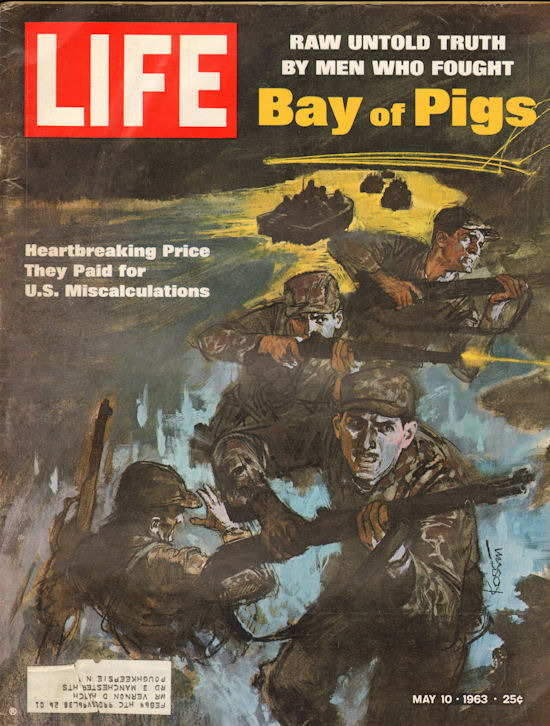
life magazine bay of pigs
USA backed fighters killed and wounded 5,000 Cubans during the failed Bay of Pigs Invasion in 1961. Cuba captured 1,200 who they added to several thousand political detainees in a trade for medicine.

Every once in a while, takeover fails, like in Cuba in 1961 and in Vietnam in 1972. In those countries, strategic resources were never at stake, so the losses didn’t seem to affect our safety or our economic security. Still, after the fights ended, the USA worked overtime to make sure it ruined their economies by deploying embargos and unleashing its leverage over international banking.

The USA ignited recent wars in the Middle East — Kuwait, Iraq, Syria — for various reasons and continues them to this day. The United States fights terrorists in undeclared wars permitted by AUMF resolutions, which allow it to kill enemies anywhere in the world by remote control using un-humaned drones.

It’s pointless to argue whether the killings are justified or moral, smart or stupid. Many families have been ruined by drones and by war. They don’t care about smart or stupid. They just hurt; survivors wonder what might have been were their loved ones allowed to live.

So, how many people have we killed? How many hurt? How many wounded? How many amputees; how many blinded; how many deafened; how many disfigured?  How many orphans?  How many widows?  How many dreams crushed; how many aspirations demolished?


Hellfire missile explosion
The picture reveals the lethality of Hellfire missile-strikes. The heat cooks flesh off bones of bystanders who get too close. 

How many loves-of-a-lifetime have been dashed on America’s battlefields? 

Unless God Himself reveals it someday, we will never know, because during the era of Bush-senior and his general, Norman Schwarzkopf (of the renown German family) no one bothered to track body-counts; no one kept statistics on the maimed and crippled.

Our military says it doesn’t do counts. It’s in bad taste. A country like the USA doesn’t count pelts or put notches on rifles; besides, how does anyone collect the names of entire families destroyed in atomic blasts like Hiroshima and Nagasaki?

In those attacks, the genealogy archives of families were obliterated. The files of victims, the records of everyone who knew them, were vaporized.

The directories of the dead in Japan are missing, perhaps forever. Unless resurrected by God, the dead, many of them, are forgotten to the end of time.


Arlinton National Cemetary
The Arlington National Cemetery holds the remains of 400,000 veterans who have served the USA in defense of our way of life. It is a sacred place. A summer job during college privileged me to trim the gravestones of thousands who loved their country enough to serve. A cemetery for those the USA has killed in the modern era, should it ever be built, will be 25 to 150 times larger depending on who collects the dead.

Nevertheless, brave reporters and historians have tried to pull together records where they can find them. I can tell you that the numbers of deaths, executions, and imprisonments in America’s wars are in dispute — with some articles on Wikipedia, for example, frozen in place and fought over by review committees for historical accuracy. The reports are hard reading, disturbing really, because some folks seem to be trying for whatever reasons to understate and misrepresent the carnage.

Despite obvious inaccuracies which defy common sense, the numbers on the internet are the most reliable civilians have. They may perhaps be understated, but they are still large. I’ve included links for those who might want to verify the statistics.

Billy Lee

Notes from the Editorial Board: As everyone knows, the United States is a close ally of Israel. Many prominent Israelis are citizens of the United States, such as former Homeland Security Director, Michael Chertoff.  Some folks, like Billy Lee, consider Israel a de-facto fifty-first state of the Union, much like Hawaii, though he admits there are important differences, to be sure.

Billy Lee has pointed out that since 1948 Israel and the United States have cooperated in a dozen or so wars and flare-ups — among them, the War of Independence, the Suez Crisis, the Six Day War, the War of Attrition, the Yom Kippur War, the Lebanon War of 1982, the South Lebanon conflict, the first and second Intifadas, the 2006 Lebanon War, the Gaza War, and various operations like Protective Edge — which were fought to secure Israel’s safety and its autonomy.

The USA has spent trillions of dollars to stabilize the Middle East and prop up with money and weapons governments favorable to our side. It has pumped over two-hundred billion dollars into Israel’s economy alone. How many people have been killed in the wars which erupted?  Billy Lee doesn’t know.

He seems to think that an accurate figure for war-related killings by the USA should include in some way the deaths inflicted during the many conflicts in the Middle East where the United States was directly involved. He simply doesn’t have the numbers, so he can’t report them. The numbers may be available to others, but they are not included in his analysis.

A similar concern involves NATO, where the United States, again, is partnering with others in wars and conflicts, and is not the sole actor.

As for other conflicts: Billy Lee has added the following list with links to the statistics. The Editorial Board


Dear Readers,

Here is a list of wars the United States has fought since 1940: World War II, the Korean War, the Cold War (including attacks on Cuba, Guatemala, Chile, Peru, Argentina, Grenada, Panama, Haiti, and others), Bosnia-Herzegovina, Kosovo, Kuwait, Afghanistan, Iran, the Iraq War, the Vietnam War, Cambodia, Laos, Thailand, the Persian Gulf War, Syria, Yemen, Somalia, and the War on Terror.


Hiroshima and Nagasaki
The names and numbers of people killed in Japan will never be known. USA bombers obliterated their records in the fires they ignited in the Japanese made-from-wood-and-paper neighborhoods and cities. 

The War against Japan deserves special mention.

The names and quantities of people the USA killed in Japan will never be known. The Air Force obliterated their records in the fires they set in the Japanese made-from-wood-and-paper neighborhoods and cities.

Beginning in 1945 sixty-seven Japanese cities of consequence were burned to rubble by incendiary night-time attacks involving hundreds of B-29 Superfortress bombers under the command of USA General Curtis LeMay.

During the first attack against Tokyo in March 1945, Lemay deployed 325 bombers to drop a half-million slow-burning napalm cluster-bombs, which killed at least 150 thousand civilians. His bombing of the capital city continued unabated for three weeks; the fire-bombing of the other sixty-six Japanese cities continued for three more months.

Five cities were held back (protected from attack) until August 1945 to permit General LeMay to decisively demonstrate American atomic fire-power. He annihilated two of them — Hiroshima and Nagasaki — with the atomic bombs named Little Boy and Fat Man.

He spared the three remaining targets, Yokohama (Japan’s second largest city, where I lived from 1952-1954), Niigata, and Kokura — after the Japanese surrendered on August 15, 1945.

Some older readers might remember that Curtis LeMay ran for Vice-President in 1968 on a third-party ticket led by Alabama Governor George Wallace. The two men tried unsuccessfully to derail racial integration in the South, which our Congress had recently mandated.

One of General Douglas MacArthur’s closest aides, Bonner Fellers, described Curtis LeMay’s attacks on Japanese civilians as “the most ruthless and barbaric killings of non-combatants in all history.”

The most conservative estimate of the number of civilians burned alive that I’ve seen in print is 500,000. Some historians have estimated the number to be as high as two million. The Japanese effort to evacuate their cities saved countless lives, but left many millions of women and children homeless, until the cities could be rebuilt after the Japanese surrendered.

Official histories written by the US Air Force claim that ”five months of jellied fire attacks” were ”so destructive” that they ”cremated 65 Japanese cities.” The attacks left ”9.2 million homeless.”


Here are some numbers of interest: atomic bomb attacks in Japan — 225,000 killed; Vietnam War — 3.4 million killed; World War II — 55 million killed; Korean War — 2 million killed; Iraq War — 1 million killed.

This list of wars is necessarily incomplete, because the USA fights secret wars from time to time. In his 1990 book, Freedom in Exile, the Dalai Lama spoke of one such war against the Chinese and admitted taking millions from the USA to support the effort. He claimed that America’s policy was to destabilize and overthrow wherever possible each and every Communist country in the world. Inside the US intelligence establishment, the suppression is called Strategic Strangulation.

This policy was the reason many Communist societies sealed their borders during the Cold War. Some, like North Korea, still do. Military historians have claimed that the United States dropped anthrax bombs on North Korean troops and their Chinese allies in 1954. This biological terror was unleashed after what historian Richard Rhodes says was a program of US bombing against cities and dams in North Korea that killed two million civilians.

General Curtis LeMay agreed. He led the US Strategic Air Command during the bombing of Korea. In 1984 he bragged before the Office of Air Force History, ”Over a period of three years or so, we killed off — what — twenty percent of the population.”  It helps to explain why they hate us. 

The numbers killed in these secret and not-so-secret wars are argued over; they are not certain or even known — certainly not by civilians who lack security clearances. Mayhem from traumatic wounds is not known.

The consensus seems to be that the total number of human beings killed by the United States since 1940 exceeds ten million.  Depending on how it is counted, the number could be far higher. A case can be made that it’s as high as sixty-five million.

In the modern era, the United States has warred against one out of four countries on the earth. I didn’t believe it, until I did the count. Count the number any which way you choose. It’s a big number. And the numbers of wounded and traumatized human beings is certainly enormous, but unknown.

I’d like to think that in the future the United States will resolve its differences with other countries and organizations in a way that doesn’t involve killing people.

The United Nations was established to do just that — peacefully resolve disputes — but the United States runs the place, some say, and others have insisted that the USA is the biggest warmonger on the planet.

It has something to do with its defense industry and the efforts of tycoons to maximize profits for themselves and their shareholders.

I hope it’s not true.

How horrible it is to have so many people killed–And what a blessing that one cares for none of them!   Jane Austin, 1811, on the Battle of Albuera

Billy Lee

Postscript:  Here is a quotation from wisdom literature, which — who knows? — might help policymakers. I wonder if anyone believes it.

It is by the fear of the LORD that someone turns away from evil. When someone’s ways please the LORD, He makes even their enemies be at peace with them. 

I found the passage in the Proverbs of the Bible.  See chapter 16.