
Update: March 25, 2021
Today, Japanese public broadcaster NHK News (the Japanese Broadcasting Corporation) reported that the intruder detection sensors at the Kashiwazaki-Karina Nuclear Power Plant have been broken for at least one year; inspectors and regulators rank it a terrorism risk at the “most serious level”.
The plant has not operated since the Tsunami of 2011, which damaged and closed many of Japan’s nuclear power plants including the catastrophic meltdown and fires at Fukishima — which remain on-going. Sensor readings at the complex suggest that one of the reactors could re-ignite. The area of concern is inaccessible.
Update: May 16, 2020
Today, NHK News announced that Japan has officially launched a Space Defense Unit, otherwise called the Space Operations Squadron (SOS). It’s mission is to protect Japan’s many satellites from debris and other space hazards and threats. A spokesman said that communication protocols between Japan and the US are yet to be worked out.
Update: May 11, 2018
In April Congress approved Japanese American Paul M. Nakasone to lead the National Security Agency, the Central Security Service, and the U.S. Cyber Command. Paul’s grandparents were Japanese citizens born in Japan. His father worked for Army intelligence services during World War II when Japanese Americans, many of them, were rounded up and detained in USA internment camps. Nakasone is an Army General appointed to lead an agency (the NSA) that has been led by a rotation of Navy Admirals, Air Force and Army Generals.
The Editorial Board
47 TONS
While the Little Rocket Man and North Korea capture the world’s attention, our president is in Tokyo to deal with a threat that dwarfs anything we have faced since the Japanese attack on Pearl Harbor 76 years ago.
The surprise attack against our Navy on Sunday morning, 7 December 1941, started a cascade of retaliation against the Japanese that three-and-a-half years later resulted in 67 Japanese cities burnt to ashes during a few months of sustained “fire-jelly” attacks by hundreds of Boeing-29 Superfortress bombers and other aircraft. After napalming the cities to ashes and dust, the United States followed the horror with a “preemptive” nuclear strike against the cities of Nagasaki and Hiroshima.
Nine million Japanese civilians were left homeless. The death toll has never been definitively calculated, but two million souls is a reasonable guess.

A few years after the stalemate of the Korean War, General Curtis LeMay — head of Strategic Air Command — claimed that his pilots had killed a similar number of Koreans by aerial bombardment — 20% of the population.
The United States killed an estimated million Iraqi civilians in the more recent wars in the Middle East, which included the Gulf War and the Iraq War.
It killed 2 million Vietnamese civilians during the Vietnam genocide of the 1960s and 70s. In the region of southeast Asia, the USA killed 3.4 million souls, military and civilian, by the war’s end.

Why am I bringing up a bunch of disturbing statistics? What’s the point? Why not leave unpleasant memories forgotten in a distant past where they can’t impact the happy lives we live now, not then?
What possible benefit can remembering the past confer upon our contented present? Why bother puking up a sour history that only the old-timers among us experienced?
May I ask one more question? Maybe thinking about the answer will help some to make sense of current events that seem to have no rhyme or reason.
Of the fifty countries against which we have directed our military wrath since World War II, which among them has a right to the biggest grievance? Who did we hurt the most?
Which country has been forced to endure the shame of a military occupation that never ends? Ok, maybe it sounds like more than one question. Deal with it.
America fights secret and not so secret wars against communist, Islamic, western hemispheric, and, it turns out, African countries all the time. We have conducted strategic operations against friend and foe alike since World War II.
We have meddled in the internal politics of super powers like Russia and China. The Dalai Lama of Tibet wrote in his book Freedom in Exile that the United States gave him millions of dollars to incite violence against China, for example.
The USA has attacked militarily one in four of the 190 countries on the earth during the modern era. Which country is the one most likely to harbor a secret ambition for revenge?
America keeps itself in a state of perpetual war to feed the appetites of voracious weapons manufacturers whose stockholders are among the world’s most affluent. The AUMF (Authorization for the Use of Military Force against terrorists) passed Congress, and President Bush signed the bill in August 2001 for a reason — to fuel the ambition of arms dealers by freeing them from the inconvenience of securing approval of Congress to declare wars — which the Constitution demands. Only California’s Barbara Lee (no relation to Billy Lee) voted against it.
Since 1991 Congress has passed and the president signed four AUMFs, mostly to cut down on the amount of work and delays that are inevitable when large elected groups of representatives are compelled to go on record for or against any particular conflict.
We in America live under a lot of illusions. We tell ourselves a lot of lies about how wonderful we are and how everyone wants to be like us. Our enemies who fear us the most insist — some of them, anyway — that they love us; they want to live with us and be like us, and we believe them.
No one tells a command officer who is carrying an automatic assault rifle that he is a pig; the term “butt-wipe” is never used. No one wants to die for a no good reason like name calling. Our subjugates place flowers in the barrels of our guns and tell us they love us.
Everyone who has been shamed and humiliated prays for their day of liberation; the day of their revenge; the day the world is finally set right. It’s human nature. The desire to settle scores crosses cultural, religious, and geographical boundaries.
Few countries that have suffered cremation by fire of millions of their citizens forget. They don’t forgive. Not really. Think long and hard.
It’s true.

The situation in Japan is dire; it is. The United States for some insane and goofy reason permitted the Japanese over the past 30 years to build the most sophisticated nuclear power grid the world has ever seen.
The USA sold the Japanese uranium-impregnated fuel rods. A by-product of their use, which is to produce the intense heat required to generate electricity, is plutonium. Instead of collecting and disposing the spent fuel rods, the Japanese built facilities to extract the plutonium. They promised to use the plutonium for fuel in advanced power generators called “fast reactors.”
Fast reactors are in principle cheaper and less complicated; they are also more volatile; more dangerous to operate.
After the earthquakes and tsunami of 2011, the Japanese abandoned “fast reactors”. They discovered during audits following the disasters at Fukushima and other facilities that their fast reactor safety records bordered on terrifying. They stopped using plutonium for fuel. With no place to “burn” what they continued to harvest, plutonium began to accumulate, bigly.
In the entire universe plutonium is found above trace amounts at one location and one location only: planet Earth. Plutonium went extinct due to radioactive decay billions of years ago.
Plutonium can be created during rare cosmic events, but the bomb-making kind — Pu 239 — is a manufactured element that does not occur in nature. It is a byproduct of nuclear fission reactions that hides within the matrix of poisons that make the remnants of spent fuel rods.
Plutonium is among the most poisonous substances known. The speck of plutonium dust that kills you, you will likely never see. Some scientists today have downplayed the lethality of plutonium 239. My advice is to be skeptical whenever vast amounts of money and power fuel a controversy.
Regardless of its lethality as a poison, no one argues that fourteen pounds is enough plutonium to make an atomic bomb of a construction so unsophisticated that a high schooler could fashion the necessary components in shop class. Sophisticated bombs require even less plutonium — a mere nine pounds.

Japan has harvested 47 tons (94,000 pounds) of high-grade plutonium from its nearly one-hundred or so nuclear power and processing plants, which include power plants, research reactors, fast reactors, reprocessing installations, and recently decommissioned facilities — decommissioned due mostly to safety concerns.
Japan’s production schedule is running at a frenetic pace — adding eight tons of surplus plutonium to its stockpile every year into the foreseeable future unless the United States is able to shut down Japan’s reprocessing installations with an agreement scheduled for negotiation in 2018. Our new president has said the old agreements won’t be changed.
By this time next year the Japanese will have accumulated enough high-grade Pu 239 to make as many as 12,000 atomic bombs. Should it ever make that choice, Japan will possess the world’s largest nuclear arsenal almost overnight.

What follows next in this essay is the scary part. Some readers might want to bail and maybe find a good comic book to occupy their imaginations.
Despite agreements with the United States that followed World War II, Japan has one of the largest military budgets in the world. The country spends 42 billion dollars per year on its military. This expenditure does not include its civilian nuclear power system or its civilian space exploration programs.
The Japanese consolidated three civilian rocket launching companies into one (named JAXA) in 2003. They are launching rockets into space all the time. JAXA designed, built, launched, and maintains the largest module on the International Space Station. The Japanese have spacecraft in the asteroid belt and spy satellites in Earth orbit. These are civilian programs.
The Japanese have, over the past fifty years, resurrected RIKEN, the laboratory complex used in their atomic bomb program during WW2. The lab employed two cyclotons, which the United States destroyed in a bombing run in 1945.
Today RIKEN labs sprawl across the islands of Japan in dozens of complexes that are impossible to police. The labs are involved in so many areas of research that no one can keep track of it all even if they wanted to. Some of the research is diabolical. One administrator was found hanging by the neck in his office in 2014. Enough said.

The Japanese don’t have to make bombs from their plutonium stores to wreak havoc on an adversary. They can pulverize the metal into aerosols and release plutonium dust into the air over cities.
They can load plutonium into drone subs like rumors say the Russians have done and set hundreds of them in the coastal waters of our country. The subs can lie in ocean sand and silt for decades before releasing their poisons, should it ever become necessary.
Their advanced missile technology might enable Japan to overwhelm our defenses by launching multiple warhead missiles over our homeland. It might take a few months, but poisoned populations would eventually succumb to the release of toxic dust.
And, should they choose to make bombs, well, any country with the resources of a country as sophisticated as Japan can turn high-grade plutonium into bombs in a few days; they can possess the capability to create hell on Earth in the blink of an eye, anytime they choose. With the right (or wrong) leadership they can unleash a nightmare of suffering far worse than the inferno we inflicted on them 72 years ago.

Plutonium is an artificially produced killing material that no human being, company, or country should ever be allowed to possess or use. It is a forbidden apple of physics that can only bring anguish to whoever uses or shares it with others.
Japan has the potential to threaten the world with the same level of terror as the United States, Russia, China, Pakistan, India, Britain, France, Germany, Israel, and who knows what other countries. Many countries are conducting (in secret) diabolical engineering even now and will continue to do so into the foreseeable future.
What could be worse? Believe it or not, our predicament might already be much worse than anyone in the USA is willing to think about or imagine.
What about the possibility that North Korea and China are playing a game of good cop / bad cop with our military planners? What if Japan is toying with the idea of leading an unholy alliance? Behind our backs? Do we really have enough Japanese-speaking spies to keep track of all the secret Samurai cults that might be conspiring at the highest levels of government?
Do we?
What if Vladimir Putin thinks: The United States lied to me. I helped to elect an American president who is ineffective — a buffoon who can’t help me the way he promised. Let’s get ’em!
Imagine an alliance of China, North Korea, Russia, and Japan; an alliance led by the one country that has the greatest lust for payback; the strongest ache to settle scores once and for all.

A surprise attack by such an alliance would be nation ending. It might end like the Battle of the Little Bighorn. We don’t have enough soldiers or missiles or ships to fight a gathering of tribes who possess tens of thousands of nuclear weapons.
The USA has the power to destroy the whole world if we must, but we can’t save ourselves; we can’t save our country; we can’t save the planet.
In the conflagration that took the hyper-alert Lieutenant Colonel George Armstrong Custer by surprise, all his ribbons and medals; all his accolades; all his friends in high places couldn’t save him, his men, or even his horses. The battle of the Little Bighorn was a massacre that dwarfed Custer’s reputation for being a really good person; a hero of the Civil War loved by every patriotic American.
To those who say, Billy Lee, you’ve gone paranoid on us… the Japanese would never organize an attack against America unawares… not a nuclear attack… they know how bad it would be… they suffered through one… they know better than anyone… and look at them, how they smile when we tell bad jokes. The last thing on their minds is revenge. The very last thing!
I say, you are so right! The Japanese would never hurt us. I lived in Japan for two years after the war. The Japanese have their quirks, yes, but most of them are not cruel or insensitive. They don’t enjoy watching torture videos for entertainment, most of them. Tying up women and twisting their bodies to prepare them for rape is not something most Japanese men would have any part in. Am I right? Of course I am.
The Japanese are not monsters. They are a kind and gentle people who don’t farm or ranch or mine, because they are resource impoverished. When I lived there our Japanese house-maids and yard-boys were as sweet as they could be. They meant us no harm. I see that now.
How on Earth are the Japanese going to get rid of the 47 tons of plutonium poison they have produced? And how will they dispose of the eight tons they plan to produce each year into perpetuity — plutonium which they admit has no longer any peacetime applications whatsoever?

Everybody knows plutonium has a radioactive half-life of 24,000 years. It’s never going to go away. Someday, through inattention or from whatever other cause, plutonium containment structures are going to rot, and the poison will leach into the soils, the oceans, and the atmosphere to kill all living things. It is Earth’s best case scenario — the scenario where nuclear war never happens, the world disarms, and plutonium is tucked away out of reach and out of sight of war makers and other terrorists.
The process that will sterilize the planet of all life is already well underway and cannot be stopped — not over a period of tens of thousands of years. Read the essay, RISK, elsewhere on this site. Humans are likely to be extinct by the time the unnatural poisons of war and opulence first make their advance against the innocent, less intelligent life-forms that we will leave behind — like chipmunks and kittens, for example — who will never be able to understand what is killing them or why.
Our new president is in Tokyo as I’m writing this essay. Anyone who asks him will learn — because he’s not afraid to say it — he is really smart and bigly educated. He understands people and how best to manipulate them to maximize his advantages and get what he wants. You don’t believe it? Ask him — for the love of God — ask him.
Maybe we should help the Japanese store their plutonium in a safe place — a place much safer than their earthquake tormented islands that float within the largest fisheries of the Pacific Ocean. We could store the plutonium perhaps deep in a cave somewhere. Maybe we could store it beneath the volcanic calderas southeast of Yosemite — or some other remote location, like a trench astride the San Andreas fault.
Yeah, that sounds good. Let’s do that.
If we talk nicely, will the Japanese listen? Maybe they will, if our new president has the sense to ask. Does anyone have a better idea? For the love of God, tell someone.
Billy Lee
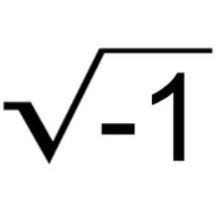
 interesting is the four real numbers it generates. (The numbers are +.2078… , -.2078… , +4.8104… , and -4.8104… .)
  even mean? Is there anyone who can visualize a reason why the answers make sense? Are all the answers even correct? Or is only one correct, as any calculator that can do the calculation will tell?
 = cos (ln i) + i sin (ln i)
 = i
= i = ln i
 = cos (
 ) + i sin (
 :
:





 = .043214;
  = 23.140693.
  who has a simple calculator with a square root key.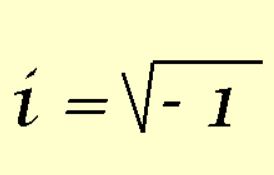
 ?
? ?
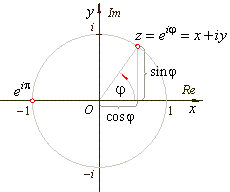
?  to stretch or shrink the unit circle of values. We aren’t going to go there. In this essay “e” is always preceded by the number “one“, which by convention is never shown.