OBAMACARE AND THE LAW OF UNINTENDED CONSEQUENCES

Opposition to Barack Obama’s health care law began six years ago, before he was even elected President. Opposition has continued through his presidency — Intense, persistent, unabated. As I write this article, advertising against “ObamaCare” is running around the clock in every state.


In June 2013 the Supreme Court overturned part of the new law to allow states to opt out of Medicaid expansion. All the Confederate states except Kentucky opted out, as did Maine and Wisconsin in the north, and the eight central states that divide the country down its middle, north to south.

One-half of the Medicaid-eligible uninsured live in these twenty-one states — five million people. Because their states opted out, these five million folks will continue to lack health insurance long after the rest of us are fully enrolled.

In addition, twenty-eight states refused to set up health care exchanges. This lack of cooperation continues to complicate the roll-out process and adds an unplanned-for burden to the new health plan.
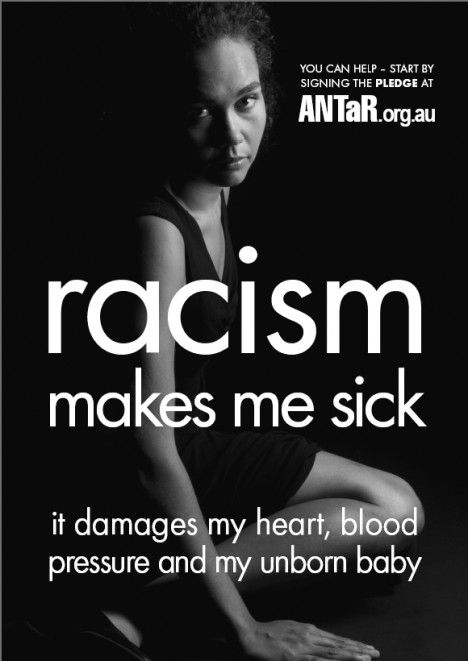

racism makes me sick girl


What’s going on here? Anyone with common sense and a knowledge of history knows exactly why the opposition is relentless. Racism is at the heart of our politics, and we have a black president who proposed a universal health care law that enables Negroes in America to finally get health insurance like the rest of us. It’s that simple.

I am sure that only a very few of those who oppose “ObamaCare” would agree that their opposition is racially motivated. People don’t generally examine themselves or their motives. Nor do most people want to change. It’s the part of being human to which the writer of Genesis alluded when he wrote, The Lord saw that the inclination of the thoughts of the human heart was only evil all the time.  

Few people believe they are evil or even capable of it. No one believes they’re racist, even when it’s obvious to everyone else. Just because messing with the Affordable Care Act has wrecked havoc on minorities and the poor in the states that opted out doesn’t mean we’re mean-spirited, opponents say. We have our reasons.

Are there other reasons people despise “ObamaCare” that aren’t racist? Of course. Some have to do with greed. The USA has the most expensive health care in the world. People who care have to ask: why?

One possibility is that the USA — unlike most countries — no longer limits incomes.

In the 1980s Congress removed caps on incomes by lowering top-bracket federal tax rates from 92% to 28% (later adjusted to 35%). For the first time since before the Great Depression people could make and keep as much money as they could get their hands on. Owners and executives began to pay themselves as much cash as they could squeeze out of their companies.


bankers looting
Artist’s conception of greed gone wild. Some Americans consider selfish greed a virtue.

Driving down wages, overcharging customers, and misrepresenting company assets & income to accrue additional tax advantages can and does result in huge windfalls, which leaders are now able to keep — under the new tax codes — for their personal enrichment.

Business owners who once spent money to strengthen their company’s infrastructure — or to bolster wages and benefits for employees — now divert it into ridiculous pay packages for themselves and their executives.

In 1990 the USA spent five hundred billion dollars on health-care. Today it’s two-and-a-half trillion — five times as much. Most of the money has gone into increased compensation for “top” doctors and health care company owners and executives.

Excessive compensation of “specialists”, owners, and high-level executives is an embarrassment to our country and a disgrace. It is the reason USA health-care is notoriously expensive and has, during the past few years, soared beyond the grasp of most median-income families.

The wealthy custodians of America’s most lucrative cash cow — the vast health care industry — are in the fight of their lives to keep government as far away as possible from their private treasure trove.


jimmy fallon obamacare
People laughed at this joke. Is it funny?

Under Obama’s presidency racism and greed have joined forces to deny tens of millions of Americans affordable health care. The national campaign to smear the ACA and degrade support by labeling it “ObamaCare” (after the hated Negro president) has been successful enough that people actually laughed at the joke illustrated above when it played on late night television. The put-down went viral on the Internet.

Let’s be clear. Buying health insurance is not mandatory. People who choose not to buy health insurance forfeit a tax deduction — same as when they choose not to buy a house. Why is this hard to understand?

And by the way, deadlines and cut-off dates don’t increase enrollments. They decrease them. They were a concession to opponents in exchange for votes of support.

What have been the unintended consequences of the campaign to destroy the Affordable Care Act? This is where Jimmy Fallon got it right. It has been a Cinderella story.


opposition debate
When this debate is over the blue shirt will know more than the green shirt. Why?

Opposition has worked the way competition between companies sometimes does. It forced advocates to confront errors and mistakes. It compelled the builders of the ACA to address problems sometimes overlooked during roll-outs of big national programs like Social Security and NASA.

Opposition sharpened wits and forced clear thinking from people who might have been tempted to overlook issues until after the roll-out. It mandated an all-hands-on-deck approach to solving the problems of the Health Exchanges after opponents pointed them out.


kiss opposition
Love overcomes hate. Believe it.

When people write the history of the Affordable Care Act a hundred years from now, I believe they will say the ACA had a smoother roll-out than many of the successful government projects introduced during the twentieth century.

They will point out that the ACA became the model for the programs of the twenty-first century. They will remember Barack Obama as one of our best and most beloved Presidents.

And once again history will teach people the age-old lesson.  Love is more powerful than hate.

And what is love if it’s not helping suffering people who stand helpless before diseases they don’t understand, which will kill them if those who are healthy turn their backs?

May those Americans given much always be a grateful people who offer hope and comfort to the sick and disadvantaged who live all around.

God is counting on us.

Billy Lee

CIVILIZATION AND INEQUALITY


divestiture 3


If the United States divested the wealth of the 100,000 wealthiest Americans but allowed divested persons to keep one million dollars to sustain themselves, what could it do with the money?

The question deserves an answer.

The answer may surprise people. Some say the United States could completely pay off the national debt of 17.4 trillion dollars and run the government at current spending levels (5.6 trillion dollars per year) for the next five years.  Taxes on everyone, including the wealthy could be completely eliminated for half a decade — until 2020.


divestiture 1
Tools of a typical tax accountant: calculator; complicated forms; toy blocks.

As a practical matter, the United States can’t divest 100,000 of its wealthiest citizens — not without crashing the economy. And, sadly, information about wealth and its distribution is frustratingly opaque. Economists can’t trust what they think they know.

Nevertheless, the United States can put in place tax policies that lift the burdens of filing and paying taxes from the backs of the vast majority of citizens. It can easily pay for things like education, health care, research, and retirement while stimulating economic investment and growth. And it can protect our freedoms and egalitarian way of life from individuals who have sequestered an unreasonable share of our resources. (Read Capitalism and Income Inequality elsewhere on this site.)


invisible hand
This is the visible hand.

The wealthy, and those who support them, tell us that the closer a civilization resembles the natural order of things — that is, a state with the least amount of government possible — the better off that civilization will be. The invisible hand of free markets will enhance the destinies of all. Free markets, fewer taxes, fewer regulations — policies like these take the brakes off the economy and improve everyone’s lives.

Since we all plan to be wealthy someday, what could possibly be wrong with reasoning like that?


bullying 2
Bullies rule on unregulated playgrounds.

Well, for one thing, it ignores why folks create civilizations in the first place. In the eons before civilization, humans made little progress. Think of an unregulated school yard or imagine a jungle with no rules. What always happens? Bullies and predators end up running everything. The meek and the fragile have to hide or be eaten. Whatever ideas or contributions they might make to enhance the quality of life get lost.

It’s been like this in jungles and on playgrounds for as long as jungles and playgrounds have existed. It’s never going to change. It’s why folks need playground teachers and yes, civilization. With civilization we can organize ourselves. We can make rules to protect the weak and improve the lives of both predators and prey.


Civilization 1
For Genghis Khan, civilization was all about him.

We know from history, it’s the powerful who create civilizations to protect their advantages. For thousands of years bullies in expensive garb have run the show on every continent on Earth.


constitution
Our nation’s founders said that all people were created equal before God.

Two-hundred-and-forty years ago something new came along. Our ancestors won a revolution. They organized a civilization that would eventually empower the powerless and give voice to the weak.

Yes, they codified slavery, because what else could they do? Africans had been slaves in America for a hundred years already. For a hundred-and-fifty years two-thirds of whites had come to America as indentured servants, a temporary form of slavery that ended, typically, after seven years of servitude.

The habits of history weighed heavily on our founders, and being unsure of their steps, they gave-in to the pressures of greed to better form the consensus that would permit the birth of something new in the world. And guess what? Our new-born civilization grew up, matured and ninety years later ended slavery in the United States of America.

Earth needed a new way — a way based on the dignity of people, their rights before God, their need to be free from humiliation by others more powerful and crafty than themselves. They needed a new kind of civilization, and our founders found a way to build it, blemished and imperfect as it was.

It took time; it didn’t happen overnight. I was twenty years old before black folks got the right to shop freely; to buy a soda in a drugstore; to buy a house; to get a loan. Maybe two-hundred years seems like a long time for a constitutional republic to get serious about freedom for individuals and families. It is a long time. We might as well admit it.


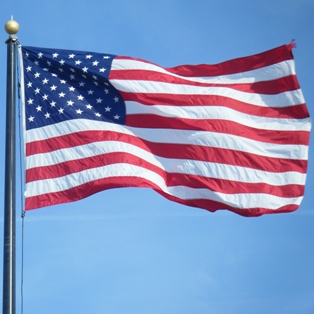
American flag
The flag should stand for what is right, just, and fair. It is the symbol of our civilization.

Today, as the civilization we built slides into the shadows of an unregulated jungle, people need to stand up and shout, No! This can’t be right.  In a civilization built by hundreds of millions, we can’t let a few thousand of the most clever humans sequester twenty-five percent of the wealth. It’s an unreasonable reward for cleverness, and it’s unfair.

Why did our ancestors build the civilization we call America? Why did they take hundreds of years to shape and change our way of governance?

It’s because they intended to make America succeed for everybody. I’d like to believe that they didn’t want it looted and plundered by the powerful. They didn’t intend for average people to be “gated” out of the desirable places to live, or for the disadvantaged poor to be locked away to rot deep inside our inner cities.

We still have work to do. The work falls on each generation to make the world a fairer, safer, more loving place for every person who lives and breathes.


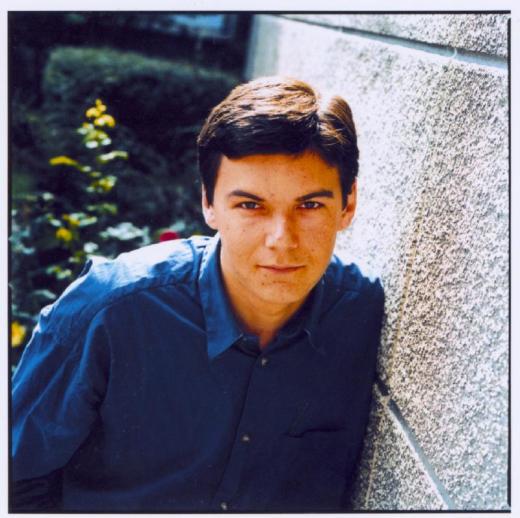
Thomas Piketty
Thomas Piketty was an instructor of economics at MIT during the 1990s; he is the founder, Paris School of Economics; Director, Department of Social Sciences, Ecole Normale Supérieure; and Director of Studies, École des Hautes Études en Sciences Sociales.

Fortunately, America has allies around the world ready and able to help do what’s right, if we only listen. One is Thomas Piketty, the French economist.

In March, 2014 he published in America his critically acclaimed Capital in the Twenty-First Century. It is a sweeping account of the rising inequality in our world, according to New Yorker Magazine’s John Cassidy.

I’m excited about this book. Many reviewers say it’s important. It is the culmination of years of research by a brilliant scholar. It presents, I’m told, a paradigm shift in thinking about the problems economies have delivering fairness to average people.

If Piketty’s book strengthens the courage of economists in the United States to speak openly about the touchy subject of inequality, he will have done our country and its people an enormous favor.


image
Gold jewelry and coins held in an overseas bank.

The United States, though proud of its wealth, seems to go to great lengths to under-report it. It’s primary focus is to collect taxes, I guess.

Assets not subject to taxation hold little interest for government accountants. The Feds limit their count to households and tell us that our total wealth is 54 trillion dollars. Other economists say it is higher — maybe as much as 188 trillion; they include in their tally many assets not normally taxed.

The subject of how wealthy America really is — who holds the wealth and in what amounts — is murky at best. According to John Cassidy, Thomas Piketty’s call for households to declare their net worth and be taxed on it will provide the reliable statistics needed to un-muddy the waters and enable policy makers to fashion the sound and fair tax policies required to protect the benefits of civilization for everyone.

Billy Lee

Post Script: Billy Lee advocates for a standard of maximum personal-incomes and estate-sizes established by the United Nations as ratios pegged to each country’s minimum wage. Violations would be treated as felonies by international courts.

Billy Lee’s proposal and some of its economic and moral advantages are described in the article, Capitalism and Income Inequality.
The Editorial Board

SEGREGATION AND THE GATED COMMUNITY

The word community sounds egalitarian to most people. And gated? No word yields a fairer portion of safety to airy openness in the image it conveys to the mind.


Gated community near Orlando, Florida.

Florida is a land flowing with gates and communities. It is a Promised Land of sun, leisure, warm pools, and exclusivity. For the past month Bevy Mae and me have been vacationing inside this paradise at a house in one such community near Naples, Florida. It took three references, photo ID, and all cash up front to get in here.

We are grateful for our good fortune. And we are in a really safe place. But when thinking about the state of affairs which has excluded as many as 94% of all Americans from the possibility of living here — if only for a few weeks — it makes me sick to my stomach.

Of course, if you don’t live here, you can’t be here — not even to drive through.


gated community 2


The compound we live in is huge. While biking in it the other day I was amazed to stumble on another gated community inside ours. It’s blessed by God with a lake and huge houses.

What’s strange is the gated occupants of our community aren’t allowed in their gated community even though their community is inside our community. Apparently, there are layers of gated-ness. I never knew that.

As teenager, I lived two years in Key West, Florida. It was before Civil Rights Act of 1964. It was totally segregated there. The only Negro I ever saw was our maid.

Our housekeeper was an articulate thirty-year-old woman and really beautiful. I liked her a lot and talked with her every chance I got, usually about politics. From her, I learned how difficult life was for black people in Key West at that time — and maybe as important, that a lot of Negroes actually lived on the island. Never knew that, either. Somehow, they managed to keep an extremely low profile. 

She said she supported the incumbent Democrat for Congress who was then running against an upstart Republican — a young guy always on the radio complaining about how rich his opponent was. She liked the Democrat, she said, because he once bought park benches for her neighborhood.


integration segregation


At Key West High School, the powers-that-be were considering the admission of a black kid from a “good” family. His dad was an officer in the U.S. Navy. Over lunch in the school cafeteria, I made the mistake of saying I saw nothing wrong with going to school with “Negroes” (as polite people referred to them).

“What!” some kid yelled. “You want to eat with niggers?”  Soon a crowd gathered. I stood my ground, and no one beat me up. The South was changing, I guess, but only a little.

One thing Key West didn’t have back then — no town did in those days — was gated communities. We had a military base that was gated — I lived on it — but the gates were for security against the hated Communists. We didn’t have terrorists or any other sort of enemies of the state. All that was to come later.

After World War II, the South and some parts of the North enforced segregation with a civilian militia called the Ku Klux Klan. It was a quasi-religious/military-style organization self-tasked with extra-judicial punishments of Negroes who violated the unwritten codes of the South.

I know something about it. My grandfather belonged to the Klan for some years, which he said he regretted. He told me things. Everyone he knew then was in the Klan, and yes, they did things they believed righteous but weren’t. 

If a black family bought a house in a white neighborhood, the militia would burn it down. Sometimes, so as not to smoke-damage nearby homes, the KKK bombed the house; or if white children lived close by, they might burn a cross in the front yard to scare occupants into leaving.

Lynchings — common after the First World War — were, by the 1950s, less common.


Ku Klux Klan


After dozens of documented actions against Negroes — and perhaps hundreds or thousands of undocumented ones — white neighborhoods did not need gates, or walls, or fences to remain segregated.

Eventually, after years of separation, white people who lived in these communities came to believe — many of them — that black people chose not to live next to them, because they preferred “their own kind.”

Terrorism? It didn’t exist in the United States of America in those days. First time I heard the word was in college. Terrorism, then, was always directed at Israel, for some reason, almost always by Palestinians. Reasons why were never clear.

I don’t know what white people say today is the reason black people don’t live in gated communities of Florida. I haven’t vacationed here long enough to learn.

I would bet that in some town somewhere in this huge state a black family probably lives in a gated community. Maybe more than one, right? I can imagine people pointing to those folks as proof of my being uncharitable to the good people of Florida and to people everywhere who live in these spaces.

But it seems plain to me — fifty years after Congress, the President and the Supreme Court declared segregated housing illegal — black people don’t live in these desirable places.

Why is that?

I don’t know.

I met a black man down here the other day. He told me he had been a Marine who helped liberate Kuwait during the first Gulf War.

He cleans the pool.

Maybe, I’ll ask him.

Billy Lee