You have heard that it was said to the men of old, ‘You shall not kill; and whoever kills shall be liable to judgment.’
Jesus
The wars of Israel were the only ‘holy wars’ in history… there can be no more wars of faith. The only way to overcome our enemy is by loving him.
Dietrich Bonhoeffer
Those who have waged war in obedience to the divine command (or in conformity with His laws) have represented…the wisdom of government and… put to death wicked men; such persons have by no means violated the commandment, ‘Thou shalt not kill.’
Saint Augustine

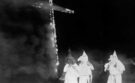
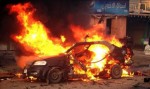
Readers might notice that the quotes by the three Christians cited above the picture don’t agree about murder. Killing is a moral controversy.
The subject is even more contentious between leaders of religions outside Christianity. It’s a strange thing. In the United States where Christianity is mainstream, pastors sometimes lead the charge toward war; some endorse capital punishment, so it’s confusing.
Can killing people be a good thing? The Catholic Church developed Just War doctrines to permit good people to kill the wicked under certain carefully crafted conditions such as proportionality, just cause, and last resort.
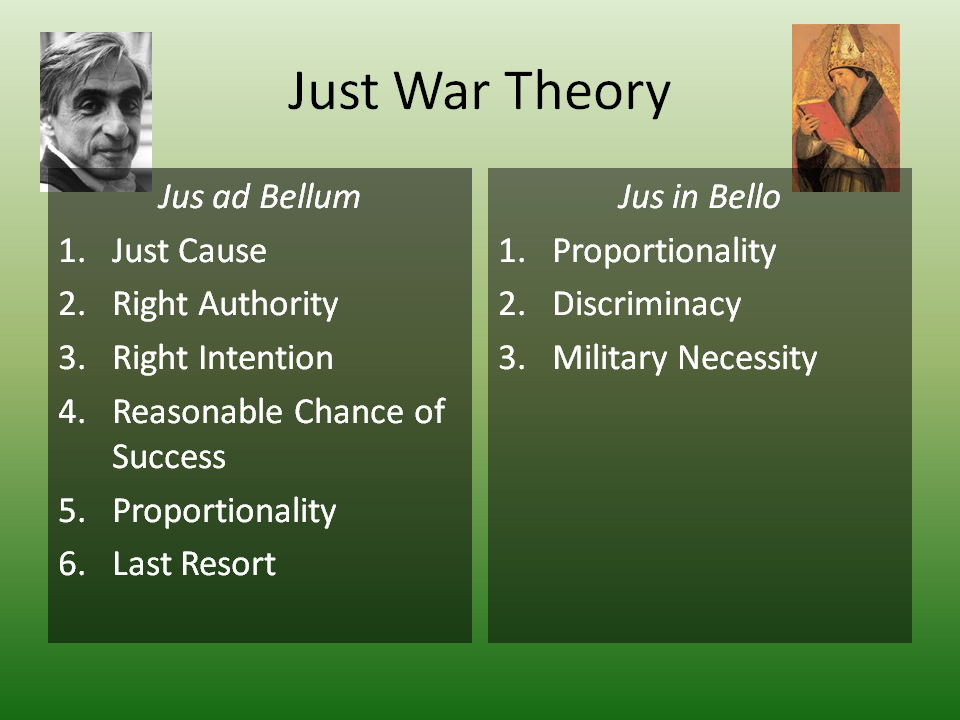
From my point of view, ideas of Just War fall under the umbrellas of self-justification, rationalization, and delusion. Will anyone admit the obvious? All countries are ruled by elites, and the USA is no exception.
Elites get to be elite through in-fighting, war, intrigue, and politics. They are, for the most part, desensitized to violence. The morality of religion is of no use to them except when it helps to consolidate and enhance their prestige and power. If a philosophy like Just War helps to alleviate the guilt feelings of soldiers they order into combat, they are fine with it.
Elites are, by process and definition, really good at fighting to maximize their advantages. Over time elites become a law unto themselves and develop their world view and their reasons for doing things, which are usually not well-understood by the average people who serve them.
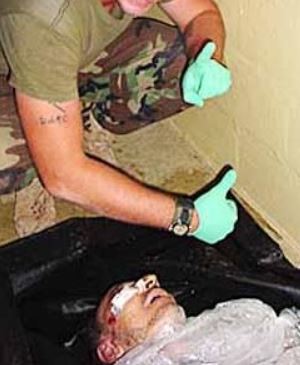
In most places, people go-along with their elites to get along. It’s less stressful and much safer to pretend that average people’s best interests are at the heart of decisions made by the wealthy and the powerful — especially as they negotiate deals, wage wars, and craft treaties.
Who wants to take-on people who can really hurt them should they ever choose to?
For their part, our elites tolerate religion, because in the United States at least Christianity seems to encourage citizens to be docile and compliant. Preachers and pastors encourage their flocks to turn the other cheek and obey authorities.
Christian evangelicals don’t challenge military power, and they generally oppose government policies designed to curb the power of individuals who accumulate vast wealth. Some encourage gun ownership and participation in wars — confusing non-Christians who might be under the impression that Jesus advocated pacifism and non-violence.
In the United States, the wealthy have built a powerful military and have used it to kill many millions of people during the past seventy-five years (the modern era). Much of the killing has occurred during periods when the United States did not formally declare war.
A lot of the killing has taken place under continuing resolutions like the Gulf of Tonkin resolution, which helped to justify the long war in Vietnam.
Another is the AUMF (Authorization for Use of Military Force) — passed by Congress on September 14, 2001 — which provided the legal authority for the United States to use military power in perpetuity against any individual, group, or country who dared threaten it.
Only Barbara Lee of California voted “no“.

Congressional consent is no longer required to wage war. Military force is now forever justified whenever and wherever the United States is threatened. The Congressional authorization of 2001 makes it easier for the USA to kill people, including American citizens living out of country.
One estimate by The Hill — a news organization whose on-line stories are widely read by members of Congress — places the number of killings by USA drones operating outside of war zones since 2001 at 2,400.
TheBillyLeePontificator.com could not independently confirm the estimate, which one of its editors characterized as “bordering on the ridiculous.”
It defies common sense that high numbers of assassinations of civilians could occur outside of warzones without arousing a profound backlash by people of goodwill, she insisted.
Is she right? Does anyone outside of government really know?
History seems to say it’s possible. Over the years the USA has invaded and tried to overthrow many countries, often under the pretext of retrieving businesses that were seized by their host countries.
In most places, the United States has succeeded — temporarily — like in Iran in 1953 where it secured natural gas and oil reserves; in Guatemala in 1954 when it took back the nationalized United Fruit Company; and in Chile in 1973 when it repossessed certain mines that were producing strategic metals.
The problem for most countries is that after the USA retrieves its property it moves in to take over the country, usually behind the scenes using native-born (and ruthless) dictators loyal to the United States.
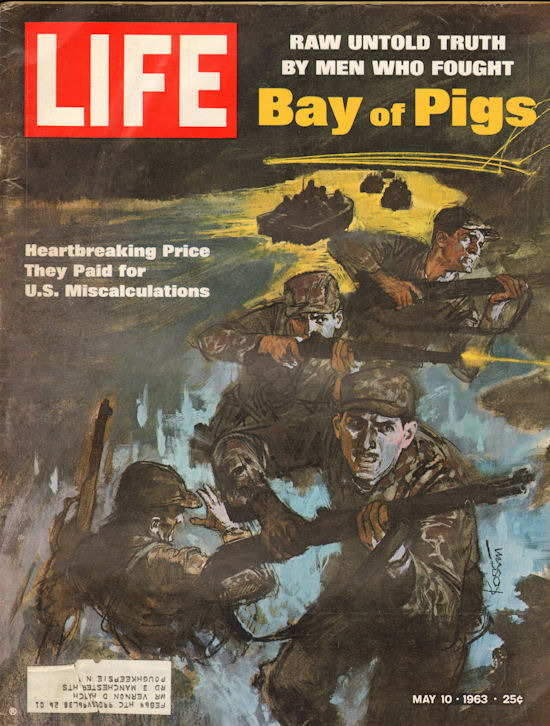
Every once in a while, takeover fails, like in Cuba in 1961 and in Vietnam in 1972. In those countries, strategic resources were never at stake, so the losses didn’t seem to affect our safety or our economic security. Still, after the fights ended, the USA worked overtime to make sure it ruined their economies by deploying embargos and unleashing its leverage over international banking.
The USA ignited recent wars in the Middle East — Kuwait, Iraq, Syria — for various reasons and continues them to this day. The United States fights terrorists in undeclared wars permitted by AUMF resolutions, which allow it to kill enemies anywhere in the world by remote control using un-humaned drones.
It’s pointless to argue whether the killings are justified or moral, smart or stupid. Many families have been ruined by drones and by war. They don’t care about smart or stupid. They just hurt; survivors wonder what might have been were their loved ones allowed to live.
So, how many people have we killed? How many hurt? How many wounded? How many amputees; how many blinded; how many deafened; how many disfigured? How many orphans? How many widows? How many dreams crushed; how many aspirations demolished?

How many loves-of-a-lifetime have been dashed on America’s battlefields?
Unless God Himself reveals it someday, we will never know, because during the era of Bush-senior and his general, Norman Schwarzkopf (of the renown German family) no one bothered to track body-counts; no one kept statistics on the maimed and crippled.
Our military says it doesn’t do counts. It’s in bad taste. A country like the USA doesn’t count pelts or put notches on rifles; besides, how does anyone collect the names of entire families destroyed in atomic blasts like Hiroshima and Nagasaki?
In those attacks, the genealogy archives of families were obliterated. The files of victims, the records of everyone who knew them, were vaporized.
The directories of the dead in Japan are missing, perhaps forever. Unless resurrected by God, the dead, many of them, are forgotten to the end of time.

Nevertheless, brave reporters and historians have tried to pull together records where they can find them. I can tell you that the numbers of deaths, executions, and imprisonments in America’s wars are in dispute — with some articles on Wikipedia, for example, frozen in place and fought over by review committees for historical accuracy. The reports are hard reading, disturbing really, because some folks seem to be trying for whatever reasons to understate and misrepresent the carnage.
Despite obvious inaccuracies which defy common sense, the numbers on the internet are the most reliable civilians have. They may perhaps be understated, but they are still large. I’ve included links for those who might want to verify the statistics.
Billy Lee
Notes from the Editorial Board: As everyone knows, the United States is a close ally of Israel. Many prominent Israelis are citizens of the United States, such as former Homeland Security Director, Michael Chertoff. Some folks, like Billy Lee, consider Israel a de-facto fifty-first state of the Union, much like Hawaii, though he admits there are important differences, to be sure.
Billy Lee has pointed out that since 1948 Israel and the United States have cooperated in a dozen or so wars and flare-ups — among them, the War of Independence, the Suez Crisis, the Six Day War, the War of Attrition, the Yom Kippur War, the Lebanon War of 1982, the South Lebanon conflict, the first and second Intifadas, the 2006 Lebanon War, the Gaza War, and various operations like Protective Edge — which were fought to secure Israel’s safety and its autonomy.
The USA has spent trillions of dollars to stabilize the Middle East and prop up with money and weapons governments favorable to our side. It has pumped over two-hundred billion dollars into Israel’s economy alone. How many people have been killed in the wars which erupted? Billy Lee doesn’t know.
He seems to think that an accurate figure for war-related killings by the USA should include in some way the deaths inflicted during the many conflicts in the Middle East where the United States was directly involved. He simply doesn’t have the numbers, so he can’t report them. The numbers may be available to others, but they are not included in his analysis.
A similar concern involves NATO, where the United States, again, is partnering with others in wars and conflicts, and is not the sole actor.
As for other conflicts: Billy Lee has added the following list with links to the statistics. The Editorial Board
Dear Readers,
Here is a list of wars the United States has fought since 1940: World War II, the Korean War, the Cold War (including attacks on Cuba, Guatemala, Chile, Peru, Argentina, Grenada, Panama, Haiti, and others), Bosnia-Herzegovina, Kosovo, Kuwait, Afghanistan, Iran, the Iraq War, the Vietnam War, Cambodia, Laos, Thailand, the Persian Gulf War, Syria, Yemen, Somalia, and the War on Terror.

The War against Japan deserves special mention.
The names and quantities of people the USA killed in Japan will never be known. The Air Force obliterated their records in the fires they set in the Japanese made-from-wood-and-paper neighborhoods and cities.
Beginning in 1945 sixty-seven Japanese cities of consequence were burned to rubble by incendiary night-time attacks involving hundreds of B-29 Superfortress bombers under the command of USA General Curtis LeMay.
During the first attack against Tokyo in March 1945, Lemay deployed 325 bombers to drop a half-million slow-burning napalm cluster-bombs, which killed at least 150 thousand civilians. His bombing of the capital city continued unabated for three weeks; the fire-bombing of the other sixty-six Japanese cities continued for three more months.
Five cities were held back (protected from attack) until August 1945 to permit General LeMay to decisively demonstrate American atomic fire-power. He annihilated two of them — Hiroshima and Nagasaki — with the atomic bombs named Little Boy and Fat Man.
He spared the three remaining targets, Yokohama (Japan’s second largest city, where I lived from 1952-1954), Niigata, and Kokura — after the Japanese surrendered on August 15, 1945.
Some older readers might remember that Curtis LeMay ran for Vice-President in 1968 on a third-party ticket led by Alabama Governor George Wallace. The two men tried unsuccessfully to derail racial integration in the South, which our Congress had recently mandated.
One of General Douglas MacArthur’s closest aides, Bonner Fellers, described Curtis LeMay’s attacks on Japanese civilians as “the most ruthless and barbaric killings of non-combatants in all history.”
The most conservative estimate of the number of civilians burned alive that I’ve seen in print is 500,000. Some historians have estimated the number to be as high as two million. The Japanese effort to evacuate their cities saved countless lives, but left many millions of women and children homeless, until the cities could be rebuilt after the Japanese surrendered.
Official histories written by the US Air Force claim that ”five months of jellied fire attacks” were ”so destructive” that they ”cremated 65 Japanese cities.” The attacks left ”9.2 million homeless.”
Here are some numbers of interest: atomic bomb attacks in Japan — 225,000 killed; Vietnam War — 3.4 million killed; World War II — 55 million killed; Korean War — 2 million killed; Iraq War — 1 million killed.
This list of wars is necessarily incomplete, because the USA fights secret wars from time to time. In his 1990 book, Freedom in Exile, the Dalai Lama spoke of one such war against the Chinese and admitted taking millions from the USA to support the effort. He claimed that America’s policy was to destabilize and overthrow wherever possible each and every Communist country in the world. Inside the US intelligence establishment, the suppression is called Strategic Strangulation.
This policy was the reason many Communist societies sealed their borders during the Cold War. Some, like North Korea, still do. Military historians have claimed that the United States dropped anthrax bombs on North Korean troops and their Chinese allies in 1954. This biological terror was unleashed after what historian Richard Rhodes says was a program of US bombing against cities and dams in North Korea that killed two million civilians.
General Curtis LeMay agreed. He led the US Strategic Air Command during the bombing of Korea. In 1984 he bragged before the Office of Air Force History, ”Over a period of three years or so, we killed off — what — twenty percent of the population.” It helps to explain why they hate us.
The numbers killed in these secret and not-so-secret wars are argued over; they are not certain or even known — certainly not by civilians who lack security clearances. Mayhem from traumatic wounds is not known.
The consensus seems to be that the total number of human beings killed by the United States since 1940 exceeds ten million. Depending on how it is counted, the number could be far higher. A case can be made that it’s as high as sixty-five million.
In the modern era, the United States has warred against one out of four countries on the earth. I didn’t believe it, until I did the count. Count the number any which way you choose. It’s a big number. And the numbers of wounded and traumatized human beings is certainly enormous, but unknown.
I’d like to think that in the future the United States will resolve its differences with other countries and organizations in a way that doesn’t involve killing people.
The United Nations was established to do just that — peacefully resolve disputes — but the United States runs the place, some say, and others have insisted that the USA is the biggest warmonger on the planet.
It has something to do with its defense industry and the efforts of tycoons to maximize profits for themselves and their shareholders.
I hope it’s not true.
How horrible it is to have so many people killed–And what a blessing that one cares for none of them! Jane Austin, 1811, on the Battle of Albuera
Billy Lee
Postscript: Here is a quotation from wisdom literature, which — who knows? — might help policymakers. I wonder if anyone believes it.
It is by the fear of the LORD that someone turns away from evil. When someone’s ways please the LORD, He makes even their enemies be at peace with them.
I found the passage in the Proverbs of the Bible. See chapter 16.
Random Reads:

WHAT IS LIFE?

LAST GASPS

END OF SPACE

MASS STOCKHOLM

TOP TWEETS