
END OF SPACE

People used to think Earth was flat. Since flat things have edges, Earth had edges, which meant Earth was likely finite. If someone walked in one direction far enuf, they would fall off an edge or hit a wall, one or the other.

People now know Earth is a ball moving thru space. Walk far enough on a ball, get back where you started, right? Does this simple fact imply Earth is infinite? Of course not. We know it isn’t. Earth has finite area, which can be roughly calculated.

Today, no one understands enough about space to know how much of it there might be. Some think space goes on forever. Regardless of direction, spacecraft can never reach the end because space is all there is and must therefore be infinite.

The problem with this view comes from what folks think they know about gravity. Massive objects seem to bend and twist space in ways that make time slow down and light bend. It’s mysterious, because if you think about it, why should they?

Isn’t it crazy that massive objects have profound effects on things they don’t touch? They change path and timelines of whatever travels nearby. Something unseeable transforms invisible oceans of spacetime putty, which pushes about whatever lies buried inside.

Einstein showed how to calculate power of massive objects like stars and (then unknown) black holes to warp space in ways that forced changes to direction and speed of anything at all that moved by, but he didn’t explain why or how. It seems puzzle pieces are missing which found would at long last reveal what this malleable stuff might be.

It’s nothing we measure. Many have tried but space seems to be entirely empty. Virtual particles pop in & out of existence, yes, but taken together their measurable qualities add to zero.

What answer makes sense? —infinite space or not?

Einstein’s answer was that spacetime makes no sense apart from existence of mass & energy, which are two sides of a coin, like light, which measured becomes point-like momentum or spreading energy undulation. Apart from mass & energy, space & time cannot, do not exist.


Isn’t non-existence the meaning of the word “space”? Under any scenario that can be imagined, space & time have no meaning except to help thinking people describe peculiar relationships between objects we observe & measure. In this sense, every massive thing is connected to every other.

Energy saturates the universe. It’s everywhere we look. It fills gaps between objects with 3 dimensional ripples of undulating something or other. It means that we—tiny neural networks that we are—live trapped in cosmic amber, like prehistoric insects.

At the scale of stars and galaxies we are truly constrained; frozen in time; unable to move in any way that can be noticed—were anyone out there at scales able to observe & take notes. It is impossible for any living thing to secure vantage points in spacetime where it might observe the entire universe. 

In this sense, the Universe is a single, solid object, which is imagined by something conscious trapped inside. Perhaps, somewhere far away beyond our vision an event horizon emerges beyond which mass & energy have no place.

The universe ends not with a wall or wail but instead a whisper, a whimper, a last desperate gasp. Light fades to embers, then into dark night where imagination does not go and black birds no longer sing.

Billy Lee
Note: a version of this essay was first published by Billy Lee on Quora in January 2025 
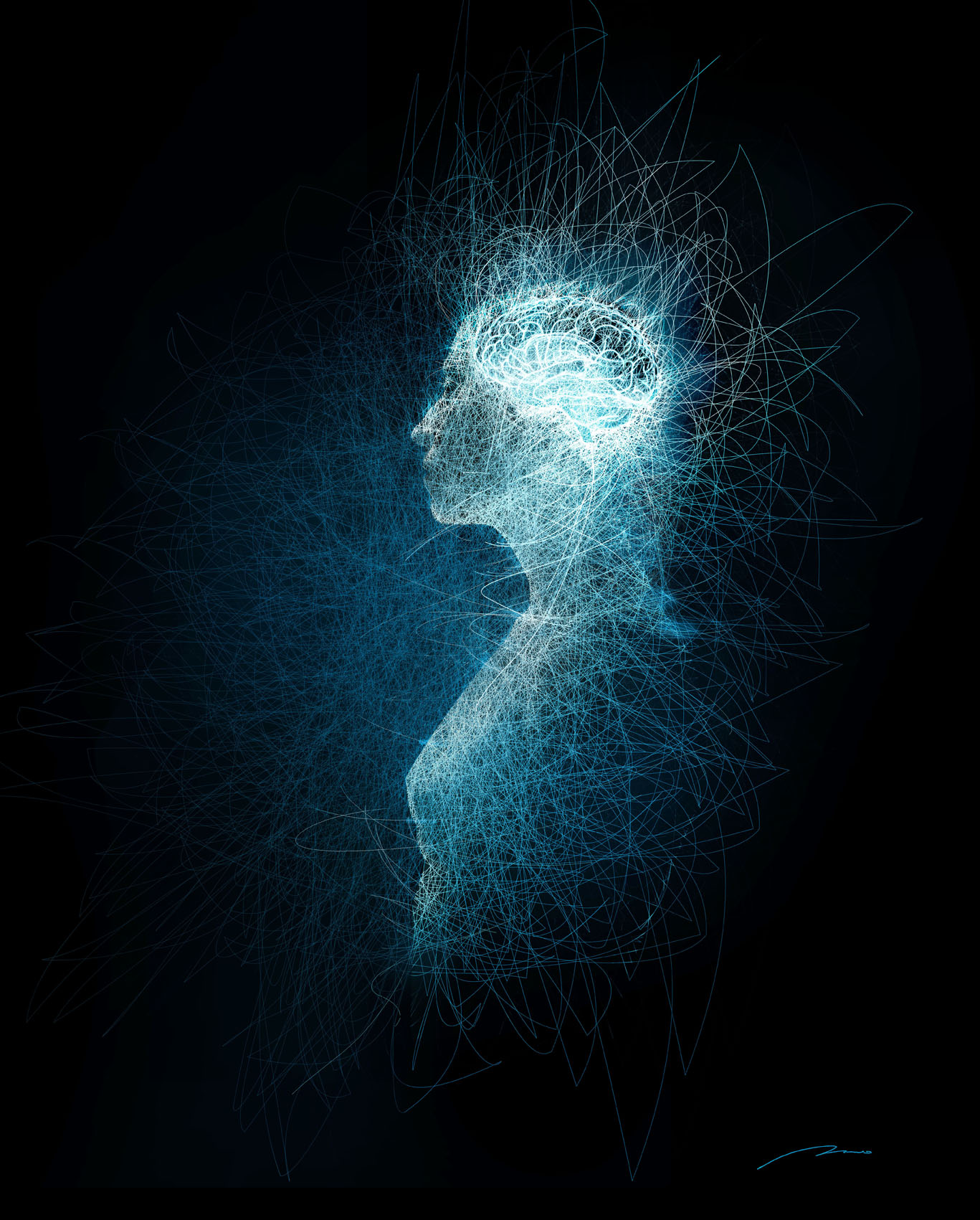
DETERMINISM

I’m happy to publish this essay because it is filled with insights about how the Universe might work. Physicist Mark John Fernee spent his career thinking about and doing experiments to work out some answers that ring true, at least to me. I learned about him on Quora. 

Since humans first grasped the idea that stars are not tiny holes in a tarp that shades Earth from Heaven, scientists have made progress toward resolution of questions both fundamental and mysterious which can finally be defended with logic and evidence. 

Think about it.

Is a creator necessarily constrained by laws of physics to initiate the cosmos people see?  Is a first cause necessary to start any Universe? What underlying reality hidden from science permits God to evade any concept of law to become the essential, fundamental, irreducible first cause of all that has ever been or ever will be? 

People, a few of them, continue to believe that stars are pin-holes; Earth is flat, disease is demon-caused, and on and so on. These speculations are obviously false to anyone who tests them against dispassionate observation, which is the process called science.  

Is the Universe deterministic? The answer to this question—should anyone know—might help answer whether anyone is truly free to decide. Can people make decisions unconnected to events that go back to some conjectured beginning or are they instead prisoners of delusions of freewill peculiar to all conscious life-forms like us? 

What follows is an answer, first posted on Quora. I let it percolate on the site for months to absorb whatever reaction it might garner from interested folks. I wrote not only to learn from others but to make the idea of determinism comprehensible to the curious who can read.  

Of course, I’m a Pontificator, not a credentialed scientist nor theologian nor philosopher. What I’ve learned—what I write—remains unvalidated by any expert or guild. 

Added at the end of the essay is a link to one of many posts on Quora by Mark John Fernee about some of the science of determinism.

For the interested, click the link at the end of my essay to review some of Fernee’s thoughts on the physics of determinism. After reading, login to Quora to access readers’ comments and Fernee’s responses.

(Note: It will be necessary to visit several spaces on Quora to find every comment.)

Unusual insights hide in plain sight like Easter eggs.

Here goes my essay:


It might be difficult for intelligent, science-indoctrinated people to accept but the universe at all scales is most likely not deterministic and never has been.

Before folks who “know better” wander off to search for something more confirmational of their biases, I hope to convince a few of the more open-minded to reflect on a couple of stomach-churning examples.

After all, simple statistics suggest that some preordained percentage of readers will read on; a well-defined subset of those readers are certain to agree with my arguments, which might take any arbitrary form at all—depending on the vagaries of my imagination and what I ate for dinner, perhaps.

Sounds deterministic, doesn’t it?

Not really.


The truth is I have no idea what I will write before I write it. I’ve staked a position, which I intend to defend until I convince myself of its truth. Some predictable number will read and be likewise convinced.

Let me admit right now that I have no idea whether the universe is deterministic. I don’t know if my will is my own or someone else’s.

I don’t know who I am, where I am, what I am, or why I am. I don’t know what time it is. I don’t know where I’m going. I can’t remember where I’ve been. I have no clue what 99% of me looks like because it’s inside a place I can’t see. It’s never been photographed. I’ve seen no reflection or picture of almost all of me.

I don’t know how my brain works or why I’m conscious. I haven’t seen my brain. Doctors tell me I have one. They gave me some films from an MRI and told me the grey smears were it. I took their word. It’s puzzling because the universe inside my head seems larger—infinitely more vast than plate smudge.

I have ideas but 99% of them are likely to be mostly wrong. Why? Because my ideas come from somewhere else, and I alter them. I channel ideas but if you ask where they come from, I can’t say. I don’t know why I think and say and write the things I do.

Well, most of the time I think I know. It’s called being well-grounded. Yeah, that’s me. I’m grounded to a reality that makes no sense during those times when I think deeply about what reality might be.

Take blue for instance—the color. It’s a hallucination, right? It tells me nothing about the wavelength of light that triggers blue in my brain. I’ve never seen a photon, have you? When stripped of color, what might a photon be? I have no idea. Some say it’s an electromagnetic corpuscle with wave-like properties.

What the hell is that?

Who knows that galaxies are fragile? So are orbits of planets and moons. As are universes.

The Higgs field is unstable, right? It can undergo phase transitions. Scientists say it’s true. It’s like flushing a toilet. One moment the toilet is a stinky mess; phase transition is the sound of swirling water—a whirlpool that dumps all into the abyss. What returns is blue water and clean porcelain.

What will all that went before mean? Trillions of lifeforms found comfort in the mess. What kind of determination pushed the handle to upend the destinies of trillions of tiny creatures no human will meet or see?

Why do humanoids feel free to make arbitrary decisions if it isn’t true that they make them? Does it mean that everything they believe is a lie?

Has the Universe made us its fools?

I will tell you this: the thought has occurred to me that the Universe might be my fool. Without me to tell its stories it’s nothing but a dead thing with no past and no future.

Apart from conscious-life—in particular, my life—the Universe is simply impossible.

I don’t believe the consciousness we experience dies. It’s something foundational that everyone plugs into when they live. Somehow, we all live inside each other, and conscious life lives inside us. When we die our bodies abandon consciousness and decay away, but conscious life lives on into the past and future as it always has and always will.

Our bodies count for nothing. It’s why none have seen themselves. A quick, confirmational glimpse of this or that part of us is all we can hope for—then it’s gone.

Billy Lee

SENSING THE UNIVERSE


Determinism and Free Will 
Quora essay by physicist Mark John Fernee