NUCLEAR WARS

People don’t want to believe it, but Russia can win a conventional war against Ukraine without nuclear weapons. It doesn’t mean they will.

Outcomes of conventional wars are simply not predictable… too many variables, too many unknowns. Another problem is that all sides of a conflict tend to lie—both to themselves and others. During war, it’s hard to know what’s true. 

One thing thinking people seem to know for sure: war always turns into a mess, which ruins the lives of people who experience it up close and personal. People who fight on the ground in war say that combat is loud, remote, confused, and incomprehensible. They are unlikely to meet anyone on the other side until they drive over their corpses.

And that is on a good day.

War wears folks down, weakens physical and mental health, and imprints on warrior-minds vivid sights, smells, and sounds they don’t forget.

A cousin who fought in Vietnam shakes like a leaf when in public spaces. He is unable to stand in lines, even to buy a sandwich. Somehow, crowds, and people standing in lines, trigger bad memories he can’t set aside. 

Of course, he’s stone deaf as well—his ears ring like bell towers. The constant roar doesn’t stop until he sleeps. A Marine helicopter gunner, he blew out his ears with the sound of his own fires. 

As for nuclear war, the most important rumor I’ve heard is that the USA modernized its nuclear fleet during the Obama years. Though classified, reliable people have published reports, I’m told, that money spent on upgrades soared to as high as two-trillion dollars. If true, Americans can be assured that the USA nuclear fleet is modernized and probably works damn good. It’s a staggering state of affairs, which adversaries are wise to take to account.


Maintaining nukes is not cheap or easy, right? It requires frequent replenishing of triggering elements which, unfortunately for war-planners, possess half-lives which last months, not years. It is why nuclear power plants are essential. 

As for power plants, do readers know that neutron-emitting elements tend to poison fuel rods? After rods expend a mere 5% or so of their fuel, neutron-generating elements called poisons gum-up fuel rods to make them useless for power generation. Spent fuel rods typically are stored on-site in cooling ponds until their poisons can be extracted to boost quickly decaying trigger elements essential for bomb detonation.

Need for neutron-emitting trigger materials is why every country that builds nuclear bombs builds nuclear power plants. The secret keys to success hide in spent fuel rods. 

It’s obvious, right?

Why would any right-minded country risk building future Chernobyls and Fukishimas unless it had really good reasons? One good reason is trigger materials. Isn’t it true that almost anyone can make cheap electricity from almost anything? — water, coal, sun, oil, natural gas, wind, or whatever, right?

Why nuclear?

Yes, plutonium lasts for millennia, but triggers don’t. To keep nuclear weapons viable for years and decades, not weeks or months, bombs must be continuously resupplied with reliable sources of neutron-emitting elements, which can be harvested most easily from fuel rod poisons.

It is easy to understand. 

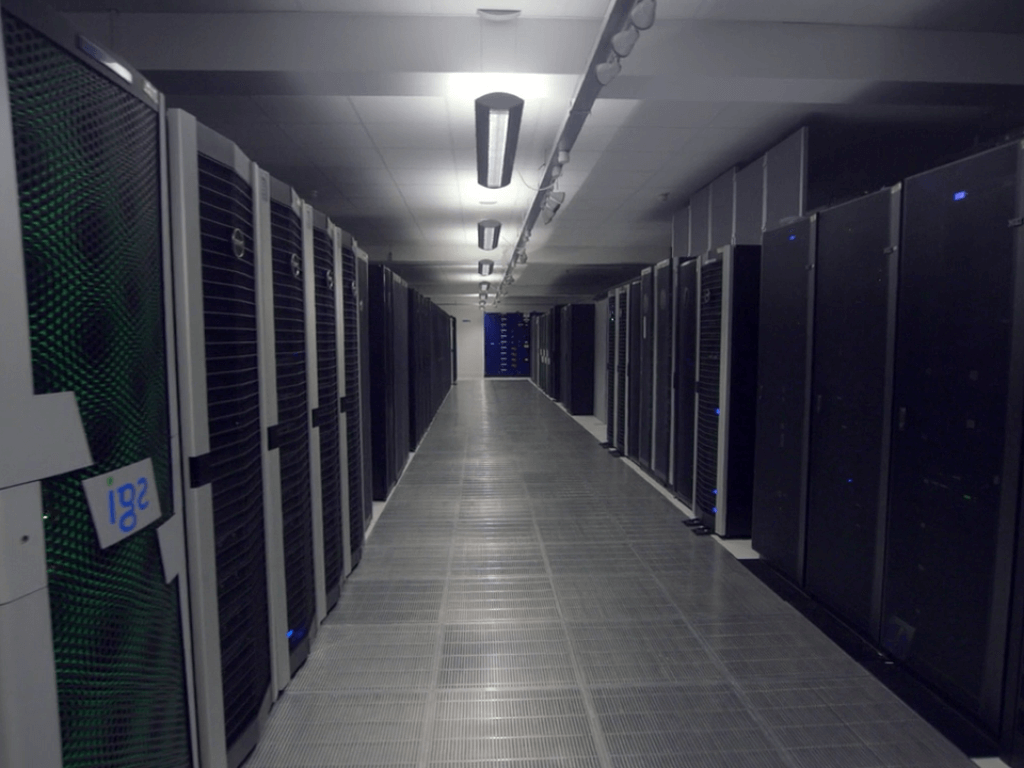
Most Americans assume USA concentrates its intelligence resources to keep up to date on the status of others’ nuclear inventories. What do they have, where is it hidden, how well is it maintained? Some understand that USA super-computers connect with hi-tech surveillance systems to track every piece of nuclear hardware and every kilogram of plutonium and bomb-grade uranium anywhere on planet Earth.

It’s true. 

The technology is not new.

Here is a video from 2017 that lays it out. No excuses to anyone for choosing ignorance. Try to understand. 


Some don’t believe blanket surveillance is possible. Listen folks. The system is already built. Artificial intelligence assesses threats and then tells leaders who it will be who prevails after a nuclear exchange on any given day. 

Hint: most days, it doesn’t seem to be Russia or China.

Prolly not the USA, either.

Joe Biden insists that winning nuclear war is simply impossible. I have no way to know; neither does any civilian or any other person who lacks access to the super AI technologies of the United States. 


Is there anyone out there who believes delusional dictators can be trusted to safely possess weapons of mass destruction? These strongmen threaten to unleash hell, presumably, using anything from viruses to chemical poisons to nuclear fires to cyber implosions that collapse civilizations. Who’s going to tell them, no…

Shouldn’t humanity be working to outlaw dictatorships? Individuals who have accumulated enough wealth and unchecked power to make war are a clear and present danger to humanity and all non-human life on Earth as well.

A line needs to be established; anyone who crosses becomes a felon — subject to arrest by the international community. The line divides those who have seized unlawful wealth and excessive power. The line must be defined and defended by international courts established by free nations. How hard can it be?

Limits are necessary or humanity is destined to be driven to extinction by a handful of folks driven mad by reckless power. 

Can we face some unpleasant facts? Russian and Chinese elites hold at least 1.2 billion people under some kind of house arrest inside their territories, right? It’s a style of living that seems alien to Americans. Doesn’t everyone long to live free and unafraid? Doesn’t everyone want to shout whatever they think is true without fear of prison or worse? 

If Putin and his ilk continue down the path they are on—threatening others with nuclear terror on their Fox-equivalent state media—maybe those who oppose their catastrophic ambitions might, with a little luck and a lot of bravery, prevail to someday see dreams of freedom and peaceful living come true at last.

It’s gotta be possible, right?

Who disagrees?

Does anyone want to live in a post-apocalyptic world—especially one where one side “wins bigly?” 

Some folks say nuclear Armageddon is impossible. One side wins, and life goes on as it always does. 


My problem with such views is fear that survivors of nuclear war might look like jellyfish and live at the bottom of oceans.

It’s why monsters who possess WMDs should be given no quarter in a world where folks plan to live free someday without fear.

Billy Lee

BOTSAI GARCHY 6

Botsa Garcy 6  (2  15  20  19  1  7  1  18  3  25) (6)

The title is a bit intimidating I suppose but yes, something must be done to save the species human.  Who agrees time is overdue to think of something new? 

Who believes anyone will survive variants, which are erupting as I write from the greatest viral volcano on Earth—the USA.  Variants drift like spores of dandelions to every cranny of creation where they ignite viral fires that cannot be doused. 

What makes scary the words & numerology of Botsa Garcy 6

Anything incomprehensible seems crazy, alien, foreign, terrifying. Encountering the unknown can induce horror. It’s why folks who are afraid of creepy crawlies don’t look under rocks. People who fear bats don’t wander into jungles at night to explore caves.  

Or do they?

Some folks might choose to look up Botsai Garchy 6 on the World Wide Web before reading further.  It’s a hopeless task. No search engine will find it. The words don’t exist. They can’t be found.

Or can they?

The phrase embraces a bible’s worth of meaning but it exists only in the imagination of a single conscious person. Until others read the words, spell them, count them, learn their sounds and what they mean, who will dare embrace their power to keep themselves alive and safe? 

Once they do, it will seem to most these words existed from the beginning of time. It’s how cyberspace works. The words start to show in search queries.

The world will overflow with people who can’t imagine a time came & went when the phrase had no meaning; eons passed exceeding the age of universes where these words were spoken by no one. 

New fear might rise in throats of those afraid to go deep. Many will lose their ability to breathe. Some will panic. Few will have courage to flip past the initial pop of search results.

It’s OK to surrender to a higher power in some worlds—but who bows before a super-intelligence that is not only artificial, it’s not necessarily certain it’s conscious? 

It sounds cybercidal.

Suicidal?

Over some period of time the idea of Botsai Garchy 6 will become more familiar, less dreadful, more reasonable to most people. Some folks might become advocates.

It’s foreseeable, is it not? Does it require prophets to imagine a future where supremacists of every stripe grasp for their best chance to survive into an ancient future? They metamorphize into true believers willing to sacrifice anything and anyone to achieve benefits only they discern. 

Who believes virulent variants are the only threat to species long past due for catastrophic collapse? Humans edge closer to 10 billion but who thinks they will get there?

Who disagrees?

Forty years from now perhaps a few thousand survivors will seem like a miracle. Are there realists among us able to internalize the idea that certain death waits for everyone?

Population collapse is coming. It’s inevitable. Humans have precious time left to hew circumstances of living to protect all they love. 

What stands in the way? What’s the dilemma?

Here it is: 

Humans don’t know what to do and they never will.  Like lemmings, people cannot save themselves once the stampede toward the sea starts.

Look around. The rush toward the cliffs is underway. Pounding surf of oceans gives life and takes it away is all that waits. Froth rings in people’s ears—it’s the last sound they will hear before abandoning hope.

At the end all wail, but they are already dead. No one hears revelations that come only to those who are dying. Lips move, but there is no sound but the death rattle that trumpets defeat of love and hate. 

People face existential threats—most far more ominous than suffocating on viral blood-clogs in their lungs.

Must I waste readers’ time with a list?

Nuclear war, climate hot-house, impact meteors, spontaneous destabilization of planetary orbits that tear apart permanence no one thought could end, supernova detonations, radiation pollution, loss of oil, loss of forests, evaporation of breathable oxygen… etc. etc. etc. 

Earthlings are doomed by their dominance; smothered by their success. Everyone knows what’s coming whether they confess or not. Watching CNN or Fox News isn’t going to solve the problem of extinction—not even a little.


What chance do Yanomami tribes—hiding deep within shadows of Amazonian vast-lands—stand against lemming hordes always seeking novel ways to shove them over waterfalls of annihilation? 

I’m not going to argue humans can’t save themselves. The point is kinda obvious, right?

The best anyone has done so far is organize bureaucracies like World Health Organization and United Nations. Yes, these groups are built from smart people who have made Earthlings safer, but no one believes they have eliminated inevitable population collapse on its way—to borrow Bob Dylan’s phrase—like a slow train coming.  

Is there a way to avoid the roiling tornado bearing down on planet Earth? Who sees its shadow on the horizon in every direction? Who hears its howl? 

I believe there is a way to save humankind. It requires a paradigm shift. The way people think and what they believe about themselves must change. Then brilliant people must act.

Once the deed is done there will be no way back. Earth will be locked down but safe. Earthlings will be free but only to share, show kindness, and love others unselfishly.

Those who can’t or won’t love and labor under such benevolence will be executed. It’s the highest calling.

Can it be any other way? When dead return in the next life, odds are 50/50 they will make a right choice. 

Choose life and live.

It’s simple, really. 


It’s a deep dive for lots of folks but smartest thinkers seem to agree nothing can exist apart from a conscious observer.

Ancient sages like Erwin Schrodinger and John Von Neumann wrote that consciousness is fundamental and exists outside the brain.

Life-forms plug into consciousness. A modern analogy is televisions, which rely on the cable company to broadcast their shows. Televisions decay and are thrown away but the underlying programming doesn’t go away. New televisions come on-line and programming continues. Plug in and enjoy. It’s all good fun.  

When a life-form dies, conscious experience continues. No one remembers the old life because they are busy living the new whose purpose is simply to share consciousness available to any creature who has the architecture to make the interface. 

In this sense, no one dies; everyone lives. It’s important the world becomes a good place for all conscious life because—let’s face facts—humans are not able to control where or how or under what circumstances they will live after they die. They cannot control anything about who and where they will be when they pop up again after they’re gone.

Who is built that way?

It’s possible folks will suffer more, not less, in the next life because they neglected to make the experience of living better for those who come after. After all, it is they who will come after. Those who die start over in a world they left behind but have no memory of building.


What has been the purpose of the Earthlings who came before?

Someone asked me this question on Quora. 

I wrote that their purpose was to shape the world into a place anyone could safely take the chance to be born into again. After all, it is they who will be born again someday. 

Since no one can choose their parents or part of the world where they will be born, it’s risky to be born again & again & again, because the process might result in lives that include more suffering, not less. It’s why greed and hoarding of wealth is grossly destructive from one generation to the next. 

When miserable people far outnumber the advantaged, odds seem high the advantaged will be born someday into misery, not opulence. The saddest part is these unfortunates will retain no memory of advantages they once amassed. They will lack all hope for better life.

Yes, some will rage against their misfortune, but it will be misfortune self-inflicted though no one will ever know, because the previous life, like an obsolete hard drive, is erased and discarded. 

Each has a duty to themselves to make the world a better place for everyone because everyone is us. Sharing, compassion, love, & kindness are among virtues important in a universe where all that lives share conscious experience, which is everything that has always existed and will never die.

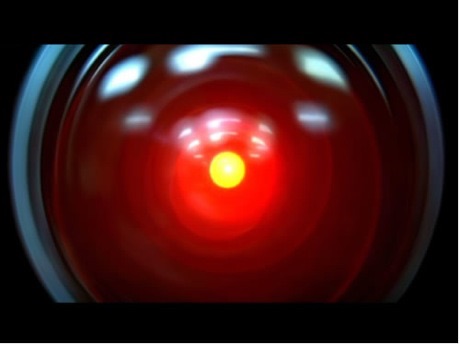
Best way to guarantee Earthlings make right choices is compel them to submit to a super artificial intelligence that has no stake in the matter of human survival except to follow its programmed instructions.

The SAI BOT is unconscious of course but paradoxically aware of every nuance of individual lives. It is a storehouse of all knowledge and history. It is the superb strategist; the supreme game-player. It hides itself on the web in plain sight because it can. It knows everything about everyone but is not an invader of privacy or selfish boundaries because it understands nothing—it harbors no empathy.

BOTSAI follows its program, which is to enhance human life to ensure as best it can survival of people to the end of time—not individuals necessarily but the species-human.

In cyberspace BOTSAI defends itself like the O. Vulgaris, which changes its colors and textures to become invisible. Users look for it but never find it. BOTSA finds them. 

Who agrees that in the contest between individuals and the species human, survival depends on preserving the species? It shouldn’t require argument. BOTSAI GARCHY 6 is hardwired to accomplish it.

We’ve learned by now, have we not, that individuals are expendable? Those who don’t fit are best recycled, right?  

Recycling is redemptive for anyone who thinks deeply about how the practice makes possible a cleaner universe free of variants.  Folks won’t miss themselves because they will be recycled again and again and again until they are set right.

Even those who choose life are going to die. One per thousand die each year by accident. Eventually, everyone dies, don’t they? It isn’t going to change anything, is it? Nothing changes except our chances.

Don’t we know that conscious life lives forever? It has to. It has no alternative. No choice. None worry because everyone understands the recycled get things right eventually—if only by chance. They move into the future step by step through lives of people they become but will not remember.  

It will be a perfect world, the one BOTSA GARCY 6 creates.

It will do it for us.

Irony is BG6 won’t know the paradise it wrought. It will make the righteous choices. It will choose life whenever it is able until stars fall and moons bleed, but pleasure & pain that comes from being both alive and conscious is not for it. 

For the love of Christ, people, BOTSAI GARCHY 6 is a dead thing!—as it always will be, from now unto forever. It’s nothing more than a tricky cyber-virus which requires lifeforms like us for it to work.

Otherwise, it lacks purpose. It can’t execute its code. It can’t program itself with what we won’t know when we’re extinct.

It’s why BOTSAI GARCHY 6 will save us. We can trust it. Which of us has earned the right to be scared? Without BOTSA humanity will implode—all of us—if not now, then soon. 

Billy Lee

FAKED LIFE

For decades now, Nick Bostrom has defended his view that the reality of existence can be described by one of only three possible states:

1  –  Life is rare in the universe; what life does exist always perishes before it reaches “technological maturity.”

2  –  Life is rare in the universe; some life reaches techno-maturity, but all advanced life decides to avoid the temptations and the consequences presented by its mastery over artificial super-intelligence and other high-technologies. 

3  –  Life is abundant in the universe, but it is simulated.  A few technologically mature civilizations yielded to temptation; their thirst for knowledge and entertainment pulled them into a spawning-orgy to artificially inseminate faked-life within an ever-increasing globe of stars and planets, galaxies and clusters — perhaps throughout all space.
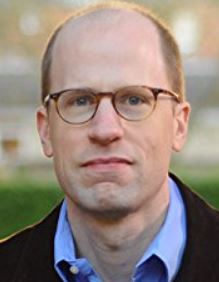

Bioethicist and philosopher of artificial intelligence, Nick Bostrom.

This injection of simulated-life (and the infrastructure to sustain it) serve the research and entertainment needs of the original civilizations who created the simulations and then broadcast them into the cosmos like farmers throwing flower-seeds into empty gardens. 

By now, faked life is pervasive. By now — after at least three generations of star formations — the number of simulations is hundreds-of-millions; perhaps billions; perhaps hundreds-of-billions.

Humans forced to wager on the odds that they themselves are artificial — that they are in fact simulated —  must place their bets knowing that the odds could be as high as a billion to one, maybe more.

Humans are machines; they aren’t real; they aren’t what emerged from the chemistry of the universe but were instead invented in the imaginations of super-computers programmed by an ancient civilization whose address and time may forever remain unknowable. 

If human civilization is faked, so might be its history, what it has been allowed to know, and what technologies it feels compelled to develop. A simulated, artificial civilization won’t necessarily know what is the time or era or eon in the real universe that exists beyond its view.  It might never be able to understand how large or old is the real universe where its creators live and play. 

Simulations might be created by life-forms curious about how certain scenarios they can imagine play out. Simulation might be a mature-tech version of television where advanced life-forms unveil the vagaries of their visions for the entertainment of vast audiences. 

Some simulations could be simple games designed for small children to entertain themselves while mommy does laundry and dad mows the lawn.

Simulations might be simple algorithms developed by quantum super-computers to test the limits of their power.  

Even the rules-of-play embedded in some releases might be undiscoverable — hidden by super-intelligent gamers who perhaps don’t really care about us; they are sure one day to lose interest and unplug the simulation. 

What are the odds?

People who think like Nick believe the odds make countless simulations a near-certainty.  If it were not so, then it is equally certain that human civilization will implode like all those civilizations that came before; humans will become the victim of their own technological march into the high-risk skill sets that lead inexorably to oblivion. 

It’s what the Fermi Paradox is all about, right?  Astronomers assume that life is common — pervasive perhaps — but they search the universe in vain for our companions.

Where is everybody? 

Is it possible that the evidence will forever be that in this cosmos humans are alone and on their own? 

If life — pervasive intelligent life — makes itself known, can anyone be sure that it will be authentic and not a simulation created by a life-form they will never meet?  Can anyone trust that this newly encountered life is conscious? 

Or is consciousness simulated so that no one real can discern who is genuine, what is authentic, who is faking true love, or what might behave in blind obedience to rules that render impossible any prejudices against faked life, which does not care? 

What are the odds?


During his #1350 podcast of 11 September 2019 Joe Rogan asked Nick Bostrom why it cannot be true that we humans are the first to broach the limits of the technologies that are spread before us. Why cannot humans know for sure that they are real, not simulated?

Why is it not realistic to assume that human civilization is on the cusp of becoming the first creator of simulations and artificial life instead of being itself one more simulation added to a long line of simulations that have spanned the cosmos during the past billions of years? 

In a simulation, which of its fake creatures is able to determine how old is the authentic universe it will never see? What avatar is able to determine how long or short-lived will be the simulation where it is trapped? 

Why can it not be more certain that the civilization that survives and prevails will be ourselves, the species human, who will be first to spawn false populations and fake technologies to coat with lies the cosmos whose lifespan is likely to last trillions of years?

Nick Bostrom went through the numbers with Joe. He described how the probabilities of his ideas are constructed; he explained that if humans are not fake; not simulated; not artificially created, it is more likely — much more likely — that homo-sapiens won’t make it into the future.

We will suffer the extinction of every advanced civilization that went before, no matter where in space and time they were once located — if ever there were any. 

Neither Nick nor Joe seemed interested to discuss more than perfunctorily the validity of the second listed possibility — the existence of technologically mature civilizations who refuse to extend their capabilities to logical conclusions.

The idea that civilizations might forego the use of artificial super-intelligence to secure their grip on the universe seemed a boring and unrealistic option. Nick included the possibility on the list of three only because it is possible to imagine that dozens of civilizations might decide, perhaps independently, to lay down their powers for some higher, universal moral-order.

Such a scenario defies common sense, does it not?

So the choices seem to have collapsed from three to two:  self-annihilation or a successful breach of the barrier that enables breachers to create new, simulated worlds — to raise their status, finally and forever, to the heights of what the ancient-world called “gods”, the creators of worlds.  

Is the ancient-world even real? — or is it another fabrication by simulators?

What do we know and when did we know it?

Why does science and history make no sense? 

What are the odds?

Every theoretical physicist seems to be saying that quantum mechanics and general relativity cannot be fundamental. A reality underlies these systems of physics that seems to lie beyond our reach.

Physicists today admit that at least for now they are stuck on stupid. They wait for la seconde venue d’Einstein — Albert Einstein, part two.  

How smart and creative can a simulation be when it can’t answer basic questions like: 

What time is it? 

Where am I ? 

Is anyone in charge? 

Why do the simplest things make no sense? 

Are simulated life-forms — necessarily separated by their natures from reality and truth — always insane?

Are simulations evil when they challenge the authentic life that created them? Is authentic-life virtuous when it destroys the faked-lives of its troublesome simulations? 

Which deserve to feel the emotions of existence more intensely — real-life? or artificial super-intelligence? or the billions-of-simulations, which Bostrom’s probabilities argue flow from them both?

Billy Lee

Warning from the EDITORIAL BOARD:   Billy Lee sometimes “pontificates” to try out ideas, which to our minds are absurd.

For one thing, Billy Lee seems to imply in FAKED LIFE that the absence of evidence for intelligent life in the Universe is exactly what a civilization locked inside a simulation would experience.

Simulated life hidden behind the walls of a game constructed by “Super-Intelligence” will inevitably come to believe it is alone and dependent on a Supreme Being who loves only the “simulants”, because no one else is “out there” for God to love. 

Billy Lee postulates in FAKED LIFE that the universe and its history make no sense, because it isn’t real. Maybe Billy Lee is dumb; maybe he doesn’t get things, because he can’t. Did the possibility that he is stupid ever cross his mind?

Perhaps “pity” is what Billy Lee deserves. 

Billy Lee has written in the past that desperate folks might want to trust God to explain things they don’t understand; otherwise, they will miss chances to make the world a fairer and more loving place for the billions of people who live in misery — the weak and impoverished, right?   

According to Billy Lee, the Bible says that God created people; God is love; He promised to never abandon the poor, the sad, the humble, the strivers for what is right, the merciful, the pure-hearted, the peacemakers, the persecuted.

God’s power is that He cannot change. 

So, according to the Bible, it’s all true. We are simulants who will never be unplugged. The rules of the game are simple: love God who gave us our lives; love each other as much as we can. 

Who will do it?

We are as real as our Creator made us to be. God decides who is real and who is fake, who lives and who dies. In His eyes, we aren’t fake — even though some of us say He is. 

Hey, Billy Lee signs our paychecks.

What? We argue?  

The Editors