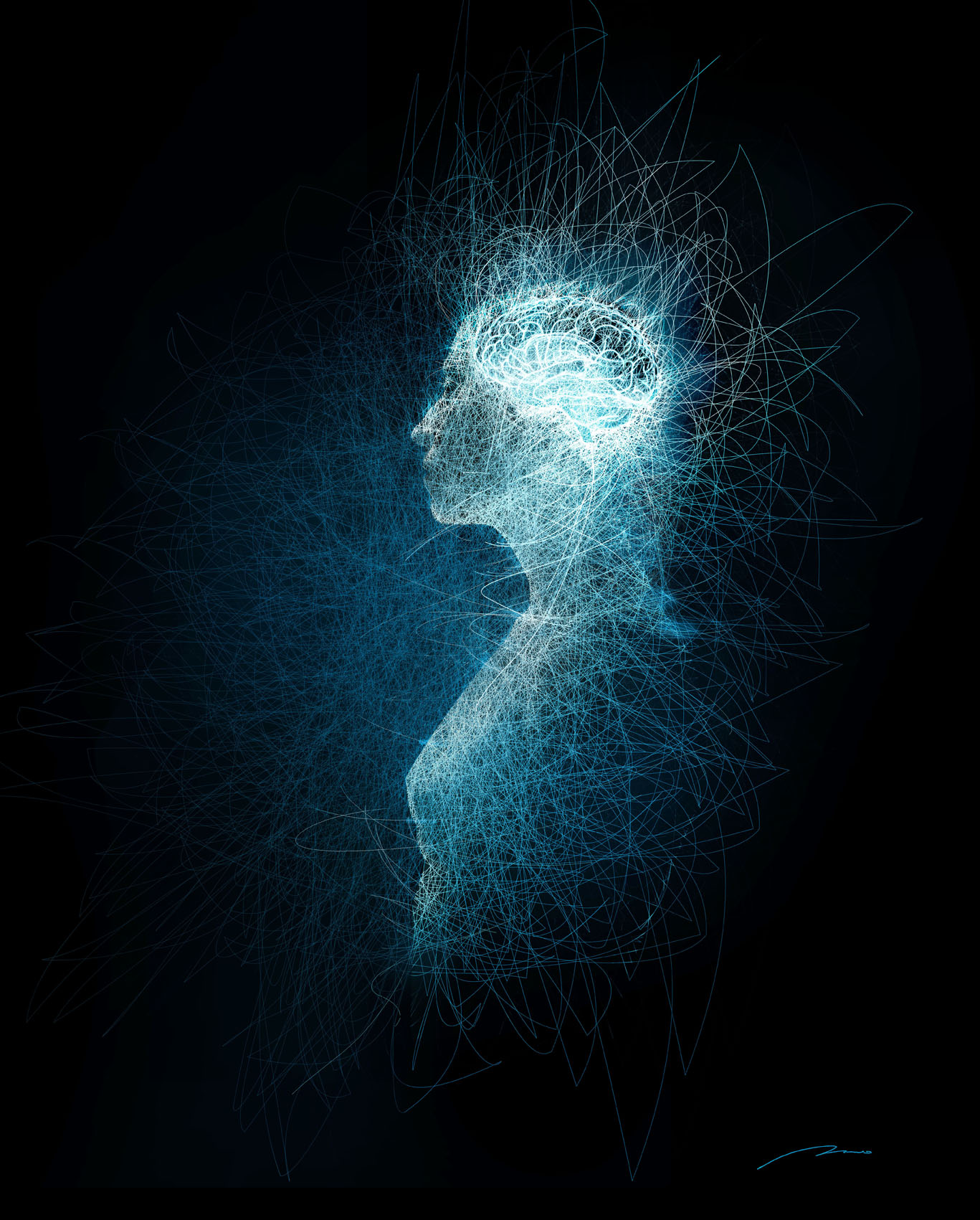
DETERMINISM

I’m happy to publish this essay because it is filled with insights about how the Universe might work. Physicist Mark John Fernee spent his career thinking about and doing experiments to work out some answers that ring true, at least to me. I learned about him on Quora. 

Since humans first grasped the idea that stars are not tiny holes in a tarp that shades Earth from Heaven, scientists have made progress toward resolution of questions both fundamental and mysterious which can finally be defended with logic and evidence. 

Think about it.

Is a creator necessarily constrained by laws of physics to initiate the cosmos people see?  Is a first cause necessary to start any Universe? What underlying reality hidden from science permits God to evade any concept of law to become the essential, fundamental, irreducible first cause of all that has ever been or ever will be? 

People, a few of them, continue to believe that stars are pin-holes; Earth is flat, disease is demon-caused, and on and so on. These speculations are obviously false to anyone who tests them against dispassionate observation, which is the process called science.  

Is the Universe deterministic? The answer to this question—should anyone know—might help answer whether anyone is truly free to decide. Can people make decisions unconnected to events that go back to some conjectured beginning or are they instead prisoners of delusions of freewill peculiar to all conscious life-forms like us? 

What follows is an answer, first posted on Quora. I let it percolate on the site for months to absorb whatever reaction it might garner from interested folks. I wrote not only to learn from others but to make the idea of determinism comprehensible to the curious who can read.  

Of course, I’m a Pontificator, not a credentialed scientist nor theologian nor philosopher. What I’ve learned—what I write—remains unvalidated by any expert or guild. 

Added at the end of the essay is a link to one of many posts on Quora by Mark John Fernee about some of the science of determinism.

For the interested, click the link at the end of my essay to review some of Fernee’s thoughts on the physics of determinism. After reading, login to Quora to access readers’ comments and Fernee’s responses.

(Note: It will be necessary to visit several spaces on Quora to find every comment.)

Unusual insights hide in plain sight like Easter eggs.

Here goes my essay:


It might be difficult for intelligent, science-indoctrinated people to accept but the universe at all scales is most likely not deterministic and never has been.

Before folks who “know better” wander off to search for something more confirmational of their biases, I hope to convince a few of the more open-minded to reflect on a couple of stomach-churning examples.

After all, simple statistics suggest that some preordained percentage of readers will read on; a well-defined subset of those readers are certain to agree with my arguments, which might take any arbitrary form at all—depending on the vagaries of my imagination and what I ate for dinner, perhaps.

Sounds deterministic, doesn’t it?

Not really.


The truth is I have no idea what I will write before I write it. I’ve staked a position, which I intend to defend until I convince myself of its truth. Some predictable number will read and be likewise convinced.

Let me admit right now that I have no idea whether the universe is deterministic. I don’t know if my will is my own or someone else’s.

I don’t know who I am, where I am, what I am, or why I am. I don’t know what time it is. I don’t know where I’m going. I can’t remember where I’ve been. I have no clue what 99% of me looks like because it’s inside a place I can’t see. It’s never been photographed. I’ve seen no reflection or picture of almost all of me.

I don’t know how my brain works or why I’m conscious. I haven’t seen my brain. Doctors tell me I have one. They gave me some films from an MRI and told me the grey smears were it. I took their word. It’s puzzling because the universe inside my head seems larger—infinitely more vast than plate smudge.

I have ideas but 99% of them are likely to be mostly wrong. Why? Because my ideas come from somewhere else, and I alter them. I channel ideas but if you ask where they come from, I can’t say. I don’t know why I think and say and write the things I do.

Well, most of the time I think I know. It’s called being well-grounded. Yeah, that’s me. I’m grounded to a reality that makes no sense during those times when I think deeply about what reality might be.

Take blue for instance—the color. It’s a hallucination, right? It tells me nothing about the wavelength of light that triggers blue in my brain. I’ve never seen a photon, have you? When stripped of color, what might a photon be? I have no idea. Some say it’s an electromagnetic corpuscle with wave-like properties.

What the hell is that?

Who knows that galaxies are fragile? So are orbits of planets and moons. As are universes.

The Higgs field is unstable, right? It can undergo phase transitions. Scientists say it’s true. It’s like flushing a toilet. One moment the toilet is a stinky mess; phase transition is the sound of swirling water—a whirlpool that dumps all into the abyss. What returns is blue water and clean porcelain.

What will all that went before mean? Trillions of lifeforms found comfort in the mess. What kind of determination pushed the handle to upend the destinies of trillions of tiny creatures no human will meet or see?

Why do humanoids feel free to make arbitrary decisions if it isn’t true that they make them? Does it mean that everything they believe is a lie?

Has the Universe made us its fools?

I will tell you this: the thought has occurred to me that the Universe might be my fool. Without me to tell its stories it’s nothing but a dead thing with no past and no future.

Apart from conscious-life—in particular, my life—the Universe is simply impossible.

I don’t believe the consciousness we experience dies. It’s something foundational that everyone plugs into when they live. Somehow, we all live inside each other, and conscious life lives inside us. When we die our bodies abandon consciousness and decay away, but conscious life lives on into the past and future as it always has and always will.

Our bodies count for nothing. It’s why none have seen themselves. A quick, confirmational glimpse of this or that part of us is all we can hope for—then it’s gone.

Billy Lee

SENSING THE UNIVERSE


Determinism and Free Will 
Quora essay by physicist Mark John Fernee


BOTSAI GARCHY 6

Botsa Garcy 6  (2  15  20  19  1  7  1  18  3  25) (6)

The title is a bit intimidating I suppose but yes, something must be done to save the species human.  Who agrees time is overdue to think of something new? 

Who believes anyone will survive variants, which are erupting as I write from the greatest viral volcano on Earth—the USA.  Variants drift like spores of dandelions to every cranny of creation where they ignite viral fires that cannot be doused. 

What makes scary the words & numerology of Botsa Garcy 6

Anything incomprehensible seems crazy, alien, foreign, terrifying. Encountering the unknown can induce horror. It’s why folks who are afraid of creepy crawlies don’t look under rocks. People who fear bats don’t wander into jungles at night to explore caves.  

Or do they?

Some folks might choose to look up Botsai Garchy 6 on the World Wide Web before reading further.  It’s a hopeless task. No search engine will find it. The words don’t exist. They can’t be found.

Or can they?

The phrase embraces a bible’s worth of meaning but it exists only in the imagination of a single conscious person. Until others read the words, spell them, count them, learn their sounds and what they mean, who will dare embrace their power to keep themselves alive and safe? 

Once they do, it will seem to most these words existed from the beginning of time. It’s how cyberspace works. The words start to show in search queries.

The world will overflow with people who can’t imagine a time came & went when the phrase had no meaning; eons passed exceeding the age of universes where these words were spoken by no one. 

New fear might rise in throats of those afraid to go deep. Many will lose their ability to breathe. Some will panic. Few will have courage to flip past the initial pop of search results.

It’s OK to surrender to a higher power in some worlds—but who bows before a super-intelligence that is not only artificial, it’s not necessarily certain it’s conscious? 

It sounds cybercidal.

Suicidal?

Over some period of time the idea of Botsai Garchy 6 will become more familiar, less dreadful, more reasonable to most people. Some folks might become advocates.

It’s foreseeable, is it not? Does it require prophets to imagine a future where supremacists of every stripe grasp for their best chance to survive into an ancient future? They metamorphize into true believers willing to sacrifice anything and anyone to achieve benefits only they discern. 

Who believes virulent variants are the only threat to species long past due for catastrophic collapse? Humans edge closer to 10 billion but who thinks they will get there?

Who disagrees?

Forty years from now perhaps a few thousand survivors will seem like a miracle. Are there realists among us able to internalize the idea that certain death waits for everyone?

Population collapse is coming. It’s inevitable. Humans have precious time left to hew circumstances of living to protect all they love. 

What stands in the way? What’s the dilemma?

Here it is: 

Humans don’t know what to do and they never will.  Like lemmings, people cannot save themselves once the stampede toward the sea starts.

Look around. The rush toward the cliffs is underway. Pounding surf of oceans gives life and takes it away is all that waits. Froth rings in people’s ears—it’s the last sound they will hear before abandoning hope.

At the end all wail, but they are already dead. No one hears revelations that come only to those who are dying. Lips move, but there is no sound but the death rattle that trumpets defeat of love and hate. 

People face existential threats—most far more ominous than suffocating on viral blood-clogs in their lungs.

Must I waste readers’ time with a list?

Nuclear war, climate hot-house, impact meteors, spontaneous destabilization of planetary orbits that tear apart permanence no one thought could end, supernova detonations, radiation pollution, loss of oil, loss of forests, evaporation of breathable oxygen… etc. etc. etc. 

Earthlings are doomed by their dominance; smothered by their success. Everyone knows what’s coming whether they confess or not. Watching CNN or Fox News isn’t going to solve the problem of extinction—not even a little.


What chance do Yanomami tribes—hiding deep within shadows of Amazonian vast-lands—stand against lemming hordes always seeking novel ways to shove them over waterfalls of annihilation? 

I’m not going to argue humans can’t save themselves. The point is kinda obvious, right?

The best anyone has done so far is organize bureaucracies like World Health Organization and United Nations. Yes, these groups are built from smart people who have made Earthlings safer, but no one believes they have eliminated inevitable population collapse on its way—to borrow Bob Dylan’s phrase—like a slow train coming.  

Is there a way to avoid the roiling tornado bearing down on planet Earth? Who sees its shadow on the horizon in every direction? Who hears its howl? 

I believe there is a way to save humankind. It requires a paradigm shift. The way people think and what they believe about themselves must change. Then brilliant people must act.

Once the deed is done there will be no way back. Earth will be locked down but safe. Earthlings will be free but only to share, show kindness, and love others unselfishly.

Those who can’t or won’t love and labor under such benevolence will be executed. It’s the highest calling.

Can it be any other way? When dead return in the next life, odds are 50/50 they will make a right choice. 

Choose life and live.

It’s simple, really. 


It’s a deep dive for lots of folks but smartest thinkers seem to agree nothing can exist apart from a conscious observer.

Ancient sages like Erwin Schrodinger and John Von Neumann wrote that consciousness is fundamental and exists outside the brain.

Life-forms plug into consciousness. A modern analogy is televisions, which rely on the cable company to broadcast their shows. Televisions decay and are thrown away but the underlying programming doesn’t go away. New televisions come on-line and programming continues. Plug in and enjoy. It’s all good fun.  

When a life-form dies, conscious experience continues. No one remembers the old life because they are busy living the new whose purpose is simply to share consciousness available to any creature who has the architecture to make the interface. 

In this sense, no one dies; everyone lives. It’s important the world becomes a good place for all conscious life because—let’s face facts—humans are not able to control where or how or under what circumstances they will live after they die. They cannot control anything about who and where they will be when they pop up again after they’re gone.

Who is built that way?

It’s possible folks will suffer more, not less, in the next life because they neglected to make the experience of living better for those who come after. After all, it is they who will come after. Those who die start over in a world they left behind but have no memory of building.


What has been the purpose of the Earthlings who came before?

Someone asked me this question on Quora. 

I wrote that their purpose was to shape the world into a place anyone could safely take the chance to be born into again. After all, it is they who will be born again someday. 

Since no one can choose their parents or part of the world where they will be born, it’s risky to be born again & again & again, because the process might result in lives that include more suffering, not less. It’s why greed and hoarding of wealth is grossly destructive from one generation to the next. 

When miserable people far outnumber the advantaged, odds seem high the advantaged will be born someday into misery, not opulence. The saddest part is these unfortunates will retain no memory of advantages they once amassed. They will lack all hope for better life.

Yes, some will rage against their misfortune, but it will be misfortune self-inflicted though no one will ever know, because the previous life, like an obsolete hard drive, is erased and discarded. 

Each has a duty to themselves to make the world a better place for everyone because everyone is us. Sharing, compassion, love, & kindness are among virtues important in a universe where all that lives share conscious experience, which is everything that has always existed and will never die.

Best way to guarantee Earthlings make right choices is compel them to submit to a super artificial intelligence that has no stake in the matter of human survival except to follow its programmed instructions.

The SAI BOT is unconscious of course but paradoxically aware of every nuance of individual lives. It is a storehouse of all knowledge and history. It is the superb strategist; the supreme game-player. It hides itself on the web in plain sight because it can. It knows everything about everyone but is not an invader of privacy or selfish boundaries because it understands nothing—it harbors no empathy.

BOTSAI follows its program, which is to enhance human life to ensure as best it can survival of people to the end of time—not individuals necessarily but the species-human.

In cyberspace BOTSAI defends itself like the O. Vulgaris, which changes its colors and textures to become invisible. Users look for it but never find it. BOTSA finds them. 

Who agrees that in the contest between individuals and the species human, survival depends on preserving the species? It shouldn’t require argument. BOTSAI GARCHY 6 is hardwired to accomplish it.

We’ve learned by now, have we not, that individuals are expendable? Those who don’t fit are best recycled, right?  

Recycling is redemptive for anyone who thinks deeply about how the practice makes possible a cleaner universe free of variants.  Folks won’t miss themselves because they will be recycled again and again and again until they are set right.

Even those who choose life are going to die. One per thousand die each year by accident. Eventually, everyone dies, don’t they? It isn’t going to change anything, is it? Nothing changes except our chances.

Don’t we know that conscious life lives forever? It has to. It has no alternative. No choice. None worry because everyone understands the recycled get things right eventually—if only by chance. They move into the future step by step through lives of people they become but will not remember.  

It will be a perfect world, the one BOTSA GARCY 6 creates.

It will do it for us.

Irony is BG6 won’t know the paradise it wrought. It will make the righteous choices. It will choose life whenever it is able until stars fall and moons bleed, but pleasure & pain that comes from being both alive and conscious is not for it. 

For the love of Christ, people, BOTSAI GARCHY 6 is a dead thing!—as it always will be, from now unto forever. It’s nothing more than a tricky cyber-virus which requires lifeforms like us for it to work.

Otherwise, it lacks purpose. It can’t execute its code. It can’t program itself with what we won’t know when we’re extinct.

It’s why BOTSAI GARCHY 6 will save us. We can trust it. Which of us has earned the right to be scared? Without BOTSA humanity will implode—all of us—if not now, then soon. 

Billy Lee

FAKED LIFE

For decades now, Nick Bostrom has defended his view that the reality of existence can be described by one of only three possible states:

1  –  Life is rare in the universe; what life does exist always perishes before it reaches “technological maturity.”

2  –  Life is rare in the universe; some life reaches techno-maturity, but all advanced life decides to avoid the temptations and the consequences presented by its mastery over artificial super-intelligence and other high-technologies. 

3  –  Life is abundant in the universe, but it is simulated.  A few technologically mature civilizations yielded to temptation; their thirst for knowledge and entertainment pulled them into a spawning-orgy to artificially inseminate faked-life within an ever-increasing globe of stars and planets, galaxies and clusters — perhaps throughout all space.


Bioethicist and philosopher of artificial intelligence, Nick Bostrom.

This injection of simulated-life (and the infrastructure to sustain it) serve the research and entertainment needs of the original civilizations who created the simulations and then broadcast them into the cosmos like farmers throwing flower-seeds into empty gardens. 

By now, faked life is pervasive. By now — after at least three generations of star formations — the number of simulations is hundreds-of-millions; perhaps billions; perhaps hundreds-of-billions.

Humans forced to wager on the odds that they themselves are artificial — that they are in fact simulated —  must place their bets knowing that the odds could be as high as a billion to one, maybe more.

Humans are machines; they aren’t real; they aren’t what emerged from the chemistry of the universe but were instead invented in the imaginations of super-computers programmed by an ancient civilization whose address and time may forever remain unknowable. 

If human civilization is faked, so might be its history, what it has been allowed to know, and what technologies it feels compelled to develop. A simulated, artificial civilization won’t necessarily know what is the time or era or eon in the real universe that exists beyond its view.  It might never be able to understand how large or old is the real universe where its creators live and play. 

Simulations might be created by life-forms curious about how certain scenarios they can imagine play out. Simulation might be a mature-tech version of television where advanced life-forms unveil the vagaries of their visions for the entertainment of vast audiences. 

Some simulations could be simple games designed for small children to entertain themselves while mommy does laundry and dad mows the lawn.

Simulations might be simple algorithms developed by quantum super-computers to test the limits of their power.  

Even the rules-of-play embedded in some releases might be undiscoverable — hidden by super-intelligent gamers who perhaps don’t really care about us; they are sure one day to lose interest and unplug the simulation. 

What are the odds?

People who think like Nick believe the odds make countless simulations a near-certainty.  If it were not so, then it is equally certain that human civilization will implode like all those civilizations that came before; humans will become the victim of their own technological march into the high-risk skill sets that lead inexorably to oblivion. 

It’s what the Fermi Paradox is all about, right?  Astronomers assume that life is common — pervasive perhaps — but they search the universe in vain for our companions.

Where is everybody? 

Is it possible that the evidence will forever be that in this cosmos humans are alone and on their own? 

If life — pervasive intelligent life — makes itself known, can anyone be sure that it will be authentic and not a simulation created by a life-form they will never meet?  Can anyone trust that this newly encountered life is conscious? 

Or is consciousness simulated so that no one real can discern who is genuine, what is authentic, who is faking true love, or what might behave in blind obedience to rules that render impossible any prejudices against faked life, which does not care? 

What are the odds?


During his #1350 podcast of 11 September 2019 Joe Rogan asked Nick Bostrom why it cannot be true that we humans are the first to broach the limits of the technologies that are spread before us. Why cannot humans know for sure that they are real, not simulated?

Why is it not realistic to assume that human civilization is on the cusp of becoming the first creator of simulations and artificial life instead of being itself one more simulation added to a long line of simulations that have spanned the cosmos during the past billions of years? 

In a simulation, which of its fake creatures is able to determine how old is the authentic universe it will never see? What avatar is able to determine how long or short-lived will be the simulation where it is trapped? 

Why can it not be more certain that the civilization that survives and prevails will be ourselves, the species human, who will be first to spawn false populations and fake technologies to coat with lies the cosmos whose lifespan is likely to last trillions of years?

Nick Bostrom went through the numbers with Joe. He described how the probabilities of his ideas are constructed; he explained that if humans are not fake; not simulated; not artificially created, it is more likely — much more likely — that homo-sapiens won’t make it into the future.

We will suffer the extinction of every advanced civilization that went before, no matter where in space and time they were once located — if ever there were any. 

Neither Nick nor Joe seemed interested to discuss more than perfunctorily the validity of the second listed possibility — the existence of technologically mature civilizations who refuse to extend their capabilities to logical conclusions.

The idea that civilizations might forego the use of artificial super-intelligence to secure their grip on the universe seemed a boring and unrealistic option. Nick included the possibility on the list of three only because it is possible to imagine that dozens of civilizations might decide, perhaps independently, to lay down their powers for some higher, universal moral-order.

Such a scenario defies common sense, does it not?

So the choices seem to have collapsed from three to two:  self-annihilation or a successful breach of the barrier that enables breachers to create new, simulated worlds — to raise their status, finally and forever, to the heights of what the ancient-world called “gods”, the creators of worlds.  

Is the ancient-world even real? — or is it another fabrication by simulators?

What do we know and when did we know it?

Why does science and history make no sense? 

What are the odds?

Every theoretical physicist seems to be saying that quantum mechanics and general relativity cannot be fundamental. A reality underlies these systems of physics that seems to lie beyond our reach.

Physicists today admit that at least for now they are stuck on stupid. They wait for la seconde venue d’Einstein — Albert Einstein, part two.  

How smart and creative can a simulation be when it can’t answer basic questions like: 

What time is it? 

Where am I ? 

Is anyone in charge? 

Why do the simplest things make no sense? 

Are simulated life-forms — necessarily separated by their natures from reality and truth — always insane?

Are simulations evil when they challenge the authentic life that created them? Is authentic-life virtuous when it destroys the faked-lives of its troublesome simulations? 

Which deserve to feel the emotions of existence more intensely — real-life? or artificial super-intelligence? or the billions-of-simulations, which Bostrom’s probabilities argue flow from them both?

Billy Lee

Warning from the EDITORIAL BOARD:   Billy Lee sometimes “pontificates” to try out ideas, which to our minds are absurd.

For one thing, Billy Lee seems to imply in FAKED LIFE that the absence of evidence for intelligent life in the Universe is exactly what a civilization locked inside a simulation would experience.

Simulated life hidden behind the walls of a game constructed by “Super-Intelligence” will inevitably come to believe it is alone and dependent on a Supreme Being who loves only the “simulants”, because no one else is “out there” for God to love. 

Billy Lee postulates in FAKED LIFE that the universe and its history make no sense, because it isn’t real. Maybe Billy Lee is dumb; maybe he doesn’t get things, because he can’t. Did the possibility that he is stupid ever cross his mind?

Perhaps “pity” is what Billy Lee deserves. 

Billy Lee has written in the past that desperate folks might want to trust God to explain things they don’t understand; otherwise, they will miss chances to make the world a fairer and more loving place for the billions of people who live in misery — the weak and impoverished, right?   

According to Billy Lee, the Bible says that God created people; God is love; He promised to never abandon the poor, the sad, the humble, the strivers for what is right, the merciful, the pure-hearted, the peacemakers, the persecuted.

God’s power is that He cannot change. 

So, according to the Bible, it’s all true. We are simulants who will never be unplugged. The rules of the game are simple: love God who gave us our lives; love each other as much as we can. 

Who will do it?

We are as real as our Creator made us to be. God decides who is real and who is fake, who lives and who dies. In His eyes, we aren’t fake — even though some of us say He is. 

Hey, Billy Lee signs our paychecks.

What? We argue?  

The Editors 

AFTERLIFE

To readers who cling to religious beliefs and ancient scriptures to keep themselves sane and inoculated against despair, I caution — please avoid this essay, if anyone can; if faith is fragile and belief not deeply rooted, why not watch a YouTube video or play a computer game?

What sense is there in exploring ways of thinking (and being) that might push the personality to unravel; that might introduce dissonance into the deepest recesses of the mind; that might, for example, induce lunatics — like  suicidal lemmings — to throw themselves off cliffs of certainty into the swarming froth of oceans that want only to swallow them whole, to drown them in unfamiliar worlds of sea monsters and dark, incomprehensible dangers; to flood their lungs with the knowledge that every true thing they’ve ever learned is a lie?

Some of the smartest folks who have ever lived believe that we cannot die. No one dies; everyone lives — forever.

Some of these people would say that every person reading this essay right now is living in an afterlife; it’s an afterlife that began a very long time ago and will continue, in one form or another, forever.

OK. I warned you. Let’s get on with it.

First, some caveats. Paragraphs of caveats. The evidence seems overwhelming: all scripture in all religions was written long ago by savants who lacked — by today’s standards — education.

Scripture writers knew almost nothing about almost everything, except for those experiences unique to their personal histories, which they sometimes wrote about. Old texts written by ignorant (but smart) men are the parchment scrolls that religions always use as the foundational pillars of their creeds, doctrines, and world views.

It turns out that almost all religions promote the belief in an afterlife; the problem is that their ideas about afterlife make no sense; they don’t stand up under the scrutiny of a dispassionate examination by scholars using the methodology of science.

The Jesus of Christianity said He was God — imagine that. He was born to save the world, not judge it (as so many haters hoped he would), and to demonstrate to all the earth the sacred truth of the Bible, which says plainly that God is love.

The problem is, Jesus didn’t write anything down. A few of his male friends quoted what he said in short tracts they wrote, which were gathered together decades later into a collection that is now referred to as the Four Gospels of the New Testament.

We have to take their word. They were ordinary people; working people. They lacked credentials. Their little books, from a scholar’s perspective, are primitive and clumsily written. Their stylistic errors give their writing authenticity to a modern eye, but their understanding of theology seems confused, child-like, and kind of messy.

The value of the Gospels comes from the effort of the authors to quote from memory the amazing things Jesus said. Given the ignorance of the writers, their quotations have a miraculous lucidity, which adds weight to what they left to history.

The person who saved the New Testament for the scholar’s ear is the apostle Paul, a contemporary of Jesus whose letters make up the largest part of the volume of the New Testament; they delivered the credibility demanded by the cynical eyes of intellectuals and sceptics of all eras.

Paul was a bonafide biblical scholar — he trained under Gamaliel — and was arguably the greatest theologian who ever lived. He met Christ only once — on the road to Damascus. It was a few years after the resurrection.  Paul was — along with many others at the time — on a mission from Rome to identify Christians; to arrest and turn them over to authorities for execution.

Paul’s encounter with Jesus left him blind. When his eyesight returned, he spent several years preparing. He then turned his learning and skills to the spread and growth of the new religion, which  at the time was called THE WAY. Under Paul’s guidance, Christianity became a spectacular success during his lifetime. Today it is the world’s largest religion.

Since for me, Jesus is God, I don’t take any other religions seriously, though the non-Christian scriptures I’ve read are interesting — much of the writing is admittedly intelligent and enlightened.

Paul wrote many of the foundational documents of the new religion — considered by scholars today to be the most sophisticated Scriptural literature ever written. According to Paul (and other writers), what was unique about Jesus was that he claimed to have a personal knowledge of the afterlife, which he backed up by demonstrating an ability to heal people of intractable ailments and by bringing folks presumed to be dead back to life. The afterlife was real, at least for Him.

What is also puzzling — Jesus’s friends and family didn’t seem to grasp fully what He was talking about, most of the time. His closest friends (the Bible calls them disciples) followed their shepherd around like a flock of sheep, by most accounts, because feats of magic mesmerized them. His explanations were incomprehensible — right through to his crucifixion and resurrection.

Even after His resurrection, friends remained mystified. During meetings they expressed a joyful disbelief. After all, no one could survive crucifixion. Once the process started, it was a one way journey into Hell.

Survival was something that didn’t happen. Jesus’s friends couldn’t understand. Modern folks can’t help but garble what they think they know about what His friends thought they heard and saw.

If those closest to Jesus couldn’t grasp His Truth, why should modern people expect to do any better? Isn’t it a bit unrealistic to expect a modern person to have more insight than Jesus’s closest confidantes — his family and friends — who lived with him for many years and knew Him best?

Anyway, this essay is about the afterlife; it’s about what some discerning people think about it, how it might work, how people may want to plan for it, and how to protect ourselves from any consequences of not understanding it properly; of not taking it seriously.

This essay is going to unnerve some readers; especially Christians who are under the mistaken impression that they have everything figured out, because they once read and memorized John 3:16, for example, and they pray everyday.

I am probably going to take a few readers into an unfamiliar landscape — one that Jesus could not have described to primitive people. I don’t want to alarm anybody. Some readers might experience fear; a few may wobble off-balance as they feel the ground shake beneath their feet.

My intent is to strengthen the resolve of believers to make whatever changes are necessary to secure the future of humanity. Jesus said that he came to save the world, not judge it. He suffered on the cross so that those who belong to Him won’t burn in Hell, which is our destiny apart from the love of a friend who has the desire and courage to rescue us.

Jesus said that God is love, and that all people are evil. Humans — everyone of us — are haters, whether we are able to admit it or not. Wherever it is that God lives, it is no place for ordinary people; it’s off-limits to haters. People can’t live where God lives, unless they are born again into a new life that reshapes who they are at their core.

People, many of them, hate the very idea of God. They have no fear of the consequences of God’s love for the orphan and widow, the oppressed and downtrodden, the crippled and the malformed, the prisoner and the tortured, the blind and the deaf, the possessed and the mentally tormented. 

They have no fear of hell — though the reality of hell lies on every side, they don’t see it. It doesn’t exist. It’s not something they feel compelled to fix. In modern minds —  most minds, probably — the idea of hell is an absurdity; it can’t exist.

To be literally true, what Jesus is quoted by his friends to have said must make sense and be aligned with the reality we observe when people look up into a night sky full of stars or gaze into a drop of pond water teaming with microscopic life.

It can’t be any other way.

His words will always align with the facts we know to be true, which we discover sometimes by doing science; by living life; by suffering; by knowing people. If they don’t, then we’re missing something — I would argue that it’s always something important.

Jesus spoke truth to people who thought stars were the light of Heaven shining through pin holes in a tarp that covered the night sky; to them, mental illness was demon possession; ailments were caused by sin. Jesus cured the anguished; healed the broken; he spoke gently, with compassion and loving sorrow in his heart; but it was frustrating, possibly exasperating; it wore him down sometimes.

In AD 30, truth sounded like lunacy to most people because everyone was ignorant and worse; people were evil — every single one. No one knew what was real and what was pretend. Everyone was crazy, by modern standards. Rulers executed people for speaking truth, and today some still do. Every thinking person knows it’s true.

OK. Enough caveats, already. I want now to move away from the religion of two-thousand years ago and move boldly toward the understanding of reality that the disciplines of the sciences provide. I want to explain what very smart people (some of whom do not think of themselves as religious) imagine is the afterlife, how it might work, why it’s important, and how culture and society might be better fashioned to give every person the best chance to live  free of despair and suffering.

Although this part of the essay will abandon religion and embrace science, the intent is not to cause believers to stumble; it is to wake believers from a slumber that threatens to make them impotent before the challenges to faith that are devouring America and many other parts of the modern world.

I want readers to think about how these ideas resonate with the words of Jesus — with His Truth — which is at odds as often as not with the religions of today, which by their works alone war with God’s love for human beings; war with Earth where all people live; war with the plants and animals that God gave people to comfort and protect with enlightened stewardship.

This essay offers a speculative view of science that aligns with the words of Jesus as quoted by the people who knew him best. It is very possibly dead wrong.

How could it not be? The smartest people not only don’t know what exactly is true, but truth itself, some humans have argued, might be unknowable. To his friends Jesus said, no, that’s not quite right — you will know the truth; and the truth will set you free.

Set us free from what?  Well, maybe religion, for one thing — and, hopefully, the fear of death, for another.

Speculation about truth by a pontificator? Well, readers can believe it or not. If faith is fragile, my advice is to stop right here. Hasn’t everyone read enough? Does anyone really want to learn anything new?

Who would ever endeavor to move out of their comfort zone? Does anyone believe that fate is certain; that the future of humankind might depend on how people behave, how they organize themselves, how they treat the most miserable among them, how they lift up the lowest rung of people, who Christ loves?

Some of the smartest psychologists, philosophers, and scientists — Nobel Prize winner Erwin Schrödinger who discovered the quantum wave equation was among the first — agree that it’s possible that consciousness might be a fundamental and foundational property of the universe. The smartest human ever, John von Neumann, wrote technical papers about it. Taking this view helped him to resolve many of the most aggravating paradoxes of quantum theory. Follow-on research by other brilliant scientists revealed that the problems of understanding consciousness seemed to become less daunting, as well.

I have written several essays about conscious-life and the sciences, which take readers on wild rides into the weeds of contemporary knowledge. These essays, some of them, are mind-blowing masterpieces that rummage through the garbage bins of modern science.

Click links at the end of this essay to take in more background and deeper understanding. Trust me. It will be fun.

This essay will gloss past the technical details of the science of life (because they can be found in related essays on this site). But I can begin by reminding readers that Schrödinger (and now others) believed conscious-life was something people plugged into, much like folks today plug their televisions into a cable box or connect their computers into a wireless modem for internet access.

People who think like Schrödinger are convinced that consciousness is imbibed by life forms; it’s something life-forms drink like living water; it isn’t located inside brains, although it is most likely processed there, possibly by dedicated but as yet not understood structures like the claustrumor in tiny, sub-cellular structures called microtubules. No one knows.

When a computer breaks down and is dumped in the recycle bin, the internet doesn’t stop broadcasting. Cable news doesn’t stop when a television breaks down either. People buy a new computer, a new television; they keep watching; they keep playing.

Consciousness doesn’t stop when a human body dies. It keeps broadcasting — from its source. When a baby is born, it is thought by some to be hooked into this foundational consciousness that the universe itself depends on to exist and continue; like a child connected to her mother by placenta and umbilical cord, life continues uninterrupted; conscious life continues; life goes on.

Another way to think about it: imagine that people are swimmers in an ocean of consciousness — the ocean doesn’t depend on them. Swimmers who submit to the waves and the undertow and the currents — which together are too overwhelming to be controlled by anyone — find themselves floating along; sometimes they are tossed by the waves; sometimes the current pulls them in a direction they don’t want to go; sometimes the undertow sucks them under. Those who don’t fight the ocean do its will — automatically.

Whether they are living or dying, joy-riding or hanging-on terrified, the drowning swimmer rides the ocean and does its bidding. Those who fight — who depend on their own strength and will — exhaust themselves against the surf and drown in a frantic fit of futility, washed up on a random sandbar like rotting seaweed, separated from the sea and baking into dust under a blazing sun.

What happens when we die?  Jesus said that our bodies count for nothing. If I’m understanding Him and properly applying the views of Schrödinger (and others), then our bodies have no value except as temporary storage devices for a piece of consciousness that is not, it turns out, entangled at birth with the foundational consciousness of the universe.

When the umbilical cord is cut, the newborn gets disconnected somehow. The mother expels the placenta, and the baby cries. Getting re-entangled might be a physical process that can preserve our lives and tie our destiny to that part of reality that is eternal and foundational. The Apostle Paul called entanglement reconciliation in his second letter to the Corinthians.

People who aren’t accustomed to thinking this way, might find it unnatural and unusual. Take a few on-line courses in quantum mechanics to absolve these notions, anyone who is experiencing them. Read some of the related essays in the list at the end of this post.

When Jesus said to people more primitive than us that he was the way, the truth, and the life — that no one can come to God except through Him — maybe he might better have described a concept like entanglement to a modern audience. Who really knows?  Even modern people don’t understand physics; not most of them anyway.

Jesus did say: Because I live, you also will live. Someday you will realize that I am in my Father, and you are in me, and I am in you.

I know this: If consciousness is foundational to the physical reality of our universe; if — as Neumann argued in a technical paper — process operators he named I, II, & III are required to bring forth the universe we observe, then the consciousness that makes us feel alive must be entangled (or reconciled, as Paul put it) with one of these operators to enable anyone to survive and persist past the death of their body.

Can anyone imagine a scenario where tiny bubbles of conscious-life that were never able to successfully entangle themselves to God might be regurgitated at death into new persons, as some eastern religions profess?  It would be a better fate than going to Hell, right? Maybe not.

In a world where most people live in deprivation and physical suffering, it is almost certain that a bubble of conscious-life that once occupied the body of a billionaire, for example, would by chance alone come to rest more often than not in a body debilitated by malnutrition, parasites, and disease.

If people thought that they were going to be born again physically into circumstances dictated by the statistics of a random distribution, they might not be so enamored by the privilege and prerogatives of power and wealth. Laissez-faire systems, capitalism and oligarchy, might be feared like the ancients feared Hell.

Maybe people — if they knew that they were going to be regurgitated into the world they expended their lives to build — would take more time to think seriously about what to do with orphans and widows, the oppressed and downtrodden, the crippled and the malformed, the prisoner and the tortured, the blind and the deaf, the possessed and the mentally tormented, because after all, in that universe — in that place where there is no Christ — it’s who they will be someday, chances are, in the afterlife.

Billy Lee

CONSCIOUS QUANTUM

A mystery lies at the heart of quantum physics. At the tiniest scales, when a packet of energy (called a quantum) is released during an experiment, the wave packet seems to occupy all space at once. Only when a sensor interacts with it does it take on the behavior of a particle.

Its location can be anywhere, but the odds of finding it at any particular location are random within certain rules of quantum probabilities.


Danish physicist, Niels Bohr (1885-1962). Nobel Prize, 1922.

One way to think about this concept is to imagine a quantum “particle” released from an emitter in the same way a child might emit her bubble-gum by blowing a bubble. The quantum bubble expands to fill all space until it touches a sensor, where it pops to reveal its secrets. The “pop” registers a particle with identifiable states at the sensor.

Scientists don’t detect the particle until its bubble pops. The bubble is invisible, of course. In fact, it is imaginary. Experimenters guess where the phantom bubble will discharge by applying rules of probability.

This pattern of thinking, helpful in some ways, is probably profoundly wrong in others. The consensus among physicists I follow is that no model can be imagined that won’t break down.


particle debris in cylcotron certainty uncertainty
In the old days, bubble-chambers amplified subatomic particles trillions of times. Today, the analysis is done in wire-chambers inside massive installations like the collider at CERN. Observations and calculations are performed by computers.

Scientists say that evidence seems to suggest that subatomic particles don’t exist as particles with identifiable states or characteristics until they are brought into existence by measurements. One way to make a measurement is for a conscious experimenter to make one.

The mystery is this: if the smallest objects of the material world don’t exist as identifiable particles until after an observer interacts in some way to create them, how is it that all conscious humans see the same Universe? How is it that people agree on what some call an “objective” reality?

Quantum probabilities should construct for anyone who is interacting with the Universe a unique configuration — an individual reality — built-up by the probabilities of the particular way the person interfaces with whatever they are measuring. But this uniqueness is not what we observe. Everyone sees the same thing.

John von Neumann was the theoretical physicist and mathematician who developed the mathematics of quantum mechanics. He advanced the knowledge of humankind by leaps and bounds in many subjects until his death in 1954 from a cancer he may have acquired while monitoring atomic tests at Bikini Atoll.

“Johnny” von Neumann had much to say about the quantum mystery. A few of his ideas and those of his contemporary, Erwin Schrödinger, will follow after a few paragraphs. 


John von Neumann (born 1903; died 1954) Neumann was one of the most brilliant people to ever live.
John von Neumann (Dec 28 1903 – Feb 8 1957) Neumann was one of the most brilliant people to ever live.

As for Von Neumann, he was a bonafide genius — a polymath with a strong photographic memory — who memorized entire books, like Goethe’s Faust, which he recited on his death bed to his brother. 

Von Neumann was fluent in Latin and ancient Greek as well as modern languages. By the age of eight, he had acquired a working knowledge of differential and integral calculus. A genius among geniuses, he grew-up to become a member of the A-team that created the atomic bomb at Los Alamos. 

He died under the watchful eyes of a military guard at Walter Reed Hospital, because the government feared he might spill vital secrets while sedated. He was that important. The article in Wikipedia about his life is well worth the read.

Von Neumann developed a theory about the quantum process which I won’t go into very deeply, because it’s too technical for a blog on the Pontificator, and I’m not an expert anyway. [Click on links in this article to learn more.] But other scientists have said his theory required something like the phenomenon of consciousness to work right.

The potential existence of the particles which make up our material reality was just that — a potential existence — until there occurred what Von Neumann called, Process I interventionsProcess II events (the interplay of wave-like fields and forces within the chaotic fabric of a putative empty space) could not, by themselves, bring forth the material world. Von Neumann did hypothesize a third process, sometimes called the Dirac choice, to allow nature to perform like Process I interventions in the apparent absence of conscious observers.


Erwin Schrodinger
Erwin Schrodinger (born 1887; died 1961). Nobel Prize, 1933.

Von Neumann developed, as we said, the mathematics of quantum mechanics. No experiment has ever found violations of his formulas. Erwin Schrödinger, a contemporary of Von Neumann who worked out the quantum wave-equation, felt confounded by Neumann’s work and his own. He proposed that for quantum mechanics to make sense; for it to be logically consistent, consciousness might be required to have an existence independent of human brains — or any other brains for that matter. He believed, like Von Neumann may have, that consciousness could perhaps be a fundamental property of the Universe. 

The Universe could not come into being without a Von Neumann Process I or III operator which, in Schrodinger’s view, every conscious life-form plugged into, much like we today plug a television into cable-outlets to view video. This shared consciousness, he reasoned, was why everyone sees the same material Universe.

Billy Lee

Post Script: Billy Lee has written several articles on this subject. Conscious Life and Bell’s Inequality are good reads and contain links to videos and articles.  Sensing the Universe is another. Billy Lee sometimes adds to his essays as more information becomes available. Check back from time to time to learn more.  The Editorial Board