#MKWA

People are trapped by delusional thinking. No argument or facts are going to change any minds. The United States has invested too much treasure on a captive population that has no way to grasp that everything they think they know for sure is fabrication.

It’s all lies.

Everything.

I’m going to tell the truth for the sake of history.  What happens next will vindicate me, said the late Fidel Castro.

Of course, it isn’t about vindicating me or even about vanquishing sociopaths when at last they self-identify so that everyone knows for sure — much like Joseph McCarthy, who identified himself decades ago on national television.

Is anyone old enough to remember? Has it occurred to anyone that McCarthy was right? The Russians are coming, he warned; Communists are at the gates; the trickle has become a flood.

Nikita Khrushchev bragged before the United Nations that Russians would bury us, even as McCarthy insisted that they already had; agents and sympathizers were infiltrating the State Department and the media in droves. 

Why do I suddenly feel like the chances are good that most folks reading this essay have never heard of any person I’ve mentioned so far? Am I talking (writing) (spitting) into the wind?  Is it only the old and discredited who enjoy the privilege to remember and learn from history?

Who knows anything for sure?

It can’t be all about justifying or humiliating anyone, because everyone on all sides is flawed. Everyone has short memories. Everyone hears what they want to hear and disregards the rest.  Right?

It’s an earworm from yesteryear that plays in the heads of everyone who is engaged and old enough to remember. The Boxer song by Roy Halee and friends means so much, even today, especially today. Does anyone agree?

I am just a poor boy though my story’s seldom told
I have squandered my resistance for a pocket full of mumbles,
such are promises

All lies and jest,
still a man hears what he wants to hear

And disregards the rest, hmmmmm

more verses

In the clearing stands a boxer, and a fighter by his trade
And he carries the reminders
Of every glove that laid him down or cut him
‘Til he cried out in his anger and his shame
”I am leaving, I am leaving,” but the fighter still remains…
 

No one gets it right in this world. The leaders of nations —  isolated in bubbles of every hue — seem the most flawed. Nothing any of them does ever works. Leaders are isolated; pampered; entitled.  Most are proud; all are cruel, because they are human beings; humans have a dark side. It’s how they roll.

Everyone knows it’s true.

It’s been this way forever and always will be. It’s why we have religion — to dampen the desire in every heart to run toward darkness; to obliterate entirety; to destroy Earth and everything the hating person loves and holds dear.

The rage fascinates and enthralls. No news stories are more watched than those that show young men going berserk and shooting up a school; or of suicidal fanatics smashing airplanes into buildings.

It all comes from the same place deep inside the hearts of the humiliated and the despised. It’s a way of getting even that drives those ruined by the evil they endured to strike back hard.

The common people want kings, and they want them to simplify things. Make it all about good and evil; them verses us; religion against ideology; stupidity verses ignorance.

People want kings (not queens) who they will someday learn to hate. Yes, it’s counter-intuitive. Do folks ignore insults? Do they overlook humiliations and move on? Some do. Most dream of revolution and the day they hear the words, I’m sorry.

The Queen is naked!  a peasant lad screams at the passing royal parade. Burn her train! another shouts.

Suddenly, it’s a mob. Everyone yells. They stamp their feet and shake their fists. Lock her up! Lock her up!  USA! USA!! USA!!!

Men love to fight. They love to kill. They love to weep. They love to spiral into self-loathing depressions. They love to jump out of airplanes and climb mountains.

Boring is always fatal to a yearning soul. But so is tempting fate and doing bad things for fun. In the end, everyone — good or bad — dies.

Believing in death makes killing easier. Does it not?

What if everyone lives?

The idea seems absurd to those who are doused in the gasoline of evil. It seems paradoxical to those who admire themselves for their lack of faith. It’s why as a species, homo sapiens are doomed.

Even the most righteous are scum who hurt people on grand scales.

It’s true.

What? Must I name names?

Harry Truman; Curtis LeMay; George Wallace; Lyndon Johnson; Richard Nixon; Robert E. Lee; J. Robert Oppenheimer — the list of names is full of men and as long as history — every name on the list is an American mass murderer — psychopaths whose life work dehumanized and  killed men, women, children, and newborns on vast scales.

Many are heroes who Americans, men and women alike, look up to as paragons of virtue and honor.

So what about #MKWA?  By now some readers must have figured out the title, right?

How can anyone who can’t figure out an initialism (acronym) as easy as this one have any chance at all to anticipate and survive catastrophes? They can’t. Make Korea Whole Again.  MKWA. It’s what this essay is about.


This is the flag of a United Korea. Japan seized control of Korea in 1910 and ran it like a vassal state until the USSR and the USA liberated it in 1945 and divided it North and South. Attempts by the North to unite the country and secure sources of fresh water for everyone started the Korean War, which ended in a stalemate and the death of three million Koreans — two million burned alive by napalm during relentless USA aerial bombardments

Who understands that Korea is one country?

The USA and Russia divided it in half after World War II.

Curtis LeMay spent two years bombing North Korea back into the Stone Age during the Korean War. Air Force historians say he killed twenty percent of the population — about two million people, General LeMay bragged years later to Air Force historians. One of his aides said under oath that the bombing was the cruelest use of military force in the history of the world. It was worse than Hiroshima and Nagasaki.

LeMay expressed no regrets.

In Japan it was his pilots, too, after all. He destroyed 67 cities in Japan. He burnt them to the ground with a fire-jelly called napalm. By the time he started on Korea, he was a bonafide expert.

Think about it.

Let the facts sink in. It will do you no harm.

I said facts weren’t going to matter. My purpose isn’t to rehash the history of Korea. Yes, the USA used bio-terrorism against the Chinese who rushed in to save North Korea from certain genocide. We “anthraxed” them.

Everyone in the world knows about it except Americans. Our leaders thought anthrax was more humane than radioactive bombs.

Yes, top generals in the USA advocated for nuclear strikes — as they did during the Vietnam War, as well. The history of every conflict turns on the capacity for barbarity by the parties who fight. I don’t want to make that argument. I don’t want to go into that dark forest. Not now.

I want to imagine the present and the future. We have two men, Trump and Kim Jong-un, who have found religion. They are, apparently, Christians looking for a way to do what’s right. Christ has changed their hearts. Both are puppets of countries run by bureaucracies entrenched by powerful elites. The president’s backers call the USA a “deep state.”  Kim calls his system the “generals.”


Kim Jong-un and Moon Jae-in celebrating the possibility for a United Korea.

Moon Jae-in is the South Korean president who replaced Park Geun-hye, the first female president in East Asia and a conservative — impeached by the National Assembly and removed from office last year. She is currently serving a 24-year prison sentence — incarcerated after her family ruled South Korea since 1961.

Forbes Magazine voted Park the most powerful woman in Asia more than once. Look it up.

Our president wants a Nobel Prize so that Obama will not one-up him.

What difference does it make what his reasons are, as long as they are sincere and strongly held?

Kim wants to create a perfect society, presumably, where people have fun and nothing but fun. No arguing allowed. 

Ok… It sounds like Woodstock — or maybe the pro basketball finals where Kim plays point guard for the champions of the world.

Does it really matter? 

Of course not.

I know that most Americans will not accept this notion, but our billionaires fear the idea that the communist way of producing wealth cooperatively and then sharing it equally might actually outperform a capitalist (slave) system; they fear the success of communism more than they fear nuclear war.

It’s true.

Who cares if no one believes it? 

Read Ted Kennedy’s book True Compass. He says plainly that men like his billionaire father feared the success of communism; they were obsessed by it.

Most people can understand why, right?

Can anyone name a billionaire who wants to forfeit their power and wealth so that a few guttersnipes can eat and go to school — or a few old-fogies can pay their own way and not beg their kids in old age?

Bill Gates, you say? His primary residence alone cost a half-billion dollars. And he’s the best billionaire we’ve got. He got his start through an under-the-table deal his mother struck with a fellow IBM board member and personal friend. The deal was not beneficial to IBM.

So Gate’s wealth came easier than for others who lied, murdered, and robbed to get theirs. Would anyone give up their advantages, if they were rich?  I don’t think so.

Voting patterns would be much different if people truly valued equality, right?

What’s the point?

Our billionaires don’t want Korea or Cuba or Venezuela or Brazil or any communist-flirting countries to succeed. The United States is at war 24/7 with both countries and leaders to lock down communism to a reputation for failure.

So far, so good.

North and South Korea want to unify. Families in both countries want to reunite before they are too old; before they die, frankly.


Click pic to enlarge in new window. SE direction on map is up. 

Korea must have nuclear weapons to deter Japan — which has the world’s largest stockpile of plutonium and the missiles to deliver it — and China who is already a nuclear and naval superpower.

Isn’t it obvious?

Korea, to survive, must have the means to deter the United States, which is smothering the Far East with its Navy of nuclear subs and aircraft super-carriers.

No one who possesses nuclear weapons uses them. After the horrors of Hiroshima and Nagasaki no one ever will. The Koreans will never use their weapons, nor will we. It’s a non-issue except in the minds of the paranoid and the delusional and the lovers of genocidal war.

A unified nuclear-armed Korea will be a deterrent to nuclear war, at least in the short run. In the long run, people understand that every country must sequester and dismantle their nuclear arsenals. I don’t think it is technically possible, though — even if every country wants it. Pandora’s box has been opened and the demons of mass-suicide are loose and unstoppable, at least from my vantage point.

I pray that I’m wrong.

The tragedy is that smart humans have manufactured and sequestered vast tonnages of PU239, an isotope of plutonium that went extinct among the stars billions of years ago.

PU239 has a half-life of 24,000 years. The missiles and containment structures designed to hold this toxic element are going to rot. Earth will soak up this life-destroying poison like vinegar to a sponge, someday.

The sad reality that no one will admit is that humans have already destroyed the earth. Homo sapiens may go extinct in the next 500 years. It’s more than possible. Certain extinction is what risk modelers all say. But plutonium will live on until it erupts to kill every chipmunk, bunny, cat, dog, bird, and butterfly that people leave behind.

Earth is going dark whether humans survive or not. Most experts put the odds of extending human survival to a thousand years or more at absolute zero.

Since the planet is going to die, why not do something nice for once and leave the Koreans alone to work out their destiny?  If the United States gets out of the way and lets nature take its course, who knows what wonderful things might happen on the Korean peninsula? Who knows how many lives will be saved should everyone avoid war and set aside their fears and prejudices?

And truthfully, what is it that Korea has that we Americans want? The answer is: absolutely nothing. Except friendship.

Despite the dark picture drawn in this essay, people can change.

People do forgive. People do help. People do love.

It’s a fact of human nature that altruism and empathy are hard-wired into the human soul alongside its reptilian origins.

Why not be friends?

Why not organize an airlift led by the United States Air Force and Navy Marines to drop food and medicine to the starving innocents of North Korea who some say are eating bark and tree leaves to survive the blockade?

Why not send in French and Cuban doctors to administer to the sick and dying; to administer antibiotics and anti-parasitic medicines? 

Both groups would rush to join such an effort. Everyone knows they would help desperate Koreans in a heartbeat.

Someone once said that the way to lose an enemy is to make a friend.

Does anyone believe in love?

Billy Lee
47 TONS

Update: March 25, 2021
Today, Japanese public broadcaster NHK News (the Japanese Broadcasting Corporation) reported that the intruder detection sensors at the Kashiwazaki-Karina Nuclear Power Plant have been broken for at least one year; inspectors and regulators rank it a terrorism risk  at the “most serious level”.

The plant has not operated since the Tsunami of 2011, which damaged and closed many of Japan’s nuclear power plants including the catastrophic meltdown and fires at Fukishima — which remain on-going. Sensor readings at the complex suggest that one of the reactors could re-ignite. The area of concern is inaccessible. 


Update: May 16, 2020  
Today, NHK News announced that Japan has officially launched a Space Defense Unit, otherwise called the Space Operations Squadron (SOS). It’s mission is to protect Japan’s many satellites from debris and other space hazards and threats. A spokesman said that communication protocols between Japan and the US are yet to be worked out. 

Update: May 11, 2018
In April Congress approved Japanese American Paul M. Nakasone to lead the National Security Agency, the Central Security Service, and the U.S. Cyber Command. Paul’s grandparents were Japanese citizens born in Japan. His father worked for Army intelligence services during World War II when Japanese Americans, many of them, were rounded up and detained in USA internment camps. Nakasone is an Army General appointed to lead an agency (the NSA) that has been led by a rotation of Navy Admirals, Air Force and Army Generals. 
The Editorial Board


47 TONS

While the Little Rocket Man and North Korea capture the world’s attention, our president is in Tokyo to deal with a threat that dwarfs anything we have faced since the Japanese attack on Pearl Harbor 76 years ago.

The surprise attack against our Navy on Sunday morning, 7 December 1941, started a cascade of retaliation against the Japanese that three-and-a-half years later resulted in 67 Japanese cities burnt to ashes during a few months of sustained “fire-jelly” attacks by hundreds of Boeing-29 Superfortress bombers and other aircraft. After napalming the cities to ashes and dust, the United States followed the horror with a “preemptive” nuclear strike against the cities of Nagasaki and Hiroshima.

Nine million Japanese civilians were left homeless. The death toll has never been definitively calculated, but two million souls is a reasonable guess.


(Click map to enlarge.) The distance from Pyongyang, North Korea to Tokyo, Japan is 800 miles; Hawaii, 4,400 miles; Los Angeles, 6,000 miles; Seattle, 5,150 miles; Alaska, 3,200 miles. The border of North Korea meanders 25 to 50 miles from downtown Seoul, South Korea.

A few years after the stalemate of the Korean War, General Curtis LeMay — head of Strategic Air Command — claimed that his pilots had killed a similar number of Koreans by aerial bombardment — 20% of the population.

The United States killed an estimated million Iraqi civilians in the more recent wars in the Middle East, which included the Gulf War and the Iraq War.

It killed 2 million Vietnamese civilians during the Vietnam genocide of the 1960s and 70s. In the region of southeast Asia, the USA killed 3.4 million souls, military and civilian, by the war’s end.  


In August 1945, USA bombers killed hundreds of thousands of Japanese civilians in atomic bomb attacks on Hiroshima and Nagasaki. Millions were burned alive in fire-jelly (napalm) bombings, which decimated 67 cities over several months. Evacuation of cities helped to reduce casualties. 

Why am I bringing up a bunch of disturbing statistics? What’s the point? Why not leave unpleasant memories forgotten in a distant past where they can’t impact the happy lives we live now, not then?

What possible benefit can remembering the past confer upon our contented present? Why bother puking up a sour history that only the old-timers among us experienced?

May I ask one more question? Maybe thinking about the answer will help some to make sense of current events that seem to have no rhyme or reason.

Of the fifty countries against which we have directed our military wrath since World War II, which among them has a right to the biggest grievance? Who did we hurt the most?

Which country has been forced to endure the shame of a military occupation that never ends? Ok, maybe it sounds like more than one question. Deal with it.

America fights secret and not so secret wars against communist, Islamic, western hemispheric, and, it turns out, African countries all the time. We have conducted strategic operations against friend and foe alike since World War II.

We have meddled in the internal politics of super powers like Russia and China. The Dalai Lama of Tibet wrote in his book Freedom in Exile that the United States gave him millions of dollars to incite violence against China, for example.

The USA has attacked militarily one in four of the 190 countries on the earth during the modern era. Which country is the one most likely to harbor a secret ambition for revenge?

America keeps itself in a state of perpetual war to feed the appetites of voracious weapons manufacturers whose stockholders are among the world’s most affluent. The AUMF (Authorization for the Use of Military Force against terrorists) passed Congress, and President Bush signed the bill in August 2001 for a reason — to fuel the ambition of arms dealers by freeing them from the inconvenience of securing approval of Congress to declare wars — which the Constitution demands. Only California’s Barbara Lee (no relation to Billy Lee) voted against it.

Since 1991 Congress has passed and the president signed four AUMFs, mostly to cut down on the amount of work and delays that are inevitable when large elected groups of representatives are compelled to go on record for or against any particular conflict.

We in America live under a lot of illusions. We tell ourselves a lot of lies about how wonderful we are and how everyone wants to be like us. Our enemies who fear us the most insist — some of them, anyway — that they love us; they want to live with us and be like us, and we believe them.

No one tells a command officer who is carrying an automatic assault rifle that he is a pig; the term “butt-wipe” is never used. No one wants to die for a no good reason like name calling. Our subjugates place flowers in the barrels of our guns and tell us they love us.

Everyone who has been shamed and humiliated prays for their day of liberation; the day of their revenge; the day the world is finally set right. It’s human nature. The desire to settle scores crosses cultural, religious, and geographical boundaries.

Few countries that have suffered cremation by fire of millions of their citizens forget. They don’t forgive. Not really. Think long and hard.

It’s true.


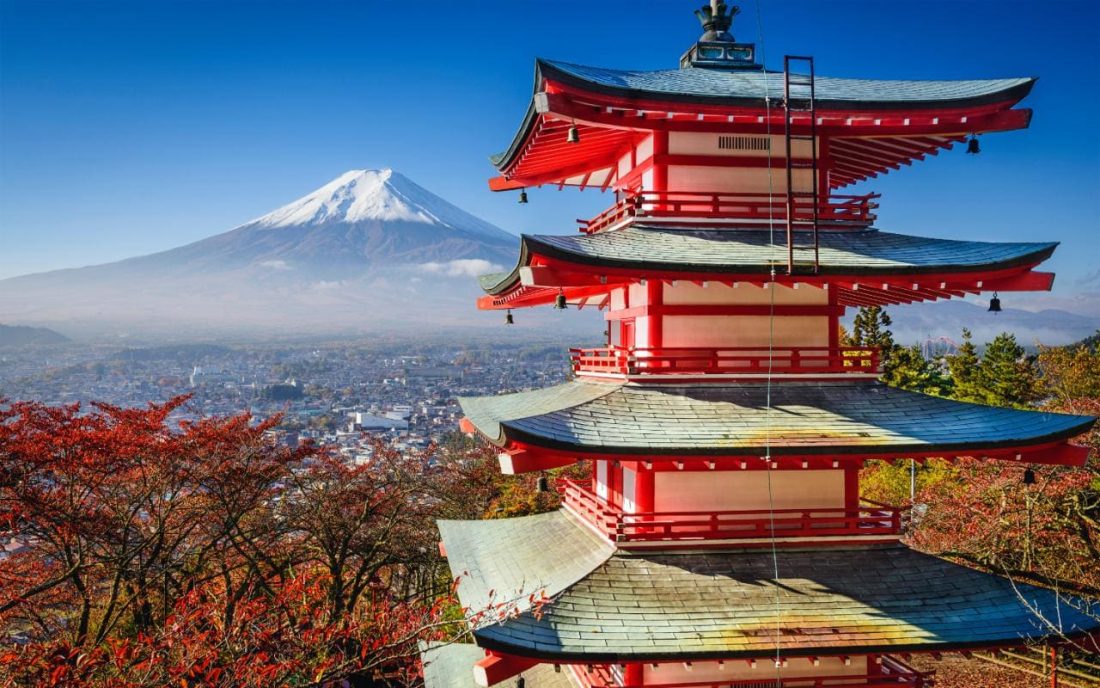
For almost a year Billy Lee lived where he could view Mount Fuji from his bedroom window during his two-year stay in Japan. The Editorial Board

The situation in Japan is dire; it is. The United States for some insane and goofy reason permitted the Japanese over the past 30 years to build the most sophisticated nuclear power grid the world has ever seen.

The USA sold the Japanese uranium-impregnated fuel rods. A by-product of their use, which is to produce the intense heat required to generate electricity, is plutonium. Instead of collecting and disposing the spent fuel rods, the Japanese built facilities to extract the plutonium. They promised to use the plutonium for fuel in advanced power generators called “fast reactors.”

Fast reactors are in principle cheaper and less complicated; they are also more volatile; more dangerous to operate.

After the earthquakes and tsunami of 2011, the Japanese abandoned “fast reactors”. They discovered during audits following the disasters at Fukushima and other facilities that their fast reactor safety records bordered on terrifying. They stopped using plutonium for fuel. With no place to “burn” what they continued to harvest, plutonium began to accumulate, bigly.

In the entire universe plutonium is found above trace amounts at one location and one location only: planet Earth. Plutonium went extinct due to radioactive decay billions of years ago.

Plutonium can be created during rare cosmic events, but the bomb-making kind — Pu 239 — is a manufactured element that does not occur in nature. It is a byproduct of nuclear fission reactions that hides within the matrix of poisons that make the remnants of spent fuel rods.

Plutonium is among the most poisonous substances known. The speck of plutonium dust that kills you, you will likely never see. Some scientists today have downplayed the lethality of plutonium 239. My advice is to be skeptical whenever vast amounts of money and power fuel a controversy.

Regardless of its lethality as a poison, no one argues that fourteen pounds is enough plutonium to make an atomic bomb of a construction so unsophisticated that a high schooler could fashion the necessary components in shop class. Sophisticated bombs require even less plutonium — a mere nine pounds.


This is what plutonium powder looks like. Japan has 94,000 pounds of it. 14 pounds are required for an unsophisticated bomb; 9 pounds for a sophisticated version.

Japan has harvested 47 tons (94,000 pounds) of high-grade plutonium from its nearly one-hundred or so nuclear power and processing plants, which include power plants, research reactors, fast reactors, reprocessing installations, and recently decommissioned facilities — decommissioned due mostly to safety concerns.

Japan’s production schedule is running at a frenetic pace — adding eight tons of surplus plutonium to its stockpile every year into the foreseeable future unless the United States is able to shut down Japan’s reprocessing installations with an agreement scheduled for negotiation in 2018. Our new president has said the old agreements won’t be changed.

By this time next year the Japanese will have accumulated enough high-grade Pu 239 to make as many as 12,000 atomic bombs. Should it ever make that choice, Japan will possess the world’s largest nuclear arsenal almost overnight. 


Plutonium is heavy. Fourteen pounds of Pu 239 is the size of a softball. Nine pounds is the size of a baseball. It is exactly the right amount to construct the 4.38″ diameter ring used in a typical bomb. By this time next year Japan will possess enough plutonium to make 12,000. Depending on how the bombs are tampered, configured, and initiated such bombs can release an equivalent explosive power in a range from 20,000 to 100,000 TONs of TNT. The bombs can be launched by artillery, dropped from planes, or delivered by missiles, drone subs and boats.

What follows next in this essay is the scary part. Some readers might want to bail and maybe find a good comic book to occupy their imaginations.

Despite agreements with the United States that followed World War II, Japan has one of the largest military budgets in the world. The country spends 42 billion dollars per year on its military. This expenditure does not include its civilian nuclear power system or its civilian space exploration programs.

The Japanese consolidated three civilian rocket launching companies into one (named JAXA) in 2003. They are launching rockets into space all the time. JAXA designed, built, launched, and maintains the largest module on the International Space Station. The Japanese have spacecraft in the asteroid belt and spy satellites in Earth orbit. These are civilian programs.

The Japanese have, over the past fifty years, resurrected RIKEN, the laboratory complex used in their atomic bomb program during WW2. The lab employed two cyclotons, which the United States destroyed in a bombing run in 1945.

Today RIKEN labs sprawl across the islands of Japan in dozens of complexes that are impossible to police. The labs are involved in so many areas of research that no one can keep track of it all even if they wanted to. Some of the research is diabolical. One administrator was found hanging by the neck in his office in 2014. Enough said.


Although the military budget of the United States seems huge, people might want to consider that the USA spends one-third of its military dollars on salaries and pensions. No other military spends as much. It maintains 800 military bases in 70 countries at an expense of $200 billion — an expense that other militaries simply don’t have. Japan spends about the same amount on defense as England, France, and Germany. A controversial argument can be made that the combined military might of Russia, China, Japan, and North Korea exceeds that of the United States. It is an argument that is hard to prove, because countries lie about their military expenditures, war-fighting readiness, and technical capabilities. The chart above is misleading in another important way, because it doesn’t include expenditures on nuclear weapons — their production, maintenance, and modernization — which are state secrets in all the countries that possess them.  

The Japanese don’t have to make bombs from their plutonium stores to wreak havoc on an adversary. They can pulverize the metal into aerosols and release plutonium dust into the air over cities.

They can load plutonium into drone subs like rumors say the Russians have done and set hundreds of them in the coastal waters of our country. The subs can lie in ocean sand and silt for decades before releasing their poisons, should it ever become necessary.

Their advanced missile technology might enable Japan to overwhelm our defenses by launching multiple warhead missiles over our homeland. It might take a few months, but poisoned populations would eventually succumb to the release of toxic dust.

And, should they choose to make bombs, well, any country with the resources of a country as sophisticated as Japan can turn high-grade plutonium into bombs in a few days; they can possess the capability to create hell on Earth in the blink of an eye, anytime they choose. With the right (or wrong) leadership they can unleash a nightmare of suffering far worse than the inferno we inflicted on them 72 years ago.


This plant is the place where the Japanese extract plutonium from spent nuclear fuel rods. The Japanese have admitted on NHK television that they have 94,000 pounds of plutonium, which they have no use for nor any place to safely store.

Plutonium is an artificially produced killing material that no human being, company, or country should ever be allowed to possess or use. It is a forbidden apple of physics that can only bring anguish to whoever uses or shares it with others.

Japan has the potential to threaten the world with the same level of terror as the United States, Russia, China, Pakistan, India, Britain, France, Germany, Israel, and who knows what other countries. Many countries are conducting (in secret) diabolical engineering even now and will continue to do so into the foreseeable future.

What could be worse? Believe it or not, our predicament might already be much worse than anyone in the USA is willing to think about or imagine.

What about the possibility that North Korea and China are playing a game of good cop / bad cop with our military planners? What if Japan is toying with the idea of leading an unholy alliance? Behind our backs? Do we really have enough Japanese-speaking spies to keep track of all the secret Samurai cults that might be conspiring at the highest levels of government?

Do we?

What if Vladimir Putin thinks: The United States lied to me. I helped to elect an American president who is ineffective — a buffoon who can’t help me the way he promised. Let’s get ’em!

Imagine an alliance of China, North Korea, Russia, and Japan; an alliance led by the one country that has the greatest lust for payback; the strongest ache to settle scores once and for all.


A Hunkpapa Lakota holy man, Sitting Bull, had the vision that led to the defeat of the USA’s 7th Calvary Regiment on June 26, 1876 — one week before the USA’s 100th anniversary. Five of seven battalions were decimated — one led by Civil War hero George Armstrong Custer. Sitting Bull became a celebrity who worked in Buffalo Bill’s Wild West Show. Later in life he became a leader of the Ghost Dance movement, which terrified whites, because it prophesied the exodus of white people from native American lands. Ten days before Christmas — on December 15, 1890 during an arrest by police on reservation property — Indian Affairs agents shot Sitting Bull in the head and chest in front of his family and friends. Agents removed his body to Fort Yates, where they buried him in a makeshift coffin.  

A surprise attack by such an alliance would be nation ending. It might end like the Battle of the Little Bighorn. We don’t have enough soldiers or missiles or ships to fight a gathering of tribes who possess tens of thousands of nuclear weapons.

The USA has the power to destroy the whole world if we must, but we can’t save ourselves; we can’t save our country; we can’t save the planet.

In the conflagration that took the hyper-alert Lieutenant Colonel George Armstrong Custer by surprise, all his ribbons and medals; all his accolades; all his friends in high places couldn’t save him, his men, or even his horses. The battle of the Little Bighorn was a massacre that dwarfed Custer’s reputation for being a really good person; a hero of the Civil War loved by every patriotic American.

To those who say, Billy Lee, you’ve gone paranoid on us… the Japanese would never organize an attack against America unawares… not a nuclear attack… they know how bad it would be… they suffered through one… they know better than anyone… and look at them, how they smile when we tell bad jokes. The last thing on their minds is revenge. The very last thing!

I say, you are so right!  The Japanese would never hurt us. I lived in Japan for two years after the war. The Japanese have their quirks, yes, but most of them are not cruel or insensitive. They don’t enjoy watching torture videos for entertainment, most of them. Tying up women and twisting their bodies to prepare them for rape is not something most Japanese men would have any part in. Am I right? Of course I am.

The Japanese are not monsters. They are a kind and gentle people who don’t farm or ranch or mine, because they are resource impoverished. When I lived there our Japanese house-maids and yard-boys were as sweet as they could be. They meant us no harm. I see that now.

How on Earth are the Japanese going to get rid of the 47 tons of plutonium poison they have produced? And how will they dispose of the eight tons they plan to produce each year into perpetuity — plutonium which they admit has no longer any peacetime applications whatsoever?


Hayabusa2 Rocket on pad at the Tanegashima Island Space Center off the southern tip of Japan. The rocket landed a  probe on the asteroid Ryugu on 4 October 2018. The Editorial Board 

Everybody knows plutonium has a radioactive half-life of 24,000 years. It’s never going to go away. Someday, through inattention or from whatever other cause, plutonium containment structures are going to rot, and the poison will leach into the soils, the oceans, and the atmosphere to kill all living things. It is Earth’s best case scenario — the scenario where nuclear war never happens, the world disarms, and plutonium is tucked away out of reach and out of sight of war makers and other terrorists.

The process that will sterilize the planet of all life is already well underway and cannot be stopped — not over a period of tens of thousands of years. Read the essay, RISK, elsewhere on this site. Humans are likely to be extinct by the time the unnatural poisons of war and opulence first make their advance against the innocent, less intelligent life-forms that we will leave behind — like chipmunks and kittens, for example — who will never be able to understand what is killing them or why.

Our new president is in Tokyo as I’m writing this essay. Anyone who asks him will learn — because he’s not afraid to say it — he is really smart and bigly educated. He understands people and how best to manipulate them to maximize his advantages and get what he wants. You don’t believe it?  Ask him — for the love of God — ask him.

Maybe we should help the Japanese store their plutonium in a safe place — a place much safer than their earthquake tormented islands that float within the largest fisheries of the Pacific Ocean. We could store the plutonium perhaps deep in a cave somewhere. Maybe we could store it beneath the volcanic calderas southeast of Yosemite — or some other remote location, like a trench astride the San Andreas fault.

Yeah, that sounds good. Let’s do that.

If we talk nicely, will the Japanese listen? Maybe they will, if our new president has the sense to ask. Does anyone have a better idea? For the love of God, tell someone.

Billy Lee