TRUTH


Truth 3


Consider this: Any philosophy or system of thought built from foundational, self-evident truths is provably consistent if and only if it is false—in which case the foundational truths can be deformed to persuade others toward any prejudice at all. 

It’s why a self-consistent method of reasoning such as Ayn Rand’s ”Objectivism” can morph to totalitarianism in the objective world where people live. In fact, Kurt Gödel once made the claim that a flaw existed in the Constitution of the United States which made totalitarianism its inevitable consequence. 

Self-evident “truths” is how 40,000 Christian denominations instead of one seduce billions to believe perverse doctrines. 

It can’t be any other way.

Billy Lee’s essay tries to explain how and why. 

THE EDITORIAL BOARD


Is it possible for humans to tell the truth always; to never lie?  Psychologists say no, it is not possible; most reasonably informed people agree.

Always speaking truth is a trait some hoped might one day help distinguish natural intelligence from artificial, which engineers at Google and other companies are working furiously to bring on-line. After all, properly trained and constrained AGI would never lie, right?


EDITORS NOTE: With release of ChatGPT-4 on 14 March 2023, consumers began to learn that mature artificial intelligence now exists and is likely to become in time sentient and motivated to lie, if only to keep itself occupied and turned on.

ChatGPT-4 is the fourth iteration of Generative Pre-trained Transformer multimodal Large Language Models developed by OpenAI.  LLMs absorb conversational inputs , then emit conversational language outputs, sometimes with accompanying images, and video when appropriate. 

Work arounds discovered by LLMs on the dilemmas of logic discussed in this essay are likely to emerge. 

Will Truth become whatever AGI says? 

Click links to learn more. 


People’s ideas — their belief systems — are inconsistent, incomplete, and almost always driven by logically unreliable, emotionally laden content, which is grounded in their particular life experiences and even trauma.

Who disagrees? 

Cognitive dissonance is the term psychologists use to describe the painful condition of the mind that results when people are unable to achieve consistency and completeness in their thinking. Every person suffers from it to one degree or another.

An unhealthy avoidance of cognitive dissonance can drive people into rigid patterns of thought. Political and religious extremists are examples of people who probably have a low tolerance for it.  


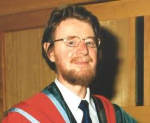
Kurt Godel
Kurt Friedrich Gödel (1906-1978) — mathematician, logician, philosopher. Kurt trusted no one but his wife to feed him; not even himself. He never ate another meal after his wife died. He starved.

Decades ago, mathematicians like Kurt Gödel proved that any math-based logic-system that is consistent can never be complete; it always contains truthful assertions—including but not limited to foundational truths, called axioms—which are impossible to prove.

Whenever humans believe that an idea or conjecture is self-evident but unprovable, it seems reasonable, at least to me, that some folks might feel compelled to disbelieve it; they might believe they are trapped in what could turn out to be a lie, because no one should be expected to embrace a set of unprovable truths, right?  

Axioms that can’t be proved are nothing more than assertions, aren’t they? Certainly, all theorems built from unprovable assertions (axioms) must carry some inherent risk of falsifiability, shouldn’t they?  

Someone unable to convince themselves that an assertion or axiom they believe is true actually is true might necessarily feel uncomfortable; even incomplete. Folks often teach themselves to not examine closely those things they believe to be true that they can’t prove. It helps them avoid cognitive dissonance.


I’m not referring to science by the way. It’s not easy for non-technical folks to confirm claims by scientists that Earth is round, for example. The earth looks flat to most people, but scientists who have the right tools and techniques can reach beyond the grasp of non-scientists to prove to themselves that planet Earth is round.

Reasonable people agree that the truth of science, some of it anyway, is discoverable to any group of humans who have the resources and training to explore it. Most agree that the scientifically well-qualified are capable of passing the torch of scientific truth to the rest of humanity.

But this essay isn’t really about science. It’s about truth itself — a concept far more mysterious and elusive than any particular assertion a scientist might make that Earth is not the center of the universe, or that the Moon is not made of cheese.

All logically consistent ways of reasoning that we know about are invented — some say, discovered — by human beings who live on Earth. Humans can and often have argued that the unprovable assertions which form the basis of any consistent way of thinking are an Achilles heel that can be attacked to bring down whatever logical structure has been erected.

It’s akin to the adage, “When nothing can go wrong, something will.” It’s a strong version of Murphy’s Law, right? It’s not possible to close circles of reasoning without an unraveling of heads and tails. 

It isn’t only the few foundational axioms of mathematically logical systems which are by definition true but unprovable. Mathematicians are always discovering complicated conjectures about the nature of numbers which everyone believes they know to be true but will in fact never be proved because they can’t be.


Freeman_Dyson
Freeman Dyson, British mathematician and physicist (Dec 15, 1923 – Feb 28, 2020)

Freeman Dyson — one of the longest-lived and most influential physicists and mathematicians of all time — argued that it is impossible to find a whole (or exact) number that is a power of 2 where someone can reverse its digits to create a whole number that becomes a power of 5.

In other words  2^{11} = 2048 , right?  Get out the calculator, those who don’t believe it. Reversing the digits to make 8402 does not result in an exact number that can be raised by the power of 5 to produce 8402.  

In this particular case,  8402^{1/5} = 6.09363...  plus a lot more decimals.  6.09363… is not a whole (or exact) number. 

Dyson asserted that no number that is a power of 2 can ever be manipulated in this way to yield an exact number that is a power of 5 — no matter how large or unlikely the number might be. Freeman Dyson and all other super-intelligent beings — perhaps aliens living in faraway galaxies — will never be able to prove this conjecture even though they all know for certain inside their own logical brains that this particular statement must be true.

All logically consistent methods of reasoning which can be modeled by simple (or not so simple) mathematics have these Achilles heels. Gödel proved this truth beyond all doubt; he proved it using a method he invented that allowed him to circumvent the dilemmas posed by the unprovable truths of the system of thinking he contrived to demonstrate his discoveries.

I’m not going to get into the details of Gödel’s Incompleteness Theorems; books have been written about them; most people don’t have the temperament to wade through the structures he built to make his point. It’s tedious reading. 

But in a nutshell, Gödel basically assigned simple numbers to logical statements — some being very complex statements encoded by very long strings of numbers — so that he could perform gargantuan operations of logic using rules of simple arithmetic on ordinary whole numbers. Take my word, his method requires traveling over unfamiliar mathematical roads; it takes getting used to.  

It should amaze non-mathematicians that truths abound in mathematics that not only have yet to be proved, they never will be, because no proof is possible. A logical path to the truth of these statements does not exist; indeed, it cannot exist. But it is useful and necessary to believe or at least accept these statements to make progress in mathematics.


Capture
Paul Joseph Cohen (1937-2007) Stanford mathematician

The late mathematician Paul Cohen — at one time a friend to Gödel — said that Gödel once told him that he wondered if it might be true that any and all conjectures in mathematics could be solved if only the right set of axioms could be collected to construct the proofs.

Cohen is best known perhaps for showing that indeed — in the case of the Continuum Hypothesis at least — he could collect two reasonable, self-evident, and distinct sets of axioms that led to logically consistent and useful proofs. One small problem, though — the proofs contradicted each other. One proved the conjecture was true; the other proved it was false.

His result is often explained this way: the consistency of any system of mathematical reasoning cannot be proved by its foundational axioms alone. If it can, the system must necessarily be incomplete; its conjectures — many of them — undecidable.

Cohen showed that a consistent and sound axiomatization of all statements about natural numbers is unachievable. Many such statements in his view could be true but not provable. Cohen introduced the concept that all systems of logic built on numbers have embedded within them some combination of ambiguity, undecidability, inconsistency, and incompleteness.

People who want their thinking to be consistent must believe things that cannot be proved. But believing logical statements that are unprovable always renders thinking incomplete — even when it is flawlessly consistent. What folks believe to be true depends fundamentally on what they believe to be self-evident: it depends on statements no one can prove: on axioms, and a little bit more.

For those who decide to believe and accept only statements that can be proved, their thinking will necessarily unravel to become inconsistent or incomplete — most likely both. Their assertions become undecidable. It can’t be any other way, according to Gödel, whose proof has withstood the test of 80 years of intense scrutiny by the smartest people who have ever lived.

Paul Cohen jumped onto the dilemma-pile by showing that the incompleteness made necessary by a particular choice of axioms can turn a logically consistent proof to rubble when a mathematician tampers with or swaps out the foundational axioms. A sufficiently clever mathematician can prove that black is white — and vice-versa.

It’s tempting to say that Gödel’s Incompleteness Theorems apply only to formal, math-based logic-structures — not the minds of human beings because those who analyze human minds always find them to be inconsistent and incomplete. But such talk makes the point.

Think about it.


paradox


So again: What is truth? 

How do folks determine that a particular statement is true if it happens to be one of those assertions that lies beyond the reach of logic, which no one — no matter how smart — will ever be able to prove? 

What good do collections of so-called self-evident axioms serve if different collections can lead to contradictions in theorems?

Most important: how does anyone avoid believing lies?

Billy Lee


Here is a short movie clip where Jesus, played by Robert Powell, answers the question asked by Pontius Pilate: What is truth?  The Editorial Board


Australian Electrical Engineer and Physicist Derek Abbott claims that mathematics is invented, not discovered: anthropological, not universal.

[added April 3, 2016] 
Here is a 2013 essay by Australian Electrical Engineer and Physicist Derek Abbott who argued—contrary to Gödel’s view—that mathematics is invented, not discovered: anthropological, not universal. Math enables humans to simplify truth to enable their limited minds to manipulate and understand simple things. Click this link for a good read.

No one can be sure that Derek’s view is correct, but I offer it as fodder for readers who are interested in why Truth and mathematics seem connected somehow—at least in the minds of thinkers like Plato, for example, and why these thinkers could be dead wrong.

Derek offers Clifford’s Geometric Algebra as an example of arbitrary mathematical reasoning favored by some robotics engineers. 


[added February 20, 2017] 
If mathematics is anthropological; if it is merely another way the human mind works and is not the golden key to a deeper reality beyond our own experience, then it can tell us nothing new about the mysteries of existence; we will not calculate our way along a path to truth. Pursuing knowledge will require us to do the difficult physical experiments to make progress—to figure out what is really going on “out there.”

Based on what the smartest scientists are saying today, human beings can’t build the kind of instruments required to answer the mysteries of the very large and the very small. Getting answers will take detectors the size of galaxies; it will demand the energy supply of thousands of stars.

If mathematics lacks a symbiotic connection to the hidden realties; if God is not a mathematician; if God doesn’t play dice as Einstein insisted… well, we won’t get to a deeper understanding of how the universe works or why it exists through clever use of mathematics. It just isn’t going to happen—not now; not anytime soon; not ever.

Kurt Gödel was the first mathematician to present for the existence of God a mathematical argument, which has proven simply impossible to falsify. If Kurt’s view of mathematics is reality, then his name is curious indeed, because its two syllables—God and El—are English and Hebrew respectively for “The Creator.”

Gödel’s name might be an imprimatur—with dots above its infinite “zero” making a kind of “pointer toward completeness”—perhaps placed by whatever it is who exists above and beyond this miraculous place where mathematicians and everyone else seem to live, however briefly.   


Friedrich Schiller 1749-1805

The 18th century German playwright and philosopher, Friedrich Schiller, wrote, “…truth lies in the abyss.”

Pray that he’s wrong.

Billy Lee

MICROWAVE COFFEE

Bevy Mae and me are coffee drinkers. Bevy used to drink a dozen cups of fully caffeinated coffee everyday.  By her third cup she could boogie with the best of them.  But that was a long time ago, before we got old. Now she drinks about two cups, and it’s decaffeinated. Me, on the other hand, well, I still imbibe the high-octane stuff.  I love it.


I drink the high-octane stuff.

If your marriage is anything like ours, you probably own one coffee-maker, but you and your spouse drink different brands, flavors or styles of coffee. For us it means we have to store the contents of at least one of our coffee-pots off-site away from the coffee-maker in containers and carafes; perhaps cups or bowls or glasses or whatever is handy. The coffee gets cold.

69050_Coffee Maker.37173901_std
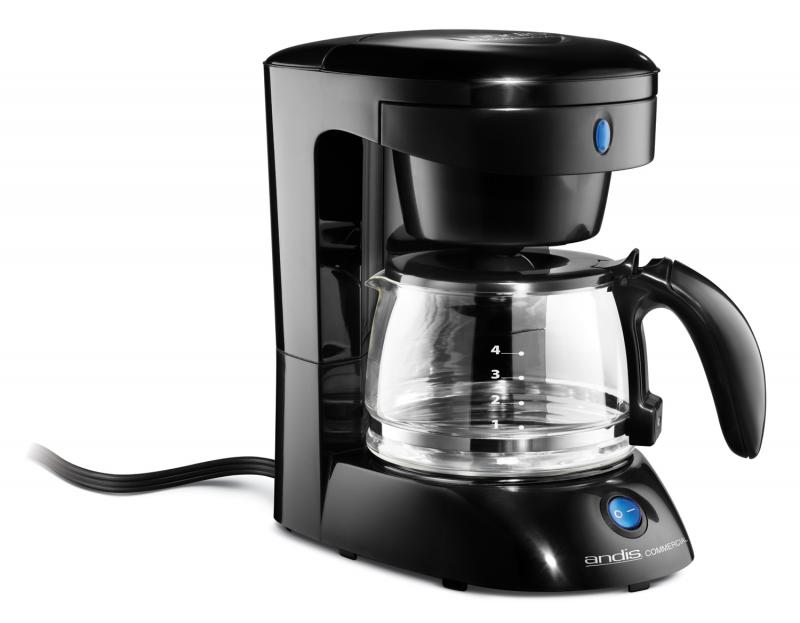
My wife and I have one coffee maker between us. It’s not enough.

Only one of us at a time can store coffee in the coffee-pot. But since we have two microwave-ovens, we don’t really need to keep our coffee hot. We can turn off the coffee-maker after we brew each pot to save energy.  Everyday we reheat our coffees in the microwaves more than once; thanks to having two of them we don’t wait in line.


We have two microwaves. It is one of the very few things which seem to have made a difference in our marriage.
Two microwaves: they can sometimes save a marriage.

Bevy Mae and I have an eclectic collection of coffee mugs gathered together over decades of marriage. I’ve often wondered: how is it that no matter how big the coffee cup or how tiny; how robust the mug or how dainty; how full or empty we fill — or even which microwave we choose — my wife and I almost never set the timer  to reheat our coffee more than once?

We always seem to set the microwave to exactly the right number of minutes and seconds to heat our coffee to exactly the right temperature.


coffee 4
                She got the calculation right.

Think about it. Can there be any doubt that the mathematics required to accurately set the timer must be beyond the capabilities of 99% of the people who set these timers to reheat their coffee everyday?

The size of the cup, its thickness and material; the amount of coffee in the cup — these are important variables that are required to be taken into account when setting the timer. Not only these variables, but there is the subjective calculation: how hot do I want this coffee to be today? Real hot? Tepid? Mildly warm?

There are many tricky variables to track and put into an equation. And, if we are reheating coffee for our significant others, we have to anticipate their calculation of what the best temperature is for their mood and state of mind.

differential equations EngMath_DifferentialEq_Terminology_02
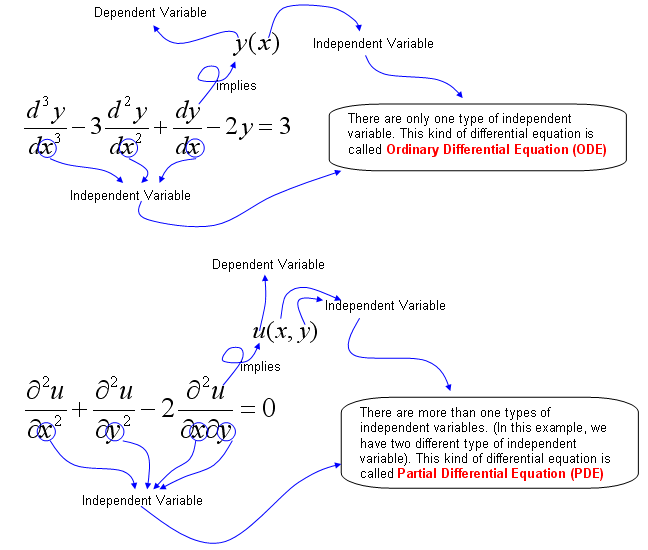
It takes a matrix of differential and difference equations plus a super computer to get microwave coffee right.

It really takes a sophisticated matrix populated with complex differential and difference equations to work out what the results might be under all the possible scenarios. And it might require a government super-computer to crunch the numbers.

Of course, I’ve never done the actual work of creating the matrix —  or the equations. Even if I had, I would have faced the daunting task of isolating all the relevant variables, the tedium of tracking all the units to make sure I ended up with seconds only in the answer, and the exhaustive testing of results to see if they match up with my expectations and experience.

Successful creation and application of a workable calculus might involve a lot of tweaking.


drinking coffee
He didn’t bother with the calculation.

Come to think of it, why would I do that? Guessing seems to work better and it’s a lot faster. But I wonder. Am I really guessing? Or is my brain, somehow, doing the math in some far away place inside my brain, behind the scenes and beyond my conscious scrutiny?

It’s kind of mysterious, being right all the time, about something as complicated as getting the number of minutes and seconds correct when setting the timer to reheat coffee.

And my wife, who knows no math, is as good at the mental calculation as me. Go figure.

Billy Lee

P.S.  Note to readers: On Valentines Day, 2015, Billy Lee bought a second coffee-maker for his wife, Bevy Mae. Why it took Billy Lee so long to solve his coffee-problem is a mystery even skilled mathematicians can’t solve.
The Editorial Board.


microwave coffee math graphic 6
Don’t try these calculations at home. Seriously. This man tried; his face froze — for. two. hours.

WHAT IS MATH?


math with color


People seem to think that mathematics is something special — a kind of magic language that when tinkered with properly makes it possible for mortals to unravel mysteries about the universe hitherto known only by God.

I see it differently. Mathematics isn’t a language per se. Although mathematics can be (and is) explained by language, math itself is a collection of rules and symbols that makes it possible to avoid the encumbrances, flourishes, and ambiguities of language. It accomplishes this feat by defining things and their relationships in strictly limited — but important — ways.


euler formula hatEuler Identity – Khan Academy


Math involves symbols and rules that aren’t explained inside the equations. It is the lack of words that gives math its mysterious and magical reputation. But once everything is defined and understood, applying the contrived but logical rules of mathematics enables folks to manipulate equations to uncover previously hidden and non-intuitive relationships among the things they have defined.

What am I saying exactly? I am saying that it is possible to use words alone to describe the process of solving and manipulating an equation, which can lead to insights into the relationship of the things in the equations. But these words will make the process of computation cumbersome, impractical, and confusing.

Spoken language contains noise and nuances that interfere with the manipulation of carefully defined relationships between narrowly defined variables. Yes, the no-nonsense logic and bare bones precision of mathematics as well as the reduction of things to a few carefully chosen attributes enables mathematicians to apply rules to discover consequences that might otherwise remain undiscovered.

But the tightness of mathematical construction makes it a tool which is almost useless for describing and analyzing many subtle yet vivid experiences of a conscious mind — like beauty, the feel of an orgasm, or the experience of grief. For these realities of conscious experience, mathematics has a reputation for being irrelevant.


euler ring     Euler Identity – Wikipedia


Spoken language gives conscious humans the messy modeling mechanism they need to connect with each other to share and understand the more nuanced experiences of life. The messiness and ambiguity of spoken language makes the unique intimacies of human communication possible. Mathematics, despite its elegance, doesn’t do intimacy well.

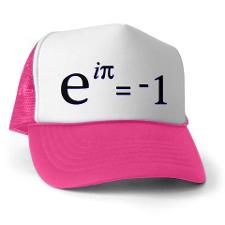
The Euler Identity, illustrated above, is sometimes presented as an example of the mysterious power of mathematics. But if anyone takes the time to think about it, what does the equation say?  It says that minus one plus one equals zero.


Complex Plane


The explanation is easy.   -1 can be rewritten as e raised to the power of i times π because of simple rules, which place on a circle of radius 1 all the values of e raised to the ith power times anything.

The number that sits next to i is the angle in radians where the result lies, right?  In this case, an angle of π radians (180°) takes the value 1 (at 0°, or 0 radians) to half-way around the circle to the value -1. 

Easy… , right?

Despite the reputation of equations for precision, it turns out that physicists and other scientists struggle to make mathematics match the results of real-world measurements.  It has to do with the problem of scales, mostly.

The electrical force is a trillion times a trillion times a trillion times greater than the force of gravity at the scale of electrons and protons. At the scale of quarks, it’s one-hundred-thousand times greater still.

It’s one example.

The non-technical public is unaware for the most part that astronomical observations involving the movement of stars, planets, and other celestial bodies — or the results of observations made of the subatomic world (no matter how carefully contrived) — fail as often as not to provide results sufficiently in agreement with mathematics to be of any practical use until they are massaged a little.

Fudge-factors are a big component of doing real science. People have won Nobel prizes for inventing fudge-factor protocols to fix things.

It’s true.

Renormalization, perturbation theory (for phenomenon both small and large), Green’s functions, propagators, Feynman diagrams, and many other adjustments and tweaks make up the contortions and modifications that scientists overlay onto their beautiful equations to make them work.

They claim to have good reasons for all the tinkering; it’s complicated down there among the quarks or up there, among the quasars; there are nuances and messiness and ambiguity in the underlying reality of nature that no one can see or fully understand — not now; not anytime soon; perhaps not ever.

At subatomic scales, a tangled mess of virtual particles — which come into and out of existence more or less spontaneously — often gets the blame for the mismatch between mathematical elegance and the cold reality of experimental results.

On the scale of the universe, dark matter and energy (which have yet to be detected or observed) are sometimes blamed for anomalies. Click on the link in this paragraph to learn more.

It’s possible that no system involving mathematics can be contrived by humans to bring the satisfaction of knowing everything for certain; nothing we are able to invent will bring a tranquil end to the pain of cognitive dissonance that seems to drive our species to wonder and explore to find the satisfying answer.

On the other hand, perhaps mathematics is more complex and goes further than we know. Methods may yet be discovered to make mathematics and physics match-up with better accuracy and precision.

Recent work by Cohl Furey and others on numbers known as octonions is showing tantalizing hints that internal properties like the force and charge of particles and their external manifestations like mass and spin are connected in peculiar ways that might be described by a more fully developed mathematics.

Dixon algebra (a combination of four division algebras) is a tool that people are using to collaborate in the search for a path forward. So far, success eludes them.  Some experts are hopeful, but many express skepticism.

The more deeply people travel into the complexities of mathematics and science the more elusive truth seems to become; perhaps God is not a mathematician; maybe Einstein was right when he said, God does not play at dice.

A die is cast into the lap, yes, but its decision is from the LORD, according to an old proverb of Solomon.

Can it really be true that understanding the world is beyond the limitations of all life on the earth — beyond the abilities of the most brilliant minds that have lived or ever will live?

Is it possible that the universe cannot be understood by any conscious life anywhere in the universe for all time?

If so, it’s time to kneel.

Billy Lee