
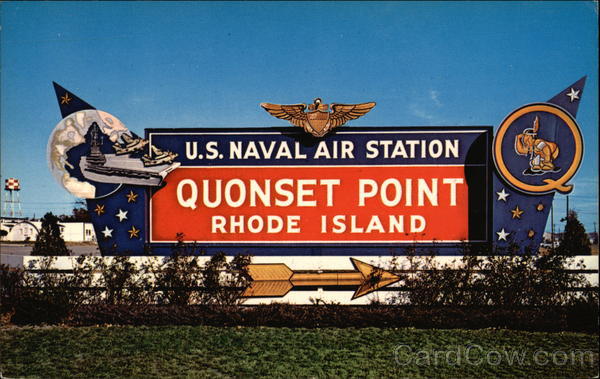
In 1958 when I was a fourth grader our family moved to Quonset Point, Rhode Island where my dad was soon promoted to lead HS-11, one of the Navy jet-helicopter squadrons defending the east coast from attack by Russian submarines.
We moved to Quonset Point with some trepidation because Hoskins Park — the housing project for military families in those days (now sold, redeveloped, and renamed Wickford Point) — had a long waiting list; we didn’t know where we would live or if we could afford off-base housing.
As it turned out, we got a lucky break. A Navy Lieutenant — who was a Negro — moved his family into Hoskins Park. Some white officers found out and decided their families weren’t going to live in non-segregated housing. As a result, vacancies popped-up, and we got in; we moved-in next door to the Negro officer and his family.
Lieutenant Brown, his wife and two daughters, lived in the two-story, condo-style apartment on the other side of a thin concrete wall from us.
Despite the custom that white and black families didn’t fraternize in those days, eventually I had encounters, conversations, and interactions with all the members of the Brown family.
Over time, I came to understand how traumatized they were, each in their own way, living in a country that, basically, isolated and mistreated them.
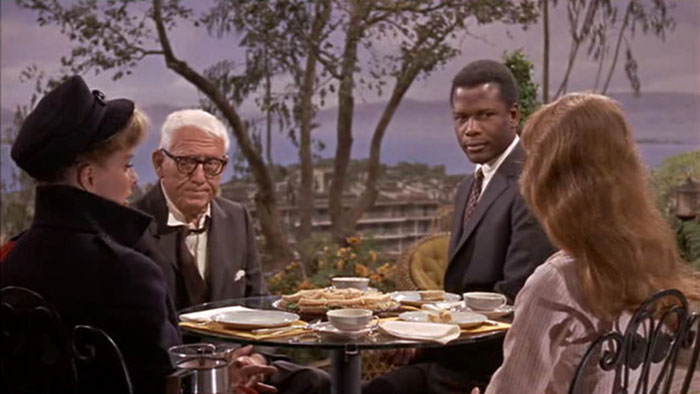
One encounter involved my parents. The Browns invited them for dinner to get acquainted, and after agonizing about it, Mom and Dad accepted. I think Dad wanted to check them out; to make sure his kids would be “safe” living next door.
After the meal, Dad reported that the Lieutenant’s wife, Jean (Alston), was a good cook, but he couldn’t shake a queasy feeling in his stomach, which spoiled his appetite. He had never interacted with negroes, except servants (everyone called black people negroes in the 1950s); he certainly had not eaten food at the same table. And, unlike my dad, Mr. Brown was a graduate of the Naval Academy.
In that sense, the lieutenant kind of outranked him. According to dad, Academy graduates favored one another and worked hard to help each other achieve promotions. They put non-Academy graduates (like dad) to great disadvantage in the competition for rank, which was fierce inside the Navy.
A black Academy graduate presented a dilemma. Brown was a graduate of the elite Naval Academy with all its privileges and protections; at the same time, he belonged to a race that was, to put it politely, undervalued both by the Navy and the country at large. It was unfamiliar terrain for dad and made him uncomfortable. I remember my parents writing a thank-you note to the Brown’s for their hospitality but as far as I know, they didn’t return an invitation.
Another incident occurred a few weeks later that changed the way I thought about people and what they sometimes go through. It happened on a day when my fourth-grade teacher decided to punish me for violation of good-citizenship. I sassed her, she claimed, because I insisted — in a loud voice before classmates — she couldn’t tell me what to do! She wasn’t my parent!
In my mind, it made sense. To show how wrong I was, she kept me after school to clean the blackboard. She forced me to practice my reading. I left school an hour late.
When I arrived home, I saw Billie — Lieutenant Brown’s sixth-grade daughter — standing on her porch a few feet from ours, crying, and shifting back and forth on her feet in a puddle of — I took a second look to be sure — her own pee. I couldn’t believe it; I didn’t know what to say or do. I ran inside our condo to tell mom.
I wish I could say that Mom brought Billie into our place, helped her clean-up, and gave her a secure place to wait until her mom got home with a key. But mother did nothing like that. Instead, she became animated and began to marvel about how such an embarrassing calamity could befall a sweet girl like Billie. I became annoyed. Why didn’t she ask us? I interrupted. We would have let her use our bathroom!
Maybe she was afraid to ask, mom said. Maybe she was afraid we would say, no.
So afraid she let her stomach burst? I yelled.

Some weeks after, I stood alone in the playground behind our building when Billie walked up. We didn’t speak but sat down together on the ground to draw pictures in the gray clay beneath us — clay the housing complex we shared was built on.
It didn’t seem right to sit with someone and not talk but I couldn’t think of anything to say. Billie was a couple of years older. We had little in common, it seemed. We concentrated for a while, in silence, on our art.
Then, she looked up. She fixed her eyes on mine. I didn’t look away. I tried to hold her gaze. Finally, she whispered. She said simply, I hate being colored.
I felt the blood drain from my face. Hate was a bad word. We didn’t use the word hate in our family.
To hear Billie whisper, hate, about herself — hate about something she had no control over or responsibility for, which she couldn’t change, wish away, or escape — upended my internal world. In that moment, the ground shifted beneath my feet.
Somehow, hearing her speak those words — and the mental image I had created in my memory of the day she danced in a pool of her own urine — conflated in my mind. As Billie waded ankle-deep in her own bodily fluids, I heard her screaming. I hate being colored!!! I hate it!! I hate it! I hate it.
In my imagination, I took my place beside her. I raged against God and all the earth for making her colored; for allowing white people to be so insensitive, so mean, so un-caring, so ill-tempered, so prejudiced.
—————
Billie’s father supervised a motor-pool near, but outside, the Quonset Point military base. According to friends of my mom, he was some kind of gas-station attendant. One warm day, he saw me playing outside and asked if I wanted to take a ride with him in his new convertible. I said sure.
He said he wanted to show me something. He was in charge of something and wanted to show me what it was. He wanted to show me what he did. At his work.
I thought, this is a crazy request. After all, I didn’t know what my own dad did. He’d never taken me to work or showed me anything having to do with what he was about when he wasn’t home.
So, I climbed into Mr. Brown’s convertible, top down, and off we went. It turned out that he was good at small talk. I listened happily to his resonant voice and enjoyed the sun and warm breezes as we rambled along. We passed through some old guard shacks, a few barbed-wire-topped chain-link fences, and entered an area so remote and wild, it was hard to believe we were still in Rhode Island.
We drove through a dense grove of trees and up onto a hill. Mr. Brown slowed the car and stopped. The sun blazed into the open convertible. Look, he said. He frowned, then nudged my shoulder and pointed. Look down there.

Below us for as far as my eyes could see, in a valley that stretched to the very edge of Earth, sat thousands of green and gray trucks and jeeps; armored personnel carriers and tanks; military vehicles of every stripe and size, all neatly parked in long straight lines. As a naive fourth grader, I found the view hard to take in. There lay spread below us more vehicles than I imagined existed in the entire world.
It was the second time a member of the Brown family stunned me. I was speechless. Then I said, you’re in charge of all of those trucks? Navy Lieutenant Brown smiled, sadly, I thought, then looked at me like Billie had.
I am, he said.
Billy Lee
Editor’s Postscript: This story is grounded in the memories of a fourth grader of events that occurred almost sixty years ago. The make of Mr. Brown’s car and the nature of the installation visited may or may not be accurate.
After writing this article, Billy Lee learned that Mr. Brown, sadly, passed away on May 22, 2012, at age 85 from cancer. After reading old press releases, he discovered that historian Robert J. Schneller had published a book in 2005 about Mr. Brown’s experiences at the Naval Academy called Breaking the Color Barrier. In 1949, it turns out, Midshipman Brown became the school’s first black graduate.
Unknown to Billy Lee, Wesley Brown had become an historical figure. Billy Lee has asked the Editors to add biographical notes to his post.
In 1958, neither Billy Lee nor Mr. Brown’s neighbors knew that the young Naval officer owned the distinction of being the first black midshipman to graduate from the Naval Academy. In the racial climate of the 1950’s, an achievement like Mr. Brown’s would have been seen as the exception that proved the rule: Negroes were inferior. It would have been bad taste in polite society to call attention to Lieutenant Brown’s achievement.
None of Wesley’s neighbors, Billy Lee recalls, had any idea of the hell he went through to become a Naval officer. In any event, white people in 1958 were so blinded by racism that they would have thought, had they known: Wesley’s accomplishment was of no consequence; it was not worth mentioning or even thinking about.
It’s hard to believe now, but white Americans in 1958 didn’t know their country had a race problem.


Wesley Brown became the first black American to survive the racial hazing at the Naval Academy and graduate. I knew him to be a happy person with a charitable attitude toward all people. He was a kind and gentle neighbor who, during the year of 1958, made me feel good each time I saw or spent time with him.
His wife, Jean (Alston), led our church choir and taught me to sing. We did a television show under her direction. His daughter, Willetta (Billie), transformed my view of the world with a single sentence. I read somewhere that Carol, the youngest daughter, did well in life.
After our families parted ways, Wesley’s family grew to include sons. Eventually, Wesley Brown and Jean divorced; Wesley married Crystal Malone in 1963. He rose to the rank of Lieutenant Commander before retiring in 1969 to pursue other interests.
As my story tells, it was racism in the Navy that made it possible for me to know the Browns. Midshipman Wesley Brown changed America for the better. He suffered to accomplish it, but he kept his pain to himself and his closest friends.
I am proud to say that once, I knew Wesley Brown and he knew me.
Billy Lee


