PLANES, TRAINS, & AUTOMOBILES; AND OUR FREEDOM

The question is simple: If circumstances conspired to take away cars and licenses so no one could drive again, would anyone feel free?


no cars img_3425
Can folks feel free, or happy, in a land without cars?

Maybe I would. I couldn’t bum rides or hitchhike, true. But if no one could drive; if everyone’s cars were taken, public transportation might improve, right?  You  know — planes, trains, and buses — how would anyone feel?

Speaking for myself, I think I might get sad and depressed. Thinking about not being able to come and go when I want, of having to depend on public transportation to venture anywhere more than a few miles from home makes me sick to my stomach. Freedom to travel on my own terms is a big part of what it takes for me to feel free and, yes, happy.


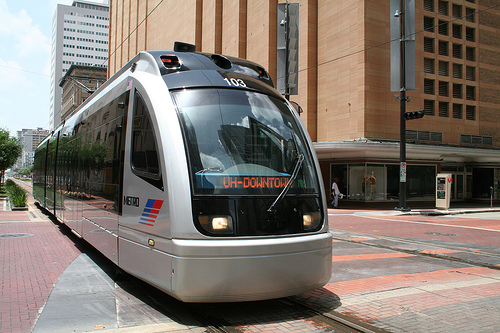
public transportation metrorail012109.21382537_std
If the only way to travel to another town was by train, how would people feel?

So why torment myself with thoughts about something that’s never going to happen? What’s the point?

In truth, many people don’t drive, especially in large metro areas like New York City, for example. Not driving is a choice. In theory at least, New Yorkers can buy cars and move to the suburbs. Knowing they can drive if they choose makes not driving not so bad, at least for most.


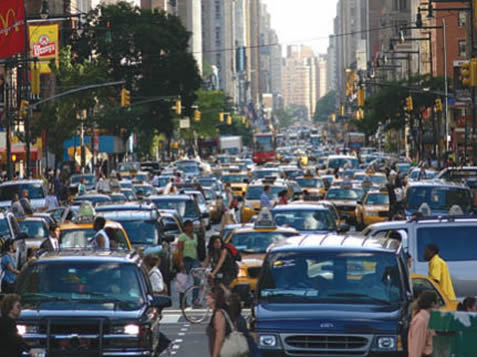
In New York City, most people don't drive.
In New York City, most people don’t drive.

Here’s my point. Someone is always telling us we are free, because we can vote for our leaders and start businesses; even keep the profits. No one can be arrested without cause. If arrested, all have the guarantee of due process and the presumption of innocence under the Constitution. Everyone can own guns and fire them in their backyards.

Is it possible that whoever they are might be right?


constitution 1
What good is declaring independence, if no one can drive?

Think about it. 

80% of citizens don’t vote regularly. 98% don’t own businesses unless franchises and pyramid-schemes like Amway count; then it’s 10%.

Few citizens are ever arrested, much less charged with a crime. And most folks — those who aren’t psychopaths — take no pleasure disturbing neighbors by firing rifle rounds in their backyards. In general most don’t participate in the privileges that define freedom.  People don’t feel their freedoms most of the time.

But here’s something else to think about: 95% drive cars.

Isn’t it cars that give the feeling of being free? Take away cars and no one has the same carefree feeling– no matter what the Constitution guarantees or profs teach in school or university.

People can go into the back yard and fire a hundred rounds from an assault rifle. All that will happen is their ears start to ring and their neighbors hate them. 


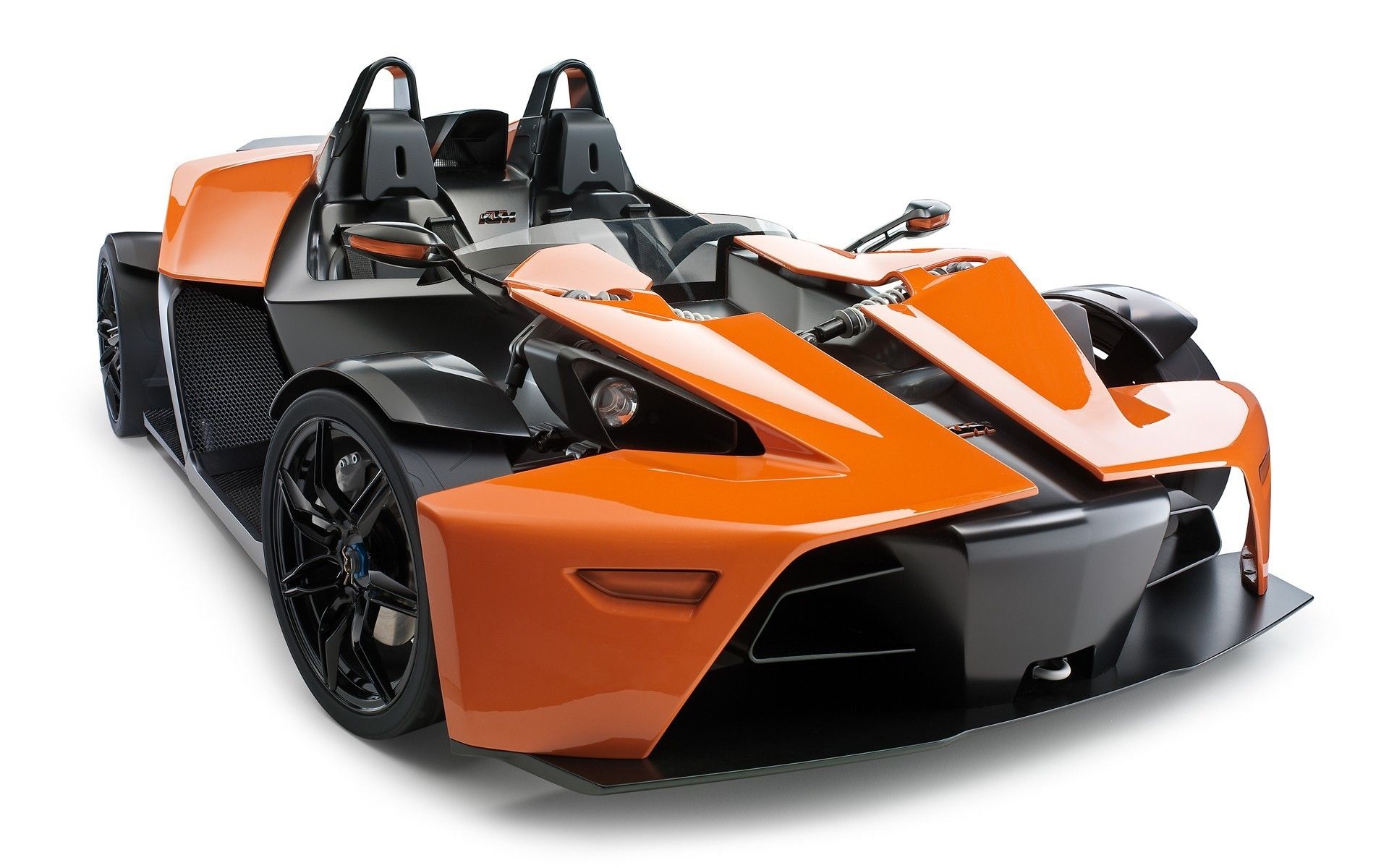
automobiles Latest-Fast-Cars
It’s cars that give us the feeling we’re free.

The thrill of freedom comes from stepping on the accelerator of a favorite car and feeling Earth slide away below us. Freedom is the feeling that anyone can come-and-go on their own terms whenever they want.


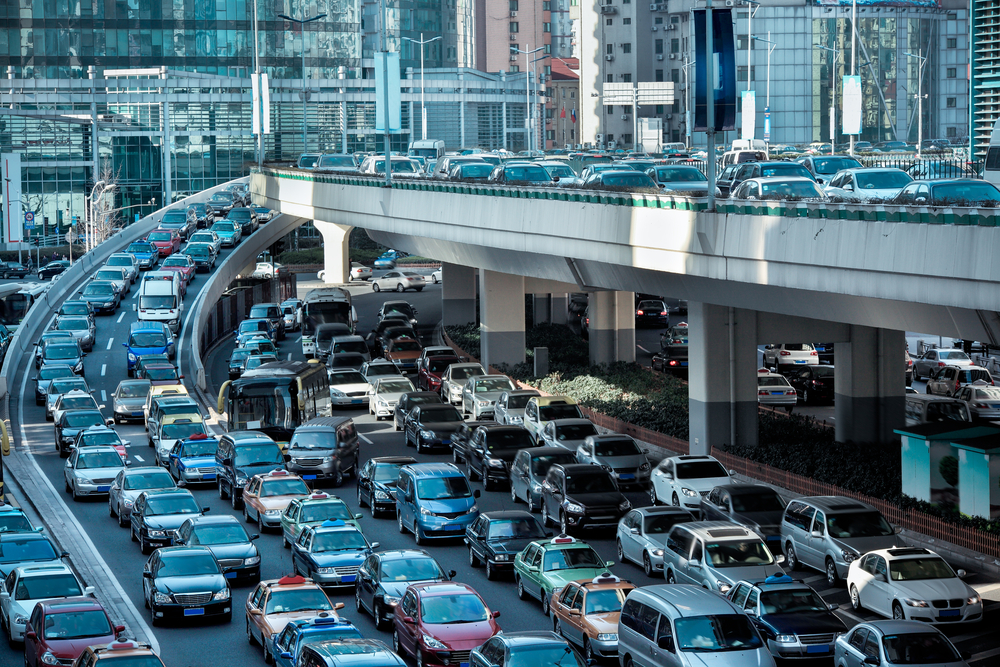
Traffic slowdowns and standstills are an assault on our freedom.
Traffic slowdowns and stand-stills are an assault on freedom.

Many Americans seem not to grasp that the right to drive is being methodically and relentlessly stripped away. In cities and towns across America, congestion on streets is presenting a clear and present danger to our way of life; it’s diminishing the freedom to travel under our own power; under our own direction, which is what everyone wants to enjoy.

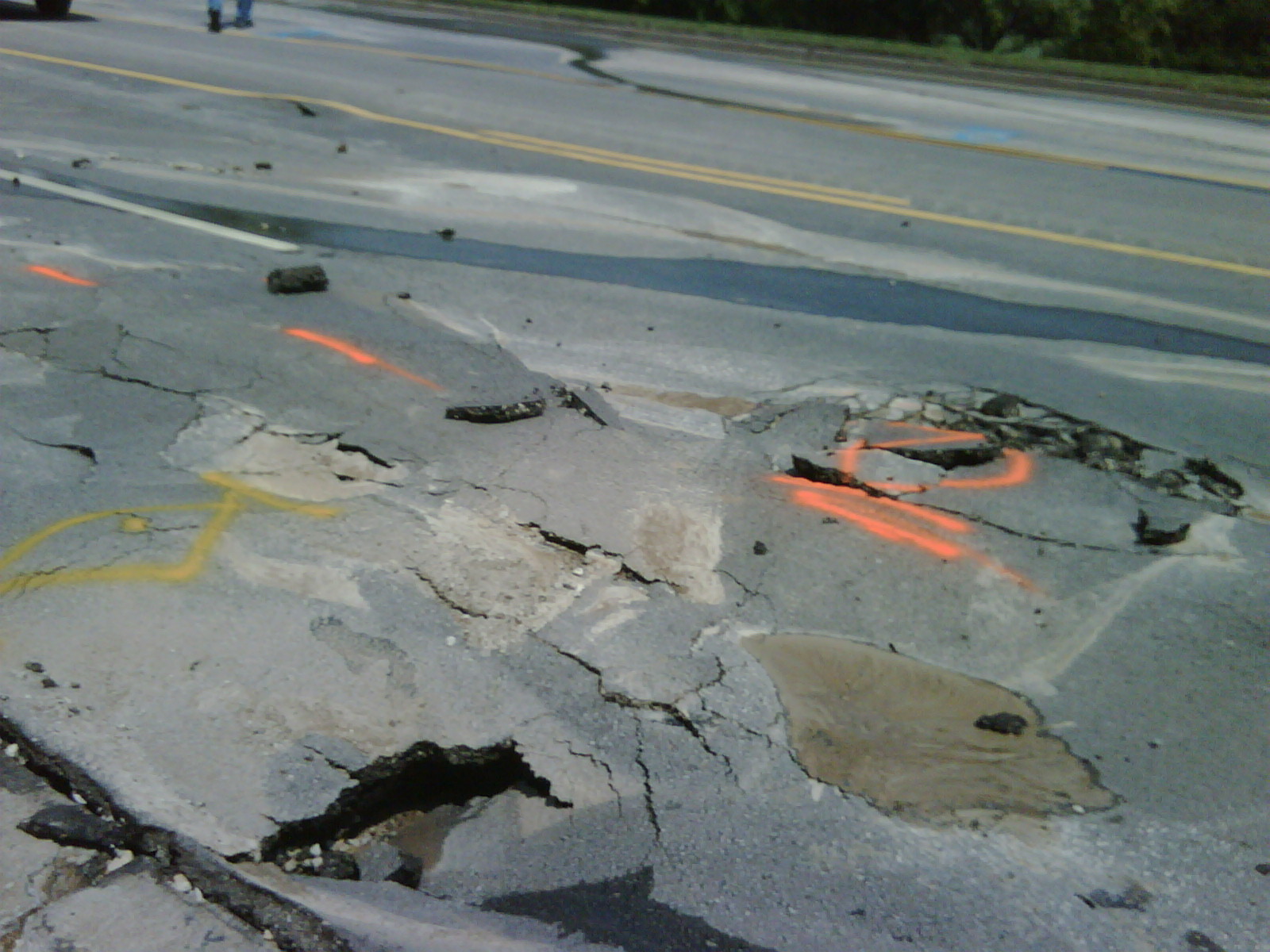
Lousy roads, poorly planned road construction, neglected road repair, deteriorated bridges and tunnels — all assault freedom and degrade our quality of life. 


Bad streets are an affront to our freedom and should be thought of as such.
Bad streets are an affront to freedom. Right?

It seems obvious that four-hour waits in line to vote wrecks freedom, because waits discourage voting, the foundational process of any democracy.  But four-hour commutes, traffic slowdowns and standstills are just as disruptive. They break the efficiency of our lives and muffle the nation’s economy.

The folks who run America seem to care little about voting or roads. Americans might want to step up to put pressure on politicians to make driving free and unencumbered — make freedom on the road the number-one national priority.

Driving free must be first-in-line; it is our most heartfelt and defining freedom.


In a computer-controlled aircraft, passengers are only along for the ride.
In computer-controlled aircraft, passengers are only along for the ride.

I learned that a few companies have already designed aircraft to take the place of cars. In the years prior to 911, I toured a number of these firms to learn firsthand how they implemented computer software to organize their engineering drawings, bills-of-materials, and tech-specs for vendors.

The plan, then, was to unleash at the right time a new era of transportation options for the general public that included light aircraft.

These companies were designing planes to fly on autopilot along pre-established routes in the sky. They took advantage of the three dimensions of space the same way city planners use tall buildings to create more working space.

The idea was to eliminate congestion and speed traffic by stacking routes and putting computers in charge of flying instead of pilots.


Sure the view is nice--when there's no clouds and you don't have to stop to stretch your legs.
The view is great — when the sky is clear, and no one has to get out to stretch their legs.

It all seemed like a good idea at the time. But the events of 911 changed planners’ views of what it might mean to put hundreds-of-thousands — maybe millions — of flying vehicles in the airspace above America — even if the craft were flying on autopilot under the guidance of computers.

Had 911 not happened, the plans were that by now on any given day at any given time people who looked up to the sky would see and hear hundreds, maybe thousands, of high-flying aircraft buzzing to and fro 24/7.


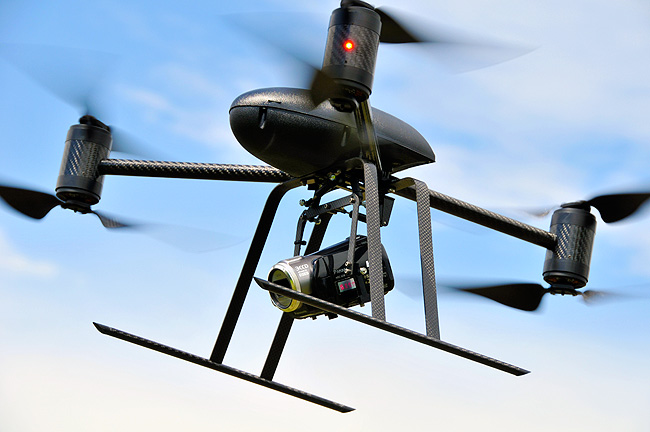
Computer-controlled aircraft flying on 3D highways are a transportation option available for implementation when the time is right.
Computer-controlled aircraft flying on 3D highways are a transportation-option, which is available for implementation when the time is right.

This high-flying, high-tech solution to highway congestion though shelved for now sits yellowing in the dark closet of national transportation options. It can be implemented when the time is right in the same way as the internet and personal-computer. But when it’s implemented, it will pose big problems.

3D highways in the sky populated by hundreds-of-thousands of computer-guided light-aircraft will have the same effect on travelers as if they were set on automated conveyor belts and whisked hither and yon.

The thrill that comes from commanding a piece of machinery and directing it to go where we decide will be gone. The feeling of empowerment and freedom experienced in cars will evaporate. 

Because — you know what’s coming, right?  If computers can direct the flights of millions of aircraft in three-dimensional space, they can do the same to cars on two-dimensional roads. And soon, very soon, they will.


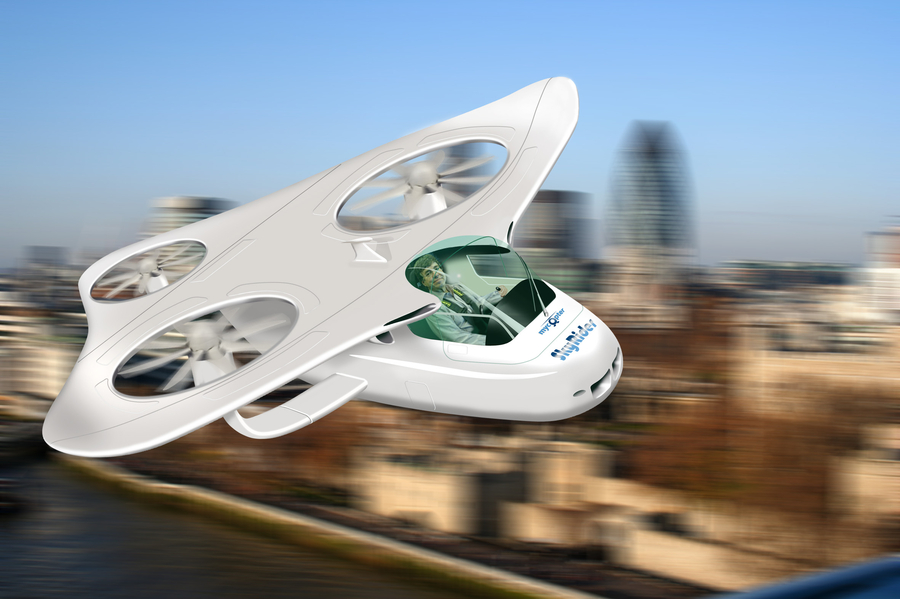
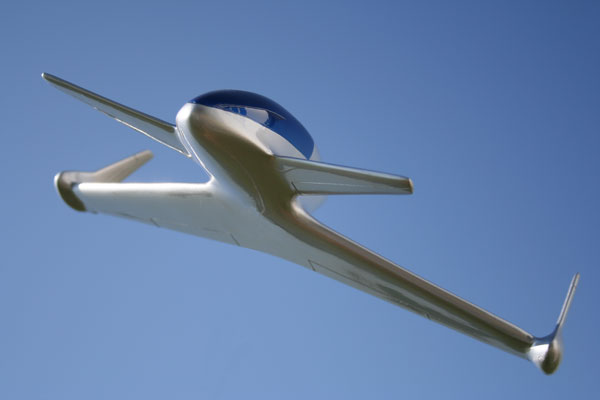
Yeah it's pretty. But if we're not flying it, do we really care?
Yes, it’s pretty. But if no one is flying it, does anyone care?

Because of over-population and the inevitable congestion it brings, the time may come when people will no longer be permitted to experience the freedom of a fast car on an empty road.

Our ancestors rode horses, after all. Most people have long-since adapted to the disappearance of the horse. Perhaps people will adapt. Circumstances will force grandchildren of today’s parents to go to private tracks to experience the lost joy of driving a car.

Riding in a computer-controlled helicopter, airplane, or other flying craft might become the norm for future travelers. People will be passengers — not drivers or pilots or navigators — for the duration of their trips. People will become dependent on another technology they don’t understand and can’t control.

We are likely to become a nation of flying and driving sheep who graze in a huge three-dimensional sheep-pen.

Will freedom ring?  Will people feel the thrill that comes from directing the path of complex machines that run like wild horses?  Will they feel the power that comes from being free?

Will children of the future experience the exhilarating freedom enjoyed by their parents during their season of control when no one felt threatened by a vice-grip embrace of an artificial-intelligence that is hovering ominously on the horizon? 

I don’t know.

Billy Lee

ON THE VERY SMALL

I hope by now you’ve read my article, Scale.  It hints at something odd about the Universe.


Saturn back-lit by the Sun. Earth is the tiny dot inside the artist’s circle to the left of the gas giant. In this pic Earth is 900 million miles or so into the page behind Saturn. Click pic to enlarge in new window.

When looking up into the night sky people sense the vast distances between the objects they see. But when looking down at the ground they experience something different. It seems that objects are solid, without internal structure.

No one can know by looking that solid objects are made of tiny molecules separated from each other by tiny gaps. Even sophisticated instruments like microscopes provide experimenters with no chance of seeing any molecules. Molecules are too small.


This algae is a single cell composed of many billions of molecules.

Think about it. No one has ever seen a molecule. 

No one.

Computers have created pictures based on programming rules and data from sensors to provide an idea of what molecules might look like — if molecules lived in the world at human scales and reacted to sensors and probes the way people do. But, of course, they don’t.


porin molecule occuring in cell membranes
Model of a single porin molecule.  These molecules stack to create tunnels for passage of smaller molecules through cell membranes.  Each molecule is made from hundreds of atoms.

Few professors emphasize to kids in freshman chemistry, as far as I know, that they are learning the rules from models of molecules which have been invented — fabricated — to help make sense of lab experiments done on substances that are able to be touched by hands and seen with unaided eyes.

Worse, visual models can never be realistic when applied to the objects scientists call atoms. Atoms are what molecules are made from. They must be completely fanciful. It’s true. Scanning tunneling microscopes (STMs) have been used since 1981 to “feel” the forces of atoms with “nano” probes. Based on plots of these forces, pictures of atoms that look like stacked billiard balls are generated by computer algorithms.

Whatever it is that atoms are, they aren’t resolvable with light, which is what brains use to view and imagine things. The constituents of atoms are quantum objects that don’t behave like anything familiar to ordinary life. Everything folks think they know about atoms is made-up by scientists who are struggling to make sense of the way substances behave under every set of experimental circumstances imaginable.


pentacene molecule
Atomic Force Microscopy (AFM) provided data to an IBM computer, which constructed this image of a benzene molecule. This technology cannot resolve the structure of the individual atoms, which impart to the molecule its geometric shape and electrical properties.

Scientists have invented models of atoms, which are made from protons, neutrons and electrons (that whirl inside s, p, d,  f & g orbitals) — whatever — to aid their thinking. No one examines an atom to see if it looks like its model, because they can’t.

Whatever it is scientists are modeling can’t be seen by eyes or microscopes. If the model helps scientists predict what will happen in experiments, they are OK with it. Physicist Stephen Hawking calls it model-dependent realism. The models are good enough.


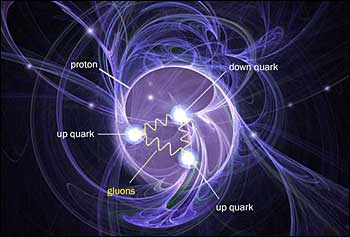
Quarks
Artist rendering of quarks. It is impossible to see quarks or to know what they really are. They were invented by physicists to help make sense of experiments done in particle colliders, which show that protons, for example, cannot be fundamental, but must have (thus far) unobservable internal structures, which in the case of protons are most realistically modeled by two ”up” quarks and one ”down”. Quarks have color as well, to help explain their interactions with gluons — which carry the ”strong force”.  

During the past fifty years or so experiments have revealed new layers of complexity, which older models of the atom don’t address. So scientists have devised new models to help them reason more clearly about the strange events they were observing.

Scientists invented more structures and more “particles” — quarks being the best known — to explain and simplify the fantastic results of recent experiments.

Before the idea of the quark, scientists struggled with the complexity of a theory that included hundreds of particles. Frustrated physicists referred to the complexity as the “particle zoo.” After the theory of quarks was accepted, the number of particles in the “standard model” dropped to seventeen.


molecular and optical physics
Periodic optical lattice potentials for atoms. At a certain ‘magic wavelength’ of the trapping light one finds identical polarizabilities for ground state atoms and Rydberg atoms (see the inset), such that the trapping strength no longer depends on the internal atomic state. (Excuse me, but anyone who understands what they just read is a genius, a mad scientist, or both.)

Some current models of the subatomic world postulate point-size masses immersed in vast volumes of interstitial space. These models reflect the mathematics used to build them, but are probably not helpful for understanding what is really going on.

John Wheeler, the theoretical physicist who coined the terms worm-hole and quantum-foam, said this about the very small:  …every item of the physical world has at bottom — a very deep bottom, in most instances — an immaterial source and explanation…

At the smallest scale anyone can realistically work with — the scale of molecules — the structure of matter is dense. The space between molecules in a lattice is not much larger than the size of the molecules.

The force fields inside the molecular lattice are powerful — powerful enough to make the lattice impermeable. Vast volumes of empty space don’t exist within. Matter and energy seem to be working together in a kind of soup of symbiotic equivalence.


Atlas particle detector at CERN
Atlas particle detector at CERN. See human inside for scale. Are they kidding? This monster machine detects so-called ”particles” that cannot be seen by humans, even with microscopes.

It might be reasonable to expect that at smaller scales, forces and fields take over. Matter, as folks usually think of it, is gone. Fields (whatever they might really be) predominate. When fields interact with detectors, the detectors provide data as if they interacted with massive particles immersed in vast volumes of empty space.

It might be an illusion that leads people to miss an underlying reality of smaller scales — descent into the abyss of small scales reveals regions of disproportionately less space, not more. The stairway to smaller scales may lead to densities of force/energy and limitations of space/time like those found in black holes.  

In a typical black hole — a hundred million may inhabit the Milky Way Galaxy — a typical event horizon might have a circumference of thirty miles. Its diameter could measure millions of miles. Dimensions like these violate the Euclidean rules of geometry everyone expects. According to the rules, a spheroidal event horizon with a thirty mile circumference can’t measure more than ten miles across.

A diameter of millions of miles for an object with a thirty mile circumference seems crazy at first, until the implications of relativity are examined, which demand that the volume of space and span of time within a black hole be densely distorted and wildly warped.

A black hole contains within its volume the energy-equivalent of all the matter of the collapsed and vanished star that formed it plus all the energy-equivalent of any other matter that may have fallen into it. It is a region mostly devoid of matter — it is energy rich but matter impoverished — analogous perhaps to those tiny spaces some think might exist within and between atoms and inside the sub-atomic realms of ordinary matter.

Said plainly, whatever exists at tiny scales is not understood, but maybe knowledge about black holes can provide insights. I think so. The problem: knowledge about black holes is speculation based on mathematics; unless we are already living inside a black hole, no one can experimentally verify the ideas of smart and talented people like Stephen Hawking, for example.

The problem of understanding the very small is serious. The most advanced particle detector humans can afford to build blows up protons to examine their debris field. The detector “looks at” debris that measures about 1/100th the size of the protons it smashes. Accelerators — like the one at CERN — can’t “see” anything smaller.

From these tiny pieces of accelerator-trash theories of nature are fashioned. The inability to resolve the super small stuff is a problem. No one can see quarks, for example. Scientists at the ALICE Lab at CERN hope to fashion a “work around” by using the nuclei of iron atoms to make progress in the coming years.

To examine debris at Planck scales — which would answer everyone’s questions — requires a resolution many trillions of times greater than CERN can deliver. Such a machine would have to be much larger than the one at CERN. It would have to be larger than the solar system. In fact, it would have to be larger than the Milky Way Galaxy. Even then, the uncertainty principle guarantees that such a machine could not remove all the quantum fuzziness from whatever images it might create.


Nema Arkani-Hamed
Nima Arkani-Hamed, theoretical physicist, born April 5, 1972

According to IAS theoretical physicist, Nima Arkani-Hamed, it might be possible to burrow down to an understanding of the very small by using pure thought — as long as it is consistent with the mathematics that is already known for sure about quantum physics and relativity theory. The problem is, no one will ever be able to confirm the new models by doing an experiment.

The good news, Nema says, is that constraints imposed by knowledge already confirmed may so reduce the number of paths to truth that somebody might find a way that is unique, sufficient, and exclusive. If so, folks can have confidence in it, though experimental verification may lie well beyond the reach of technology.

But again, fundamental problems — like trying to observe an intact, whole atom — remain. No technology of any kind exists that will permit anyone to observe an entire atom at once and resolve its parts.

Physicists are reduced to using what they learn from observing atomic-scale debris to help fashion, in their imaginations, what such an entity might “look” like. No one will ever have the holistic satisfaction of holding an atom in their experimental hands, observing it, and pushing on its quantum-endowed components to see what happens.


alchemy
Artist rendering of an alchemy research laboratory.

Where does it all lead? At this stage in its history, science is struggling to figure out what’s happening. 

In the USA, (where the big money is) science seems to serve the military and companies struggling to create products that capture the imagination and pocketbooks of a buying public. For the moment at least, science is preoccupied with serving better those who pay for its services.

But someday — hopefully soon — scientists may refocus their considerable talents on the questions that really matter most to people:

Where are we?  What, exactly, is this place? Is anyone in charge?  

Billy Lee