PLANES, TRAINS, & AUTOMOBILES; AND OUR FREEDOM

The question is simple: If circumstances conspired to take away cars and licenses so no one could drive again, would anyone feel free?


no cars img_3425
Can folks feel free, or happy, in a land without cars?

Maybe I would. I couldn’t bum rides or hitchhike, true. But if no one could drive; if everyone’s cars were taken, public transportation might improve, right?  You  know — planes, trains, and buses — how would anyone feel?

Speaking for myself, I think I might get sad and depressed. Thinking about not being able to come and go when I want, of having to depend on public transportation to venture anywhere more than a few miles from home makes me sick to my stomach. Freedom to travel on my own terms is a big part of what it takes for me to feel free and, yes, happy.


public transportation metrorail012109.21382537_std
If the only way to travel to another town was by train, how would people feel?

So why torment myself with thoughts about something that’s never going to happen? What’s the point?

In truth, many people don’t drive, especially in large metro areas like New York City, for example. Not driving is a choice. In theory at least, New Yorkers can buy cars and move to the suburbs. Knowing they can drive if they choose makes not driving not so bad, at least for most.


In New York City, most people don't drive.
In New York City, most people don’t drive.

Here’s my point. Someone is always telling us we are free, because we can vote for our leaders and start businesses; even keep the profits. No one can be arrested without cause. If arrested, all have the guarantee of due process and the presumption of innocence under the Constitution. Everyone can own guns and fire them in their backyards.

Is it possible that whoever they are might be right?


constitution 1
What good is declaring independence, if no one can drive?

Think about it. 

80% of citizens don’t vote regularly. 98% don’t own businesses unless franchises and pyramid-schemes like Amway count; then it’s 10%.

Few citizens are ever arrested, much less charged with a crime. And most folks — those who aren’t psychopaths — take no pleasure disturbing neighbors by firing rifle rounds in their backyards. In general most don’t participate in the privileges that define freedom.  People don’t feel their freedoms most of the time.

But here’s something else to think about: 95% drive cars.

Isn’t it cars that give the feeling of being free? Take away cars and no one has the same carefree feeling– no matter what the Constitution guarantees or profs teach in school or university.

People can go into the back yard and fire a hundred rounds from an assault rifle. All that will happen is their ears start to ring and their neighbors hate them. 


automobiles Latest-Fast-Cars
It’s cars that give us the feeling we’re free.

The thrill of freedom comes from stepping on the accelerator of a favorite car and feeling Earth slide away below us. Freedom is the feeling that anyone can come-and-go on their own terms whenever they want.


Traffic slowdowns and standstills are an assault on our freedom.
Traffic slowdowns and stand-stills are an assault on freedom.

Many Americans seem not to grasp that the right to drive is being methodically and relentlessly stripped away. In cities and towns across America, congestion on streets is presenting a clear and present danger to our way of life; it’s diminishing the freedom to travel under our own power; under our own direction, which is what everyone wants to enjoy.

Lousy roads, poorly planned road construction, neglected road repair, deteriorated bridges and tunnels — all assault freedom and degrade our quality of life. 


Bad streets are an affront to our freedom and should be thought of as such.
Bad streets are an affront to freedom. Right?

It seems obvious that four-hour waits in line to vote wrecks freedom, because waits discourage voting, the foundational process of any democracy.  But four-hour commutes, traffic slowdowns and standstills are just as disruptive. They break the efficiency of our lives and muffle the nation’s economy.

The folks who run America seem to care little about voting or roads. Americans might want to step up to put pressure on politicians to make driving free and unencumbered — make freedom on the road the number-one national priority.

Driving free must be first-in-line; it is our most heartfelt and defining freedom.


In a computer-controlled aircraft, passengers are only along for the ride.
In computer-controlled aircraft, passengers are only along for the ride.

I learned that a few companies have already designed aircraft to take the place of cars. In the years prior to 911, I toured a number of these firms to learn firsthand how they implemented computer software to organize their engineering drawings, bills-of-materials, and tech-specs for vendors.

The plan, then, was to unleash at the right time a new era of transportation options for the general public that included light aircraft.

These companies were designing planes to fly on autopilot along pre-established routes in the sky. They took advantage of the three dimensions of space the same way city planners use tall buildings to create more working space.

The idea was to eliminate congestion and speed traffic by stacking routes and putting computers in charge of flying instead of pilots.


Sure the view is nice--when there's no clouds and you don't have to stop to stretch your legs.
The view is great — when the sky is clear, and no one has to get out to stretch their legs.

It all seemed like a good idea at the time. But the events of 911 changed planners’ views of what it might mean to put hundreds-of-thousands — maybe millions — of flying vehicles in the airspace above America — even if the craft were flying on autopilot under the guidance of computers.

Had 911 not happened, the plans were that by now on any given day at any given time people who looked up to the sky would see and hear hundreds, maybe thousands, of high-flying aircraft buzzing to and fro 24/7.


Computer-controlled aircraft flying on 3D highways are a transportation option available for implementation when the time is right.
Computer-controlled aircraft flying on 3D highways are a transportation-option, which is available for implementation when the time is right.

This high-flying, high-tech solution to highway congestion though shelved for now sits yellowing in the dark closet of national transportation options. It can be implemented when the time is right in the same way as the internet and personal-computer. But when it’s implemented, it will pose big problems.

3D highways in the sky populated by hundreds-of-thousands of computer-guided light-aircraft will have the same effect on travelers as if they were set on automated conveyor belts and whisked hither and yon.

The thrill that comes from commanding a piece of machinery and directing it to go where we decide will be gone. The feeling of empowerment and freedom experienced in cars will evaporate. 

Because — you know what’s coming, right?  If computers can direct the flights of millions of aircraft in three-dimensional space, they can do the same to cars on two-dimensional roads. And soon, very soon, they will.


Yeah it's pretty. But if we're not flying it, do we really care?
Yes, it’s pretty. But if no one is flying it, does anyone care?

Because of over-population and the inevitable congestion it brings, the time may come when people will no longer be permitted to experience the freedom of a fast car on an empty road.

Our ancestors rode horses, after all. Most people have long-since adapted to the disappearance of the horse. Perhaps people will adapt. Circumstances will force grandchildren of today’s parents to go to private tracks to experience the lost joy of driving a car.

Riding in a computer-controlled helicopter, airplane, or other flying craft might become the norm for future travelers. People will be passengers — not drivers or pilots or navigators — for the duration of their trips. People will become dependent on another technology they don’t understand and can’t control.

We are likely to become a nation of flying and driving sheep who graze in a huge three-dimensional sheep-pen.

Will freedom ring?  Will people feel the thrill that comes from directing the path of complex machines that run like wild horses?  Will they feel the power that comes from being free?

Will children of the future experience the exhilarating freedom enjoyed by their parents during their season of control when no one felt threatened by a vice-grip embrace of an artificial-intelligence that is hovering ominously on the horizon? 

I don’t know.

Billy Lee

AIR TRAVEL SAFETY

Airlines spend serious money to convince consumers flying is safe. Not only is flying safe, they insist, but it is way more safe than driving.
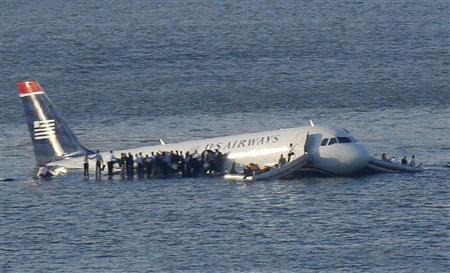

The Miracle on the Hudson improved airline mortality statistics, because no one died. (78 were injured)

Why is it, then — every time some folks board planes, settle into the seat, place the tray-table up and the seat-back in the upright position, hear the engines ignite and roar, and feel the pull of the plane against their backs — hands begin to sweat, the heart pounds, guts squirm, and minds start screaming helpless, desperate questions: What if  they’re wrong? What if I die? Why didn’t I take the car?

If anyone is like me, they enter a car to go somewhere five or six times a day. In other words, people participate in driving events thousands of times a year. Is it really possible that boarding a plane thousands of times a year is safer than driving? Many humans would die from heart attacks alone, if they did such a thing.

Even if anyone has two or three car accidents per year, it is unlikely that someone will die. In fact, stats reveal that one auto-related death occurs per 100 million driving miles.  It amounts to 3.4 million hours of driving.

It’s equivalent to one driver navigating their vehicle 390 years continuously — 24/7 — without a break.  Does anyone believe an airplane of any kind at all can fly that many years accident-free? When it crashes, hundreds of passengers die. It’s not so hard to figure out. 

When airplanes, helicopters, and jets crash, it is unlikely anyone will survive. An aircraft must fly perfectly or people die, more times than not.

Not so with cars.
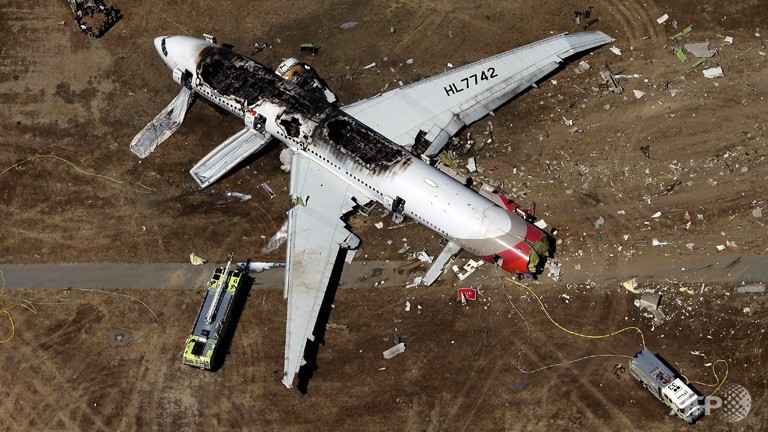

asiana plane crash San Francisco Boeing 777
This accident in San Francisco had little effect on mortality statistics for the Boeing 777, because only three people died. (181 were injured)

It’s probably un-helpful to spout a bunch of numbers and ratios and statistics to prove the obvious. People in panic-mode don’t do well with numbers, anyway.

But let me make this observation: smart people in the airline industry are serving up a mess of misleading statistics to get the flying public to underestimate the risks of boarding an airplane.

Guess what? Airlines perform this charade to separate the traveling public from its money. Is anyone surprised?

The only way flying will ever be safer than driving is if folks fly as few times a year as possible. All the favorable statistics airlines like to quote rest on this simple premise: If people fly less, they are less likely to die.

People get into planes fewer times than into cars. Therefore flying is safer than driving. Cogito ergo sum. Quod erat demonstrandum.
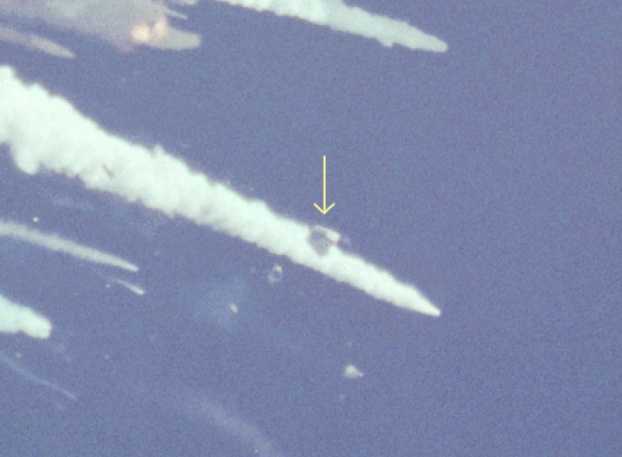

Challenger_breakup_cabin shuttle disaster
Arrow points to intact flight-cabin during Challenger disaster.

Remembering the Space Shuttle program may bring the point into sharper focus. As the public knows now, the government discontinued the space-shuttle after observers pointed out that it was unreasonably dangerous to the astronauts.

At first the program seemed safe. Then an accident took a dozen lives. Afterward, it was safe again. Then another accident. More deaths.

Soon it became obvious. Every thirty flights the program was going to lose an entire crew. A way to improve the odds couldn’t be found. The program was scrapped.

The government threw up its hands and said: Let private companies handle the space program. Look at the great job they are doing for the airlines.

Billy Lee

SEGREGATION AND THE GATED COMMUNITY

The word community sounds egalitarian to most people. And gated? No word yields a fairer portion of safety to airy openness in the image it conveys to the mind.


Gated community near Orlando, Florida.

Florida is a land flowing with gates and communities. It is a Promised Land of sun, leisure, warm pools, and exclusivity. For the past month Bevy Mae and me have been vacationing inside this paradise at a house in one such community near Naples, Florida. It took three references, photo ID, and all cash up front to get in here.

We are grateful for our good fortune. And we are in a really safe place. But when thinking about the state of affairs which has excluded as many as 94% of all Americans from the possibility of living here — if only for a few weeks — it makes me sick to my stomach.

Of course, if you don’t live here, you can’t be here — not even to drive through.


gated community 2


The compound we live in is huge. While biking in it the other day I was amazed to stumble on another gated community inside ours. It’s blessed by God with a lake and huge houses.

What’s strange is the gated occupants of our community aren’t allowed in their gated community even though their community is inside our community. Apparently, there are layers of gated-ness. I never knew that.

As teenager, I lived two years in Key West, Florida. It was before Civil Rights Act of 1964. It was totally segregated there. The only Negro I ever saw was our maid.

Our housekeeper was an articulate thirty-year-old woman and really beautiful. I liked her a lot and talked with her every chance I got, usually about politics. From her, I learned how difficult life was for black people in Key West at that time — and maybe as important, that a lot of Negroes actually lived on the island. Never knew that, either. Somehow, they managed to keep an extremely low profile. 

She said she supported the incumbent Democrat for Congress who was then running against an upstart Republican — a young guy always on the radio complaining about how rich his opponent was. She liked the Democrat, she said, because he once bought park benches for her neighborhood.


integration segregation


At Key West High School, the powers-that-be were considering the admission of a black kid from a “good” family. His dad was an officer in the U.S. Navy. Over lunch in the school cafeteria, I made the mistake of saying I saw nothing wrong with going to school with “Negroes” (as polite people referred to them).

“What!” some kid yelled. “You want to eat with niggers?”  Soon a crowd gathered. I stood my ground, and no one beat me up. The South was changing, I guess, but only a little.

One thing Key West didn’t have back then — no town did in those days — was gated communities. We had a military base that was gated — I lived on it — but the gates were for security against the hated Communists. We didn’t have terrorists or any other sort of enemies of the state. All that was to come later.

After World War II, the South and some parts of the North enforced segregation with a civilian militia called the Ku Klux Klan. It was a quasi-religious/military-style organization self-tasked with extra-judicial punishments of Negroes who violated the unwritten codes of the South.

I know something about it. My grandfather belonged to the Klan for some years, which he said he regretted. He told me things. Everyone he knew then was in the Klan, and yes, they did things they believed righteous but weren’t. 

If a black family bought a house in a white neighborhood, the militia would burn it down. Sometimes, so as not to smoke-damage nearby homes, the KKK bombed the house; or if white children lived close by, they might burn a cross in the front yard to scare occupants into leaving.

Lynchings — common after the First World War — were, by the 1950s, less common.


Ku Klux Klan


After dozens of documented actions against Negroes — and perhaps hundreds or thousands of undocumented ones — white neighborhoods did not need gates, or walls, or fences to remain segregated.

Eventually, after years of separation, white people who lived in these communities came to believe — many of them — that black people chose not to live next to them, because they preferred “their own kind.”

Terrorism? It didn’t exist in the United States of America in those days. First time I heard the word was in college. Terrorism, then, was always directed at Israel, for some reason, almost always by Palestinians. Reasons why were never clear.

I don’t know what white people say today is the reason black people don’t live in gated communities of Florida. I haven’t vacationed here long enough to learn.

I would bet that in some town somewhere in this huge state a black family probably lives in a gated community. Maybe more than one, right? I can imagine people pointing to those folks as proof of my being uncharitable to the good people of Florida and to people everywhere who live in these spaces.

But it seems plain to me — fifty years after Congress, the President and the Supreme Court declared segregated housing illegal — black people don’t live in these desirable places.

Why is that?

I don’t know.

I met a black man down here the other day. He told me he had been a Marine who helped liberate Kuwait during the first Gulf War.

He cleans the pool.

Maybe, I’ll ask him.

Billy Lee