OCEAN WAR

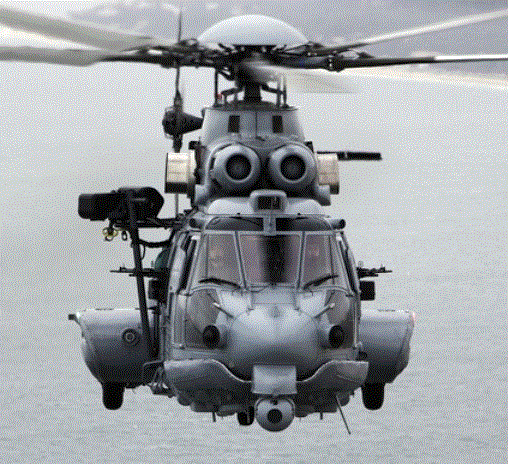
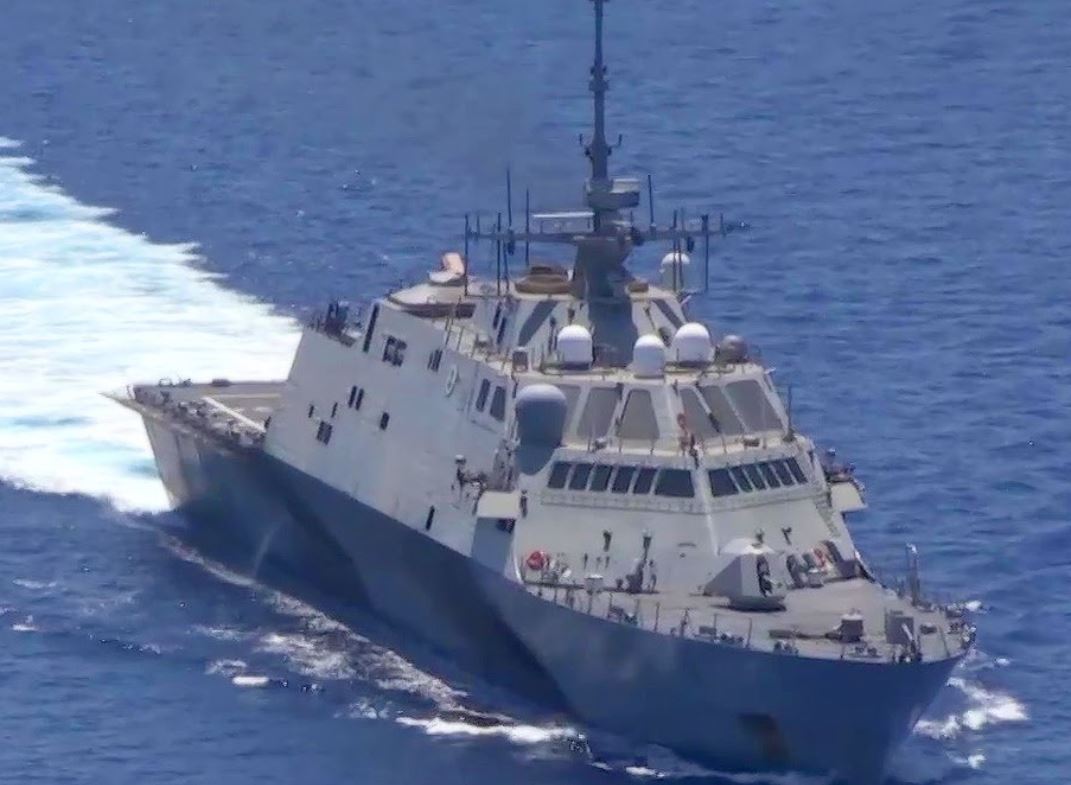
Russian hypersonic ship killing missiles fired from submarines and jets pose an existential threat to the US Navy Fleet. From AP Photo. 

UPDATE BY THE EDITORS: 5 AUGUST 2021; The Associated Press reported yesterday the following: A prospective Russian hypersonic missile has been successfully test-fired from a nuclear submarine for the first time, the military said Monday. The Russian Defense Ministry said that the Severodvinsk submarine performed two launches of the Zircon cruise missile at mock targets in the Barents Sea.


Editors Note: The January 16, 2018 edition of the New York Times reports that five Naval officers are being charged with negligent homicide related to the incidents described in this essay where seventeen sailors lost their lives, others were injured, and ships were damaged. The decision to take these officers to trial or court-martial is imminent.


The United States Navy insists that it has 277 ships on active-duty. About 132 are combat surface vessels; 75 or so are submarines. About 70 are logistical craft designed to supply the fleet.

Do the math. 132 surface ships patrol the oceans. Yes, the Navy says they have a fleet of 160 or so non-commissioned ships held in reserve, but they are unavailable and ineffective during first strike scenarios.

The New York Times agrees with the Navy. Everyone agrees — we have 277 ships. I hope the Navy and the New York Times are lying, because if they aren’t, we are in big trouble. We don’t have enough boats.

132 surface ships can’t control the Great Lakes, let alone the world’s seven oceans. Submarines, everyone knows, are almost useless except when used for nuclear deterrence.

The Navy’s Seventh Fleet is headquartered in Yokosuka, Japan. The fleet is responsible to cover 48 million square miles — from Japan to South Korea to Singapore, unless the faraway reaches of the South China Sea are included; then the square miles are too confusing for anyone to compute.

China claims the whole of the South China Sea as its sovereign territory, including all reefs, atolls, and islands.

How many ships bear the awesome duty to keep the sea-lanes open and safe from pirates and hostile powers like North Korea? The Navy says, 70. The USA deploys one aircraft carrier and 69 ships.

Some news outlets have reported that an additional carrier group has been sent into the Sea of Japan to augment the current force configuration. A typical carrier strike group consists of eleven vessels, two of which are submarines. So, the total on the date of this essay might be as high as 81.

Sorry, but someone is ordering our sailors to do an impossible job. The job is too big, the resources are too thin, and guess what? 

A flotilla of 81 vessels scurrying about the South China Sea to keep a lid on China, which is seizing islands that belong to Vietnam, Taiwan, and the Philippines as they build and fortify new ones wherever they want is more than enough problems to exhaust any navy. People get tired. Accidents happen.

We have 70 ships in theater, the Navy says. We probably have 81. What does the other side have?

Well, we don’t really know. They lie. So do we. But we and they both watch; and we and they both spy and calculate.

Hillary Clinton — once upon a time (anyone remember?) she had the security-clearance to know — during a 2016 presidential debate let slip that Russian drone submarines are patrolling our coasts. These are cheap subs that sail apparently with no crews on board.

She said it once. Her assertion was never repeated in the press or public media. Everyone pretended they didn’t hear, for good reason. The number and types of ships in the Russian and Chinese fleets that are arrayed against our tiny arsenal of boats are state secrets. It’s all classified — out of reach of everyone except those with a clearance and a need to know. 
Chinese frigates like this one often stalk US ships in the South China Sea.

It seems clear to more than a few casual observers of Chinese shipping that the Chinese are building the most high-tech navy the world has ever seen. They have been building it for a few decades now.

The Chinese have practiced their sea-going skills in coordination with the Russian navy since 2012. Last year the Russians and Chinese held joint naval exercises in the South China Sea, of all places. Joint land-based military exercises started in 2007.

China is selling its naval technologies and hardware to smaller countries that don’t normally threaten us. Thailand is buying Chinese subs. With military hi-tech weapons spread among a dozen or more countries in secret alliances with China… well… if it’s happening more than we know, does anyone think it’s good for our side?

But really, what would any reasonable person suspect are the forces arrayed against us? Look around. Hundreds-of-thousands of Russians live on the island of Cuba ninety miles from the United States.

Upscale area southwest of the airport in Havana, Cuba. (From Google Earth. Street View not available.)

Go on Google Earth and look at the Cuban neighborhoods. Some nice ones have Russian street names. It’s true. The Russians have a number of wonderfully designed, modern military bases for both subs and ships; and — oh yeah — they have fighter jets and missiles, as well.

Does anyone disagree? Go look.

Am I trying to scare people?

Doesn’t the public have enough to fear? Isn’t terrorism, immigration, climate change, distant war, disease, and precarious health care that could collapse now that the GOP is in charge enough to worry about? Of course it is. 

Secretary of State Rex Tillerson helped Boris Yeltsin and Vladimir Putin build Russia’s oil and gas infrastructure. It is the world’s best. Note from the Editors: Tillerson resigned his post on March 31, 2018. 

Besides, our country has thousands of nuclear weapons buried hundreds of feet below the cornfields and deserts of the heartland to extinguish any threats, should we lose our Navy. Until the missiles rot and their plutonium payloads leech into our soils, why worry?

Everyone should sleep well at night, right?  Who wants to alarm anyone?  I don’t.

Secretary of State Tillerson said we should sleep well, so why not? He knows all about the Russians, having helped them build their oil industry over many decades.

Depending on when anyone takes its measure, Russia’s energy industry is the world’s largest and most productive — bigger than Saudi Arabia’s. People don’t believe it, but it’s true.

Russia is the world’s biggest oil and natural gas producer and exporter. Secretary Tillerson must know what he’s talking about, right? 

Well, here is some stuff that is not so comforting. It might scare some people. Between 1975 and 2016 (41 years) our Navy experienced nine accidents, mostly between our own ships. Only two accidents involved the boats of foreign countries. That’s not bad. That’s not the scary part. But hear me out.

The Ehime Maru was on a 74-day voyage to train high school students to become commercial fishermen when it was struck on 9 February 2001 by a US submarine. It sank. Of the 35 on board, nine died, including four teenagers.

In 2001 a Japanese fishing-training boat, the Ehime Maru, with thirty-five Japanese citizens aboard, was obliterated near the Hawaiian island of Oahu when the commanding officer of one of our attack submarines allegedly hot-dogged the craft for civilian joy-riders.

Our new president, George W. Bush, went on national TV to apologize to the Japanese, and the United States paid huge fines and compensation to the Japanese government and the grieving families of the nine who died, which included four high school students.

In 2004, the aircraft carrier U.S.S. John F. Kennedy ran over an Arab sailboat in the Persian Gulf.  15 people died, but the Navy didn’t identify who they were it seems, and no one was compensated, as far as I know. Two jet fighters parked on deck were damaged. The Navy relieved the commanding officer.

USS Belknap, guided-missile cruiser, destroyed in 1975 near Sicily.

The most serious accident was in 1975 when the same U.S.S. John F. Kennedy hit one of our own guided-missile cruisers, the USS Belknap, off the island of Sicily. The Belknap was completely destroyed; seven sailors died.

A fire burned on the Belknap for twenty hours just a few yards from the magazine where Terrier surface-to-air missiles were stored. The ship was constructed with aluminum, which caught fire. The entire above deck structure melted. It took nearly five years to reconstruct the ruined cruiser. In 1995, the Navy struck it from the Naval Registry and began using it for target practice. They sunk it during a live-fire exercise in 1998.

A year after the Belknap accident, the USS John F. Kennedy collided with another ship, this time the aging USS Bordelon destroyer during a refueling. The Navy struck the ship from its registry and sold it to Iran for parts in 1977. No one died.

So, during the forty-one years between 1975 and 2016, the US Navy had nine peacetime accidents, seven of which were friendly-fire and self-inflicted. 24 foreign nationals died; 7 U.S. sailors; 1 U.S. civilian. Ship losses: one cruiser and one obsolete destroyer. Maybe other losses occurred. I haven’t heard about them, if there were any.

The USS John S. McCain collided with a Liberian oil tanker, the Alnic MC, on August 20, 2017 in an early morning incident that killed ten sailors. The crash took the destroyer out of action for at least one year.

And now comes the scary part; hold onto your pants: In the seven months since the inauguration of our comb-over commander-in-chief (and keeper of nuclear codes), the U.S. Navy has suffered four major accidents, which killed 17 sailors and injured scores more.

It’s lost two of its most powerful missile-guided destroyers — the U.S.S. Fitzgerald and the U.S.S. John S. McCain. It might be years before they are back in service. Readers can read about the fates of the USS Antietam and the USS Lake Chaplain in the links below.

At least two dozen sailors and officers have been disciplined, including a Vice-Admiral, a Commander, and a Lieutenant Commander. Admiral John Richardson, chief of Naval operations, has ordered an “operational pause” to all fleet commanders. He’s ordered a months-long review of protocols, because, he says, “there’s something out there that we’re not getting at.”

All this commotion is happening during a time when we’re planning to conduct war games against North Korea and are daily challenging the Chinese in the South China Sea.

Can I put things into perspective? If the accident rate of the past seven months was applied to the past forty-one years, the U.S. Navy would be short another 85 ships and 800 sailors. Thousands more young men and women would be maimed and wounded, and 250 promising Naval careers would be wrecked.

In peacetime, essentially, the U.S. Navy might have lost one-third of its fleet and some of its best sailors and officers at a cost of hundreds of billions of dollars.

The USS Antietam, a guided missile cruiser, grounded itself in Tokyo Bay January 31, 2017. It released over one thousand gallons of toxic hydraulic oil into the bay and damaged both of its propellers and propeller hubs. Repair costs will exceed $4 million.

Here are a few of the headlines from our country’s newspaper of record, the New York Times. All headlines are from articles written in 2017. I’ve read every single one of them. Readers can access their content by clicking on the links. The remainder of my essay is written below these headlines:

China and Russia Hold First Joint Naval Drill in the Baltic Sea

Naval Collision Adds to Fears About U.S. Decline in Asia

After U.S. Destroyer Collision, Chinese Paper Says U.S. Navy a Hazard

Filipino Officials: Chinese Navy Stalked Philippine Area

4 Accidents, 2 Deadly, Raise Questions About Navy Operations

USS Lake Champlain Collision at Sea

Bodies of Several Sailors Are Found Aboard Damaged U.S. Destroyer

Sleeping Sailors on U.S.S. Fitzgerald Awoke to a Calamity at Sea

Japan Says Deadly Ship Collision Happened Earlier Than Reported

Maritime Mystery: Why a U.S. Destroyer Failed to Dodge a Cargo Ship

Navy Ship in Collision Named for McCain’s Dad, Grandfather

Previous Collisions Involving U.S. Navy Vessels

After Dangerous Collisions, Navy Will Pause for Safety Check

U.S. Admiral Says Remains Found Inside Damaged Destroyer

Commander of Naval Fleet Relieved of Duty After Collisions

Top Two Officers on Navy Ship in Deadly Collision Off Japan Are Relieved of Duties

10 Missing After U.S. Navy Ship and Oil Tanker Collide Off Singapore

Navy Dismisses 7th Fleet Commander After Warship Accidents

Mississippi Shipyard to Fix Destroyer Hit in June Collision

U.S. Navy Relieves Seventh Fleet Commander in Wake of Collisions in Asia

Wreckage of U.S.S. Indianapolis, Lost for 72 Years, Is Found in the Pacific*

*Some readers may have noticed that the last headline seems to have no connection whatsoever to this essay. But they would be wrong.

Recall that the battleship USS Indianapolis was the fiercest war machine we had during World War II in the Pacific. We used that ship to deliver the atomic bomb Little Boy (dropped on Hiroshima) to Tinian Island in the western Pacific Ocean sometime during July, 1945. It would be assembled and delivered to the Japanese people with terrifying effect on August 15.

From Tinian the Navy ordered the Indianapolis to advance to Leyte Island in the Philippines to prepare for an all-out assault and invasion of Japan scheduled to follow the atomic blasts that were soon to occur.

On July 30 the lumbering battleship encountered a Japanese submarine which delivered six torpedoes in the wee hours of the night. The sub commander later said that the clouds parted, which permitted the Indianapolis to be silhouetted by moon-light. It made targeting easy. Two torpedo struck the Indianapolis.

The ammunition on board caught fire and blew-off the front quarter. It took twelve minutes for the battleship to sink below the surface. The ship sucked four hundred men to the bottom and left behind an oil slick that would sicken and blind many of the nearly one-thousand sailors and marines who survived to face death by dehydration, drowning, and sharks.

The USS Indianapolis delivered the atomic bomb to the Air Force in the Pacific before being sunk by a Japanese submarine. The ordeal took the lives of nearly a thousand men during five days in the open sea. Read Devil’s Voyage by Jack L Chalker.

The Navy didn’t notice that their prized battleship was missing. After five days of vomiting, diarrhea, hallucinations, and shark attacks, three hundred men were still alive (some in lifeboats, including the Commanding Officer) when an aircraft on an unrelated mission saw something suspicious and flew down to take a closer look.

Twenty-two men who were pulled from the water remain alive today. The Navy court-martialed the commander, Captain McVay, and convicted him for not zig-zagging as he sailed. The Japanese sub-commander testified that zig-zagging would not have mattered. The Indianapolis was going to the floor of the ocean, in any event, he insisted. Nothing could have stopped what happened.

Losing a ship, even in war, is a big deal in the Navy. It’s not something that anyone takes lightly, even when there are extenuating circumstances and good reasons for failure. Captain McVay committed suicide in 1968—clutching a toy sailor in one hand and his service revolver in the other.

The Navy has a history of not being able to keep track of its ships. The earth’s oceans are vast, and we don’t have that many boats on them. Hiding ships from our enemies means we sometimes hide them from ourselves.

Civilian boats are another matter. Merchant fleets deploy 51,405 ships on our oceans. Most of them are bigger and longer and heavier than our 277 Navy ships. Almost all run on auto-pilot most of the time, especially at night when the crews sleep. If the computer directs the tanker to ram a boat like the Fitzgerald, that’s what is going to happen. In collisions, chances are Navy ships will lose.

Collision avoidance should be easy. Crews need only have situational awareness and the ability to steer the boat. The problem is that to perform these tasks crews rely on a complicated matrix of technologies that always seem to fail in critical situations like combat or rule violations by other boats.

These technologies should be used to confirm human observation and decisions; instead sailors confirm what the technology tells them, but only when something goes wrong, which is almost always too late. An alarm sounds and a glance at a computer screen shows that a tanker is 500 meters to starboard, so a crew member looks out a window to see if it’s there. No! That’s bassackwards and will get someone killed.

Officers might better demonstrate proficiency in the absence of high-tech aids for situational awareness and steering, then add high-tech proficiencies one skill-set at a time. Maybe they wear merit badges to enable COs to tell at a glance who can handle hydraulic controls and who is good at computer-aided navigation, for example.

Every officer doesn’t have to master every skill-set, and the least skilled officer should be able to turn off the high-tech systems they haven’t mastered in order to steer the boat and stop it using the skills they do have, when necessary.

Laser distance finders (like those used by golfers) and wide-field-of-view night vision binoculars should be standard issue. A half dozen or more sailors should be stationed around the perimeter of every boat and be required to report what they see or don’t see every five minutes or so. No snoozing!

Mischief Reef is the site of a Chinese airstrip and military installation built on a contested atoll in the Philippines.

Anyway, one thing about the four accidents this year (January 31, the USS Antietam; May 9, the USS Lake Champlain; June 17, the USS Fitzgerald; August 20, the USS John S. McCain) bothers me: the destroyer McCain was nearly sunk just two weeks after it challenged the Chinese at a contested atoll named Mischief Reef, which the Chinese have in recent years built-up into a military base.

I have a problem with coincidences that turn out bad for our side. Malevolent intent by an adversary is always possible. Every bridge officer should understand the protocols to avoid intentional (or unintentional) collisions initiated by rogue (or wayward) boats.

A Philippine-manned cargo ship, the ACX Crystal, rammed the USS Fitzgerald, a guided-missile destroyer, on June 17, 2017. Seven US sailors died. The night was clear; the seas calm. The commanding officer and another crew member were severely injured. Repairs will cost hundreds of millions and take years to complete.

Our Navy is a mess. Everyone knows it. The optics of powerful warships limping into port under the power of a dozen or so tugboats emboldens our enemies and demoralizes our patriotic fighting men and women.

We have the wrong ships, designed the wrong way, for the wrong wars, for the wrong reasons. And our Navy is overworked to the max. We all know it’s true. It doesn’t have to be. It’s good to have high-tech systems, but they are useless during a crisis. Everyone must be proficient at low-tech and know how to enable it. Seriously.

Politics and corruption, profiteering and greed, laziness and lack of zeal are going to kill us all if we don’t wake up. It’s time for civilians to step up and defend our way of life. It’s time for corporations and billionaires to do what’s right — not what makes them wealthy at the expense of our country’s defense and the prosperity of our citizens and the people of the world who are looking to us for leadership.

We are going to regret privatizing our military and using contractors instead of citizens to fight our battles. We are going to lose our freedoms and our country if we don’t fight for both. Everyone must do their part. Corruption can have no role in the process.

We must use our power to make the world safer, freer, and better for everyone, not just ourselves. People are sick and tired of “America first.” We have so much, already.

It’s time to share our advantages, with love. If we do what’s right, if we embrace public service and reach out to the disadvantaged in the world (the military, after all, doesn’t have the room or the money for every citizen), we won’t need to kill everyone who hates us like we’ve been doing for hundreds of years.

A year or two of public service by every American in impoverished neighborhoods and blighted communities might make a big difference in the why, how, and who we fight.

Billy Lee

NIGHTMARE

I lived as a teenager and young adult during the 1960s in an America where abortion was illegal in every state. At least 10% of women and girls got abortions anyway, maybe more.

Who knows? The technology of abortion is not complicated; people performed them for pregnant girls and women, usually for small fees.
 
Birth control was something new. Girls and young women, most of them, did not yet understand how it all worked. They suffered shame and ignorance. Many got “into trouble” who never imagined it could happen to them — learning about their pregnancies, some of them, long after their boyfriends had moved on.

In junior high — it was 1961 — I was thirteen. In those days, Thursday was Queers Day. Anyone who wore green was considered queer and could be harassed — no mercy.

God help the wearer of green on Queers Day. I had no idea what being queer meant. I knew it was bad. Queer folk went to prison, some of them. They couldn’t get security clearances in the military, not in the Navy, anyway.

Dad told me, so I knew it was true. 

Blacks couldn’t vote until 1964. I was 16. Until the assassination of civil rights leader Martin Luther King Jr. in 1968, businesses like hotels, drugstores, theaters, and realtors could choose to not sell their products to anyone they hated — usually Negroes
 
Yes, a few companies sold to black people but not many. After Martin was murdered, 125 cities erupted into racial violence. Some say more. Congress, fearing the unraveling of America, passed the Fair Housing Act and other legislation to make racial discrimination by business owners illegal.
 
I never saw a black face on television until 1965. I was 17. Black musicians and singers entertained on the radio and in night clubs in most large cities. On the radio it was not possible to know always if the singer was black.


Otis Redding released a hit song during Christmas of 1964. I loved it. When Otis died in 1967, I did not know what he looked like. I’d never seen a picture of one of the most popular American singers of all time.
 
When I graduated from college, one thing I did know for sure was what all the many brands of cigarettes looked like. I knew Marlboro tastes good like a cigarette should. 

The jingle burned my brain. I will never be rid of it. TV forced hundreds-of-millions in the USA and around the world to watch countless thousands of cigarette commercials

Viewers back then couldn’t pause or mute programs. Remotes didn’t exist.

Of course, I smoked. Who can resist sophisticated advertising

I can’t.

Back in the day, the one and only control anyone had over what they watched was the on-off switch. The “off” switch meant choosing to be lonely, sometimes.  


On television news, I watched the USA fight genocidal war in Vietnam. I signed up to serve as an infantry officer, no less. I learned that war is bad — much worse than I imagined.

I protested, and the army stripped me of my pending commission. I was arrested at an antiwar demonstration and spent hours in jail before some good lawyers set me free.
 
Historians have argued that sometime during 1952 (I was four) the USA dropped anthrax munitions on Chinese troops stationed in northern Korea. The act of bioterrorism was justified by the idea that the alternative was nuclear weapons, which everyone believed involved more risk.

When doing research, I learned that everyone in the world seemed to know about the anthrax attack except Americans.

In 1976, a “rogue” CIA employee blew up a commercial airplane carrying, among other folks, the Cuban Olympic fencing team. The bombing was the world’s first act of aviation terrorism — a form of warfare our enemies would one day turn against us.

A “rogue” CIA asset named Oswald assassinated President Kennedy in 1963. I was in high school. Back in the day, rogue actors seemed to show up from time to time in places where unusually catastrophic events erupted. 

Wikipedia reports: According to a 1963 FBI memo that was released to the public in 2008, [former president] Ford was in contact with the FBI throughout his time on the Warren Commission and relayed information to the deputy director, Cartha DeLoach, about the panel’s activities.

I lived in America under President Nixon, the closest thing to a Nazi ever elected to the White House.  I was 26 when Congress started the impeachment process against him, but Nixon chose to resign in exchange for a pardon by his vice-president turned president, Gerald Ford.

During high school, I lived in Virginia, where white people went “coon” hunting to find and execute random black people.

I lived a half mile from the headquarters of the American Nazi Party, which was led by a retired Navy Commander.

 Can things get worse?

Of course.

Government leaders lie. Many are hypocrites. It’s often not possible to know what’s true. A lot of people who wear suits and ties are haters and power-trippers.

It’s true.


We are a slave state.

Slavery was 100 years old in America when our nation established itself under a constitution in 1776 — it was 150 years old if indentured servants — who were white and European — are included. Two-thirds of whites came to America as slaves. True, they weren’t in chains, and their “contracts” expired after seven years.
 
Slavery is the fertile soil out of which the thorn bush of capitalism spread its vile branches of greed and exclusion. The institution of bondage makes getting rich a lot easier for those who own slaves.
 
Who doesn’t love the roses of capitalism? But its spines can grow long enough to wound and kill the unwary. Unlimited incomes and estate sizes turn capitalism into a predatory exercise; without limits people get hurt; democracy is devalued; economies stall; recession and depression follow.
 
The disadvantaged poor are as often as not sent to war by the rich and powerful to further maximize their enormous advantages. Threatening war to take the oil of Iraq is an example — an idea recently floated by President Trump.

Since the beginning of empires, every thinking person has known that greed, unchecked and unrestrained, destroys civilizations. The Bible says that the love of money is the root of every kind of evil.

It’s true.

Almost everyone in the world today lives under authoritarian governments run by men who don’t give a damn about freedom. It’s always been this way.

Even in an America with its Statue of Liberty, its Bill of Rights, its wide-open spaces and fast cars, most people find themselves trapped in jobs they hate working for rich folks who can disrupt and sometimes ruin their lives with two words: You’re fired.

To put things into perspective: unless our new president decides to arrest and execute dissenters, or drops nuclear bombs, we will get through what seems to some like a living nightmare. It is not, not really, not yet.
 
We’ve been down this nasty road before. It leads to upheaval, yes, but if my generation survived and prevailed, then our kids and grandkids have a chance to prevail as well.
 
My advice is to be smart; dignity and love demand that each person resist evil as best they can. Unfortunately, my experience is that the brave who resist lose every battle. 

Who can close their eyes? The USA targeted and killed resisters in both Asia and the United States during the Vietnam debacle, to cite one example out of many.   
 
War resisters lost every fight; every argument; every skirmish; every battle. 

People still ridicule baby boomers who said no to war. Ads on TV make claim that many boomers suffer from hepatitis C.  Imagine — the generation that said no to war is a leper colony according to pharma pigs, who always push imaginary cures. 
 
Like everything else billionaires tell us, it’s bullshit. I don’t know a single person from my generation who has hepatitis C. Yes, some boomers have hepatitis C; that much has to be true; it’s simple statistics; and, yes, some voters cheated during our recent presidential election. There are always some, always on both sides, it turns out. 

Anything is possible.

Everything is possible.


Powerful people can paint the people they despise in any colors they want.

Crooked Hillary.

Lying Ted.

Sleepy Joe. 
 
Slander is not new. The 9th Commandment forbids it. No one cares. People increase their power by violating it. It’s the way power rolls.

It always will be.
 
It’s why Jesus said that unless graced by a miracle by God, the wealthy have as much chance of getting into heaven as a camel squeezing through the eye of a needle.
 
Despite the harm that billionaires do, they can’t change the reality that Martin Luther King Jr. described during his short life of suffering for the cause of freedom and equality:

The moral arc of the universe is long, but it bends toward justice.

They murdered Dr. King when he was 39. He didn’t live long, but he changed the course of civilization on Earth for as long as civilization lasts. 

We, every one of us, can share Martin’s hope: non-violent resistance is not futile. Not yet. Not ever. It only seems futile when we are tired and discouraged.

Some have died to make folks free.

 It’s not fair, it’s not right, but it’s true.

We have heroes. 

Billy Lee

FLYING BLIND

It’s possible to fly blind and survive. It’s possible to fly a twin-engine Beechcraft through a wicked storm without instruments; without communication; find the airfield, locate an empty runway, and land safely.

It’s possible to feel the air disappear beneath your wings and freefall — even tumble — thousands of feet, time after time, dozens of times, recover the aircraft, and keep on flying.

It’s possible for clouds to be impenetrable, lightning to be relentless and unceasing, rain to be thick as waterfalls — with a vomiting passenger in the seat next to you — and keep your wits, keep your senses, keep your fear in check, keep your focus, and keep flying.


Anything is possible during a storm when all is lost except training and skills and the belief that you really are the best pilot in the Navy — when you know deep in your gut that this storm, which forecasters managed to miss, is not how it’s going to end for you or the high-ranking government official sitting in the seat next who hates to fly; who hitched a ride, who chose you, because he trusted you to get him to his meeting with the president, or whoever it was, in one piece.

It’s not possible to stay dry however. During this flight my dad, the pilot, sweat through his clothes. When I met him after his ten minute drive home from the airfield, I asked him, how did you get so wet?  His hair and face looked like he just stepped out of the shower. His flight-suit was dark with sweat; water dripped from his cuffs; even his shoes squeaked from pooling sweat around his feet.

I had a rough flight, he said. The worst flight of my life. I got overheated. Never sweat like this, ever. I’m ok. We made it. No problems.

Dad left it at that. But a week later, his passenger came to our house for dinner. He told the whole story. He said Dad saved his life during that flight. No one in the Navy was a better pilot, he insisted, and I believed him.  

It was 1964; I was a high school sophomore living at home in Arlington, Virginia near the nation’s capitol. It was the year when Barry Goldwater, the darling of the lunatic fringe of the Republican Party, ran for president. He lost everywhere except Alabama, Georgia, Louisiana, Mississippi, South Carolina and Arizona — his home state. (Today — a lifetime later — lunatics are mainstream; go figure.)

In 1964, the American Nazi Party — led by retired Navy Commander Lincoln Rockwell — owned a field next to our neighborhood where it maintained a barracks and its national headquarters.

Rockwell’s few dozen men were heavily armed; we heard they used German Shepherds to keep gawkers away, but we never saw any when me and my friends snuck onto the property to fire bottle rockets at the barracks. One time a trooper in black boots and tee-shirt walked up on us and clicked the bolt on his rifle. We ran like hell to get away. He didn’t squeeze the trigger. We didn’t trespass again, either.

One time, we visited the Nazi offices and barracks on a dare. A guard let us into the headquarters. I was amazed at how much red color there was. The carpeting on the floors, the walls — even the carpeting on the ceilings — all was red.

It was quiet inside, like a church; even tranquil. One of the men invited us to take some pamphlets from a table in the foyer. We took some, but I don’t remember reading anything but a few of the headings. The content — what little I scanned — seemed ignorant. The Nazis despised Jews and Negroes. What else was new?

A few years later someone on a roof at a strip mall near our house fired a shot at Rockwell. He was leaving the laundromat where he washed his clothes, of all things.

I always bought pop-sickles and candy a few doors down at the Seven-Eleven. It didn’t seem particularly remarkable to learn in 1967 as I started my sophomore year at college that someone assassinated the Nazi commander a mere half-mile from my house.

But to get back to my essay…

Dad crashed a couple of planes during his time in the Navy; it seemed like every pilot screwed up sometime in those early days during World War II and a little after. 

During one accident Dad and another pilot collided over a town in Florida. Dad had to bail; he was flying low; his parachute opened immediately; he swung three times as he hung suspended beneath; he hit the ground hard. Except for bruises, he was fine. The other pilot tumbled into the ground and was killed.

The Navy court-martialed my dad, which came as a shock; an official inquiry followed; it lasted a few months, and, in the end, Dad had to take the stand and testify; he was terrified the whole time, my grandfather told me.

Dad confirmed it; he was never more scared before or after, he confessed many years later. The Navy cleared Dad of wrong-doing; he lived to fly another day — with a clean record — which is all he wanted to do anyway since as a boy he first saw an airplane fly over his farm.

Flying was freedom. It was so clear. He hated working in the mud and manure of a farm; if he could fly, he could escape — like the pilots who flew over his farm, he would be free. He would find a way.

It took planning and luck, but he made it. He took a train from Detroit to Chicago; he managed to sign up for the Navy flight program five minutes before the deadline. The rest is history.

Dad rose rapidly in the ranks of both Naval Aviation and Navy intelligence; more specifically the National Security Agency (NSA), which in those days tracked ships, mostly. Early on, the Navy taught him to speak Russian; much later, they taught him French, but it was too late. He never became fluent.

People who know how I write, must by now realize that this essay is going somewhere amazing; somewhere they don’t expect. Have patience. Keep reading.

Dad was a leader with strong views about what made for good leadership. He believed in taking care of his men; he believed in meting out justice to misbehaving officers and enlisted men in the same way — no favoritism to officers.

Military justice doesn’t work the same way as civilian justice. People who have served in the Navy know that commanders can throw their people in the “brig” for any reason — or no reason.

Commanders have absolute power, which they must have if they are to lead an effective fighting force that obeys orders under combat duress and the threat of death. Dad punished officers in the same way he disciplined the men.

(Editor’s note: women didn’t serve in fighting units until the 1990s.)

But Dad had another belief about power that people who have never wielded it don’t understand. To lead disparate and rebellious people — which large groups of humans tend to be — it is essential to keep them guessing; to keep them off guard; to keep them off-balance; and most important, to keep them uninformed. Never tell subordinates anything they don’t have an absolute need to know. Make everyone unsure of what they think they know and what they think they don’t know.

How does this work in practice? Why is it effective?

My uncle Dean told me a story about a time when Dad took him to visit the anti-submarine, jet-helicopter squadron he commanded in Key West, Florida. It was dark — about nine o’clock at night (2100 hours they say in the Navy). 

Dad parked his car outside the guard shack; he and Dean got out and walked past the guard. The guard motioned them through with a salute and a smile.

According to my uncle, Dad whirled around and stormed the guard. He stood toe to toe, in his face, and dressed him down. You will demand identification from anyone who passes this point, sailor!  He pointed at my uncle. This man, here, he might be a spy. You put the security of the most important squadron of fighters on this island at risk. Report to my office tomorrow morning — 1000 hours.

Yes sir! the guard said.

Dad took Uncle Dean into the hangar and showed him anti-submarine jet-helicopters. He took him aboard his favorite and showed him the complicated arrays of instruments and armaments then available to the armed forces.

Gages and dials, buttons and levers, advanced screens and switches covered the cockpit ceiling, its floor and doors and front panels. Belts and canisters and other incomprehensible items filled every available nook and cranny. There was no empty space, anywhere.

Dean got quite a show, I can tell you, because Dad took me on the same tour. My thought after seeing how the Navy fights was, how does anyone learn all this complicated stuff, let alone fly these monstrous beasts, which slay the Russian sub-dragons?

Anyway, the tour ended after ten or fifteen minutes, and the two men left the hangar to return to the car and begin the drive home. We lived on the base less than two miles from the squadron. Dad and Dean walked along laughing about something, when the guard stopped them. May I see your identification, gentlemen? he said calmly.

Once again, Dad spun on his heels. What? Are you blind? Am I not the commander of this squadron? Do you not see me every day? You checked Dean, here, ten minutes ago. He is a guest. Leave us alone and show respect. Return to post.

Sir… yes sir!  the guard shouted.

Later, Dean asked dad. You ordered this sailor to always ask for ID. Later, when he did exactly as you asked, you humiliated him. Why?

When you’re in charge, Dad said, the men have to know. You keep them guessing. You keep them off-balance. You force them to determine in their own minds what they believe you expect from them. Everything works better that way.

Yeah, it’s weird. But I think he might have understood something important. I’ve known other powerful men who operate the same way. I’ve worked for some.

Our newly elected president seems to share this view of power. Disinformation seems to be his modus operandi.

Another sacrosanct principle of leadership is not sharing information with “the help.” No one will ever see the tax returns, balance sheets, income statements, or health records of the newly elected president.

It’s called flying blind. Everyone flies blind except the pilot. He’s trained. He knows what to do. The world might seem to be falling apart all around. But with any luck at all, the pilot will land the plane — safely.

There is one thing that my dad once did that has been erased from history by disinformation. In the must-read book by Oliver Stone, The Untold History of the United States, Mr. Stone tells a story about an incident during the Cuban missile crisis that almost led to nuclear war. Here is an excerpt:

On October 27 [1962] an incident occurred that Schlesinger accurately described as ”not only the most dangerous moment of the Cold War. It was the most dangerous moment in human history.” A navy group led by the carrier USS Randolph began dropping depth charges near a Soviet B-59 submarine sent to protect the other Soviet ships approaching Cuba. Those inside the U.S. destroyers were unaware that the Soviet sub was carrying nuclear weapons. Soviet signals officer Vadim Orlov described the scene: ”The depth charges [sic] exploded right next to the hull.”

Get the book to read a harrowing account of the hours of hell Russian men inside the sub endured. Some officers passed out. The bottom line is this: the submarine’s commanding officer gave an order to launch a nuclear missile, but the communist political officer on board, Vasili Arkhipov, overruled him.  According to Oliver Stone, Arkhipov refused to launch, single handedly preventing nuclear war.


I can tell readers that the only weapons of war we had in Key West capable of chasing nuclear subs and dropping depth charges with the accuracy described in the book was Sikorsky anti-submarine jet-helicopters, which were under the command of my dad. They used new communication technologies called spread spectrum communications. The Russians were unable to jam USA crosstalk or track the trajectories of our most lethal weapons.  

The Russians were flying blind, and it hurt them, big-time. These secret technologies have since become the foundation of modern communications used by satellites, cell phones, and GPS. 

One pilot in the Navy had both the nerve and skill to deploy depth charges onto a nuclear submarine without risk of a direct hit, which would have released poisons. Only one had access to intelligence about Russian subs in the area — intelligence no one but a few senior officers shared. 

He was the one pilot in theater who was not flying blind. He happened to be an NSA officer, yes. He knew the rules of engagement on both sides. He spoke Russian. He trusted his training and skills. He could chase a Russian nuclear sub out of Cuban waters and turn the confrontation in our favor.

It’s what he did.

Enough said.

Researchers told Oliver Stone that we were flying blind; it was only luck and a Russian political operative who prevented a nuclear war during the Cuban missile crisis of 1962. So, he wrote it down.

What else could he do? He wasn’t there. I was. I lived with one of the key players. We ate breakfast and dinner together almost every single day.

Maybe most on the aircraft carrier USS Randolph and its escort ships were sailing blind, like Stone suggested; maybe most of the pilots were flying blind; but not everyone. Maybe, sometimes, people get lucky.

That’s what Dad believed. He always said, people make their own luck.

Practice, preparation, persistence, plus perception based on the best intelligence; the best equipment; the best technology — there is nothing lucky or blind about any of it.

Add a little patriotism.

It’s why we win.

Billy Lee