CIVILIZATION AND INEQUALITY


divestiture 3


If the United States divested the wealth of the 100,000 wealthiest Americans but allowed divested persons to keep one million dollars to sustain themselves, what could it do with the money?

The question deserves an answer.

The answer may surprise people. Some say the United States could completely pay off the national debt of 17.4 trillion dollars and run the government at current spending levels (5.6 trillion dollars per year) for the next five years.  Taxes on everyone, including the wealthy could be completely eliminated for half a decade — until 2020.


divestiture 1
Tools of a typical tax accountant: calculator; complicated forms; toy blocks.

As a practical matter, the United States can’t divest 100,000 of its wealthiest citizens — not without crashing the economy. And, sadly, information about wealth and its distribution is frustratingly opaque. Economists can’t trust what they think they know.

Nevertheless, the United States can put in place tax policies that lift the burdens of filing and paying taxes from the backs of the vast majority of citizens. It can easily pay for things like education, health care, research, and retirement while stimulating economic investment and growth. And it can protect our freedoms and egalitarian way of life from individuals who have sequestered an unreasonable share of our resources. (Read Capitalism and Income Inequality elsewhere on this site.)


invisible hand
This is the visible hand.

The wealthy, and those who support them, tell us that the closer a civilization resembles the natural order of things — that is, a state with the least amount of government possible — the better off that civilization will be. The invisible hand of free markets will enhance the destinies of all. Free markets, fewer taxes, fewer regulations — policies like these take the brakes off the economy and improve everyone’s lives.

Since we all plan to be wealthy someday, what could possibly be wrong with reasoning like that?


bullying 2
Bullies rule on unregulated playgrounds.

Well, for one thing, it ignores why folks create civilizations in the first place. In the eons before civilization, humans made little progress. Think of an unregulated school yard or imagine a jungle with no rules. What always happens? Bullies and predators end up running everything. The meek and the fragile have to hide or be eaten. Whatever ideas or contributions they might make to enhance the quality of life get lost.

It’s been like this in jungles and on playgrounds for as long as jungles and playgrounds have existed. It’s never going to change. It’s why folks need playground teachers and yes, civilization. With civilization we can organize ourselves. We can make rules to protect the weak and improve the lives of both predators and prey.


Civilization 1
For Genghis Khan, civilization was all about him.

We know from history, it’s the powerful who create civilizations to protect their advantages. For thousands of years bullies in expensive garb have run the show on every continent on Earth.


constitution
Our nation’s founders said that all people were created equal before God.

Two-hundred-and-forty years ago something new came along. Our ancestors won a revolution. They organized a civilization that would eventually empower the powerless and give voice to the weak.

Yes, they codified slavery, because what else could they do? Africans had been slaves in America for a hundred years already. For a hundred-and-fifty years two-thirds of whites had come to America as indentured servants, a temporary form of slavery that ended, typically, after seven years of servitude.

The habits of history weighed heavily on our founders, and being unsure of their steps, they gave-in to the pressures of greed to better form the consensus that would permit the birth of something new in the world. And guess what? Our new-born civilization grew up, matured and ninety years later ended slavery in the United States of America.

Earth needed a new way — a way based on the dignity of people, their rights before God, their need to be free from humiliation by others more powerful and crafty than themselves. They needed a new kind of civilization, and our founders found a way to build it, blemished and imperfect as it was.

It took time; it didn’t happen overnight. I was twenty years old before black folks got the right to shop freely; to buy a soda in a drugstore; to buy a house; to get a loan. Maybe two-hundred years seems like a long time for a constitutional republic to get serious about freedom for individuals and families. It is a long time. We might as well admit it.


American flag
The flag should stand for what is right, just, and fair. It is the symbol of our civilization.

Today, as the civilization we built slides into the shadows of an unregulated jungle, people need to stand up and shout, No! This can’t be right.  In a civilization built by hundreds of millions, we can’t let a few thousand of the most clever humans sequester twenty-five percent of the wealth. It’s an unreasonable reward for cleverness, and it’s unfair.

Why did our ancestors build the civilization we call America? Why did they take hundreds of years to shape and change our way of governance?

It’s because they intended to make America succeed for everybody. I’d like to believe that they didn’t want it looted and plundered by the powerful. They didn’t intend for average people to be “gated” out of the desirable places to live, or for the disadvantaged poor to be locked away to rot deep inside our inner cities.

We still have work to do. The work falls on each generation to make the world a fairer, safer, more loving place for every person who lives and breathes.
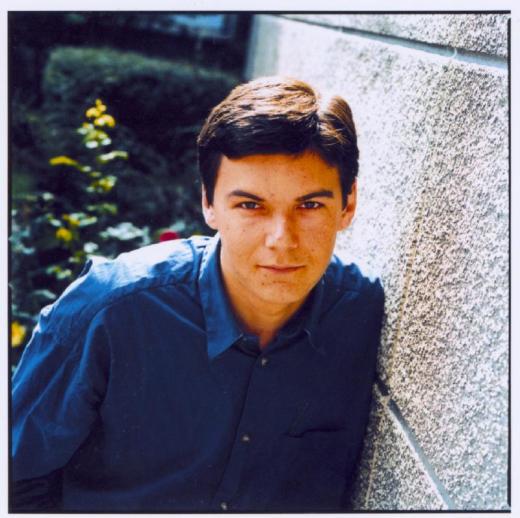

Thomas Piketty
Thomas Piketty was an instructor of economics at MIT during the 1990s; he is the founder, Paris School of Economics; Director, Department of Social Sciences, Ecole Normale Supérieure; and Director of Studies, École des Hautes Études en Sciences Sociales.

Fortunately, America has allies around the world ready and able to help do what’s right, if we only listen. One is Thomas Piketty, the French economist.

In March, 2014 he published in America his critically acclaimed Capital in the Twenty-First Century. It is a sweeping account of the rising inequality in our world, according to New Yorker Magazine’s John Cassidy.

I’m excited about this book. Many reviewers say it’s important. It is the culmination of years of research by a brilliant scholar. It presents, I’m told, a paradigm shift in thinking about the problems economies have delivering fairness to average people.

If Piketty’s book strengthens the courage of economists in the United States to speak openly about the touchy subject of inequality, he will have done our country and its people an enormous favor.


image
Gold jewelry and coins held in an overseas bank.

The United States, though proud of its wealth, seems to go to great lengths to under-report it. It’s primary focus is to collect taxes, I guess.

Assets not subject to taxation hold little interest for government accountants. The Feds limit their count to households and tell us that our total wealth is 54 trillion dollars. Other economists say it is higher — maybe as much as 188 trillion; they include in their tally many assets not normally taxed.

The subject of how wealthy America really is — who holds the wealth and in what amounts — is murky at best. According to John Cassidy, Thomas Piketty’s call for households to declare their net worth and be taxed on it will provide the reliable statistics needed to un-muddy the waters and enable policy makers to fashion the sound and fair tax policies required to protect the benefits of civilization for everyone.

Billy Lee

Post Script: Billy Lee advocates for a standard of maximum personal-incomes and estate-sizes established by the United Nations as ratios pegged to each country’s minimum wage. Violations would be treated as felonies by international courts.

Billy Lee’s proposal and some of its economic and moral advantages are described in the article, Capitalism and Income Inequality.
The Editorial Board

CAPITALISM AND INCOME INEQUALITY


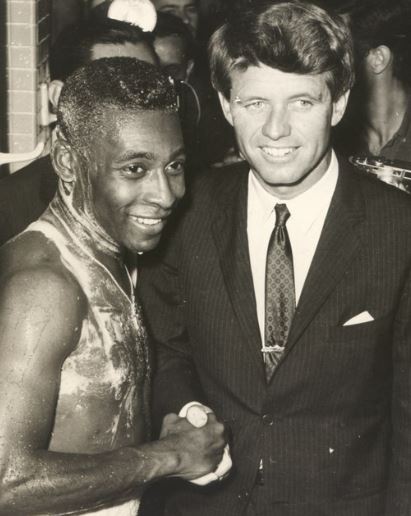
Pele’ with Bobby Kennedy in Rio, 1965. Pele’ died 29 Dec 2022 of complications from colon cancer. He was 82. 

Our gross national product…counts air pollution and cigarette advertising, and ambulances to clear away…carnage. It counts…locks…and jails…. It counts napalm and the cost of a nuclear warhead, and armored cars for police who fight riots in our streets….

Yet the gross national product does not allow for the health of our children, the quality of their education or the joy of their play. It does not include the beauty of our poetry or the strength of our marriages, the intelligence of our public debate or the integrity of our public officials…. It measures everything in short, except that which makes life worthwhile. 

Bobby Kennedy 1968


Capitalism is a system of wealth creation characterized by private ownership of the means of production (land, buildings, factories, labor, patents, intellectual property, etc.), where products are made and sold in unregulated markets to generate the revenues that sustain production and provide profits for the owners to use as they see fit.


capitalism


Capitalism works best in a stable legal environment, where laws protect owners sufficiently that their ability to produce products is unimpeded.

Under this definition, Capitalism differs little from Slavery until the legal environment secures certain rights to labor.

In the USA, the legal environment takes the form of a constitutional republic undergirded by a bill of rights. The bill-of-rights secures certain safeguards to labor in the arenas of religion, speech, arms, assembly, petitions and so on. The constitutional republic secures representative government, which enables labor to choose its political leaders.

The owners of businesses make up a small percentage of the population and would be insignificant players in the parts of the legal environment where voting majorities determine the operation of government if they were not protected by privileges which, as a practical matter, are not enjoyed by labor.

In the United States the powers of government are divided into the three branches to provide checks on usurpation of powers. Further checks on government power are provided by business owners—specifically those individuals who own media and entertainment; individuals who direct cartels in certain industries like defense, medicine, agriculture, transportation, information technology, and pharmaceuticals; and those individuals who own and operate private militias.


Cartel money


It is understood and admitted by independent economists and historians (those who don’t work for the cartels) that without intervention by government, Capitalism tends to concentrate wealth in the hands of business owners—even in those rare circumstances when owners show little interest in manipulating the system to maximize their advantages.

The inability of Capitalism to generate a vigorous and sustainable middle class creates problems of poverty and is one reason why economists tend to advocate for government programs to redistribute wealth to the lower-earning labor sector.


tank production world war II


An important historical example followed the aftermath of World War Two. Millions of GIs returned home to the United States after defeating Germany and Japan. Business owners tied to the war profited well and wanted to give something extra to the families of soldiers who fought to protect them. 


woman stacking artillery shell world war II


Because the tax code at that time limited how much revenue owners could keep, they looked for ways to dump windfalls into worthy causes. They worked with government to fashion programs for low-cost education, home loans, and other perks for returning GIs. Windfalls permitted the USA to build highway systems and inexpensive cars for ordinary people to enjoy. Within a few years of the start of these initiatives America built a middle class.  

So, what eventually happened?

In the years after 1980 a new generation of business-owners took power and convinced Congress and the president that taxes on large incomes should be reduced from 92% to 28%. These capitalists were sons and grandsons, for the most part, of the same men who helped build the middle class in the first place.

What is the effect of these tax rate changes? What do tax changes mean for society and labor, where most Americans live?

And let’s be clear. The 92% tax rate on earnings above $250,000 during the Roosevelt-Truman-Eisenhower-Kennedy-Nixon-Carter years was a de-facto cap on high-incomes. Workarounds did exist for those lucky few who had access to stockbrokers — men mostly who opened doors to low tax rates for privileged elites — but all non-stock market income was capped.

One good example is the medical profession. After 1980 the dramatic reduction of top tax-rates eliminated what had been a practical limit on incomes. Doctors — many operated as business owners — learned that income limits were gone; minus a small tax fee, they could keep as much money as they could collect. 

What happened?

Doctors increased fees at a frenetic pace.


Medical Professioin


Medical care costs became prohibitive for the majority of workers. As a result, some migrated into programs like Medicaid and Medicare. Others found themselves locked into jobs they disliked because quitting meant losing insurance.  Today medical care is so expensive that Congress felt compelled to pass the Affordable Care Act (Obamacare) to avert systemic collapse of public access to healthcare.

With limits on incomes now gone, doctors, some of them, seem to be overcharging government healthcare programs for services; a few have been arrested for committing crimes to maximize their incomes. The temptations of unlimited Benjamins have ignited a frenzy for dollars that shows no signs of abating.

In the USA, chasing after unlimited wealth seems to have overtaken every profession and institution. Businesses and public institutions are being looted by the professionals who run them.

Owners drive down wages because they can keep the difference for themselves. Operators drive businesses nearly into bankruptcy to skim as much money as they can in as short a time as possible—so they can retire to a private island, perhaps. Who knows?


bankers looting


Concentration of wealth can be a bad thing because it influences what society produces to the disadvantage of labor and the poor. Expensive luxury items (like $500M homes) are built to satisfy the appetites of the wealthy while products and services like schools, clean water, and nutritious food needed by labor are neglected.

These trends (and anyone could list dozens more) are not new. Every civilization that has allowed unreasonable concentrations of wealth has come to a bad end. Ordinary citizens are demoralized, excesses are committed, cynicism and cruelty increase.


gated community


An example is gated neighborhoods. It is humiliating to be ostracized by the privileged. Humiliation of citizens without redress breeds despair, which leads to pathologies destructive to society.


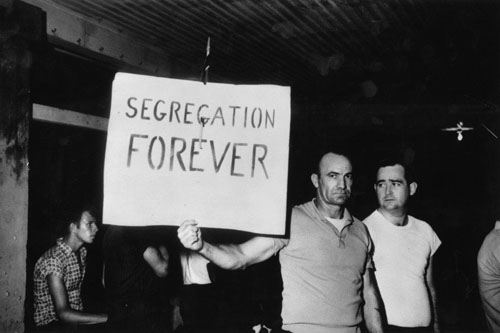
segregation forever


Segregation is an impulse strongly felt by a slave state with a long history of income inequality. It behooves those of us who live in the USA—a country with the reputation for promoting the cruelest form of slavery—to guard against trends (like gated-living) that reek of segregation and slavery.

Another problem with unlimited wealth is that it tempts those who have it to buy hi-tech weapons. Many wealthy individuals have created militias to enhance their power.

Everyone knows about the Mafia but respected individuals with good public relations have established private militias as well. A family in Michigan owns an air force and drones plus soldiers who work under contract with the US military to fill in gaps overseas.


militia


A concentration of wealth combined with military power in the hands of an entitled few can become a clear and present danger to the liberty and way of life of ordinary citizens.

Now… a few sentences about Ayn Rand who, more than any other public figure I know, provided the moral justification for the rapid sequestration of wealth by our elites.

I met this squat, chain-smoking, thick-accented Russian woman 50 years ago after having read every book and newsletter she had published at the time. She wrote with seductive logic that appealed to me and I suppose other average people and probably a lot of billionaires as well. The utopian vision described in her book The Virtue of Selfishness undergirds extremist groups like the Tea Party and their spin-offs. 


virtue of selfishness cartoon


Like most utopian thinkers, her logic was flawless yet led to ridiculous conclusions false on their face. As fantasy her fiction has a certain appeal but to advocate for turning a country over to its richest citizens to do as they please is folly and counter to every form of democracy and free society.

Consider these questions. Who spies more—government or the companies we work for? Who looks at social media sites, credit ratings, where we live, or what our hobbies are—government or the companies we work for?

Who discourages us from speaking our minds? Who stops ordinary people from discussing religion and politics? Who intimidates folks from protesting social injustice? Who blacklists professionals when they “go-rogue” ? Who controls how much money anyone makes?

Clearly, private companies exercise these powers.

What about government? 

It collects taxes and arrests bad people who commit crimes.

Companies? They control our lives.

Think about it.

What are we? Slaves?

The answer is, yes, kind-a. 


team player


Under Capitalism business owners are an existential threat to people’s freedom. But we have a representative government, don’t we?

In theory at least, folks can use the government to their advantage—not only to limit the powers of business owners over their personal lives but to limit the incomes and estate sizes of private individuals through appropriate tax policies.

And they can forbid the acquisition of military-style powers by civilian elites. It’s important. Read the Second Amendment to convince yourself that it’s true. Outside of the limits of a well-regulated militia, gun-runners are anathema to freedom.  Limiting military powers to well regulated militias is the reasonable prerogative of free people in democratic republics like the United States. 

How do we preserve the best elements of Capitalism—a proven wealth generator—while eliminating threats it can impose on our liberties and, for most people, their standard of living?


Video added 27 October 2025. Explains how USA tax law drives gross inequality. Billy Lee’s proposal (below) caps inequality & is easier to enforce fairly. 
The Editors


My proposal is this: pass a maximum-income law. This law would set the maximum income from all sources as a multiple of the minimum wage.

Let’s say the multiple is set to 1,000. When the minimum wage is set to $20,000 per year, the maximum income from all sources would be pegged at 1,000 times that—$20 million.

In the same way, the maximum size of estates could be set at some multiple of the maximum income. The multiple might be set by Congress at 20, for example. Then the maximum size of an estate would be 20 times $20M—a $400M maximum. 

Now these multiples are simply one example. It might be that folks decide a multiple of 1,000 is too high or too low; they might decide to set the multiple at something lower—say 100 or 50—like it was during the 1950s and 60s. Then again, folks might agree that a figure of $400M isn’t enough for high achievers in the modern age and set maximums higher. 


image


What’s important is to set maximum incomes high enough to preserve incentives to create wealth while at the same time reducing the incentive to loot that unlimited incomes encourage. Unreasonable profits which might end up in owners’ pockets would then more likely be distributed inside companies to workers or to the existential needs of the companies themselves.

Wealth not distributed inside companies could be given to charity or society (e.g. through the mechanism of taxes) to be spent on programs beneficial to labor.

Of course, concentrations of wealth are necessary for economic development. This need for capital is where well-regulated public corporations and public banks come into play.

I hope to write an essay about the role of corporations in society sometime in the future. Hopefully, someone else will write the essay before I get around to it. For now let me suggest that the United States might be better off if corporations and financial institutions were made truly public and regulated like public utilities.

A challenge presented by this proposal is to apply these income and estate-size limits internationally to prevent individuals and cartels overseas from gaining advantages that would threaten our country and its citizens.


UN world a happy place


The United Nations International Court of Justice and the International Criminal Court could be enlisted in this effort. The United States government has the influence and power within the international community to make it happen.

Another challenge worth mentioning is that although this proposal puts limits on only a few thousand, or perhaps a few tens-of-thousands of individuals and their families, these are the folks who actually control governments by the power of their concentrations of wealth.  It might be problematic, at least at first, to convince the truly wealthy to go along.


UN tank


But we should try. They are tens-of-thousands. We are billions. Think about it. The grandfathers of the current generation of the wealthy shared their wealth to benefit ordinary people. I don’t believe that any billionaire thinks that their sharing after World War II hurt any of them in any way that counts for anything.

Billy Lee

Click Watch on YouTube link below to view Michael Moore’s award winning movie, Capitalism: A Love Story. 


Postscript added 3 December 2022:
During the past two years of pandemic, oligarchs increased their wealth by five trillion dollars. The gap between wealthy and poor, in both resources and power, increased dramatically worldwide. The predicament of ordinary people changed. To help readers understand, the Editors agreed to include the following video.