
No one knows why humans like music. Dopamine floods our brains when we hear patterns of sound, that’s all. Scientists are conducting research.
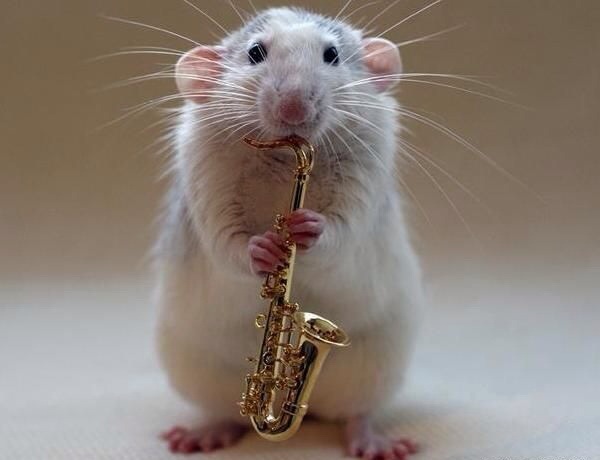
One surprise for me at least was to learn some animals enjoy music. It should resonate with their heartbeats and play at natural, species-specific pitches and timbres.
It takes effort to create music animals like. They won’t pay for it. Even pets—most anyway—don’t self-identify as music lovers.

As far as I know, only one species takes time to create tools to play music: homo sapiens. Yes, animals like gibbons, birds, whales, insects—even dogs next door—make noises that sound suspiciously like music to most humans. Research is ongoing.
Some philosophers say music is not something that can exist in the universe apart from conscious life. Music seems to require minds to produce and at least one semi-conscious mind to like.
Sensations of pleasure initiated by vibrations of air entering ears is the result of auditory hallucinations created by brains. Air molecules bounce off structures, which stimulate brains to manufacture mysterious qualia called sound, which in turn unleashes avalanches of chemical (emotional) reactions within the body.
Many parts of the brain are involved in music appreciation. Researchers report visual, tactile, olfactory, and gustatory areas of the brain are woke by music. Research continues—sometimes with focus on definitions of peculiar words like olfactory and gustatory.

There seems to be no similarity between simple vibrations entering ears and complex, textured mental experience conjured by music. It might be sad for some readers to learn when Universe ends, it takes music with it.

Most people did not hear much music before the invention of the phonograph in 1877. What music they heard was played mostly by itinerant flute musicians and occasional wood-nymphs on tambourine.
It took decades for the phonograph to become enough widespread to impact the listening habits of average people. As music technology evolved to become pervasive, its mystery inspired some scientists to try to figure out just what the hell was going on.

Current research suggests that as many as 4% of humans do not enjoy music. Whatever process is not going on in their heads, it seems inherited. Some simply lack genetic coding required to process musical pleasures. If all life mimicked these unfortunates, music would cease to exist.
Some make claim folks would not miss it. Music is not necessary for survival, they insist. Humans have lived on Earth for maybe millions of years without any but the most primitive forms.

That might be. But irrepressible popularity during past 50 years in all parts of the world is proof. People like music. It’s going nowhere.
Here’s some music to help persuade skeptics:
Billy Lee
Update: 5 July 2016: When Billy Lee wrote this essay two years ago, he was naive; he didn’t know about the dark side of music. Recently he learned that music has been used by intelligence agencies since the 1980s to torture people.
Imagine being forced to listen to old sound tracks from the Lawrence Welk Show over and over. It’s a sordid, terrifying prospect. Billy Lee didn’t want to soil his essay by discussing it.
Alex Ross’s article in the 4 July 2016 issue of the New Yorker Magazine ripped open the underbelly of this stinking carcass of evil. Ross titled his essay, The Sounds of Hate.
Since then, links to the essay have been retitled to When Music is Violence. No one at The Pontificator knows why print version and Internet version titled differently.
The Editorial Board
DUDE!!! Re: “people did not hear much music before the invention of the phonograph in 1877.”—King David, Songs of Solomon, Mozart, Beethoven, Greig, Bach, Ancient Greece and Rome,
http://www.metmuseum.org/toah/hd/grmu/hd_grmu.htm
http://en.wikipedia.org/wiki/Music_of_ancient_Rome
The entire content of Africa, http://blogs.longwood.edu/samiuah/2012/04/30/the-importance-of-music-in-the-african-culturemore-than-just-a-song/
I’m not even to Asia yet…….. Gonna have to give you a big downgrade on this one brother.