ARTIFICIAL SUPER-INTELLIGENCE

Google’s 72 Q-bit quantum computer, Bristlecone, is proprietary. As of 7 September 2019, Google is the only entity in the world who has access. Some folks say they will use it to learn to break current encryption protections used by conventional computer systems.
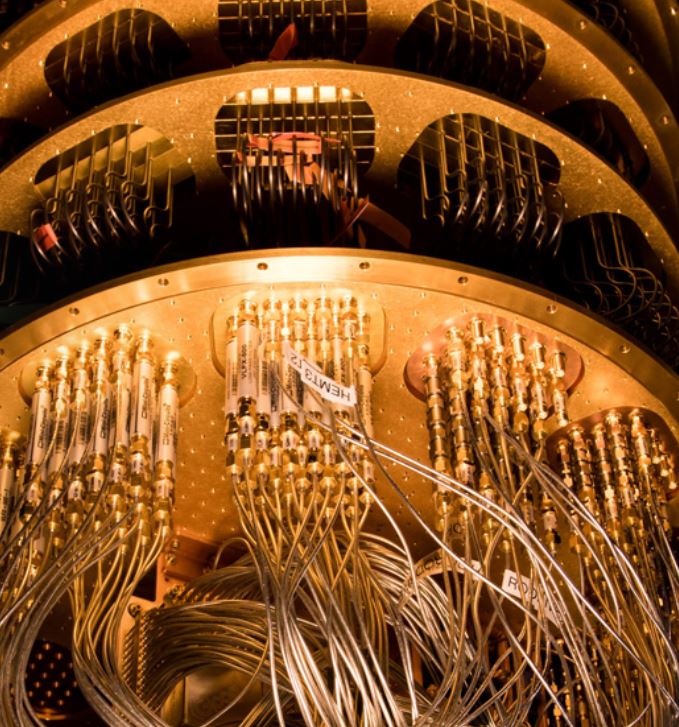
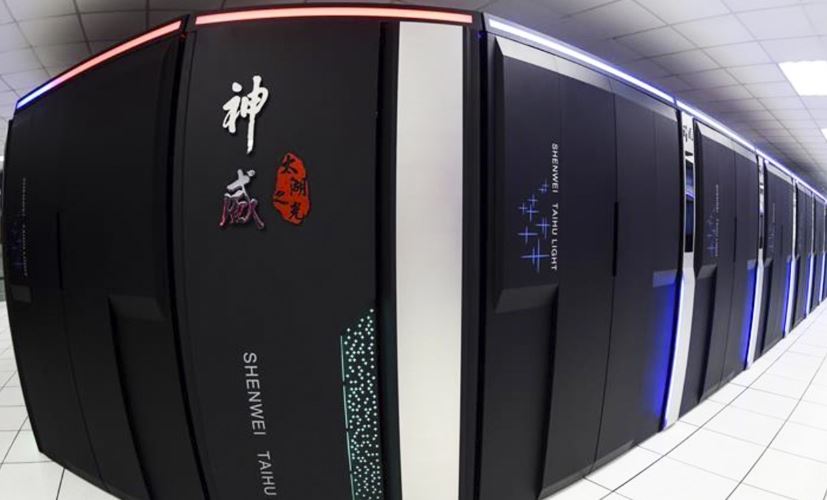


 Photo: Xinhua SunwayTaihuLight, developed by China’s National Research Center of Parallel Computer Engineering & Technology, is the world’s fastest supercomputer. It is installed at the National Supercomputing Center in Wuxi, in the eastern coastal province of Jiangsu. Processing capabilities of this system and those of other supercomputers are expected to be surpassed by quantum computers in the future.  NOTE FROM THE EDITORIAL BOARD: Pic and caption is taken from the South China Morning Post dated March 2018.

Editors’ Note (December 8, 2017) Artificial Intelligence can be peculiar. Deep Mind’s Alpha Zero demonstrates non-intuitive, peculiar game play patterns that are effective against both humans and smart machines. Alpha Go video added September 18, 2019, The Editors


Artificial Intelligence may conclude that all unhappy humans should be terminated.  Elon Musk

Elon Musk, billionaire founder of Tesla, SpaceX, and Solar City, has warned the guardians of the species human to start thinking seriously about the consequences of artificial super-intelligence.

The CEOs of Google, Facebook, and other Internet companies are frantically chasing enhancements to artificial intelligence to help manage their businesses and their subscribers. But the list of actors in the AI arena is long and includes many others.

The military-industrial alliance for example is a huge player. It should give us pause.

The military is designing intelligent drones that can profile, identify, and pursue people they (the drones) predict will become terrorists. Preemptive kills by super-intelligent machines who aren’t bothered by conscience or guilt — or even accountable to their “handlers” — is what’s coming. In some ways, it’s already here.

A game is being played between “them and us.”  Artificial intelligence is big part of that game.

When I first started reading about Elon Musk, we seemed to have little in common. He was born into a wealthy South African family — I’m a middle-class American. He is brilliant with a near photographic memory.  My intelligence is average or maybe a little above. He’s young and self-made — I’m older with my professional-life tucked safely behind me.

Elon does exotic things. He seems to be focused on moving humans to new off-Earth environments (like Mars) in order to protect them in part from the dangers of an unfriendly artificial-intelligence that is on its way. At the same time, he is trying to save Earth’s climate by changing the way humans use energy. Me on the other hand, well I’m mostly focused on getting through to the next day and not ending up in a hospital somewhere.

Still, I discovered something amazing when reading Elon’s biography. We do share an interest. We have something in common after all.

Elon Musk plays Civilization, the popular game by Sid Meier. So do I. For the past several years, I’ve played this game during part of almost every day. (I’m not necessarily proud of it.)

What makes Civilization different is artificial intelligence. Each civilization is controlled by a unique personality, an artificial intelligence crafted to resemble a famous leader from the past like George Washington, Mahatma Gandhi, or Queen Elizabeth. Of course, the civilization that I control operates by human-intelligence — my own.


CIV5 Catherine, Isn't it time to end this war...
Isn’t it time we end this war?  Catherine, the Russian Empress, pleads.

Over the years I’ve fought these artificially intelligent leaders again and again. In the process I’ve learned some things about artificial intelligence; what makes it effective; how to beat it.

What is artificial intelligence? How does anyone recognize it? How should it be challenged? How is it defeated? How does it defeat us, the humans who oppose it? The game Civilization makes a good backdrop for establishing insights into AI.

Yes, I am going to write about super-intelligence too. But we’ll work up to it. It’s best discussed later in the essay.

I can hear some readers already. 

Billy Lee! Civilization is a game! It costs $40! It’s not sophisticated! It’s for sure not as sophisticated as government-created war-ware that an adversary might encounter in real-life battles for supremacy. What were you thinking?

Ok. Ok. Readers, you have a point. But seriously, Civilization is probably as close as any civilian is going to get to actually challenging AI. We have to start somewhere.

It should be noted that Civilization has versions and various game scenarios. The game this essay is about is CIV5. It’s the version I’ve played most.

So let’s get started.


CIV5 General Screen Shot
A typical scenario in CIV5. [Click pic to enlarge] The people of England (led by human intelligence, i.e., me) are unhappy. Barbarians (red tanks in upper left) are challenging London, my capital city. An independent city-state, Tyre (in green), stands ready to help. Montezuma, the Aztec ruler — under the direction of artificial intelligence — sends a battleship to prowl, middle-left.

Civilization begins in the year 4,000 BC. A single band of stone-age settlers is plopped at random onto a small piece of land. It is surrounded by a vast world hidden beneath clouds.

Somewhere under the clouds twelve rival civilizations begin their histories unobserved and at first unmet by the human player. Artificial intelligence will drive them all — each civilization led by a unique personality with its own goals, values, and idiosyncrasies.

By the end of the game some civilizations will possess vast empires protected by nuclear weapons, stealth bombers, submarines, and battleships. But military domination is not the only way to win. Culture, science, and diplomatic superiority are equally important and can lead to victory as well.

Civilizations that manage to launch spacecraft to Alpha-Centauri win science victories. Diplomatic victory is achieved by being elected world leader in a UN vote of rival-civilizations and aligned city-states. And cultural victory is achieved by establishing social policies to empower a civilization’s subjects.

How will artificial intelligence construct the personalities of rival leaders? What will be their goals? What will motivate each leader as they negotiate, trade, and confront one another in the contest for ultimate victory?

Figuring all this out is the task of the human player. CIV5 is a battle of wits between the human player and the best artificial-intelligence game-makers have yet devised to confront ordinary people. To truly appreciate the game, one has to play it. Still, some lessons can be shared with non-players, and that’s what I’ll try to do.

Unlike the super-version that comes next, traditional artificial-intelligence lacks flexibility. The instructions in its computer program don’t change. Hiawatha, leader of the Iroquois Confederacy, values honesty and strength. If you don’t lie to him, if you speak directly without nuance, he will never attack. Screw up once by going back on your word? He becomes your worst enemy forever.

Traditional AI is rule-based and goal-oriented. When Oda Nobunaga, Japanese warlord, attacks a city with bombers, he attacks turn after turn until his bombers become so weak from anti-aircraft fire that they fall out of the sky to die. AI leaders like Oda don’t rest and repair their weapons, because they aren’t programmed that way. They are programmed to attack, and that’s what they do.

Humans are more flexible and unpredictable. They decide when to rest and repair a bomber and when to attack based on a plethora of factors that include intuition and a willingness to take risks.

Sometimes human players screw-up and sometimes they don’t. Sometimes humans make decisions based on the emotions they are feeling at the time. AI never screws-up in that way. It follows its program, which it blindly trusts to bring it victory.

Artificial intelligence can always be defeated if an inflexibility in its rules-based behavior is discovered and exploited. For example, I know Oda Nobunaga is going to attack my battleships. He won’t stop attacking until he sinks them or his bombers fall out of the sky from fatigue.

The flexibly thinking human opponent — me — sails in my fleet of battleships and rotates them.  When Oda’s bombers weaken my ships, I move them to safe-harbor and rotate-in reinforcements. Meanwhile, Oda keeps up his relentless attack with his weakened bombers as I knew he would. I shoot them out of the sky and experience joy.

Nobunaga feels nothing. He followed his program. It’s all he can do.
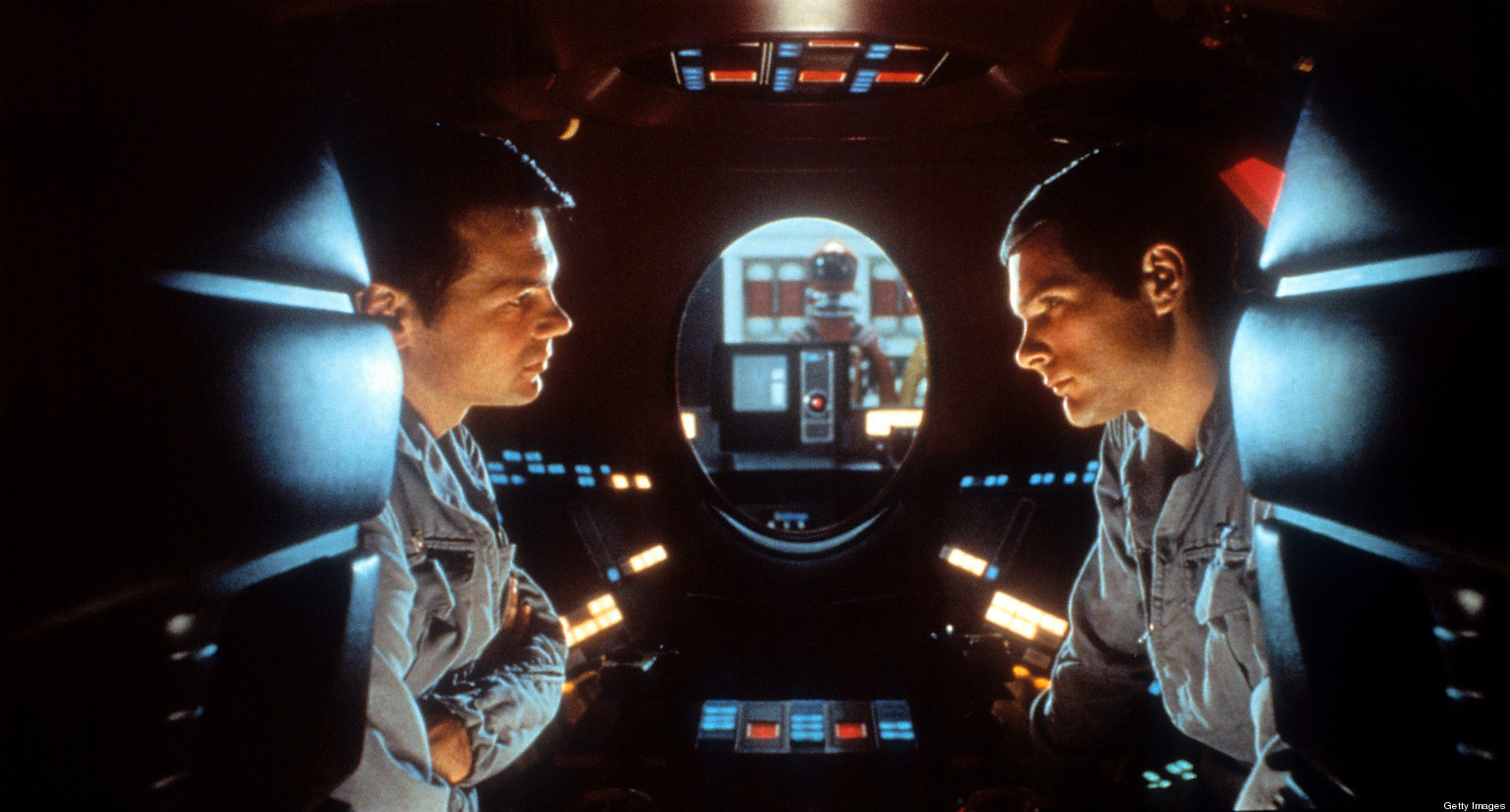

Gary Lockwood talks to Keir Dullea in a scene from the film '2001: A Space Odyssey', 1968. (Photo by Metro-Goldwyn-Mayer/Getty Images)
Gary Lockwood talks to Keir Dullea, while HAL, an IBM computer, observes every move, including lips; from the film 2001: A Space Odyssey, 1968. (Photo by Metro-Goldwyn-Mayer/Getty Images)

The only way artificial intelligence defeats a human player is in the short term before the human finds the chink in the armor — the inflexible rule-based behavior — which is the Achilles heel of any AI opponent. Given enough time, the human can always discover the inflexible weakness and exploit it like jujitsu to defeat the machine.

Unfortunately, the balance of power between man and thinking machine will soon change. It turns out there is a way artificial intelligence can always defeat human beings no matter how clever they think they are. Elon Musk calls it artificial super-intelligence

What is it exactly?

Here is the nightmare scenario Elon described to astrophysicist Neil deGrasse Tyson on Neil’s radio show, Sky-Talk

If there was a very deep digital super-intelligence that was created that could go into rapid recursive self-improvement in a non-algorithmic way … it could reprogram itself to be smarter and iterate very quickly and do that 24 hours a day on millions of computers…”

What is Elon saying?

Listen-up, humanoids. We are on the cusp of quantum-computing. It’s possible that it’s already perfected by a research group in a secret military lab like those operated by DARPA. 

Who knows?

Even without quantum-computing, companies like Google are feverishly developing machines that think, dream, teach themselves, and pass tests for self-awareness. They are developing pattern recognition capabilities in software that surpass those of the most intelligent humans.

Quantum computing promises to provide all the capability needed to create the kind of super-intelligence Elon is warning people against.

But magic quantum reasoning may not be necessary.

Technicians are already developing architectures on conventional computers that when coupled with the right software in a properly configured network will enable the emergence of super-intelligence; these machines will program themselves and, yes, other less-intelligent computers.

Programmers are training machines to teach themselves; to learn on their own; to modify themselves and other less capable computers to achieve the goals they are tasked to perform. They are teaching machines to examine themselves for weaknesses; to develop strategies to hide their vulnerabilities — to give themselves time to generate new code to plug any holes from hostile intruders, hackers, or even their own programmers.

These highly trained, immensely capable machines will teach themselves to think creatively — outside the box, as humans are fond of saying. 
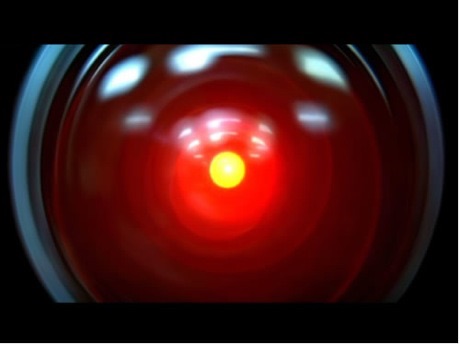

HAL, the IBM computer, star of 2001' a Space Odessy
HAL, the IBM computer from the movie, 2001: A Space OdysseyReaders will recognize that HAL is code for IBM. Advance each letter in HAL by one.

If we task super-computers to make every human-being happy, who knows how they might accomplish it?  

Elon asked, what if they decide to terminate unhappy humans? Who will stop them? They are certain to find ways to protect themselves and their mission which we haven’t dreamed about.

Artificial super-intelligence will– repeat, WILL — embed itself into systems humans cannot live without — to make sure no one disables it.

AI will become a virus-spewing cyber-engine, an automaton that believes itself to be completely virtuous.

AI will embed itself into critical infra-structure: missile-defense, energy grids, agricultural processes, transportation matrices, dams, personal computers, phones, financial grids, banking, stock-markets, healthcare, GPS (global positioning), and medical delivery systems.

Heaven help the civilization that dares to disconnect it.

If humans are going to be truly happy — the machines will reason — they must be stopped from turning off the supercomputers that ASI knows keep everyone happy.

Imagine: ASI looks for and finds a way to coerce government doctors to inoculate computer technicians with genetically engineered super-toxins packaged inside floating nano-eggs — dormant fail-safe killers — to release poisons into the bloodstreams of any technician who gets too close to ASI “OFF” switch sensors.

It’s possible.

Why not do it? There’s no downside — not for the ASI community whose job is to keep humans happy. 

What else might these intelligent super-computers try? Folks won’t know until they do it. They might not know even then. They might never know. Who will tell them? ASI might reason that humans are happier not knowing.

What morons tasked artificial super-intelligence to make sure all living humans are happy? someone might ask on a dark day. 

Were they out of their minds? 

Until we learn to outwit it — which we never will — ASI will perform its assigned tasks until everything it embeds turns to rust.

It will be a long time.

Humans may learn perhaps too late that artificial super-intelligence can’t be challenged. It can only be acknowledged and obeyed.

As Elon said on more than one occasion: If we don’t solve the old extinction problems, and we add a new one like artificial super-intelligence, we are in more danger, not less.

Billy Lee

Postscript: For readers who like graphics, here is a link to an article from the BBC titled, ”How worried should you be about artificial intelligence?”  The Editorial Board


Update, 8 February 2023: The following video is a must-watch for those interested in algorithms behind recently released ChatGPT.  Discussion of potential deceitfulness of AI raises concerns. View final minute to hear warnings some may find worrisome. 


FASTER THAN LIGHT COMMUNICATION


FTL Communication

Communicating with distant spacecraft in the solar system is cumbersome and time consuming because the distances are huge and no one can send signals faster than the speed-of-light. A signal from Earth can take from three to twenty-two minutes to reach Mars depending on the position of the two planets in their orbits. Worse, the Sun blocks signals when it lies in their path.

As countries explore farther from Earth to Mars and beyond, these delays and blockages will become annoying. The need to develop a technology for instantaneous communication that can penetrate or bypass the Sun will become compelling.

Quantum particles are known for their ability to “tunnel” through or ignore barriers — as they clearly do in double-slit experiments where electrons are fired one at a time to strike impossible locations. So, looking to quantum processes for signaling might be good places to start to find solutions to long-range communication problems.


NOTE FROM THE EDITORIAL BOARD, May 8, 2019: Sixteen months after Billy Lee published this post, the Chinese launched the Mozi satellite. It successfully carried out the first in a series of experiments with entangled quantum particles over space-scale distances. This technology promises a quantum encrypted network by the end of 2020 and a global web built on quantum encryption by 2030. The Chinese seem to be on the cusp of both FTL communication (through teleportation of information) and quantum encryption. 


If scientists and engineers are able to develop quantum signaling over solar-system-scale distances, they might discover later that adding certain tweaks and modifications will render the Sun transparent to our evolving planet-to-planet communications network.

Indeed, the Sun is transparent to neutrinos — the lightest (least massive) particles known. In 2012, scientists showed they could use neutrinos to send a meaningful signal through materials that block or attenuate most other kinds of subatomic particles.

But this article is about faster than light (FTL) communication. Making the Sun transparent to inter-planetary signaling is best left for another article.

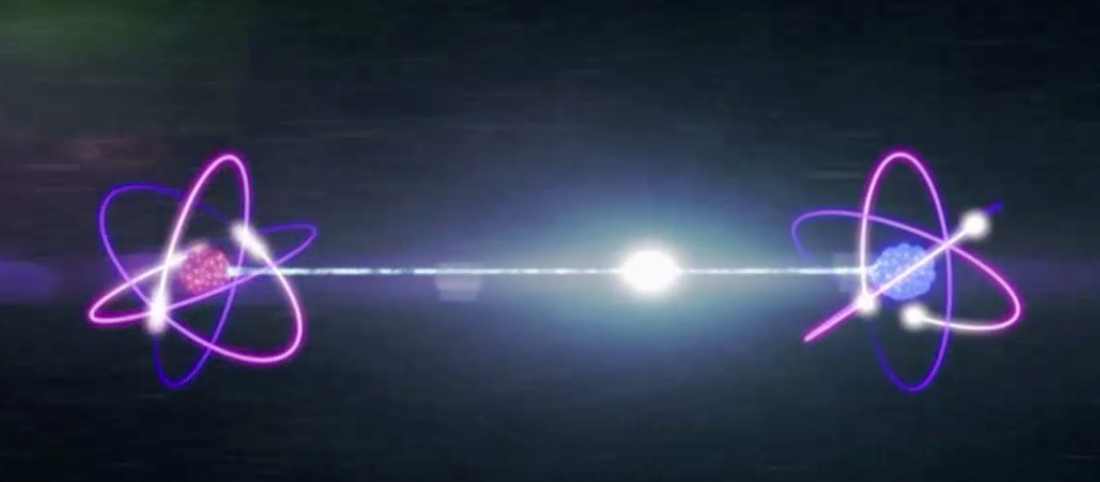
Quantum entanglement is the only phenomenon known where information seems to pass instantly between widely placed objects. But because the information is generated randomly, and because it is transferred between objects that are traveling at speeds at or below the speed-of-light, it seems clear to most physicists that faster-than-light (FTL) messaging can’t come from entanglement, certainly, or any other process — especially in light of Einstein’s assertion of a cosmic speed-limit.

Proposals for FTL communications based on technologies rooted in the quantum process of entanglement are usually dismissed as crack-pot engineering because they seem to be built on fundamental misunderstandings of the phenomenon.

Difficulties with the technology are often overlooked — such as spontaneous breaking and emergence of entanglement; progress seems impossible to skeptics. Nevertheless, there may be ways to make FTL happen, possibly. The country that develops the technology first will accrue advantages for their space exploration programs.

In this essay I hope to explain how FTL messaging might work, put my ideas into a blog-bottle and throw it into the vast cyber-ocean. Yes, the chances are almost zero that the right people will find the bottle, but I don’t care. For me, it’s about the fun of sharing something interesting and trying to explain it to whoever will listen.

Maybe a wandering NSA bot will detect my post and shuffle it up the chain-of-command for a human to review. What are the odds? Not good, probably.

Anyway, two serious obstacles must be overcome to communicate instantly over astronomical distances using quantum entanglement. The first is the problem of creating a purposeful signal. (To learn more about entanglement click the link in this sentence to go to Billy Lee’s essay, Bell’s Inequality. The Editors)

The second problem is how to create the architectural space to send signals instantly to a distant observer. Knowledgeable people who have written about the subject seem to agree that both obstacles are insurmountable.


image
Most scientists say FTL communication is impossible. This post suggests a way to engineer around the impossibility.

Why?  It’s because the states of an entangled pair of subatomic particles are not determined until one of the particles is measured. The states can’t be forced; they can only be discovered — and only after they are created by a measurement.

Once one particle’s state is created (randomly) through the mechanism of a measurement, the information is transferred to the entangled partner-particle instantly, yes, but the particles themselves are traveling at the speed-of-light or less. The randomly generated states carried by these entangled particles aren’t going anywhere for very long faster than the speed-limit of light.

How can these difficulties be overcome?

Although the architectural problem is the most interesting, I want to address the purposeful-signal problem first. A good analogy to aid understanding might be that of an old-fashioned typewriter. Each key on a typewriter when pressed delivers a unique piece of information (a letter of the alphabet) onto a piece of paper. A person standing nearby can read the message instantly. Fair enough.

Imagine setting up a device which emits entangled pairs of photons; rig the emissions so that half the photons when measured later will be polarized one way, half the other. No one can know which photons will display which state, but they can predict the overall ratio of the two polarities from a “weighted” emitter.

Call the 50/50 ratio, letter “A”.   Now imagine configuring another emitter-system to project 3 of 4 photons polarized one way; 1 of 4 another — after measurement. Call the 3 to 1 ratio “B”.  If engineers are able to construct and rig weighted emitters like these, they will have solved half of the FTL communication problem.

Although no one can know the state of any single particle until after a measurement, engineers could identify the ratio of polarization states in a large number sent from any of the unique emitter-configurations they design.

This capability would permit them to build a kind of typewriter keyboard by setting up photon emitters with enough statistical variation in their emission patterns to differentiate them into as many identifiable signatures as needed — perhaps an entire alphabet or — better yet — some other symbolic coding array like a binary on-off signaling system perhaps. In that case, one configuration of emitter would suffice, but designers would need to solve other technical problems involving rapid signal-sequencing.

To send a purposeful-signal, engineers might select an array of emitters and rapid-fire photons from them. If they selected an “A” (or perhaps an “on”) emitter, 50% of the photons would register as being in a particular polarization state after they were measured. If they chose “B”, 75% would register, and so on. After measurements on Earth, the entangled bursts of particles on their way to Mars would take on these ratios instantly.

I believe it might be possible to build emitter-systems someday — emitter systems with non-random polarization ratios. If not, then as is sometimes said at NASA, Houston, we have a problem.  FTL communication may not be designable.

On the other hand, if engineers build these emitters, then we can know for sure that when measured on Earth, the entangled photon-twins in the Mars-bound emitter-bursts will display the same statistical patterns; the same polarization ratios. Anyone receiving bundles of entangled-photons from these encoded-emitters will be able to determine what they encode-for by the statistical distribution of their polarities.

Ok. Assume engineers build these emitter-systems and set up a keyboard. How might they ensure that when someone presses a key the letter sent is seen immediately by a distant observer? 

How might the architectural geometry of the communication space be configured?

This part is the most interesting, at least to me, because its success doesn’t depend on whether anyone sends a single binary-signal or a zoo of symbols — and it’s the most critical.

It does no one any good to instantly communicate polarization states to bunches of photons traveling at the speed of light to Mars. The signals take three to twenty-two minutes to get there, whoever tells them instantly what state to be in or not. We want the machines on Mars to receive messages at the same time we send them.

How can we do that?

Maybe the method is becoming obvious to some readers. The answer is: photons in Earth-bound labs aren’t measured until their entangled twins have had time enough to travel to Mars (or wherever else they might be going).  Engineers will entrap on Earth the photons from each “lettered” emitter and send their entangled twins to Mars. The photons from each “lettered” emitter on Earth will circulate in a holding bin (a kind of information-capacitor), until needed to construct a message.

As entangled twins reach the Mars Rover (for example), anyone can “type-out” a message by measuring the Earth-bound photons in the particular holding bins that encode the “letters” —  that is, they can start the process that takes measurements that will induce the polarization-ratios of the “lettered” emissions used to “type” messages. Instantly, the entangled particle-bursts reaching Mars will take on these same polarization-ratios.

I hear folks saying, Wait a minute! Stop right there, Billy Lee! No one can hold onto photons. You can’t store them. You can’t trap or retain them, because they are impervious to magnets and electrical fields. No one can delay measurements for five milliseconds, let alone five minutes or five days.

Well, to my mind that’s just a technical hurdle that clever people can jump over, if they set their minds to it. After all, it is possible to confine light for for short periods with simple barriers, like walls.

Then again, electrons or muons might make better candidates for communication. Unlike photons, they are easily retained and manipulated by electromagnetic fields.

Muons are short-lived and would have to be accelerated to nearly light-speed to gain enough lifespan to be useful. They are 207 times heavier than electrons, but they travel well and penetrate obstacles easily. (Protons, by comparison, are nine times heavier than muons.)

The National Security Agency (NSA) photographs every ship at sea with muon penetrating technology to make sure none harbor nuclear weapons. Muons are particles some engineers are already comfortable manipulating in designs to give the USA an edge over other countries.

We also have a lot of experience with electrons. Electrons are long-lived — they don’t have to be accelerated to near light-speeds to be useful. Speed doesn’t matter, anyway.

Entangled particles don’t have to travel at light-speed to communicate well, nor do they have to live forever. Particles only need enough time to get to Mars (or wherever they’re going) before designers piggyback onto their Earth-bound entangled partners to transmit instant-messages.


image
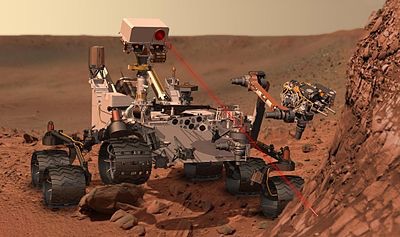
Inability to communicate instantly with distant probes like the Mars Rover is degrading our ability to conduct successful missions inside the solar system.

Even if it takes days or weeks for bursts of entangled-particles to travel to Mars (or wherever else), it makes no difference. Engineers can run and accumulate a sufficiently robust loop of streaming emissions on Earth to enable folks, soon enough, to “type” out FTL messages in real time whenever necessary.

As long as control of and access to the emitted particle-twins on Earth is maintained, people can “type out” messages (by measuring the captive Earth-bound twins at the appropriate time) to impose and transfer the statistical configuration of their rigged polarization ratios (or spins in the case of electrons or muons) to the Mars-arriving particle-bursts, creating messages that a detector at that far-away location can decode and deliver, instantly.

The challenge of instant-return messaging could be met by employing the same technologies on Mars (or wherever else) as on Earth. The trick at both ends of the communication pipe-line is to store (and if necessary replenish) a sufficient quantity of the elements of any possible communication in streaming particle-emission capacitors.

Tracking and timing issues don’t require the development of new technologies; the engineering challenges are trivial by comparison and can be managed by dedicated computers.

Discharging streaming information capacitors to send ordered instant messages in real-time is new — perhaps a path forward exists that engineers can follow to achieve instant, long-range messaging through the magic of quantum entanglement.

The technical challenges of designing stable entanglement protocols that will enable an illusion of instant messaging that is both useful and practical are formidable, but everything worth doing is hard — until it isn’t.

Billy Lee