People hate me. People have hated on me my whole life, but never more than now, it seems, in my old age, when I need their love so bad. If they only knew how their hatred weakens me and any hope I have for happiness. Maybe they’d relent and welcome me into their friendly world.
But I don’t think so. If they knew how much I hurt, they’d hate me more, shun and isolate me even further, just to watch me suffer.
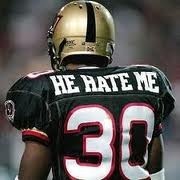
Rod Smart was the leading rusher for the Las Vegas Outlaws of the short-lived XFL. His career took him to both the CFL and NFL, where he played in Super Bowl 38 for the Carolina Panthers. On the last play of the game, with the Panthers trailing 32-29 and only 4 seconds left on the clock, Rod Smart received the New England Patriots kick-off. He was unable to score the game-winning touch-down.
As Torrold DeShaun “Rod” Smart, the would-be NFL star, once said: I feel as if everyone hates me, from my mom to my dad and even my brothers and sisters; everyone ”Hates Me.”
All hope abandon, ye who enter here…
The first time I learned people hate me was at the Army boot-camp for officer-candidates at Fort Benning, Georgia during the summer of 1968. I went there to train after becoming an officer candidate to avoid the military draft during the Vietnam War.
It was a period in our history when the government conscripted hundreds of thousands of young men to fight in Vietnam. Exemptions from the draft (called deferments) had been given to college students for years, but no longer.
Students across the country began competing to get into Army ROTC training programs, because they were the only sure way to stay in school and avoid military service, at least temporarily. At my school, I was one of only eighteen students (out of a pool of several thousand applicants) who qualified for officer training.
I felt lucky, because now I could finish my education. Maybe, by the time of my graduation, the war would be over.
Cadets who enjoyed push-ups (and were good at them) thrived in officer training camp.
At officer boot-camp that summer, in the humid choking heat of Georgia, the training began. The recruits were, like me, the cream of the crop, the best of the best, from some of the finest colleges and universities in the USA and around the world. I’ve not been with smarter, worthier people than those who shared my summer of ’68 at Fort Benning.
We found ourselves trapped in the grasp of some of the most ignorant, mean-spirited drill sergeants I’ve ever encountered. Their mission was to squeeze each recruit through a juice-grinder to see what we were made of and to prove to the military how strong (or how weak) were our minds and bodies.
They cursed us, abused us, deprived us of sleep and dignity, and told us we were over-privileged swamp scum, not worthy of the army. They convinced me they meant every word.
Drill-sergeants ask a young recruit whether he prefers caramel or strawberry syrup on his French soufflé.
In chow-lines, gnarly swamp-people with missing teeth menaced and taunted us by swearing, shoving and pointing fingers. One officer forced recruits to eat their own cigarettes.
During a month-and-a-half of hell, I watched people go beserk on the firing range, collapse with seizures due to excessive heat and lack of water, quit the program, and go mad.
All I thought about during those forty-two days in Hell was this: it can’t last forever. I can survive, I can hold on, I can sleep again with my sweet girl-friend, Mary-Ann, who loves me. All this pain, this agony, will fade to an unpleasant memory, nothing more, in good time.
Studies conducted on young men adept at crawling through mud beneath barbed-wire show that they enjoy the taste of dirt more than cadets who lack this skill.
But, of course, I was naïve. Every dinner has its dessert, its crème-de-la-crème, its grand-finale, its coup-de-grace. Boot-camp was no different.
Two days before the end of training, the Army announced that each cadet in every forty-three-man platoon would participate in mandatory peer-reviews of their fellows. Drill Instructors — armed with notepads and pencils — ordered every officer-candidate to rank every other officer-candidate, from top to bottom.
Worst of all, the DIs forced each cadet to write an explanatory paragraph about each soldier they placed in the bottom-five. I think I remember trying to say something nice about each one of the five I chose.
As it happened, the evening after the peer-review, one of the cadets broke into the administration building and stole the reviews. Word got around, and soon a few dozen cadets, including me, gathered outside the barracks to rummage through them, their summaries and explanatory comments.
I discovered that my fellow cadets ranked me third from the bottom. I couldn’t grasp it, it seemed so unreal, so I read the comments. Apparently, I lost equipment, stole things, went AWOL, and was generally unprepared and unkempt.
I lacked the intelligence required to lead, lacked problem solving skills, etc. etc., on and on. I kept checking the name to see if it was mine. Nothing written about me was true.
This photo, retrieved from the Army Archive, shows Billy Lee on his last day of boot camp. He is the cadet lying on the stretcher, apparently too drunk to walk the quarter-mile to a waiting bus.
It occurred to me that all of it — all the negativity and cruelty; every last hateful condemning word — was going to be part of my permanent record, my profile, which would follow me forever in the army and beyond.
Why, I asked myself over and over, would people who I thought were my friends write nasty, untrue, career-ending things about me? I couldn’t work out the answer.
Officer training camp broke me. I spent the next two days drunk, sobbing silently inside myself. On the last day, while the other cadets scurried to leave, I writhed on the floor by my bunk, unable to pack my things or police my area. Psychological trauma and grief immobilized me. The pain of being hated ruined me. I never recovered.
Billy Lee
Editor’s note:This article has been a fictionalized compilation of actual events, which occurred during two training camps — the first at Fort Benning, Georgia; the second at Fort Riley, Kansas the following summer. The stolen peer-reviews incident occurred at Fort Riley during the summer of 1969.
Incidents in the two camps have been conflated by Billy Lee to make a more comprehensible read. The incidents are true. The order is true. But events happened over consecutive camps — basic training and advanced infantry training the following summer.
P.S. Since writing this article, some people have asked me if, over the years, I might not have garnered some insight into why my ROTC compatriots at Fort Riley rejected me. (At Fort Benning, peer reviews weren’t conducted.)
The answer is yes, but these insights weren’t included in the article, so that readers (who might not know me well) could experience the wonder I felt. In truth, (allow me first to lie; the truth is too painful) I was well-connected and proud. People hate arrogance, and that is what I was. I received special treatment from higher-ups. That, and my attitude, didn’t go over well. (Will you permit me to do some preliminary blame-shifting?)
General Boatwright was two months older than my dad. Like my dad, he was a Warrior who dedicated his life to the defense of the United States of America.
General Boatwright, the base commander at Fort Riley — who knew my dad — gave me an escort on his private plane to camp. I boasted about it. Later, he flew to our bivouac-site with a half dozen helicopters and called me out of formation (as I remember it, with a bull-horn) to interview me in front of everyone about camp conditions. I remember he asked about the food and how we were treated. I told him everything was great.
The General invited me to what I think I remember was his daughter’s birthday celebration, which meant I had to abandon my buddies to harsh camp conditions, while I partied.
Later, I wrote a thank-you letter to the General, which a drill instructor somehow managed to intercept. He read it aloud at morning reveille to my gathered platoon. In front of everyone, the outraged DI tore up my letter, while he explained so that even a child could understand: cadets don’t write letters to Generals.
None of these incidents helped me get a good peer review. (Listen to me shuck and jive over these irrelevant incidents. Patience, please. I’m working my way to truth, but it’s hard)
The most damaging things that happened were self-inflicted. I remember bragging about myself to others. (Here comes partial self-serving approximations of truth.) I told wildly exaggerated stories to hide the truth about myself from others. The truth was, I hated the choices I made. I bragged about myself, but I bragged about things no one should be proud of — like the details of my sex-life.
I self-destructed. Yes, I hated the Army. Yes, I hated war. Yes, I trapped myself in a place I didn’t want to be. I made it embarrassingly obvious to everyone. I hated myself.
Yes, I hated the Army. Yes, I hated war.
I couldn’t believe the terrible decisions I’d made. I couldn’t believe what a coward I was; how I caved to the powerful idiots who took us into the genocidal killing-field that was Vietnam for no other purpose than to test our newest equipment and evaluate our effectiveness to wage war. (More tangential bullshit is on its way.)
I found myself in a space I didn’t want to be, doing things I didn’t believe, for reasons that made no sense. I was scared to pay the price that came with resisting the evil I saw so clearly once I immersed myself in it. I had abandoned my point of view, my sense of what was right and wrong; my identity; my sense of self; my integrity. (If only any of this were true!)
Why, under the stress of basic training, did I turn on myself? Why did I manipulate others to turn on me? Why did I work so hard to bring the Universe of judgment and condemnation down on my pathetic-loathing-self? I would have to wait until many years later in therapy to learn the answers. (And I can never share them. Why don’t you understand? It’s killing me. I’m so afraid.)
I became obnoxious and inauthentic. It must have been obvious to everyone but me. It’s a wonder one of the cadets didn’t shoot me. They turned on me, because to them I was a sick puppy and a phony to boot. I wouldn’t own up. I was a coward. I refused to embrace the truth about myself.
Today, it’s clear to me that way back then in the fevered heat of officer training camp my peers would have ranked me at the very bottom of the pile had it not been for a couple of loving, perceptive souls who shared my pain and placed me, mercifully, carefully, near the very top.
Their act of kindness meant that when the scores were averaged, two other cadets would suffer the excruciating shame of being hated even more than me. Imagine. Hated more than me! HaHa! HaHaHa! Burp.
UPDATE, JUNE 15, 2020: Today, the Supreme Court of the United States ruled that discrimination against gay and transgender workers is unconstitutional. Gays and transgender people are now protected by federal law, which forbids discrimination.
UPDATE, JUNE 26, 2015:Today, the Supreme Court of the United States approved the right of any two unrelated adults to marry. This article, written one year ago for both gay and straight Christians, remains relevant because it addresses issues of Christian marriage.
I’ve noticed (how could anyone not notice?) that some folks use the Bible to browbeat people who are gay. Every once in a while, not often, people are surprised to learn that persons leading the charge against gays are gay themselves. And people — sometimes — know. Somehow, folks who have the courage to self-disclose become the target of people who are working through their self-loathing by bullying. It can become a heart-wrenching spectacle.
I’m old enough to remember years ago when Anita Bryant, the former Florida orange juice spokesperson, led a national crusade against gays. Her followers’ approach to the issue of homosexuality was to show up to Gay Pride events with signs reading, you are all going to hell.
In the midst of one of her anti-gay campaigns her marriage fell apart. The media reported, apparently in error, that her husband was gay. One reporter, who knew better, reported her husband was a homo-sapien.
Some folks who have found themselves on the receiving end of hostile condemnation have complained that Christians are rude and insensitive. I remember one kid complaining on TV about the awful treatment his gay parents received from Christians during a parade they attended. It hurt, he said.
Anyway, the Bible is clear, isn’t it?
God judges people with the same mercy (or lack of mercy) they show others, to paraphrase Jesus. Somewhere in the Bible is the promise that when our ways please God, enemies make peace with us.
Didn’t Jesus call folks to be peacemakers and witnesses of his love for all people? It must be possible to love gay people without scaring them half to death and humiliating them.
I’ve been thinking: why not write about a few well-known passages in the Bible that seem to address the issues of gay love and share a few insights? It seems to be a subject on a lot of people’s minds these days.
Of course, I’m not a theologian. I’m a pontificator, right? These ideas are my opinions, subject to change if anyone points out their errors.
Mostly, I’m asking questions about certain Bible verses to try to help people think about ways churches can make the road to Christ an easier walk for gay folks and those who love them.
It’s a sensitive subject in some churches, my own included. I hope people don’t take my word for anything except to get their thinking started. Maybe some will talk with others they know and trust who might have a similar interest.
This article speaks to straight Christians, mostly, whose ideas about sexuality may possibly be shaped more by prejudice and ignorance than by what is written in the Bible. I hope gay Christians will join the discussion. If any are reading now, insights are important. Submit comments at the end of the article, anyone who cares.
In the USA we have the LGBTacronym. It stands for lesbian, gay, bi-sexual, transgender. Some folks are adding “Q” for questioning; various other letters are sometimes added to include related like-minded groups.
Fair enough.
I think the LGBTQ acronym is appropriate for secular discussions of sexuality. It is a shield of unity for folks who are struggling to cope with the pain of society’s prejudice and bigotry.
But for Christians, it seems to me, gay sexuality discouraged by the Bible is more narrowly defined — transgender issues are not mentioned, for one thing.
Gay sex is described in graphic terms only in the Old Testament — a collection of books written thousands of years ago; it recalls for us that men who ”lay with men in the same way they lay with women” were put to death in Old Testament times in the same way as adulterers and those who practiced six other categories of sexual activity.
Oddly, under Old Testament law, a man who committed adultery could escape execution if his sex partner was the wife of either his uncle or brother. He suffered the curse of childlessness, instead.
Should a man sleep with a menstruating woman, both were punished by being cut-off from their people.
And for those who didn’t get the message that sexual sin was serious, the book of Deuteronomy reveals that newly-wed women discovered to be non-virgins were executed and their marriages annulled.
Punishments for sexual sins thousands of years ago during Old Testament times were severe.
The Bible contains 66 books, 31,102 verses, and over 727,000 words.
In the entire Bible (66 books, 31,102 verses, over 727,000 words) little is written on the subject of gay sex or relationships — on gay sex: a dozen or so verses in nine or so books — on gay relationships: one interesting story in the book of Samuel about the love relationship of David with King Saul’s son, Jonathan.
The Bible says their love was more deeply felt than the love between a man and a woman. In this story, at least, it seems the Bible permitted two men to love one another. But it doesn’t seem to suggest, at least to me, that the love shared by David and Jonathan had a sexual dimension.
Some Christian leaders have written that homosexual activity is among the worst sins people commit. How is it then that homosexual activity is not mentioned in the Ten Commandments, the bedrock moral teaching of the Bible? How is it that Christ himself never mentioned it?
And if all sin — any sin — separates people from God, how can any particular sin be judged worse than any other, unless folks are speaking in a secular sense? And if they speak in a secular sense, aren’t they obligated to remember that, in America at least, people have protected rights to believe or not believe pretty much anything they want when it comes to religion or any other subject?
It’s something called freedom, and it applies to both Christians and non-Christians.
Neither do I condemn you. Go now and leave this life of sin.
In this article I am writing to Christians, both gay and straight. And in this context, I have to admit that a fair reading of the Bible reveals that the handful of writers who addressed the issue said plainly that sex between men was sin. Those who submit themselves to Christ Jesus have an obligation, as everyone does, to repent and leave this life of sin, as Jesus advised the famous woman caught in the act of adultery.
The woman’s accusers planned to kill her. Jesus saved her life and set her free.
Fomenting hysteria and supporting anti-gay political movements are unseemly for Christian churches, especially in light of the small number of verses about gay-sex in the Bible.
Churches better serve God when they transform themselves into safe places for gay men and women who belong to Christ to worship and enjoy the friendships to which they are entitled as members of the Christian community.
A gay Christ-professing man or woman should never be afraid to lose friends or face church discipline for being true to themselves and others, even as their process of sanctificationis ongoing.
[Sanctification is a technical term used by theologians to refer to the process whereby the LORD, over the lifetime of a believing sinful person, transforms that person to holiness. The process is not finished until after the believer dies and Christ presents them holy and spotless before God, the Father. The Editors]
It might be helpful to consider this: in contrast to its paucity of gay-sex verses, the Bible contains hundreds of condemnations of hetero-sexual activity including, but not limited to, masturbation, fornication, adultery, rape, and prostitution. I mention these because an important theme in the Bible is that sexual ”impurity” separates people from God. Some leaders claim it impacts marriages and leads to consequences like divorce.
Depending on the translation, the word, homosexuality, appears only once (or twice) in the Bible — in the New Testament. In one passage, the writer explains that the law of God is good when it is used properly. He says the law is made to guide breakers of the law, like those who practice homosexuality, to cite one group among eleven listed in the verse.
The Old Testament passages that warn men to avoid sex with other men are the basis of the New Testament passages just mentioned. Were it not for the sensitivity of some, these verses might go unnoticed.
The passages were written three thousand years ago — before modern medicine and antibiotics; before innovators invented condoms or even soap. If modern society lacked doctors, medicines, condoms, and soap, wouldn’t it make sense to caution men (and women) to avoid unprotected sex with multiple partners?
I don’t know of a single religion that advocates executing non-virgin women who marry, even though a verse in Deuteronomy seems to demand it. Execution has outlived itself. In the USA religious freedom means that extreme religious views have little chance to become law.
Many Christian leaders, perhaps most of them, say, no. It has nothing to do with health. The reason for prohibition is to promote sanctity of marriagebetween one man and one woman.
But the Old Testament was written when powerful men — many of them Bible heroes — took hundreds, sometimes many hundreds, of wives and concubines. Many less-powerful men in ancient societies couldn’t marry because powerful rulers reduced numbers of available women.
An argument can be made that polygamy increased temptation in ancient times for single men to couple. But there were risks. Those who practiced gay sex risked their health and lives. Effective treatment against infection was non-existent.
In the same way, powerful men who practiced polygamy were themselves at risk for sexually transmitted disease should their wives submit themselves to other men. Adultery became a capital crime punished by pulverizing offending women with rocks until they died.
The rise of HIV/AIDs in modern times is a reminder of what gay men suffered during bygone Old Testament eras. Most folks agree that sex in ancient times, despite its pleasures, always posed downside risks. Many of these risks have been mitigated in modern times.
It should be easy to understand why leaders of ancient civilizations took a keen interest in protecting vulnerable, often ignorant, people from harming themselves. These concerns sometimes migrated into their written documents, like those dozen verses found in nine books of the Bible.
The story of Sodom is used to justify suppression of gays in many parts of the world. What does the story actually say?
What about Sodom and Gomorrah? This famous story is found in the Book of Genesis, written about 3,000 years ago. It is the basic text in the Bible used to justify the suppression of gays in many parts of the world. It’s time to take a closer look.
What, exactly, happened in the ancient city of Sodom?
According to the story in the Bible, the LORD appeared to Abraham in the form of three men. They discussed the town of Sodom. Abraham, fearing for the lives of the innocent, argued that destroying the city was not just. The three men agreed. They would not destroy the city, they said, if they found as few as ten good men.
The LORD went to Sodom, this time in the form of two angels. They entered Sodom, where the men living there threatened them with rape, presumably because they were beautiful.
I don’t want to get into the complexities of Christian theology (because I’m not a theologian, and it’s a sensitive subject), but permit me to point out that some believe the three men who discussed Sodom with Abraham were the Holy Trinity; that is the Father, Son, and Holy Spirit; the Triune God as it were, of Christian orthodoxy.
Later, according to this view, the LORD entered Sodom in the form of the two angels mentioned earlier, who personified — or perhaps were — Christ Jesus and the Holy Spirit. God the Father remained, presumably, at a safe distance outside the city, because some say the nature of his Holiness would have brought instant death to any sinner who looked at Him.
All the men living in Sodom, young and old, turned out to see the angels. Their reaction was not to welcome the representatives of the living God, but to attack the house where they were staying to gain access to rape them.
If you were God, what would you do? If the angels were brothers, is there anyone who would stand by and just let things happen? Of course not. God blinded the attackers to enable the angels and their host family to escape; He ignited a volcano and buried the city of Sodom under its ashes.
My question is this: was it the homosexuality of some of the men in Sodom that upset God? Or was it the predatory sexual appetites of all the men of Sodom for two of God’s most trusted messengers?
Certainly the attack provoked God’s sense of justice, and it became personal, because the men of Sodom threatened to degrade and possibly kill the two essential envoys God would ultimately task to redeem humanity. In fact, according to the view I described earlier, the men of Sodom attacked God Himself, a stupid thing for anyone to try.
There is a lot here to think about. The men of Sodom went to war against God, and God taught them the painful lesson that he protects his own, some of whom, presumably, lived in Sodom’s vicinity and had become its victims, much as God’s envoys almost had. Can there be any doubt, after reading this story, that God will defend those who belong to him?
It might be helpful to pause for a moment to say a few words about angels. The Bible describes angels as being neither male nor female; they don’t procreate or marry. They don’t have sexual relations.
It’s not that their sexuality is ambiguous. They don’t have a sexual identity! They are not sexual beings. To paraphrase Jesus, there is no sex (marriage or giving in marriage) in heaven.
Keeping the words of Jesus in mind, it seems reasonable to believe that most will agree that subjecting an angel to a sexual assault rises to the level of a horrible crime punishable, in this case at least, by death.
All the men in Sodom, both gay and straight, participated in the crime against God’s envoys. It turned into a war the men had no chance to win.
According to the Bible account, all the men in Sodom, both young and old, participated in this outrage. It means that some of the men could not have been homosexuals. In fact, the majority were not, if anyone chooses to use their common sense to read the passage.
Can any reasonable person extrapolate that all men from then until the end of time stand condemned, because they, like the men of Sodom, want to have sex with people they’ve only just met and don’t really know?
I’m not sure. Maybe. Yet some use this story to condemn only the men who were gay, and not only that, they condemn all gay men for all time. It doesn’t seem fair.
In fact it’s not fair; it’s not even biblical. The prophet Ezekiel gives the reasons for Sodom’s destruction in chapter sixteen of his eponymous book and explains clearly that other cities were worse in God’s eyes than Sodom, including, of all cities, the City of Peace: Jerusalem. And he predicts that God will someday restore both Sodom and Jerusalem; and he explains why. Click on the link and read the chapter, anyone who doesn’t believe it.
Ok, readers. Maybe it’s time for a break. Take some deep breaths. Inhale through the nose. Exhale through the mouth. Exhale slowly. Good. Good. OK, then. Let’s move on.
May I now, please, be allowed to pose another question, this time from the New Testament? May I humbly ask if it is possible, just possible, that another Scripture passage is being misread by some possibly gay-intolerant Christians?
Many of us are familiar with the words written by Paul where he says of humanity, God gave them over to shameful lusts. Even their women exchanged natural sexual relations for unnatural ones.
I’ve heard Christians say that this passage refers to lesbianism. But let’s slow down and think for a minute. Doesn’t it seem reasonable — wouldn’t the passage make better sense — if the shameful and unnatural relations Paul condemns are between the women and their husbands? Doesn’t the passage, when read properly, reflect the conservative attitude of Paul, who wrote it, and the attitudes of early Christians as recorded in other non-biblical texts?
Isn’t this view consistent with the passage Paul wrote exhorting married couples to keep their marriage beds pure and undefiled? Can there be any doubt that early Christians believed — based on their reading of passages in the Old Testament — that certain sexual acts were unclean and defiling, regardless of who performed them?
Saint Dominic’s Catholic Church, San Francisco, California
After all, the early Christian Church permitted only missionary-position style sex to heterosexual couples who the Church itself married — and then solely for the purpose of producing offspring. Sex was of course forbidden to anyone not married.
In fact, sex was forbidden even to those who were married if they served the Church in any leadership position whatsoever — this according to the 33rd Canon of the Council of Elvira in AD 306. This conservative view has been the traditional position of the Catholic Church for centuries.
By this difficult — some might say impossible — standard, many congregants of the forty-thousand Christian denominations in the world today might be standing before God guilty of sexual rebellion and in need of forgiveness.
Straight Christians, many of them it seems, are in the same sexual predicament as their gay brothers and sisters.
What are we to do? How do we avoid Hell? One thing Christians might do is try to understand this simple idea: straight people are in the same sexual sin-boat as gay people. Of course, they are. Think about it.
Straight people want biblically-forbidden sex like almost everyone else. They are tempted to act out their unbiblical sexual proclivities, many of them, within their marriages and against God’s will — if we adopt the Church’s historically orthodox and conservative position on sexuality, which admonishes Christians to keep their marriage beds pure and undefiled.
Jesus brings forgiveness and grace to Scripture and offers hope to people overwhelmed by sexual suffering who once faced execution for their sexual behavior.
But those who belong to Christ Jesus are united by him, according to Scripture, into one holy people. Yes, each of us is self-condemned by our own behavior, even by our own unbiblical sexual behavior inside our marriages, if the view of the New Testament writer and the Catholic Church is fully accepted.
When studying the Bible, people learn that everyone — all of us; gay and straight — once we submit our lives to Christ are made righteous before God by Jesus’s death in our place on the cross.
The Old Testament death sentence for sexual sins is endured by Jesus alone who reconciles each person to God. Then, over time, God’s Holy Spirit transforms all into a people worthy to spend eternity in heaven.
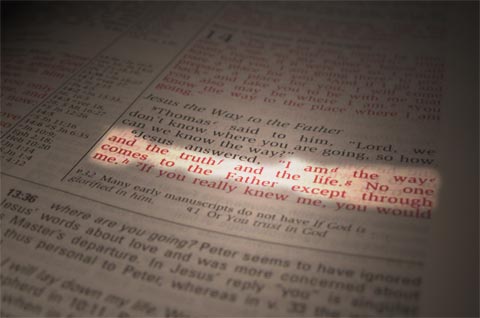
And this is my view. The Bible plainly says that Christ Jesus provided a way out of our dilemma. Jesus really is the way, the truth and the life, as he said. As the Wordof God, Jesus has the authority to both fulfill Scripture and to meet its demand for justice through his sacrificial death on a Roman cross.
This concept of grace is a central theme of the Bible. It is repeated twice; once in the Old Testament (Psalm 32) and once in the New Testament (Romans 4):
Blessed are those whose transgressions are forgiven, whose sins are covered. Blessed are those whose sin the Lord will never count against them.
Who are the people the Bible talks about, whose sins are covered? They are me and you and everyone we know.
Jesus brings the concept of forgiveness and grace to Scripture and offers hope to the fallen; hope to those who once faced execution for their sexual behavior. And Jesus, through his Holy Spirit, gives us the ability to treat our marriage partners with the honor, dignity, and respect owed anyone who belongs to God.
The Bible says people will someday live in a time when the law of God is written on their hearts. I really believe that time is now.
The law is written on our hearts.
The law is no longer written on stone, unless it is our hearts that are stone. We know in our hearts — where the law lives — we must love more our wives and husbands, our gay sons and daughters, our gay sisters and brothers, mothers and fathers, and especially our gay neighbors.
Shouldn’t we be praying for each other, that Jesus will give people the strength and grace to endure the sexual suffering they are sure to face in this life on Earth?
We know full well (because Jesus told us) that there is no sex (marriage and giving in marriage) in Heaven. This fact alone should give folks comfort, because it means no one will be taking their sexual identity with them.
All who enter Heaven will be free of sexual sin and sexual suffering. People will enter as brothers and sisters of Jesus, in complete victory over sins that once separated them on Earth. We will enter Heaven celebrating freedom. Everyone, even the most sexually-imprisoned, has this hope, in Christ Jesus.
This much folks should know. Love pleases God more than hate. They should know that tolerance and inclusion please God more than intolerance and exclusion, because the Bible says, God is love.
But those who belong to Christ Jesus know something more. If we honestly face our past and examine our hearts, we know that God loved us first, before we even knew who He really was, while we were still numbering ourselves — many of us — among the most God-hating people on Earth.
Don’t folks have a duty to love those who are like what they used to be — ignorant of who God is and ignorant, even, of who they themselves are? Of course they do. It’s difficult, because most want to forget the past and move on. No one wants to be reminded that everyone is trapped in a quicksand of sin; that absent Christ Jesus they have no hope of rescue.
Can Christians move on without first offering out-stretched hands to fallen friends? Some can be found within our churches. They are sexual sinners like us.
And just like us, they always will be.
God loved us first, before we even knew who He was.
I hope that Christians have love enough to accept their gay brothers and sisters in the name of Christ Jesus; that they have the wisdom to see that we share the same daily struggle against sin; that we have the presence of mind to beg Jesus to lift us out of the muddy waters of sin, together if necessary; to wash us clean with His blood that he shed for us in suffering.
Pray that the LORD forgives us, accepts us, and loves us unconditionally, which is nothing more than everything we’ve ever wanted.
Billy Lee
Post Script: The story behind the publication of this article is told in Writing Free. The Editorial Board
I wrote my first big story in fourth grade. I called it, Adventures on the Amazon. It’s now lost to history, but I remember organizing it into chapters.
Chapters were a big deal. I’d never written anything so long that it could be divided into paragraphs, much less chapters.
Each chapter was a little–kid-against-nature story. I battled hungry piranhas, pygmies with blow-darts, hippopotami, elephants, boa constrictors, fire ants, and so on.
It was a long story. My teacher awarded an A and invited me to read before the class. When I finished, my classmates applauded, so I decided to keep writing.
In fourth grade I wrote, Adventures on the Amazon. It took place in an exotic setting in a world I never visited.
My next big project was in seventh grade. In long-hand, I wrote a four-thousand word story about torture called, I am not a Coward. In it I tortured my brother to death to prove to the townspeople I wasn’t a coward. When I carried my dead brother into the heart of town to show the people what I had done, they weren’t proud of me like I hoped. Instead, they turned on me in horror and stoned me to death, while I screamed I am not a coward, I am not a coward!
I can’t tell you why I wrote Coward. I lack the courage to tell anyone why. I suppose I’ll be taking my reason to the grave. I really am a coward.
Before I showed the story to anyone, I taught myself to type. I thought, a story this good has to be typed. It deserves the simple dignity of a formal type-set. So I spent the summer with a book I talked mom into buying called Teach Yourself to Type in Ten Weeks. Iused it over the summer, between seventh and eighth grade, to give me the skills to type out my masterpiece.
It felt like I’d conquered the world, once I finished the typing. I had taught myself to type and written an incredible story, all without the aid of a teacher. It was important to me and a source of pride.
I decided to read, I am not a Coward, to my family. Dad gathered everyone into our small living room for the dramatic presentation. Excitement lay on every face. Billy Lee had written a story. He could write. Everyone beamed with anticipation. They were proud of me, it was easy to see. I cleared my throat and began:
They say I am a coward. They say I watched my brother burn to death without lifting a finger to save him.
Despite my short-story to the contrary, I’ve been a coward my entire life.
Dad lifted his hand. Hold on there, Billy Lee, he said, white-faced. He ordered everyone to leave the room. I think it would be better if you read this story to me, first. After the last family member had scampered away, he motioned for me to start.
So I read the story through to the end, while he sat across from me, silent. It took about a half-hour. When I finished, he paused to gather his thoughts. Billy Lee, he finally said. That’s the finest piece of mis-directed talent I’ve ever heard. Please don’t read it to anyone else.
It’s just not possible to suppress a story that rises to the level of I am Not a Coward. Over the next few months I gave private readings to friends, when Dad wasn’t home. After a while I had read it to everyone I knew, so I hid my story to protect it.
How I was able to preserve and protect my story over the years is nothing short of miraculous. I lived in a Navy family, after all. We moved every two years or so. My dad liked to say that every move is like a house fire. Things burn-up. Things get misplaced and go missing. Yet almost sixty years later, I am not a Coward survives.
During high school I wrote a number of stories that teachers asked me to read before students. I won’t bore you. But one story slowed my momentum. In ninth grade a closeted-gay teacher led my creative writing class. I submitted a story about a Navy medical corps-man who hid his gay identity.
The teacher seemed to dislike it. He gave it an A-minus. He told me I was a lazy writer, because I used too many adjectives. More powerful verbs and adverbs were the answer. Even today, as I write, his comments roll around inside my head. I still love adjectives. Some of them are just perfect, as far as I’m concerned.
Based on my experience living in Japan during kindergarten, I wrote a graduate level paper on a Japanese company I invented. It received an ”A.”
In college, money was scarce. To earn money for beer or whatever, I wrote term papers for people. I wrote under-graduate papers on economics, history and english, mostly. I charged by the grade, so getting an A was important.
I wrote only one paper at the graduate level — a microeconomics study on a currently successful Japanese company selected by the student. I invented the company I selected. Everything about it was imagined — even its name was fiction. My customer’s grade? A. I knew nothing about economics or Japan. Yes, I had taken a freshman econ class, and yes, I had lived in Japan — when I was in kindergarten. Apparently, it was enough. My writing career was on fire.
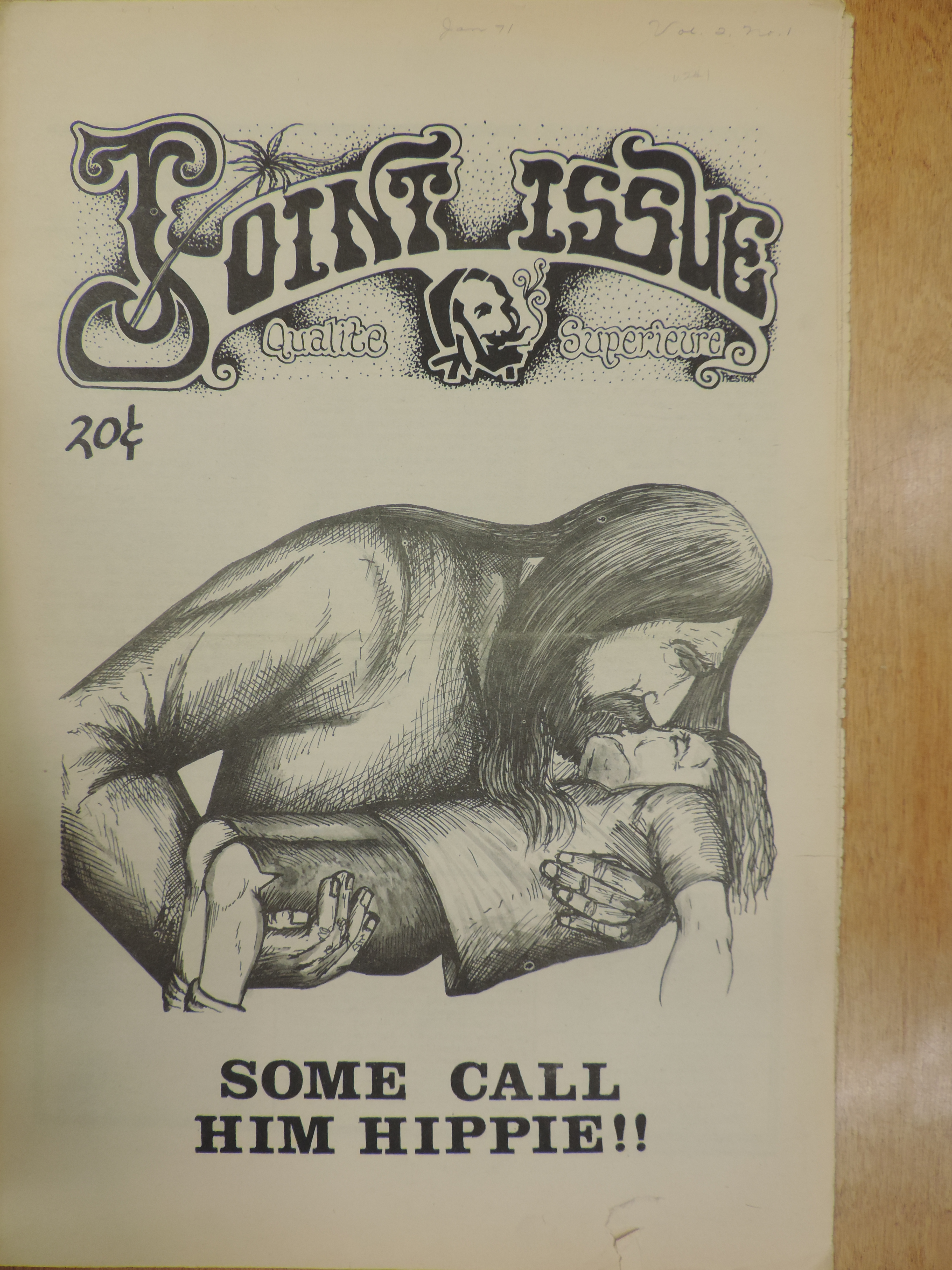
Joint Issue was an alternative community newspaper. Alternative didn’t mean the writers could write whatever they liked. This cover parodied a roadside billboard, popular in 1970, where a uniformed police officer was shown providing resuscitation to a drowning child. The caption on the sign said, ”Some call him Pig!” Police felt unfairly persecuted in the 1970s during the anti-Vietnam war movement when they clashed sometimes with protestors during demonstrations.
Eventually I dropped out of college to join the anti-Vietnam-war movement. I worked on staff for a community anti-war underground newspaper. All articles were critiqued and followed a commonly agreed to set of values. I found I wasn’t free to write, because every piece had to get by staff who had their own ideas about what was appropriate for our fifteen-thousand readers.
Though I continued to write and publish, my articles never seemed to rise to the level of good. People read our paper. It was highly circulated for an underground. We did some things right, I suppose. But I can understand why staff-writers on newspapers and magazines today feel the same pressures I did to conform to the values of the people who decide if they will be published. No one is the Lone Ranger, especially where writing is a business driven by profits or, in our case, ideology.
I stopped writing during my career as a mechanical engineer and machine designer. But eventually, after four decades, I retired. I thought, maybe it would be fun to start writing again. My writing skills lay rusty, in ruins, really. Why not start a blog, I thought to myself, and write about what I’ve learned and know? Maybe I’ll write about things I don’t know, too. Maybe I’ll pontificate, if I feel like it. Who can stop me? I had this crazy idea I could write anything. If I sounded like a communist at times, so what? Who was going to fire me? I was retired. I was free, and I was going to write like it.
Some in my family were blustering and pontificating on Facebook, crowding out the pictures and videos of grandchildren. I thought, why not give people another place to pontificate? It might go a long way to help free up the space we depended on to provide news about our little people. I figured readership would be tiny. I would fly under the radar of hostile readers, if hostile people actually lived in cyber-land as was sometimes rumored.
Gays and straights had problems with my story about a gay physician’s assistant.
The first unusual thing happened right away, after I published a short story about a gay physician’s assistant. Almost immediately a swarm of Asian bots from the women’s apparel industry attacked my site. Anonymous comments piled up fast. More bots landed from USA cosmetic and high-fashion sites. What was going on?
I reread my article. It was supposed to be neutral. It was supposed to describe the gulf between gays and Christians on the subject of marriage and hint at some possible common ground of interest and attitude. But the writing was poor. The article tilted strongly toward a Christian point of view. It lacked ambiguity and neutrality — important components in articles designed to make people think.
I rewrote the story. And I put restrictions on comments. From now on each comment would be reviewed before posting to make sure it was from a living person. Overnight, the attacks stopped. I had peace on my blog-site. My family could continue to indulge me, reading my pontifications to help me feel loved and listened to in my old age, I supposed.
I puttered along writing articles about everything and anything that popped into my head. After writing about twenty-five posts, I decided to do something different: something bold; something experimental. I would self-disclose my sexuality and challenge readers to drop their prejudices against gays. I wrote the article, tidied it up and pushed the publish button. All hell broke loose.*
Site views were running ten times normal.
WordPress, keeper of my blog-site, alerted me to unusually high view volume. I looked up my stats. Site views were running ten times normal and piling up fast. At first I thought, wow, people like my blog.
The truth was, some thought I was advocating for homosexuality. They believed my views were against the Bible, inspired by satan, and possibly embarrassing to my family. People swarmed my site trying to understand the article and how to respond to it. Some decided that, unless I took down my post, they would turn me in to church-elders, a necessary prelude to (if I didn’t cooperate) church-discipline, even to possible excommunication.
But by then church leaders were already rummaging through my articles. Some articles, they found wanting. Their attitude was, since I belonged to their church, because I was a baptized covenant member, I certainly was not free to say anything I wanted. Everything I wrote had to be consistent with scripture and what they thought it said. To show they meant business, they disbanded my Bible-study group and removed me from leadership.
Church leaders expected me to comply. Comply, I did.
Church leaders wrote me a letter which included a bullet-list of concerns. They announced my punishments. They presented another list; this time, demands. They expected me to comply, and comply is what I did.
I took down the offending article. My seventy-one year old wife was recovering from open-heart surgery. All her friends are in our church. The last thing we needed was to undergo an excommunication. Like Galileo, who blasphemed Jesus and the Catholic church by making the absurd claim that Earth was not the center of the universe, it was recant or be tortured — because having my blog ripped out from under me feels like torture. I didn’t see it coming.
Church leaders say they love me and want what’s best for my soul. I believe them. It’s what I want too. And truth is, my article was edgy. It pushed a lot of boundaries, even mine. I didn’t like some parts of the article either, it turned out. No one wants to go to Hell. No one wants to forfeit the love of Jesus. No one wants to lose friends they’ve had for decades over an article or two in a blog. I get that. I feel it, too.
I want to write; unafraid, if possible.
Decades spent in prayer, renouncing sin, loving the unlovable, giving aid to the wretched — the things we do as part of submitting to the will of Jesus — these things are supposed to humble us. But I want to write, unafraid, if possible. I can’t know, always, if something I write is going to offend someone well versed in the theology of our church.
In life, we all want to get it right. I don’t want to upset anyone. But no one gets it right one-hundred percent of the time; not even close. Even with a team of the best advisors available, no one gets it right all the time. Entire nations of praying people march off the cliffs of history, sometimes.
I have this idea that in America we have freedom of speech only if no one is listening to us. As soon as a handful of people start reading our stuff, even if it’s just family and a few Facebook friends, some people make it their business to bend us to their ideas of what is appropriate.
Try to speak freely. If people start to listen, you could be in for a sad surprise.
Freedom of speech means little more than bragging-rights to the people who run our country and manage our institutions, it seems to me. They brag to the world about how free we are; how easy it is to speak our minds. But try to publish. See what happens.
Start a blog and try to find your voice. Speak freely, tell it like it is, as you, your unique self, sees it — uncensored and unafraid — if only with your family and close friends. If you think America is the land of the free, you might be in for a sad surprise.
Billy Lee
* Note: we’ve included a link to the re-written, re-titled and sanitized version of the original article, Christian Love and Gay Pride. The rewritten version, which better articulates the views of Billy Lee, is called, Gay Love and Christian Pride. The Editorial Board
I imagine men wrote many books over hundreds, even thousands, of years. The best of these books were collected by other men interested in truth, ethics, and the nature of God.
These men were, I suppose, prominent in law, medicine, politics, philosophy, and religion. They selected books that presented a consistent view of their ideas about Jesus and what he had done. They prayed that God would guide them as they organized their chosen books into a collection, now called the Bible.
We know they believed God answered their prayers, because they included in the Bible this passage: all Scripture is God-breathed and useful for teaching, rebuking, correcting, and training in righteousness….
By AD 400 Jerome produced a definitive Latin edition of the Bible called the Vulgate, which effectively set the Canon of the New Testament. The Canon of the Old Testament wasn’t fully agreed on until after the Protestant Reformation in the sixteenth century.
One notable change: the Book of Sirach (which Jesus quoted) was dropped to make the Protestant Old Testament match the then current Judaic Canon.
In the 13th century, Stephen Langton divided the Bible into chapters. In the 16th century, French printer, Robert Estienne, divided it into verses.
Today, the shepherds of Christianity spend years studying the books of the Bible, their histories and pedigrees. Some believe God has called them to shepherd the faithful by keeping church doctrine consistent with the “inerrant” Scripture of the Bible.
In the two thousand years since the crucifixion of Jesus, the pursuit of inerrancy has led — by some accounts — to the establishment of over forty-thousand Christian denominations.
It seems reasonable to ask: if Scripture is inerrant and plainly written, why so many denominations? Are the large numbers the result of a godly pursuit of “inerrancy” or from other causes? The extraordinary number of denominations — many formed after the Protestant Reformation of 1517 — leads me to think that the natural tendencies of young pastors, chafing under the authority of those with whom they disagree, may play a role.
These leaders seem to share the conviction that God chose them to fight the good fight against false doctrine. They defend their understanding of God’s inerrant word against all comers. Sometimes, it seems to me, they end up increasing their influence but leave weakened churches and damaged denominations in their wake.
I think I know why these men don’t fight and win their battles within the denominations they were called to serve. I imagine it doesn’t occur to them, because they see themselves as protectors of congregants who could be eternally harmed by contact with heretics.
And, in truth, it’s stressful to submit to church authorities with whom they disagree, especially in matters of faith. Some can’t deal with it. The pressure is too great. They find themselves in an uncomfortable cognitive-dissonance between the truth of Scripture as God has revealed it to them and another compelling biblical principle: submission to the authorities established by God Himself.
It’s a psychological double-bind of excruciating pain for those who take seriously their vows to serve Christ. It takes a lot of prayer and the support of the saints to determine God’s will and muster the strength to endure it. These leaders sometimes choose to break away to form new churches — new denominations — where they can better manage their message. And in the end, if the history of the Church is a guide, God is faithful to justify the conscientious men who belong to Him and heal their divides.
Where does this idea about “inerrancy” of Scripture come from, since the Bible was written by men, and gently hides mankind’s many prejudices and ignorant ideas about history and science? If Scripture is inerrant — and I believe it is — its truth must come from God alone. God makes Scripture true, even when human logic, common sense and evidence seem to speak otherwise.
Sometimes God condescends to endow truth to Scripture as a concession to our hard hearts and inabilities to love each other the way we should. Jesus said as much when he replied to the famous question Pharisees asked about an apparent contradiction in the Bible concerning divorce, recorded in Mathew 19. Moses permitted divorce, contrary to God’s original plan, Jesus said, because people’s hearts were hard.
The Bible plainly says we live in a time when the law of God is written on our hearts. The law is no longer written on stone, unless it is our hearts that are made of stone. We know in our hearts — where the law lives — we should love more.
Loving more means, it seems to me, judging less for one thing. We should pray we can love more our spouses, our sisters and brothers, mothers and fathers, and especially our neighbors, both gay and straight.
Yes, making safe spaces for gay folks to worship Jesus and to grow in holiness within our churches is a controversial subject these days. But it seems to me that those of us who are straight share with our gay brothers and sisters a life-long desire for sexual sin. That we can better hide our sinful desires gives us no advantages before Christ, our redeemer, because he sees into our hearts and knows we are, by nature, sinful and in rebellion against God — pretty much all the time.
This much we know. Love pleases God more than hate. We should know that tolerance and inclusion please God more than intolerance and exclusion, because the Bible says, God is love.
But those of us who belong to Christ Jesus know more. If we honestly face our past and examine our hearts, we know that God loved us first, before we even knew who He was, while we still numbered ourselves — many of us — among the most ungodly on the earth.
Shouldn’t we love those who are like what we used to be?
Of course, we should. Yes, it’s difficult, because most of us want to forget our pasts and move on. Will we really move on without first rescuing our fallen friends? Some can be found within our churches. Will we abandon them on a battlefield ofdoctrinal purity?