CORN MEN

Miguel Angel Asturias won the Nobel Prize for Literature in 1967 during my freshman year at college. I must have been chasing girls the day of the announcement. I just don’t remember him. Until a few months ago, I didn’t know who he was.

While doing research on the Cuban Revolution and its leaders for recent blog-posts, Miguel’s name kept popping up here and there in various contexts, so I decided to learn more about the author by trying to take an inside-the-cover peek into his signature book, Men of Maize, on Amazon.com.

Was Asturias really that good that he could win a Nobel prize? What did he write about?



Miguel Angel Asturias, I’d already learned, was born in Guatemala and wrote in Spanish — a language I didn’t read or speak. I was able to find some English translations of his books on-line, but they seemed to be scarce and out-of-print.

On Amazon.com, Men of Maize (Hombres de Maiz) cost $50 — in used condition, of course. “Like-new” copies priced-out at over a hundred dollars. The titles didn’t feature Amazon’s inside-the-cover functionality either, so my free peek inside-the-cover strategy just wasn’t going to work.

Other books by Asturias were also unavailable in English, although a beat-up library copy of Strong Wind (Viento Fuerte) turned up on-line for sale at ten bucks.  I decided to buy it and then search through libraries on-line for Men of Maize. It turned out that a solitary university library, which happened to be located nearby, owned a solitary English language copy, so I drove over to check it out.


Miguel Angel Asturias; born Oct 19, 1899; died June 9, 1974
Miguel Angel Asturias; born 19 Oct 1899; died 9 June 1974

According to the inside cover, the library acquired the book in 1993, the same year Hombres de Maiz was translated into English and incorporated into UNESCO’s World Heritage historical book collection. It had been forty-four years since it was first published, in Spanish. The librarian — who must have jumped out of her chair to place the order — probably thought the book would become a big hit among the institution’s forty-thousand English readers.

Sure enough, according to the book’s ledger, someone or other had already borrowed the award-winning novel five times: June 1996; February 1997; February 2001; July 2003; July 2009.  And now a sixth borrower was stepping up to the plate — that would be me — to end the book’s most recent six-year no-hitter.  Unless the forty-thousand folks who used the student library were reading it in Spanish, Corn Men wasn’t doing so good, not where I lived, anyway; not in English.

How does a critically acclaimed once-upon-a-time international best-seller written by a Nobel Prize winning author (unavailable in USA bookstores) generate a paltry six library reads in twenty-two years at a major university library that is also serving the public?  I don’t know.

I took the book home to study it.  Here is the opening sentence: Gasper[pronounced Jasper, like the blood-stone] Ilom lets them steal the sleep from the eyes of the land of Ilom.  Ok, not sure what this is about, I’ll keep reading.  Gasper Ilom lets them hack away the eyelids of the land of Ilom with axes…  Huh?  Gasper Ilom lets them scorch the leafy eyelashes of the land of Ilom with fires that turn the moon to furious red…  Mmm. Keep reading. Keep reading. OK. End of page one.  Gasper stretched himself out,…bound in sleep and in death by the snake of six-hundred-thousand coils of mud, moon, forests, rainstorms, mountains, lakes, birds, and echoes that pounded his bones until they turned to a black frijol paste dripping from the depths of the night.


Gerald Martin, translator of Miguel Angel Asturias and Gabriel García Márquez
Gerald Martin, translator.

Page one, I soon learned, was the weakest page in the book. On page two and beyond, the novel began to rise into a tour de force, a masterpiece, which had been lovingly captured and transformed into English by translator, Gerald Martin.

Asturias, I discovered, wrote in a style that critics would later call magic realism.  It’s the style of One Hundred Years of Solitude, by Gabriel Garcia Marquez (Gabo), which also won a Nobel Prize and is required reading in many university literature programs. Gabo published his book in Argentina during the same year that Asturias won his Nobel Prize (1967).

For those familiar with Gabo’s book, it’s use of language is shallow compared to that of Asturias — though it is a fun and light-hearted read; I would say it is more entertaining to average readers interested in plot over word-play and character development. Gabo referred to his book as a kind of inside joke written for friends.

Whatever style anyone chooses to label Corn Men, Miguel Asturias was clearly a genius who knew unusual stuff, and he could write. That’s my view, anyway. His writing stands alone. Critics have compared him to Keats and Joyce, but I say, no. Those authors can sometimes depress the reader with their pedantic displays.

Not Miguel. He was humble, brilliant, knowledgeable, and direct. He didn’t grandstand. He didn’t show-off. He painted with a preternatural palette to portray ways of being which were lucid and compelling; and fabulously unusual. His writing sometimes took my breath away, because it was original, unpredictable, and paradigm-shattering.

Only Shakespeare himself rewires the brains of his readers like Asturias, I thought. Yes, references to Mayan culture might be arcane. But they didn’t impede the flow of the story or obscure its meaning. They simply provided rivulets to explore for those readers who might like to learn more than they know.


Popol Vuh cover
Popol Vuh is Mayan scripture. It contains accounts of creation, ancestry, history, and cosmology. It even references a great flood.

My interest in Corn Men, after reading it, has less to do with the story itself, or its backstory, than with its use of language — though all of it is incredible. For example, the Guatemalan writer — a Sorbonne trained ethnologist and bonafide expert in Maya culture — spent forty years transcribing and translating into Spanish the Mayan “bible”, Popol Vuh  (Book of the People).  His knowledge of Mayan culture saturates the novel.

Miguel Angel Asturias lived and breathed Guatemala, which for him sheltered a personal treasure-cache of Maya ruins, history, legends, culture, writings, and artifacts. Asturias was in love with all of it.

Guatemala should be of interest to all Americans, as well, because it is central to recent US history. In 1954 Guatemala became the second of several modern democracies the United States chose to overthrow. (The first was Iran, in 1953.)

Encouraged by the easy success of its military takeovers, the USA used Guatemala as a base of operations to try again, in 1961, to seize control of Cuba, but its Bay of Pigs invasion (modeled after its strategy in Guatemala), failed.

The USA was undeterred by miscalculation. It learned from its mistakes, made tweaks in its planning and, by the middle 1960s, began overthrowing governments in the Americas and around the world to further its economic and strategic interests.

Like falling dominoes, countries like Chile, Nicaragua, Panama, South Vietnam, and Iraq (there were others) fell to USA backed military coups and takeovers, until President Obama put a stop to it all in 2008. (Two exceptions continue to be Afghanistan and Syria, where takeover planning and operations are ongoing.)

Editors Note: As of 25 May 2018 destabilization of countries the USA dislikes seems to have resumed as a cornerstone of its foreign policy, which is to dominate all countries on the earth. The policy is called strategic strangulation; it’s like waterboarding except that it’s inflicted on countries; it’s being applied against Cuba, North Korea, Iran, Venezuela, Brazil, Turkey, and many others — which some readers won’t have any trouble identifying. Readers should keep in mind that everything changed when the GOP and its Russian-Israeli backers seized power in the manipulated and rigged election of November 2016. Billy Lee published this essay during the final years of the Obama presidency.

Current problems in socialist democracies like Brazil, Columbia, and Venezuela appear (on the day of this writing) to be the work of wealthy power-brokers working outside the influence of traditional government agencies long associated with destabilization programs; the CIA and its labyrinth of agricultural-aid programs seem to be playing historically minor roles at the present time.


Jacobo Arbenz 2
Jacobo Arbenz, Guatemalan President, 1951-1954

Not so in 1954. Back then USA proxies overpowered the popularly elected Guatemalan President, Jacobo Arbenz and forced him to stand naked before reporters before they put him on an airplane and threw him out.

They then stripped another prominent Guatemalan, our writer Miguel Angel Asturias, of his citizenship and expelled him (along with hundreds of his friends and acquaintances) from the country he loved.

Soon, over one-hundred thousand citizens fled to neighboring countries, after they learned that the military government was “disappearing” opponents — a terrifying practice that would spread to other USA backed dictatorships, like Argentina, in the decades to come.

Miguel’s exile (to Argentina and Chile) lasted eight years during which the United States transformed Guatemala into a training ground and staging area for CIA backed militias tasked to, among other things, protect dictators allied with American businesses, hunt down and kill leftist revolutionaries (one of them, Che Guevara), and capsize popularly elected socialist governments, like those in Chile and Nicaragua.


Maya pyramid in Gutemala
     Maya Pyramid in the city of Tikal, Guatemala

As I said before, my interest in Corn Men lies beyond its compelling story and backstory. Yes, it is a novel about the indigenous Indians of Guatemala, who believed their skin was made of corn. Yes, it describes the marginalization and suppression of a native people by modern hi-tech agribusiness, which viewed corn as nothing more than a crop that could be sold.

Corn could not be one’s personal identity, the northern white-men of agribusiness insisted. Corn did not, could not, envelop, protect, and nurture ones soul.

According to the leaders of big agribusiness, corn was something to eat, nothing more. The Mayan Indians knew better. Corn was sacred. Corn was people. They were made from it.


Mayan Corn Men
      Corn Men don’t remember.

Cross-cultural differences as wide as these, though fascinating, always seem to lead toward tragedy. On the book’s final page, in the epilogue, in the last paragraph, at the last sentence, Asturias shows us the horrific result: a degraded world where corn men become ants. They work on utopian ant farms harvesting kernels of corn. The glory and the magic of living inside skin made of corn has been flayed away.

The thrill of being Corn Men, the joy of being a fruit-like part of the earth, is not even remembered. From now on, corn men are worker ants. It becomes all about the work. It’s all about producing corn, selling corn, eating corn, buying corn, maybe even popping corn. It’s no longer about being corn.

Or is it?

Gerald Martin, the translator, thought Asturias may have intended the last paragraph to show that in the distant future the Indians would actually triumph; their descendants would win their fight to be corn people by establishing a kind of worker’s paradise; a communal corn-based utopia; a society based, presumably, on communism, where they would toil like joyful ants.

Who knows?  Asturias never said.  His ending remains ambiguous, open to interpretation and discussion. Good literature is like that, it seems.

The dilemmas which Asturias described are thought provoking for sure, but what made me love Corn Men was Miguel’s way with language; the way he used language to paint the surreal internal realities of the many indigenous persons he described. The literary techniques and devices he employed to craft the landscapes, animals, people, and action in Corn Men are complex, varied, and thrilling to encounter and embrace, at least for me.

To my mind, Miguel’ s prose is amazing, wondrous, dense, and sophisticated. Gerald Martin, his translator, preserved and amplified it all in a resplendent English version in 1993, which is the one I read.

Below are my personal picks of phrases from the book, Corn Men, (my proletarian version of the title) to give flavor to uninitiated readers; to acquaint them with the astonishing author, Asturias. And, as always, please, feel free to click on the links in this post to learn more.

Billy Lee

What follows are assorted tidbits from a few chapters in the 1993 Gerald Martin translation of Hombres de Maiz, by Miguel Angel Asturias, first published in 1949.  Billy Lee hopes these vivid constructs will stimulate interest in the book for all those folks who like to write and read.   The Editorial Board


bunny rabbit with shiny eyes
…rabbits…turned into stars…

…word of the earth turned to flame by the sun almost set fire to the maize-leaf ears of the yellow rabbits in the sky…that planted themselves in the sky, turned into stars, and faded into the water like reflections with ears.

…rivers stagnant with wakefulness…

…he was swallowed by a toothless half moon which sucked him from the air, without biting him, like a small fish.

…ground sticky with cold…

…fingernails heavy as shotgun slugs…

…liquor…the water of war…

Gasper grew older as he talked…

His head fell to the ground like a flowerpot with buds of tiny thoughts.

His thoughts passed out of his ears…

…her hair combed by Gaspar’s teeth…

She shrank back like a blind hen.

A handful of sunflower seeds in her entrails.


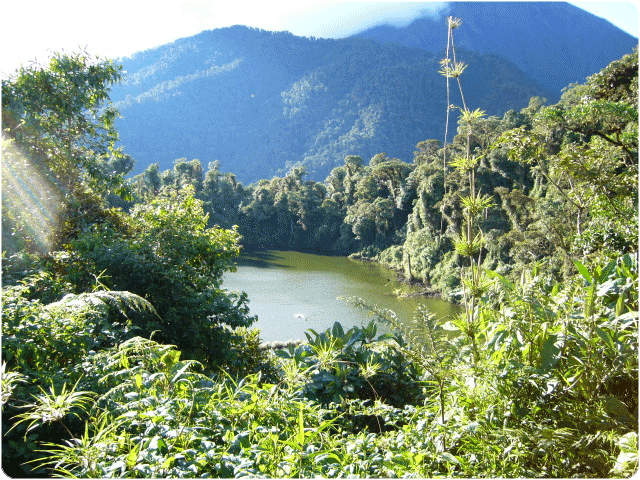
Rio Sarstun Guatemala river
…river that…rots…for wanting to sleep…

…river that sleeps as it flows and opens its eyes in the pools and rots for wanting to sleep…

…the earth that falls from the stars…

…creamy skies and butter rivers running low…

…shadow hard as the walls…

…gun fully loaded with seeds of darkness…

…skin like old bark, his hair sticking out over his forehead like the tip of a sucked mango…

…dog dyed red with ringworm…

…face the color of vinegar scum…

…shadowy corpses scattering handfuls of maize down from the sky in torrents of rain…


firefly wizard
…firefly wizards…

…firefly wizards, who dwelt in tents of virgin doeskin…

…the mud gets more wrinkled year by year, like an aging face…

…sound of his breathing like water falling on porous earth…

…meat contorted in the fire as though the animals had come back to life and were being burned alive…

…boiling fat made rain bubbles in the tortilla dishes…

…men and women trembling like the leaves smacked by machetes.

…saffron colored mountains bathed in turpentine down to the valleys…

…baked puff-pastry faces…

…white root poison…

…sob chilled his nostrils…
old mayan man
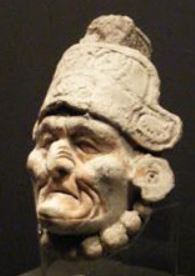
…old fool…afraid of everything…

…his fears were just that, the tremors of an old fool who, because of his age, was starting to be afraid of everything.

…crawling children and warm legs…

Candy rosaries like sugared cartridge belts around young bosoms.

…a swarm of locusts on fire…like golden hailstones with wings…

…skeleton light of fireflies…

…deer like lunar sawdust in the fragile light…

…jaw trembling like a loose horseshoe…

…darkness streamed out of the anthills…


horseman in fire
…everything was on fire…like the light at the beginning of the world…

…everything was on fire, without giving off either flame, smoke, or any smell of burning.  The candle glow of the fireflies streamed down from his hat, behind his ears, over the collar of his embroidered shirt, over his shoulders, up the sleeves of his jacket, down the backs of his hairy hands, between his fingers, like frozen sweat, like the light at the beginning of the world, a brightness in which everything could be seen…

Without saying a word he started bleeding away inside.

…as his voice turned flesh and blood in the cartilage of his nose, mid sobs and thick snuffles…

Senor Tomas, who sat on his leather stool and sucked in his tears, with his back to the door…

…the fire followed on behind with a rush, like a shaggy dog wagging its tail of smoke at him.

…it’s dangerous to contradict what lunatics or lovers say…

Roads of white earth are like the bones of all roads that fall dead at night.  …They remain unburied to give passage to souls in torment…


fire like water
…fire is like water when it flows…

Fire is like water when it flows, no one can cut it off.

…smoke swirling like milk…

…his sigh dropped from the tip of his spurs like tears, almost like words.

…wrapped in their ponchos like mummies…

…the earth was a huge nipple…

The sun, blear-eyed, could hardly see.

Stones from agave slings hummed through the razor-sharp air in the sun-toasted silence of the ripened fields…

Through the tattered lip his incisors, like two enormous nose drips, thrust forward a ridge of cold laughter.

…gums nailed down with stumps…

Madmen and children speak the truth.

night thorns
…spines…hidden like jaguars…

…sarespino bushes, which by day seem to keep their spines hidden, like jaguars, and bring them out as it grows dark to wound those who pass by.

…echo of the bells that toll for the dead down in the town until they make everyone dizzy, tilan-tilon, tilan-tilon…

The hands of those who snap the maize plant so the cob will finish ripening are like the hands that break the sound of bells in two, so the dead person will ripen.

…the running of the rats, real persons to judge from the noise they made, as though they were moving furniture, were the last things she heard.

…lighter sneezed sparks as the flint struck the steel.

…sparks that sailed…like little partridge eyes to set alight the gold-starched clothes of dry sun and dry moon, dry salt and dry star, of the maize-fields.

…flowers like doomed flags crawling with insects…

…darkness in the clear light of liquor, a luminous liquid which coats everything inside you black as you swallow it, dresses you in mourning inside.

…spurs speaking to the stallion in telegraphic, star-like language.

Death is the dark betrayal of the liquor of life.

Two thin burned legs inside a petticoat of ash, a head with no ears and a small lock of hair, also of ash, and a few curled fingernails, was all that could be lifted from the ground where Vaca Manuela Machojon had fallen.

The waters of the river would cheep at the edges of the pools, like little chicks.

…speaking as though he were killing lice with his teeth…

old mayan woman
…her soul…pleading for relief…

…her soul bulging out of her aged, deep-set eyes, pleading mutely for relief…

…tidal waves of weeping that makes everything salty, because tears are salty, because man is made salty by weeping from the moment he is born…

…jasmine-colored teeth…

…a body that goes out of tune, my son, is no good anymore for this life…

…its blood of red citrus juice bathed the moon…

…the madman’s vision is like a mirror broken inside him and in the pieces he sees what he saw whole before.

…he turned his head with the eyes of a boiled crab…

Musus tried to control his horse, sitting up like a flea in the stirrups, buttocks-battered by the trot.

…hoofs echoed like pewter-pots…

…his eyes were fixed on a long serpent of trees which seemed to be crawling between the mountains with the sound of thunder.

Don Chalo…bellowed at him with his mouth open up to his eyes, and such force of lungs that the sound even poured out of his nose.

The sonorous blood clots of his laughter could not be heard, but it was joyful paint that splashed over his face…

red moon
…clotting blood of the red moon…

…the thick clotting blood of the red moon…

…dark forest which stank of horses…

…you could hear something like the boiling fizz of water produced by the stubborn flight of insects…

…flea-bitten nag which paid no heed to word or spur once it became stuck to the ground with the glue of weariness and the thin gum of darkness that was half a dream.

…his ears hummed as though he’d been dosed with quinine…

…silver-coin necklaces of clear water and mountains of leaves that woke at each disturbance, each gust of wind with the clamor of a swarm of locusts sandpapering the air.

…carpets of dry pine needles, rivulets which the shine of the moon turned into navigable rivers of white honey along bare hillsides surrounded by pine groves…

The stallion tossed its head as it felt the splash of large drops of white moon.

…sprinkle of limy light…

Pine cones like the bodies of tiny motionless birds, sacrificed birds petrified with terror on the ever convulsing branches.

two spiders 2
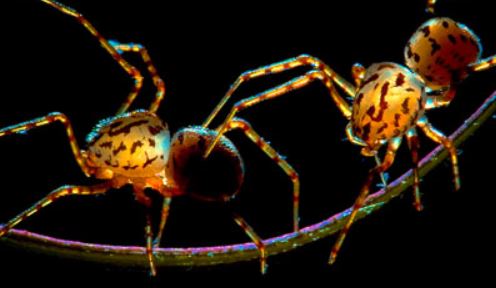
…hands…like spiders….

The hands of the second lieutenant looked like scuffling spiders beneath the play of lights and shadows.

The light and shade had awoken the itching of the mange between his fingers.

Air and earth, as the riders advanced, seemed to be folded in dark and luminous pleats, blinking, and the stones and black spinebushes gave grasshopper leaps.

…the brightness that was coming at them now, gropingly, mid a beautiful darkness, seemed more like a star in the sky forgotten there since the beginning of the world.

…they could hear the tinkling of stones as they sang beneath the horses’ hoofs.

The rocks, faintly orange in color, were reflected in the film of moon and water that covered them like the surface of a mirror…

…meteors falling with their tendons bleeding light…

…the collapse of a vegetable being which no longer has the will to resist the onrush of the wind.

They literally merged their necks with the necks of their horses, to offer the least resistance, and because contact with living, sweating animals which smelled like sacks of salt afforded them the vague security of companionship in the midst of danger.

…that man whose pale blue eyes shown like crystals of fire…

Squirrel in tree hole
…squirrels…chewed on cheerful thoughts…

…distant howling of coyotes in lunar syrup, squirrels gnawing with laughter as they chewed on cheerful thoughts…

The moon had fallen with its slow decaying light in a convex sky weepy with night dew.

Suffocating suphur fumes in which diseases seemed to float…

…whiplashing of the fierce wind…armed with razor leaves.

Black wasps smelling of hot cane liquor fleeing from honeycombs the color of excrement sown in the earth, half honeycomb, half ant’s nest.

Little streams of weeping, like brown sugar water, ran through the dust of the roads on his cheeks.

…it grows chill, like the fur of a dead animal, at night.

I picked you up and brought you back to life by blowing on you like a fire when all that’s left is a spark.

…fireflies played at little candles in the darkness. If only Goyo Yic could have seen just one of those small greenish lights, the color of hope, which lit up his pockmarked face, dry and expressionless as cow dung.

…sticks sounded like snapping guitar strings on the docile backs of the oxen…

To hear them speak was better than charity now, in his solitude, when to hear a voice in his house he had to talk to himself, and it’s not the same at all when you talk to yourself, it’s a human voice, sure, but it’s the voice of a madman.


crowd-at-the-market-in-Santiago-Atitlan-Guatemala-BG
…people…made from hillside earth…

People from the highlands smelling of wool, crags, and black poplars. People from the coast stinking of salt and sea sweat. People from the east, made of hillside earth, giving off an odor of tobacco, dry cheese, yucca paste and corn starch, and people from the north smelling of drizzle, mockingbird cages, and boiled water.

The blind man heard the sky palpitate like some feathered creature, and a strange itching troubled his groin and nipples, as if his sweat were eating away his courage as acid corrodes metal.

…time, which passes without us noticing: as we always have time, we don’t realize we’re always short of it, was how Culebro explained it to him.

…knees deadened from so much kneeling, hands dripping the white smallpox from the candles they held in bundles…

What color is weeping? he cried, stretched out on the ground, and in the same cry, with the very ache of his weeping, he replied, It’s the color of white rum!

White copal, which is the mysterious white brother to rubber, the black brother, the darkness that jumps.

amate flower
…a woman who is truly loved cannot be seen…

A woman who is truly loved cannot be seen, she is the flower of the amate, seen only by the blind, the flower of blind men, men blinded by love, blinded by faith, blinded by life.

…let himself be bathed, one of those moonlit nights when everything looks just as it does by day, in the tree milk that flows down from the machete cuts in the bark of the moon, that light of copal the wizards cook in receptacles of dream and oblivion.

The woman made a sound of splintering teeth, grinding them, and of bones straining in their joints, stretching out, curling up, crushing her face with tears, which interlocked the sorrow of sinfulness to her placid smile of contentment.

The sky moved.

Billy Lee

SHAKESPEARE SONNET GEMSTONES

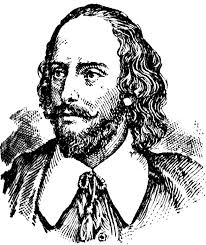
ShakespeareI know almost nothing about the man, William (Will) Shakespeare. Over the centuries, scholars have questioned many of the details of his life including his birth, circumstances of his death, his sexuality, and his authorship of various works. It seems it might not be possible for any modern person to know anything they can fully trust about the man himself.

I’ve yet to take a college course on Shakespeare or perform in one of his plays. I have attended theatrical performances and watched movie enactments. Mostly, I’ve read his plays and his poetry, not much more. His work is suffused in unique hues, which easily identify his authorship. When reading Shakespeare, my interest is always in his unusual use of language, which appeals to me more than that of any other English-speaking writer or poet.

Shakespeare, whoever he was, had a gift for language which seems to have seduced nearly every person of letters I’ve ever met. He had a talent for drawing attention to the nuances of meaning through a peculiar juxtaposition of his singular syntax with unexpected context.

Shakespeare’s pen tugs and pulls on the corroded wires in our brains to make new schematics. His ink flushes out the rust and lubricates the synapses to enable fresh and completely radical transformations of our internal world. Best of all, his complex literary architecture provides a grand space where readers can safely explore many of the raw subtleties of life, love, power, sorrow, decline and death.

I love Shakespeare. Shakespeare’s language thrills me. I agree with Poet Laureate, Donald Hall, who once observed that Shakespeare’s writing is among the most densely strewn (with gems) of any literature in the world.

shakespeare sonnetsIn this article are collected — from Shakespeare’s Sonnets — over one-hundred and fifty of his brightest jewels and most dazzling gemstones. I don’t much care about the size or carat of a crystal — or its clarity. Color and cut are what fascinate me. If the excerpt doesn’t sparkle, it isn’t on my list. 

The scintillas in this sample are in order of their appearance in the Sonnets. They make up a kind of Reader’s Digest abridgement, which should enable readers to glean some of Shakespeare’s best lines without having to spend several hours reading all one-hundred and fifty-four chapters.


From Shakespeare’s Sonnets:

…making a famine where abundance lies, thyself thy foe, to thy sweet self too cruel.

When forty winters shall besiege thy brow, and dig deep trenches in thy beauty’s field, thy youth’s proud livery, so gazed on now, will be a tatter’d weed, of small worth held.

Thou art thy mother’s glass, and she in thee calls back the lovely April of her prime.

Die single, and thine image dies with thee.

…sap check’d with frost and lusty leaves quite gone, beauty o’ersnow’d and bareness everywhere: then, were not summer’s distillation left, a liquid prisoner pent in walls of glass…

…thou art much too fair to be death’s conquest and make worms thine heir.

Sweets with sweets war not…


shakespeare sonnet
Is it for fear to wet a widow’s eye that thou consumes thyself in single life?
Is it for fear to wet a widow’s eye that thou consumes thyself in single life?

The world will be thy widow and still weep…

But beauty’s waste hath in the world an end, and kept unused, the user so destroys it.

For thou art so possess’d with murderous hate that ‘gainst thyself thou stick’st not to conspire, seeking that beauteous roof to ruinate which to repair should be thy chief desire.

Make thee another self, for love of me.

…violet past prime, and sable curls all silver’d o’re with white…

…barren rage of death’s eternal cold…

Thy end is truth’s and beauty’s doom and date.

…wasteful Time debateth with Decay to change your day of youth to sullied night…

…my verse…is but as a tomb which hides your life and shows not half your parts.

Sometime too hot the eye of heaven shines…

Pluck the keen teeth from the fierce tiger’s jaws, and burn the long-lived phoenix in her blood…

Yet, do thy worst, old Time: despite thy wrong, my love shall in my verse ever live young.

An eye more bright than theirs, less false in rolling, gilding the object whereupon it gazeth; a man in hue, all hues in his controlling, which steals men’s eyes and women’s souls amazeth.

With sun and moon, with earth and sea’s rich gems…

…not so bright as those gold candles fix’d in heaven’s air…

For all that beauty that doth cover thee is but the seemly raiment of my heart…

For at a frown they in their glory die.  The painful warrior famoused for fight, after a thousand victories once foil’d, is from the book of honor razed quite, and all the rest forgot for which he toil’d.


aquatic couple embracing underwater
…thy soul’s thought, all naked… …puts apparel on my tatter’d loving.

…thy soul’s thought, all naked…  …puts apparel on my tatter’d loving, to show me worthy of thy sweet respect…

And keep my drooping eyelids open wide, looking on darkness which the blind do see…

…like a jewel hung in ghastly night, makes black night beauteous and her old face new…

But day by night, and night by day, oppress’d?  And each, though enemies to either’s reign, do in consent shake hands to torture me…

For thy sweet love remember’d such wealth brings that then I scorn to change my state with kings.

Then can I drown an eye, unused to flow, for precious friends hid in death’s dateless night, and weep afresh love’s long since cancell’d woe, and moan the expense of many a vanish’d sight…

Thou are the grave where buried love doth live…

Though thou repent, yet I have still the loss: the offender’s sorrow lends but weak relief to him that bears the strong offence’s cross.  Ah! but those tears are pearl which thy love sheds, and they are rich and ransom all ill deeds.


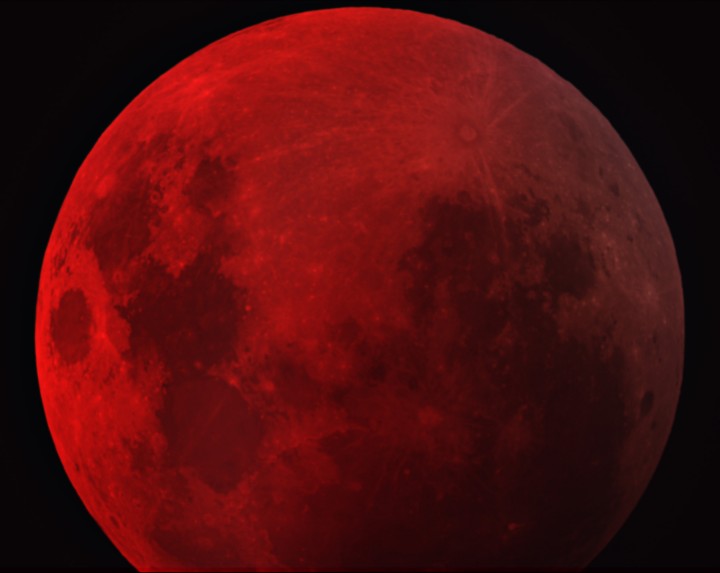
101220-NASA-eclipse01
…clouds and eclipses stain both moon and sun…

Roses have thorns, and silver fountains mud; clouds and eclipses stain both moon and sun, and loathsome canker lives in sweetest bud.

I do forgive thy robbery, gentle thief, although thou steal thee all my poverty; and yet, love knows, it is a greater grief to bear love’s wrong than hate’s known injury.

Lascivious grace, in whom all ill well shows, kill me with spites; yet we must not be foes.

…thy beauty and thy straying youth, who lead thee in their riot even there where thou are forced to break a twofold truth; hers by thy beauty tempting her to thee; thine, by thy beauty being false to me.

If I lose thee, my loss is my love’s gain, and losing her, my friend hath found that loss; both find each other, and I lose both twain, and both for my sake lay on me this cross; but here’s the joy; my friend and I are one; sweet flattery! then she loves but me alone.

And darkly bright are bright in dark directed.

When to unseeing eyes thy shade shines so!

All days are nights to see till I see thee, and nights bright days when dreams do show thee me.

For nimble thought can jump both sea and land.

These present-absent with swift motion slide.

A closet never pierced with crystal eyes…

Mine eye’s due is thy outward part, and my heart’s right thy inward love of heart.

Or heart in love with sighs himself doth smother…


gems 2
…my jewels trifles are…

But thou, to whom my jewels trifles are, most worthy of comfort, now my greatest grief, thou, best of dearest and mine only care, art left the prey of every vulgar thief.

Against that time when thou shalt strangely pass and scarcely greet me with that sun, thine eye…

To leave poor me thou hast the strength of laws, since why to love I can allege no cause.

For that same groan doth put this in my mind; my grief lies onward and my joy behind.

So am I as the rich, whose blessed key can bring him to his sweet up-locked treasure, the which he will not every hour survey, for blunting the fine point of seldom pleasure?

The rose looks fair, but fairer we it deem for that sweet odor which doth in it live.

They live unwoo’d and unrespected fade, die to themselves.  Sweet roses do not so; of their sweet deaths are sweetest odors made…

So true a fool is love that in your will, though you do any thing, he thinks no ill.

I am to wait, though waiting so be hell; not blame your pleasure, be it ill or well.


antique_photo_album_closure
…show me your image in some antique book…

O, that record could with a backward look, even of five hundred courses of the sun, show me your image in some antique book…

Like as the waves make towards the pebbled shore, so do our minutes hasten to their end; each changing place with that which goes before, in sequent toil all forwards do contend.

Time doth transfix the flourish set on youth and delves the parallels in beauty’s brow, feeds on the rarities of nature’s truth, and nothing stands but for his scythe to mow…

O, no! thy love, though much, is not so great: it is my love that keeps mine eye awake…

Sin of self-love possesseth all mine eye and all my soul and all my every part; and for this sin there is no remedy, it is so grounded in my heart.

But when my glass shows me myself indeed, beated and chopp’d with tann’d antiquity…

And all those beauties whereof now he’s king are vanishing or vanish’d out of sight, stealing away the treasure of his spring…

…against confounding ages cruel knife, that he should never cut from memory my sweet love’s beauty, though my lover’s life…


beach
When I have seen the hungry ocean gain advantage on the kingdom of the shore…

When I have seen the hungry ocean gain advantage on the kingdom of the shore, and the firm soil win of the watery main, increasing store with loss and loss with store…

Ruin hath taught me thus to ruminate, that Time will come and take my love away.

Since brass, nor stone, nor earth, nor boundless sea, but sad mortality o’ersways their power, how with this rage shall beauty hold a plea, whose action is no stronger than a flower?

O, how shall summer’s honey breath hold out against the wreckful siege of battering days, when rocks impregnable are not so stout, nor gates of steel so strong, but Time decays?

O, none, unless this miracle have might, that in black ink my love may still shine bright.

…right perfection wrongly disgraced…

Why should false painting imitate his cheek and steal dead seeing of his living hue?

They look into the beauty of thy mind, and that, in guess, they measure by thy deeds; then, churls, their thoughts, although their eyes were kind, to thy fair flower add the rank smell of weeds…

For slander’s mark was ever yet the fair; the ornament of beauty is suspect, a crow that flies in heaven’s sweetest air.

When I perhaps compounded am with clay, do not so much as my poor name rehearse, but let your love even with my life decay…

For I am shamed by that which I bring forth, and so should you, to love things nothing worth.


cold yellow leaves with snow
…when yellow leaves, or none, or few, do hang upon those boughs which shake against the cold…

…when yellow leaves, or none, or few, do hang upon those boughs which shake against the cold…

…as after sunset fadeth in the west, which by and by black night doth take away, Death’s second self, that seals up all in rest.

…the coward conquest of a wretch’s knife…

The worth of that is that which it contains, and that is this, and this with thee remains.

…for the peace of you I hold such strife as ‘twixt a miser and his wealth is found…

Why is my verse so barren of new pride, so far from variation or quick change?  Why with the time do I not glance aside to new-found methods and to compounds strange?

Thou by thy dial’s shady stealth mayst know time’s thievish progress to eternity.

Thine eyes that taught the dumb on high to sing and heavy ignorance aloft to fly…

…being wreck’d, I am a worthless boat…

When all the breathers of this world are dead; you still shall live — such virtue hath my pen — where breath most breathes, even in the mouths of men.

…making their tomb the womb wherein they grew…

…upon thy side against myself I’ll fight, and prove thee virtuous…


shakespeare sonnets ladyfair
Thy love is better than high birth to me…

Thy love is better than high birth to me, richer than wealth, prouder than garments’ cost, of more delight than hawks or horses be; and having thee, of all men’s pride I boast: wretched in this alone, that thou mayst take all this away and me most wretched make.

But what’s so blessed-fair that fears no blot?  Thou mayst be false, and yet I know it not.

In many’s looks the false heart’s history is writ in moods and frowns and wrinkles strange…

How like Eve’s apple doth thy beauty grow…

They that have the power to hurt and will do none…

…who, moving others, are themselves as stone, unmoved, cold, and to temptation slow…

They are the lords and owners of their faces…

Lilies that fester smell far worse than weeds.

O, in what sweets dost thou thy sins enclose!

O, what a mansion have those vices got which for their habitation chose out thee, where beauty’s veil doth cover every blot…

The hardest knife ill-used doth lose his edge.

As on the finger of a throned queen the basest jewel will be well esteemed…

How many lambs might the stern wolf betray, if like a lamb he could his looks translate!

The teeming autumn, big with rich increase, bearing the wanton burden of the prime, like widow’d wombs after their lord’s decease…

…hope of orphans and unfather’d fruit…

…roses fearfully on thorns did stand…


Medieval couple love
…eternal love in love’s fresh case…

Give my love fame faster than Time wastes life…

The mortal moon hath her eclipse endured…

So that eternal love in love’s fresh case weighs not the dust and injury of age, nor gives to necessary wrinkles place, but makes antiquity for aye his page…

…mine eye is in my mind…

My most true mind thus makes mine eye untrue.

Such cherubins as your sweet self resemble, creating every bad a perfect best…

If it be poison’d, ’tis the lesser sin that mine eye loves it and doth first begin.

But reckoning time, whose million’d accidents creep in ‘twixt vows and change decrees of kings, tan sacred beauty, blunt the sharp’st intents, divert strong minds to the course of altering things…

Love is not love which alters when it alteration finds…

Love’s not Time’s fool, though rosy lips and cheeks within his bending sickle’s compass come: love alters not with his brief hours and weeks, but bears it out even to the edge of doom.

Bring me within the level of your frown, but shoot not at me with your waken’d hate…

…to prevent our maladies unseen, we sicken to shun sickness when we purge…

…drugs poison him that so fell sick of you.

What potions have I drunk of Siren tears, distill’d from limbecks foul as hell within…

O benefit of ill!  Now I find true that better is by evil still made better; and ruin’d love, when it is built anew, grows fairer than at first, more strong, far greater.

For if you were by my unkindness shaken as I by yours, you’ve pass’d a hell of time…

…how hard true sorrow hits…

‘Tis better to be vile than vile esteem’d…

For why should others’ false adulterate eyes give salutation to my sportive blood?  Or on my frailties why are frailer spies, which in their wills count bad what I think good?

Unless this general evil they maintain, all men are bad, and in their badness reign.

Our dates are brief, and therefore we admire what thou dost foist upon us that is old…

To this I witness call the fools of time, which die for goodness, who have lived for crime.

…black beauty’s successive heir…

…fairing the foul with art’s false borrow’d face…


eve offers apple Forbidden_Fruit_by_kusokurae
…none knows well to shun the heaven that leads men to this hell.

The expense of spirit in a waste of shame is lust in action…

…as a swallowed bait on purpose laid to make the taker mad…

Before, a joy proposed; behind, a dream.  All this the world well knows; yet none knows well to shun the heaven that leads men to this hell.

And in some perfumes is there more delight than in the breath that from my mistress reeks.

Thou art as tyrannous, so as thou art, as those whose beauties proudly make them cruel…

…a torment thrice threefold thus to be cross’d.

The sea, all water, yet receives rain still…

…thus far for love my love-suit, sweet, fulfil.

Make but my name thy love, and love that still, and then thou lovest me, for my name is Will.

…to put fair truth upon so foul a face…

When my love swears that she is made of truth I do believe her, though I know she lies…

And wherefore say not I that I am old?  O, love’s best habit is in seeming trust, and age in love loves not to have years told: therefore I lie with her and she with me, and in our faults by lies we flatter’d be.

…the manner of my pity-wanting pain…

As testy sick men, when their deaths be near, no news but health from their physicians know…

Only my plague thus far I count my gain, that she that makes me sin awards me pain.


cupid's fire
…my female evil tempteth my better angel from my side…

Two loves I have of comfort and despair, which like two spirits do suggest me still: the better angel is a man right fair, the worser spirit a woman color’d ill.  To win me soon to hell, my female evil tempteth my better angel from my side, and would corrupt my saint to be a devil, wooing his purity with her foul pride.

Yet this  shall I ne’re know, but live in doubt, till my bad angel fire my good one out.

Those lips that Love’s own hand did make breathed forth the sound that said I hate.

I hate from hate away she threw, and saved my life, saying not you.

So shalt thou feed on Death, that feeds on men, and Death once dead, there’s no more dying then.

For I have sworn thee fair and thought thee bright, who art as black as hell, as dark as night.

O, how can Love’s eye be true, that is so vex’d with watching and with tears?

The sun itself sees not till heaven clears.

…all my best doth worship thy defect, commanded by the motion of thine eyes…

But, love, hate on, for now I know thy mind; those that can see thou lovest, and I am blind.

Who taught thee how to love thee more the more I hear and see just cause of hate?


cupid bird bath
…the bath for my help lies where Cupid got new fire…

For all my vows are oaths but to misuse thee…

For I have sworn thee fair; more perjured I, to swear against the truth so foul a lie.

I, sick, withal, the help of bath desired … but found no cure: the bath for my help lies where Cupid got new fire — my mistress’ eyes.

Billy Lee


BLAISE PASCAL: THOUGHTS


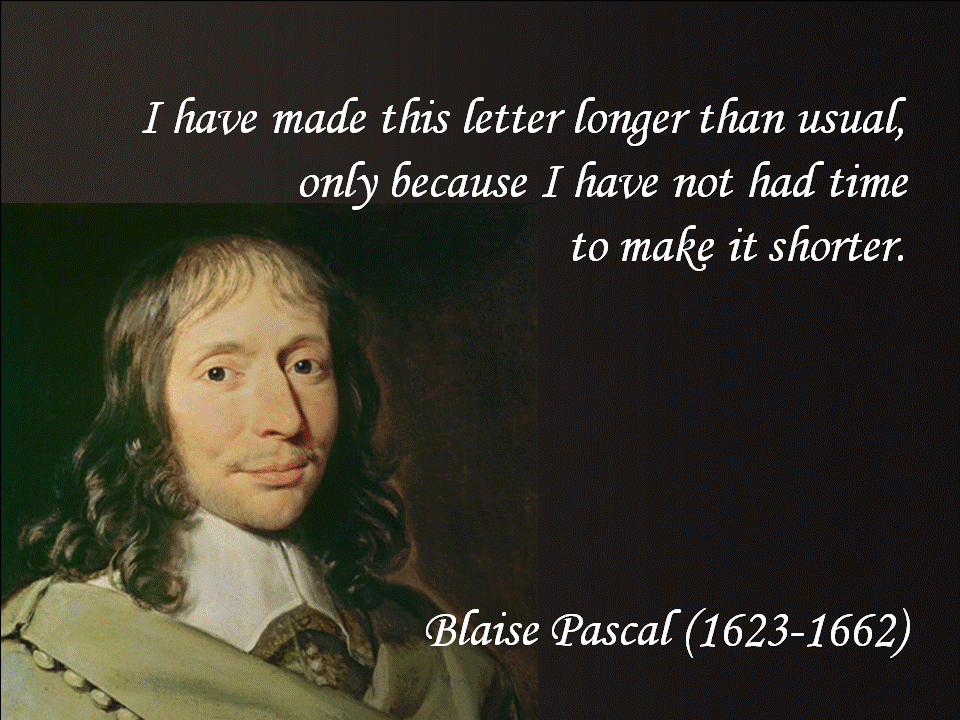
blaise-pascal-with-quote1


Blaise Pascal was a man who suffered terribly his entire life until he died at age 39 from a metastasized stomach cancer. His mother died when he was 3 years old; his father when he was 28.

For those who aren’t familiar with his life, let me point out that he was French, raised by his sisters, educated by his father, and very involved in the religious controversies of his time (1623-1662).  He was an inventor and mathematician of the highest order. His sufferings — his physical ailments and psychological agonies — are legendary.

I won’t burden people with the details of his life — historians and biographers have written many books to help folks understand this tragic man, if anyone is interested. What I want to do is share, in English, some of the clever things he wrote during his short life and provide a link to his books, if anyone is interested in reading further.

Most of the quotations in this essay were first published some years after his death, gleaned from scraps of paper found among his personal belongings. Had they been published during his lifetime, he might have become even more controversial than he actually was. The added stress of additional criticism from contemporaries might have shortened his life even more.

Blaise Pascal had what modern people would call a negative attitude toward groups like the Jesuits and possibly the Catholic Church, which declared five tenets of his Calvinist-style religious order, the Jansenists, heresy when he was 30 years old and still grieving for his lost father. But mostly, he had a negative attitude toward other people and himself, all of whom he considered to be hopelessly wicked.

Sensitive individuals who suffer like Pascal did, it seems to me, find it more natural than others who live easier lives to think that the world is a hostile place populated by selfish and uncaring people in need of a savior.

Pascal is reported to have said, Sickness is the natural state of Christians. He spoke his dying words in a moment of sublime clarity amid a chaos of physical suffering. He whispered helplessly, May God never abandon me.


cycloid pascal
Pascal solved several previously intractable problems associated with cycloids. 

Below are some samples of Pascal’s thoughts, which I found interesting and a little sad when first I read them many years ago. His ”pensees” seem to be his way of making sense of a world that held no comfortable place for him to lay his head; a world devoid of a mother’s touch to reassure him; a world lacking the medicines and psychological insights he needed to find the peace, freedom from pain, and the joy for living so many of us in the modern world freely pursue.

Blaise Pascal was oppressed by the heightened discernment of a brilliant mind smothered by relentless suffering. His intelligence (contemporaries called him a prodigy) enabled this sensitive man to articulate his suffering through the lens of Christian philosophy, which he adopted as his own.

Here are some of his thoughts:


Myself at twenty is no longer me.

Christian piety destroys the self. Human civility conceals and suppresses it.

It is a bad sign when someone is seen producing outward results as soon as he is converted. 

Sleep, you say, is the image of death; for my part I say that it is rather the image of life.

We are standing on sand; the earth will be dissolved, and we will fall as we look up at the heavens.

Life is nothing but a perpetual illusion; there is nothing but mutual deception and flattery. No one talks about us in our presence as he would in our absence.

Man is nothing but disguise, falsehood and hypocrisy….  He does not want to be told the truth.

Each rung of fortune’s ladder which brings us up in the world takes us further from the truth, because people are more wary of offending those whose friendship is most useful and enmity most dangerous. A prince can be the laughing-stock of Europe and the only one to know nothing about it.

Is it not true that we hate the truth and those who tell it to us, and we want them to be deceived to our advantage, and want to be esteemed by them as other than we actually are?

It is no doubt an evil to be full of faults, but it is a still greater evil to be full of them and unwilling to recognize them, since this entails the further evil of deliberate self-delusion.

The most unreasonable things in the world become the most reasonable because men are so unbalanced. What could be less reasonable than to choose a ruler of a state the eldest son of a queen?

When we have heard only one side, we are always biased in its favor.

To the church: There is no need to be a theologian to see that their only heresy lies in the fact that they oppose you.

It is false zeal to preserve truth at the expense of charity.

Humiliations dispose us to be humble.

It is better not to fast and feel humiliated by it than to fast and be self-satisfied.

God can bring good out of evil, but without God we bring evil out of good.

God will create an inwardly pure Church, to confound…the inward impiety of the proud Pharisees.  …. For, although they are not accepted by God, whom they cannot deceive, they are accepted by men, whom they do deceive.

We all act like God in passing judgments.

Do small things as if they were great, because of the majesty of Christ, who does them in us and lives our life; and great things as if they were small and easy, because of his almighty power.

They do both good works and bad to please the world and show that they are not wholly Christ’s, for they are ashamed to be.

Jesus was abandoned to face the wrath of God alone. Jesus is alone on earth, not merely with no one to feel and share his agony, but with no one even to know of it.

Silence is the worst form of persecution.

No one is allowed to write well anymore.

You brand my slightest deceptions as atrocious, while excusing them in yourselves as the [(way of your church)].

Would God have created the world in order to damn it? Would he ask so much of such feeble people?

Persecution is the clearest sign of piety.

Which is harder, to be born or to rise again? That what has never been should be, or that what has been should be once more?

All faith rests on miracles.

How happy I should be if…someone took pity on my foolishness, and was kind enough to save me from it in spite of myself.

We must make no mistake about ourselves: we are as much automaton as mind.

You would soon have faith if you gave up a life of pleasure.

We never do evil so fully and cheerfully as when we do it out of conscience.

The proper function of power is to protect.

If everyone knew what others said about him, there would not be four friends in the world.

Fear not, provided you are afraid, but if you are not afraid, be fearful.

God hides himself. He has left men to their blindness, from which they can escape only through Jesus Christ.

I marvel at the boldness with which these people presume to speak of God.

It is an appalling thing to feel all one possesses drain away.

Who has more cause to fear hell, someone who does not know whether there is a hell, but is certain to be damned if there is, or someone who is completely convinced that there is a hell, and hopes to be saved if there is?

Truth is so obscure nowadays and untruth so well established that unless we love the truth we shall never recognize it.

“Yet I have left me seven thousand.”  I love these worshippers who are unknown to the world, and even to the prophets.

We never love anyone, only their qualities.

Must one kill to destroy evildoers? That is making two evildoers in place of one.  Overcome evil with good.

We are nothing but lies, duplicity, contradiction, and we hide and disguise ourselves from ourselves.

As I write down my thought it sometimes escapes me, but that reminds me of my weakness, which I am always forgetting….

Man’s sensitivity to little things and insensitivity to the greatest things are marks of a strange disorder.

It is a fearful blindness to lead an evil life while believing in God.


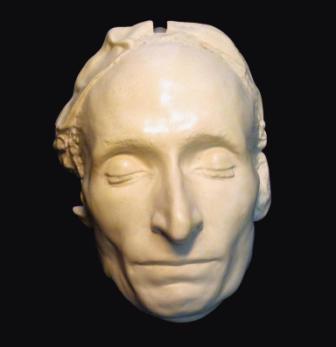
pascal death mask
Pascal’s death mask.

That’s enough for now.

Blaise, I pray you have found the happiness in Heaven that eluded you on Earth.

Blaise Pascal.  Amazon.com

Billy Lee

WRITING FREE

I wrote my first big story in fourth grade. I called it, Adventures on the Amazon.  It’s now lost to history, but I remember organizing it into chapters.

Chapters were a big deal. I’d never written anything so long that it could be divided into paragraphs, much less chapters.

Each chapter was a little–kid-against-nature story. I battled hungry piranhas, pygmies with blow-darts, hippopotami, elephants, boa constrictors, fire ants, and so on.

It was a long story. My teacher awarded an A and invited me to read before the class. When I finished, my classmates applauded, so I decided to keep writing.


In fourth grade I wrote, Adventures on the Amazon. It took place in an exotic setting in a world I never visited.

My next big project was in seventh grade. In long-hand, I wrote a four-thousand word story about torture called, I am not a Coward.  In it I tortured my brother to death to prove to the townspeople I wasn’t a coward. When I carried my dead brother into the heart of town to show the people what I had done, they weren’t proud of me like I hoped. Instead, they turned on me in horror and stoned me to death, while I screamed I am not a coward, I am not a coward!

I can’t tell you why I wrote Coward.  I lack the courage to tell anyone why. I suppose I’ll be taking my reason to the grave. I really am a coward.

Before I showed the story to anyone, I taught myself to type. I thought, a story this good has to be typed. It deserves the simple dignity of a formal type-set. So I spent the summer with a book I talked mom into buying called Teach Yourself to Type in Ten Weeks. I used it over the summer, between seventh and eighth grade, to give me the skills to type out my masterpiece.

It felt like I’d conquered the world, once I finished the typing. I had taught myself to type and written an incredible story, all without the aid of a teacher. It was important to me and a source of pride.

I decided to read, I am not a Coward, to my family. Dad gathered everyone into our small living room for the dramatic presentation. Excitement lay on every face. Billy Lee had written a story. He could write. Everyone beamed with anticipation. They were proud of me, it was easy to see. I cleared my throat and began:

They say I am a coward. They say I watched my brother burn to death without lifting a finger to save him.


image
Despite my short-story to the contrary, I’ve been a coward my entire life.

Dad lifted his hand. Hold on there, Billy Lee, he said, white-faced. He ordered everyone to leave the room.  I think it would be better if you read this story to me, first.  After the last family member had scampered away, he motioned for me to start.

So I read the story through to the end, while he sat across from me, silent. It took about a half-hour. When I finished, he paused to gather his thoughts. Billy Lee, he finally said. That’s the finest piece of mis-directed talent I’ve ever heard. Please don’t read it to anyone else.  

It’s just not possible to suppress a story that rises to the level of I am Not a Coward. Over the next few months I gave private readings to friends, when Dad wasn’t home. After a while I had read it to everyone I knew, so I hid my story to protect it.  

How I was able to preserve and protect my story over the years is nothing short of miraculous. I lived in a Navy family, after all. We moved every two years or so. My dad liked to say that every move is like a house fire. Things burn-up. Things get misplaced and go missing. Yet almost sixty years later, I am not a Coward survives.

During high school I wrote a number of stories that teachers asked me to read before students. I won’t bore you.  But one story slowed my momentum. In ninth grade a closeted-gay teacher led my creative writing class. I submitted a story about a Navy medical corps-man who hid his gay identity.

The teacher seemed to dislike it. He gave it an A-minus. He told me I was a lazy writer, because I used too many adjectives. More powerful verbs and adverbs were the answer.  Even today, as I write, his comments roll around inside my head. I still love adjectives. Some of them are just perfect, as far as I’m concerned.


japanese economy
Based on my experience living in Japan during kindergarten, I wrote a graduate level paper on a Japanese company I invented. It received an ”A.”

In college, money was scarce. To earn money for beer or whatever, I wrote term papers for people. I wrote under-graduate papers on economics, history and english, mostly. I charged by the grade, so getting an A was important.

I wrote only one paper at the graduate level — a microeconomics study on a currently successful Japanese company selected by the student.  I invented the company I selected. Everything about it was imagined — even its name was fiction. My customer’s grade?  A.  I knew nothing about economics or Japan. Yes, I had taken a freshman econ class, and yes, I had lived in Japan — when I was in kindergarten. Apparently, it was enough. My writing career was on fire.


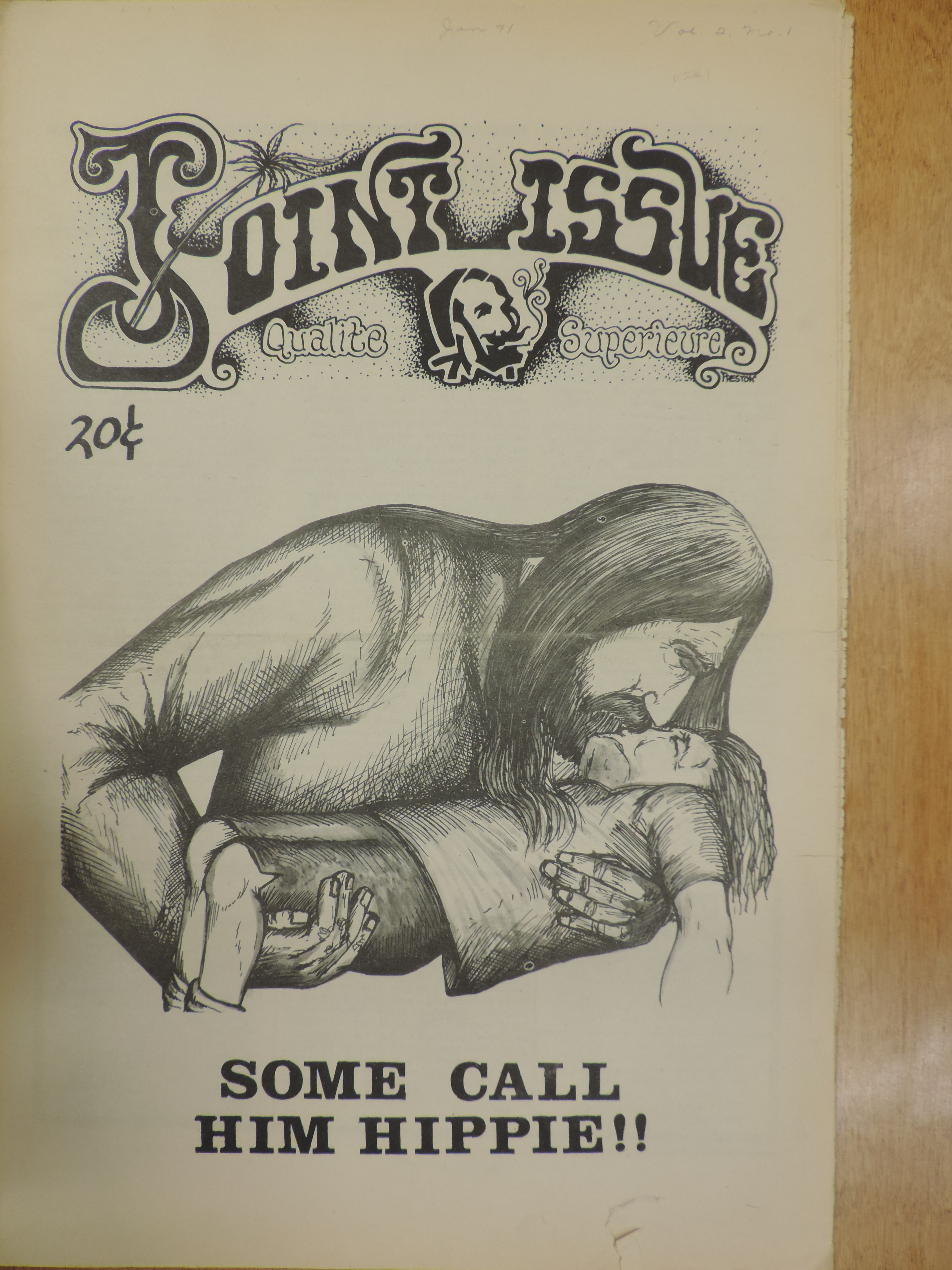
Joint Issue was an alternative community newspaper. Alternative didn’t mean the writers could write whatever they liked. This cover parodied a roadside billboard, popular in 1970, where a uniformed police officer was shown providing resuscitation to a drowning child. The caption on the sign said, ”Some call him Pig!”  Police felt unfairly persecuted in the 1970s during the anti-Vietnam war movement when they clashed sometimes with protestors during demonstrations.  

Eventually I dropped out of college to join the anti-Vietnam-war movement.  I worked on staff for a community anti-war underground newspaper. All articles were critiqued and followed a commonly agreed to set of values. I found I wasn’t free to write, because every piece had to get by staff who had their own ideas about what was appropriate for our fifteen-thousand readers.

Though I continued to write and publish, my articles never seemed to rise to the level of good. People read our paper. It was highly circulated for an underground. We did some things right, I suppose. But I can understand why staff-writers on newspapers and magazines today feel the same pressures I did to conform to the values of the people who decide if they will be published. No one is the Lone Ranger, especially where writing is a business driven by profits or, in our case, ideology.

I stopped writing during my career as a mechanical engineer and machine designer. But eventually, after four decades, I retired. I thought, maybe it would be fun to start writing again. My writing skills lay rusty, in ruins, really. Why not start a blog, I thought to myself, and write about what I’ve learned and know? Maybe I’ll write about things I don’t know, too. Maybe I’ll pontificate, if I feel like it. Who can stop me? I had this crazy idea I could write anything. If I sounded like a communist at times, so what? Who was going to fire me? I was retired. I was free, and I was going to write like it.

Some in my family were blustering and pontificating on Facebook, crowding out the pictures and videos of grandchildren. I thought, why not give people another place to pontificate? It might go a long way to help free up the space we depended on to provide news about our little people. I figured readership would be tiny. I would fly under the radar of hostile readers, if hostile people actually lived in cyber-land as was sometimes rumored.


archie comic 3
Gays and straights had problems with my story about a gay physician’s assistant.

The first unusual thing happened right away, after I published a short story about a gay physician’s assistant. Almost immediately a swarm of Asian bots from the women’s apparel industry attacked my site. Anonymous comments piled up fast. More bots landed from USA cosmetic and high-fashion sites. What was going on?

I reread my article. It was supposed to be neutral. It was supposed to describe the gulf between gays and Christians on the subject of marriage and hint at some possible common ground of interest and attitude. But the writing was poor. The article tilted strongly toward a Christian point of view. It lacked ambiguity and neutrality — important components in articles designed to make people think.

I rewrote the story. And I put restrictions on comments. From now on each comment would be reviewed before posting to make sure it was from a living person. Overnight, the attacks stopped. I had peace on my blog-site. My family could continue to indulge me, reading my pontifications to help me feel loved and listened to in my old age, I supposed.

I puttered along writing articles about everything and anything that popped into my head. After writing about twenty-five posts, I decided to do something different: something bold; something experimental. I would self-disclose my sexuality and challenge readers to drop their prejudices against gays. I wrote the article, tidied it up and pushed the publish button. All hell broke loose.*


wordpress stats
Site views were running ten times normal.

WordPress, keeper of my blog-site, alerted me to unusually high view volume. I looked up my stats. Site views were running ten times normal and piling up fast. At first I thought, wow, people like my blog.

The truth was, some thought I was advocating for homosexuality. They believed my views were against the Bible, inspired by satan, and possibly embarrassing to my family. People swarmed my site trying to understand the article and how to respond to it. Some decided that, unless I took down my post, they would turn me in to church-elders, a necessary prelude to (if I didn’t cooperate) church-discipline, even to possible excommunication.

But by then church leaders were already rummaging through my articles. Some articles, they found wanting. Their attitude was, since I belonged to their church, because I was a baptized covenant member, I certainly was not free to say anything I wanted. Everything I wrote had to be consistent with scripture and what they thought it said. To show they meant business, they disbanded my Bible-study group and removed me from leadership.


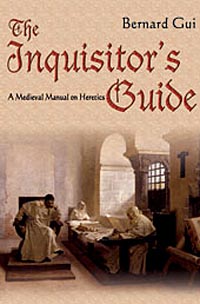
heresy Inquisitor's guide Bernard Gui
Church leaders expected me to comply. Comply, I did.

Church leaders wrote me a letter which included a bullet-list of concerns. They announced my punishments. They presented another list; this time, demands. They expected me to comply, and comply is what I did.

I took down the offending article. My seventy-one year old wife was recovering from open-heart surgery. All her friends are in our church. The last thing we needed was to undergo an excommunication. Like Galileo, who blasphemed Jesus and the Catholic church by making the absurd claim that Earth was not the center of the universe, it was recant or be tortured — because having my blog ripped out from under me feels like torture. I didn’t see it coming.

Church leaders say they love me and want what’s best for my soul. I believe them. It’s what I want too. And truth is, my article was edgy. It pushed a lot of boundaries, even mine. I didn’t like some parts of the article either, it turned out. No one wants to go to Hell. No one wants to forfeit the love of Jesus. No one wants to lose friends they’ve had for decades over an article or two in a blog. I get that. I feel it, too.


angel 2
I want to write; unafraid, if possible.

Decades spent in prayer, renouncing sin, loving the unlovable, giving aid to the wretched — the things we do as part of submitting to the will of Jesus — these things are supposed to humble us. But I want to write, unafraid, if possible. I can’t know, always, if something I write is going to offend someone well versed in the theology of our church.

In life, we all want to get it right.  I don’t want to upset anyone. But no one gets it right one-hundred percent of the time; not even close. Even with a team of the best advisors available, no one gets it right all the time. Entire nations of praying people march off the cliffs of history, sometimes.

I have this idea that in America we have freedom of speech only if no one is listening to us. As soon as a handful of people start reading our stuff, even if it’s just family and a few Facebook friends, some people make it their business to bend us to their ideas of what is appropriate.


Try to speak freely. If people start to listen, you could be in for a sad surprise.

Freedom of speech means little more than bragging-rights to the people who run our country and manage our institutions, it seems to me. They brag to the world about how free we are; how easy it is to speak our minds. But try to publish. See what happens.

Start a blog and try to find your voice. Speak freely, tell it like it is, as you, your unique self, sees it — uncensored and unafraid — if only with your family and close friends. If you think America is the land of the free, you might be in for a sad surprise.

Billy Lee

* Note: we’ve included a link to the re-written, re-titled and sanitized version of the original article, Christian Love and Gay Pride. The rewritten version, which better articulates the views of Billy Lee, is called, Gay Love and Christian Pride.  The Editorial Board