WHAT’S GOING ON?

What’s Going On?

UPDATE FROM THE EDITORIAL BOARD: On 26 March 2020, the U.S. Department of Justice indicted Nicolas Maduro on charges of drug trafficking and narco-terrorism, and the Department of State offered a $15 million reward for information that helps ”bring him to justice”.


It’s an album title – prophetic in its way — by Marvin Gaye, who was shot and killed by his own father on April Fools Day, 1984. Marvin would have celebrated his 45th birthday the next day, April 2.

Spring was on its way; no one saw winter coming.

It seemed at first that a fight between his parents went terribly wrong. Relatives tell different versions. In the end, it went down like this: Marvin’s father, a Pentecostal Minister and Healer, shot Marvin in his heart with a .38 caliber pistol Marvin gave him for Christmas.

Left behind were an adopted son, two bio-children, two brothers, two sisters, a half-brother, and his parents.

What’s Going On?

His father, it turned out, suffered from an undiagnosed brain tumor located on his pituitary gland. It made him violent; it drove him crazy. He felt scared. He feared his son. He shot the boy-man that he told everyone who would listen he truly loved.

What’s Going On?

Marvin Gaye propelled the Motown sound into the stratosphere of American popular music during the 1960s. Like most gifted black men in those years, he was a traumatized human being. He made the best of it.

Albums like What’s Going On and songs like Sexual Healing brought reassurance and comfort to millions of folks who suffered the emotional stress of living inside but apart in apartheid and militarized America.

In those days, like today, America itched for a fight. It found a good fight in Vietnam; it would soon find many others – all pointless and needlessly wasteful of both national treasure and human life. Like Marvin’s dad, America shot its sons in their hearts. America wasted a generation, which it forced to choose between fighting war and fighting against war.

Father, father
We don’t need to escalate
You see, war is not the answer
For only love can conquer hate
You know we’ve got to find a way
To bring some lovin’ here today, oh oh oh
Picket lines and picket signs
Don’t punish me with brutality
Talk to me, so you can see
Oh, what’s going on…

A few souls managed to tightrope between the chasms of violence on both sides, but not many. Today, the United States is a couple of countries short of conquering the entire world.

Venezuela is one country among a dozen or so that sit at the top of a hit-list.

What will come next?

What’s Going On?

I’ve answered a lot of questions about Venezuela on Quora. I’ve never visited the country. I know almost nothing about it except what I’ve read in books and on Twitter by people who live there. Still, I have opinions. I’m not afraid to pontificate about the situation, because I’ve seen these coup-scenarios playout my entire life – seven decades and counting.

It’s like listening to a scratched record that constantly skips to play the same musical phrase; it’s like watching reruns of familiar shows like Leave it to Beaver and even the Twilight Zone. I can tell anyone how a show will end, because in their way all the old shows have the same predictable endings.

What’s happening in Venezuela and how it will end is both predictable and depressing. My standard of living and yours depend on what happens next. The security and safety of our Union depend on it.

The Russians and Cubans must lose. America must win.

Why?

We take the spoils, because if we miss our chance to seize the oil of Venezuela, over time the United States will slide into economic decline. Prosperity and the power of USA billionaires depend not only on free-trade and favorable trade agreements, but also on the resources they sequester; how much of the bounty of others they can steal.

It’s true.

What’s Going On?


TheBillyLeePontificator.com is now open for questions. What follows are answers. The most recent questions are first; the oldest are last.

1 – What’s happening in Venezuela right now?

Over the past several years the United States has been reestablishing its control over the countries of the western hemisphere, right? Dilma Rousseff of Brazil is a prominent example. Anyone who doesn’t know who she is — or her story — isn’t paying attention.

It won’t help to name others. People who know Ms. Rousseff need no explanation. For those who don’t, no explanation will suffice.

It’s easy for Americans to claim ignorance about what their country does to maintain its control over the resources and people of South and Central America. It’s not pretty. People are imprisoned and shot (murdered) to assert USA sovereignty.

Does anyone want to watch the processes by which the sausage they eat is manufactured? Of course not. No one wants to even think about it. The process is brutal and inhumane. It’s better not to know. All anyone really wants is for the sausage to taste good and not make them sick. No one prays for the safety of the pigs who give their lives so that people can enjoy their breakfasts.

It’s the same in Venezuela. The country has massive oil reserves. The leadership is allied with countries who exert their powers on the other side of the world. These countries are always making moves to gain a foothold on American turf. The result is turf wars, which is what Venezuela is.

The United States will kill and imprison as few Venezuelans as possible, hopefully, but it will prevail; it will secure Venezuela’s natural resources, including its oil, for the USA to use and buy from the billionaires who shape its vision.

2 – Considering that every superpower had its rise and fall, do you think that the US will ever drastically fall, and how far into the future do you think that will be?

Since World War II the USA has militarily attacked one-fourth of the world’s nation-states. Of the 195 countries in the world, the USA controls or “unduly influences” all but twenty-five, give or take — through treaties, alliances, trade agreements, and so on. The United Nations is located inside the United States for a reason.

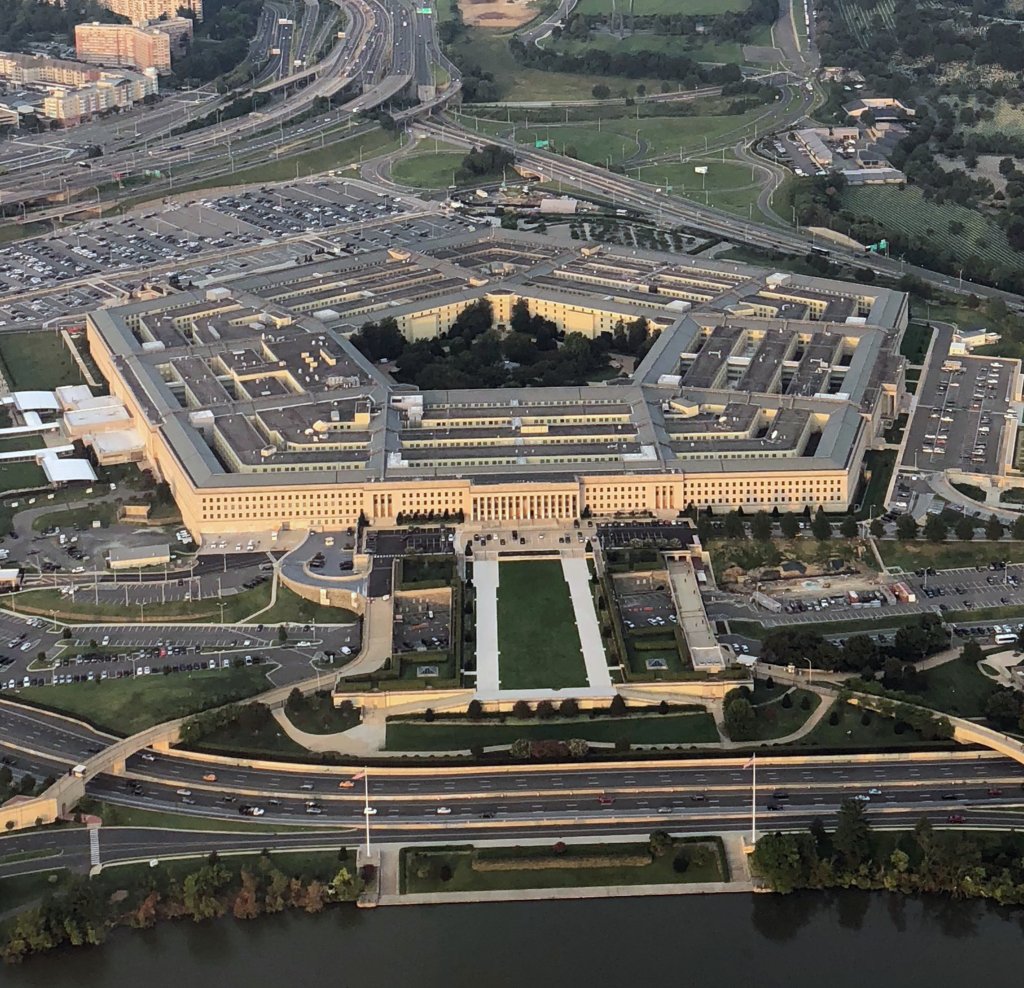
The USA controls the entire western hemisphere and exercises its military dominance without much interference anytime it decides. The Pentagon is a big place. People underestimate its power, because the majority of its structure is not viewable — most of it is below-ground. The vast scale of US power is necessary to operate 800 military bases, which are located in every region of the world.

The financial system of the USA is a force-multiplier that enables the USA to quarantine with knee-bending sanctions both individuals and countries who oppose its goals. American financial leverage is legendary.

The United States is on a trajectory toward world domination that would make the Third Reich stand up and take notice. It is remarkable how US power has grown during my lifetime. The USA is always at war with somebody.

Except for the four years of the Carter administration, the killing and dying doesn’t stop. The numbers of murders has reached into the tens of millions since the end of the last world war.

I believe that the American empire will collapse when the Yellowstone Supervolcano erupts. It might be 500 years from now or next Tuesday. There is no way to know for sure.

3 – Are the recurring power outages in Venezuela due to US interference in their country?

The United States could easily send in technical experts to stand up Venezuela’s power grid. It chooses not to. Not only that, it refuses to provide any kind of aid at all by refusing to work with the elected representatives of that oil-rich country.

Worse, the United States is plotting to isolate and embargo Venezuela. The US president wants their oil; USA oligarchs are at war with socialism; the State Department is at war with Russia who is providing aid to the beleaguered President Maduro.

It doesn’t take a genius to understand that the United States cares nothing for the ordinary people of Venezuela; it instead is destabilizing the country to secure its resources.

Securing resources in the western hemisphere is something the United States has done repeatedly since the end of World War II. Ask any bona-fide historian if I’m right. Its success is one reason why the United States has the highest standard of living of all other countries in its half of the world.

4 – Russia sends troops to Venezuela to give the United States a ”red line”. Should the United States be worried, and do you think this could start a war between the United States and Russia?

My answer is a guess based on no knowledge or evidence; here it is: the USA will not challenge Russia militarily as long as Trump is president. It’s not collusion; Mueller proved that our president is the most patriotic president that the USA has ever had (and will ever have since he is likely to be the last).

Every red-blooded gun-toting Christian in America knows that Russian oligarchs with the help of almighty God put Trump into power to kill us all for allowing gays to marry. It’s not hard to understand.

5 – What is Venezuela’s national anthem?


Glory to the Brave People


6 – Is it technically possible to sabotage a country’s electricity infrastructure using an electromagnetic attack, as Venezuelan president Maduro has claimed, as the cause of his country’s power failure?

Where were you during the Iraq War? Taking down Saddam Hussein’s electrical grid was a point of pride during that war. Our leaders bragged about it on the evening news.

USA’s ability to attack infra-structure is vastly improved today. Venezuela is the perfect place to conduct diabolical tests of new war-fighting techniques and coup protocols.

Why?

It’s the oil, stupid. (I’m using a popular expression for emphasis. It’s not meant to insult anyone’s point of view.)

Anyone who is knowledgeable about the post-world-war history of the western hemisphere knows that the USA has been or now is at war with every country. The United States runs things or makes those who oppose it miserable with sanctions, sabotage, and subversion.

It’s not something a reasonable person can argue against.

Said another way, only an ideologue or an apologist will deny the culpability of the USA for waging war against Venezuela. If the United States cared about Venezuela, it would help Maduro, not undercut him.

7 – Why do you think there is a nationwide power outage in Venezuela going on right now?

During the Iraq war, the USA took down Baghdad’s power grid. It’s something our country is good at. That this power outage occurred during destabilization efforts to install a new president doesn’t look good for the prime suspects.

8 – Where in the world is the next international war likely to break out?

First, it’s important for everyone to understand that major international conflicts are potential species-extinction events. Enough nuclear, chemical, and biological weapons are available to enough countries to threaten the survival of humankind — should humankind fall into the abyss of a conflagration like it did during the two previous world wars.

It’s true that the last world war ended almost 75 years ago, but insufficient time has passed to be convincing that another world war won’t occur, perhaps sooner than anyone imagines.

One important reason why world-war has not occurred is because the United States has spent the post-world-war years consolidating its grip on empire. The USA knows the names, phone numbers, and addresses of every world leader and their relatives. It has cruise missiles and bunker-busters with each leader and family member’s name on at least one of them.

It’s personal. The number of individuals we don’t like and have removed from power is large and growing yearly. Maduro of Venezuela is the latest name on the USA Naughty List, but so, recently, was Dilma Rousseff of Brazil as well as countless others around the world — especially in the Middle East.

According to who counts, 195 countries exist in the world. The USA has conducted military operations against one-fourth of them since the end of World War II. Many conflicts are state secrets not shared with the public.

Expect major changes in Africa soon, anyone who doesn’t believe it.
To my way of reasoning, the best way to determine where the next lit-match will ignite is to look to past conflagrations. Countries with a history of warlike behavior are more likely than countries that lack such a history to start the next major international conflict.

What countries might these be? I’m not going to name them, because why make enemies unnecessarily who might have reformed their ways? But anyone with a knowledge of history and current events can create their own list. It’s not hard to do.

9 – How much worse can it look for Maduro? Denying hungry and sick Venezuelans from free food and medicine with guns. Isn’t Maduro’s time up?

Anyone with any sense knows that the USA engineered this debacle, because it is at war with socialism.

We invaded Cuba after they threw out the mafia, for crying out loud. We preferred organized crime to socialism.

10 – What should everyone know about the current political crisis in Venezuela?

Venezuela lives and dies on the price of oil. Low oil prices brought Venezuela to the brink of collapse in the late 1990s and made Hugo Chavez’s rise possible. Maduro, his successor, is falling on the sword of collapsing oil prices.

What confuses people is why.

Is the USA manipulating the oil markets to take down Maduro? The US has a consistent record of overthrow attempts against leftist governments. With a billionaire oligarch leading the USA, it seems possible.

Why doesn’t the United States help Maduro stabilize his country, which would be the humanitarian path? No one is sure. Common sense seems to suggest that our leaders are looking for a way to make a socialist system fail. Why else back a 35-year-old nobody to run the country? Wouldn’t aid to the elected government be an easier way to bring relief?

The Russians are involved, which further complicates. It’s possible that DT works for their side — so this coup that’s been in the making by our side during the past five years or so is sure to fail now that DT is aware and getting involved.

Time will tell.

It’s a sad state of affairs, what’s going on right now.

11 – Will a civil war happen in Venezuela?

The US has been at war with Venezuela for a long time now. Hundreds of America’s brightest have been working in their Pentagon offices for years to make sure socialism doesn’t succeed in South America.

Our wealthy oligarchs don’t want anyone to believe that a system might work where they aren’t allowed to steal as much as they possibly can and still call it “free enterprise.”

It simple, really. They are looking for allies inside Venezuela who are willing to blame Maduro for what America is doing to undercut them behind the scenes.

This crap started in Guatemala in 1954; it never ends.

12 – Why is Venezuela’s military backing Maduro recently? Is it worth it?

Maduro is the elected president of Venezuela in the same way that Trump is the elected president of the United States. Was the US election fair? Ask Reality Winner who is serving a five-year prison term incommunicado, because she disclosed NSA info on voting fraud. You will find that you can’t interview her.


Reality Winner, incarcerated NSA whistle-blower who exposed voter fraud and tampering in the 2016 presidential election. She is serving a five-year prison sentence — incommunicado as are other whistleblowers like Daniel Hale of the NSA and Teri J. Albury of the FBI.

So good luck figuring out what the truth is.

The billionaires who milk America don’t like socialism, because it is a system where people cooperate to create wealth, which they then share. Sharing wealth is anathema to oligarchs and mob bosses.

So, the USA is pulling out a well-worn playbook to guide itself through the process of replacing the experienced and elected leaders of Venezuela with a 35-year-old kid who knows just enough to do what he’s told. The USA promises to make him president. He promises to serve. It’s a kind of tit-for-tat.

To increase urgency and hysteria the USA manipulates currency and oil prices while it builds a right-wing cartel of nations to do its bidding. All the leaders will get rich under the plan. No one seriously gives a hoot about what happens to the poor.

The biggest danger is civil war, which happens to be exactly the same danger facing the United States. What goes around comes around.

The USA would be doing the world a big favor by helping Maduro get his country on its feet. Low oil prices have been catastrophic for Venezuela. Why don’t we help instead of using a bad situation as an opportunity to set up a bunch of oligarchs who will march to our drumbeat instead of their own?

Why is economic diversity such a bad thing? Ted Kennedy said in his last book that tycoons like his legendary dad were afraid that if socialism succeeds anywhere in the Western Hemisphere, it might become a prairie fire that takes down their edifice of privileges.

No tycoon wants a prairie fire. Every wealthy person believes they are self-made and entitled to all the advantages that their money can buy.

Ordinary people have about the same power to control the circumstances of their lives as farm animals.

It’s pathetic, really.

13 – With a regime change impending, within the next 30-50 years, will Venezuela consider socialistic influences for governmental structure again?

The pending regime change that is coming will take place in the United States. Americans are sick of boorish elites who — under a GOP led by pig Trump — won’t be electable in 2020.

One-party-rule by progressive democrats will bring relief to average people — something they haven’t experienced since the early 1970s. Many young people have no idea what it’s like to live in country that limits what the wealthy can steal and works overtime to bring equity to working people.

14 – Do you agree that reducing imports from Venezuela by the United States is an adequate short-term answer for helping that country and its citizens?

The best thing the USA can do to help Venezuela is to end sanctions, embargos, destabilization by our intelligence forces, and the policy of strategic strangulation, which is killing people — especially the weak.

The next best thing is to organize an international effort to airdrop food aid into the country. Flood the country with rice, powdered milk, clean water, potatoes, corn, etc. Inexpensive food is easy to collect and distribute and will help to strengthen the elderly, children, the pregnant, and the sick.

Flood the country with medical supplies and doctors to help the sick. Start talks with Maduro to offer him all the assistance he needs to get his country on its feet again.

15 – Is the newly accepted Venezuelan government by the United States backed by the majority of people in Venezuela? Or is it propaganda?

Citgo, the Venezuelan oil company, ships 500,000 barrels of heavy crude into Texas refineries every day. The crude is used to make diesel fuel for trucks. Without cheap diesel America’s goods and services get expensive real fast.

America’s oligarchs hate socialist countries. Most people can understand why. The foreign policy of the United States is to destabilize and overthrow all socialist countries whenever possible. Venezuela is an easy mark, because their leaders do not seem to be sophisticated.

Secretary of State, Mike Pompeo, and National Security Advisor, John R. Bolton, are leading a coalition of nations to inflict strategic strangulation on the Maduro administration. The government cannot access its gold reserves (held in British banks) and is fighting to maintain control of Citgo, which adds 10 billion dollars to the nation’s coffers each year.

The USA plans to divert as many assets as it can to the puppet government it is setting up under the auspices of a 35-year-old kid who no one ever heard of before about three days ago.

The process of destabilization has been accelerated under Trump, and the USA is now making its move.

The USA is hoping for military defections combined with public demonstrations to force a sham election in the next 30 days to oust the socialist government in Venezuela and legitimize a new government, which they will control behind the scenes. They hope to assassinate Maduro if they get the opportunity. The Russians are sending in a large security detail to protect the lives of the current group of leaders and help them hold onto power.

The country of Venezuela is polarized much like the USA. The elites want the USA to intervene; the poor want Madura and socialism. All sides want the USA led embargo, destabilization protocols, and strategic strangulation to stop ASAP.

16 – Will the Venezuelan military switch sides if they see the US military lining up for an invasion? Don’t they care mostly about how much they are paid? What good is an ousted Maduro?

Overthrowing elected socialist governments is a specialty of US foreign policy. The USA is good at it, but it doesn’t always work.

Even an intense strategic strangulation of Cuba (and an invasion to boot) was unable to break down the Cuban revolution.

The USA killed two million Vietnamese but failed miserably to prevent the unification of North and South.

Early successful overthrows such as those in Iran (1953) and Guatemala (1954) have convinced policy makers that the odds are in their favor when they decide to decimate a particular country. They have a better than even chance to prevail, so why not take it?

The problem is that everyone now knows — after 79 years of messing with governments — that the USA cares almost exclusively about itself and the protection of its tycoons. Democracy, equality, and basic fairness mean nothing to the United States in its conduct of foreign policy.

Many policy makers disagree with my point of view, but they are in the habit of giving in to self-deception to make it possible for them to live inside themselves.

17 – What is the likelihood that the US will at some time become entangled in a coup in South America?

The USA has a history of involvement in the politics of South and Central American countries. Coups are part of the history. Where have you been?

Seriously.

Destabilizing socialist countries in our hemisphere is an important component of the foreign policy of the United States. Everyone knows. It’s not a well-kept secret.

The USA keeps track of what’s going on through agricultural programs, aid, and assistance. When it desires change, the USA generally tries diplomacy first. If it doesn’t work, more violent methods have been used, including assassinations, disappearances, and coups.

Under certain circumstances, it can be illegal to talk about what exactly our intelligence services do to keep the Americas safe for exploitation by our companies. The most famous company that the USA went to war for was the United Fruit Company during the Eisenhower years. The president’s secretary held a lot of the company’s stock.

Some countries have raw materials that are considered strategic assets. The USA or its surrogates operate mines and other facilities to secure these assets and to keep other competitor countries from access. Right?

The instability in South and Central America that has arisen since President Obama stepped down is probably the result of activities encouraged by the newest president. He has lots of precedents to justify himself, correct?

18 – Are Russia and China’s recent provocative military maneuvers a prelude to war with the United States?

My belief — based on no evidence I can recite — is that our president is a pacifist. He enjoys pretend violence, like pro-wrestling, but is repulsed by real violence. He likes to threaten, yell, call people names, sue people in court, etc., but he is uninterested in physically hurting someone. For him fake violence is a kind of game. Often, he forgives and makes up later.

His mistresses have all said, as far as I know, that he treated them with kindness; something that many philanderers are not known to do.

When he bombed an airstrip to retaliate against a Syrian chemical attack, he set up the targeting so that no one on-site would get hurt. Yes, an attack on another target killed a hundred or so Russian soldiers, but it was an unintended screw-up he’d probably like to have back.

Our president likes to huff and puff and make deals; it’s a harmless game for him that has no meaning except for the fun he gets each day trying to outwit his opponents who he calls “rats” or “crooked” or “lyin” or whatever fits. Hillary Clinton, in real life, is one of his best friends, for crying out loud.

Trump is a liberal at heart, but he pretends to be a racist monster to hold onto his base, which is, let’s face facts, hold-overs from the Confederacy of the Old South. Southern racists are dangerous when angry; otherwise, they are the dumbest, easiest-to-manipulate voters in the country. They are like lemmings — if Trump says, “run off a cliff”, they’ll do it and praise Jesus for the opportunity.

Trump will not go to war against China or Russia as long as he can play monopoly with their oligarchs. He’ll bluster and threaten. He won’t pull any triggers.

One very interesting thing happened the day he became president. A prominent drug lord from Mexico was arrested and disappeared into the New York City penal system. Within a few days the man’s family was rounded up. They haven’t been heard from since.

So, the president has power. His problem is that a component of his power comes from sympathetic mob bosses, often with dual-citizenship — almost always from Russia and Israel. These “friends” aren’t shy about taking care of business, so the president won’t have to.

19 – The US could lose a future war against Russia or China, a new report to Congress has suggested. Do you agree?

The United States completed a two-trillion-dollar upgrade to our nuclear missile inventories during the Obama administration. The USA built a doomsday matrix.

I’ve heard rumors that a certain country has built a doomsday bomb capable of destroying Earth were it ever detonated. Folks should know that there is no upper limit to the destructive power of hydrogen bombs. Countries can build them as big as they want. They can blow up Earth itself.

The USA might not be able to win a hot war, but we won’t lose it to others, either. A war to the death against Russia or China is a war to the death of the planet. If recovery is possible, it will take thousands of years, but climate changes and the loss of resources will mean that Earth will never be what it once was; humans will never be what they once were.

War by major powers against each other (a world-war) is something that can never be allowed to happen again. The next world-war will kill billions of people and unleash a pandora’s box of suffering on the few unfortunates who survive. Rich and poor alike who live will be traumatized to the end of their natural lives.

Hot war is suicide. The leaders of every nation-state must give their last ounce of courage to preserve the one place in the universe where people have the hope to survive and thrive.

20 – Why is Russia’s military so powerful despite the fact that they spend less on defense than the USA?

1 – The Russians pay lower salaries and have fewer military bases. (The USA maintains 800 bases in 70 countries.)

2 – Russia is more than twice the size of the United States.

3 – Russia has the world’s largest reserves of oil.

4 – Russians are more literate in science and engineering than Americans.

5 – Russia has developed dangerous (to us) technological advantages in missile technology. They have air-to-surface missiles that are stealthy and reach velocities close to three miles per second. The USA has nothing in its arsenal that can track and shoot them down, which means that we risk losing our entire fleet of navy ships in a hot war.

6 – Russia has a fleet of drone subs deployed off our coasts.

7 – Russia does not seem to the have rampant corruption and cost overruns in its manufacturing sector that the United States is known for and which drive up the price of everything the Pentagon buys.

8 – Russians build their vehicles, artillery, and guns to perform in off-road bad weather conditions. They design their equipment to be simple, reliable, and easy to fix.

9 – The USA is paying unreliable private companies to administer a big part of its military space program. The temptations that lead to profiteering and unrealistic assessments of effectiveness might rot the foundations of military readiness. It is a risk the Russians don’t take.

Having said all this, the fact is that the militaries of both countries are nightmarishly lethal. The side that attacks first in the next war will accrue big initial advantages that could make a counter-punch ineffective. An immediate imbalance of power could easily become permanent and lead to catastrophe for the country that takes the first hit.

Technologies of modern warfare are making the world less safe for war-makers.

Hope is when the generals and civilian leaders don’t feel safe that they will avoid all-out war.

Terror-in-the-gut starts when military planners understand that the other side will strike first.

Billy Lee
CONTRADICTIONS

The Bible says that all who call on the name of the LORD will be saved. Jesus said not so fast, that’s not quite right. Not everyone who says LORD, LORD will be saved, but only those who do the will of GOD.

Despite what 40,000 Christian denominations (and counting) teach their congregations, the Bible is full of contradictions. Worse for modern readers, it is full of scientific and historical nonsense.

The most compelling contradiction involves the subject of divorce. The Bible both forbids and permits it. Jesus said that the contradiction was intentional to accommodate the hardness of people’s hearts.

When Jesus says the Bible harbors contradictions, that kind of settles the matter, does it not?

It seems that for some, it doesn’t.

One New Testament writer asserts that all Scripture is God-breathed and useful for teaching and instruction.  He doesn’t assert that everything written is contradiction-free.

For one thing, the Bible wasn’t anywhere near complete when he wrote his tract. There are other reasons. The ancients didn’t have the same ideas about evidence, science, proof, and logic that western modernity has. It’s not easy to accept, but almost everything that matters to us was different in the ancient world.

My experience with members of congregations from dozens of churches has taught me that many folks are drawn to religion because they want certainty.

The uncertainties of life scare them. They hate ambiguity and want their stupid notions about life confirmed. The easiest way is to group-think with like-minded believers.

All congregations teeter on the brink of madness. Cult culture is always lurking beneath the shadows of human weakness and fallibility.

It’s not difficult to understand that Jesus had a serious problem that could not easily be overcome. By modern standards, the brightest people of first-century Israel were hopelessly ignorant. A huge number suffered from illness, both physical and mental. They had no realistic understanding about why.

They knew not where the wind came nor what the stars were. Some thought, according to the screenwriters of the 1964 classic movie, Spartacus, that a giant lived in a cave with a young girl. He looked at her and sighed. From his breath the wind stirred.

As for stars, some thought they were the light of Heaven shining through tiny holes in a tarp that covered Earth at night like a tent.

If you were Jesus and encountered such ignorance, where would you start?  In those days, almost everything people believed was a lie.

A truth teller has no chance in the modern world. What chance would such a person have two-thousand years ago?

It is one of the great miracles of Jesus’s life that he was able to reach his mid-thirties before the leaders he challenged killed him.

Think about it. Life was cheap when the Romans used the cross to teach wayward people the lesson that rebels die hard. When wood was scarce, Romans nailed people to the sides of their houses. Non-citizens in occupied territories didn’t even get the benefit of a hearing more often than not.

From Jesus’s point of view, the most important problem people faced was not physical suffering or oppression but separation from God caused by their propensity to sin. Evil was the result of not knowing God and living life apart.

For Jesus, God is love. People who live outside the will and protection of love are certain to traumatize those they care about most — starting with themselves first, their own families, and moving inevitably outward like cancer into the organs of the people they hate, which for most people is everyone they meet.

The problem of hate and senseless cruelty is that it is not a respecter of persons, knowledge, wealth, or power. Hate and cruelty destroy lives whether people believe stars are pinholes or distant suns.

Jesus didn’t address the problem of human ignorance, because it is a problem that is always with us. Even the smartest people today can’t explain to anyone in a way that makes sense how it is that people got here. The best educated from the best schools talk crazy most of the time.

Instead of worrying about the minutiae of hermeneutics, Jesus said that Scripture is best summarized by two simple actions: loving God who gave us life, and loving the others who God also created and loves.

We do the will of God when we love and forgive. It’s simple. A child can understand.

Major portions of the Christian Bible weren’t written when Jesus walked the earth. It was hundreds of years after Christ’s death before a compilation of tracts were collected that were sensible and consistent enough that the scholars of the time felt confident to publish.

They published a handful of Bibles, because the printing press wouldn’t be invented for a thousand years more. Even then, the text wasn’t partitioned into chapters or verse; chapters and verses would be added later — hundreds of years into the future.

Jesus was well aware that most people wouldn’t be taught to read for a long, long time after he was gone. He knew that language and cultures change with time. No one has to be God to understand that translations of ancient languages are always a little unreliable — open to interpretation —  no matter how much scholarship is brought to bear.

It’s why Jesus promised that the Holy Spirit would write the Words of God on human hearts; the words of God would guide believers until he returned to rescue the world someday.

Which day?

Jesus said he had no idea. All he knew was that he would return when humankind needed him most. It would be during a catastrophe; an extinction event the likes of which no one has ever seen; a time when the moon and stars disappear from view.

In a time of existential danger — a day that might never come — he promised to rescue us one last time.

Preachers have created a cottage industry out of the promise of a Second Coming.  Writers make a ton of money cashing in on people’s insatiable curiosity to understand the “end times.”

Who will be saved? Who will be thrown into the fires of Hell? 

Who will be awarded movie rights? Who will hold the copyrights to the greatest story ever told?

People demand that God be perfect. They insist that everything created by God be perfect. If things can’t be made perfect, they want nothing to do with God. Who needs a God who doesn’t live up to my high standards? some dare to reason.

God disagrees, of course. God said that he saw that the things he created were good, not perfect. A lot of people get that simple truth from the first book of the Bible completely wrong.

The first humans sinned and found themselves separated from God. The world they entered wasn’t good. It was bad. The reason, sadly, was because they made it bad.

It’s a subtle thought, but good versus bad is qualitatively different from perfect verses flawed. It has a different flavor that can make a difference in the way people view the wonder of God and what he has done.  It changes the texture of the relationship with our Maker in a way that when correctly understood is able to rekindle the embers of love that Jesus warned will (for most folks) grow cold.

We don’t want that, do we?  I don’t want it, and neither does God. God doesn’t demand perfection; he’s asking us to love and be good to ourselves and each other. We will make mistakes; we are not and never will be perfect; we can love and forgive each other our trespasses, as the oldest of Christ’s prayers says.

Forgiving each other erases the bad and releases the good in every person who is abundantly loved.  It’s a perfect system to restore wholesomeness; perfection itself is irrelevant — does anyone know? — and, anyway, it’s unachievable by both people and God.

Everything that was made was good; it wasn’t necessarily perfect. Let that sink in. Perfection turns us into automata; into machines of steel and hardened hearts; into measurers and comparators; into judges and executioners.

Only love is made perfect through the shed blood of Christ Jesus alone. It is the central mystery of the Bible — a stumbling block for many.

We are flesh and blood made in the image of God. Jesus commanded every person under Heaven to live life unafraid. We don’t fret if a hair is grey or out of place; we don’t worry about wrinkles or crooked teeth or brains that don’t function like we think they should.

We don’t worry about the clothes we wear or the food we eat. We don’t obsess on our health or our popularity. We don’t carry guns or live behind walls or fly drones over our neighbors’ yards; we don’t fear strangers; we love them and take them in.

Most of all we trust God to meet our needs — like the sparrow and the fox who God feeds and shelters and knows as intimately as ourselves, the people who worship the LORD with grateful hearts — because without God with us we are lost in a universe we will never understand.

Billy Lee

MESSAGE FROM THE EDITORIAL BOARD:  Once again Billy Lee has pontificated about religion without offering readers anything to back it up. We demanded that he quote something from Scripture.

He picked  1 John 4: 7-12:

”Dear friends: Let us love one another, for love comes from God. Everyone who loves has been born of God and knows God.  Whoever does not love does not know God, because God is love.  […]  No one has ever seen God; but if we love one another, God lives in us and his love is made complete in us.”

NOTES:

  1. τελεος – having reached its end; finished; complete —  Matthew 5: 48
  2. τετελεσται – it has been finished — John 19: 30

“C”

NOTE:  The members of the EDITORIAL BOARD are aware that many readers may not have studied physics or astronomy. They might be under the false impression that an article like the one that follows is going to be incomprehensible. 

Nothing could be farther from the truth. Yes, those who have studied Maxwell’s Equations and Einstein’s theories will find his essay a kind of cakewalk. No doubt, eggheads will have issues with some assertions. Submit objections in comments — your head does not have to look like an egg.

WE, THE EDITORS wish to reassure readers — especially those who have yet to study math and science — that they have intelligence and imagination enuf to understand Billy Lee’s basic arguments.

We know Billy Lee. We work with him every day. He talks and tweets a lot but what does he really know? 

Billy Lee likes to share notions with folks who can read. He claims it does no harm. For those who get “high” on science, Billy Lee included videos to make rabbit-hole hopping fun. Don’t be afraid to watch some.

THE EDITORIAL BOARD


UPDATE BY THE EDITORIAL BOARD:  May 15, 2019; Victor T. Toth, the Hungarian software developer, author, and Quora guru of quantum physics wrote, “a photon has no rest mass, but it carries plenty of energy, and it has momentum.  Its stress-energy-momentum tensor is certainly not zero.  So it can be a source of gravity, it has inertia, and it responds to gravity.  […] relativity theory predicts … twice the deflection angle for a photon in a gravitational field than the deflection of a Newtonian particle.”

Almost a century of experiments plus hundreds of upvotes on Quora by physicists seem to validate Victor’s argument. 


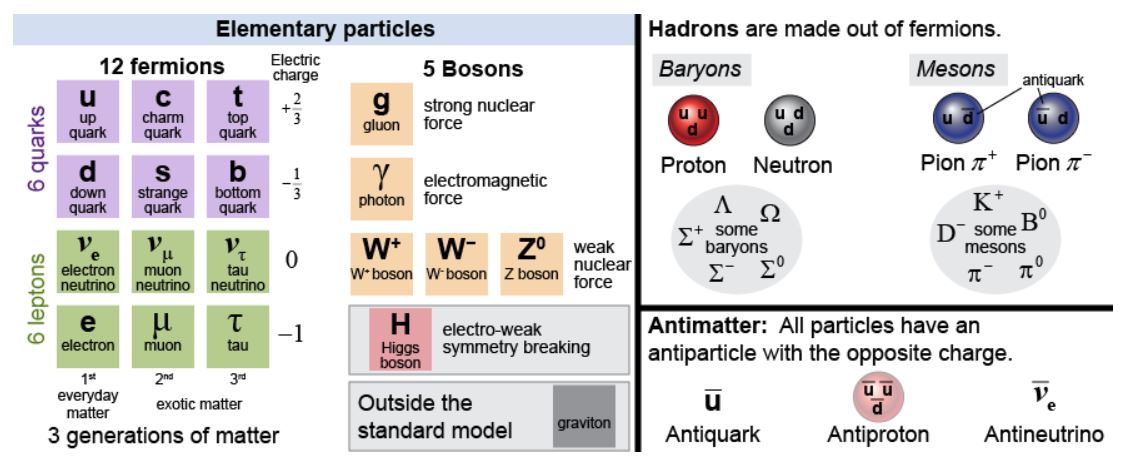
The photon is known to be the only massless, free-moving particle in the Standard Model of physics. Other massless particles are the gluon, the graviton, and of course the Higgs, discovered in 2012 at CERN. Europeans plan to build a Higgs factory to learn more about them. Gluons mediate the strong force. They don’t propagate through empty space.  No one has yet observed even a single graviton. Higgs give fermions like quarks their mass. 

Photons have an electric and magnetic structure. They are electromagnetic pulses of energy that emerge from atoms when electrons drop from a higher energy state to a lower one. When electrons shed energy, a pulse of electromagnetic radiation is emitted — a photon of light.


Click pic for better view in new tab.

Photons of light can be emitted from atoms at different frequencies — colors when wavelengths fall within the narrow range that humans see. These frequencies depend on the energy of electrons, which exist in many differently configured shells (or orbitals) within both atoms and molecules.

Wavelengths of light felt but not seen are called infrared; other invisible frequencies fall into broad categories such as radio waves, microwaves, x-rays, gamma rays and so on — all require instruments to detect.


Electromagnetic radiation is the medium through which humans observe and interact with everything knowable in the universe. Humans live inside an electromagnetic bubble that they are struggling to understand.

One thing most physicists understand is that a disturbing 95% of the energy and mass of the universe comes from a source no one can see. Physicists observe the effects of invisible (dark) matter and invisible (dark) energy by measuring the unusual dynamics of galaxies and by cataloging the physical organization and expansion of the universe itself.


These measurements make no sense unless folks assume that a lot of gravitationally interacting stuff is out there which no one has yet observationally confirmed. The missing mass is not debris or dark stars. The most exaggerated conjectures about how much mass and energy is scattered among the stars won’t come anywhere near enough to explain forces that make galaxies behave strangely.

Dark matter and energy don’t seem to be electromagnetic. Dark matter, if it exists, interacts with the mass of two-trillion galaxies and seems to refract their emitted light. Humans are blind to all of it.

Scientists postulate matter they call WIMPS, MACHOS, axions, and erebons.  Each has a few properties necessary to make the universe work as observed, but none have all the required properties except perhaps erebons, if Roger Penrose’s Conformal Cyclic Cosmology (CCC) is someday verified.

Other candidates for dark matter? — why not sterile neutrinos, GIMPs, and SIMPs

Space-saturating foam of micro-sized black holes is another idea some have proposed. The problem is that theorists believe tiny black holes might be too stable to radiate electromagnetic waves or gravity waves.

Micro-holes lie in a sort of crevice of invisibility — unobservable by LIGO and LISA style gravity-wave sensors, yet too massive for current and future particle-colliders like CERN to create. 

Because micro-holes don’t radiate light at any frequency, light telescopes will never find them. No imagined interaction of micro-holes is able to generate gravity-waves with enough disruptive power in spacetime to be detected. The nature of physics seems to suggest that no technology can be developed to confirm or deny the black-hole foam idea. 

Perhaps the same dilemma faces dark matter detection. We know it exists, but physics says we can never find it. It will always lie just outside our reach doing its work in an invisible universe no one will ever see. 

Worse, not one of the proposed forms of “dark” matter has ever been observed or identified. It is likely that no experiment currently scheduled will detect dark matter, which many physicists believe is “out there” and makes maybe four parts out of five of all the matter in the universe.

It’s an incredible paradox for conscious humans to live in a universe where they are blind to almost every important thing that is happening within and around them.

Humanoids are like fish which spend their lives swimming in streams buried deep inside caves. Spelunkers like me know that certain species of cave fish have no eyes. They lack all ability to see their world — as do we, it seems. As intelligent as people are, they don’t yet build sensors capable of confirming their notions about what the universe might actually be at large scales or small.  

Oh well…  someday maybe new discoveries will make our predicament evaporate away.  The universe will reveal itself to humans, as we knew it would. Our dream to fully understand reality will come true.

Some day.

Scientists have sensible mathematics to show that if electromagnetic particles are massless, they must travel at an upper limit, called c.  Over decades, folks decided that this constant is the speed of a photon in a vacuum; they decided that photons have no internal rest mass and travel in vacuum at a speed limit — the speed of light.

The truth might be more mysterious. No one knows what the upper limit of “c” is, because no one knows with certainty that space is truly empty or that massless particles exist.

When physicists say that certain particles are massless, they sometimes mean that they don’t interact with the Higgs Field, which is known to give mass to fermions, like quarks. They don’t mean they don’t have energy, specifically kinetic energy, which is a form of inertial mass, right? They also aren’t saying photons don’t interact gravitationally. They do, in a special way described by the geodesics of spacetime in Einstein’s General Relativity. 

More on this idea later. 


British physicist Brian Cox wrote in his book  Why Does E = mc2 ?  that the question about whether photons have rest mass is not yet settled.

It’s true that more than a few reasonable people seem to believe that photons traveling freely in the vacuum of space are massless. If they truly are then the permittivity constant “ε” in Maxwell’s equation can be established for electro-magnetic particles (like photons).


The formula below is used to calculate the speed of a massless electromagnetic particle; it is thought to be a maximum speed.


For now, ignore the μ term. It is the permeability (resistance) of vacuum to infusion by a magnetic field, which is determined by experiment. It is sometimes called the magnetic constant.

Epsilon (ε} is the permittivity (resistance) of vacuum to an electric field. It is sometimes called the electric constant.

c” is the so-called ”universal speed limit.” It is called the lightspeed constant

These three numbers — μ, ε, and — help to define the maximum velocity of an electromagnetic wave, which most people believe is the archetypal photon (of light). They assume that the photon packet travels at the maximum allowable speed in a vacuum.

A problem with this view is that no one has proved that space is free; or that space has no weight; or that photons have no rest mass; or that undiscovered particles formed from forces other than electricity and magnetism don’t exist. A few scientists have said that there might be no such things as free space or massless photons. It is also possible that space presents less resistance to other phenomenon yet to be discovered.

The idea that ”dark” matter and energy must exist to make the universe behave the way it does is compelling to many physicists. If true, it is possible — though light travels nearly 300 million meters-per-second — it is not traveling at the maximum speed of a generic, massless particle. The electric constant (ε) might need to be adjusted.

A decrease in the permittivity (resistance) of space (ε) — made obvious by inclusion of vast number of photons in the cosmic microwave background  — drives ”ε” to be smaller and ”c” to be larger, right? 

New particles, dark and as yet undiscovered, might do the same. The consequences could be significant.

Determining the upper speed of a massless particle requires a form of circular reasoning that is currently based on the measurement of the velocity of photons in a vacuum, which is called the speed of light.

The measured velocity of light in a vacuum is now an established constant of nature with a fixed value that doesn’t change regardless of the frame of reference. Modern labs have measured both the frequencies and wavelengths of various colors of light; multiplying the two numbers together always yields the same result — the speed of light.

Knowing the speed of light permits physicists to establish a value for ε by working backwards in the wave equation to solve for the electric permittivity of space. The value of “ε” falls easily from Maxwell’s Equations to a precision of 12 places.

It can’t be any other way. But is it the right way?

Here’s the problem: Physicists have measured mass in photons during experiments at the linear accelerator lab at Stanford University, SLAC.

In superconductors, photon mass has been measured to be as high as 1.2 eV.

Photon mass has been observed in wave guides and in plasmas.

Fact is, photons have inertial mass, which is a measure of their energy as calculated from their wavelengths or frequencies. In relativity theory, energy and mass are measured in the same units, electron-volts, because in the theory, mass and energy are equivalent. 


Click this link to view CLOSER TO TRUTH interview with Raphael Bousso.

Cosmologist, Raphael Bousso, believes that empty space has weight, which is a measure of the cosmological constant, which is a measure of dark energy.

Space seems to be saturated like a sponge with something that gives it energy or force or weight if you will. The weight of empty space determines the size of the universe and some of its fundamental laws. Universes beyond our own with different weights of space can be larger or smaller and obey different rules.

Most physicists agree that photons become massive when they travel through transparent materials like glass, where they slow down by as much as 40%.

The problem is that these observations conflict with both the Heisenberg and the Schrodinger view of quantum mechanics, which is the most tested and confirmed model physicists have. Modern ideas seem to work best when photon mass is placed on the energy side of the mass-energy column. Otherwise, the presence of internal mass suggests that photons can be restrained to a defined size, which drives their momentums to infinity.

The truth is that it is not possible to prove that photons are massless. The stress-energy-momentum tensor in Einstein’s equation of General Relativity implies that photons can be both the source and the object of gravity.  I’m referring to this tensor as “mass” and leaving it there for others to dispute. A rabbit hole for courageous readers to explore is the concept of pseudotensor, which this essay will avoid. 

It is also not true that a photon can never be at rest either.  Lab techs do unusual things with photons during experiments with lasers and superconductors — including slowing photons down and even stopping some (with supercooled helium-4).  Right?

Another problem is the electromagnetic nature of light. The electric part of a light-wave carries enough energy to move an electron up and down. The magnetic part carries the same energy but its motion creates a force that pushes electrons outward in the same direction as the light. It’s why light-sails work in space. Oscillating magnetic fields push light forward. Otherwise, light might stand in one place and simply jiggle. But is light-speed the best magnetic fields can do? 

Electromagnetism could be irrelevant in the search for an upper speed limit “c“, because “c” might prove to be the result of an unknown set of particles with properties outside the current boundaries of the Standard Model. 

Massless particles, — undiscovered ones anyway — might not be electromagnetic. Humans might be biologically unfit to detect them; unable to measure their properties. 

For those who might be rolling their eyes, remember that physicists claim that 95% of the mass and energy required to make the universe behave the way it does is missing. They call the missing stuff “dark” because they can’t find it. Excuse me should anyone catch me rolling my eyes. 

Some theorists have speculated that “dark photons” might exist to help fill in the gaps. The popular TV show How the Universe Works actually repeated the idea in an episode of its latest series. The writers were probably referring to axions, which some physicists propose are similar to photons except that they have mass and are slower moving.

Photons are bosons. They are force carriers for electrons, correct?

Maybe folks should try to accept the notion that nothing in physics prevents bosons like photons from having mass or from taking on mass when they whiz over and through atoms and molecules (in glass and water, for example) where some physicists conjecture, they stimulate the release of polaritons in their wake. Jiggling electrons that lack the energy to jump states emit polaritons, which seem to add enough equivalent mass to photons to slow them down. Think of polaritons as light-matter wavelets

Massive, gravitationally interacting photons are not required to be “dark.”  If photons are the dark matter, axions are unnecessary to solve certain problems both in cosmology and the Standard Model.  No experiment will find them.

I mentioned that three other particles are presumed to be massless: the gluon, the graviton, and the Higgs boson. 

To review, the gluon is not easily observed except in particle colliders where it lives briefly before decaying into other particles; it is confined among the protons and neutrons in the nuclei of atoms. The graviton, on the other hand, has never been observed. The Higgs boson was discovered in 2012. CERN plans to build a Higgs factory someday to explore its properties.

The only particle available to physicists right now that enables them to establish the permittivity of space and compute the velocity of massless particles is the photon.

That’s it.

If the photon has internal mass, i.e., rest mass, everything changes.


Let’s hop into a rabbit hole for a moment and go back a step: What if massless, non-electromagnetic particles mediate entanglement, for example? Wherever paired electrons are found, entanglement rules, right?

Everyone knows that entanglement violates laws of logic and physics. No one can make sense of it.

What if massless non-electromagnetic particles entangle the electromagnetic particles of the subatomic world? If they travel a thousand or ten-thousand times the speed of light, they will present an illusion over short planetary scales that entanglement is instantaneous. No instrument or lab will detect the difference.

What are the consequences if massless non-electromagnetic particles travel at a billion times the speed of light? Maxwell’s equations won’t apply to particles like these. 

Because it seems that speeds of subatomic particles like photons are able to increase as their masses approach zero, it is possible that “c” could be orders of magnitude faster than the speed of a photon — that is, the speed of light — if it turns out that photons harbor tiny but significant rest masses.

I’m not advocating this notion. Let’s crawl out of the rabbit hole. I’m suggesting only that such a state of affairs is possible, because the assumption that photons at rest are massless — that internal mass of photons is always zero — though reasonable and desirable to justify models, is not yet settled according to some physicists.

And there is, of course, the phenomenon of entanglement which no one can explain.

Here’s speculation that should blow the mind of any thinking person: Could photons, if shown to have internal mass, be the stuff that make the galaxies move in the non-intuitive ways they do?

Yes, some physicists argue that the upper limit on the internal (rest mass) of a photon must be less than 10-52 kilograms, which is about 5.6E-17 eV for folks who think that way. (Multiply mass by the speed of light twice to make the conversion and divide by 1.60218E-19 Joules per eV.)

5.6E-17 eV doesn’t seem like much mass at all until folks realize that the minimum number of photons in the universe might be as high as 1090.   This number is ten billion times the number of atoms in the universe. It means that the internal mass contribution from photons alone could easily exceed 1038 kilograms if the upper limit proposed by some is used to perform the calculation.

Do the math, anyone who doesn’t believe it.

Guess what?

Prepare for a letdown.

Based on the conjectured eVs, the mass of all material in the visible universe is in the neighborhood of 1053  kilograms. The video below will help the reader understand how this value and others are calculated. The mass of the visible universe turns out to be 1,000 trillion times more than the conjectured internal mass of all photons.


Think about it.

Is it enough mass to account for the galaxy anomalies seen by astrophysicists?  To any reasonable mind the answer is obviously, no. But this conclusion is not the end of the story. 


Those who study astronomy know that the outer stars in galaxies seem to move at roughly the same speed as the inner. Yet the galaxies aren’t flying apart.

By way of contrast, the planets in solar systems like ours travel slower the farther away they orbit from their sun.  If Neptune orbited as fast as Earth, it would fly away into deep space.

A recalibration to account for the internal mass of photons of light (which seems to always be discounted) does not at first blush offer the gravitational heft that astrophysicists require to make everything on galactic scales fall into place.

The cosmic background radiation — which is nothing more than photons that decoupled close to the beginning of time — saturates the universe like vinegar in a sponge, right?  It is distributed evenly across all space for as far as human-built instruments can see.

The CMB makes an annoying hum in radio telescopes no matter their focus or where they point. Photons with tiny internal masses or no mass at all will have no influence on the understanding by astrophysicists of how the universe behaves.

Neutrinos, which seem to oscillate between three (or perhaps four) as yet undetermined massive states, might at times take on values below the actual mass-value of photons — if photons turn out to be more massive than most believe. The laws of physics require that neutrinos less massive than massive photons, should they exist, must travel superluminally (faster than light).  Agreed?

Several “discredited” observations have reported faster-than-light neutrinos, including the unexpected outcome of the infamous OPERA experiment, which inspectors eventually blamed on a loose fiber-optic cable that was ever-so-slightly longer than it should have been.  

OK.  It seems reasonable.  Who can argue?

Scientists who believe that superluminal neutrinos actually exist don’t speak up, perhaps out of fear for their careers. They probably couldn’t get their opinions published anyway, right?


Click pic for better view in new tab.

Crackpot ideas that later prove valid is how science sometimes works. It’s how science has become the mess that it is — a chaos of observations that can’t make sense out of 95% of what is going on all around; a plethora of experimental results that don’t quite match the work of theorists.

The super-brilliant people who paint the mathematical structures of ultimate reality rely on physicists to smear their masterworks with the muds of perturbation, renormalization, and a half dozen other incomprehensible substrates to get the few phenomenon folks think they understand to look right and make sense. Theory and experiment don’t seem to match-up as well as some folks think they should more times than not.

A minor recalibration based on the acceptance of photons as quantum objects with tiny, almost unmeasurable masses will not change ideas about the nature of the universe and what is possible, because the upper-bound on photon masses might be undervalued — perhaps by a factor of billions.


Theorists like Nima Arkani-Hamed work on abstract geometries called amplituhedrons to salvage notions of massless particles while simplifying calculations of scattering probabilities in quantum mechanics. It seems to me like hopeless adventures doomed to fail. But in fairness so did Columbus’s exploration for new worlds.

To be a serious candidate for dark matter, a typical microwave photon should have an average mass of nearly .05 eV (electron volts), which is about 9 x 10-38 kilograms. If multiplied by the number of photons ( 1090 ), the photon masses add almost miraculously to become 85% of the theoretical mass of the universe.

(1E90)*(9E-38) = 9E52.  (9E52) / .85 = 1E53 kg. 

It’s the same number conjectured by dark-matter advocates. 

To qualify for dark matter means that a typical or average photon must have close to one ten-millionth of the mass of an electron.

Only then does everything fall into place like it should.

Pull out the calculator, anyone who doesn’t believe it.


Einstein, in his famous 1905 paper on special relativity, showed that mass is equivalent to the energy of an object divided twice by a constant, which is “c” squared, right?

Later, he added a second term to the internal energy of a particle which is its inertial energy, pc2 . Simplified, this term equals hf for a massless photon. The total energy of any object is the square root of the sum of its internal energy and its inertial energy. 

E = \sqrt {(mc^2)^2 + (pc)^2}

If Einstein is taken at his word, then the inertial mass of a photon is a function of its characteristic frequency — i.e. the inertial mass of a photon is equal to 

\frac{hf}{c^2}

where “h” is the Planck constant and “c” is the speed of light. The internal mass, should any exist, can be discounted. 

An argument can be made from Einstein’s equations that the mass of a photon might be \sqrt {2} times larger. A factor of 1.414… won’t change the argument. It strengthens the point but is, in the end, not important enough to include in an article that is already overly long. Curious readers can review the reasoning in my essay General & Special Relativity

If the average photon has an inertial mass of .05 eV, it requires that — all else being equal — the combined photon energy in a non-expanding universe would lie in the range of infrared light, a frequency in this case of 12E12 Hz, which is sometimes referred to as far-infrared.

(Set equivalent-mass equal to .05 eV (8.9E-38 kilograms) and solve for frequency.) The frequency approaches the lower energy microwave part of the light spectrum. 

Note:  For perspective, one eV is the energy (or mass equivalent) of a near-infrared photon of frequency 242E12 Hz, which approaches from below the higher-energy visible-light part of the light spectrum. 

The mass equivalence of the inertial energy of 1E90 infrared photons is sufficient to hold the universe together to prevent runaway expansion caused by repulsion due to the gravity constant Λ in Einstein’s equation for General Relativity. 

Do the math.

I know what some people might be thinking: Didn’t the 29 May 1919 solar eclipse, which enabled observers to confirm Einstein’s theory of General Relativity, demonstrate that photons lack internal mass?  Didn’t Eddington’s experiment prove wrong Newton’s idea that photons, which he called corpuscles, were massive objects? 

Maybe. Maybe not.  Maybe internal mass isn’t necessary. There is enough energy in the inertial term of Einstein’s equation to yield the required mass.

Unlike massive particles where internal energy far outweighs inertial energy, for photons, inertial energy is dominant. Even if science admits to a small amount of internal mass in photons, it is their inertial energy that dominates.

I found a good mathematical argument for light mass on Quora by Kyle Lochlann, an academic in relativity theory. Here is the link:

PHOTON MASS

Be sure to read comments to his answer — especially those who find math incomprehensible, which might be nearly everyone who reads my blog. 

After all, Newton’s theory of gravity predicted that the light from stars would deflect near the Sun at only half what Eddington’s experiment clearly showed. Eddington’s eclipse proved Einstein’s theory — the geodesics of spacetime bend in the presence of massive objects like stars.

Many concluded that photons followed the geodesics of spacetime, because photons lacked mass equivalence of any kind. Newton erred about pretty much everything involving gravity and light, some said.  

But their conclusion can’t be right, can it? Doesn’t their conclusion ignore what the math of Einstein’s formulas actually says?


Won’t it make more sense to say that the geodesics of spacetime constrain and overwhelm whatever internal and inertial mass photons might possess?  Doesn’t it make more sense to convert the frequency-related inertial energy of photons to mass to better explain their behavior near objects like the Sun? 

Evidence exists that light-mass is a thing and that it matters. Einstein included a mass-equivalence term for light in his tensors for general relativity. Frank Wilczek, MIT Nobel laureate, is famous for insisting that the mass of anything at all is its energy content. The energy of light is in its frequency, its momentum, which is a measure of its mass. 

It’s true that light does not seem to interact with the Higgs field. Nevertheless, the energy of light seems to interact gravitationally with ordinary matter. The interaction is not measurable when photon numbers are small. When photon numbers are huge, perhaps it is.  

A single photon in the presence of the Sun has no chance. When 10E90 photons saturate a space that is almost entirely devoid of matter, photons can shape a universe — especially when their number is 10 billion times the number of atoms. 

It seems possible, at least to me.

According to data gathered by the NASA WMAP satellite, ordinary matter in the observable universe amounts to a little more than 1/4 of a neutron per cubic meter of space. It amounts to 253.33E6 electron-volts of mass. Everything else WMAP observed was “cold dark matter” and “dark energy”.

How many .05 eV photons does it take to flood a cubic meter of space with enough mass-equivalence to reduce the mass-energy of 1/4 of a neutron to 15% of the total? How many photons are required to sum to 85% of the energy WMAP attributed to “cold dark matter”? It turns out that the number is 34 billion photons per cubic meter. 

The question is: how many photons are there? 

The observable universe has an estimated volume in the neighborhood of 1E80 cubic meters, right? Yes, it might be as much as 4 times that number. 

The lower-bound number of photons in the observable universe is 1E90. It might be ten times more.

It turns out that the number photons per cubic meter in the universe must be somewhere close to 25 billion.  25 is pretty darn close to 34. Since all the numbers are estimates with large margins of error, it’s possible that everything will fall into place as it should if and when the statistics of the universe are ever known with precision.

Could photons of light might be the “cold” dark matter everyone is searching for?

A single neutron has no chance when it is bathed in 136 billion .05 eV photons, which surround and envelop it on all sides from every direction. It makes a kind of quantum scale Custer’s Last Stand for random neutrons, right? 

When scientists look at the universe today, they see an accelerating expansion. They see in the cosmic background radiation photons that have slipped from infrared into longer, less energetic microwave wavelengths which no longer have enough mass-equivalence to hold the universe together.

As light stretches into longer and longer wavelengths through interaction mechanisms such as Compton scattering and other processes (like the push of “dark energy” or the less popular gravitational tug of parallel universes), light frequencies and energies diminish.

Eventually, when the total of all light falls below an average frequency of 12E12, the equivalent mass of the 1E90 primordial photons loses its grip; it becomes unable to hold the universe together.

Near the beginning of time when photons were orders-of-magnitude higher in frequency than now, their stronger gravitationally-equivalent-masses pulled together the structures astronomers study today, like stars and galaxies.


But now scientists seem to be witnessing a runaway expansion of the universe. Light has stretched and dimmed into the microwave and radio-wave frequencies where its mass-equivalence is unable to hold together the universe as it once was.

Because we can’t detect it, isn’t it possible that dark energy and dark matter don’t exist? That is to say, the idea that dark matter and energy are necessary to account for observations is no more than a conjecture made necessary by a misbehaving universe of unusual galaxies. But direct observational evidence for dark matter and energy is the part of the conjecture that is missing. No one has ever seen any.

What astronomers are observing instead is faraway galaxies that existed billions of years ago when the mass-equivalent energy of photons was greater than it is now.

The intact universe of galaxies seen in the night sky today, which is photographed with high-resolution space-borne telescopes, is not up to date in any sense at all, except that it is the view of an ancient past that goes back almost to the beginning of time depending on how deep into space anyone looks.

Everyone who cares about astronomy knows it’s true.

To qualify as a candidate for dark matter means that a photon must have close to one ten-millionth of the mass of an electron. It seems like a reasonable ratio, right?

In the Standard Model, only neutrinos are less massive than electrons. No one knows what the mass of each of the three “flavors” of neutrinos is, but when added they are less than 0.12 eV — about 2.4 times the equivalent-mass of infrared photons and about one four-millionth of the mass of electrons. It seems possible to me that the mass of at least one of the flavors of neutrinos will be less than the conjectured equivalent-mass of an infrared photon packet.

Neutrons and protons are, by contrast, 2,000 times “heavier” than electrons.

I am asking working physicists to reexamine estimates that claim the mass of a photon can be no more than trillions of times less than the mass of an electron.

The claim can be found at the back of articles in science journals as well as in blogs across the internet. For me, the idea seems ridiculous on its face. The energy-equivalent mass of photons varies with frequency, but only the lowest energy radio wave photons can hope to approach the low equivalent-mass estimated in the latest publications.

Scientists might want to revisit the mass of a photon and the methodology of its measurement. The stakes are high, and science doesn’t have many options. Hope — like the energy of ancient photons — is fading.


Science would be served best if scientists started from scratch to reexamine every assumption and lab procedure. The search for dark matter has become an expensive and compulsive quest that seems futile, at least to me. Several costly experiments have reached disappointing dead ends, which are reviewed in the “VICE on HBO” video located near the start of this essay.

What if photons of light really are the dark matter, which is hiding in plain sight waiting to be discovered by anyone who dares to look at the problem with fresh eyes?

What if the delay between the observations of the CMB (cosmic microwave background) and the structure of the universe is a natural disconnect in time and space that misleads folks to believe that mass must be “out there”, when it has in fact long since dissipated?

From another perhaps opposite perspective, what if photons are instead stimulating emissions from virtual particles as they travel at fantastic speeds through the vastness of space? What if these emissions add mass to photons sufficient to bring them to the “dark matter” threshold, as they do in materials like glass?

Such a state of affairs would imply that not all photons travel the same speed in the so-called vacuum of “empty” space. It is a heretical idea, for sure — a can of worms, perhaps to some, but hey! — you can catch a lot of fish with a can of worms.

A photon is a packet of electromagnetic oscillations built-up from many frequencies. Superposition of these frequencies adds to give a photon its characteristic frequency from which its equivalent mass can be calculated. Right?

Use imagination to think of the many ways a higher “speed limit” that is mandated by the existence of massive photons might work to stimulate the interest of a space-traveling civilization to explore the universe, which ordinary folks begin to understand is more accessible, more reachable than anyone thought possible.

Consider the number of inexplicable phenomena that would make sense if particles thought to have zero internal mass don’t really exist, and photons, gluons, gravitons, and Higgs bosons aren’t the only ones.

Recalibration might save a lot of time and effort in the search for the putative missing energy and mass of the universe.

Should “dark” particles exist whose internal mass is less than that of photons, they will likely move at superluminal speeds that make them difficult to track. To influence stars, their number would have to dwarf photons. Such an idea strains credulity.

A counterproposal by Roger Penrose speculates that dark matter particles might have the mass of the eye of a flea; he calls them “erebons.” These particles are electromagnetically invisible, but their huge masses relative to other particles in the Standard Model make them gravitationally compelling.

Erebons decay; evidence for their decay should be showing up in data collected by LIGO detectors.

So far persuasive evidence for erebons has not been found.


For scientists and explorers, the access-barrier to a universe shaped and configured by massive photons will most certainly shrink — perhaps thousands to millions of times.

The stars and galaxies that people believed were unreachable might finally fall within our grasp.

Or — perhaps less optimistically and more cynically — the mass-equivalent energy of 1E90 photons might by now be so severely degraded that nothing can save a universe that has already come undone and flown away into an abyss that humans will never see.

The radiation-evidence from a catastrophe of disintegrating galaxies that has already occurred won’t reach Earth-bound viewers for perhaps billions of years.

Should humans survive, our progeny — many millions or billions of years from now — may “see” in the vastness of space a cold and diminished radio-wave radiation that hums in a soul-less vacuum devoid of galaxies and visible light.  Microwave light will by then be nothing more than a higher-pitched, prehistoric memory.

Roger Penrose says that the fluid dynamics of an exhausted universe devoid of matter will become indistinguishable from the singularity that gave its start. A new universe will ignite from the massless, radiation-ashes of the old.

The idea is called Conformal Cyclic Cosmology — or CCC

Human-nature forces us to want to know more; most folks want to search for and find the answers to the questions that will determine the fate of all life on Earth and in the vast stretches of spacetime that remain beyond our reach.

Is the universe within our grasp, or has it already disintegrated?

We search for truth to set ourselves free.

Billy Lee

GOING DOWN

This essay is going to be a little short of words compared to most on The Pontificator.  Brevity will relieve friends who might read my essays to be polite or feign interest. I wish I had more readers like them, but most who read I will never meet. I don’t know what they love or hate.

I know this. If the GOP retains its lockdown on all branches of the government after Tuesday’s “election”, the Confederates will have won their Civil War. It took 150 years, but they will have won. Donald Trump is a modern Jefferson Davis — the first president of the new Confederacy.

Trump is bigger than Jefferson Davis. Like Davis, the president works for a coalition of revolutionaries who despise democracy. They support a modern version of slavery, on which they pin the heroic title of Capitalism, right?

They are eager to kill to protect it. It’s why they are rabid Second Amendment advocates; it’s why they harass and threaten liberals on-line, on the phone, in the press, in the churches, and inside state legislatures.

It’s a system where everyone works for the wealthy to manipulate and exploit ignorant people who actually believe they are going to be rich and powerful oligarchs themselves, someday. All that is required is to work hard and prepare, prepare, prepare.

Sure, that works. Ask any brick layer or steel worker. Ask an auto worker. Ask a teacher or a nurse or a restaurant busboy. It isn’t going to happen.

Get real.

The only chance working people will ever have to earn high incomes is if rich people share the wealth by paying fair wages and taxes, which is the opposite of what they decided to do when they rushed through the recent “tax cuts.”

About 90% of the cuts went to the one-percent, right? Of course, the poor can buy lottery tickets. Lottery tickets sometimes work, don’t they? Doesn’t everyone in the USA have someone in their family who has won millions in the lottery? The lottery has been going strong since the early 1970s — almost fifty years. It must be working, because more people play the lottery than ever before.

Divide hard-working folks — who after long days at work don’t have the time or energy to think things through — with any number of issues that make no sense. The classic issue is abortion, of course. It always is.

Any woman can secure an abortion. It only takes two inexpensive pills or a boyfriend who has watched a couple how-to videos on the dark web. The only political question is whether abortions are going to be legal and safe or illegal  and risky.

Legality or Constitutionality makes no difference to desperate women, but it might mean that a few unfortunates will spend time in prison away from their families should they get caught. Fear of prison increases anxiety, but it won’t stop a female impregnated by a man she hates. She will abort.

It’s been this way since the beginning of history. Before the process of abortion was known, women took their unwanted babies into the mountains to be eaten by wolves and crows.

The president has promised to punish women who have abortions. Judge Kavanaugh, the drunk sex addict and party animal who terrorized Dr. Ford during an alcoholic rut, promised Senator Susan Collins that he won’t overturn Roe v. Wade. He made the promise to secure her vote.

As the president likes to say, “We’ll see what happens.”

There are so many other fabricated issues; so many “scary” people — immigrant rapists, immigrant invaders, gays and their spouses, black political candidates, Mexicans who vote, socialist doctors, Obama and his ACA, Muslim terrorists, Muslims who aren’t terrorists, native Americans who don’t live in houses or apartments who want to vote, unindicted Hillary and her co-conspirators, lying reporters, homeless people, immigrant children who must be separated from parents and confined in cages, angry mobs of Democrats, and on and so on….  The list of  imagined “terrible people” who everyone must fear is as long as America itself.


It’s a white supremacist’s wet-dream — burning crosses with any number of “horrible” people duck-taped to the raging firewood.  Ethnic and cultural cleansing of “evil” Americans seems to give supremacists a certain cathartic release. It’s what lynching and castrating were all about decades ago.

Read Trump supporter twitter feeds, anyone who doesn’t believe it. They will terrify the uninitiated.  It’s always pics of automatic weapons, Confederate and American flags, photos of prominent progressives with target-crosses on their faces, and a little blurb about how much the tweeter hates liberals and loves Jesus and President Trump. Often a Bible verse is added for righteous measure.

People who hate gravitate toward demagogues. The USA has enough haters to elect Nazis to every office in the land. On Tuesday, those of us who have a different opinion of right and wrong are going to find out who is right and who is wrong.

Are we going down like lemmings off a cliff into the maelstrom below? Will Americans drink the Kool-Aid of a Jim Jones sociopath?

We will soon know the truth about our country — if the Russians (or the Republicans who own the voting machines) don’t manipulate the results, as some in our intelligence agencies say they have already. In Texas early voters report that some machines are flipping votes for certain candidates. It’s a bad sign of problems to come on voting day.


Reality Winner is the incarcerated NSA worker who exposed voter fraud in the 2016 presidential election. She is serving a five year sentence. 

NSA worker Reality Winner is in prison with no access to media, reporters, phones, or computers for a reason, right? Once people lose confidence in the integrity of the electoral process, the alternative is Civil War. We did that once. The war turned into a bloody mess that destroyed a generation of Americans. It’s a war that continues to be fought.

What if a miracle happens? What if the election is fair?

What happens if suppressed voters manage to get to the polls to cast provisional ballots when necessary?

What if all votes are counted; no one tampers with the computers nor the voting machines; everyone stays in line and votes until midnight if necessary in those states where the GOP disrupts minority voting to make it as difficult as humanly possible?

What then?

What if the GOP is thrown out and the Democrats take control of the Senate and the House of Representatives? It seems like a hopeless pipedream, but stranger things have happened.

The president will question the accuracy of the count, of course, and a countdown to revolution will begin by alt-right fanatics who are itching for a fight. They’ve already killed a dozen Jewish people inside a Temple in Pittsburg; they’ve threatened the lives of the most influential Democrats in the country — including two presidents. Right?

Does anyone think that white supremacists are going to end their bloody rampage short of total victory or defeat? Winning is going to be as problematic as losing, unfortunately.

An added burden is that everyone who has an ounce of political sense knows that the president is working with Russian and Israeli mafias to lockdown the country. We are going to become Russia with our own Vladimir Putin if certain oligarchs get their way.

Anyone who isn’t afraid has a false confidence reminiscent of passengers on the Titanic or the Jews who waited eagerly for the Nazis to cleanse them with warm showers.

Are Americans out of their minds?  This election shouldn’t be close.

How can evangelicals support the GOP? An impeachment victory by Democrats will ensure that Mike Pence, a sincere Christian by all accounts, will replace a president who had no history of association with any church or group of believers until he made his convenient Faustian covenant with Jerry Falwell, Jr. and Franklin Graham.


NOTE BY EDITORIAL BOARD: On August 25, 2020 Jerry Falwell accepted a $10.5 million severance package from Liberty University to step down. Like Adam in the Garden of Eden, he blamed his wife for the sex scandals that followed him pretty much everywhere during his tenure. 


We can impeach and remove our demented president. Some Democrats say Mike Pence will be worse. But sensible people must know that his hand on the nuclear button will be a safer hand, because he isn’t completely crazy like the Donald. Who can’t see it?

Is this lunacy what Americans want? Is this insanity what our brothers and sisters in arms fought and died for in all the wars we’ve won to keep freedom alive?

I don’t think so.

We’ll find out soon enough.

This election is a litmus test. Pray that all of us on both sides can survive and endure the results, which are sure to change America for good or ill.

Billy Lee

YOU’RE FIRED!

The words “You’re fired!” are among the most painful I’ve ever heard.

I’ve lost a lot of jobs during my life, so the pain has accumulated to the point where I would rather die than re-live my life—unless I could arrange things so that no person would ever have the power to drive a stake into my heart, because that’s what being “let go” feels like.

I never followed Trump‘s television show The Apprentice because hearing the punch line “You’re Fired!” always felt like a hard slap to the face. Watching young men and women suck up to a powerful boss who gut-punches all but one was never harmless entertainment. Not for me, anyway.


The number of people fired during the Trump administration is staggering. How many of these 24 high-power individuals can anyone identify? They are the tip of a mammoth iceberg of graft, corruption, incompetence, ignorance, and suffering. Who disagrees?

I’ve fired people. I understand why our president won’t do it in real life. He always assigns the task to an underling, right? The White House employment line churns like a stormy ocean but the president stays above the froth.

Firing someone is more painful than being fired because it stays with you forever. It’s not something you can overcome by getting a better job, for example. You can’t take it back. I’ve always wondered whether I might have found a kinder way to address the problems I thought firing others solved.

Those who read my essays might remember that I managed some restaurants when I was in college. Back then finding good help was hard, because everyone worked.

I needed a cook really bad. A roly-poly guy with a sweet face applied for the job. He explained that he was a slow learner, but he would try to become the best cook he could.

After three days, I realized that he was slow, like he said. He would never be able to keep up; he lacked the intelligence to memorize the menu and prepare the food properly.

I called him into my office.

“Ruby,” I said. “I don’t see how we’re going to be able to make this work. I’m sorry, but I have to let you go.”

He said, “Mr. Lee, I understand. Uh, you gave me a chance. Uh… uh, it didn’t work out. It’s happened before. It’s not your fault.  Uh, don’t feel bad. I’m to blame. I’m slow, uh… that’s all.”

He offered his hand, pivoted, and walked out. He had obviously memorized his exit speech. I put my face in my hands and sobbed.

It was clear that Ruby suffered from a disability of some kind. My need for a cook blinded me. Until he recited his sentences, I didn’t see it. No matter how hard he tried he was never going to make it in a world that demanded quick wits and fast problem solving.

What made me cry was that he wasn’t going to give up. It seemed like no reversal mattered. Success would forever elude him, but he had just enough resources and determination to pick himself up, give his speech, shake hands, and strive to find the next opportunity.

Ruby was willing to fight against the odds to become a hamburger cook. He took great pains not to traumatize managers, including me, who inevitably would be forced to fire him to protect their bottom line. In his effort to spare my feelings he failed—like he probably failed at everything he tried.

I felt sick to my stomach. I felt remorse. Ruby gave everything he had. Nothing worked. Something wasn’t right. There was nothing I could do.

It’s been decades. My heart aches. I wonder if by some miracle Ruby ever made his dream come true. I’ll never know.

At the time, I managed two restaurants. Because I was a student at the university, assistant managers and other responsible employees helped me to keep operations running smooth.

At the second store a couple of waitresses complained that a busboy I hired was stealing tips.

I called the kid into my office. “Are you stealing?” I asked. The boy immediately began emptying his pockets. His pockets were deep. He dumped big handfuls of quarters and dimes on my desk. I didn’t say a word. When the last dime dropped, he ran out of the store. We never saw him again.

It felt good. The waitresses didn’t seem to mind either.

I hired a rather attractive waitress at the first store. She had the annoying habit of talking too much to other waitresses. She was loud, and it irritated me. After a couple of months, I started to hate her because she didn’t seem to feel an urgency to follow through on the things I asked. I felt disrespected.

One day she said something that rubbed me the wrong way. I called her back to my office and fired her in almost the same way Trump would years later on his TV show. I was cold and matter of fact. “You talk too much and don’t do what you’re told,” I said. “You’re fired!”

The girl broke down and began wailing. “How will I get money for my trip to Europe this summer?” she begged.

I would be in Italy that summer myself to visit family living in Naples at the time. I had no idea until that moment that her job was a means to an admirable end.

A wave of nausea swept over me. I was making a terrible mistake. It seemed somehow impossible to backtrack. I’d played my hand. From now on things could never be good between us. “It’s time to leave,” I told her.

She went to court over it, but the owners of the restaurant knew the judge, so nothing happened. I feel like a worm when I remember this act of needless cruelty.


Big Boy Restaurants were among the first in a wave of fast-food chains to capture the hearts and pocketbooks of a public too busy to cook home meals in the 1960s. The Big Boy Slim Jim sandwich remains one of my all-time favorites.

I hired a cook who caught on fast. “I’ve been been vacationing in Florida,” he answered when I asked about his tan.

After a few weeks the owner approached to tell me the cook had pulled him aside to explain that I was a terrible manager who should be fired. The cook expressed his belief that he was the best choice to replace me.

I said to the owner, “That’s interesting. He is a good cook and smart enough probably. Maybe he could help out at another store.”

The owner looked at me like I was crazy. “Are you out of your mind?” he said. “This guy is trying to get you fired so he can take your job in this store—a store you manage!  What are you going to do about it?”

“I don’t know,” I said.  “Maybe I can start training him in other parts of the job and someday he will know enough to help us.”

“No!” the owner said. “You are going to fire that back-stabbing son-of-a-bitch. When I come in here next week, he’s gone, understand?”

When the new cook came in for his shift, I asked him to walk outside with me. I said, “The owner tells me you think I’m incompetent.”  The guy threw up his hands like he was being arrested for something and said, “I screwed up. You’re right. Fire me! No hard feelings, OK?” He wheeled around and disappeared down the street.

I felt surprise and relief. I didn’t fire him. He fired himself.  I think I remember someone telling me he hitchhiked back to Florida.

Well, this essay is supposed to be about me being fired, not me firing others so let’s get on with it.

I was an athlete in high school. I played football and baseball. I was an All Star third baseman. In football I played tight end. Because my dad was the commander of a Navy jet-helicopter squadron in Key West, we lived on the Florida island during my eighth-grade year and the first half of ninth grade.

Key West High School had a good reputation, because it graduated several big-time athletes back then—George Mira and Boog Powell are the two I remember because they had younger brothers who were close to me in age. We called Boog’s brother “Boob.” He took the joke with grace and good humor. Athletics was a big deal.

Toward the end of the fall season, our freshman football team lost an important game. In the locker room the coach dressed down the team to the point of being profane and abusive.

He was more than unfair. I felt degraded. We played our hearts out. I piped up to defend my friends, “Maybe if you knew how to coach, we would have won!”

The coach turned purple. “Billy Lee, you will never play sports again at Key West High School. You are done.”

I cried on the bus ride home. I reminded the coach about how good I was at baseball. He had seen me play during an All-Star contest between the civilian and Navy leagues. He knew I was good.

He remained stoic and unmoved. Fortunately for me, the Navy promoted my dad and we moved to Arlington, Virginia where he led some group at the Pentagon not known to the public. I would play sports again, after all.


More is under the Pentagon than above. It’s a big place, which I was fortunate to visit and tour—under supervision, of course. My dad worked several years within a labyrinth whose mission was to protect and defend the United States of America.

Unfortunately for me I missed out on a season of baseball. Ninth graders went to junior-high; my new school didn’t field a baseball team. When high school try-outs finally came, a year later, I made the JV team.

The suburban schools outside Washington DC were big.  A thousand tenth grade boys tried out. Eighteen made the cut. I thought, This is great. I’m back on track.

Then, disaster. It got cold in northern Virginia. I was used to playing in the heat of the deep south. My legs and arms seemed to stiffen-up in the frigid temperature, and I endured a terrible scrimmage. I made costly errors and went hitless. The coaches announced after practice that they had agreed to bring three varsity players down to JV to give them more playing time. Three JV players would be cut.

The names of the final “final roster” would be posted in the gym. Anyone whose name wasn’t on the list was cut. The decisions were final. There would be no discussions, no negotiations.

I must have looked at the roster a dozen times before I could accept that my name wasn’t on it. I told my dad on the ride home from practice. Visibly shaken, all he could manage was a barely audible, “oh.”

I experienced my first nervous breakdown. It lasted a few months. I told my mother that I was terrified all the time. It never stopped. She confessed that she had a breakdown when she was younger, but in time she got through it.


In ninth grade I lived in Key West, where my dad defended America against Soviet subs with a squadron of jet-helicopters during the Cuban Missile Crisis. My mother stands next to me. When my athletic dreams unraveled the following year, I had a nervous breakdown. Mom led me safely through to the other side of hell. After aging she suffered memory loss, but she remained a happy, optimistic person to the end of her life.

It made me feel good to know that my mother understood. I waited for healing. Eventually, I got better.

Dad was promoted again. The president sent him to Paris to represent the United States Navy at NATO.  The French planned to withdraw.  Dad tried but was unable to change their minds. A year later he would lead war games in the Mediterranean Sea for an ineffective coalition of nations called SEATO (now disbanded), and the family would follow him to Naples, Italy.

But my senior year would be spent in France. It would be a welcome change from the Washington DC suburbs, which to this day I associate with “fear and loathing“—bad mental health.

It’s hard to believe, but I did get fired from high school—in Paris of all places.

My girlfriend’s dad was Secretary of the Embassy in Paris. Sandy attended a French high school and spoke fluent French. It made getting around easy because not only was she connected and accepted everywhere, but she also made a gifted translator. I had no communication problems when we explored the twenty or so arrondissements together.

Because I went to the school for military-dependents (populated mostly by Army kids) I couldn’t invite Sandy to our senior prom. It was a school rule, a stupid rule, but that was the Army way in those days.

Someone got the bright idea to hook me up with the ranking General’s daughter—a sweet girl, but I didn’t know her. Because I already had a girlfriend who I sort of loved, I had no interest in the arrangement with the General’s daughter.

I made some stupid decisions that involved selling sleeping pills that were freely available (at nominal cost without a prescription) in the French drugstores (les pharmacies) near our house. I sold the pills to friends to raise money for Paris prom expenses, which I expected to be, well, excessive. It turned out that the pills were illegal on American military property, which included the high school.

A big kid I didn’t know bought three and started running around the campus yelling to everybody that he was high on LSD—a kind of joke, I guess. Anyway, the Defense Intelligence Agency (DIA) locked down the school, did a sweep, and found discarded pill wrappers.

After a number of interrogations, they got to the truth and had to decide how to handle me and two other kids who had nothing to do with anything except that they “confessed” to buying one pill each.

One of the kids was the only black at the school. It didn’t help at all that his dad was an enlisted man—his dad was not, sadly, the highest-ranking Naval officer in Paris, like mine. He and his family were put on the first flight out of Paris. His family was uprooted over a sleeping pill. 

The verdict was that I would not attend the last week of classes but would receive a diploma and be allowed to go to the graduation ceremonies—including the after-party.

The senior prom was off-limits. It was my punishment. The Army would send a West Point cadet (from the academy famous for its overlook of the Hudson River fifty miles north of New York City) to accompany the General’s daughter.

For me, the punishment was a reward. Yes, I was expelled from high school, but I was going to graduate, and I didn’t have to hang around during the last week of classes. I was free.


Sandy’s civilian high school reserved the Eiffel Tower for their prom. No one had a problem with me being her guest. Yes, the tower was amazing.  After the celebration, we club-hopped through Paris night spots with the money I had made, which the DIA didn’t bother to confiscate.

As for my own high school graduation party, school-rules didn’t permit Sandy to be there.  It took place on a large estate, which was romantically lit and well-attended.

A beautiful girl I had seen at school but not yet met walked-up to introduce herself, and somehow, we found a way to make love behind a grove of trees in the backyard. Until then, I hadn’t understood how much comfort some women are able to provide to a man who seeks reassurance.

Sometimes I wish I’d run off with the girl like she said she wanted, but her dad was an enlisted man. I couldn’t see a way to make things work. In those days officer families and enlisted families didn’t mix. It was like segregation of the races, kind of.

Speaking of race, as I told readers, the Army sent the black kid who had nothin’ to do with nothin’ and his whole family back to the states on the first plane out of Paris. They forbade him to graduate or visit parties. I thought his punishment was outlandishly unfair, but it was the 1960s.  Most high-powered white people hated black people at the time. It’s the way things were back then.

It wasn’t possible for me to set things right.

This essay is getting kind of long, isn’t it?  Maybe I should write a Section-Deux someday to cover the horrors I suffered as an adult working at a dozen companies for 35 years.

No?

Ok.

Here is a summary, then:

After returning to the states and entering University I got myself fired from the Army Officer program (ROTC) a few weeks before I was scheduled to receive an officer’s commission.

My mistake was to speak a few lines over a microphone and loudspeakers to about 15,000 fellow college students who were protesting against the Vietnam War. Although I received a wild ovation (people jumped up and down, screamed in my ears, and hugged me) it didn’t go over well at headquarters. It ended my military career.

The Lieutenant Colonel who fired me was a good enough guy. He gave me a failing grade in Foreign Relations—the last class requirement for an officer’s commission. As a result, my military record was spotless. I was too dumb to be an infantry officer. That’s all.

After being released by the Army—like every other civilian guy—I became subject to the military draft.  It was a lottery system designed to determine who would be inducted.

I drew a low number, which the colonel must have known, because it was based on date-of-birth— information in my personnel file he possessed. A low draft number meant that I had no way out. A grunt tour in the agent-orange saturated undergrowth of Vietnam was certain.

Unknown to the colonel, a friend of mine sat on the draft board. By the grace of God and help from my friend (he was an uncle, actually), the Army never called.

After he retired the colonel became a player in township politics. By all accounts he did good things for his community. Years later I ran into him from time to time when shopping. He always smiled and asked how things were going. He seemed surprised to learn that things were going well.

I did get fired from my first three jobs out of college. One company told me to my face that they couldn’t retain employees who opposed the military, which is what a four week long investigation into my background by their crack investigators had uncovered.


Fortune 500 companies closed their doors to millions of young Americans whose crime was protesting an undeclared, genocidal war at the end of the world: the Vietnam War. The Vietnamese lost every battle and suffered millions of casualties. They won the war. Who can argue with success?  I often wonder how much better-off America and Vietnam would be if the people who were smart enough to resist a cruel and senseless war had been allowed to take their place in leadership when the fighting ended. No one will ever know. 

After three investigations and three firings by Fortune 500 companies over a short period of two years, I suffered catastrophic depression. I couldn’t muster the energy to look for work. I decided to return to the University to upgrade my skills, while I underwent counseling.

I took a part time job as a busboy for an upscale restaurant. The tips were fantastic. At a company Christmas party, my beautiful (and fearless) wife acted “inappropriately” according to a complaint by the owner’s wife; when I returned to work her husband fired me. In those days, men were responsible for the behavior of their wives.

I got a better job, and life went on.  I sharpened my skills, started a family, and garnered engineering-design experience. After several years, a packaging-machine builder hired me to investigate cost overruns on their flagship machine line.  I discovered a kick-back scheme by top execs that involved powerful suppliers. The CEO quit to avoid arrest, and I was fired to provide cover for those who had no intention of quitting.

The upside was that I received the most lucrative severance package of my career.

I don’t feel good about it, because justice wasn’t served. It rarely is, right?  I wanted to stay alive, protect my family, and not get blacklisted in my profession (engineering), which would render me unable to earn a living. My only option was cowardice, and that’s what I chose.

Life would continue, but I learned how power and fear twist justice in the world of plundering by civilians. It was an eye-opener, for sure.

The highest paid job I ever held required that I work seven days a week. I made a ridiculous amount of money, but under the pressure of too many hours and unreasonable demands from our biggest client, General Motors, my supervisor started drinking more than usual. I told him he was an alcoholic. We argued, and he fired me. He told me he couldn’t work with someone who thought he was a drunk.

The lowest paid job was Bible-study leader at church. It paid exactly nothing. I sat on a planning council with other leaders where we discussed things. The “elders” revealed that they intended to sever their ties to the national denomination, because they didn’t think the denominational leaders had punished sufficiently a pastor who had presided over his daughter’s wedding to her girlfriend.

The elders seemed to possess a morbid hatred of Christian heretics who favored gay people. They intended to join another, more conservative denomination to set things right.

I told the leaders they were stupid; it was a bad move that would have bad consequences. I was right, but the bad consequences were directed at me—personally. They disbanded my Bible group, barred me from leadership, and forced me to shut down my website for six weeks.

Eventually, many shunned me. I got a lucky opportunity to resign my membership without the misfortune of being excommunicated. It’s complicated, but the part of the story that I can repeat is told on this site. Click the link or look it up. I was able to leave in good standing, which was an answered prayer—in my grateful opinion.

The week after we decided to leave, my wife and I found a church with lovely people who were, many of them, crazy conservative, but we didn’t care. They talked to us and treated us nice. Nice goes a long way with us both. My wife made and continues to make a lot of new friends.

God does only good things, I learned.

It’s true.

My work experiences weren’t always negative. I cooperated with the FBI on some important investigations involving national security.  I invented or helped to invent products used by everyone everywhere—including the first tear-spout coffee lids and tamper-resistant caps for juice cartons (for which I received $1,000 and a patent).

I also helped design and tool the first generation of run-flat wheels used on Hummer combat vehicles. I kind of got trapped on that one. I vowed I would never apply my talents to warfare but I did—I was a single parent raising a family of kids at the time. For their sake I couldn’t quit. 

As the highest paid union worker at the factory, my career would be toast if I wasn’t on board.  I used state-of the-art design software to solve many production problems. Everything that anyone designed went through me for corrections and approvals.

Company executives invited the press and directed me to appear on a television news show to demonstrate an important production technique that made the wheels possible. The execs were soon in deep trouble with the FBI over what turned out to be a national security screw-up; the program was, after all, classified.

The damage was done, but the FBI didn’t interview me. The FBI didn’t want certain people to know, because I happened to be working with them on another more important investigation that they wanted to keep secret.

I was able to retire at age 60, which to my way of thinking wasn’t soon enough. In all the years I worked, I never spent more than five-and-a-half years at any one company.

I get called frequently with job offers, but I turn them down.  A few years ago a company I worked for early in my career called to offer a lucrative three-month assignment, which I accepted.

Once rehired they kept extending my quit date. I put my foot down and gave them a date certain. The company put a person near my office to facilitate my every move to make sure they got the last ounce of production from me before I returned to retired life.

On the last day, they honored me with a luncheon party.

I bought a lot of things with the money they paid me including a stair-climber for my wife, a new car, a garage rebuild, a new concrete driveway and sidewalks front and back, and landscaping. What my wife and I didn’t spend went in the bank. It is amazing what five months of work can buy, I thought when everything was finished.

I was glad I went back to work but decided I would never do it again. The time to pontificate would never be more right.

What is the lesson from all this self-disclosure?


As my hero Doug Flutie once said, “Each person makes their own way in this world.”  Who disagrees?

Anyone who can think understands that no life can be explained within an encyclopedia, nor a book—even a long one. People who think know that accomplished people are complex, but so are the less accomplished.

Even a simple dog or cat—a pet—has a complicated life, which becomes apparent to anyone who takes the time to write it all down. Try it, any skeptic who doubts the truth about the complexity of living beings.

Even after decades of blunders, any bloke who is able to hide beneath their thick skull an undamaged and flexible brain should be able—if they reflect on their experiences and are lucky, as I was—to make sense enough sometimes to pass on to others what they’ve learned, both good and bad.

My process is called PONTIFICATION

It’s what I do.  

The people I most want to rescue are the ones I love. True to those who pursue authentic lives passionately lived, these are the kind of folks who generally resist pontificators.

Oh, well.

My life unfolded for whatever reasons the way it did, and I’m OK with it.

What choices did I have? 

I ask those I’ve hurt to forgive me.

No one wants to die evil. With the help of Jesus, people can be forgiven, can’t they? Who believes it?

Despite all evidence to the contrary—may God help me—I always have.

In another life someone said, YOU’RE FIRED!  over and over. It gave me nightmares.

PTSD.

Hell, it was me who said it, sometimes.

…forgive them. They are clueless…  is what Christ said before they killed him. He held no grudges. He defended those who hurt him most. 

Billy Lee


NOTE FROM THE EDITORIAL BOARD: 

Billy Lee’s account, You’re Fired! contains omissions of events, some of which are included in other essays on this site. A few details are arranged in non-sequential order.

The full story about Billy Lee’s separation from the army is known only to the author and the army; Billy Lee simplified the narrative. (No harm to truth intended or done.)

We advise readers to refer to other essays on this website to fill in gaps and resolve contradictions.

WE THE EDITORS changed some of the names to protect anonymity.

MYSTERIES

People ask a lot of questions, don’t they?

Some are simple to answer, but people who have missed their opportunity to be broadly educated sometimes can’t separate the simple queries from the hard.  I’m in that group, more times than not.

I rummaged through an old safe the other day.  I found its key tucked away and forgotten in the back of a drawer in an antique desk. I asked myself: what might be in that old safe?  Why not take a look?  What harm could there be in searching a dusty safe for forgotten objects?

I found old papers and school reports. I found Christmas and birthday greetings and expired credit cards.  I found a rectangular tin-foil-wrapped object pressed flat and smooth and a quarter-inch thick — a pamphlet of some kind, perhaps.

I would unwrap it later.

I reviewed a report card from the seventh grade. It held up well during the past 58 years. My geography teacher wrote a comment that caught me by surprise. “Billy Lee is a thinker,” he wrote next to the “A” he gave me.

I remembered back.  Mr. Holden drove a taxi-cab nights to make ends meet. Memories flooded in.

He complained that teachers weren’t paid enough. Between taxi fares, he read books. He recited titles and authors, but I knew I would never read them. The writers’ names were unfamiliar — foreign, some of them, which I couldn’t remember or pronounce; the titles? — incomprehensible.

How could anyone read books whose content was unconnected to anything they knew or were able to understand?  I couldn’t. I was sure of it.

I found a letter from a girl I once loved.  She explained why we could no longer be together.  Despite all my wonderful qualities, I was needy, she explained. I needed to turn my needs into wants by finding others to fill in the gaps she couldn’t.

It was odd, I thought. I didn’t realize how technically expert was her craft the first time I read her note. Who knows? Maybe today she is a famous author who writes under a pen-name. Stranger things have happened in the history of literature, right?

The writer of Jane Eyre comes to mind. Charlotte Brontë published her novel under the name of Currer Bell.  I always thought a writer of her depth might have come up with a better name.  I did, and I’m not half the writer Charlotte was. People have to admit, Billy Lee has a nice ring, no?

Lately, I’ve been writing answers to questions on Quora to which no one can possibly know the answers.  I call them mystery questions.

Many of the questions remind me of the sailor’s dilemma where a seaman finds himself stranded and adrift on a raft in a vast ocean of swells during a raging monsoon. The man clings to a few pieces of wood and prays to God for deliverance.

He asks God why was he born when it is clear that his life is going to end in terror, alone on a raft in a bottomless sea with no chance of rescue. If God by some miracle answers his prayer; if God saves him and the storm clears, the sun will bake him alive; eventually the sharks will eat him.

Why? Why? Why?

What sin did he commit that drove him to his fate? What decisions did he make that were ill-advised and unwise?

What might he have done differently to avoid the horrid end he knows will befall him in the few moments that remain before his strength is sapped and he loses his grip on the last piece of wood, which will disintegrate once he’s sucked beneath the churn.

Well, one answer that comes to mind is this: he didn’t plan for his birth; once born he didn’t plan for his death. He never really believed that he was doomed to a lonely, fearful death — the destiny of all living creatures; humans are no exception.

The answer to his cry for answers is that there are no answers. No one avoids losing everything they love. It is every person’s fate. No scheme, no matter how cleverly constructed, avoids it.

And yet the sailor begs God. He shakes his fist and screams against the gale: God, why did you forget me?  Why my pointless life?  Why did I suffer to the very end? 

Amen.

Here are six mysteries I will struggle to explain.


Mystery 1What caused or initiated the Big Bang, if there was nothing before it?

95% of the mass and energy of the universe that theories and observations say must be “out there”, no one has been able to find, right?

Does anyone anywhere know anything at all about what the universe is or how it works?

The big bang is a verbal “analogy” used to help folks visualize what a few theorists have worked out mathematically to explain a lot of observations that otherwise make no sense.

Here is the hard part: the mathematics is also an analogy; it isn’t real; it’s just numbers. Mathematics cannot make a model that reflects fundamental realities without simplifying a lot of important stuff — and no one as yet knows what the missing stuff is that human speculation and observation is overlooking.

We all know it’s true.

Mathematics is a way of reasoning — like language but minus its ambiguities and textures. An argument can be made that mathematics and language are not adequate to the challenge of describing reality.

Humans seem to be lost in a mystery of existence from which they will never be rescued. They lack certain fundamental tools that they must someday discover and develop to give them any chance at all to climb out of a very dark hole of ignorance.

It might be possible to understand the cosmos — if the secrets of consciousness are unraveled. Consciousness is the magic-water in the desert of ignorance which — when found, understood, and imbibed — could quench the thirst-to-know that every thinking person suffers. That is my hope, anyway.

Consciousness might be fundamental and foundational. Most people won’t accept it, but almost every brilliant person who has thought the problem through seems to have written that it must be so.

Start with this: Why Something, Not Nothing?

Then this:

Sensing the Universe

Then this:

Conscious-Life


Mystery 2Assuming we can completely separate religion and faith from pure science and fact, then speaking from a purely scientific point-of-view, what form would life after death take?

The consciousness that people experience today is the consciousness they will experience after death if consciousness is the fundamental foundation of all reality.

Conscious life-forms plug into universal consciousness like televisions plug into the cable network. TVs come and go, but the cable network is forever broadcasting. The conscious experience it creates appears in the televisions that are connected to it and can be observed on their screens by independent observers.

The reality of television comes from its fundamental foundation, which is a broadcasting system — in this analogy. As long as a television is plugged in and turned on somewhere, the reality of the cable network will continue.

Consciousness does not belong to the TV, but is experienced by it. When the TV “dies”, this consciousness will continue to be experienced by other TVs. The unplugged television will never miss it, and the consciousness it shared with other televisions will never die.

This view of reality has been described in analogous ways by Erwin Schrödinger, John Von Neumann, John Archibald Wheeler, and other brilliant physicists.

Conscious-Life


Mystery 3How is DNA a natural code?

DNA is a reservoir of bases that RNA draws from to build sequences that are processed in RNA-built structures called ribosomes. From them polypeptide “necklaces” are fashioned which are folded by Golgi structures into proteins. Proteins become the tissues of the body and the catalysts of cell metabolism, right?

In humans, 10% of DNA is used to make the templates of proteins (2%) and catalysts called polymerases (8%). The rest (90%) is not used as far as anyone knows today.

A lot of extraneous chemical structures play at the edges of DNA to influence what is expressed and what is suppressed. It’s called epigenetics and is an active field of research.

DNA is neither a code nor a cipher. It’s not that simple. A lot more is going on that scientists know about and which scientists know nothing about. For example, proteins exist in the body for which no DNA sequencing has been found in the genome. It’s called dark DNA.

NO CODE


Mystery 4 If the expansion of the Universe is accelerating, won’t it reach infinite speeds?  What does an expanding universe mean after the heat death of the universe?

The universe is expanding like a balloon that is being inflated by the force of something that exists inside it, which no one understands. I’ve heard mainstream physicists say that they believe this expansion is uniform and accelerating; it will lead to a “Big Rip.”

The Big Rip will tear apart everything — including atoms and parts of atoms. Energy will dissipate and the universe will flat-line and disappear. It will be as if the universe never existed when the process is complete. Space, time, energy, and matter ripped to shreds will leave nothing behind.

I’ve always thought that the accelerated expansion of the universe is caused by the gravitational tug of trillions of parallel universes that surround our own like a swarm of fireflies. Accelerated expansion is evidence for massive parallel universes, it seems to me.

As seductive as this idea is, no one is proposing it as a serious explanation for the observations of expansion. I don’t know why, but suspect that many of the smartest people don’t think the parallel worlds model clears up enough of the mysteries in the cosmos to be worth pursuing.

Neither does the Big Rip model. It can be argued that the “rip” model explains nothing. It describes what happens when everything is driven apart by an unknown force to its logical conclusion. Somehow, the description doesn’t seem helpful. It doesn’t answer the biggest question of all: how did everything start in the first place?

How did we get here? Where are we? Is anyone in charge? Will the universe live and die without the benefit of any living thing — any conscious life, including itself — understanding the why and how of it all?

How can something on the scale of a universe exist and then cease to exist whose mysteries were forever out of reach — impossible for conscious-life to grasp or comprehend?


Mystery 5How could the precursors to the origin of life move or assemble with intent? At what point would this intent become actual life?

Anyone who says they understand how the precursors of life assemble is telling fibs, because no one has any idea how life started. I’ve heard convoluted conjectures about how clays, for example, might have got life started, but they are unconvincing and not reproducible, at least to my way of thinking.

Based on evidence in ancient rocks it seems more likely that comets and asteroids carried prokaryotic cells to Earth. These cells are thousands of times smaller than the eukaryotic cells that are the building blocks of all animals and plants.

Because these cells are small and are, internally, a disorganized mess (no organelles, no nuclei, tiny amounts of RNA & DNA mixed together like scrambled eggs along with everything else they contain),  it seems reasonable that prokaryotes could be abundant in the universe and have existed since the first generation of stars and planets.

These cell types were firmly established on Earth (a third generation star) by Earth-Year one-billion. Oxygen didn’t exist, nor did oceans. Some geologists believe Earth was bone-dry at its start.

Now comes the really hard part to understand. It took two-billion years for these tiny cells to branch-off into the much larger and more tightly organized cells called eukaryotes. During that time an onslaught of ice-balls from the outer reaches of the solar-system created a deluge of water on both Mars and Earth. 

Earth — having 2.65 times the gravity of Mars and a magnetosphere (which Mars lost when its iron-nickel core froze) — was able to hold onto both its atmosphere and its oceans.

Oceans are probably the incubators where highly unlikely events occurred that made humans possible. Cells grew in size and complexity. Some engulfed prokaryotic granules that became the mitochondria that every eukaryotic cell uses like mechanical batteries to add the energy necessary for big cells to survive.

Somehow these big cells learned how to use sunlight for power. Photosynthesis released oxygen, which poisoned almost every other kind of living cell on the planet. The survivors, the remnant, took another billion-and-a-half years to become space-exploring civilizations of highly intelligent animals who call themselves humans.

It’s a process that, because of its duration and a number of sporadic near-extinctions, seems unlikely to have happened at all, but here everyone is on Earth to prove that the impossible is possible.

Although I agree with Freeman Dyson that prokaryotic life is going to be found to be pervasive in the hundreds-of-thousands of methane-and-water ice-balls in the outer reaches of the solar system (called the Kuiper Belt), it seems unlikely that the much larger eukaryotic cells (or the animals and plants that evolved from them) will ever be found anywhere else but on mother Earth.

It’s possible that intelligent life has evolved in some other place, but the odds are small enough that by the time humans suffer their inevitable extinction it seems unlikely that they will have found and identified beyond Earth any non-prokaryotic life at all.

FINDING LIFE IN THE UNIVERSE


And now, at last, the final mystery. Mystery number six.

Who forgot what it is?

Remember the foil wrapped object found in the old safe?  What was inside, anyway?

Any guesses?


I took the shiny object to my wife, Bevy Mae, and we carefully peeled away the foil to reveal the contents within.

And of course, dear reader, you guessed right.  A stack of money is a wonder to behold.  It makes living feel real good, at least for a while. A sufficiently large amount provides the freedom to buy any old thing at all.

Will we buy a sailboat and take our thrills from a roiling ocean?

We don’t know.

Billy Lee

EMERGENCY

Talking heads on MSNBC are calling the latest political developments involving the president a national emergency.

What’s going on?

The president nominated and the GOP is about to confirm a young conservative judge to sit on the Supreme Court who will make abortion illegal in all fifty states.

Everyone knows it’s coming.


The man’s name is Brett Kavanaugh. He seems to be a partisan hack — an ideologue who lacks common sense — but he’s smart and highly educated in conservative jurisprudence. Everybody says so, right?

He worked hard for Kenneth Starr to impeach President Clinton for lying to Congress about what at the time seemed to be a consensual extra-marital affair. Does anyone remember?

Ok, so what?

Well, the president who nominated him is a nut-job himself who can’t tell the truth, because he doesn’t know right from wrong; he has a mental disorder that renders him delusional, paranoid, and vindictive.

It’s in all the latest books, right?  Trump’s First YearFire and FuryUnhingedFearThe Truth About Trump,  etc. etc. — a bunch of best sellers published during the Donald’s first 595 days as president.

Trump sold folks a fiction that Barry Obama somehow misplaced his birth certificate — if found, it would prove he was a Kenyan usurper.  As a candidate for president, Donny said that he had hired investigators to find the missing piece of paper. To this day, the president suspects that the document found was a forgery.

But he’s moved on, he says. Why don’t we?

Ok. So what?

[Note from the Editorial Board: On 6 October 2018, Donald Trump signed-off on the Senate’s confirmation of Kavanaugh to serve on the Supreme Court of the United States of America.]

Trump introduced and elevated to super-stardom a very young man, Kim Jong-Un of North Korea. He enabled the kid to keep his atomic toys and to more effectively work to reunite his country with the south. The process of reunification is going on behind the scenes as I write.

Ok. So what?

A former CIA chief called the Korean summit, treasonous. The CIA chief no longer appears on TV. The president stripped his security clearance. He slapped him, somehow, off the public radar.

Ok. So what?

Some in the president’s inner circle have been indicted and pled guilty to more charges than anyone can name or count. The president replaces the unfaithful; turnover churns; life goes on.

Ok. So what?

A rotten, no-good coward — OK, someday they might make him/her a hero like they did John McCain — wrote an anonymous letter to the New York Times. The Times turned it into an “editorial”.  The mole (or lion) works with a cabal of fellow travelers (or saviors of the Republic) inside the White House to unravel the president and disable his agenda.

Who wants to bet it was his Chief of Staff, John Kelly?  Not me.

Ok. So what?

Christians meet daily to pray with the president to give him victory over his enemies, presumably. If the president falls, the vice-president Mike Pence will hold him up; he’ll carry-on the fight.

Ok. So what?

Tweeters, like myself, are being overrun by hoards of follower-bots.  They aren’t real.

I look at who they follow  — to make sure they are fake — then block them. (They seem to follow each other and a few other souls who actually are real — like me.)  If I didn’t block, I’d have thousands of fake followers.


Note from the Editorial Board:  No, the @BillyLeePontif on Twitter is not a hybrid form of artificial intelligenceBilly Lee is not an “AI BOT”, nor was he created by us. He was never sort-of-fake nor will he ever be. The Editors


“They” plan to make me and others like me unwilling and unsuspecting nodes in a huge network, which will light-up like a wildfire of California Christmas trees before the midterms to sway public voting through intimidation, threats, false tweets, and fake activity orchestrated by who? — public relations firms?  — foreign governments?  — trumpletonian hate groups? — Christian evangelists?  — or all four groups working together (with Israel, of course) to finally conquer the world and secure the Holy Land for the Jewish refugees who still live there? 

Is there anyone in Hell who knows what is going on and wants to tell someone?

Does anyone care?

Ok. So what?

I can’t be rambling. I don’t want to sound like a badly coded bot . I’ll lose my audience, correct?

Let’s get to it.

What is this emergency I am writing about, anyway?

It’s abortion. Only white supremacists, sycophants. and clowns in the president’s follower-base will stay behind to give him the time of day if he turns his heels to support a woman’s right to end her pregnancy.  It’s that simple.

Can anyone make an argument for the president should he change his mind as he sometimes does to support the right of women to secure abortions?  — because legal, free, and safe abortion was his position for years. Does anyone remember?

Does his head of yellow straw lose its luster if he betrays his pledge to capture and kill pregnancy-options in the USA?

Who knows?

Ok. Probably not.

Time to move on.

My hunch is that most people reading this essay do not remember living in the United States when abortion was against the law. They are too young.

I remember.

I remember the first time the word “abortion” appeared in a nationally syndicated magazine. I was in seventh grade. The word, which snuck its way into an issue of LIFE Magazine, created a sensation. Flood gates opened. Every news-outlet covered the story. For months, it was the only subject sophisticated people talked about.

I didn’t learn what the word meant until I was older and found an unabridged dictionary that defined it. After reading the definition, I still didn’t understand the word. In the United States of the 1950s and 1960s, many subjects remained off-limits and off-airways. When it came to sex and abortion, they were mysteries to children, certainly, but also to adults.

After the cultural revolution of the 1960s (which changed everything), it seems impossible for young people to believe that their country could be as naive as the USA once was. Young folks can’t imagine that the United States was a nation of mostly sheep who believed everything they read in books and magazines and everything they heard on the radio and watched on television.

It was a country with a vigorous right-wing press, but progressive views were scrupulously suppressed. No one explained what communism or socialism was, except to say that they were bad systems which existed in countries that wanted to destroy us. It was a time when citizens took everything their leaders said as absolute truth.

Believe it.

In 1968,  I was a college sophomore who owned a convertible and a lot of spending money. At a party one night in early spring a beautiful girl I had met a few times came onto me. She boldly asked if I wanted to go upstairs and have sex with her.

I thought, I can’t make it with this beautiful girl unless I’m clean. I have to go back to the dorm and take a shower first. I told her, and she agreed to wait. After returning we went upstairs and made love.

I was slightly drunk and kind of scared — it seemed unnatural to be pursued by a pretty girl who had never shown interest in me before — but I went ahead and then it was over.  I drove home and forgot about it.

The next weekend Alexa (not her real name, of course) called on the phone to tell me she was pregnant. I thought, wow! — now I can marry a beautiful woman. That’s a good outcome!

I asked her not to be afraid. I would take care of everything. Of course I would marry her and we would raise the child together. She could finish her education; I’d pay for it, and then I’d finish school after — while she took her turn caring for our child.

Suddenly she started crying. ”Oh Billy Lee” she sobbed. ”You are so honest and so kind. I can’t lie to you — I just can’t.” 

”What are you talking about, Alexa?”

”The guy who made me pregnant is the drummer in the band at the club where I work. He hates me now and won’t speak to me.” 

”You work at a club? What club?”

Well, enough voyeurism. The short version is she worked at a strip club where she was a go-go dancer employed by the band.

Ok. So what?

Well, the reason I’m writing this essay is to give people a picture of what getting an abortion was like fifty years ago when terminating a pregnancy was a crime in every state. It’s not clear that abortions will work in exactly the same way next year when the country circles back to once again make abortions illegal.

Drugs are available today that weren’t before. For less than twenty dollars a pregnant girl can purchase pills on the internet that will end her pregnancy. She can use bit-coin or other underground currencies to completely hide the transaction forever behind the most sophisticated encryption that organized-crime can devise.

She can ask her boyfriend to watch certain videos on the dark web. Voila!  After an hour of viewing and the purchase of a few implements, he’s an abortion doctor.

When he’s ready, the termination of his girlfriend’s pregnancy will start its eternal journey down that rutted road to distant and forgotten memories.

In the 1960s, it was more difficult. Alexa set up a meeting with three doctors in an old house somewhere. She asked, and I tagged along. They signed some forms, which claimed that her life would be in danger if she carried her pregnancy to term.  I drove Alexa to Maryland where we spent a week at the house of one of my dad’s friends who was in Europe at the time.

Alexa made an appointment at Johns Hopkins University Hospital, which was known to be a safe place where the doctors performed the procedure for women whose lives were in danger. Yes, it was expensive.

Her friends chipped in $600 — about $3,000 in today’s money. Though the hospital accepted her as a patient, the problem was that they wanted Alexa to return in three months. The abortion scheduling was crowded — booked solid.  Alexa would be six months pregnant before it became her turn on the schedule.

Alexa and I decided to spend the week we had set aside for the hospital visit to go out each night to party in the Georgetown clubs in Washington DC — we ended up dancing and drinking away every dime of the money we had collected from her friends. Nightly, we returned to our borrowed house to make love with no worries about pregnancy.

It was liberating to love a beautiful woman unafraid of consequences.

I learned later that some in the neighborhood noticed the young couple coming and going at late hours from the house of their friend; they complained, but nothing came of it.

At week’s end we returned to our university where Alexa went to work on her friends to gather the money she needed for the final appointment. The school year would be over by then. Summer break was on its way.  When she left on her second trip to DC three months later, she took the bus.

She knew what to do. She no longer needed me. The dress rehearsal was over. It wasn’t necessary for anyone to accompany her, she said.

I guess I don’t blame her.

As it happened, I became one of eighteen young men at the university who the government accepted into the army-officer training program that year. Over five-thousand applied in a futile effort to stay in school after the government ended draft deferments for college students — to better supply warm bodies to the killing fields in southeast Asia.

The army scheduled my training to start that summer in Georgia at Fort Benning.  I couldn’t have been with Alexa, even if she wanted me, which she didn’t. In training, recruits were isolated in those days. Even a telephone call was impossible.

It turned out that it would be three-and-a-half years before I saw Alexa again. We ran into each other outside a steak house. She invited me to go inside and have something to eat.

She told me she owned a successful dance studio in Detroit. She looked amazing. She really did. She was happy. A good life lay ahead of her that would be full of all the good things that money from her business would buy.

I was dirty and unkempt. Again, I needed a shower, except worse. My clothes were rags, really.  I explained that my military training didn’t end well.  I became an anti-war protestor who spent maybe way too much time in the streets and the city parks. Someone put my car on blocks one night and stripped it of its MAG wheels and everything else of value.

I had no car.

I helped my friends organize demonstrations; I wrote unpaid copy for an anti-war newspaper.  After resigning a pending officer’s commission (with the full support and encouragement of the Army) I dropped out of the university to fight the good fight against the Vietnam war and racism. I bussed tables a few hours a week in the same restaurant I once managed. Financially, I wasn’t doing well.

Alexa interrupted; she touched me on the arm and leaned-in to thank me for helping her that one time years ago when she needed a friend she could trust.

I felt unworthy. I felt shame. She was too good for me. This time in her expensive clothes and me in my filthy jeans, it was obvious to us both.

She paid for my meal and said good-by for the last time.

My wonderful life would come later.

Billy Lee