Infinities and singularities are equivalent when mass is absent and entropy (that is, randomness) is maximum, because in both states the ability of the universe to scale itself is lost.
It is called conformal equivalence. It means that the shape of everything in two systems is the same; the scale is indeterminate or irrelevant. Size can’t be measured.
Warning to the faint of heart: this essay will reveal ideas that might change the way some readers think about the universe. Keep an open mind.
What is the fate of the cosmos? Almost everyone agrees that it will expand exponentially, possibly forever. As it does, all matter will be sucked into black holes like water into bathtub drains where — perhaps over trillions of years — it will evaporate by a mechanism believed to produce Hawking radiation; mass converts into massless photons and radiates outward until every black hole evaporates and disappears.
Sir Roger Penrose, the brilliant mathematical physicist, has said that new satellite data might support his theory of Eons, which asserts among other things that the universe expands while black holes collect and evaporate away all matter; entropy (or randomness) increases to maximum.
At the termination of the Eon the universe cannot tell whether it is at its beginning or its end because it doesn’t know what size it is; all its metrics become equivalent to those found in the singularity that many speculate preceded the emergence of the Universe humans find themselves in today.
In the unimaginable heat of a singularity, the concept of mass also disappears; it becomes irrelevant. Energy dwarfs mass to overwhelm it; runaway entropy (randomness) goes to maximum.
With no mass the concept of scale disappears. Without mass all the gravitational degrees of freedom vanish. The universe doesn’t know what size it is or if it is any size at all.
Entropy (or randomness) of “the singularity” initiates the Big Bang in the same way as a maximally expanded and evaporated universe; the two states — infinity and singularity — are equivalent. They are not distinguishable; one is like the other and emerges from the other.
Both the singularity and the infinitely expanded universe are unable to determine how big they are because both lose the ability to scale themselves when matter is no longer present; both states have maximum entropy; the distribution of energy becomes infinitely random.
The result is that the expansion of a maximally expanded universe starts anew as if it were a singularity. A new “eon” begins at the end of each expansion; the universe expands in stages with the beginning of each stage indistinguishable from a singularity.
The universe seems to chug along like a smoking choo-choo train — almost like a perpetual motion machine that generates a brand new universe on the fading gasp of its last puff.
A contraction of mass into a singularity is a popular idea, but it never happens — not in this theory — except in black holes where all matter evaporates over time into the pure energy of Hawking radiation. In Penrose’s theory, only an infinite series of expansions following one upon the other from singularities indistinguishable by their metrics from maximally-expanded-universes will emerge.
It’s like a woman who gives birth to a daughter. The process repeats forever in the history of humans. Daughter buds from mother. Mother doesn’t contract to the size of a baby who then grows to become a new mother.
No, the process is continuous — one mother gives birth to a baby who grows to become a mother who births a new baby and on and on into an infinity of mothers that progress in a line of succession to the end of a time that has no end.
The universe expands until it becomes a singularity that expands into a new universe. The process never ends. There is no beginning and no end.
Roger Penrose at a conference. Photo by Biswarup Ganguly.
Does this idea by Roger Penrose resonate with the ring of truth to anyone? Roger has said that his idea is having some trouble catching on with bona-fide cosmologists.
For me, Roger Penrose’s idea feels like truth. His truth sets me free; everything falls into place; a weight is lifted from my shoulders when I think about what it means and why things might be the way they are.
Roger says that he is retired; the mathematics of his theory are worked out by his acolytes; they make predictions that are testable. One thing they predict are “Hawking points” or spots.
Hawking points are places where massive black holes have evaporated away every bit of the matter of the galaxies that fell into them. This radiation is concentrated; it will emerge to imprint the cosmic background of the universe that follows. The points or regions will spread to cover a circle in the sky that is four degrees across — close to eight times that of the Moon. Hawking points, if verified, will emit an energy that is ten to fifteen times more intense than the cosmic background radiation.
Hawking “spots” should be findable by humans. The radiation they represent bled into our universe from the universe that preceded and spawned them. Identifying Hawking spots will lend credence to the idea that a universe preceded ours and that another will follow in the far distant future — perhaps trillions of years from now.
Perhaps thirty candidates have been identified by recent satellite observations. The WMAP (Wilkinson Microwave Anisotropy Probe) satellite — illustrated above — and the newer Planck satellite have identified in the microwave background radiation (CMB) areas in space where the predictions of the Eon theory seem likely to be confirmed.
Roger claims that — absent mass — big and cold is equivalent to small and hot. The laws of thermodynamics hold in both worlds and are conformally equivalent. The mathematics are the same.
Roger Penrose has won 17 major awards in science; he has made major contributions in at least 30 areas of science and mathematics. The implications of his theory of conformal cyclic cosmology (CCC), if accepted by mainstream science, are worthy of a Nobel Prize.
I hope he lives long enough to receive it.
The video above, at 23:23, explains a consequence of the theory that dark matter (called erebons by Penrose) is required to make it work. Erebons are hugely massive compared to other atomic particles; they possess the mass equivalent of the eyeball of a flea. Sir Roger predicts that they decay and leave behind signals that will be confirmed by a focused analysis of data collected by the Laser Interferometer Gravitational-Wave Observatory LIGO.
Another interesting and rather strange consequence of the theory addresses the Fermi Paradox. From Wikipedia is the following reference:
”In 2015 Gurzadyan and Penrose discussed the Fermi paradox, the apparent contradiction between the lack of evidence but high probability estimates for the existence of extraterrestrial civilizations. Within conformal cyclic cosmology, the cosmic microwave background provides the possibility of information transfer from one Eon to another, including of intelligent signals within the information panspermiaconcept.”
NOTE: The members of the EDITORIAL BOARD are aware that many readers may not have studied physics or astronomy. They might be under the false impression that an article like the one that follows is going to be incomprehensible.
Nothing could be farther from the truth. Yes, those who have studied Maxwell’s Equations and Einstein’s theories will find his essay a kind of cakewalk. No doubt, eggheads will have issues with some assertions. Submit objections in comments — your head does not have to look like an egg.
WE, THE EDITORS wish to reassure readers — especially those who have yet to study math and science — that they have intelligence and imagination enuf to understand Billy Lee’s basic arguments.
We know Billy Lee. We work with him every day. He talks and tweets a lot but what does he really know?
Billy Lee likes to share notions with folks who can read. He claims it does no harm. For those who get “high” on science, Billy Lee included videos to make rabbit-hole hopping fun. Don’t be afraid to watch some.
THE EDITORIAL BOARD
UPDATE BY THE EDITORIAL BOARD:May 15, 2019; Victor T. Toth, the Hungarian software developer, author, and Quora guru of quantum physics wrote, “a photon has no rest mass, but it carries plenty of energy, and it has momentum. Its stress-energy-momentum tensor is certainly not zero. So it can be a source of gravity, it has inertia, and it responds to gravity. […] relativity theory predicts … twice the deflection angle for a photon in a gravitational field than the deflection of a Newtonian particle.”
Almost a century of experiments plus hundreds of upvotes on Quora by physicists seem to validate Victor’s argument.
The photon is known to be the only massless, free-moving particle in the Standard Model of physics. Other massless particles are the gluon, the graviton, and of course the Higgs, discovered in 2012 at CERN. Europeans plan to build a Higgs factory to learn more about them. Gluons mediate the strong force. They don’t propagate through empty space. No one has yet observed even a single graviton. Higgs give fermions like quarks their mass.
Photons have an electric and magnetic structure. They are electromagnetic pulses of energy that emerge from atoms when electrons drop from a higher energy state to a lower one. When electrons shed energy, a pulse of electromagnetic radiation is emitted — a photon of light.
Click pic for better view in new tab.
Photons of light can be emitted from atoms at different frequencies — colors when wavelengths fall within the narrow range that humans see. These frequencies depend on the energy of electrons, which exist in many differently configured shells (or orbitals) within both atoms and molecules.
Wavelengths of light felt but not seen are called infrared; other invisible frequencies fall into broad categories such as radio waves, microwaves, x-rays, gamma rays and so on — all require instruments to detect.
Electromagnetic radiation is the medium through which humans observe and interact with everything knowable in the universe. Humans live inside an electromagnetic bubble that they are struggling to understand.
One thing most physicists understand is that a disturbing 95% of the energy and mass of the universe comes from a source no one can see. Physicists observe the effects of invisible (dark) matter and invisible (dark) energy by measuring the unusual dynamics of galaxies and by cataloging the physical organization and expansion of the universe itself.
These measurements make no sense unless folks assume that a lot of gravitationally interacting stuff is out there which no one has yet observationally confirmed. The missing mass is not debris or dark stars. The most exaggerated conjectures about how much mass and energy is scattered among the stars won’t come anywhere near enough to explain forces that make galaxies behave strangely.
Dark matter and energy don’t seem to be electromagnetic. Dark matter, if it exists, interacts with the mass of two-trillion galaxies and seems to refract their emitted light. Humans are blind to all of it.
Scientists postulate matter they call WIMPS, MACHOS, axions, and erebons. Each has a few properties necessary to make the universe work as observed, but none have all the required properties except perhaps erebons, if Roger Penrose’s Conformal Cyclic Cosmology (CCC) is someday verified.
Space-saturating foam of micro-sized black holes is another idea some have proposed. The problem is that theorists believe tiny black holes might be too stable to radiate electromagnetic waves or gravity waves.
Micro-holes lie in a sort of crevice of invisibility — unobservable by LIGO and LISA style gravity-wave sensors, yet too massive for current and future particle-colliders like CERN to create.
Because micro-holes don’t radiate light at any frequency, light telescopes will never find them. No imagined interaction of micro-holes is able to generate gravity-waves with enough disruptive power in spacetime to be detected. The nature of physics seems to suggest that no technology can be developed to confirm or deny the black-hole foam idea.
Perhaps the same dilemma faces dark matter detection. We know it exists, but physics says we can never find it. It will always lie just outside our reach doing its work in an invisible universe no one will ever see.
Worse, not one of the proposed forms of “dark” matter has ever been observed or identified. It is likely that no experiment currently scheduled will detect dark matter, which many physicists believe is “out there” and makes maybe four parts out of five of all the matter in the universe.
It’s an incredible paradox for conscious humans to live in a universe where they are blind to almost every important thing that is happening within and around them.
Humanoids are like fish which spend their lives swimming in streams buried deep inside caves. Spelunkers like me know that certain species of cave fish have no eyes. They lack all ability to see their world — as do we, it seems. As intelligent as people are, they don’t yet build sensors capable of confirming their notions about what the universe might actually be at large scales or small.
Oh well… someday maybe new discoveries will make our predicament evaporate away. The universe will reveal itself to humans, as we knew it would. Our dream to fully understand reality will come true.
Some day.
Scientists have sensible mathematics to show that if electromagnetic particles are massless, they must travel at an upper limit, called “c“. Over decades, folks decided that this constant is the speed of a photon in a vacuum; they decided that photons have no internal rest mass and travel in vacuum at a speed limit — the speed of light.
The truth might be more mysterious. No one knows what the upper limit of “c” is, because no one knows with certainty that space is truly empty or that massless particles exist.
When physicists say that certain particles are massless, they sometimes mean that they don’t interact with the Higgs Field, which is known to give mass to fermions, like quarks. They don’t mean they don’t have energy, specifically kinetic energy, which is a form of inertial mass, right? They also aren’t saying photons don’t interact gravitationally. They do, in a special way described by the geodesics of spacetime in Einstein’s General Relativity.
More on this idea later.
British physicist Brian Cox wrote in his book Why Does E = mc2 ? that the question about whether photons have rest mass is not yet settled.
It’s true that more than a few reasonable people seem to believe that photons traveling freely in the vacuum of space are massless. If they truly are then the permittivity constant “ε” in Maxwell’s equation can be established for electro-magnetic particles (like photons).
The formula below is used to calculate the speed of a massless electromagnetic particle; it is thought to be a maximum speed.
For now, ignore the μ term. It is the permeability (resistance) of vacuum to infusion by a magnetic field, which is determined by experiment. It is sometimes called the magnetic constant.
Epsilon (ε} is the permittivity (resistance) of vacuum to an electric field. It is sometimes called the electric constant.
”c” is the so-called ”universal speed limit.” It is called the lightspeed constant.
These three numbers — μ, ε, and c — help to define the maximum velocity of an electromagnetic wave, which most people believe is the archetypal photon (of light). They assume that the photon packet travels at the maximum allowable speed in a vacuum.
A problem with this view is that no one has proved that space is free; or that space has no weight; or that photons have no rest mass; or that undiscovered particles formed from forces other than electricity and magnetism don’t exist. A few scientists have said that there might be no such things as free space or massless photons. It is also possible that space presents less resistance to other phenomenon yet to be discovered.
The idea that ”dark” matter and energy must exist to make the universe behave the way it does is compelling to many physicists. If true, it is possible — though light travels nearly 300 million meters-per-second — it is not traveling at the maximum speed of a generic, massless particle. The electric constant (ε)might need to be adjusted.
A decrease in the permittivity (resistance) of space (ε) — made obvious by inclusion of vast number of photons in the cosmic microwave background — drives ”ε” to be smaller and ”c” to be larger, right?
New particles, dark and as yet undiscovered, might do the same. The consequences could be significant.
Determining the upper speed of a massless particle requires a form of circular reasoning that is currently based on the measurement of the velocity of photons in a vacuum, which is called the speed of light.
The measured velocity of light in a vacuum is now an established constant of nature with a fixed value that doesn’t change regardless of the frame of reference. Modern labs have measured both the frequencies and wavelengths of various colors of light; multiplying the two numbers together always yields the same result — the speed of light.
Knowing the speed of light permits physicists to establish a value for ε by working backwards in the wave equation to solve for the electric permittivity of space. The value of “ε” falls easily from Maxwell’s Equations to a precision of 12 places.
It can’t be any other way. But is it the right way?
Here’s the problem: Physicists have measured mass in photons during experiments at the linear accelerator lab at Stanford University, SLAC.
In superconductors, photon mass has been measured to be as high as 1.2 eV.
Photon mass has been observed in wave guides and in plasmas.
Fact is, photons have inertial mass, which is a measure of their energy as calculated from their wavelengths or frequencies. In relativity theory, energy and mass are measured in the same units, electron-volts, because in the theory, mass and energy are equivalent.
Click this link to view CLOSER TO TRUTH interview with Raphael Bousso.
Cosmologist, Raphael Bousso, believes that empty space has weight, which is a measure of the cosmological constant, which is a measure of dark energy.
Space seems to be saturated like a sponge with something that gives it energy or force or weight if you will. The weight of empty space determines the size of the universe and some of its fundamental laws. Universes beyond our own with different weights of space can be larger or smaller and obey different rules.
Most physicists agree that photons become massive when they travel through transparent materials like glass, where they slow down by as much as 40%.
The problem is that these observations conflict with both the Heisenberg and the Schrodinger view of quantum mechanics, which is the most tested and confirmed model physicists have. Modern ideas seem to work best when photon mass is placed on the energy side of the mass-energy column. Otherwise, the presence of internal mass suggests that photons can be restrained to a defined size, which drives their momentums to infinity.
The truth is that it is not possible to prove that photons are massless. The stress-energy-momentum tensor in Einstein’s equation of General Relativity implies that photons can be both the source and the object of gravity. I’m referring to this tensor as “mass” and leaving it there for others to dispute. A rabbit hole for courageous readers to explore is the concept of pseudotensor, which this essay will avoid.
It is also not true that a photon can never be at rest either. Lab techs do unusual things with photons during experiments with lasers and superconductors — including slowing photons down and even stopping some (with supercooled helium-4). Right?
Another problem is the electromagnetic nature of light. The electric part of a light-wave carries enough energy to move an electron up and down. The magnetic part carries the same energy but its motion creates a force that pushes electrons outward in the same direction as the light. It’s why light-sails work in space. Oscillating magnetic fields push light forward. Otherwise, light might stand in one place and simply jiggle. But is light-speed the best magnetic fields can do?
Electromagnetism could be irrelevant in the search for an upper speed limit “c“, because “c” might prove to be the result of an unknown set of particles with properties outside the current boundaries of the Standard Model.
Massless particles, — undiscovered ones anyway — might not be electromagnetic. Humans might be biologically unfit to detect them; unable to measure their properties.
For those who might be rolling their eyes, remember that physicists claim that 95% of the mass and energy required to make the universe behave the way it does is missing. They call the missing stuff “dark” because they can’t find it. Excuse me should anyone catch me rolling my eyes.
Some theorists have speculated that “dark photons” might exist to help fill in the gaps. The popular TV show How the Universe Works actually repeated the idea in an episode of its latest series. The writers were probably referring to axions, which some physicists propose are similar to photons except that they have mass and are slower moving.
Photons are bosons. They are force carriers for electrons, correct?
Maybe folks should try to accept the notion that nothing in physics prevents bosons like photons from having mass or from taking on mass when they whiz over and through atoms and molecules (in glass and water, for example) where some physicists conjecture, they stimulate the release of polaritons in their wake. Jiggling electrons that lack the energy to jump states emit polaritons, which seem to add enough equivalent mass to photons to slow them down. Think of polaritons as light-matter wavelets.
Massive, gravitationally interacting photons are not required to be “dark.” If photons are the darkmatter, axions are unnecessary to solve certain problems both in cosmology and the Standard Model. No experiment will find them.
I mentioned that three other particles are presumed to be massless: the gluon, the graviton, and the Higgs boson.
To review, the gluon is not easily observed except in particle colliders where it lives briefly before decaying into other particles; it is confined among the protons and neutrons in the nuclei of atoms. The graviton, on the other hand, has never been observed. The Higgs boson was discovered in 2012. CERN plans to build a Higgs factory someday to explore its properties.
The only particle available to physicists right now that enables them to establish the permittivity of space and compute the velocity of massless particles is the photon.
That’s it.
If the photon has internal mass, i.e., rest mass, everything changes.
Let’s hop into a rabbit hole for a moment and go back a step: What if massless, non-electromagnetic particles mediate entanglement, for example? Wherever paired electrons are found, entanglement rules, right?
Everyone knows that entanglement violates laws of logic and physics. No one can make sense of it.
What if massless non-electromagnetic particles entangle the electromagnetic particles of the subatomic world? If they travel a thousand or ten-thousand times the speed of light, they will present an illusion over short planetary scales that entanglement is instantaneous. No instrument or lab will detect the difference.
What are the consequences if massless non-electromagnetic particles travel at a billion times the speed of light? Maxwell’s equations won’t apply to particles like these.
Because it seems that speeds of subatomic particles like photons are able to increase as their masses approach zero, it is possible that “c” could be orders of magnitude faster than the speed of a photon — that is, the speed of light — if it turns out that photons harbor tiny but significant rest masses.
I’m not advocating this notion. Let’s crawl out of the rabbit hole. I’m suggesting only that such a state of affairs is possible, because the assumption that photons at rest are massless — that internal mass of photons is always zero — though reasonable and desirable to justify models, is not yet settled according to some physicists.
And there is, of course, the phenomenon of entanglement which no one can explain.
Here’s speculation that should blow the mind of any thinking person: Could photons, if shown to have internal mass, be the stuff that make the galaxies move in the non-intuitive ways they do?
Yes, some physicists argue that the upper limit on the internal (rest mass) of a photon must be less than 10-52 kilograms, which is about 5.6E-17 eV for folks who think that way. (Multiply mass by the speed of light twice to make the conversion and divide by 1.60218E-19 Joules per eV.)
5.6E-17 eV doesn’t seem like much mass at all until folks realize that the minimum number of photons in the universe might be as high as 1090. This number is ten billion times the number of atoms in the universe. It means that the internal mass contribution from photons alone could easily exceed 1038 kilograms if the upper limit proposed by some is used to perform the calculation.
Do the math, anyone who doesn’t believe it.
Guess what?
Prepare for a letdown.
Based on the conjectured eVs, the mass of all material in the visible universe is in the neighborhood of 1053 kilograms. The video below will help the reader understand how this value and others are calculated. The mass of the visible universe turns out to be 1,000 trillion times more than the conjectured internal mass of all photons.
Think about it.
Is it enough mass to account for the galaxy anomalies seen by astrophysicists? To any reasonable mind the answer is obviously, no. But this conclusion is not the end of the story.
Those who study astronomy know that the outer stars in galaxies seem to move at roughly the same speed as the inner. Yet the galaxies aren’t flying apart.
By way of contrast, the planets in solar systems like ours travel slower the farther away they orbit from their sun. If Neptune orbited as fast as Earth, it would fly away into deep space.
A recalibration to account for the internal mass of photons of light (which seems to always be discounted) does not at first blush offer the gravitational heft that astrophysicists require to make everything on galactic scales fall into place.
The cosmic background radiation — which is nothing more than photons that decoupled close to the beginning of time — saturates the universe like vinegar in a sponge, right? It is distributed evenly across all space for as far as human-built instruments can see.
The CMB makes an annoying hum in radio telescopes no matter their focus or where they point. Photons with tiny internal masses or no mass at all will have no influence on the understanding by astrophysicists of how the universe behaves.
Neutrinos, which seem to oscillate between three (or perhaps four) as yet undetermined massive states, might at times take on values below the actual mass-value of photons — if photons turn out to be more massive than most believe. The laws of physics require that neutrinos less massive than massive photons, should they exist, must travel superluminally (faster than light). Agreed?
Several “discredited” observations have reported faster-than-light neutrinos, including the unexpected outcome of the infamous OPERA experiment, which inspectors eventually blamed on a loose fiber-optic cable that was ever-so-slightly longer than it should have been.
OK. It seems reasonable. Who can argue?
Scientists who believe that superluminal neutrinos actually exist don’t speak up, perhaps out of fear for their careers. They probably couldn’t get their opinions published anyway, right?
Click pic for better view in new tab.
Crackpot ideas that later prove valid is how science sometimes works. It’s how science has become the mess that it is — a chaos of observations that can’t make sense out of 95% of what is going on all around; a plethora of experimental results that don’t quite match the work of theorists.
The super-brilliant people who paint the mathematical structures of ultimate reality rely on physicists to smear their masterworks with the muds of perturbation, renormalization, and a half dozen other incomprehensible substrates to get the few phenomenon folks think they understand to look right and make sense. Theory and experiment don’t seem to match-up as well as some folks think they should more times than not.
A minor recalibration based on the acceptance of photons as quantum objects with tiny, almost unmeasurable masses will not change ideas about the nature of the universe and what is possible, because the upper-bound on photon masses might be undervalued — perhaps by a factor of billions.
Theorists like Nima Arkani-Hamed work on abstract geometries called amplituhedrons to salvage notions of massless particles while simplifying calculations of scattering probabilities in quantum mechanics. It seems to me like hopeless adventures doomed to fail. But in fairness so did Columbus’s exploration for new worlds.
To be a serious candidate for dark matter, a typical microwave photon should have an average mass of nearly .05 eV (electron volts), which is about 9 x 10-38 kilograms. If multiplied by the number of photons ( 1090 ), the photon masses add almost miraculously to become 85% of the theoretical mass of the universe.
(1E90)*(9E-38) = 9E52. (9E52) / .85 = 1E53 kg.
It’s the same number conjectured by dark-matter advocates.
To qualify for dark matter means that a typical or average photon must have close to one ten-millionth of the mass of an electron.
Only then does everything fall into place like it should.
Pull out the calculator, anyone who doesn’t believe it.
Einstein, in his famous 1905 paper on special relativity, showed that mass is equivalent to the energy of an object divided twice by a constant, which is “c” squared, right?
Later, he added a second term to the internal energy of a particle which is its inertial energy, pc2 . Simplified, this term equals hf for a massless photon. The total energy of any object is the square root of the sum of its internal energy and its inertial energy.
If Einstein is taken at his word, then the inertial mass of a photon is a function of its characteristic frequency — i.e. the inertial mass of a photon is equal to
where “h” is the Planck constant and “c” is the speed of light. The internal mass, should any exist, can be discounted.
An argument can be made from Einstein’s equations that the mass of a photon might be times larger. A factor of 1.414… won’t change the argument. It strengthens the point but is, in the end, not important enough to include in an article that is already overly long. Curious readers can review the reasoning in my essay General & Special Relativity.
If the average photon has an inertial mass of .05 eV, it requires that — all else being equal — the combined photon energy in a non-expanding universe would lie in the range of infrared light, a frequency in this case of 12E12 Hz, which is sometimes referred to as far-infrared.
(Set equivalent-mass equal to .05 eV (8.9E-38 kilograms) and solve for frequency.) The frequency approaches the lower energy microwave part of the light spectrum.
Note:For perspective, one eV is the energy (or mass equivalent) of a near-infrared photon of frequency 242E12 Hz, which approaches from below the higher-energy visible-light part of the light spectrum.
The mass equivalence of the inertial energy of 1E90 infrared photons is sufficient to hold the universe together to prevent runaway expansion caused by repulsion due to the gravity constant Λ in Einstein’s equation for General Relativity.
Do the math.
I know what some people might be thinking: Didn’t the 29 May 1919 solar eclipse, which enabled observers to confirm Einstein’s theory of General Relativity, demonstrate that photons lack internal mass? Didn’t Eddington’s experiment prove wrong Newton’s idea that photons, which he called corpuscles, were massive objects?
Maybe. Maybe not. Maybe internal mass isn’t necessary. There is enough energy in the inertial term of Einstein’s equation to yield the required mass.
Unlike massive particles where internal energy far outweighs inertial energy, for photons, inertial energy is dominant. Even if science admits to a small amount of internal mass in photons, it is their inertial energy that dominates.
I found a good mathematical argument for light mass on Quora by Kyle Lochlann, an academic in relativity theory. Here is the link:
Be sure to read comments to his answer — especially those who find math incomprehensible, which might be nearly everyone who reads my blog.
After all, Newton’s theory of gravity predicted that the light from stars would deflect near the Sun at only half what Eddington’s experiment clearly showed. Eddington’s eclipse proved Einstein’s theory — the geodesics of spacetime bend in the presence of massive objects like stars.
Many concluded that photons followed the geodesics of spacetime, because photons lacked mass equivalence of any kind. Newton erred about pretty much everything involving gravity and light, some said.
But their conclusion can’t be right, can it? Doesn’t their conclusion ignore what the math of Einstein’s formulas actually says?
Won’t it make more sense to say that the geodesics of spacetime constrain and overwhelm whatever internal and inertial mass photons might possess? Doesn’t it make more sense to convert the frequency-related inertial energy of photons to mass to better explain their behavior near objects like the Sun?
Evidence exists that light-mass is a thing and that it matters. Einstein included a mass-equivalence term for light in his tensors for general relativity. Frank Wilczek, MIT Nobel laureate, is famous for insisting that the mass of anything at all is its energy content. The energy of light is in its frequency, its momentum, which is a measure of its mass.
It’s true that light does not seem to interact with the Higgs field. Nevertheless, the energy of light seems to interact gravitationally with ordinary matter. The interaction is not measurable when photon numbers are small. When photon numbers are huge, perhaps it is.
A single photon in the presence of the Sun has no chance. When 10E90 photons saturate a space that is almost entirely devoid of matter, photons can shape a universe — especially when their number is 10 billion times the number of atoms.
It seems possible, at least to me.
According to data gathered by the NASA WMAP satellite, ordinary matter in the observable universe amounts to a little more than 1/4 of a neutron per cubic meter of space. It amounts to 253.33E6 electron-volts of mass. Everything else WMAP observed was “cold dark matter” and “dark energy”.
How many .05 eV photons does it take to flood a cubic meter of space with enough mass-equivalence to reduce the mass-energy of 1/4 of a neutron to 15% of the total? How many photons are required to sum to 85% of the energy WMAP attributed to “cold dark matter”? It turns out that the number is 34 billion photons per cubic meter.
The question is: how many photons are there?
The observable universe has an estimated volume in the neighborhood of 1E80 cubic meters, right? Yes, it might be as much as 4 times that number.
The lower-bound number of photons in the observable universe is 1E90. It might be ten times more.
It turns out that the number photons per cubic meter in the universe must be somewhere close to 25 billion. 25 is pretty darn close to 34. Since all the numbers are estimates with large margins of error, it’s possible that everything will fall into place as it should if and when the statistics of the universe are ever known with precision.
Could photons of light might be the “cold” dark matter everyone is searching for?
A single neutron has no chance when it is bathed in 136 billion .05 eV photons, which surround and envelop it on all sides from every direction. It makes a kind of quantum scale Custer’s Last Stand for random neutrons, right?
When scientists look at the universe today, they see an accelerating expansion. They see in the cosmic background radiation photons that have slipped from infrared into longer, less energetic microwave wavelengths which no longer have enough mass-equivalence to hold the universe together.
As light stretches into longer and longer wavelengths through interaction mechanisms such as Compton scattering and other processes (like the push of “dark energy” or the less popular gravitational tug of parallel universes), light frequencies and energies diminish.
Eventually, when the total of all light falls below an average frequency of 12E12, the equivalent mass of the 1E90 primordial photons loses its grip; it becomes unable to hold the universe together.
Near the beginning of time when photons were orders-of-magnitude higher in frequency than now, their stronger gravitationally-equivalent-masses pulled together the structures astronomers study today, like stars and galaxies.
But now scientists seem to be witnessing a runaway expansion of the universe. Light has stretched and dimmed into the microwave and radio-wave frequencies where its mass-equivalence is unable to hold together the universe as it once was.
Because we can’t detect it, isn’t it possible that dark energy and dark matter don’t exist? That is to say, the idea that dark matter and energy are necessary to account for observations is no more than a conjecture made necessary by a misbehaving universe of unusual galaxies. But direct observational evidence for dark matter and energy is the part of the conjecture that is missing. No one has ever seen any.
What astronomers are observing instead is faraway galaxies that existed billions of years ago when the mass-equivalent energy of photons was greater than it is now.
The intact universe of galaxies seen in the night sky today, which is photographed with high-resolution space-borne telescopes, is not up to date in any sense at all, except that it is the view of an ancient past that goes back almost to the beginning of time depending on how deep into space anyone looks.
Everyone who cares about astronomy knows it’s true.
To qualify as a candidate for dark matter means that a photon must have close to one ten-millionth of the mass of an electron. It seems like a reasonable ratio, right?
In the Standard Model, only neutrinos are less massive than electrons. No one knows what the mass of each of the three “flavors” of neutrinos is, but when added they are less than 0.12 eV — about 2.4 times the equivalent-mass of infrared photons and about one four-millionth of the mass of electrons. It seems possible to me that the mass of at least one of the flavors of neutrinos will be less than the conjectured equivalent-mass of an infrared photon packet.
Neutrons and protons are, by contrast, 2,000 times “heavier” than electrons.
I am asking working physicists to reexamine estimates that claim the mass of a photon can be no more than trillions of times less than the mass of an electron.
The claim can be found at the back of articles in science journals as well as in blogs across the internet. For me, the idea seems ridiculous on its face. The energy-equivalent mass of photons varies with frequency, but only the lowest energy radio wave photons can hope to approach the low equivalent-mass estimated in the latest publications.
Scientists might want to revisit the mass of a photon and the methodology of its measurement. The stakes are high, and science doesn’t have many options. Hope — like the energy of ancient photons — is fading.
Science would be served best if scientists started from scratch to reexamine every assumption and lab procedure. The search for dark matter has become an expensive and compulsive quest that seems futile, at least to me. Several costly experiments have reached disappointing dead ends, which are reviewed in the “VICE on HBO” video located near the start of this essay.
What if photons of light really are the dark matter, which is hiding in plain sight waiting to be discovered by anyone who dares to look at the problem with fresh eyes?
What if the delay between the observations of the CMB (cosmic microwave background) and the structure of the universe is a natural disconnect in time and space that misleads folks to believe that mass must be “out there”, when it has in fact long since dissipated?
From another perhaps opposite perspective, what if photons are instead stimulating emissions from virtual particles as they travel at fantastic speeds through the vastness of space? What if these emissions add mass to photons sufficient to bring them to the “dark matter” threshold, as they do in materials like glass?
Such a state of affairs would imply that not all photons travel the same speed in the so-called vacuum of “empty” space. It is a heretical idea, for sure — a can of worms, perhaps to some, but hey! — you can catch a lot of fish with a can of worms.
A photon is a packet of electromagnetic oscillations built-up from many frequencies. Superposition of these frequencies adds to give a photon its characteristic frequency from which its equivalent mass can be calculated. Right?
Use imagination to think of the many ways a higher “speed limit” that is mandated by the existence of massive photons might work to stimulate the interest of a space-traveling civilization to explore the universe, which ordinary folks begin to understand is more accessible, more reachable than anyone thought possible.
Consider the number of inexplicable phenomena that would make sense if particles thought to have zero internal mass don’t really exist, and photons, gluons, gravitons, and Higgs bosons aren’t the only ones.
Recalibration might save a lot of time and effort in the search for the putative missing energy and mass of the universe.
Should “dark” particles exist whose internal mass is less than that of photons, they will likely move at superluminal speeds that make them difficult to track. To influence stars, their number would have to dwarf photons. Such an idea strains credulity.
A counterproposal by Roger Penrose speculates that dark matter particles might have the mass of the eye of a flea; he calls them “erebons.” These particles are electromagnetically invisible, but their huge masses relative to other particles in the Standard Model make them gravitationally compelling.
Erebons decay; evidence for their decay should be showing up in data collected by LIGO detectors.
So far persuasive evidence for erebons has not been found.
For scientists and explorers, the access-barrier to a universe shaped and configured by massive photons will most certainly shrink — perhaps thousands to millions of times.
The stars and galaxies that people believed were unreachable might finally fall within our grasp.
Or — perhaps less optimistically and more cynically — the mass-equivalent energy of 1E90 photons might by now be so severely degraded that nothing can save a universe that has already come undone and flown away into an abyss that humans will never see.
The radiation-evidence from a catastrophe of disintegrating galaxies that has already occurred won’t reach Earth-bound viewers for perhaps billions of years.
Should humans survive, our progeny — many millions or billions of years from now — may “see” in the vastness of space a cold and diminished radio-wave radiation that hums in a soul-less vacuum devoid of galaxies and visible light. Microwave light will by then be nothing more than a higher-pitched, prehistoric memory.
Roger Penrose says that the fluid dynamics of an exhausted universe devoid of matter will become indistinguishable from the singularity that gave its start. A new universe will ignite from the massless, radiation-ashes of the old.
Human-nature forces us to want to know more; most folks want to search for and find the answers to the questions that will determine the fate of all life on Earth and in the vast stretches of spacetime that remain beyond our reach.
Is the universe within our grasp, or has it already disintegrated?
Some are simple to answer, but people who have missed their opportunity to be broadly educated sometimes can’t separate the simple queries from the hard. I’m in that group, more times than not.
I rummaged through an old safe the other day. I found its key tucked away and forgotten in the back of a drawer in an antique desk. I asked myself: what might be in that old safe? Why not take a look? What harm could there be in searching a dusty safe for forgotten objects?
I found old papers and school reports. I found Christmas and birthday greetings and expired credit cards. I found a rectangular tin-foil-wrapped object pressed flat and smooth and a quarter-inch thick — a pamphlet of some kind, perhaps.
I would unwrap it later.
I reviewed a report card from the seventh grade. It held up well during the past 58 years. My geography teacher wrote a comment that caught me by surprise. “Billy Lee is a thinker,” he wrote next to the “A” he gave me.
I remembered back. Mr. Holden drove a taxi-cab nights to make ends meet. Memories flooded in.
He complained that teachers weren’t paid enough. Between taxi fares, he read books. He recited titles and authors, but I knew I would never read them. The writers’ names were unfamiliar — foreign, some of them, which I couldn’t remember or pronounce; the titles? — incomprehensible.
How could anyone read books whose content was unconnected to anything they knew or were able to understand? I couldn’t. I was sure of it.
I found a letter from a girl I once loved. She explained why we could no longer be together. Despite all my wonderful qualities, I was needy, she explained. I needed to turn my needs into wants by finding others to fill in the gaps she couldn’t.
It was odd, I thought. I didn’t realize how technically expert was her craft the first time I read her note. Who knows? Maybe today she is a famous author who writes under a pen-name. Stranger things have happened in the history of literature, right?
The writer of Jane Eyre comes to mind. Charlotte Brontë published her novel under the name of Currer Bell. I always thought a writer of her depth might have come up with a better name. I did, and I’m not half the writer Charlotte was. People have to admit, Billy Lee has a nice ring, no?
Lately, I’ve been writing answers to questions on Quora to which no one can possibly know the answers. I call them mystery questions.
Many of the questions remind me of the sailor’s dilemma where a seaman finds himself stranded and adrift on a raft in a vast ocean of swells during a raging monsoon. The man clings to a few pieces of wood and prays to God for deliverance.
He asks God why was he born when it is clear that his life is going to end in terror, alone on a raft in a bottomless sea with no chance of rescue. If God by some miracle answers his prayer; if God saves him and the storm clears, the sun will bake him alive; eventually the sharks will eat him.
Why? Why? Why?
What sin did he commit that drove him to his fate? What decisions did he make that were ill-advised and unwise?
What might he have done differently to avoid the horrid end he knows will befall him in the few moments that remain before his strength is sapped and he loses his grip on the last piece of wood, which will disintegrate once he’s sucked beneath the churn.
Well, one answer that comes to mind is this: he didn’t plan for his birth; once born he didn’t plan for his death. He never really believed that he was doomed to a lonely, fearful death — the destiny of all living creatures; humans are no exception.
The answer to his cry for answers is that there are no answers. No one avoids losing everything they love. It is every person’s fate. No scheme, no matter how cleverly constructed, avoids it.
And yet the sailor begs God. He shakes his fist and screams against the gale: God, why did you forget me? Why my pointless life? Why did I suffer to the very end?
Amen.
Here are six mysteries I will struggle to explain.
Mystery 1 — What caused or initiated the Big Bang, if there was nothing before it?
95% of the mass and energy of the universe that theories and observations say must be “out there”, no one has been able to find, right?
Does anyone anywhere know anything at all about what the universe is or how it works?
The big bang is a verbal “analogy” used to help folks visualize what a few theorists have worked out mathematically to explain a lot of observations that otherwise make no sense.
Here is the hard part: the mathematics is also an analogy; it isn’t real; it’s just numbers. Mathematics cannot make a model that reflects fundamental realities without simplifying a lot of important stuff — and no one as yet knows what the missing stuff is that human speculation and observation is overlooking.
We all know it’s true.
Mathematics is a way of reasoning — like language but minus its ambiguities and textures. An argument can be made that mathematics and language are not adequate to the challenge of describing reality.
Humans seem to be lost in a mystery of existence from which they will never be rescued. They lack certain fundamental tools that they must someday discover and develop to give them any chance at all to climb out of a very dark hole of ignorance.
It might be possible to understand the cosmos — if the secrets of consciousness are unraveled. Consciousness is the magic-water in the desert of ignorance which — when found, understood, and imbibed — could quench the thirst-to-know that every thinking person suffers. That is my hope, anyway.
Consciousness might be fundamental and foundational. Most people won’t accept it, but almost every brilliant person who has thought the problem through seems to have written that it must be so.
Mystery 2 — Assuming we can completely separate religion and faith from pure science and fact, then speaking from a purely scientific point-of-view, what form would life after death take?
The consciousness that people experience today is the consciousness they will experience after death if consciousness is the fundamental foundation of all reality.
Conscious life-forms plug into universal consciousness like televisions plug into the cable network. TVs come and go, but the cable network is forever broadcasting. The conscious experience it creates appears in the televisions that are connected to it and can be observed on their screens by independent observers.
The reality of television comes from its fundamental foundation, which is a broadcasting system — in this analogy. As long as a television is plugged in and turned on somewhere, the reality of the cable network will continue.
Consciousness does not belong to the TV, but is experienced by it. When the TV “dies”, this consciousness will continue to be experienced by other TVs. The unplugged television will never miss it, and the consciousness it shared with other televisions will never die.
This view of reality has been described in analogous ways by Erwin Schrödinger, John Von Neumann, John Archibald Wheeler, and other brilliant physicists.
DNA is a reservoir of bases that RNA draws from to build sequences that are processed in RNA-built structures called ribosomes. From them polypeptide “necklaces” are fashioned which are folded by Golgi structures into proteins. Proteins become the tissues of the body and the catalysts of cell metabolism, right?
In humans, 10% of DNA is used to make the templates of proteins (2%) and catalysts called polymerases (8%). The rest (90%) is not used as far as anyone knows today.
A lot of extraneous chemical structures play at the edges of DNA to influence what is expressed and what is suppressed. It’s called epigenetics and is an active field of research.
DNA is neither a code nor a cipher. It’s not that simple. A lot more is going on that scientists know about and which scientists know nothing about. For example, proteins exist in the body for which no DNA sequencing has been found in the genome. It’s called dark DNA.
Mystery 4 — If the expansion of the Universe is accelerating, won’t it reach infinite speeds? What does an expanding universe mean after the heat death of the universe?
The universe is expanding like a balloon that is being inflated by the force of something that exists inside it, which no one understands. I’ve heard mainstream physicists say that they believe this expansion is uniform and accelerating; it will lead to a “Big Rip.”
The Big Rip will tear apart everything — including atoms and parts of atoms. Energy will dissipate and the universe will flat-line and disappear. It will be as if the universe never existed when the process is complete. Space, time, energy, and matter ripped to shreds will leave nothing behind.
I’ve always thought that the accelerated expansion of the universe is caused by the gravitational tug of trillions of parallel universes that surround our own like a swarm of fireflies. Accelerated expansion is evidence for massive parallel universes, it seems to me.
As seductive as this idea is, no one is proposing it as a serious explanation for the observations of expansion. I don’t know why, but suspect that many of the smartest people don’t think the parallel worlds model clears up enough of the mysteries in the cosmos to be worth pursuing.
Neither does the Big Rip model. It can be argued that the “rip” model explains nothing. It describes what happens when everything is driven apart by an unknown force to its logical conclusion. Somehow, the description doesn’t seem helpful. It doesn’t answer the biggest question of all: how did everything start in the first place?
How did we get here? Where are we? Is anyone in charge? Will the universe live and die without the benefit of any living thing — any conscious life, including itself — understanding the why and how of it all?
How can something on the scale of a universe exist and then cease to exist whose mysteries were forever out of reach — impossible for conscious-life to grasp or comprehend?
Mystery 5 — How could the precursors to the origin of life move or assemble with intent? At what point would this intent become actual life?
Anyone who says they understand how the precursors of life assemble is telling fibs, because no one has any idea how life started. I’ve heard convoluted conjectures about how clays, for example, might have got life started, but they are unconvincing and not reproducible, at least to my way of thinking.
Based on evidence in ancient rocks it seems more likely that comets and asteroids carried prokaryotic cells to Earth. These cells are thousands of times smaller than the eukaryotic cells that are the building blocks of all animals and plants.
Because these cells are small and are, internally, a disorganized mess (no organelles, no nuclei, tiny amounts of RNA & DNA mixed together like scrambled eggs along with everything else they contain), it seems reasonable that prokaryotes could be abundant in the universe and have existed since the first generation of stars and planets.
These cell types were firmly established on Earth (a third generation star) by Earth-Year one-billion. Oxygen didn’t exist, nor did oceans. Some geologists believe Earth was bone-dry at its start.
Now comes the really hard part to understand. It took two-billion years for these tiny cells to branch-off into the much larger and more tightly organized cells called eukaryotes. During that time an onslaught of ice-balls from the outer reaches of the solar-system created a deluge of water on both Mars and Earth.
Earth — having 2.65 times the gravity of Mars and a magnetosphere (which Mars lost when its iron-nickel core froze) — was able to hold onto both its atmosphere and its oceans.
Oceans are probably the incubators where highly unlikely events occurred that made humans possible. Cells grew in size and complexity. Some engulfed prokaryotic granules that became the mitochondria that every eukaryotic cell uses like mechanical batteries to add the energy necessary for big cells to survive.
Somehow these big cells learned how to use sunlight for power. Photosynthesis released oxygen, which poisoned almost every other kind of living cell on the planet. The survivors, the remnant, took another billion-and-a-half years to become space-exploring civilizations of highly intelligent animals who call themselves humans.
It’s a process that, because of its duration and a number of sporadic near-extinctions, seems unlikely to have happened at all, but here everyone is on Earth to prove that the impossible is possible.
Although I agree with Freeman Dyson that prokaryotic life is going to be found to be pervasive in the hundreds-of-thousands of methane-and-water ice-balls in the outer reaches of the solar system (called the Kuiper Belt), it seems unlikely that the much larger eukaryotic cells (or the animals and plants that evolved from them) will ever be found anywhere else but on mother Earth.
It’s possible that intelligent life has evolved in some other place, but the odds are small enough that by the time humans suffer their inevitable extinction it seems unlikely that they will have found and identified beyond Earth any non-prokaryotic life at all.
And now, at last, the final mystery. Mystery number six.
Who forgot what it is?
Remember the foil wrapped object found in the old safe? What was inside, anyway?
Any guesses?
I took the shiny object to my wife, Bevy Mae, and we carefully peeled away the foil to reveal the contents within.
And of course, dear reader, you guessed right. A stack of money is a wonder to behold. It makes living feel real good, at least for a while. A sufficiently large amount provides the freedom to buy any old thing at all.
Will we buy a sailboat and take our thrills from a roiling ocean?
I have hope that someday readers will visit Quora.com to look up me — Billy Lee — to read my answers to hundreds — perhaps one day thousands — of questions asked by every kind of curious person from every part of the world.
I love to read and think about questions from unmet others — to encounter oddities that have never occurred to me to ask or answer.
It’s humbling to be confronted by the knowledge that not only do I not know the answers to thousands of questions, but I lack the breadth of mind to even imagine such questions; I am convicted by my own lack of curiosity and inability to think deeply about an almost infinite number of mysteries that other people of all types and backgrounds wonder about and seek to understand.
Hundreds of years ago, polymaths — the smartest and most energetic of them, anyway — could know and understand all that humankind ever dreamed. Today, the world is too complex; the depth of knowledge required to understand a narrow subject — like juice-carton safety-caps (I hold a patent) — takes years, maybe decades, to acquire.
Is it any wonder that smart people give up and go stupid?
No matter how much a Doctor of Philosophy knows about the rules of logic, he’s a dummy to every certified automobile mechanic he will ever meet — and vice-versa, right?
A way out of the dilemma is to practice the art of pontification. I pontificate based on a lifetime of experience; and reading; and wandering the world; and poking around in my backyard — to ponder why things are the way they seem to be.
Je connais beaucoup demerde, and I know a lot of nothing. When I write it down, well, magic happens. Resonate rings of truth rise which when later read render me reeling.
I’m unsure where-from the magic comes. It seems to fall from heaven to light the world. I’m driven to share with souls known only to God, because I have no way to know who reads my blog. I know only that some folks make the time, because WordPress stats say it’s so.
One of the things on Quora.com that seems to confuse a lot of people is the difference between momentum — a measure of the mass of an object multiplied by its velocity in a particular direction — and kinetic energy, which is a measure of the energy of an object that has been accelerated for a period of time in a particular direction, which enables it to do work.
Momentum is an object’s mass times its velocity; it is a measure of its inertia along a defined direction. It is measured in newton-seconds.
Kinetic energy is released by an object in units of acceleration that were initially induced by newtons of force. It is equal to half the quantity that is calculated by multiplying an object’s mass by its velocity squared. It is measured in units called joules, which are newton-meters.
Of course, spinning objects that aren’t moving in any direction have momentum and kinetic energy, too. The two are wrapped together in a concept called, torque.
Dear God, help me.
Now, I’m confused. Somebody, please, explain to me. I thought I understood until I started writing. I did. Really.
Another source of confusion concerns the nature of photons, which are tiny packets of oscillating electric and magnetic energy — from which light is made, right?
Photons seem to have no mass in the vacuum of space. When they pass through a material like glass, they leave a wake of disrupted electrons in the glass which belch out polaritons. These particles add mass to the photons and slow them down by as much as forty percent.
When photons exit the glass and enter the vacuum of space they leave the polaritons behind, lose their acquired mass, and jump to light speed, instantaneously.
Who knows for sure that it’s true?
Who understands why?
Here is an interesting thought: if humans — limited in understanding by language and mathematics — are unable to ever know why photons exist and behave as they appear to do, then who can? Who does understand?
Is all the complexity of the universe understood by no one? Is it possible that an unlikely universe can exist forever whose fundamentals cannot be articulated and which lies outside the experience and ability to comprehend of any sentient life-form whatever, whenever, wherever?
What kind of place do we live in, anyway?
Calm down. Take a breath.
Reality may not be as hopelessly inaccessible as it seems. Can it?
Here are some questions, which I’ve answered as truthfully as I know how. The answers are assertions of truth.
1 – How did a single cell organism eventually lead to complex life on earth, and does that mean that all life has a common ancestor (the single cell)?
This one is the 64-million-dollar question that no one has ever answered convincingly. Prokaryotic cells were established 3.5 billion years ago on the early Earth. They evolved to become the bacteria and archaea branches in the tree of life that exist to this day.
Here is the amazing part, at least for me: Eukaryotic cells, which are the much larger and more tightly organized cells of all animals and plants, did not emerge until two billion years after prokaryotes. It took a long time to evolve cells capable of conjugating into more complex life.
For the past 1.5 billion years eukaryotic cells have evolved into life forms capable of civilization and space exploration. The time frame is amazingly long.
The thought that a lunatic could in a moment of bad judgment start a cascade of events that extinguishes all life is troubling.
When astronomers look into space they see no signatures of life as advanced as ours. Again, this is troubling, because it might be an indicator that the knowledge possessed by advanced life-forms may approach some asymptotic limit where self-annihilation becomes inevitable.
2 -What evidence would falsify the theory of evolution?
No one knows all the myriad ways that life evolves, only that it does. That life evolved from cells that were fully functional 3.5 billion years ago is an established fact, because of evidence found in rocks.
Scientists know that it took two billion years for these ancient cells to evolve into the much larger and more tightly organized eukaryotic cells that today are the foundational structures of all animals and plants.
No one knows how life as complex as cells was established on a hostile planet like the early Earth, but everyone has an opinion; these opinions are called conjectures and theories.
One scientist might say that life started on Mars and was transferred to Earth on space debris uplifted by a cataclysm on Mars. Another says no; all the stuff necessary to make prokaryotic (primitive) cells existed in abundance on a young Earth — perhaps near hot vents in the ocean floor. Other geologists say the earth was bone dry at one billion years. Oceans came later, so just what the heck does anyone know for sure, anyway?
Many conjectures purport to explain how life changed from unicellular eukaryotic forms 1.5 billion years ago into the space-exploring civilizations of today. Every conjecture thus far has already been falsified either by evidence or by competing conjectures that make as much sense but are different.
For example: some say mutations in DNA drive evolution. The problem is that mutations are too rare. Some say an eco-sphere of processes driven by a halo of molecules that cling to DNA drives evolution. They call it epigenetics. Others say, no. RNA drives evolution like colonies of intelligent ants who build hives. There are other explanations.
None are verifiable or generally accepted due to an insufficient body of proof that is able to overcome alternative ideas that are equally compelling.
Another problem is that no one knows if DNA life is all there is. DNA is a molecule that cannot be seen or worked with until it is amplified into a viewable goo.
Are there other undiscovered molecules no one knows how to amplify?
Understanding of the parameters and limits of life is incomplete and may perhaps mislead researchers. Humans might not yet know enough to figure out the dynamics of genomes. More needs to be discovered and understood.
Is there a shadow biosphere that is in a symbiotic relationship with DNA? Where is the dark DNA that biologists can’t find that is necessary to code for many of the proteins they know exist?
How were cells themselves established so quickly on Earth? It’s a question whose answer is discussed by countless experts and non-experts; no answer fully satisfies.
Darwin’s ideas about natural selection and survival of the fittest have their place. But he was just getting started, and he died a long time ago. Scientists have a lot of work left to do.
3 – Which Bible story is most objectionable when looked at in the context of modern morality?
All Scripture is God-breathed. To love and be loved by both God and people is why we were born; it’s what makes life precious and worth living. No one wants to die; no one wants to be hated.
The sad part is that everyone suffers; everyone is hated by someone; everyone hates someone; everyone dies after a life of blunders and sin. Christ Jesus came to save the lost, which by the looks of this thread is pretty much everyone.
We have hope. It’s something to hold onto as we grow weak and find ourselves ruined at the end of our minutes in the sun on our beloved Earth.
Jesus made a path for us. It cost him everything a human can pay. He somehow survived the Roman crucifixion that killed him to show the poor and overly burdened that in his power is the way, the truth, and the life.
There is a path to paradise; we — everyone of us — can find it by surrendering to the God who loved us, gave us life, and suffered to set right what we put wrong.
4 – People say Newton’s third law, “For every action, there is an equal and opposite reaction,” is not accurate. Is it true?
Einstein said that only mass and energy exist; they are in fact equivalent; they are the same thing; two sides of the same coin. Energy gives rise to all other phenomenon and forces that scientists observe.
Stephen Hawking said that when mass (or energy) comes into existence a negative energy must emerge to balance it so that when added up everything in the universe sums to zero. It appears that Newton’s third law, equal and opposite, is not only accurate — it is a fundamental balancing principle that undergirds existence.
Mass is matter, which can be positive or negative and is referred to as matter or anti-matter.
The Billy Lee Conjecture claims that mass is pixelated (quantized) such that in the contest of emergence within the smallest spherical volume, matter or anti-matter (one or the other) will prevail due to a natural truncation of π in the putative spherical volume of the creation space.
An evenly divided ratio of matter and anti-matter within a spherical creation-space is physically impossible if π is truncated by pixelization. Matter and anti-matter will annihilate until a single piece of either matter or anti-matter remains after the creation event.
To maintain a zero-sum, balancing counter-energy will emerge according to speculation by the late Stephen Hawking.
Over long periods it seems that an extraordinary amount of matter has accumulated inside our own universe by surviving the natural annihilation of matter by anti-matter. This matter seems to have generated an enormous amount of counter-balancing energy — some of which Newton called gravity. Most of the energy remains undiscovered and is referred to as “dark.”
In our own universe, π seems to “round-off” near the precision of the Planck constant.
In universes outside our own — some of which seem to be pulling our universe apart in an accelerating expansion caused, perhaps, by their own gravitational forces — π may truncate to different values to generate in some cases a prevailing anti-matter and opposing energies that manifest qualities different from the energies found in our own universe.
If parallel universes disrupt the zero-sum strategy of our own, it may still be true that the principle of zero-sum or equal but opposite is operational, but humans are too small and the distances are too far for anyone to ever know for sure that it is true.
5 – What are the major foreign policy issues that the United States of America is working on in 2018?
I’m writing this answer just after the meeting in Singapore between North Korea and the United States involving the Korean nuclear arsenal.
The Secretary of State, Pompeo, said yesterday that NK has two years to de-nuke. This delay might tempt the Japanese to convert their stockpile of 47 tons of plutonium into bombs. Japan and North Korea have issues related to the Japanese occupation of Korea from 1910 to 1945.
It takes ten pounds to make one bomb. The Japanese can make as many bombs as they want in as little as 24 hours.
A Japan armed with 10,000 nuclear bombs (they already have the missiles to launch them) is a clear and present danger to China, Russia, and Korea — not to mention the United States with whom Japan has a beef that goes all the way back to World War Two when the USA destroyed 67 of their cities with napalm; two cities by atomic bombs.
The USA has occupied Japan ever since. Some of the Japanese probably hate us — who knows for sure?
6 – Can a photon’s speed be slowed down? I have heard that it can be slowed by a medium, but I have also heard that it is just the velocity being slowed as it “bounces” from particle to particle? I am not talking about Bose-Einstein condensation.
The current thinking is this: when a photon leaves the vacuum to enter a material object, it leaves a wake in its path that vibrates electrons in the medium. These oscillating (or disturbed) electrons generate polaritons, which are photon-like objects that can catch and add mass to the photon. With mass added, the photon slows down — as much as 40% in glass, for example, which enables more polaritons to pile on.
When the photon exits into the vacuum of space, it disentangles from the polaritons, and instantly resumes light speed.
I didn’t make this up.
It’s what some physicists are saying, and it explains a lot and leaves a lot unexplained — like all things physics when folks go just a little deeper into the abyss of understanding.
7 – What is the relation between light and darkness? Can one exist without the other?
Light is the action of certain wavelengths of electromagnetic radiation on structures in the eye, which trigger hallucinations in the brain that humans report as “light.”
An infinite range of frequencies are “out there.” Humans are blind to almost all of them. People who are unable to trigger hallucinations induced by electromagnetic radiation say that they are experiencing “darkness.”
Some frequencies of light are experienced as “heat.” Because the sensation is not accompanied by visual cues, people in hot rooms with no windows believe they are experiencing “darkness.”
The experience of heat is caused by the same electromagnetic waves that induce visual experience, but they are a tiny bit longer in length than those which induce the experience of the color “red” in humans.
The longer waves carry less energy and are invisible to people unless they view the ”infra-red” light through high-tech sensors. Local fire-departments use these sensors to identify ”hotspots” where fires might reignite.
8 – Given an opportunity to pass through one or two slits with no detection, will a quantum object always pass through both?
If the slits are in the right position and are cut to the right size and are at the right distance from the source, a pattern on a detector screen will evolve over time to look as if waves are passing through the slits and interfering in a predictable way with each other.
Of course, it’s not true, because the particles are shot one at a time and the duration of the experiment can be hours to weeks long. The shots land one dot at a time. After thousands of shots, a pattern that resembles what one would expect of waves interfering is formed by the particles as they accumulate on the detector backstop.
9 – Is Jesus a hoax? Jesus has not walked on Earth in 2,000 years. How can a man 2,000 years ago save anyone?
I was hungry and you gave me something to eat, I was thirsty and you gave me something to drink, I was a stranger and you invited me in, I needed clothes and you clothed me, I was sick and you looked after me, I was in prison and you came to visit me.
The righteous will say, ‘Lord when did we do these things?’
My answer will be, ‘Everything you did to help suffering people, you did for me.’
The preceding is a paraphrase of part of Matthew 25, a book in the Bible.
Read it. Why not?
The answer is in the sense that it is not a hoax that the “least of these” walk the earth when we do. How we treat unfortunates is, in the view of Jesus, the way we treat him. He will return to us the same courtesies when finally we give GOD an account of our lives.
RNA, in its many forms, behaves like ant colonies which swarm over the DNA pile to do a number of tasks that seem to involve a lot of decision making.
RNA selects out of billions of bases a few thousand which it strings together to make “genes” that it transfers to ribosomes — which are made almost entirely of RNA and are among the oldest structures in cells.
At a ribosome, the genes are coupled to RNA that carries amino acids; the amino acids are then ejected from the ribosome to be strung together like necklace beads; they are transported to Golgi structures where they are folded into proteins.
A process this complex — and it’s actually far more complex than this summary implies — can be orchestrated without intelligence; it’s possible, but without intelligence of some form, the process seems, at least to me, to border on the miraculous.
After all, what is the result?
It is a conscious thinking life-form who can, in cooperation with others, figure out its own origins.
11 – How do Quantum spins get affected by Quantum entanglement?
All atoms with electron shells that are home to more than one electron have entangled electrons. The spins tend to oppose each other. With bosonic particles, down conversion techniques produce photons that have opposite polarization.
Most physicists think that spin is induced during measurement; the spin is transmitted oppositely to the entangled partner instantly — no matter how far separated.
For this reason, a pair of entangled particles can be envisioned as a single particle that behaves as if one of its dimensions (the distance between its endpoints) is missing.
The distance between the entangled pair behaves as if it is zero — when it is known to be non-zero.
12 – What is the viability of colonies on other planets?
The two planets closest to Earth are the most viable places for colonies simply because they are the easiest to resupply. They are Mars and Venus.
Neither can sustain colonies, because they lack magnetospheres, which are essential for deflecting high energy particles emitted by the Sun (called the solar wind). These particles are deadly to life. The molten iron-nickel cores of Mars and Venus froze millions of years ago on both planets, which collapsed their magnetospheres.
Venus has a highly toxic atmosphere, which is another reason to rule out colonization there.
Beyond Mars are gas giants. Only their rocky moons are candidates for human colonies. All the moons appear to be too cold to operate the machinery necessary to sustain human life. Most lack protection from the solar wind.
Bonus Assertion – Does a photon consist of (f) quantized energy packets each of (h) joules?
A photon seems to be a packet of vibrating electric and magnetic energy, each part of which exerts its energy at a right angle to the other. The energy in the packet is proportional to vibrational frequency alone. A photon has no mass or acceleration. It travels along at a constant speed in space-time. The electric portion of the energy is about seven times the energy of the magnetic portion.
Photons can become more intense (that is, brighter) when they pile up. Pile ups don’t happen to electrons, protons, and neutrons because they obey an exclusion principle that forbids them from occupying the same space at the same time.
Photons can pile up, but their intensity (or energy) can only be transferred into electrons that are in an energy state that resonates with the frequency of the incoming photons. Non-resonate electrons ignore un-matched photons, so photons pass through non-resonate electrons unimpeded.
The energy of an individual photon can be expressed as its kinetic energy and shown to equal Planck’s constant times the photon’s frequency, which always results in a very small number.
When expressed in terms of its wavelength (λ), photon energy equals the Planck constant (h) times the speed of light (c) divided by the wavelength (λ) of the photon. Notice that the mass term is missing due to a simple manipulation of the relevant equations — which anyone who is interested can find in the following link.
Momentum might not be an appropriate metric for a force carrying boson like a photon, because momentum is based on mass, which many physicists say photons in a vacuum don’t possess.
Another reason momentum could be an inappropriate metric is that the velocity of photons in a vacuum is independent of any reference frame, right? Momentum is a vector quantity that is always measured in relationship to a particular reference frame or the momentum of another particle.
There is a theory that claims that photons pick up mass when they pass through materials like glass. They seem to leave a wake that shakes up electrons in the material. The vibrating electrons release polaritons, which by a mechanism analogous to superposition add mass to the photon and slow it down. When the photon exits and returns to vacuum, it sheds the polaritons, becomes massless, and returns to light speed instantly.
Perhaps photons in the vacuum of space acquire mass by interacting with virtual particles that emit virtual polaritons. Notions about the nature of the universe would be changed radically if such a notion were confirmed by evidence.
Because h and c are constants, they can be multiplied together to give a constant that is very close to 2E-25. Dividing 2E-25 by the wavelength of a photon will give its energy in joules. Of course, all units are SI, which stands for standard international units, correct?
Since E = hf or (hc / λ) , the energy is always a multiple of h, which is the Planck constant. The word “multiple” is a simple way to say “quantized”.
So, the energy of a photon bunch or pile can be expressed as a multiple of the number of photons of a certain wavelength in that bunch. The energy in each individual photon is its wavelength (or frequency, if you like) multiplied by the Planck number — a constant equal to 6.626E-34.
It takes a pile-up — or bunch — of about 7 photons with wavelengths close to 2.5 one-hundred-thousandths of an inch long (635 nanometers) to carry enough energy to light up the sensors in a human eye.
How much energy is in those seven photons? It is seven times 2E-25 / 635E-9 — in joules, right?
It’s 2.2E-18 joules. Converted to an easier metric befitting its scale, the energy is nearly 14 electron volts, which is equivalent to the energy held in 14 electrons.
People say that photons with wavelengths that measure 635 nanometers create the color yellow-orange in their minds.
A lot of people have been poisoned recently, mostly in Europe by Russians, if overseas media is believed.
Mark Rowley, Britain’s chief police official for counterterrorism and international security, told media that the former British agent and Russian citizen Sergei V. Skripal, 66, and his daughter Yulia Skripal, 33, “were targeted specifically,” — poisoned on 7 March 2018 by a nerve agent.
People familiar with nerve poisons have said that the poison used in this attack is impossible for a “non-state” actor to produce, let alone store and deploy to kill others. The statement by Britain’s top terrorism cop doesn’t leave room for many suspects.
Sergei and his daughter endured the mysterious deaths of several family members over the past many years. Now both lie in hospital in intensive care with Sergei remaining in critical condition as this essay is written. The killers seem to have targeted not only Sergei, but his entire family.
This essay isn’t about intentional assassinations by twisted power-trippers with appetites for terror.
The assassinations by poison in England and elsewhere set the context for something far more pervasive and debilitating — the unleashing of toxins on billions of humans and virtually every animal and plant on the earth and sea by uncaring people motivated not by revenge but by the desire to sequester money for themselves, their families, and their businesses.
A lot of money can be made by people who don’t care who or what they poison. There is no limit to how much money they can keep, either. Read Capitalism and Income Inequality.
In this essay I’m going to write about a dozen or so poisons that people are ingesting in ignorance which destroy their kidneys, their brains, their hearts, their nerves, their stomachs, their muscles, their finger and toenails, and their long beautiful hair. Who will warn people about the dangers if I don’t?
This chart is likely the best interactive periodic table on the web. The Royal Society of Chemistry (in London) provides it free to anyone who wants to use it. Click chart or this link to open it in a new window — and have fun!
Television tells us nothing except that the current president and his thugs are rolling back decades of protections against all kinds of dangerous products; nothing in popular media warns anyone that they are floating in a fog of toxins that is making them sick and killing them unawares. Without regulations, it’s going to get worse.
Dozens of people have dropped dead while using paint-strippers that contain the toxin methylene chloride, according to CBS News. (Click link for video.) Manufacturers say that millions use their products safely. Why ban a substance that only kills a few people per year? Life is cheap in unregulated America. It seems like life is going to get a lot cheaper.
Methylene chloride is used to decaffeinate coffee and tea. No one in authority seems to care. A California judge is ruling whether a law that compels coffee retailers to warn customers about cancer risks can be enforced. The chemical in this case is acrylamide, a known carcinogen, which is produced when coffee is brewed.
Acrylamide contaminates French fries, potato chips, bread, and other foodstuffs. The current leadership at the EPA (Environmental Protection Agency) is laughing at California. EPA execs continue to push for deregulation while they strive to keep the population ignorant about the risks of the products they use and ingest.
What would people think if they learned that only one person in three dies of old age? The two other unfortunates are dying from preventable accidents and diseases caused primarily by the toxins they ingest daily. Think about it.
Does anyone believe it? The punks who seized power last year after a tampered election are planning to deconstruct the United States and its agencies, whose mission was once to make life safer and easier for ordinary people.
The danger is not only inside the USA. Anyone who disagrees that homo sapiens are in danger ought to look to the plant and animal kingdoms around the world. Diversity is collapsing; the health of adult animals is deteriorating; fish and other sea-life contain high levels of toxins that make them unsafe to eat.
Were it not for short life spans, the suffering of animals and plants would be obvious to all but the most willfully ignorant. Testing of animals shows that all adult animals are suffering from contamination by heavy metals and other toxins placed into the environment by guess who? — humans, mostly.
What is manganism, anyway? Yes, it’s the title of my essay, but it’s also a matrix of symptoms induced by the deadly neurotoxin, manganese. Like most of the poisons in this article, it is a fundamental element of the periodic table. I am arguing that a position in the periodic table does not entitle entrepreneurs to extract and market elements in the table that are poisons.
Humans need 5 milligrams of manganese daily to power up the enzymes used in cell catalysis. Double the dose to 10, however, and they develop psychosis — manganese madness. The difference between survival and suffering is razor thin.
Symptoms start as irritability, mood swings, and compulsiveness, which progress to full-fledged Parkinson disease-like pathologies that are often misdiagnosed. Manganism lowers IQ and increases aggression — a dangerous juxtaposition.
With the advent of industrialization and the follow-on of high-technology, manganese has been poured into the environment like rain-water. It’s used everywhere in industry to prevent corrosion in metals.
Most steel contains manganese; some steels have as much as 15%. Construction helmets and military headgear are fabricated from them.
Manganese is a major component of alkaline batteries. It’s found in ground water, gasoline, and fertilizers — it’s used on the plants people eat. It’s concentrated by water-heaters that feed hot water to showers, of all places. Never swish water in your mouth from a shower-head while bathing.
Chronic exposure to air contaminated by manganese dioxide particles can cause manganism. MnO2 is classed as a cumulative neurotoxin according to the MSDS for manganese dioxide. The black powder is used in ”salt water” car batteries, now under development to replace lithium batteries. David Pogue ate the powder during a NOVΛ television broadcast to demonstrate its ”safety.” Don’t do it, Billy Lee advises. He recommends that scientists who plan to remain capable of adding together more than two numbers avoid inhaling manganese dioxide dust. The Editorial Board
The sodium-ion battery (some call it a salt-water battery) is, at this moment, coming on line. It uses manganese-dioxide electrodes. The plan is to use these batteries to power cars by 2020, mainly because the batteries don’t catch fire. The introduction of these batteries into electric cars will add another flood of manganese into the environment where it will — eventually — be ingested by plants, animals, and humans.
Brain damage by manganese is irreversible.
People once wondered why the people of ancient Rome went crazy. Edward Gibbon and other historians attributed it to moral decay and corruption. But the people of ancient Rome added lead to their wine to kill pathogens (like mold and fungus) and to sweeten it. Even on a good day adding highly toxic lead to wine is a bad idea.
Americans — like the ancient Romans — are weird, too. Maybe someday historians and pathologists will note the high levels of manganese in our exhumed bodies and conclude that we also unwittingly destroyed ourselves from a single chemical no one really needed and that no one took the time to forbid.
Amethyst. Natural and manufactured contain manganese, which gives it a purple color.
It takes a lot of effort to isolate manganese. People take the time to produce it for one reason and one reason only — to make money. Manganese is an iron-like metal used to impart the color purple to the gemstone, amethyst. Producers of manganese pay lobbyists to convince congress-people to go easy on them, so they can continue to enrich their families while the planet dies beneath their shuffling feet.
Breathing manganese vapors is the most direct path to poisoning, but manganese is also imbibed by eating too many of the wrong vegetables and not eating enough other vegetables that counter-act the toxin. The balance between enough and too much is that fragile.
Modern technology is tipping the balance into the way-too-much zone. Soon people will be too far gone to notice or care. They will be weak and shaky — unable to save themselves; unable to find refuge from poisons they can’t see, smell, or taste.
Steels rust and corrode. Manganese dust worms its way into soils and floats in the air, carried by the wind. Folks spread manganese-rich fertilizers on their lawns and crops. Inhaling small amounts of dust induces neurological injury.
Introducing tens-of-thousands of tons of manganese into the power plants of electric cars is only going to add to the problems of maintaining a healthy Earth.
There is a good reason why tycoons want to make manganese a staple of the world’s diet of toxins. The supply is inexhaustible. The floors of the Earth’s oceans are covered by 500 billion tons of baseball sized nodules of manganese. When the land-based stuff is gone, profiteers plan to scoop manganese nodules off the ocean floors.
At least 500 billion tons of baseball sized manganese nodules lay on the floor of the world’s oceans. Entrapped within are other elements like the neurotoxin, thallium.
Here’s the problem: these nodules contain an additional neurotoxin called thallium, which was used as a rodent poison in the United States until it was banned in 1972 — accidents killed too many pesticide technicians.
Enough said.
I don’t want to depress or scare anyone, so I’m only going to go into detail on a couple of other poisons that are ruining lives. Then I will list a number of toxins that everyone is ingesting everyday — with links added for anyone who wants to learn more.
To any reader who has read this far — congratulations. You have courage and a high bummer tolerance.
Wall-Mart sold to “juniors” hundreds-of-thousands of Miley Cyrus jewelry accessories coated with high levels of cadmiumin 2010. According to press accounts, they refused to stop selling these poison trinkets for months, because they claimed they lacked the tools to test their products for safety. Cadmium is toxic, even in the smallest amounts. There is no safe level.
Artists discovered cadmium’s toxic effects, when first they mixed it into paints to make vibrant orange, yellow, and red colors during the early 1800s. It’s a heavy metal that when ingested instantly attacks the kidneys (which it eventually destroys), lungs, and bones. It causes cancer. Smoking, welding, painting, metals production, galvanizing, and fertilizers are common sources of human contamination.
Ni-Cad (nickel-cadmium) rechargeable batteries are one of the most pervasive consumer products — used in every kind of electronic gadget, including computers and even children’s toys until banned by many countries a few years ago.
Did anyone properly dispose these batteries when they came to the end of their useful lives? I don’t think so. Most folks tossed them in the trash where over the decades they have been corroding in land-fills to poison everything they touch. There is no safe-level for human exposure.
Ni-Cad batteries are banned for general use by the EU (European Union), but are freely available in the United States and other countries. In the current climate of deregulation, toxins like cadmium are going to be unloaded on our unsuspecting populations for one reason and one reason only; we all know why: money.
Billionaires rule, and none live in the toxic wastelands of ordinary America. Greed thrives on greed while it drives out compassion, common sense, and consumer safety.
Cadmium is pervasive in zinc deposits and is embedded in every galvanized piece of metal you have ever handled. In Japan rice grown in cadmium contaminated irrigation water causes itai-itai disease. It makes bones so weak they fracture spontaneously. Click the link to learn more.
People who work to galvanize steel can develop metal fume fever, a flu-like disease that renders them unconscious should they breathe in the cadmium that always contaminates zinc, which is the galvanizing metal. When ingested in fumes, zinc will by itself make workers sick.
Gun enthusiasts sometimes fall victim to metal fume fever, because bullets can tear away microscopic layers of gun-barrel bores; metal-toxins become an invisible mist they inhale unaware.
Zinc-oxide is the major component of sunscreens. Do sunbathers trust the manufacturers of sunscreen around the world to decontaminate zinc from the cadmium in its ores? There is no safe dose for cadmium. Smearing cadmium into the pores of sweating skin is a bad idea.
Zinc is 97.5% of every U.S. penny minted since the 1980s. The copper cladding is less than three percent. It is impossible to remove all traces of cadmium from zinc. Pennies are poisonous. There is no safe level for cadmium. Handling old pennies with sweaty hands (or swallowing one accidentally) is another bad idea.
To say again: I have compiled a list of about a dozen or so poisons that people are ingesting in ignorance that destroy their kidneys, their brains, their hearts, their nerves, their stomachs, their muscles, their finger and toenails, and their long beautiful hair. Who is going to tell them about the dangers if I don’t?
I see nothing on television; I read nothing in print media that warns the public that they are living in a poison glen of toxins where billionaires make them sick and yes, murder them.
Do these greedy monsters care? If they did, they would provide health care to the miserable people they hurt. The truth is, they could care less. The consensus among billionaires is to ruin health care in the United States and let victims fend for themselves.
The wealthy intend to privatize every government program designed to defend the helpless. Their puppets advocate for privatization and an end to regulations on conservative talk shows all the time, and I for one believe they mean it.
It must be asked again: Does anyone know that only one person in three dies of old age? The two other unfortunates are dying from preventable accidents and diseases caused primarily by the toxins they ingest daily.
Anyone who disagrees that humans are at risk ought to look to the plant and animal kingdoms. As I wrote earlier, diversity is collapsing; the health of adult animals is in a terrible state; sea-creatures are irradiated by the run-off from ruined nuclear power generators like those at Fukushima in Japan and those on sea-going vessels that have sunk like the Thresher and Scorpion submarines; sea-life is radio-active and unsafe to eat. Were it not for short life spans, the suffering of animals and plants would be obvious to all but the most willfully ignorant.
Like manganese, selenium is another element in the periodic table that is required in trace amounts for cell catalysis but is toxic in slightly higher amounts. It is produced by burning coal, among other processes.
Selenium causes garlic breath, intestinal distress, hair loss, fingernail fall-out, and neurological damage. It smells like horse-radish. Who wouldn’t eat horse radish if they smelled it in their food? Cirrhosis of the liver, pulmonary edema, and death are not uncommon.
Selenium is a major component of lithium batteries, photo-copiers, and solar cells. Brazil nuts and peaches, especially those grown in certain soils, are sometimes loaded with selenium.
So far I have mentioned three toxic elements: manganese, cadmium, and selenium. It’s the tip of a ginormous iceberg of poisons.
Does anyone understand that catalytic converters — the five inch diameter by two foot long tubes in exhaust pipes under all cars — have a useful life of only 100,000 miles? A lot of things can wreck converters before a hundred-thousand miles — unburned fuel and leaks of coolant and oil can clog and render useless the pollution reducing power of any converter.
Whether wrecked early or not, a large percentage of cars in cities rely on catalytic converters that are ineffective, because many are old, for one thing. They are supposed to prevent pollutants that induce ADHD, autism, and Alzheimer’s in old folks, babies, children, and the vulnerable — which is everyone who doesn’t wear a face mask.
People in China and Japan wear white face masks. When they blacken, they throw them out and put on new. Who wears face masks in the USA? No one.
Catalytic converters arenot working! Look along the curbs of city streets a few days after a heavy snow. It’s a grey-black mess of God knows what. When the snow melts where do the contaminants go that the innocents trusted catalytic converters to soak up?
Isn’t it obvious? The sludge dries to become dust; it blows in the wind; people and animals breathe it in. Animals eat it, because they don’t wash their food.
Environmental contaminants measure in the millions of tons. Workers produce them in factories where they spend their careers trying to avoid the accidents that will poison them and ruin perhaps the rest of their lives.
Few coal miners avoid the miseries of coal toxins — an example that should by now be obvious to anyone who is paying attention. All the old-timers are sick. Visit coal country. Meet these unfortunates.
Go to farms where the run-off from fertilizers contaminates the wells. Only farmers who drink bottled water avoid disease. Go to farm country and look for old men. Ask them about their health issues, if you can find them.
Undiagnosed (or misdiagnosed) people who are sick from toxins do not understand why they suffer from delusional thinking, mood swings, and PTSD-type symptoms. No general tells his battle-hardened soldiers that poison impregnates their ammunition; it’s loaded with spent uranium to make it heavier and more lethal.
Few soldiers on today’s killing fields escape poisoning by the highly toxic materials in their ammunition and the weapons-exhaust that spreads a smoke of poisons on friendly positions during war.
Some soldiers come home terrorized by a fear whose source is unknown to them. Irrational behavior, aggression, spousal abuse, persistent nightmares, even mass shootings are all behaviors that can sometimes be traced back to battlefield poisons, should anyone be brave enough to do the studies that would confirm what anyone with common sense knows is true.
Now might be the time to admit that I’ve found it best to keep essays from becoming overly long; it would take many books to cover the subject of commercial toxins comprehensively.
What follows is a simple list of a few of the elements from the periodic table that are in common use today which are toxic and will kill or debilitate anyone who ingests them. Click on the links to learn more.
Heavy metals – coal is the biggest source, as well as waste from the mining of less-toxic metals. Toxic heavy metals include lead, arsenic, cadmium, mercury, and chromium. Heavy metals help to populate the list of elements below.
.
Beryllium – no safe level. Used in all kinds of spark-proof tools and in the alloyed metals of outer-space and under-sea vehicles.
.
Chlorine – once used in trench warfare, because it is heavy and clings to the ground. Highly poisonous.
.
Bromine – until recently unregulated, it eats the ozone layer. It can cause psychosis in humans and has other toxic effects. People put it in their swimming pools — and in pesticides, which farmers spray on plants people eat.
.
Cobalt – can be used to safely house “dirty” bombs. During an explosion cobalt debris converts into a deadly isotope that poisons land for decades.
.
Arsenic – a poison unable to be detected until the mid eighteen-hundreds. Referred to in times past as “inheritance powder.”
.
Thallium – another “inheritance powder” that is tasteless and odorless. Before government banned its use in 1972, folks used thallium to poison rats and ants. It contaminates many ores, including zinc. It is a pollutant of cement and coal processing. The skin sucks it into the body like a sponge. Low doses cause hair loss.
.
Strontium – bones and teeth suck up radio-active strontium like vinegar to a sponge. It bursts into flame when exposed to air, which is one reason it’s used in fireworks and roadside flares.
.
Antimony – used by the ancients to make them vomit. They believed purging was a pathway to better health.
.
Tellurium – contact with even the smallest amounts will make a person smell bad for weeks. Miners try to avoid it, often without success.
.
Barium – makes rat poison that is fatal in doses as small as one gram.
.
Cerium – used in the walls of self-cleaning ovens, in cigarette lighters, and in camping lanterns. Commercial grade cerium always contains radioactive thorium. Civilians have been prosecuted for isolating thorium from cerium in vain attempts (thus far) to make atomic bombs.
.
Osmium – an extremely toxic metal that is easily absorbed through the skin when touched. It shreds the lungs and ruins the eyes.
OK. I think this is a list that is sufficient to show that not every naturally occurring element is as safe as, say, nitrogen; probably no element is as safe as nitrogen, which is 78% of the air folks breathe. Of course, anyone who breathes nitrogen without oxygen dies of suffocation in minutes.
Are there other elements in the periodic table that are dangerous to human health? Unfortunately, yes. Most of them are refined in labs and used by the military.
This essay is about elements that the public might encounter at work or from products they buy or use to simply live their lives — like foods or building materials in homes, for example.
The problem is this: thousands of toxic materials are produced from combinations of elements that are sold everywhere to do almost everything. Unless these materials are ruthlessly regulated, pigs who produce and profit by them have proven time and again that they are willing to hurt people — sometime kill them — to get rich.
Whoever heard of a CEO going to prison for poisoning someone? It doesn’t happen.
Some people, after reading an essay like this one, might decide that living is fraught with too many dangers. Life is no longer worth living. Some might ask themselves: is it better to just die and get it over with?
Well, one way that works, I’m told, is to ingest 37 bananas. It’s important to eat the peels as well as the meat. Thirty-seven is apparently the right dose.
Bananas are naturally radioactive; they contain potassium; a lot of people don’t know. Who will tell them? Not only radioactivity, but pesticides like chlorpyrifos coat the peels so that people are less likely to get bit by venomous spiders, which most assuredly would otherwise be hiding in bunches of untreated fruit.
Bananas contain substantial amounts of hydroxytryptamine, a serotonin-like chemical that if improperly dosed or taken with other substances can induce either euphoria or adverse reactions up to and including death.
People hell-bent on successful self-immolation might try eating 38 bananas — one more than necessary — just to be on the safe side.
The practice of blowing oneself up by eating one more banana than necessary is called, bananism. I almost used the term to title this essay.
Billy Lee
Warning by the Editorial Board: Billy Lee recommends that anyone who eats more than twenty bananas a day seek medical attention and psychological counseling. Never eat the peels.


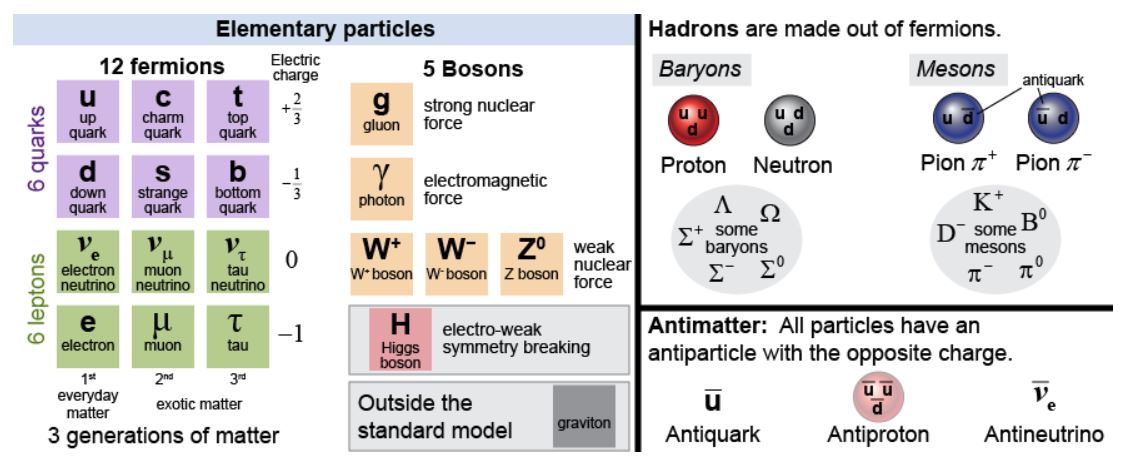




 times larger. A factor of 1.414… won’t change the argument. It strengthens the point but is, in the end, not important enough to include in an article that is already overly long. Curious readers can review the reasoning in my essay


