I have a lot to say about renormalization; if I wait until I’ve read everything to know about it, my essay will never be written; I’ll die first; there isn’t enuf time.
Click this link and the one above to read what some experts argue is the why and how of renormalization. Do it after reading my essay, though.
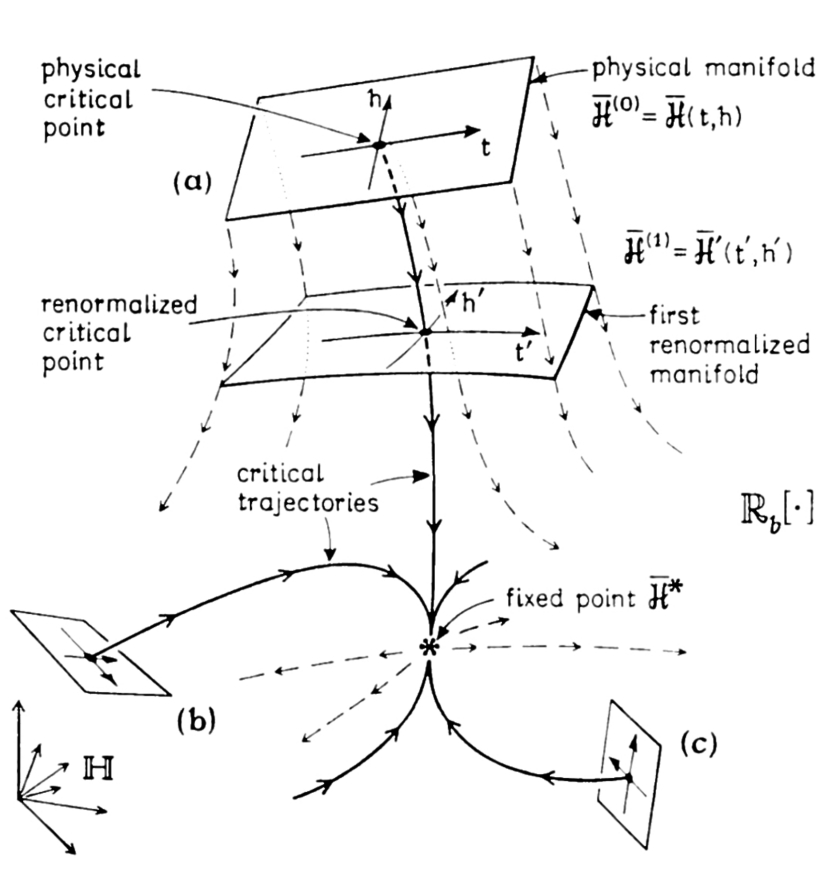
Here is a snippet rewritten from a Quora post: Renormalization is a set of techniques used to resolve infinities that pop up when calculating. It is based on the idea that system behavior depends on scale. Cut away problematic pieces that scale badly to extract finite, testable portions where infinities don’t appear.
Let’s move on.
There’s a problem inside the science of science; there always has been. Facts don’t match the mathematics of theories people invent to explain them. Math seems to remove important ambiguities that underlie all reality.
People noticed the problem as soon as they started doing science. The diameter of a circle and its circumference was never certain; not when Pythagoras studied it 2,500 years ago or now. Number π is the problem. It’s irrational, not a fraction; it’s a number with no end and no pattern — 3.14159…forever into infinity.
More confounding, π is a number which transcends all attempts by algebra to compute it. It is a transcendental number that lies on the crossroads of mathematics and physical reality, a curious number at the heart of creation because using it means that diameters, surface areas, and volumes of spheres cannot be calculated precisely.

The diameter of a circle is multiplied by π to calculate its circumference, and vice-versa. No one can know exactly everything about a circle, because π is uncertain, undecidable, and in truth unknowable.
Back in the day, people learned to use the fraction 22 / 7 or, for more accuracy, 355 / 113. These fractions gave the wrong value for π but they were easy to work with and close enough to do engineering problems.
Fast forward to Isaac Newton, English astronomer and mathematician, who studied the motion of planets. Newton published Philosophiæ Naturalis Principia Mathematica in 1687. I have a modern copy in my library. It’s filled with formulas and derivations. Not one works to explain the real world — not one.
Newton’s equation for gravity describes the interaction between two objects — the strength of attraction between Sun & Earth, for example, and the resulting motion of Earth.
Moon, Mars, Venus, and other bodies warp space-time waters in the pool where Earth & Sun swim. No formula predicts the future of multi-bodied systems. Numerical methods, 2-body approximations among others are used.

In 1887 Henri Poincare and Heinrich Bruns proved that such formulas cannot be written. The three-body problem (or any N-body problem, for that matter) cannot be solved by a single equation. Fudge-factors must be introduced by hand, Richard Feynman once complained. Powerful computers combined with numerical methods seem to work well enough for some problems.
Perturbation theory was first proposed in the 17th century. By 1960, physicists used it to solve problems in quantum physics. It helped. Space exploration depends on perturbation techniques. It’s not perfect. A fudge factor called rectification is sometimes used to update changes as systems evolve. When NASA lands probes on Mars, no one can know exactly where they are relative to reference points on the Earth.
Even when using the signals from constellations of six or more Global Positioning Systems (GPS) in high earth-orbit, it’s not possible to know exactly where anything is. Beet farmers out west combine the GPS systems of at least two countries to hone the courses of their tractors and plows. On a good day farmers can locate a row of beets to within an eighth of an inch. That’s plenty good, but the several GPS systems they depend on are fragile and cost billions per year. In beet farming, an eighth inch isn’t perfect, but it’s close enough.
Although a general method of perturbations can be described in mathematics, problems emerge when quantum and astral scales overlap. Relativity & quantum mechanics do not work well together, at least mathematically. Infinities appear that seem unresolvable.
Quantum physics is a frontier of knowledge that presents unique roadblocks to precision. Physicists have invented more excuses for why they can’t get anything exactly right than probably any other group of scientists. Quantum physics is maybe 100-years old, but problems today seem more difficult than ever.

Insurmountable?
Well, interaction of sub-atomic particles with themselves combined with, I don’t know, interactions with swarms of virtual particles might disrupt the expected correlations between theories and experimental results. The mismatches can be spectacular. They dwarf N-body problems of astronomy.
Worse — the problem of scales. For one thing, electrical forces are a billion times a billion times a billion times a billion times stronger than gravitational forces at sub-atomic scales. Forces appear to manifest themselves according to the distances across which they interact. It’s odd.
Measuring the charge on electrons produces different results depending on their energy. High energy electrons interact strongly; low energy electrons, not so much. So again, how can experimental results lead to theories that are both accurate and predictive? Divergent amplitudes that lead to infinities aren’t helpful.
An infinity of scales piles up to produce troublesome infinities in the math which tend to erode predictive usefulness of formulas and diagrams. Once again, researchers are compelled to fabricate fudge-factors. Renormalization is the buzzword for several popular methods.
Probably the best-known renormalization technique was described by Shinichiro Tomonaga in his 1965 Nobel Prize speech. According to the view of retired Harvard physicist Rodney Brooks, Tomonaga implied that …replacing the calculated values of mass and charge, infinite though they may be, with the experimental values… is the adjustment necessary to make things right, at least sometimes.
Isn’t such an approach akin to cheating? — at least to working theorists worth their salt? Well, maybe… but as far as I know results are all that matter. Truncation and faulty data mean that math can never match well with physical reality, anyway.
Folks who developed the theory of quantum electrodynamics (QED) used perturbation methods to bootstrap their ideas to useful explanations. Their work produced annoying infinities until they introduced creative renormalization techniques to chase them away.
At first physicists felt uncomfortable discarding the infinities that showed up in their equations; they hated introducing fudge-factors. Maybe they felt they were smearing theories with experimental results that weren’t necessarily accurate. Some may have thought that a poor match between math, theory, and experimental results meant something bad; they didn’t understand the hidden truth they struggled to lay bare.
Philosopher Robert Pirsig believed the number of possible explanations scientists could invent for phenomena were in fact unlimited. Despite all the math and convolutions of math, Pirsig believed something mysterious & intangible like quality or morality guided human understanding of the Cosmos. He saw an infinity of notions floating inside his mind. It drove him insane, at least in the years before he wrote his iconic Zen and the Art of Motorcycle Maintenance.
The newest generation of scientists aren’t embarrassed by anomalies. N. David Mermin said, “shut up and calculate.” Digital somersaults are executed to validate work difficult for most to understand, much less perform. Researchers determine scales, focus on relevant portions, cut-away irrelevant parts, and extract appropriate physics to make suitable matches of math to experiment. They put horse before the cart more times than not, some critics have said.
Apologists say, no. Renormalization is simply a reshuffling of parameters in a theory to prevent its failure. Renormalization doesn’t sweep infinities under the rug; it is a set of techniques scientists use to make useful predictions in the face of divergences, infinities, and blowup of scales which might otherwise wreck progress in quantum physics, condensed matter physics, and even statistics. From YouTube video above.
It’s not always wise to question smart folks, but renormalization seems a bit desperate, at least to my way of thinking. Is there a better way?
The complexity of the language scientists use to understand and explain the world of the very small is a convincing clue that they could be missing pieces of puzzles, which might not be solvable by humans regardless how much IQ any petri-dish of gametes might deliver to brains of future scientists.
It’s possible that humans, who use language and mathematics to ponder and explain, are not properly hardwired to model complexities of the universe. Folks lack brainpower sufficient to create algorithms for ultimate understanding.
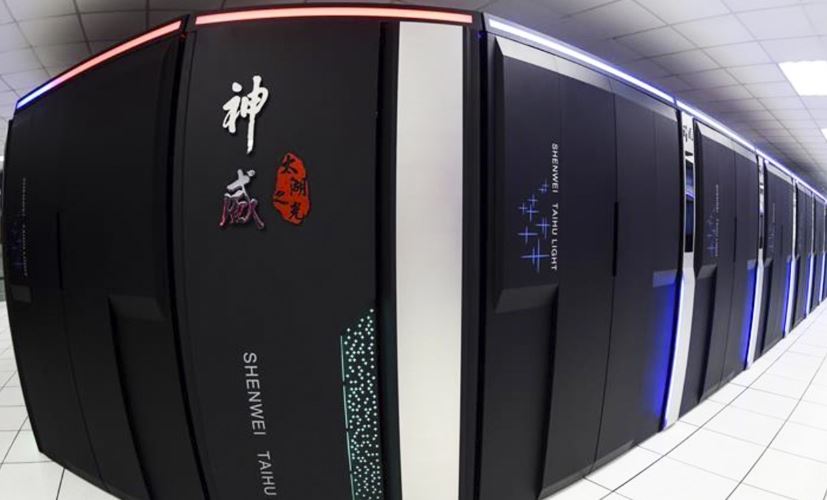
People are like the first Commodore 64 computers (remember?) who needed massive upgrades to become Sunway TaihuLight or Cray XK7 Titan super-computers, right?
Perhaps Elon Musk’s Neuralink add-ons will help someday.
The smartest thinkers — people like Nick Bostrom and Pedro Domingos (who wrote The Master Algorithm) — predict artificial super-intelligence will be developed & hardwired with hundreds or thousands of levels — each loaded with trillions of parallel links — to digest all meta-data, books, videos, and internet information (a complete library of human knowledge). Armies of trained computers will discover paths to knowledge unreachable by puny humanoid intelligence.
Super-intelligent computer systems might achieve understanding in days or weeks that all humans working together over millennia might never acquire. The risk of course is that such intelligence, when unleashed, might enslave us.
Another downside might involve communication between human and machine. Think of a father — a math professor — teaching calculus to the family cat. It’s hopeless, right?
Founder of Google and Alphabet Inc., Larry Page (graduated from same school as one of my sons) is working on artificial super-intelligence. He owns piece of Tesla Motors, started by Elon Musk of SpaceX.
Imagine an expert in AI & quantum computation joining forces with billionaire Musk who possesses the rocket launching power of a country. Right now, neither is getting along, Elon said. They don’t speak. It could be a good thing, right?
What are the consequences?
Entrepreneurs don’t like to be regulated. Temptations of military power added to science-knowledge provided by super-intelligence might corrupt these men and push them & humanity toward unmitigated… what’s the word I’m looking for?
I heard Elon say he doesn’t like regulation, but he wants to be regulated. He believes super-intelligence will be civilization ending. He’s planning to put a colony on Mars to escape its power and ensure human survival.

Is Elon saying he doesn’t trust himself, that he doesn’t trust people he knows like Larry? Are these guys demanding governments save Earth from themselves?
I haven’t heard Larry ask for anything like that. He keeps a low profile. God bless him as he gathers to himself in cyberspace everything anyone says & does.
Think about it.
Think about what it means.
We have maybe 10 years, tops, maybe less. Maybe it’s ten days. Maybe the worst has already happened, but no one told us. Somebody, think of something — quick.
Who thought laissez-faire capitalism might someday spawn an airtight autocracy that enslaves the world?
Humans might want to renormalize their aspirations — their civilizations — before infinities of misery wreck Earth and unfree futures emerge that no one wants.
Billy Lee