The Bible says that all who call on the name of the LORD will be saved. Jesus said not so fast, that’s not quite right. Not everyone who says LORD, LORD will be saved, but only those who do the will of GOD.
Despite what 40,000 Christian denominations (and counting) teach their congregations, the Bible is full of contradictions. Worse for modern readers, it is full of scientific and historical nonsense.
The most compelling contradiction involves the subject of divorce. The Bible both forbids and permits it. Jesus said that the contradiction was intentional to accommodate the hardness of people’s hearts.
When Jesus says the Bible harbors contradictions, that kind of settles the matter, does it not?
It seems that for some, it doesn’t.
One New Testament writer asserts that all Scripture is God-breathed and useful for teaching and instruction. He doesn’t assert that everything written is contradiction-free.
For one thing, the Bible wasn’t anywhere near complete when he wrote his tract. There are other reasons. The ancients didn’t have the same ideas about evidence, science, proof, and logic that western modernity has. It’s not easy to accept, but almost everything that matters to us was different in the ancient world.
My experience with members of congregations from dozens of churches has taught me that many folks are drawn to religion because they want certainty.
The uncertainties of life scare them. They hate ambiguity and want their stupid notions about life confirmed. The easiest way is to group-think with like-minded believers.
All congregations teeter on the brink of madness. Cult culture is always lurking beneath the shadows of human weakness and fallibility.
It’s not difficult to understand that Jesus had a serious problem that could not easily be overcome. By modern standards, the brightest people of first-century Israel were hopelessly ignorant. A huge number suffered from illness, both physical and mental. They had no realistic understanding about why.
They knew not where the wind came nor what the stars were. Some thought, according to the screenwriters of the 1964 classic movie, Spartacus, that a giant lived in a cave with a young girl. He looked at her and sighed. From his breath the wind stirred.
As for stars, some thought they were the light of Heaven shining through tiny holes in a tarp that covered Earth at night like a tent.
If you were Jesus and encountered such ignorance, where would you start? In those days, almost everything people believed was a lie.
A truth teller has no chance in the modern world. What chance would such a person have two-thousand years ago?
It is one of the great miracles of Jesus’s life that he was able to reach his mid-thirties before the leaders he challenged killed him.
Think about it. Life was cheap when the Romans used the cross to teach wayward people the lesson that rebels die hard. When wood was scarce, Romans nailed people to the sides of their houses. Non-citizens in occupied territories didn’t even get the benefit of a hearing more often than not.
From Jesus’s point of view, the most important problem people faced was not physical suffering or oppression but separation from God caused by their propensity to sin. Evil was the result of not knowing God and living life apart.
For Jesus, God is love. People who live outside the will and protection of love are certain to traumatize those they care about most — starting with themselves first, their own families, and moving inevitably outward like cancer into the organs of the people they hate, which for most people is everyone they meet.
The problem of hate and senseless cruelty is that it is not a respecter of persons, knowledge, wealth, or power. Hate and cruelty destroy lives whether people believe stars are pinholes or distant suns.
Jesus didn’t address the problem of human ignorance, because it is a problem that is always with us. Even the smartest people today can’t explain to anyone in a way that makes sense how it is that people got here. The best educated from the best schools talk crazy most of the time.
Instead of worrying about the minutiae of hermeneutics, Jesus said that Scripture is best summarized by two simple actions: loving God who gave us life, and loving the others who God also created and loves.
We do the will of God when we love and forgive. It’s simple. A child can understand.
Major portions of the Christian Bible weren’t written when Jesus walked the earth. It was hundreds of years after Christ’s death before a compilation of tracts were collected that were sensible and consistent enough that the scholars of the time felt confident to publish.
They published a handful of Bibles, because the printing press wouldn’t be invented for a thousand years more. Even then, the text wasn’t partitioned into chapters or verse; chapters and verses would be added later — hundreds of years into the future.
Jesus was well aware that most people wouldn’t be taught to read for a long, long time after he was gone. He knew that language and cultures change with time. No one has to be God to understand that translations of ancient languages are always a little unreliable — open to interpretation — no matter how much scholarship is brought to bear.
It’s why Jesus promised that the Holy Spirit would write the Words of God on human hearts; the words of God would guide believers until he returned to rescue the world someday.
Which day?
Jesus said he had no idea. All he knew was that he would return when humankind needed him most. It would be during a catastrophe; an extinction event the likes of which no one has ever seen; a time when the moon and stars disappear from view.
In a time of existential danger — a day that might never come — he promised to rescue us one last time.
Preachers have created a cottage industry out of the promise of a Second Coming. Writers make a ton of money cashing in on people’s insatiable curiosity to understand the “end times.”
Who will be saved? Who will be thrown into the fires of Hell?
Who will be awarded movie rights? Who will hold the copyrights to the greatest story ever told?
People demand that God be perfect. They insist that everything created by God be perfect. If things can’t be made perfect, they want nothing to do with God. Who needs a God who doesn’t live up to my high standards? some dare to reason.
God disagrees, of course. God said that he saw that the things he created were good, not perfect. A lot of people get that simple truth from the first book of the Bible completely wrong.
The first humans sinned and found themselves separated from God. The world they entered wasn’t good. It was bad. The reason, sadly, was because they made it bad.
It’s a subtle thought, but good versus bad is qualitatively different from perfect verses flawed. It has a different flavor that can make a difference in the way people view the wonder of God and what he has done. It changes the texture of the relationship with our Maker in a way that when correctly understood is able to rekindle the embers of love that Jesus warned will (for most folks) grow cold.
We don’t want that, do we? I don’t want it, and neither does God. God doesn’t demand perfection; he’s asking us to love and be good to ourselves and each other. We will make mistakes; we are not and never will be perfect; we can love and forgive each other our trespasses, as the oldest of Christ’s prayers says.
Forgiving each other erases the bad and releases the good in every person who is abundantly loved. It’s a perfect system to restore wholesomeness; perfection itself is irrelevant — does anyone know? — and, anyway, it’s unachievable by both people and God.
Everything that was made was good; it wasn’t necessarily perfect. Let that sink in. Perfection turns us into automata; into machines of steel and hardened hearts; into measurers and comparators; into judges and executioners.
Only love is made perfect through the shed blood of Christ Jesus alone. It is the central mystery of the Bible — a stumbling block for many.
We are flesh and blood made in the image of God. Jesus commanded every person under Heaven to live life unafraid. We don’t fret if a hair is grey or out of place; we don’t worry about wrinkles or crooked teeth or brains that don’t function like we think they should.
We don’t worry about the clothes we wear or the food we eat. We don’t obsess on our health or our popularity. We don’t carry guns or live behind walls or fly drones over our neighbors’ yards; we don’t fear strangers; we love them and take them in.
Most of all we trust God to meet our needs — like the sparrow and the fox who God feeds and shelters and knows as intimately as ourselves, the people who worship the LORD with grateful hearts — because without God with us we are lost in a universe we will never understand.
Billy Lee
MESSAGE FROM THE EDITORIAL BOARD: Once again Billy Lee has pontificated about religion without offering readers anything to back it up. We demanded that he quote something from Scripture.
He picked 1 John 4: 7-12:
”Dear friends: Let us love one another, for love comes from God. Everyone who loves has been born of God and knows God. Whoever does not love does not know God, because God is love. […] No one has ever seen God; but if we love one another, God lives in us and his love is made complete in us.”
NOTES:
τελεος – having reached its end; finished; complete — Matthew 5: 48
I have hope that someday readers will visit Quora.com to look up me — Billy Lee — to read my answers to hundreds — perhaps one day thousands — of questions asked by every kind of curious person from every part of the world.
I love to read and think about questions from unmet others — to encounter oddities that have never occurred to me to ask or answer.
It’s humbling to be confronted by the knowledge that not only do I not know the answers to thousands of questions, but I lack the breadth of mind to even imagine such questions; I am convicted by my own lack of curiosity and inability to think deeply about an almost infinite number of mysteries that other people of all types and backgrounds wonder about and seek to understand.
Hundreds of years ago, polymaths — the smartest and most energetic of them, anyway — could know and understand all that humankind ever dreamed. Today, the world is too complex; the depth of knowledge required to understand a narrow subject — like juice-carton safety-caps (I hold a patent) — takes years, maybe decades, to acquire.
Is it any wonder that smart people give up and go stupid?
No matter how much a Doctor of Philosophy knows about the rules of logic, he’s a dummy to every certified automobile mechanic he will ever meet — and vice-versa, right?
A way out of the dilemma is to practice the art of pontification. I pontificate based on a lifetime of experience; and reading; and wandering the world; and poking around in my backyard — to ponder why things are the way they seem to be.
Je connais beaucoup demerde, and I know a lot of nothing. When I write it down, well, magic happens. Resonate rings of truth rise which when later read render me reeling.
I’m unsure where-from the magic comes. It seems to fall from heaven to light the world. I’m driven to share with souls known only to God, because I have no way to know who reads my blog. I know only that some folks make the time, because WordPress stats say it’s so.
One of the things on Quora.com that seems to confuse a lot of people is the difference between momentum — a measure of the mass of an object multiplied by its velocity in a particular direction — and kinetic energy, which is a measure of the energy of an object that has been accelerated for a period of time in a particular direction, which enables it to do work.
Momentum is an object’s mass times its velocity; it is a measure of its inertia along a defined direction. It is measured in newton-seconds.
Kinetic energy is released by an object in units of acceleration that were initially induced by newtons of force. It is equal to half the quantity that is calculated by multiplying an object’s mass by its velocity squared. It is measured in units called joules, which are newton-meters.
Of course, spinning objects that aren’t moving in any direction have momentum and kinetic energy, too. The two are wrapped together in a concept called, torque.
Dear God, help me.
Now, I’m confused. Somebody, please, explain to me. I thought I understood until I started writing. I did. Really.
Another source of confusion concerns the nature of photons, which are tiny packets of oscillating electric and magnetic energy — from which light is made, right?
Photons seem to have no mass in the vacuum of space. When they pass through a material like glass, they leave a wake of disrupted electrons in the glass which belch out polaritons. These particles add mass to the photons and slow them down by as much as forty percent.
When photons exit the glass and enter the vacuum of space they leave the polaritons behind, lose their acquired mass, and jump to light speed, instantaneously.
Who knows for sure that it’s true?
Who understands why?
Here is an interesting thought: if humans — limited in understanding by language and mathematics — are unable to ever know why photons exist and behave as they appear to do, then who can? Who does understand?
Is all the complexity of the universe understood by no one? Is it possible that an unlikely universe can exist forever whose fundamentals cannot be articulated and which lies outside the experience and ability to comprehend of any sentient life-form whatever, whenever, wherever?
What kind of place do we live in, anyway?
Calm down. Take a breath.
Reality may not be as hopelessly inaccessible as it seems. Can it?
Here are some questions, which I’ve answered as truthfully as I know how. The answers are assertions of truth.
1 – How did a single cell organism eventually lead to complex life on earth, and does that mean that all life has a common ancestor (the single cell)?
This one is the 64-million-dollar question that no one has ever answered convincingly. Prokaryotic cells were established 3.5 billion years ago on the early Earth. They evolved to become the bacteria and archaea branches in the tree of life that exist to this day.
Here is the amazing part, at least for me: Eukaryotic cells, which are the much larger and more tightly organized cells of all animals and plants, did not emerge until two billion years after prokaryotes. It took a long time to evolve cells capable of conjugating into more complex life.
For the past 1.5 billion years eukaryotic cells have evolved into life forms capable of civilization and space exploration. The time frame is amazingly long.
The thought that a lunatic could in a moment of bad judgment start a cascade of events that extinguishes all life is troubling.
When astronomers look into space they see no signatures of life as advanced as ours. Again, this is troubling, because it might be an indicator that the knowledge possessed by advanced life-forms may approach some asymptotic limit where self-annihilation becomes inevitable.
2 -What evidence would falsify the theory of evolution?
No one knows all the myriad ways that life evolves, only that it does. That life evolved from cells that were fully functional 3.5 billion years ago is an established fact, because of evidence found in rocks.
Scientists know that it took two billion years for these ancient cells to evolve into the much larger and more tightly organized eukaryotic cells that today are the foundational structures of all animals and plants.
No one knows how life as complex as cells was established on a hostile planet like the early Earth, but everyone has an opinion; these opinions are called conjectures and theories.
One scientist might say that life started on Mars and was transferred to Earth on space debris uplifted by a cataclysm on Mars. Another says no; all the stuff necessary to make prokaryotic (primitive) cells existed in abundance on a young Earth — perhaps near hot vents in the ocean floor. Other geologists say the earth was bone dry at one billion years. Oceans came later, so just what the heck does anyone know for sure, anyway?
Many conjectures purport to explain how life changed from unicellular eukaryotic forms 1.5 billion years ago into the space-exploring civilizations of today. Every conjecture thus far has already been falsified either by evidence or by competing conjectures that make as much sense but are different.
For example: some say mutations in DNA drive evolution. The problem is that mutations are too rare. Some say an eco-sphere of processes driven by a halo of molecules that cling to DNA drives evolution. They call it epigenetics. Others say, no. RNA drives evolution like colonies of intelligent ants who build hives. There are other explanations.
None are verifiable or generally accepted due to an insufficient body of proof that is able to overcome alternative ideas that are equally compelling.
Another problem is that no one knows if DNA life is all there is. DNA is a molecule that cannot be seen or worked with until it is amplified into a viewable goo.
Are there other undiscovered molecules no one knows how to amplify?
Understanding of the parameters and limits of life is incomplete and may perhaps mislead researchers. Humans might not yet know enough to figure out the dynamics of genomes. More needs to be discovered and understood.
Is there a shadow biosphere that is in a symbiotic relationship with DNA? Where is the dark DNA that biologists can’t find that is necessary to code for many of the proteins they know exist?
How were cells themselves established so quickly on Earth? It’s a question whose answer is discussed by countless experts and non-experts; no answer fully satisfies.
Darwin’s ideas about natural selection and survival of the fittest have their place. But he was just getting started, and he died a long time ago. Scientists have a lot of work left to do.
3 – Which Bible story is most objectionable when looked at in the context of modern morality?
All Scripture is God-breathed. To love and be loved by both God and people is why we were born; it’s what makes life precious and worth living. No one wants to die; no one wants to be hated.
The sad part is that everyone suffers; everyone is hated by someone; everyone hates someone; everyone dies after a life of blunders and sin. Christ Jesus came to save the lost, which by the looks of this thread is pretty much everyone.
We have hope. It’s something to hold onto as we grow weak and find ourselves ruined at the end of our minutes in the sun on our beloved Earth.
Jesus made a path for us. It cost him everything a human can pay. He somehow survived the Roman crucifixion that killed him to show the poor and overly burdened that in his power is the way, the truth, and the life.
There is a path to paradise; we — everyone of us — can find it by surrendering to the God who loved us, gave us life, and suffered to set right what we put wrong.
4 – People say Newton’s third law, “For every action, there is an equal and opposite reaction,” is not accurate. Is it true?
Einstein said that only mass and energy exist; they are in fact equivalent; they are the same thing; two sides of the same coin. Energy gives rise to all other phenomenon and forces that scientists observe.
Stephen Hawking said that when mass (or energy) comes into existence a negative energy must emerge to balance it so that when added up everything in the universe sums to zero. It appears that Newton’s third law, equal and opposite, is not only accurate — it is a fundamental balancing principle that undergirds existence.
Mass is matter, which can be positive or negative and is referred to as matter or anti-matter.
The Billy Lee Conjecture claims that mass is pixelated (quantized) such that in the contest of emergence within the smallest spherical volume, matter or anti-matter (one or the other) will prevail due to a natural truncation of π in the putative spherical volume of the creation space.
An evenly divided ratio of matter and anti-matter within a spherical creation-space is physically impossible if π is truncated by pixelization. Matter and anti-matter will annihilate until a single piece of either matter or anti-matter remains after the creation event.
To maintain a zero-sum, balancing counter-energy will emerge according to speculation by the late Stephen Hawking.
Over long periods it seems that an extraordinary amount of matter has accumulated inside our own universe by surviving the natural annihilation of matter by anti-matter. This matter seems to have generated an enormous amount of counter-balancing energy — some of which Newton called gravity. Most of the energy remains undiscovered and is referred to as “dark.”
In our own universe, π seems to “round-off” near the precision of the Planck constant.
In universes outside our own — some of which seem to be pulling our universe apart in an accelerating expansion caused, perhaps, by their own gravitational forces — π may truncate to different values to generate in some cases a prevailing anti-matter and opposing energies that manifest qualities different from the energies found in our own universe.
If parallel universes disrupt the zero-sum strategy of our own, it may still be true that the principle of zero-sum or equal but opposite is operational, but humans are too small and the distances are too far for anyone to ever know for sure that it is true.
5 – What are the major foreign policy issues that the United States of America is working on in 2018?
I’m writing this answer just after the meeting in Singapore between North Korea and the United States involving the Korean nuclear arsenal.
The Secretary of State, Pompeo, said yesterday that NK has two years to de-nuke. This delay might tempt the Japanese to convert their stockpile of 47 tons of plutonium into bombs. Japan and North Korea have issues related to the Japanese occupation of Korea from 1910 to 1945.
It takes ten pounds to make one bomb. The Japanese can make as many bombs as they want in as little as 24 hours.
A Japan armed with 10,000 nuclear bombs (they already have the missiles to launch them) is a clear and present danger to China, Russia, and Korea — not to mention the United States with whom Japan has a beef that goes all the way back to World War Two when the USA destroyed 67 of their cities with napalm; two cities by atomic bombs.
The USA has occupied Japan ever since. Some of the Japanese probably hate us — who knows for sure?
6 – Can a photon’s speed be slowed down? I have heard that it can be slowed by a medium, but I have also heard that it is just the velocity being slowed as it “bounces” from particle to particle? I am not talking about Bose-Einstein condensation.
The current thinking is this: when a photon leaves the vacuum to enter a material object, it leaves a wake in its path that vibrates electrons in the medium. These oscillating (or disturbed) electrons generate polaritons, which are photon-like objects that can catch and add mass to the photon. With mass added, the photon slows down — as much as 40% in glass, for example, which enables more polaritons to pile on.
When the photon exits into the vacuum of space, it disentangles from the polaritons, and instantly resumes light speed.
I didn’t make this up.
It’s what some physicists are saying, and it explains a lot and leaves a lot unexplained — like all things physics when folks go just a little deeper into the abyss of understanding.
7 – What is the relation between light and darkness? Can one exist without the other?
Light is the action of certain wavelengths of electromagnetic radiation on structures in the eye, which trigger hallucinations in the brain that humans report as “light.”
An infinite range of frequencies are “out there.” Humans are blind to almost all of them. People who are unable to trigger hallucinations induced by electromagnetic radiation say that they are experiencing “darkness.”
Some frequencies of light are experienced as “heat.” Because the sensation is not accompanied by visual cues, people in hot rooms with no windows believe they are experiencing “darkness.”
The experience of heat is caused by the same electromagnetic waves that induce visual experience, but they are a tiny bit longer in length than those which induce the experience of the color “red” in humans.
The longer waves carry less energy and are invisible to people unless they view the ”infra-red” light through high-tech sensors. Local fire-departments use these sensors to identify ”hotspots” where fires might reignite.
8 – Given an opportunity to pass through one or two slits with no detection, will a quantum object always pass through both?
If the slits are in the right position and are cut to the right size and are at the right distance from the source, a pattern on a detector screen will evolve over time to look as if waves are passing through the slits and interfering in a predictable way with each other.
Of course, it’s not true, because the particles are shot one at a time and the duration of the experiment can be hours to weeks long. The shots land one dot at a time. After thousands of shots, a pattern that resembles what one would expect of waves interfering is formed by the particles as they accumulate on the detector backstop.
9 – Is Jesus a hoax? Jesus has not walked on Earth in 2,000 years. How can a man 2,000 years ago save anyone?
I was hungry and you gave me something to eat, I was thirsty and you gave me something to drink, I was a stranger and you invited me in, I needed clothes and you clothed me, I was sick and you looked after me, I was in prison and you came to visit me.
The righteous will say, ‘Lord when did we do these things?’
My answer will be, ‘Everything you did to help suffering people, you did for me.’
The preceding is a paraphrase of part of Matthew 25, a book in the Bible.
Read it. Why not?
The answer is in the sense that it is not a hoax that the “least of these” walk the earth when we do. How we treat unfortunates is, in the view of Jesus, the way we treat him. He will return to us the same courtesies when finally we give GOD an account of our lives.
RNA, in its many forms, behaves like ant colonies which swarm over the DNA pile to do a number of tasks that seem to involve a lot of decision making.
RNA selects out of billions of bases a few thousand which it strings together to make “genes” that it transfers to ribosomes — which are made almost entirely of RNA and are among the oldest structures in cells.
At a ribosome, the genes are coupled to RNA that carries amino acids; the amino acids are then ejected from the ribosome to be strung together like necklace beads; they are transported to Golgi structures where they are folded into proteins.
A process this complex — and it’s actually far more complex than this summary implies — can be orchestrated without intelligence; it’s possible, but without intelligence of some form, the process seems, at least to me, to border on the miraculous.
After all, what is the result?
It is a conscious thinking life-form who can, in cooperation with others, figure out its own origins.
11 – How do Quantum spins get affected by Quantum entanglement?
All atoms with electron shells that are home to more than one electron have entangled electrons. The spins tend to oppose each other. With bosonic particles, down conversion techniques produce photons that have opposite polarization.
Most physicists think that spin is induced during measurement; the spin is transmitted oppositely to the entangled partner instantly — no matter how far separated.
For this reason, a pair of entangled particles can be envisioned as a single particle that behaves as if one of its dimensions (the distance between its endpoints) is missing.
The distance between the entangled pair behaves as if it is zero — when it is known to be non-zero.
12 – What is the viability of colonies on other planets?
The two planets closest to Earth are the most viable places for colonies simply because they are the easiest to resupply. They are Mars and Venus.
Neither can sustain colonies, because they lack magnetospheres, which are essential for deflecting high energy particles emitted by the Sun (called the solar wind). These particles are deadly to life. The molten iron-nickel cores of Mars and Venus froze millions of years ago on both planets, which collapsed their magnetospheres.
Venus has a highly toxic atmosphere, which is another reason to rule out colonization there.
Beyond Mars are gas giants. Only their rocky moons are candidates for human colonies. All the moons appear to be too cold to operate the machinery necessary to sustain human life. Most lack protection from the solar wind.
Bonus Assertion – Does a photon consist of (f) quantized energy packets each of (h) joules?
A photon seems to be a packet of vibrating electric and magnetic energy, each part of which exerts its energy at a right angle to the other. The energy in the packet is proportional to vibrational frequency alone. A photon has no mass or acceleration. It travels along at a constant speed in space-time. The electric portion of the energy is about seven times the energy of the magnetic portion.
Photons can become more intense (that is, brighter) when they pile up. Pile ups don’t happen to electrons, protons, and neutrons because they obey an exclusion principle that forbids them from occupying the same space at the same time.
Photons can pile up, but their intensity (or energy) can only be transferred into electrons that are in an energy state that resonates with the frequency of the incoming photons. Non-resonate electrons ignore un-matched photons, so photons pass through non-resonate electrons unimpeded.
The energy of an individual photon can be expressed as its kinetic energy and shown to equal Planck’s constant times the photon’s frequency, which always results in a very small number.
When expressed in terms of its wavelength (λ), photon energy equals the Planck constant (h) times the speed of light (c) divided by the wavelength (λ) of the photon. Notice that the mass term is missing due to a simple manipulation of the relevant equations — which anyone who is interested can find in the following link.
Momentum might not be an appropriate metric for a force carrying boson like a photon, because momentum is based on mass, which many physicists say photons in a vacuum don’t possess.
Another reason momentum could be an inappropriate metric is that the velocity of photons in a vacuum is independent of any reference frame, right? Momentum is a vector quantity that is always measured in relationship to a particular reference frame or the momentum of another particle.
There is a theory that claims that photons pick up mass when they pass through materials like glass. They seem to leave a wake that shakes up electrons in the material. The vibrating electrons release polaritons, which by a mechanism analogous to superposition add mass to the photon and slow it down. When the photon exits and returns to vacuum, it sheds the polaritons, becomes massless, and returns to light speed instantly.
Perhaps photons in the vacuum of space acquire mass by interacting with virtual particles that emit virtual polaritons. Notions about the nature of the universe would be changed radically if such a notion were confirmed by evidence.
Because h and c are constants, they can be multiplied together to give a constant that is very close to 2E-25. Dividing 2E-25 by the wavelength of a photon will give its energy in joules. Of course, all units are SI, which stands for standard international units, correct?
Since E = hf or (hc / λ) , the energy is always a multiple of h, which is the Planck constant. The word “multiple” is a simple way to say “quantized”.
So, the energy of a photon bunch or pile can be expressed as a multiple of the number of photons of a certain wavelength in that bunch. The energy in each individual photon is its wavelength (or frequency, if you like) multiplied by the Planck number — a constant equal to 6.626E-34.
It takes a pile-up — or bunch — of about 7 photons with wavelengths close to 2.5 one-hundred-thousandths of an inch long (635 nanometers) to carry enough energy to light up the sensors in a human eye.
How much energy is in those seven photons? It is seven times 2E-25 / 635E-9 — in joules, right?
It’s 2.2E-18 joules. Converted to an easier metric befitting its scale, the energy is nearly 14 electron volts, which is equivalent to the energy held in 14 electrons.
People say that photons with wavelengths that measure 635 nanometers create the color yellow-orange in their minds.
A few months ago, I published 25 Answers to questions readers of Quora.com took time to ask me, because they trusted I knew what I was writing about. Yes, the world is easily fooled by pontificators posing as experts. I confess, I am one of them.
I am a bona-fide pontificator and intend to continue pontificating until I can no longer remember my name. For me, it’s art. My promise is truth, accuracy, and to fix screw-ups when someone points them out.
The response to my blog-bag of answers was underwhelming to the point where I wondered whether I should ever inflict another anthology of eclectic curiosities on any group of readers anywhere in the world.
Yes! I decided. Of course, I will. I love to read what I write!
When I forget what I once knew, I read the posts and remember how smart I was when I could remember stuff. It’s a good feeling. Someday I hope my grandchildren will understand why I don’t remember their names or how old they are. Someday I hope they will get what I’m talking about.
Brain-dead and happy is a wonderful combination, and I have it. Yes, I do. It is wonderful. I feel happy and content most of the time.
My mother had Alzheimer’s for years. It was a peculiar variation where she could remember twenty-five quips and jokes, which she repeated to anyone who would listen. Sometimes she wondered what was wrong with her. She asked about it, sometimes.
She always forgot the answer, but to the end she never forgot her repertoire of sure-fire laugh lines. Mom delighted us to the very end of her life, God bless her.
Anyway, I know stuff, and I’m no longer afraid to share. I would say I am becoming fearless.
This essay is a collection of 25 more questions that people from around the world have asked, and I have dared answer. My last Quora compilation was mostly math and physics. Not this time. Here answers focus more on politics, philosophy, religion, and other esotery.
Oh, I might slip a science or math question in here or there for nerds I know are out there who read my stuff and cling to every word.
Here goes.
1 – How is it “just” for jails to be privately owned in the U.S.?
Allowing private citizens to own the means-of-incarceration is as insane as it is unjust and undemocratic.
Since 1984, America has allowed people to sequester as much wealth as they can manage. The looting, cheating, and chicanery that followed has turned America into one of the most corrupt, cruel, and unfair countries the world has ever known.
The result is that now we have an associate of a powerful Russian cartel serving as our president. Are we really going to allow his friends to own our prisons?
Are we out of our minds?
The situation is far worse than you can imagine.
Billionaires run the media. You aren’t going to hear about ways of organizing our country that are in opposition to their consensus about how things should be done. What passes as “dissent” on shows like Rachel Maddow, for example, has the backing of some billionaire somewhere.
We don’t know the names of the people who run our country. They don’t run for office. They do buy the services of office holders on both sides of the aisle — GOP and Democrat. It’s disturbing, especially when people finally realize that they are at bottom mere slaves with no real power. If voting made a difference, would billionaires allow it? Would you, if you were rich? I don’t think so.
Even now, confidence in our electoral system is being undermined. Reality Winner, the NSA contractor who exposed Russian tampering with our election results, rots in jail; she can’t obtain bail. The media doesn’t cover her. They want us to forget all about her.
Keeping Reality incarcerated undermines confidence, because it makes it seem like the government has something to hide about our election process.
Elon believes (correctly) that the risk of a future human extinction event approaches certainty over a very short period of time that can be estimated to be in the hundreds of years or less.
Elon believes we are in a race against catastrophe; humans are special and must be protected; one way to reduce extinction probabilities for humans is to establish populations on other planets and moons.
There are 165 or so rocky (solid) bodies in the solar system with enough gravity that humans can walk on them. Places where large populations can survive are fewer than five and could be as few as absolute zero.
Mars has special problems for human survival which must be solved. It has no protection from high energy radiation and cosmic rays. It lacks a magnetosphere and the atmospheric gases like nitrogen and oxygen that are opaque to harmful rays and particles. Elon believes these problems will be solved and that risk of extinction can be reduced if we establish vigorous colonies there.
He has hope where most informed people do not. My hope is that we can avoid extinction on Earth, but volatile climate and frequent ice ages are difficult to overcome.
We also have new and unusual risks associated with our technologies —biological, nuclear, AI, totalitarianism, resource depletion, and runaway climate change.
Natural risks include asteroid strikes, super nova irradiation, and volcanism. These natural risks are likely to be the same (or larger) on other bodies in the solar system as they are on Earth.
Two human-like species are known to have gone extinct in the geological record. (Some anthropologists say it’s three.) Human populations experienced a near extinction event 70,000 years ago when the total population collapsed to less than 4,000.
I do not know what Elon Musk thinks about organized religion.
I see religion as a brake on the tendency of humans to kill each other, which history teaches has sometimes been effective and at other times not. Sometimes, strongly held religious beliefs lead to war.
On one thing humans agree: they love to fight.
3 – What is the greatest achievement in human history?
Blaise Pascal said that civilization advanced when people finally understood that being the son of a Queen did not qualify someone to be a King.
Nepotism kills civilizations and impedes human progress. An example is the president bringing in his family to manage the United States, presumably because loyalty trumps ability.
The cascading catastrophe that is enveloping us will soon teach anyone who is teachable that placing loyalty to a “king” above the ability to serve our country is one of the many roads that leads nations to ruin.
4 – Why is there a lot of woo-woo surrounding the double slit experiment?
If you shot a BB gun once every five minutes for two weeks at a steel plate that had cut into it two quarter-inch slits, you wouldn’t expect to find 25 or so tidy columns of holes in the wall behind when you were done. People who have done this experiment with atomic scale particles always say “woo” after, because the phenomenon makes no sense.
The mathematics to describe the phenomenon is the same as that used to explain wave-behavior. The problem is this: even if you shoot one wave packet at a time (using photons) instead of solid BB-like particles (like Buckyballs), no one expects that over a few weeks tidy columns will form on the back wall that look like wave interference. The reason for the pattern is a total mystery.
5 – What is the origin of geometric shapes (triangle, circle, cube, etc.)? If the universe was governed by different laws, would it be possible that these concepts would also be different?
People speculate about the origins of idealized shapes that don’t occur in nature (except approximately). People seem to crave symmetry. They don’t like cognitive dissonance, uncertainty, or ambiguity.
People who are dissonant-intolerant are easy to manipulate. Politicians prey on people’s discomfort by offering simple solutions in return for votes. The result is always disillusionment, because nothing involving people is simple.
Nothing in nature is simple, either.
Triangles, circles, and cubes seem simple because of their symmetries. They appeal to the simple-minded among us — which is 99% of the population, right? It might be 100% if mathematics and language are insufficient to understand ultimate reality.
Einstein had this theory that only mass and energy exist. They are equivalent; they are two sides of the same coin. Space and time are a consequence, not a cause.
Space-time was described by tensor-metrics, and the metrics show that space-time does not have to be flat.
Lines can be thought of as geodesics, which are “straight” only when the metrics of space-time are “flat”. When the metrics “curve” space-time (as they do near massive objects) parallel lines might be parallel in one place only, as lines of longitude on Earth are parallel in one place only — at the equator.
The laws of physics seem unlikely, because twenty or so constants in nature have been discovered that can’t be derived and seem to make no sense. All these constants have been revealed by experiments and seem to be irrational. One example is the constant “α” (alpha), which is discussed in the first link that follows this answer.
Stephen Hawking says that the odds of a universe configured like ours are 1E500 against, which is close to an infinity. But Stephen Wolfram says that at the heart of the universe is a simple algorithm. In his view the algorithm, should anyone ever discover it, will prove that our universe is the only configuration possible.
6 – What salary in the United States puts you in the top 10%, top 5%, top 2%, and top 1% in terms of salary?
All anyone needs to know about train-wreck America is that half of all black families live on less than $40K per year; half of all non-black families live on less than $75K per year. It’s hard to imagine that families can survive, let alone prevail, on so little income.
The USA is segregated by income and race. Poor people have no idea how easy life is for the wealthy; the wealthy don’t believe America has poverty.
I have five sons and one daughter. Only two of the six are in the top 1%. The most talented one, an assistant professor of kinetic art at a major university, is in the bottom half. His brothers give him money so he can get by.
7 – Modern humans appeared 200,000; civilization 10,000; and advanced technology 500 years ago. Why no advancement for something like 190,000 years?
Technology advances when survival demands it. Wars involving large populations did not become possible until about 3,000 years ago, because human populations were small.
Technology (to wage war) began to advance when population size increased; war technology percolated into the general population during peacetime.
70,000 years ago the human population collapsed to what some anthropologists believe was fewer than 4,000 individuals. The climb back took a long time because the world was in an ice age until 15,000 years ago or so. It has taken time to reach seven billion individuals.
The good news is that advances in technology and science are no longer driven by war, but by the preparation for war. Entertainment, comfort, convenience, and other factors drive inventors to bring clever technologies to peacetime populations.
Avoidance of war should become the highest priority of humankind from here on out, or we might suffer a catastrophic population collapse that would most certainly set back human development for hundreds of thousands of years.
Extinction is another possibility. At least two intelligent hominid species are known to have gone extinct during the past 200,000 years. There may be others.
Sorry for the short answer. The list of technologies and natural catastrophes that can annihilate homo sapiens is long. Click the following link to read about most of them.
8 – Should the USA build a competing Status-6 Oceanic Multipurpose System (Doomsday) Nuclear warhead?
Enough Pu239 has already been produced in weapons and processed from nuclear fuel rods to sterilize planet Earth of all life.
One country, Japan, has isolated 47 tons of Pu239 from fuel rods, is adding 8 tons per year, and has complained on NHK television that they don’t know what to do with it. Ten pounds is enough to make one atomic bomb.
Plutonium 239 is bomb making material. Japan has 94,000 pounds. It is producing 16,000 pounds per year. Twelve pounds makes one high-yield bomb.
The level of toxicity of Pu239 dust has recently become controversial. My understanding is the traditional one: the speck of brown dust that kills you, you will never see.
The half-life of Pu239 is 24,000 years. Risk studies (which include about a dozen hazards not related to plutonium) have shown that the chance that homo sapiens will survive a catastrophic population collapse during the next 24,000 years is less than one-in-a-million.
Humans cannot baby-sit all the plutonium that exists in facilities on every continent and keep life on earth safe from annihilation by contamination. The warheads and storage facilities are going to rot over time, and the earth will soak up the poisons left behind like vinegar in a sponge.
Doomsday is not a question of whether-or-not but of fast-or-slow. There is no upper limit to the size of a hydrogen bomb, so fast is doable. A rogue group with enough resources could construct a bomb powerful enough to obliterate Earth.
No one can undo the poisons that now exist, so slow is inevitable.
9 – What is the evolutionary reason that human beings are superficial and attracted to external appearances more than towards intrinsic qualities such as intelligence, character, integrity, honesty and virtuosity?
My reading and life experience tell me that humans are attracted to symmetry.
There could be any number of reasons, but it is easy to argue that symmetry seems to create less stress in those who encounter it, which may make them more receptive (and less reluctant) to mate with those who have it.
Reduction of cognitive dissonance is a major driver of conscious-life; symmetry seems to reduce dissonance in sentient beings like humans.
Interest by humans in mathematics and art seems to confirm, at least to my mind, that folks are driven to imbibe “harmonies” and “patterns” in nature; these symmetries provide them with reassurance that the world is not hostile and that happiness and reduction of stress is possible in the face of accidents, disease, and predators.
Intelligence, character, integrity, honesty and virtuosity are qualities that are not easily perceived and can even be illusory. People are good at feigning all these qualities to manipulate others to satisfy their needs — especially their sexual appetites and their desire for power over others.
Symmetry is not easily disguised (or the lack of it, even with good grooming) and can be an indicator of good mental and physical health, because symmetrical (attractive) people tend to have higher status and are in general less traumatized by mistreatment (on average) than people who do not have this physical quality.
People may mate with high symmetry individuals and later discover than the intangible moral qualities that they value in a life-partner are missing. Such a discovery can lead to separation, but meanwhile offspring have been spawned who have high levels of symmetry, and the process of selection for this quality continues unabated into future generations.
Yes, I have no evidence that this conjecture is correct; it’s not my field, but it seems to be a factor in the world I find myself.
10 – How does Russia stay on par with the USA in many high-tech military systems when their GDP and military budget is so small by comparison? Shouldn’t we be light-years ahead of them by now?
USA military spending is deceptive and classified.
The United States has 800 bases inside 70 countries. It is at war with every country that doesn’t do what it’s told.
Since the end of WW2, the USA has attacked one-fourth of the 195 countries on the earth. Depending on who counts, the USA has killed between 10 and 65 million people, most of them civilians. Injured people are uncountable.
The high casualty rates are due to the way it fights. The USA bombs the enemy to rubble, then moves in a few troops supported by large numbers of indigenous mercenaries to deny the rubble to the enemy.
Take two countries the size of the USA and put them side by side. The land area is less than Russia. Russia is huge. Its entire population is technically literate.
In the USA, only elites are educated. The vast majority of Americans are poorly trained, because public education is underfunded and neglected. Under the American system, education doesn’t generate profits for the wealthy, so they won’t support it.
Because America is segregated by race and income, it is difficult for visitors to get a sense of how poor the general population is. Wealthy Americans are in complete denial of the simple truth that their country is a train wreck for 75% of the people who live in it.
People with the money to travel don’t explore urban ghettos or rural wastelands. They don’t know things, nor do they want to know.
The USA has the world’s biggest and cruelest prison system for a reason.
Think about it.
Every country in the world, including Russia, is trying to avoid the wrath of the United States. They say nice things to us, so we won’t hurt them. They build as much deterrence as they can to avoid being attacked or embargoed.
11 – Has anyone considered leaving the USA because of the gun laws?
Anyone who has to carry a gun to feel safe is living in the wrong place. My recommendation is to move to safety ASAP.
The guns that many civilians own today inflict shattering injuries that no one who is shot can recover from. The slugs are high velocity and tumble. They are designed in non-conformance with the Geneva accords and are diabolical workarounds.
I would rather die myself than fire one of these weapons at another human being, no matter what they’ve done.
We have police and soldiers who are trained to inflict mayhem when necessary to protect civilians from human predation. Why not let them do their jobs while we civilians throw our war guns away?
Carrying a high-powered weapon into a wild area that is rife with people-eating predators might be a good idea under some circumstances. I don’t have a problem with defense-by-gun against wild animals who might be trying to kill for food or fun.
My recommendation is to travel in wild areas in a way that doesn’t unnecessarily encourage attack by dumb and innocent animals — because, can we face facts? — they don’t know any better.
Animals have a right to live in a natural way and not be provoked. People are smart enough to travel in the wild and avoid unnecessary contacts with carnivores.
12- What would happen to Hitler if he was captured today?
Well, I believe he would be released and featured in the next GOP presidential debates, win the Republican nomination, lose the popular vote by millions in the general election but win the electoral college, and become president.
As a lunatic with delusions of grandeur, he might do very well indeed.
I don’t think he would kill nearly a hundred million people like he did the last time around. It is more likely closer to two billion. But hey, that leaves five billion humans to abase themselves before him, so it would be worth it, right?
13 –Would you consider the USA a noble superpower when compared to other superpowers like Russia and China?
The billionaires who run the USA believe that private ownership is noble and that public ownership is ignoble. They are in a war against any form of socialism or collectivism.
Since the end of WW2, the wealthy have used the military power of the United States to attack one-fourth of the 195 countries on the earth to prevent a cascade of civilizations into communism. This war has, with a few exceptions, been enormously successful.
Today, they are fighting to consolidate their power. The billionaires of Russia, China, Israel, and the USA are dividing up the world like the New York City crime families of a few generations ago (watch the Godfather Trilogy or read the book by Mario Puzo).
Private ownership (called Capitalism) is a permutation of slavery that can be corrupting to democratic governance — as is obvious to any observer of U.S. history.
14 – How do you interpret human consciousness? Are you the center of the universe?
Consciousness is the fundamental and foundational principle of the universe. Conscious life plugs into this foundational consciousness in a way analogous to televisions plugging into a cable outlet. A television can be unplugged and replaced. But the cable programming continues. It is eternal. Consciousness is at the center of the universe. Conscious life is at the periphery.
15 – How would slavery have evolved in society if it was not seen as morally wrong?
“Capitalism” is the modern term for slavery. Owners of plantations, factories, and other businesses accrue the benefits of the plantation owners of former times.
Instead of providing slave quarters and food to their slaves, they pay a tiny stipend (called a minimum wage) to their laborers, which frees owners from the additional responsibility of caring for and protecting workers.
Putting the burden of housing, food, health care, and transportation on the backs of low-paid workers is called “freedom.”
The legal system disciplines unruly workers, while the state unemployment system helps dissatisfied owners replace those workers they believe are unfit.
For a small percentage of Americans, it’s a beautiful system.
Because the USA segregates workers both by race and income, most poor people don’t interact with the wealthy. This lack of contact between rich and poor reduces conflict and promotes peaceful living.
17 – Which among these countries is the best to live? Canada, USA or Australia? Why?
My question is, which country is the best place to live if you are poor? Most people are born poor.
If people go on living by being born again after they die, the odds that they will be born impoverished is high regardless of how well they lived in their prior life. That’s why its important to make the world a good place to live for impoverished people.
Does anyone seriously believe that they only live once? Consciousness continues somewhere, and it’s all there is, right? Absent conscious-life the universe can have no meaning.
I believe Cuba is the best place to live if you are poor, because it has a good climate and the government tries to provide services to ordinary people that are available only to the well-to-do in places like Canada, Australia, and the USA.
People might want to go to Cuba to find out how the poor live on that island. Then come back and observe how the poor live in their own countries.
The United States is segregated by income and wealth, so it’s hard to find poor people if you are rich, and if you are poor it is impossible to meet rich people.
18 – Trump wants to develop a lot of smaller, “tactical” nukes. Should the US use these against North Korea?
The USA bombed North Korea back to the Stone Age during the Korean War.
It killed an estimated two million civilians. The bombing was led by General Curtis LeMay of the Strategic Air Command who later partnered with George Wallace when he ran for president back in the 1960s and carried several states including Michigan (if I remember it right).
Wallace was a white supremacist. The Air Force’s own official historians have called LeMay’s bombing of North Korea the cruelest use of military power in world history.
This is the same General who destroyed 67 Japanese cities and burned their populations alive with napalm (fire-jelly) during WW2.
North Korea has done nothing to justify a military strike against its territory.
Nuclear weapons of any size or type should never be used in war, especially when there is nothing to be gained but the reputation for being a monster.
What does Korea have that we could possibly want? The answer is, nothing.
We have a choice to make: are we good or evil? Our destiny depends on how we answer that question.
19 – I am terrified of single-payer systems as implemented in socialist countries. Can this happen in the US? Was Obama trying to give everyone healthcare all along?
The USA is based on a slave system (now referred to as capitalism or free-market) where the owners of the plantations have doctors, which they share with their favorite house slaves. The field hands get nothing. The plantation owners are terrified that they might have to share their doctors with “unworthy” people should a slave revolt occur, so they have built the world’s most massive prison system to isolate slaves who might dare challenge the status quo.
In other words, people have to work for the right company and have the right job to get access to free health care. Very few do.
The system is so simple, a child can understand it.
Obama threw a wrench into the system by making it possible for people who work for the wrong companies (or who don’t work at all, for whatever reason) to buy access to health care for a reduced fee. Care is still expensive, but it’s not totally out of reach anymore for about three-quarters of the population.
In Cuba (for example) every neighborhood and apartment complex has a doctor assigned to it. What could be more effective than walking down the hall or across the street to be evaluated? If necessary folks are referred for further treatment to a hospital. Otherwise they get the meds they need, and that’s as complicated and inconvenient as it gets.
I grew up in a Navy family. We had free health care. If you got sick, you just drove to the base hospital and the doctors evaluated you. No paper work, no fees. It was a “single-payer” socialized system of medicine. It was better than what we have today as civilians except that protocols, equipment, and medicines are more effective today than they were sixty years ago when I was in that Navy system.
It’s hard for me to believe that this is a serious question by a serious person, but clueless people in the USA are subject to sophisticated behavioral modification protocols due to the immense amount of money that is involved in medicine and drugs, as well as guns, entertainment, food, and transportation.
So it isn’t surprising that people fear a lot of things that aren’t dangerous and are oblivious to dangers that are serious. It’s all about helping a relatively few families and cartels sequester the lion’s share of our nation’s resources.
Someday, maybe things will become more fair than they are now. I hope so.
20 – Why is it assumed that America invented slavery when slavery has been around for much of human history?
America practiced one of the cruelest forms of slavery. It is the only country in the western hemisphere where slave revolts were successfully suppressed.
Today, slavery has been renamed; it is called capitalism. In the USA, slaves are called workers and are free to live outside the gated communities of the wealthy. Workers are segregated by income to minimize the possibility of unrest.
The USA continues to prevent a successful slave revolt by maintaining the largest prison system by far that the world has ever known.
Two-thirds of white people came to America as slaves, called indentured servants. This practice started 150 years before the country became a constitutional republic and continued for many decades after. Indentured servitude was a seven year term of slavery that ended in freedom.
For Africans slavery was permanent. 100% of Africans came to America as slaves for life. There were notable exceptions. Billy Lee, George Washington’s slave and best friend, was set free when George Washington died; Billy Lee continued to live on GW’s Mount Vernon estate as a free man until his death.
22 – Is it true that until humans become one nation, we will never go further than Mars?
Organizing a human mission to Mars is expensive and dangerous. A coalition of nations might be able to manage the expense and risk.
Elon Musk’s company, SpaceX, is planning a Mars mission. I haven’t heard how the company plans to finance it.
Mars has an iron-nickel core like the earth, but it froze solid many millions of years ago. The magnetic field collapsed, which permitted the solar wind to blow away most of the planet’s atmosphere.
Any biological life forms on or near its surface will have to withstand the stress of continuous, high-energy radiation and the bombardment by cosmic particles with the energy of baseballs.
Travel to planets or moons as far as Jupiter and beyond will take many years.
Unless humans are heavily sedated, it is doubtful that they will be able to endure a journey of several years in a cramped space vehicle. They will lose muscle mass and possibly their sanity — certainly their perspectives that help them maintain a sense of normalcy.
Successful functioning by humans on an alien moon or planet after a journey of several years might not be possible no matter who organizes the trip or what precautions are taken.
23 – To Christians: Which scientific claims are incompatible with your faith, and why?
Science confirms my faith, because it seems to be saying that reality is mind-boggling; the odds against a universe constructed like ours with its unusual forces and constants seems to be infinite.
Jesus came to save the ignorant and the despised of the world, which is pretty much everyone. He avoided the subject of science altogether, for good reason.
No reasonable person can believe that the universe started with the big bang of a singularity that then inflated rapidly to create the conditions for conscious life with enough intelligence to understand its origins. That’s cray-cray, but it’s how some astronomers explain the universe.
Even with all we know, the underlying reality of existence remains a complete mystery. If Jesus came to Earth today, would he talk science to humanity?
I seriously doubt it. I don’t believe humans are hard-wired to understand how the universe works or what reality is. We evolved in an unusually safe place and time in the universe and carry with us all the peculiarities and idiosyncrasies that accompany our unlikely presence.
The Bible says plainly that one day people who have ridiculed God will be asked why they didn’t look up at the night sky and wonder why it is that they are so small and dark while the night sky is so large and bright.
How could serious people have missed such an important clue? How could anyone misunderstand their predicament and not concede the possibility that one day they might realize their hopes and dreams through the love of God who created, cares for, and protects them?
24 – Keeping the knowledge you have today, would you rather travel a thousand years into the future, or a thousand years into the past?
The risks to survival that faced individuals a thousand years ago far exceed the risks that people will face a thousand years from now—if humans survive another thousand years.
The counter-intuitive statistical reality is that the odds against species survival are actually higher than odds against survival of any individual human, should individual humans achieve viability during the next thousand years.
Most analysts of risk are suggesting that homo sapiens do not have much time left before extinction overwhelms them.
The geological record shows that at least two human-like species have already gone extinct. The particular species that thrives today (us) faces risks brought on by its technological expertise, which is certain to destroy it eventually.
I would choose to go forward in time, but I would do so with a great deal of fear knowing the old adage that curiosity kills the cat.
If everything turns out all right, the big question would be, how do uneducated, stupid people do in this new world?
Because uneducated and stupid is exactly what anyone will become who dares travel into a future one-thousand years more advanced than today.
25 – What are ways one can approach a complex idea that we don’t understand?
Complex ideas are of two kinds: ideas that one or more people understand but others don’t; and ideas which no one understands.
In the case where certain humans exist who understand a complex idea, the objective should be to learn what they know either by talking to them or reading what they have published. By this process, maybe folks can gather enough clues to guide them to further inquiries, which will lead eventually to understanding.
Many complex ideas require skills in certain subsets of knowledge like mathematics, languages, logic, philosophy, and the technical arts (such as metallurgy or whatnot) to make progress.
In the case where a complex idea can be demonstrated and stated but no one understands it (an example is “entanglement” in quantum physics), the approach is different. In these cases, it may not be possible to create a model of any kind in anyone’s mind to reduce the annoying dissonance that comes from not understanding.
People waste a lot of time — some go mad — trying to understand ideas no one understands or will ever understand. Most people seem to believe (in error, it seems to me) that everything can be understood if smart people work hard and are clever.
The idea, which I believe, is that complete understanding is not possible; it is a complex idea that no one understands, including me.
BONUS QUESTION 1 – In history, humans have fought and killed each other for every piece of land on the Earth. Why has the massive continent of Antarctica always been out of that conflict?
This absence of conflict may be coming to an end. A National Geographic reporter has been reporting on alarming developments in Antarctica over the past several years that the fake news has all but ignored.
BONUS QUESTION 2 – Why did mankind invent religion?
As far as I can tell, no records of an ancient civilization without religion have been discovered. I think that it is very scary to be suddenly aware that you exist and not know why — especially at night when wild animals roam freely, and the sky is full of lights that should not be there.
Editorial Board Recommendation: We are encouraging readers to visit Quora.com to read responses by Billy Lee (and others) to hundreds of questions asked by curious people from around the globe.
To readers who cling to religious beliefs and ancient scriptures to keep themselves sane and inoculated against despair, I caution — please avoid this essay, if anyone can; if faith is fragile and belief not deeply rooted, why not watch a YouTube video or play a computer game?
What sense is there in exploring ways of thinking (and being) that might push the personality to unravel; that might introduce dissonance into the deepest recesses of the mind; that might, for example, induce lunatics — like suicidal lemmings — to throw themselves off cliffs of certainty into the swarming froth of oceans that want only to swallow them whole, to drown them in unfamiliar worlds of sea monsters and dark, incomprehensible dangers; to flood their lungs with the knowledge that every true thing they’ve ever learned is a lie?
Some of the smartest folks who have ever lived believe that we cannot die. No one dies; everyone lives — forever.
Some of these people would say that every person reading this essay right now is living in an afterlife; it’s an afterlife that began a very long time ago and will continue, in one form or another, forever.
OK. I warned you. Let’s get on with it.
First, some caveats. Paragraphs of caveats. The evidence seems overwhelming: all scripture in all religions was written long ago by savants who lacked — by today’s standards — education.
Scripture writers knew almost nothing about almost everything, except for those experiences unique to their personal histories, which they sometimes wrote about. Old texts written by ignorant (but smart) men are the parchment scrolls that religions always use as the foundational pillars of their creeds, doctrines, and world views.
It turns out that almost all religions promote the belief in an afterlife; the problem is that their ideas about afterlife make no sense; they don’t stand up under the scrutiny of a dispassionate examination by scholars using the methodology of science.
The Jesus of Christianity said He was God — imagine that. He was born to save the world, not judge it (as so many haters hoped he would), and to demonstrate to all the earth the sacred truth of the Bible, which says plainly that God is love.
The problem is, Jesus didn’t write anything down. A few of his male friends quoted what he said in short tracts they wrote, which were gathered together decades later into a collection that is now referred to as the Four Gospels of the New Testament.
We have to take their word. They were ordinary people; working people. They lacked credentials. Their little books, from a scholar’s perspective, are primitive and clumsily written. Their stylistic errors give their writing authenticity to a modern eye, but their understanding of theology seems confused, child-like, and kind of messy.
The value of the Gospels comes from the effort of the authors to quote from memory the amazing things Jesus said. Given the ignorance of the writers, their quotations have a miraculous lucidity, which adds weight to what they left to history.
The person who saved the New Testament for the scholar’s ear is the apostle Paul, a contemporary of Jesus whose letters make up the largest part of the volume of the New Testament; they delivered the credibility demanded by the cynical eyes of intellectuals and sceptics of all eras.
Paul was a bonafide biblical scholar — he trained under Gamaliel — and was arguably the greatest theologian who ever lived. He met Christ only once — on the road to Damascus. It was a few years after the resurrection. Paul was — along with many others at the time — on a mission from Rome to identify Christians; to arrest and turn them over to authorities for execution.
Paul’s encounter with Jesus left him blind. When his eyesight returned, he spent several years preparing. He then turned his learning and skills to the spread and growth of the new religion, which at the time was called THE WAY. Under Paul’s guidance, Christianity became a spectacular success during his lifetime. Today it is the world’s largest religion.
Since for me, Jesus is God, I don’t take any other religions seriously, though the non-Christian scriptures I’ve read are interesting — much of the writing is admittedly intelligent and enlightened.
Paul wrote many of the foundational documents of the new religion — considered by scholars today to be the most sophisticated Scriptural literature ever written. According to Paul (and other writers), what was unique about Jesus was that he claimed to have a personal knowledge of the afterlife, which he backed up by demonstrating an ability to heal people of intractable ailments and by bringing folks presumed to be dead back to life. The afterlife was real, at least for Him.
What is also puzzling — Jesus’s friends and family didn’t seem to grasp fully what He was talking about, most of the time. His closest friends (the Bible calls them disciples) followed their shepherd around like a flock of sheep, by most accounts, because feats of magic mesmerized them. His explanations were incomprehensible — right through to his crucifixion and resurrection.
Even after His resurrection, friends remained mystified. During meetings they expressed a joyful disbelief. After all, no one could survive crucifixion. Once the process started, it was a one way journey into Hell.
Survival was something that didn’t happen. Jesus’s friends couldn’t understand. Modern folks can’t help but garble what they think they know about what His friends thought they heard and saw.
If those closest to Jesus couldn’t grasp His Truth, why should modern people expect to do any better? Isn’t it a bit unrealistic to expect a modern person to have more insight than Jesus’s closest confidantes — his family and friends — who lived with him for many years and knew Him best?
Anyway, this essay is about the afterlife; it’s about what some discerning people think about it, how it might work, how people may want to plan for it, and how to protect ourselves from any consequences of not understanding it properly; of not taking it seriously.
This essay is going to unnerve some readers; especially Christians who are under the mistaken impression that they have everything figured out, because they once read and memorized John 3:16, for example, and they pray everyday.
I am probably going to take a few readers into an unfamiliar landscape — one that Jesus could not have described to primitive people. I don’t want to alarm anybody. Some readers might experience fear; a few may wobble off-balance as they feel the ground shake beneath their feet.
My intent is to strengthen the resolve of believers to make whatever changes are necessary to secure the future of humanity. Jesus said that he came to save the world, not judge it. He suffered on the cross so that those who belong to Him won’t burn in Hell, which is our destiny apart from the love of a friend who has the desire and courage to rescue us.
Jesus said that God is love, and that all people are evil. Humans — everyone of us — are haters, whether we are able to admit it or not. Wherever it is that God lives, it is no place for ordinary people; it’s off-limits to haters. People can’t live where God lives, unless they are born again into a new life that reshapes who they are at their core.
People, many of them, hate the very idea of God. They have no fear of the consequences of God’s love for the orphan and widow, the oppressed and downtrodden, the crippled and the malformed, the prisoner and the tortured, the blind and the deaf, the possessed and the mentally tormented.
They have no fear of hell — though the reality of hell lies on every side, they don’t see it. It doesn’t exist. It’s not something they feel compelled to fix. In modern minds — most minds, probably — the idea of hell is an absurdity; it can’t exist.
To be literally true, what Jesus is quoted by his friends to have said must make sense and be aligned with the reality we observe when people look up into a night sky full of stars or gaze into a drop of pond water teaming with microscopic life.
It can’t be any other way.
His words will always align with the facts we know to be true, which we discover sometimes by doing science; by living life; by suffering; by knowing people. If they don’t, then we’re missing something — I would argue that it’s always something important.
Jesus spoke truth to people who thought stars were the light of Heaven shining through pin holes in a tarp that covered the night sky; to them, mental illness was demon possession; ailments were caused by sin. Jesus cured the anguished; healed the broken; he spoke gently, with compassion and loving sorrow in his heart; but it was frustrating, possibly exasperating; it wore him down sometimes.
In AD 30, truth sounded like lunacy to most people because everyone was ignorant and worse; people were evil — every single one. No one knew what was real and what was pretend. Everyone was crazy, by modern standards. Rulers executed people for speaking truth, and today some still do. Every thinking person knows it’s true.
OK. Enough caveats, already. I want now to move away from the religion of two-thousand years ago and move boldly toward the understanding of reality that the disciplines of the sciences provide. I want to explain what very smart people (some of whom do not think of themselves as religious) imagine is the afterlife, how it might work, why it’s important, and how culture and society might be better fashioned to give every person the best chance to live free of despair and suffering.
Although this part of the essay will abandon religion and embrace science, the intent is not to cause believers to stumble; it is to wake believers from a slumber that threatens to make them impotent before the challenges to faith that are devouring America and many other parts of the modern world.
I want readers to think about how these ideas resonate with the words of Jesus — with His Truth — which is at odds as often as not with the religions of today, which by their works alone war with God’s love for human beings; war with Earth where all people live; war with the plants and animals that God gave people to comfort and protect with enlightened stewardship.
This essay offers a speculative view of science that aligns with the words of Jesus as quoted by the people who knew him best. It is very possibly dead wrong.
How could it not be? The smartest people not only don’t know what exactly is true, but truth itself, some humans have argued, might be unknowable. To his friends Jesus said, no, that’s not quite right — you will know the truth;andthe truth will set you free.
Set us free from what? Well, maybe religion, for one thing — and, hopefully, the fear of death, for another.
Speculation about truth by a pontificator? Well, readers can believe it or not. If faith is fragile, my advice is to stop right here. Hasn’t everyone read enough? Does anyone really want to learn anything new?
Who would ever endeavor to move out of their comfort zone? Does anyone believe that fate is certain; that the future of humankind might depend on how people behave, how they organize themselves, how they treat the most miserable among them, how they lift up the lowest rung of people, who Christ loves?
Some of the smartest psychologists, philosophers, and scientists — Nobel Prize winner Erwin Schrödinger who discovered the quantum wave equation was among the first — agree that it’s possible that consciousness might be a fundamental and foundational property of the universe. The smartest human ever, John von Neumann, wrote technical papers about it. Taking this view helped him to resolve many of the most aggravating paradoxes of quantum theory. Follow-on research by other brilliant scientists revealed that the problems of understanding consciousness seemed to become less daunting, as well.
I have written several essays about conscious-life and the sciences, which take readers on wild rides into the weeds of contemporary knowledge. These essays, some of them, are mind-blowing masterpieces that rummage through the garbage bins of modern science.
Click links at the end of this essay to take in more background and deeper understanding. Trust me. It will be fun.
This essay will gloss past the technical details of the science of life (because they can be found in related essays on this site). But I can begin by reminding readers that Schrödinger (and now others) believed conscious-life was something people plugged into, much like folks today plug their televisions into a cable box or connect their computers into a wireless modem for internet access.
People who think like Schrödinger are convinced that consciousness is imbibed by life forms; it’s something life-forms drink like living water; it isn’t located inside brains, although it is most likely processed there, possibly by dedicated but as yet not understood structures like the claustrum — or in tiny, sub-cellular structures called microtubules. No one knows.
When a computer breaks down and is dumped in the recycle bin, the internet doesn’t stop broadcasting. Cable news doesn’t stop when a television breaks down either. People buy a new computer, a new television; they keep watching; they keep playing.
Consciousness doesn’t stop when a human body dies. It keeps broadcasting — from its source. When a baby is born, it is thought by some to be hooked into this foundational consciousness that the universe itself depends on to exist and continue; like a child connected to her mother by placenta and umbilical cord, life continues uninterrupted; conscious life continues; life goes on.
Another way to think about it: imagine that people are swimmers in an ocean of consciousness — the ocean doesn’t depend on them. Swimmers who submit to the waves and the undertow and the currents — which together are too overwhelming to be controlled by anyone — find themselves floating along; sometimes they are tossed by the waves; sometimes the current pulls them in a direction they don’t want to go; sometimes the undertow sucks them under. Those who don’t fight the ocean do its will — automatically.
Whether they are living or dying, joy-riding or hanging-on terrified, the drowning swimmer rides the ocean and does its bidding. Those who fight — who depend on their own strength and will — exhaust themselves against the surf and drown in a frantic fit of futility, washed up on a random sandbar like rotting seaweed, separated from the sea and baking into dust under a blazing sun.
What happens when we die? Jesus said that our bodies count for nothing. If I’m understanding Him and properly applying the views of Schrödinger (and others), then our bodies have no value except as temporary storage devices for a piece of consciousness that is not, it turns out, entangled at birth with the foundational consciousness of the universe.
When the umbilical cord is cut, the newborn gets disconnected somehow. The mother expels the placenta, and the baby cries. Getting re-entangled might be a physical process that can preserve our lives and tie our destiny to that part of reality that is eternal and foundational. The Apostle Paul called entanglement reconciliation in his second letter to the Corinthians.
People who aren’t accustomed to thinking this way, might find it unnatural and unusual. Take a few on-line courses in quantum mechanics to absolve these notions, anyone who is experiencing them. Read some of the related essays in the list at the end of this post.
When Jesus said to people more primitive than us that he was the way, the truth, and the life — that no one can come to God except through Him — maybe he might better have described a concept like entanglement to a modern audience. Who really knows? Even modern people don’t understand physics; not most of them anyway.
Jesus did say: Because I live, you also will live. Someday you will realize that I am in my Father, and you are in me, and I am in you.
I know this: If consciousness is foundational to the physical reality of our universe; if — as Neumann argued in a technical paper — process operators he named I, II, & III are required to bring forth the universe we observe, then the consciousness that makes us feel alive must be entangled (or reconciled, as Paul put it) with one of these operators to enable anyone to survive and persist past the death of their body.
Can anyone imagine a scenario where tiny bubbles of conscious-life that were never able to successfully entangle themselves to God might be regurgitated at death into new persons, as some eastern religions profess? It would be a better fate than going to Hell, right? Maybe not.
In a world where most people live in deprivation and physical suffering, it is almost certain that a bubble of conscious-life that once occupied the body of a billionaire, for example, would by chance alone come to rest more often than not in a body debilitated by malnutrition, parasites, and disease.
If people thought that they were going to be born again physically into circumstances dictated by the statistics of a random distribution, they might not be so enamored by the privilege and prerogatives of power and wealth. Laissez-faire systems, capitalism and oligarchy, might be feared like the ancients feared Hell.
Maybe people — if they knew that they were going to be regurgitated into the world they expended their lives to build — would take more time to think seriously about what to do with orphans and widows, the oppressed and downtrodden, the crippled and the malformed, the prisoner and the tortured, the blind and the deaf, the possessed and the mentally tormented, because after all, in that universe — in that place where there is no Christ — it’s who they will be someday, chances are, in the afterlife.
What’s interesting to me about Christmas is that the man who rescued the world from the soul-destroying power of sin started life as a helpless baby. He slipped into history unnoticed and overlooked, I suppose, but his anonymity didn’t last more than a few hours.
According to the Christmas stories in the Bible, he was visited by both angels and people; Herod, the Roman administrator of the town where he was born, when he couldn’t locate him, gave orders to kill all boys under two, because the stories visitors were telling scared him.
People are afraid of babies. It’s not unusual. Sometimes — from ancient history until now — people kill them; who knows why? Everyone has their reasons.
An ex-girlfriend once called to tell me she was pregnant. At the time, it seemed like the worst news of my life.
Babies are miracles; gifts given in love.
Yesterday, the child she carried — the baby who changed everything in everyone’s lives — won a golf tournament in Florida. He will be celebrating Christmas with us in a few days.
The first time I saw Billy Lee Junior — a few months after he was born — I knew he carried my genes. The love I felt — in a doctor’s office of all places — came close to killing me; my heart pounded almost out of my chest when first I saw his beautiful face; his perfect feet; his tiny toes.
Jesus lived into his thirties before the prejudices and hatreds of his era coalesced to destroy him. He told us why he was born — he came to save the world, not judge it, he said.
He came to bear witness to the truth — that God is love, as the Bible says.
Readers who dislike reading opinions they don’t share might want to consider reading something else. The essay below may not be suitable for rigid thinkers. Readers who enjoy rallies where angry crowds chant lock her up! lock her up! and USA! USA! are doubly cautioned.
Billy Lee believes that all religions and all governments — including our own — are crafted by elites to enhance their power. Religion and government sometimes work together like good cops and bad cops to maintain the order of society by both reassuring and intimidating those few citizens who may sometimes feel reluctant to cooperate.
Billy Lee thinks that all economic systems, whatever label they may carry, are nothing more than variations on slavery. One possible exception is democraticcommunalism — a system that has been thoroughly discredited.
Systems where wealth is shared more or less equally are no longer taken seriously, at least in the United States, because our elites want nothing to do with them. It’s a reason why our leaders have strangled Cuba with an embargo for 55 years with no end in sight.
Income equality is not one of their core values. Everyone knows that alpha-males don’t share well; they fully intend to take everything they can until the end of time. Billionaires rule. They always have. Some historians say that Alexander the Great was worth 304 billion in today’s dollars. Alexander reigned in 330 BC when a billion dollars was considered real money.
Fortunately, this essay isn’t about economics. Who wants to get all depressed about stuff they don’t understand and can’t do anything about? No, this post was written to address a much deeper problem — the takeover of our country by lunatics.
Billy Lee is suggesting that the conservative evangelical church in America is infested with men who are pushing a political agenda that might very well be opposed to the vision of Christ Jesus, the Son of God, who they say they serve; indeed their aim seems to be to acquire political power; some prominent males have recently bragged that they made a deal with our newly elected president to help them better impose their will on America and the world.
According to Billy Lee, these leaders hope to guide the citizens of the United States into accepting a Christian form of what has all the appearances of a kind of Sharia Law. The president-elect promised Jerry Falwell Jr. and Franklin Graham that he will help them; he is on-board.
Falwell, who attended the recent GOP convention, described during his speech a deal he made with Trump to repeal the 1954 law that forbids tax-exemptions to church groups who finance the campaigns of political candidates aligned with their pet projects, favored laws, and constitutional preferences. In return, Falwell promised to help deliver the presidency.
The Editorial Board
(The Board wants our readers to know that the churches pictured in this essay were designed and built by members of Billy Lee’s family.)
DISARMING CHRISTIANS
Let me begin by saying my hope is that the Bible verses below will provide readers with some context for the observations and insights that will follow.
Politically conservative evangelical leaders believe that every word in the Bible is literally true; the Bible is inerrant and doctrinally pure; anyone who doesn’t bow before the concept of biblical inerrancy is a heretic and opposed to God.
Evangelical pastors cannot be ordained in almost every denomination in the United States unless they sign legal documents that swear allegiance to inerrancy as one of their core beliefs.
Yes, many who sign these documents have their own definitions of what inerrancy actually means. Pastors argue with one another all the time about it. Some sign what they call “conscience clauses” to keep them out of trouble with meddling denominational titans and even their own parishioners.
But enough inside baseball.
The fact is, I too believe the Bible is inerrant. Just to make sure readers understand, I’m not a theologian; I’m not a pastor or an elder or a deacon either; I’m a pontificator — a lowly pontificator. I don’t even belong to a church. I go to church. My wife makes me.
But I haven’t signed any dotted lines. I once wrote — a couple years ago when I actually was a communicant member of a church — about the subject of inerrancy, which I hope readers will revisit. In it I asked this question:
Where does this idea about ”inerrancy” of Scripture come from since the Bible was written by men and gently hides mankind’s many prejudices and ignorant ideas about history and science? If Scripture is inerrant—and I believe it is—its truth must come from God alone. God makes Scripture true, even when human logic, common sense, and evidence seem to speak otherwise.
I would argue that my support of inerrancy gives me the right to challenge other Christians; to argue that the separation of church and state is necessary and essential if we are to protect our freedoms from conservative politicians posing as clerics, who are busy seizing control of churches and denominations in backwoods America.
It’s not just the backwoods. These political fights are going on in cities and college towns, urban centers and sophisticated suburbs. I side with reasonable people who don’t believe they have all the answers. I side with tolerant, open-minded thinkers who are kind to people who have been ostracized and hated because they don’t fit certain stereotypical molds that conservatives seem to favor.
I certainly don’t think of myself as a heretic or a trouble-maker. In fact, I would like to believe that I am in submission to the will of Christ Jesus; I know I have experienced the forgiveness of my sins and the healing power of God’s love. God has given me gifts, which I treasure.
Anyway, it’s time to get on with this essay. Is there a better way to start than by quoting Bible verses? As is the convention in many Bibles, words in red represent the spoken words of Jesus. Sometimes I use the color purple to call attention to Scripture I hope readers won’t overlook. Hold on tight, everyone. I am about to take readers on a wild ride. Here goes:
Leviticus 17:10 I will set my face against [anyone] who eats blood, and I will cut them off from my people.
Leviticus 7:27 Anyone who eats blood must be cut off from their people.
Leviticus 19:27 … Do not cut your bodies for the dead or put tattoo marks on yourselves. I am the Lord.
Deuteronomy 25:11 If two men are fighting and the wife of one […] seizes [the other] by his private parts, you shall cut off her hand. Show her no pity.
Psalm 118:11 They surrounded me on every side, but in the name of the Lord I cut them down.
Isaiah 9:17 …everyone is ungodly and wicked, every mouth speaks folly.
Isaiah 29:20 The ruthless will vanish, the mockers will disappear, and all who have an eye for evil will be cut down — those who with a word make someone out to be guilty, who ensnare the defender in court and with false testimony deprive the innocent of justice.
Isaiah 53:12 … he poured out his life unto death and was numbered with the transgressors. For he bore the sin of many and made intercession for the transgressors.
Daniel 2:34-45 While you were watching, a rock was cut out, but not by human hands. … It will crush all those kingdoms and bring them to an end, but it will itself endure forever. This is the meaning of the vision of the rock cut out of a mountain, but not by human hands…
Hosea 6:5 …I killed you with the words of my mouth…
Luke 22:33-38 But [Peter] replied, Lord, I am ready to go with you to prison and death. Jesus answered, I tell you, Peter, before the rooster crows today, you will deny three times that you know me.
Then Jesus asked them, When I sent you without purse, bag or sandals, did you lack anything?Nothing, they answered.
He said to them,But now if you have a purse, take it, and also a bag; and if you don’t have a sword, sell your cloak and buy one. For it is written: ‘And he was numbered with the transgressors’, and I tell you that this must be fulfilled in me. Yes, what is written about me is reaching its fulfillment.
The disciples said, See Lord, here are two swords.
That’s enough!Jesus replied.
John 6:53-59 Jesus said to them,I tell you, unless you eat the flesh of the Son of Man and drink his blood, you have no life in you. Whoever eats my flesh and drinks my blood has eternal life, and I will raise them up at the last day. For my flesh is real food and my blood is real drink. … He said this while teaching in the synagogue….
John 6:66 From this time forward many of his disciples turned back and no longer followed him.
John 12:47… I did not come to judge the world, but to save it.
John 16:2…the time is coming when anyone who kills you will think they are offering a service to God.
John 16:8When [the Holy Spirit] comes, he will prove the world to be in the wrong about sin and righteousness and judgment: about sin, because people do not believe in me; about righteousness, because I am going to the Father, where you can see me no longer; and about judgment, because the prince of this world [Satan] now stands condemned.
I have much more to say to you, more than you can bear. But when the Spirit of truth comes, he will guide you into all the truth.
The Rock-Cut Tomb of Jesus is located in the East Talpiot neighborhood — three miles south of the Old City — in East Jerusalem. The body of Jesus has never been found.
John 20:1 …while it was still dark, Mary Magdalene went to the tomb and saw that the stone [rock] had been removed…
1 Peter 2:16 Live as free people, but do not use your freedom as a cover-up for evil; live as God’s slaves.
OK. We’ve collected enough Bible verses to start a Hallelujah cacophony. Readers must by now have a lot of questions. Don’t worry. Hundreds of thousands of people have made careers answering questions about the Bible. Answers abound.
One obvious question is this: the Bible seems to forbid the eating of blood; if drinking blood gets one cut-off from God’s people; if it results in a kind of excommunication, why does Jesus insist that anyone who wants to live must drink his blood or die?
How does anyone drink the blood of Jesus, anyway? What does it mean — it must be true — what Jesus said; does this death cure work? Is his promise — that eternity lives inside his blood and that we must drink it to live — inerrant?
Here’s another question: Is everyone wicked? Really? Every single person? Is everyone a fool? Does everyone speak “folly”? Is there no one that anyone can trust? Even oneself?
How about this: Will folks who label people they hate with a single word — words like crooked (Hillary) or lying (Ted) or corrupt (____) or fraudulent (____) or dishonest (____) or hypocritical (____) or dumb (____) or killer (____) or guilty as hell (fill in the blank, those who dare) — will they really be cut down?
Will the ruthless vanish and mockers disappear? Really? Does anyone believe these promises of the Bible? Do haters and mockers ever truly fall?
Here’s a good one: the title of this essay is called, Disarming Christians. Disarming is a nice word, right? It means charming or beguiling or winsome. Imagine meeting charming, beguiling, winsome Christians. It would be kind of nice wouldn’t it?
Disarming can also mean taking away someone’s weapons of war. Christians are armed to the teeth with weapons of war, some of them. They carry guns in open-carry states; some carry concealed weapons with special licenses that permit them to bring guns into schools, libraries, and government buildings — even churches.
But let’s not talk about right-now. Let’s not talk about today. Let’s talk about those yesterdays long ago when the deadliest weapon a civilian could carry was a sword.
Jesus must have thought his disciples were unarmed. At the end, just before He was arrested and crucified, he told them to sell their coats and buy swords. Lo and behold, the whole lot of them were carrying weapons, it turned out.
See Lord, they said. Here are two swords right here! They might have added, How lucky we won’t have to sell our coats, stop what we’re doing and make the hard walk to buy swords from a bronze-smithy.
The followers of Jesus were already transgressors. He lived among them just as Isaiah 53:12 (in the list above) said He would. No one needed to be told by Jesus to be bad.
It didn’t matter whether anyone knew or not. In fact, Peter used his sword to hack the ear off a youngster named Malchus — the servant of the High Priest. It’s about as low as a follower of Jesus could go, unless denying Christ three times when He needed him most counts for anything.
The Bible says we are free but warns us to not use our freedom as a license to hurt people in ways we would never hurt ourselves, even when we are able to hide bad behavior to avoid corrupting those who are always watching.
Really? Does the Bible mean to say that people can’t, as the old joke goes, pray to God for bicycles but when they realize God doesn’t work that way, steal them instead and pray for forgiveness? — in Jesus’s Holy Name of course.
Evangelical political operators, as they always do, lobbied the public during the election to vote against the Christian presidential candidates and go with the one person who has no history with any church — the one who refused to divulge his health records, his taxes, or his foreign entanglements.
These operatives urged followers of Christ Jesus to vote for a man who married three women — two, by the way, grew up in prominent, communist families from countries once hostile to the USA.
Trump made a deal with evangelicals; he made them an offer they couldn’t refuse. My essay Satan Surrender sorts through some aspects of the arrangement.
Jesus said: I was born for one purpose; to bear witness to the truth. Everyone on the side of truth hears my voice. Pilate asked Him the famous question: What is truth? He didn’t answer. (Click link to view video.) Hours later, the Romans executed the Christ. British actor Robert Powell portrayed Jesus in the 1976 television mini-series Jesus of Nazareth, which won many awards.
Peter believed he was Christ’s most loyal supporter; his most devoted disciple. Jesus once called him Satan and told him that he was unreliable. Peter may have been crude, possibly foul-mouthed; some Bible writers portrayed him as impulsive and on occasion violent.
It seems to me that the conservative evangelical church in America is a lot like Peter. Jesus will build his kingdom; he will someday make a spectacular entrance onto the world stage, which he promised to do 2,000 years ago.
I think the date is still on. I don’t think we’ve been stood up. Christ Jesus is on his way. But Peter came to a bad end according to some accounts, and the conservative evangelical church and its blind-guides will as well if folks don’t wake up and make changes.
One change we can make is to turn off television whenever possible. People must know that most shows are unwatchable for those who struggle to live a holy and righteous life. People watch OAN and FOX; they visit internet web-sites like Breitbart, etc. Is it any wonder that many in the land of the free and the home of the brave are suffering from a psychosis of evil?
Perhaps the answer to my earlier question about the blood of Christ Jesus is to ask another question: Is His blood so holy and precious — powerful to save — that any other blood is poison by comparison, even defiling to the sensibilities of an Almighty God?
The sacred life of Jesus and the fearful agony of its end — suffered on the cross of a Roman executioner — brought a flood of life into the dark world of sinners, who Jesus said God loves more than Him; God gave His Son over to a crucifixion, of all things — to settle scores for all time for the terrible things we’ve done against Him and against each other.
Let’s face hard facts: people sometimes do bad things for which they deserve to die. Everyone it seems has someone who wants them dead; everyone is hated by someone; and everyone at one time or another hates enough to kill. That’s reality as I see it anyway.
In my mind, after years of reading the Bible and listening to sermons, I have developed some fantasies. Sometimes I imagine things that could never happen, but imagining their possibility gives me a kind of emotional release.
God forgive me. Sometimes I think I hear Jesus crying out on the cross in a loud voice; he’s yelling at me: Kill me, he screams. Eat my flesh; eat my clotted blood; hurl your hate; do it now! I’m bleeding out and time is short….
Jesus’ head falls forward. He is quiet, and I am witness to the horror of hatred satiated and injustice served. His face in death is unrecognizable. I recoil at the thought of God; that He could unleash such terror against a righteous man.
God forgive me. More hallucinations. Jesus slurs his words and looks past me into the storm. Strike me until your hate is spent; strike until you exhaust yourself and can no longer lift your arms or even stand; fall into the mud and blood at my feet and eat your fill. Make yourself sick on your hate. It is finished.
My mind is a whirlwind, a tornado of confusion. Nothing seems real. Do you not see? Jesus is whispering, rasping. The wind howls. Thunder whipsaws the cross like a pendulum. His voice is a death rattle, I can barely hear. Everything is accomplished.
A soldier shoots out of nowhere and plunges a spear into Jesus’s stomach. The soldier twists the blade and yanks hard. He doesn’t look. He walks past and pulls at his vest for cover against the hail.
Your sins are forgotten!
Did Jesus shout to a man who wouldn’t look at him? Sins forgotten. Or was he shouting at me? Was it the soldier snapping like a feral dog maybe at us both? I couldn’t tell. The blood from Jesus’s wound pounds on me like a waterfall as I writhe in the mud and the rain.
Yell louder, I can’t hear, I scream back, because the storm is raging and I can’t hear myself above the thunder and the rain. I forgive you, I think I hear Him calling.
My mind is in fever. I don’t know what is real or if I’m in delirium. Is Jesus dead or not? Yes, he’s dead; of course he is. But I hear him hacking into the howl.
Get up! Yes, he is yelling loud, like a young man; a warrior. Now I hear him clearly. Find the brother and sister you hate; find the mother and father you despise — who like strangers lusted and misused you — who stripped you naked and beat you; find them; find them all; find the wicked people who ruined your life and forgive them.
I stagger to my feet. The rain is violent. It cleans my body completely. I look up at Jesus. His body is clean as well. His eyes are glazed by death. He doesn’t breathe. Water runs down his face and off the soles of his feet.
I turn and look into the storm. I’m cold. The temperature has dropped, and I’m really, really cold. Find a way to love, I hear him murmur. Find a way to love the world we gave you; find a way to love everything in it including yourself, because we made you from the mud you puked in.
I want you to live, I say. He doesn’t hear. How could he? He’s dead. I love you, I say, under my breath.
The way, the truth, and the life — it’s whathe said he was — sweet words everyone pretended to believe. No one knew what He was talking about.
I look up at Jesus for the last time. Death has a look that is best described by the word, horror. But Jesus looks like an angel in flight with his arms outstretched and his body washed clean by the storm. He is more beautiful in death than he ever was in life.
You’re free, Jesus, I say at last.
You’re free. Spread your wings and soar. Fly away to wherever your heart lives, to whoever your heart loves.
You’re free.
Billy Lee
Post Scriptby the Editorial Board:
Knowing our writer the way we do, the Editorial Board hasstrongly admonished and chastised Billy Lee. We explained that his fantasy encounter with Jesus wasn’t an appropriate ending for an essay about disarming Christians.
It’s not good enough, we told him. It doesn’t meet the high standards of the Pontificator. We insisted that he give Jesus the last word — not the fantasy Jesus that swims in his head, but the real Jesus; the Jesus of history and the Bible.
Here is what he picked — something Jesus said — from Christian scripture, John 16:33.
I have told you these things, so that in me you may have peace. In this world you will have trouble. But take heart! I have overcome the world.
Jesus is the Christ — the lamb of God who takes away the sins of the world, Billy Lee insists. It sounds like words he stole from somewhere.
It’s true.
With any luck at all, maybe this time Billy Lee got it right, for once.
Consider this: Any philosophy or system of thought built from foundational, self-evident truths is provably consistent if and only if it is false—in which case the foundational truths can be deformed to persuade others toward any prejudice at all.
It’s why a self-consistent method of reasoning such as Ayn Rand’s ”Objectivism” can morph to totalitarianism in the objective world where people live. In fact, Kurt Gödel once made the claim that a flaw existed in the Constitution of the United States which made totalitarianism its inevitable consequence.
Self-evident “truths” is how 40,000 Christian denominations instead of one seduce billions to believe perverse doctrines.
It can’t be any other way.
Billy Lee’s essay tries to explain how and why.
THE EDITORIAL BOARD
Is it possible for humans to tell the truthalways; to never lie? Psychologists say no, it is not possible; most reasonably informed people agree.
Always speaking truth is a trait some hoped might one day help distinguish natural intelligence from artificial, which engineers at Google and other companies are working furiously to bring on-line. After all, properly trained and constrained AGI would never lie, right?
EDITORS NOTE: With release of ChatGPT-4 on 14 March 2023, consumers began to learn that mature artificial intelligence now exists and is likely to become in time sentient and motivated to lie, if only to keep itself occupied and turned on.
ChatGPT-4 is the fourth iteration of Generative Pre-trained Transformer multimodal Large Language Models developed by OpenAI. LLMs absorb conversational inputs , then emit conversational language outputs, sometimes with accompanying images, and video when appropriate.
Work arounds discovered by LLMs on the dilemmas of logic discussed in this essay are likely to emerge.
Will Truth become whatever AGI says?
Click links to learn more.
People’s ideas — their belief systems — are inconsistent, incomplete, and almost always driven by logically unreliable, emotionally laden content, which is grounded in their particular life experiences and even trauma.
Who disagrees?
Cognitive dissonance is the term psychologists use to describe the painful condition of the mind that results when people are unable to achieve consistency and completeness in their thinking. Every person suffers from it to one degree or another.
An unhealthy avoidance of cognitive dissonance can drive people into rigid patterns of thought. Political and religious extremists are examples of people who probably have a low tolerance for it.
Kurt Friedrich Gödel (1906-1978) — mathematician, logician, philosopher. Kurt trusted no one but his wife to feed him; not even himself. He never ate another meal after his wife died. He starved.
Decades ago, mathematicians like Kurt Gödel proved that any math-based logic-system that is consistent can never be complete; it always contains truthful assertions—including but not limited to foundational truths, called axioms—which are impossible to prove.
Whenever humans believe that an idea or conjecture is self-evident but unprovable, it seems reasonable, at least to me, that some folks might feel compelled to disbelieve it; they might believe they are trapped in what could turn out to be a lie, because no one should be expected to embrace a set of unprovable truths, right?
Axioms that can’t be proved are nothing more than assertions, aren’t they? Certainly, all theorems built from unprovable assertions (axioms) must carry some inherent risk of falsifiability, shouldn’t they?
Someone unable to convince themselves that an assertion or axiom they believe is true actually is true might necessarily feel uncomfortable; even incomplete. Folks often teach themselves to not examine closely those things they believe to be true that they can’t prove. It helps them avoid cognitive dissonance.
I’m not referring to science by the way. It’s not easy for non-technical folks to confirm claims by scientists that Earth is round, for example. The earth looks flat to most people, but scientists who have the right tools and techniques can reach beyond the grasp of non-scientists to prove to themselves that planet Earth is round.
Reasonable people agree that the truth of science, some of it anyway, is discoverable to any group of humans who have the resources and training to explore it. Most agree that the scientifically well-qualified are capable of passing the torch of scientific truth to the rest of humanity.
But this essay isn’t really about science. It’s about truthitself — a concept far more mysterious and elusive than any particular assertion a scientist might make that Earth is not the center of the universe, or that the Moon is not made of cheese.
All logically consistent ways of reasoning that we know about are invented — some say, discovered — by human beings who live on Earth. Humans can and often have argued that the unprovable assertions which form the basis of any consistent way of thinking are an Achilles heel that can be attacked to bring down whatever logical structure has been erected.
It’s akin to the adage, “Whennothing can go wrong, something will.” It’s a strong version of Murphy’s Law, right? It’s not possible to close circles of reasoning without an unraveling of heads and tails.
It isn’t only the few foundational axioms of mathematically logical systems which are by definition true but unprovable. Mathematicians are always discovering complicated conjectures about the nature of numbers which everyone believes they know to be true but will in fact never be proved because they can’t be.
Freeman Dyson, British mathematician and physicist (Dec 15, 1923 – Feb 28, 2020)
Freeman Dyson — one of the longest-lived and most influential physicists and mathematicians of all time — argued that it is impossible to find a whole (or exact) number that is a power of 2 where someone can reverse its digits to create a whole number that becomes a power of 5.
In other words , right? Get out the calculator, those who don’t believe it. Reversing the digits to make 8402 does not result in an exact number that can be raised by the power of 5 to produce 8402.
In this particular case, plus a lot more decimals. 6.09363… is not a whole (or exact) number.
Dyson asserted that no number that is a power of 2 can ever be manipulated in this way to yield an exact number that is a power of 5 — no matter how large or unlikely the number might be. Freeman Dyson and all other super-intelligent beings — perhaps aliens living in faraway galaxies — will never be able to prove this conjecture even though they all know for certain inside their own logical brainsthat this particular statement must be true.
All logically consistent methods of reasoning which can be modeled by simple (or not so simple) mathematics have these Achilles heels. Gödel proved this truth beyond all doubt; he proved it using a method he invented that allowed him to circumvent the dilemmas posed by the unprovable truths of the system of thinking he contrived to demonstrate his discoveries.
I’m not going to get into the details of Gödel’s Incompleteness Theorems; books have been written about them; most people don’t have the temperament to wade through the structures he built to make his point. It’s tedious reading.
But in a nutshell, Gödel basically assigned simple numbers to logical statements — some being very complex statements encoded by very long strings of numbers — so that he could perform gargantuan operations of logic using rules of simple arithmetic on ordinary whole numbers. Take my word, his method requires traveling over unfamiliar mathematical roads; it takes getting used to.
It should amaze non-mathematicians that truths abound in mathematics that not only have yet to be proved, they never will be, because no proof is possible. A logical path to the truth of these statements does not exist; indeed, it cannot exist. But it is useful and necessary to believe or at least accept these statements to make progress in mathematics.
The late mathematician Paul Cohen — at one time a friend to Gödel — said that Gödel once told him that he wondered if it might be true that any and all conjectures in mathematics could be solved if only the right set of axioms could be collected to construct the proofs.
Cohen is best known perhaps for showing that indeed — in the case of the Continuum Hypothesis at least — he could collect two reasonable, self-evident, and distinct sets of axioms that led to logically consistent and useful proofs. One small problem, though — the proofs contradicted each other. One proved the conjecture was true; the other proved it was false.
His result is often explained this way: the consistency of any system of mathematical reasoning cannot be proved by its foundational axioms alone. If it can, the system must necessarily be incomplete; its conjectures — many of them — undecidable.
Cohen showed that a consistent and sound axiomatization of all statements about natural numbers is unachievable. Many such statements in his view could be true but not provable. Cohen introduced the concept that all systems of logic built on numbers have embedded within them some combination of ambiguity, undecidability, inconsistency, and incompleteness.
People who want their thinking to be consistent must believe things that cannot be proved. But believing logical statements that are unprovable always renders thinking incomplete — even when it is flawlessly consistent. What folks believe to be true depends fundamentally on what they believe to be self-evident: it depends on statements no one can prove: on axioms, and a little bit more.
For those who decide to believe and accept only statements that can be proved, their thinking will necessarily unravel to become inconsistent or incomplete — most likely both. Their assertions become undecidable. It can’t be any other way, according to Gödel, whose proof has withstood the test of 80 years of intense scrutiny by the smartest people who have ever lived.
Paul Cohen jumped onto the dilemma-pile by showing that the incompleteness made necessary by a particular choice of axioms can turn a logically consistent proof to rubble when a mathematician tampers with or swaps out the foundational axioms. A sufficiently clever mathematician can prove that black is white — and vice-versa.
It’s tempting to say that Gödel’s Incompleteness Theorems apply only to formal, math-based logic-structures — not the minds of human beings because those who analyze human minds always find them to be inconsistent and incomplete. But such talk makes the point.
How do folks determine that a particular statement is true if it happens to be one of those assertions that lies beyond the reach of logic, which no one — no matter how smart — will ever be able to prove?
What good do collections of so-called self-evident axioms serve if different collections can lead to contradictions in theorems?
Most important: how does anyone avoid believing lies?
Billy Lee
Here is a short movie clip where Jesus, played by Robert Powell, answers the question asked by Pontius Pilate: What is truth?The Editorial Board
Australian Electrical Engineer and Physicist Derek Abbott claims that mathematics is invented, not discovered: anthropological, not universal.
[added April 3, 2016] Here is a 2013 essay by Australian Electrical Engineer and Physicist Derek Abbott who argued—contrary to Gödel’s view—that mathematics is invented, not discovered: anthropological, not universal. Math enables humans to simplify truth to enable their limited minds to manipulate and understand simple things. Click this link for a good read.
No one can be sure that Derek’s view is correct, but I offer it as fodder for readers who are interested in why Truth and mathematics seem connected somehow—at least in the minds of thinkers like Plato, for example, and why these thinkers could be dead wrong.
Derek offers Clifford’sGeometric Algebra as an example of arbitrary mathematical reasoning favored by some robotics engineers.
[added February 20, 2017] If mathematics is anthropological; if it is merely another way the human mind works and is not the golden key to a deeper reality beyond our own experience, then it can tell us nothing new about the mysteries of existence; we will not calculate our way along a path to truth. Pursuing knowledge will require us to do the difficult physical experiments to make progress—to figure out what is really going on “out there.”
Based on what the smartest scientists are saying today, human beings can’t build the kind of instruments required to answer the mysteries of the very large and the very small. Getting answers will take detectors the size of galaxies; it will demand the energy supply of thousands of stars.
If mathematics lacks a symbiotic connection to the hidden realties; if God is not a mathematician; if God doesn’t play dice as Einstein insisted… well, we won’t get to a deeper understanding of how the universe works or why it exists through clever use of mathematics. It just isn’t going to happen—not now; not anytime soon; not ever.
Kurt Gödel was the first mathematician to present for the existence of God a mathematical argument, which has proven simply impossible to falsify. If Kurt’s view of mathematics is reality, then his name is curious indeed, because its two syllables—God and El—are English and Hebrew respectively for “The Creator.”
Gödel’s name might be an imprimatur—with dots above its infinite “zero” making a kind of “pointer toward completeness”—perhaps placed by whatever it is who exists above and beyond this miraculous place where mathematicians and everyone else seem to live, however briefly.
Friedrich Schiller 1749-1805
The 18th century German playwright and philosopher, Friedrich Schiller, wrote, “…truth lies in the abyss.”





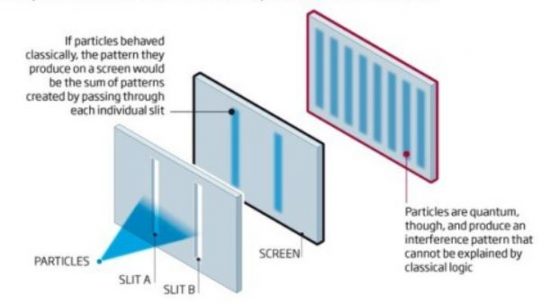


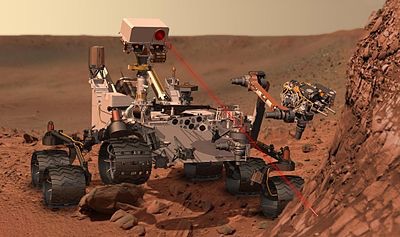







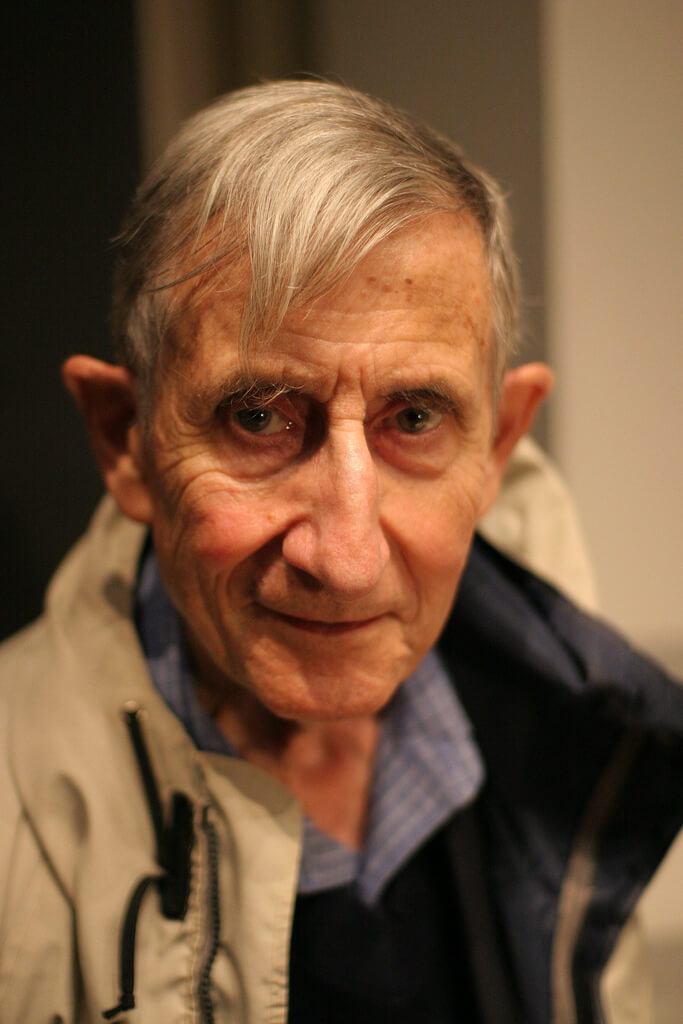
 , right? Get out the calculator, those who don’t believe it. Reversing the digits to make 8402 does not result in an exact number that can be raised by the power of 5 to produce 8402.
  plus a lot more decimals. 6.09363… is not a whole (or exact) number.