BELL’S INEQUALITY

UPDATE: 18 December 2022:  Royal Swedish Academy of Sciences on 4 October 2022 awarded the Nobel Prize in Physics to: 

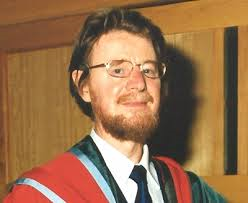
Alain Aspect
Institut d’Optique Graduate School – Université Paris-
Saclay and École Polytechnique, Palaiseau, France


Alain Aspect, winner of 2022 Nobel Prize in Physics

John F. Clauser
J.F. Clauser & Assoc., Walnut Creek, CA, USA

Anton Zeilinger
University of Vienna, Austria

“for experiments with entangled photons, establishing the violation of Bell inequalities and pioneering quantum information science”


UPDATE: September 5, 2019:  I stumbled across this research published in NATURE during December 2011, where scientists reported entanglement of vibrational patterns in separated diamond crystals large enough to be viewed without magnification. Nature doi:10.1038/nature.2011.9532


UPDATE: May 8, 2018: This video from PBS Digital Studios is the best yet. Click the PBS link to view the latest experimental results involving quantum mechanics, entanglement, and their non-intuitive mysteries. The video is a little advanced and fast paced; beginners might want to start with this link.


UPDATE: June 17, 2016:   Ali Sundermier published a description of quantum entanglement for non-scientists. Here is the link.

Another beginner’s overview of quantum mechanics by Cathal O’Connell is in this link.

UPDATE: February 4, 2016:  Here is a link to the August 2015 article in Nature, which makes the claim that the last testable loophole in Bell’s Theorem has been closed by experiments conducted by Dutch scientists. Conclusion: quantum entanglement is real.

UPDATE: Nov. 14, 2014:    David Kaiser proposed an experiment to determine Is Quantum Entanglement Real?  Click the link to redirect to the Sunday Review, New York Times article. It’s a non-technical explanation of some of the science related to Bell’s Theorem. 


Someone nominated Irish physicist, John Stewart Bell, (1928-1990) for a Nobel Prize during the year he died from a sudden brain hemorrhage. Nobel rules prevent the awarding of prizes to people who have died. Bell never learned of his nomination.

John Stewart Bell‘s Theorem of 1964 followed naturally from the proof of an inequality he fashioned (now named after him), which showed that quantum particle behavior violated logic.

It is the most profound discovery in all science, ever, according to Henry Stapp—retired from Lawrence Berkeley National Laboratory and former associate of Wolfgang Pauli and Werner Heisenberg. Other physicists like Richard Feynman said Bell simply stated the obvious.


Beta Barium Borate crystals can be used to ”down-convert” photons into entangled pairs.

Here is an analogy I hope gives some idea of what is observed in quantum experiments that violate Bell’s Inequality: Imagine two black tennis balls—let them represent atomic particles like electrons or photons or molecules as big as buckyballs.


The tennis balls are created in such a way that they become entangled—they share properties and destinies. They share identical color and shape.  [Entangled particles called fermions display opposite properties, as required by the Pauli exclusion principle.]

Imagine that whatever one tennis ball does, so does the other; whatever happens to one tennis ball happens to the other, instantly it turns out. The two tennis balls (the quantum particles) are entangled.

[For now, don’t worry about how particles get entangled in nature or how scientists produce them.  Entanglement is pervasive in nature and easily performed in labs.]


According to optical and quantum experimentalist Mark John Fernee of Queensland, Australia, ”Entanglement is ubiquitous. In fact, it’s the primary problem with quantum computers. The natural tendency of a qubit in a quantum computer is to entangle with the environment. Unwanted entanglement represents information loss, or decoherence. Everything naturally becomes entangled. The goal of various quantum technologies is to isolate entangled states and control their evolution, rather than let them do their own thing.”

In nature, all atoms that have electron shells with more than one electron have entangled electrons. Entangled atomic particles are now thought to play important roles in many previously not understood biological processes like photosynthesis, cell enzyme metabolism, animal migration, metamorphosis, and olfactory sensing. There are several ways to entangle more than a half-dozen atomic particles in experiments.


Imagine particles shot like tennis balls from cannons in opposite directions. Any measurement (or disturbance) made on a ball going left will have the same effect on an entangled ball traveling to the right.

So, if a test on a left-side ball allows it to pass through a color-detector, then its entangled twin can be thought to have passed through a color-detector on the right with the same result. If a ball on the left goes through the color-detector, then so will the entangled ball on the right, whether or not the color test is performed on it. If the ball on the left doesn’t go through, then neither did the ball on the right. It’s what it means to be entangled.

Now imagine that cannons shoot thousands of pairs of entangled tennis balls in opposite directions, to the left and right. The black detector on the left is calibrated to pass half of the black balls. When looking for tennis balls coming through, observers always see black balls but only the half that get through. 
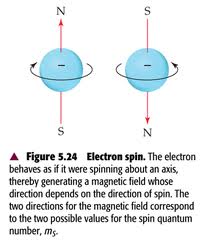

Spin is one of the characteristics of a quantum object, much like yellow is a characteristic of a tennis ball.

Spin describes a particle property of quantum objects like electrons — in the same way color or roundness describe tennis balls. The property is confusing, because no one believes electrons (or any other quantum objects) actually spin. The math of spin is underpinned by the complex-mathematics of spinors, which transform spin arrows into multi-dimensional objects not easy to visualize or illustrate. Look for an explanation of how spin is observed in the laboratory later in the essay. Click links for more insight.


Now, imagine performing a test for roundness on the balls shot to the right. The test is performed after the black test on the left, but before any signal or light has time to travel to the balls on the right. The balls going right don’t (and can’t) learn what the detector on the left observed. The roundness-detector is set to allow three-fourths of all round tennis balls through.

When round balls on the right are counted, three-eighths of them are passing through the roundness-detector, not three-fourths. Folks might speculate that the roundness-detector is acting on only the half of the balls that passed through the color-detector on the left. And they would be right.

These balls share the same destinies, right? Apparently, the balls on the right learned instantly which of their entangled twins the color-detector on the left allowed to pass through, despite all efforts to prevent it.

So now do the math. One-half (the fraction of the black balls that passed through the left-side color-detector) multiplied by three-fourths (the fraction calibrated to pass through the right-side roundness-detector) equals three-eighths. That’s what is seen on the right — three-eighths of the round, black tennis balls pass through the right-side roundness-detector during this fictionalized and simplified experiment.


Polarization is another characteristic of a quantum particle, much like roundness is for a tennis ball.
Polarization is a term used to describe a wave property of quantum objects like photons.  Polarizing filters are rotated in experiments to determine some of the properties of atomic particles, like spin.

According to Bell’s Inequality, twice as many balls should pass through the right-side detector (three-fourths instead of three-eighths). Under the rules of classical physics (which includes relativity), communication between particles cannot exceed the speed of light.

There is no way the balls on the right can know if their entangled twins made it through the color detector on the left. The experiment is set up so that the right-side balls do not have time to receive a signal from the left-side. The same limitation applies to the detectors.

The question scientists have asked is: how can these balls (quantum particles) — separated by large distances — know and react instantaneously to what is happening to their entangled twins? What about the speed limit of light? Instantaneous exchange of information is not possible, according to Einstein.

The French quantum physicist, Alain Aspect, suggested his way of thinking about it in the science journal, Nature (March 19, 1999).


Alain Aspect
Alain Aspect, French physicist, is best known for his work on quantum entanglement.

He wrote: The experimental violation of Bell’s inequalities confirms that a pair of entangled photons separated by hundreds of meters must be considered a single non-separable object — it is impossible to assign local physical reality to each photon.

Of course, the single non-separable object can’t have a length of hundreds of meters, either. It must have zero length for instantaneous communication between its endpoints. But it is well established by the distant separation of detectors in experiments done in labs around the world that the length of this non-separable quantum object can be arbitrarily long; it can span the universe.

When calculating experimental results, it’s as if a dimension (in this case, distance or length) has gone missing. It’s eerily similar to the holographic effect of a black hole where the three-dimensional information that lives inside the event-horizon is carried on its two-dimensional surface. (See the technical comment included at the end of the essay.)


Schematic of physicist Alan Aspect's experimental apparatus which verified that the act of measurement influenced distant entangled calcium electrons instantaneously.
Here is a drawing of an apparatus the French physicist, Alain Aspect, designed to quickly change the angle of polarity-measurements for emitted photons. In experiments, he used the logic of Bell’s Inequalities and the speed of his switches to show that it was not possible for photons to carry specific (or unique) polarity-angles until after they were measured by the polarization detectors.  Once measured, Alain showed that the new, narrowly defined polarity states of his photons always propagated to their distant entangled twins, instantly.  


Another way physicists have wrestled with the violations of Bell’s Inequality is by postulating the concept of superposition. Superposition is a concept that flows naturally from the linear algebra used to do the calculations, which suggests that quantum particles exist in all their possible states and locations at the same time until they are measured.

Measurement forces wave-particles to “collapse” into one particular state, like a definite position. But some physicists, like Roger Penrose, have asked: how do all the super-positioned particles and states that weren’t measured know instantaneously to disappear?

Superposition, a fundamental principle of quantum mechanics, has become yet another topic physicists puzzle over. They agree on the math of superposition and the wave-particle collapse during measurement but don’t agree on what a measurement is or the nature of the underlying reality. Many, like Richard Feynman, believe the underlying reality is probably unknowable.

Quantum behavior is non-intuitive and mysterious. It violates the traditional ideas of what makes sense. As soon as certainty is established for one measurement, other measurements, made earlier, become uncertain.

It’s like a game of whack-a-mole. The location of the mole whacked with a mallet becomes certain as soon as it is struck, but the other moles scurry away only to pop up and down in random holes so fast that no one is sure where or when they really are.

Physicists have yet to explain the many quantum phenomena encountered in their labs except to throw-up their hands to say — paraphrasing Feynman — it is the way it is, and the way it is, well, the experiments make it obvious.
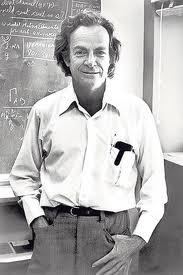

Feynman
Richard Feynman (1918-1988) downplayed Bell’s Inequality because, he said, it simply pointed out what was already obvious from experiments.

But it’s not obvious, at least not to me and, apparently, many others more knowledgeable than myself. Violations of Bell’s Inequality confound people’s understanding of quantum mechanics and the world in which it lives. A consequence has been that at least a few scientists seem ready to believe that one, perhaps two, or maybe all four, of the following statements are false:

1) logic is reliable and enables clear thinking about all physical phenomenon;

2) the universe exists independently of any conscious observer;

3) information does not travel faster than light.

4) a model can be imagined to explain quantum phenomenon.

I feel wonder whenever the idea sinks into my mind that at least one of these four seemingly self-evident and presumably true statements could be false — possibly all four — because repeated quantum experiments suggest they must be. Why isn’t more said about it on TV and radio?


Quantum mechanics (1)
Some scientists think non-physicists cannot grasp quantum mechanics. This little girl disagrees.

The reason could be that the terrain of quantum physics is unfamiliar territory for a lot of folks. Unless one is a graduate student in physics — well, many scientists don’t think non-physicists can even grasp the concepts. They might be right.

So, a lot is being said, all right, but it’s being said behind the closed doors of physics labs around the world. It is being written about in opaque professional journals with expensive subscription fees.

The subtleties of quantum theory don’t seem to suit the aesthetics of contemporary public media, so little information gets shared with ordinary people. Despite the efforts of enthusiastic scientists — like Brian CoxSean M. CarrollNeil deGrasse Tyson and Brian Greene — to serve up tasty, digestible, bite-size chunks of quantum mechanics to the public, viewer ratings sometimes fall flat.

When physicists say something strange is happening in quantum experiments that can’t be explained by traditional methods, doesn’t it deserve people’s attention? Doesn’t everyone want to try to understand what is going on and strive for insights?  I’m not a physicist and never will be, but I want to know.

Even me — a mere science-hobbyist who designed machinery back in the day — wants to know. I want to understand. What is it that will make sense of the universe and the quantum realm in which it rests?  It seems, sometimes, that a satisfying answer is always just outside my grasp.

Here is a concise statement of Bell’s Theorem from the article in Wikipedia — modified to make it easier to understand: No physical theory about the nature of quantum particles which ignores instantaneous action-at-a-distance can ever reproduce all the predictions about quantum behavior discovered in experiments.


laser-controlled-polarization
Familiarity with concepts like wave polarization and particle-spin can help demystify some aspects of quantum mechanics. One aspect that can’t be demystified: in experiments quantum objects display the properties of both waves and particles.

To understand the experiments that led to the unsettling knowledge that quantum mechanics — as useful and predictive as it is — does indeed violate Bell’s proven Inequality, it is helpful not only to have a solid background in mathematics but also to understand ideas involving the polarization of light and — when applied to quantum objects like electrons and other sub-atomic particles — the idea of spin.  Taken together, these concepts are somewhat analogous to the properties of color and roundness in the imaginary experiment described above.

This essay is probably not the best place to explain wave polarization and particle spin, because the explanation takes up space, and I don’t understand the concepts all that well, anyway.  (No one does.)

But, basically, it’s like this: if a beam of electrons, for example, is split into two and then recombined on a display screen, an interference pattern presents itself. If one of the beams was first passed through a polarizer, and if experimenters then rotate the polarizer a full turn (that is, 360°), the interference pattern on the screen will reverse itself.  If the polarizer-filter is rotated another full turn, the interference pattern will reverse again to what it was at the start of the experiment.

So, it takes two spins of the polarizer-filter to get back the original interference pattern on the display screen — which means the electrons themselves must have an intrinsic “one-half” spin. All so-called matter particles like electrons, protons, and neutrons (called fermions) have one-half spin.

Yes, it’s weird. Anyway, people can read-up on the latest ideas by clicking this link. It’s fun. For people familiar with QM (quantum mechanics), a technical note is included in the comments section below.

Otherwise, my analogy is useful enough, probably. In actual experiments, physicists measure more than two properties, I’m told. Most common are angular momentum vectors, which are called spin orientations. Think of these properties as color, shape, and hardness to make them seem more familiar — as long as no one forgets that each quality is binary; color is white or black; shape is round or square; hardness is soft or hard.


Crystals can be used to “down-convert” photons into  entangled pairs.

Spin orientations are binary too — the vectors point in one of two possible directions. It should be remembered that each entangled particle in a pair of fermions always has at least one property that measures opposite to that of its entangled partner.

The earlier analogy might be improved by imagining pairs of entangled tennis balls where one ball is black, the other white; one is round, the other square; add a third quality where one ball is hard, the other soft. Most important, the shape and color and hardness of the balls are imparted by the detectors themselves during measurement, not before.

Before measurement, concepts like color or shape (or spin or polarity) can have no meaning; the balls carry every possible color and shape (and hardness) but don’t take on and display any of these qualities until a measurement is made. Experimental verification of these realities keep some quantum physicists awake at night wondering, they say.

Anyway, my earlier, simpler analogy gets the main ideas across, hopefully. And a couple of the nuances of entanglement can be found within it. I’ve added an easy to understand description of Bell’s Inequality and what it means to the end of the essay.

Here are two additional links with more depth: CHSH Inequality; Bell Test Experiments.
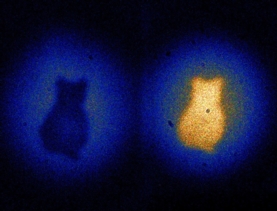

A carbord cut-out of a cat imaged by photons that never went through the cut-out itself. Credit: Gabriela Barreto Lemos
This cardboard cut-out of a cat was imaged by entangled photons. Lower energy photons interacted with the cut-out while their higher energy entangled twins interacted with the camera to create the picture.
Credit: Gabriela Barreto Lemos

In the meantime, scientists at the Austrian Academy of Sciences in Vienna recently demonstrated that entanglement can be used as a tool to photograph delicate objects that would otherwise be disturbed or damaged by high energy photons (light). They entangled photons of different energies (different colors).

They took photographs of objects using low energy photons but sent their higher energy entangled twins to the camera where their higher energies enabled them to be recorded. New technologies involving the strange behavior of quantum particles are in development and promise to transform the world in coming decades.

Perhaps entanglement will provide a path to faster-than-light communication, which is necessary to signal distant space-craft in real time. Most scientists say, no, it can’t be done, but ways to engineer around the difficulties are likely to be developed; technology may soon become available to create an illusion of instantaneous communication that is actually useful. Click on the link in this paragraph to learn more.

Non-scientists don’t have to know everything about the individual trees to know they are walking in a quantum forest. One reason for writing this essay is to encourage people to think and wonder about the forest and what it means to live in and experience it.

The truth is, the trees (particles at atomic scales) in the quantum forest seem to violate some of the rules of the forest (classical physics). They have a spooky quality, as Einstein famously put it.


remu warrior night scene 3
The quantum forest is a spooky place, Einstein said. 

Trees that aren’t there when no one is looking suddenly appear when someone is looking. Trees growing in one place seem to be growing in other places no one expected. A tree blows one way in the wind, and someone notices a tree at the other end of the forest — where there is no wind — blowing in the opposite direction. As of right now, no one has offered an explanation that doesn’t seem to lead to paradoxes and contradictions when examined by specialists.


Henry Stapp, Amazon.com

John Stewart Bell proved that trees in the quantum forest violate laws of nature and logic. It makes me wonder whether anyone will ever know anything at all they can fully trust about fundamental, underlying essence of reality.

Some scientists, like Henry Stapp (now retired), have proposed that brains enable processes like choice and experiences like consciousness through the mechanism of quantum interactions. Stuart Hameroff and Roger Penrose have proposed a quantum mechanism for consciousness they call Orch Or.

Others, like Wolfgang Pauli and C. G. Jung, have gone further — asking, when they were alive, if the non-causal coordination of some process resembling what is today called entanglement might provide an explanation for the seeming synchronicity of some psychic processes — an arena of inquiry a few governments are rumored to have incorporated (to great effect) into their intelligence gathering tool kits.

In a future essay I hope to speculate about how quantum processes like entanglement might or might not influence human thought, intuition, and consciousness.

Billy Lee

P.S.  A simplified version of Bell’s Inequality might say that for things described by traits A, B, and C, it is always true that A, not B; plus B, not C; is greater than or equal to: A, not C.  

When applied to a room full of people, the inequality might read as follows: tall, not male; plus male, not blonde; is greater than or equal to: tall, not blonde.

Said more simply: tall females and dark haired men will always number more than or equal to the number of tall people with dark hair. 

People have tried every collection of traits and quantities imaginable. The inequality is always true, never false; except for quantum objects.


wave equation schrodinger
Schrödinger’s Wave Equation describes how the quantum state of a physical system changes with time. It can be used to calculate quantized properties and probability distributions of quantum objects.

One way to think about it: all the ”not” quantities are, in some sense, uncertain in quantum experiments, which wrecks the inequality. That is to say, as soon as ”A” is measured (for example) ,”not B” becomes uncertain. When ”not B” is measured, ”A” becomes uncertain.

The introduction of uncertainties into quantities that were — before measurement — seemingly fixed and certain doesn’t occur in non-quantum collections where individual objects are big enough to make uncertainties not noticeable. The inability to measure both the position and velocity of small things with high precision is called the uncertainty principle and is fundamental to physics. No advancement in the technology of measurement will ever overcome it.

Uncertainty is believed to be an underlying reality of nature. It runs counter to the desire humans have for complete and certain knowledge; it is a thirst that can never be quenched.

But what’s really strange: when working with entangled particles, certainty about one particle implies certainty about its entangled twin; predicted experimental results are precise and never fail.

Stranger still, once entangled quantum particles are measured, the results, though certain, change from those expected by classical theory to those predicted by quantum mechanics. They violate Bell’s Inequality and the common sense of humans about how things should work. 

Worse: Bell’s Theorem seems to imply that no one will ever be able to construct a physical model of quantum mechanics to explain the results of quantum experiments.  No ”hidden variables” exist which, if anyone knew them, would explain everything. 

Another way to say it is this: the underlying reality of quantum mechanics is unknowable.  [A technical comment about the mystery of QM is included in the comments section.]

Billy Lee
PLANES, TRAINS, & AUTOMOBILES; AND OUR FREEDOM

The question is simple: If circumstances conspired to take away cars and licenses so no one could drive again, would anyone feel free?


no cars img_3425
Can folks feel free, or happy, in a land without cars?

Maybe I would. I couldn’t bum rides or hitchhike, true. But if no one could drive; if everyone’s cars were taken, public transportation might improve, right?  You  know — planes, trains, and buses — how would anyone feel?

Speaking for myself, I think I might get sad and depressed. Thinking about not being able to come and go when I want, of having to depend on public transportation to venture anywhere more than a few miles from home makes me sick to my stomach. Freedom to travel on my own terms is a big part of what it takes for me to feel free and, yes, happy.


public transportation metrorail012109.21382537_std
If the only way to travel to another town was by train, how would people feel?

So why torment myself with thoughts about something that’s never going to happen? What’s the point?

In truth, many people don’t drive, especially in large metro areas like New York City, for example. Not driving is a choice. In theory at least, New Yorkers can buy cars and move to the suburbs. Knowing they can drive if they choose makes not driving not so bad, at least for most.


In New York City, most people don't drive.
In New York City, most people don’t drive.

Here’s my point. Someone is always telling us we are free, because we can vote for our leaders and start businesses; even keep the profits. No one can be arrested without cause. If arrested, all have the guarantee of due process and the presumption of innocence under the Constitution. Everyone can own guns and fire them in their backyards.

Is it possible that whoever they are might be right?


constitution 1
What good is declaring independence, if no one can drive?

Think about it. 

80% of citizens don’t vote regularly. 98% don’t own businesses unless franchises and pyramid-schemes like Amway count; then it’s 10%.

Few citizens are ever arrested, much less charged with a crime. And most folks — those who aren’t psychopaths — take no pleasure disturbing neighbors by firing rifle rounds in their backyards. In general most don’t participate in the privileges that define freedom.  People don’t feel their freedoms most of the time.

But here’s something else to think about: 95% drive cars.

Isn’t it cars that give the feeling of being free? Take away cars and no one has the same carefree feeling– no matter what the Constitution guarantees or profs teach in school or university.

People can go into the back yard and fire a hundred rounds from an assault rifle. All that will happen is their ears start to ring and their neighbors hate them. 


automobiles Latest-Fast-Cars
It’s cars that give us the feeling we’re free.

The thrill of freedom comes from stepping on the accelerator of a favorite car and feeling Earth slide away below us. Freedom is the feeling that anyone can come-and-go on their own terms whenever they want.


Traffic slowdowns and standstills are an assault on our freedom.
Traffic slowdowns and stand-stills are an assault on freedom.

Many Americans seem not to grasp that the right to drive is being methodically and relentlessly stripped away. In cities and towns across America, congestion on streets is presenting a clear and present danger to our way of life; it’s diminishing the freedom to travel under our own power; under our own direction, which is what everyone wants to enjoy.

Lousy roads, poorly planned road construction, neglected road repair, deteriorated bridges and tunnels — all assault freedom and degrade our quality of life. 


Bad streets are an affront to our freedom and should be thought of as such.
Bad streets are an affront to freedom. Right?

It seems obvious that four-hour waits in line to vote wrecks freedom, because waits discourage voting, the foundational process of any democracy.  But four-hour commutes, traffic slowdowns and standstills are just as disruptive. They break the efficiency of our lives and muffle the nation’s economy.

The folks who run America seem to care little about voting or roads. Americans might want to step up to put pressure on politicians to make driving free and unencumbered — make freedom on the road the number-one national priority.

Driving free must be first-in-line; it is our most heartfelt and defining freedom.


In a computer-controlled aircraft, passengers are only along for the ride.
In computer-controlled aircraft, passengers are only along for the ride.

I learned that a few companies have already designed aircraft to take the place of cars. In the years prior to 911, I toured a number of these firms to learn firsthand how they implemented computer software to organize their engineering drawings, bills-of-materials, and tech-specs for vendors.

The plan, then, was to unleash at the right time a new era of transportation options for the general public that included light aircraft.

These companies were designing planes to fly on autopilot along pre-established routes in the sky. They took advantage of the three dimensions of space the same way city planners use tall buildings to create more working space.

The idea was to eliminate congestion and speed traffic by stacking routes and putting computers in charge of flying instead of pilots.


Sure the view is nice--when there's no clouds and you don't have to stop to stretch your legs.
The view is great — when the sky is clear, and no one has to get out to stretch their legs.

It all seemed like a good idea at the time. But the events of 911 changed planners’ views of what it might mean to put hundreds-of-thousands — maybe millions — of flying vehicles in the airspace above America — even if the craft were flying on autopilot under the guidance of computers.

Had 911 not happened, the plans were that by now on any given day at any given time people who looked up to the sky would see and hear hundreds, maybe thousands, of high-flying aircraft buzzing to and fro 24/7.


Computer-controlled aircraft flying on 3D highways are a transportation option available for implementation when the time is right.
Computer-controlled aircraft flying on 3D highways are a transportation-option, which is available for implementation when the time is right.

This high-flying, high-tech solution to highway congestion though shelved for now sits yellowing in the dark closet of national transportation options. It can be implemented when the time is right in the same way as the internet and personal-computer. But when it’s implemented, it will pose big problems.

3D highways in the sky populated by hundreds-of-thousands of computer-guided light-aircraft will have the same effect on travelers as if they were set on automated conveyor belts and whisked hither and yon.

The thrill that comes from commanding a piece of machinery and directing it to go where we decide will be gone. The feeling of empowerment and freedom experienced in cars will evaporate. 

Because — you know what’s coming, right?  If computers can direct the flights of millions of aircraft in three-dimensional space, they can do the same to cars on two-dimensional roads. And soon, very soon, they will.


Yeah it's pretty. But if we're not flying it, do we really care?
Yes, it’s pretty. But if no one is flying it, does anyone care?

Because of over-population and the inevitable congestion it brings, the time may come when people will no longer be permitted to experience the freedom of a fast car on an empty road.

Our ancestors rode horses, after all. Most people have long-since adapted to the disappearance of the horse. Perhaps people will adapt. Circumstances will force grandchildren of today’s parents to go to private tracks to experience the lost joy of driving a car.

Riding in a computer-controlled helicopter, airplane, or other flying craft might become the norm for future travelers. People will be passengers — not drivers or pilots or navigators — for the duration of their trips. People will become dependent on another technology they don’t understand and can’t control.

We are likely to become a nation of flying and driving sheep who graze in a huge three-dimensional sheep-pen.

Will freedom ring?  Will people feel the thrill that comes from directing the path of complex machines that run like wild horses?  Will they feel the power that comes from being free?

Will children of the future experience the exhilarating freedom enjoyed by their parents during their season of control when no one felt threatened by a vice-grip embrace of an artificial-intelligence that is hovering ominously on the horizon? 

I don’t know.

Billy Lee

ON THE VERY SMALL

I hope by now you’ve read my article, Scale.  It hints at something odd about the Universe.


Saturn back-lit by the Sun. Earth is the tiny dot inside the artist’s circle to the left of the gas giant. In this pic Earth is 900 million miles or so into the page behind Saturn. Click pic to enlarge in new window.

When looking up into the night sky people sense the vast distances between the objects they see. But when looking down at the ground they experience something different. It seems that objects are solid, without internal structure.

No one can know by looking that solid objects are made of tiny molecules separated from each other by tiny gaps. Even sophisticated instruments like microscopes provide experimenters with no chance of seeing any molecules. Molecules are too small.


This algae is a single cell composed of many billions of molecules.

Think about it. No one has ever seen a molecule. 

No one.

Computers have created pictures based on programming rules and data from sensors to provide an idea of what molecules might look like — if molecules lived in the world at human scales and reacted to sensors and probes the way people do. But, of course, they don’t.


porin molecule occuring in cell membranes
Model of a single porin molecule.  These molecules stack to create tunnels for passage of smaller molecules through cell membranes.  Each molecule is made from hundreds of atoms.

Few professors emphasize to kids in freshman chemistry, as far as I know, that they are learning the rules from models of molecules which have been invented — fabricated — to help make sense of lab experiments done on substances that are able to be touched by hands and seen with unaided eyes.

Worse, visual models can never be realistic when applied to the objects scientists call atoms. Atoms are what molecules are made from. They must be completely fanciful. It’s true. Scanning tunneling microscopes (STMs) have been used since 1981 to “feel” the forces of atoms with “nano” probes. Based on plots of these forces, pictures of atoms that look like stacked billiard balls are generated by computer algorithms.

Whatever it is that atoms are, they aren’t resolvable with light, which is what brains use to view and imagine things. The constituents of atoms are quantum objects that don’t behave like anything familiar to ordinary life. Everything folks think they know about atoms is made-up by scientists who are struggling to make sense of the way substances behave under every set of experimental circumstances imaginable.


pentacene molecule
Atomic Force Microscopy (AFM) provided data to an IBM computer, which constructed this image of a benzene molecule. This technology cannot resolve the structure of the individual atoms, which impart to the molecule its geometric shape and electrical properties.

Scientists have invented models of atoms, which are made from protons, neutrons and electrons (that whirl inside s, p, d,  f & g orbitals) — whatever — to aid their thinking. No one examines an atom to see if it looks like its model, because they can’t.

Whatever it is scientists are modeling can’t be seen by eyes or microscopes. If the model helps scientists predict what will happen in experiments, they are OK with it. Physicist Stephen Hawking calls it model-dependent realism. The models are good enough.


Quarks
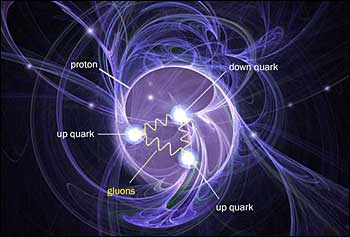
Artist rendering of quarks. It is impossible to see quarks or to know what they really are. They were invented by physicists to help make sense of experiments done in particle colliders, which show that protons, for example, cannot be fundamental, but must have (thus far) unobservable internal structures, which in the case of protons are most realistically modeled by two ”up” quarks and one ”down”. Quarks have color as well, to help explain their interactions with gluons — which carry the ”strong force”.  

During the past fifty years or so experiments have revealed new layers of complexity, which older models of the atom don’t address. So scientists have devised new models to help them reason more clearly about the strange events they were observing.

Scientists invented more structures and more “particles” — quarks being the best known — to explain and simplify the fantastic results of recent experiments.

Before the idea of the quark, scientists struggled with the complexity of a theory that included hundreds of particles. Frustrated physicists referred to the complexity as the “particle zoo.” After the theory of quarks was accepted, the number of particles in the “standard model” dropped to seventeen.


molecular and optical physics
Periodic optical lattice potentials for atoms. At a certain ‘magic wavelength’ of the trapping light one finds identical polarizabilities for ground state atoms and Rydberg atoms (see the inset), such that the trapping strength no longer depends on the internal atomic state. (Excuse me, but anyone who understands what they just read is a genius, a mad scientist, or both.)

Some current models of the subatomic world postulate point-size masses immersed in vast volumes of interstitial space. These models reflect the mathematics used to build them, but are probably not helpful for understanding what is really going on.

John Wheeler, the theoretical physicist who coined the terms worm-hole and quantum-foam, said this about the very small:  …every item of the physical world has at bottom — a very deep bottom, in most instances — an immaterial source and explanation…

At the smallest scale anyone can realistically work with — the scale of molecules — the structure of matter is dense. The space between molecules in a lattice is not much larger than the size of the molecules.

The force fields inside the molecular lattice are powerful — powerful enough to make the lattice impermeable. Vast volumes of empty space don’t exist within. Matter and energy seem to be working together in a kind of soup of symbiotic equivalence.


Atlas particle detector at CERN
Atlas particle detector at CERN. See human inside for scale. Are they kidding? This monster machine detects so-called ”particles” that cannot be seen by humans, even with microscopes.

It might be reasonable to expect that at smaller scales, forces and fields take over. Matter, as folks usually think of it, is gone. Fields (whatever they might really be) predominate. When fields interact with detectors, the detectors provide data as if they interacted with massive particles immersed in vast volumes of empty space.

It might be an illusion that leads people to miss an underlying reality of smaller scales — descent into the abyss of small scales reveals regions of disproportionately less space, not more. The stairway to smaller scales may lead to densities of force/energy and limitations of space/time like those found in black holes.  

In a typical black hole — a hundred million may inhabit the Milky Way Galaxy — a typical event horizon might have a circumference of thirty miles. Its diameter could measure millions of miles. Dimensions like these violate the Euclidean rules of geometry everyone expects. According to the rules, a spheroidal event horizon with a thirty mile circumference can’t measure more than ten miles across.

A diameter of millions of miles for an object with a thirty mile circumference seems crazy at first, until the implications of relativity are examined, which demand that the volume of space and span of time within a black hole be densely distorted and wildly warped.

A black hole contains within its volume the energy-equivalent of all the matter of the collapsed and vanished star that formed it plus all the energy-equivalent of any other matter that may have fallen into it. It is a region mostly devoid of matter — it is energy rich but matter impoverished — analogous perhaps to those tiny spaces some think might exist within and between atoms and inside the sub-atomic realms of ordinary matter.

Said plainly, whatever exists at tiny scales is not understood, but maybe knowledge about black holes can provide insights. I think so. The problem: knowledge about black holes is speculation based on mathematics; unless we are already living inside a black hole, no one can experimentally verify the ideas of smart and talented people like Stephen Hawking, for example.

The problem of understanding the very small is serious. The most advanced particle detector humans can afford to build blows up protons to examine their debris field. The detector “looks at” debris that measures about 1/100th the size of the protons it smashes. Accelerators — like the one at CERN — can’t “see” anything smaller.

From these tiny pieces of accelerator-trash theories of nature are fashioned. The inability to resolve the super small stuff is a problem. No one can see quarks, for example. Scientists at the ALICE Lab at CERN hope to fashion a “work around” by using the nuclei of iron atoms to make progress in the coming years.

To examine debris at Planck scales — which would answer everyone’s questions — requires a resolution many trillions of times greater than CERN can deliver. Such a machine would have to be much larger than the one at CERN. It would have to be larger than the solar system. In fact, it would have to be larger than the Milky Way Galaxy. Even then, the uncertainty principle guarantees that such a machine could not remove all the quantum fuzziness from whatever images it might create.


Nema Arkani-Hamed
Nima Arkani-Hamed, theoretical physicist, born April 5, 1972

According to IAS theoretical physicist, Nima Arkani-Hamed, it might be possible to burrow down to an understanding of the very small by using pure thought — as long as it is consistent with the mathematics that is already known for sure about quantum physics and relativity theory. The problem is, no one will ever be able to confirm the new models by doing an experiment.

The good news, Nema says, is that constraints imposed by knowledge already confirmed may so reduce the number of paths to truth that somebody might find a way that is unique, sufficient, and exclusive. If so, folks can have confidence in it, though experimental verification may lie well beyond the reach of technology.

But again, fundamental problems — like trying to observe an intact, whole atom — remain. No technology of any kind exists that will permit anyone to observe an entire atom at once and resolve its parts.

Physicists are reduced to using what they learn from observing atomic-scale debris to help fashion, in their imaginations, what such an entity might “look” like. No one will ever have the holistic satisfaction of holding an atom in their experimental hands, observing it, and pushing on its quantum-endowed components to see what happens.


alchemy
Artist rendering of an alchemy research laboratory.

Where does it all lead? At this stage in its history, science is struggling to figure out what’s happening. 

In the USA, (where the big money is) science seems to serve the military and companies struggling to create products that capture the imagination and pocketbooks of a buying public. For the moment at least, science is preoccupied with serving better those who pay for its services.

But someday — hopefully soon — scientists may refocus their considerable talents on the questions that really matter most to people:

Where are we?  What, exactly, is this place? Is anyone in charge?  

Billy Lee

Random Reads:

ART

Artists who endure humiliation are ripped apart. The choice is to embrace the uniqueness humiliation imposes or be made miserable by it forever. It’s a bad choice but survivors must choose. >>

THE CHURCH AND THE GAY PEOPLE

The PA wore an Archie watch, a purple wristband, and a Batman necklace. You like cartoons? I asked. I love comics, he gushed, don't you? …

BEING HATED

People hated on me my whole life but never more than now when I need their love so bad. If they knew how they weaken me they'd hate me more. ...>>

AVOIDING FERMI PARADOX

Whatever evidence there might be that intelligent life lurks somewhere in the vastness of space beyond Earth has not yet emerged, right? Perhaps life blossomed in the ancient past and went extinct. No evidence.   It's not because no one's looking. Ground based search teams at SETI are well-known but so are spin-offs at ATA, MWA, & LIFE, which are doing serious science in their own searches for distant life.  Satellites are making surveys -- JWST, TESS, among others.  Europa Clipper is on its way to Jupiter's moon Europa.  Dragonfly will launch July 2028 on 3-year journey to Saturn's moon, Titan. Purpose of this essay is nothing to do with technical details of discovering primitive life or, more insane, the hunt for space-dominating civilizations. No. It's about becoming one, which demands preserving the universe's only intelligence we know that has proven itself capable enuf to create lifeforms in its own image, except smarter---a lot smarter.  Humans have already engineered th...

MAKE AMERICA BREAK AGAIN

The time has arrived when everyone must let go of fear and act like the heroes we must become to protect everything and everyone we care about. ...>>

ESCAPE FROM FREEDOM

Americans live inside a psychotic bubble of evil. Some have lost the ability to assess realistic threats to the things they hold dear. ... >>

AIR TRAVEL SAFETY

Airlines spend serious money to convince consumers flying is safe. Not only is flying safe, they insist, but it is way more safe than driving.


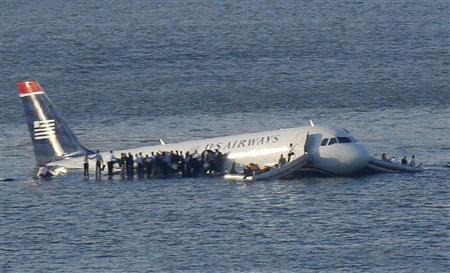
The Miracle on the Hudson improved airline mortality statistics, because no one died. (78 were injured)

Why is it, then — every time some folks board planes, settle into the seat, place the tray-table up and the seat-back in the upright position, hear the engines ignite and roar, and feel the pull of the plane against their backs — hands begin to sweat, the heart pounds, guts squirm, and minds start screaming helpless, desperate questions: What if  they’re wrong? What if I die? Why didn’t I take the car?

If anyone is like me, they enter a car to go somewhere five or six times a day. In other words, people participate in driving events thousands of times a year. Is it really possible that boarding a plane thousands of times a year is safer than driving? Many humans would die from heart attacks alone, if they did such a thing.

Even if anyone has two or three car accidents per year, it is unlikely that someone will die. In fact, stats reveal that one auto-related death occurs per 100 million driving miles.  It amounts to 3.4 million hours of driving.

It’s equivalent to one driver navigating their vehicle 390 years continuously — 24/7 — without a break.  Does anyone believe an airplane of any kind at all can fly that many years accident-free? When it crashes, hundreds of passengers die. It’s not so hard to figure out. 

When airplanes, helicopters, and jets crash, it is unlikely anyone will survive. An aircraft must fly perfectly or people die, more times than not.

Not so with cars.


asiana plane crash San Francisco Boeing 777
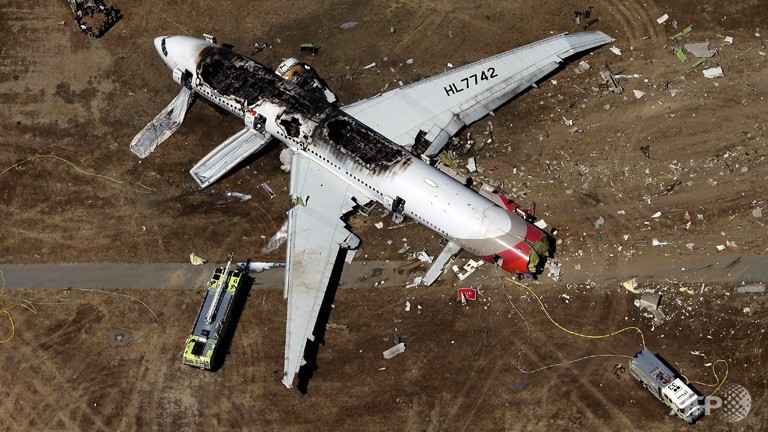
This accident in San Francisco had little effect on mortality statistics for the Boeing 777, because only three people died. (181 were injured)

It’s probably un-helpful to spout a bunch of numbers and ratios and statistics to prove the obvious. People in panic-mode don’t do well with numbers, anyway.

But let me make this observation: smart people in the airline industry are serving up a mess of misleading statistics to get the flying public to underestimate the risks of boarding an airplane.

Guess what? Airlines perform this charade to separate the traveling public from its money. Is anyone surprised?

The only way flying will ever be safer than driving is if folks fly as few times a year as possible. All the favorable statistics airlines like to quote rest on this simple premise: If people fly less, they are less likely to die.

People get into planes fewer times than into cars. Therefore flying is safer than driving. Cogito ergo sum. Quod erat demonstrandum.


Challenger_breakup_cabin shuttle disaster
Arrow points to intact flight-cabin during Challenger disaster.

Remembering the Space Shuttle program may bring the point into sharper focus. As the public knows now, the government discontinued the space-shuttle after observers pointed out that it was unreasonably dangerous to the astronauts.

At first the program seemed safe. Then an accident took a dozen lives. Afterward, it was safe again. Then another accident. More deaths.

Soon it became obvious. Every thirty flights the program was going to lose an entire crew. A way to improve the odds couldn’t be found. The program was scrapped.

The government threw up its hands and said: Let private companies handle the space program. Look at the great job they are doing for the airlines.

Billy Lee

NUCLEAR POWER AND ME

CBS 60 Minutes drone-video of the Chernobyl Zone of Alienation, a safe area. 


Here is an excerpt from a 1975 resume about my experience in the nuclear power industry:

Engineering Technician at Ingersoll-Rand Company. Designed and serviced pumps and condensers for nuclear power plants; assisted engineers on service calls; toured and worked inside nuclear power plants; trained in construction and operation of nuclear power plants.

I didn’t last long at Ingersoll-Rand before they fired me for incompetence. But during the six months before my meltdown they sent me inside nuclear power plants to learn how to operate and maintain the pumps and condensers used to move and cool liquids inside the plants. Under the supervision of licensed nuclear engineers I learned how to inspect and fix pumps — some of them the size of little houses.

The plant executives had the habit of inviting visiting engineers and technicians to lunch, where their supervisors would present short overviews of plant operation, describe safety features, and speculate about the future of nuclear energy in the United States.

They promised that the government planned to approve the construction of a thousand nuclear power plants by the year 2000. The facilities would be “fail-safe” due to their many redundant safety features. As it turned out, their enthusiasm was misguided.

As of today, 438 nuclear power plants have been built in the entire world. The United States operates 61. The safety record is abysmal.


The Three Mile Island Nuclear Power Plant in Pennsylvania suffered a partial meltdown in March 1979 —  twelve days after Michael Douglas released the movie China Syndrome. The meltdown catapulted the movie to international success as people struggled to understand what happened. After the accident, cancer rates within ten miles of the plant increased 64% according to a  team of Columbia University researchers.

Currently, there are 30 operating nuclear reactors at 12 generating stations on 11 sites in the Great Lakes basin. Almost all are located on the banks of our great fresh-water lakes. Radioactive waste-products are stored in cooling-ponds at each of these sites yards away from the purest fresh-water on planet Earth.

Highly radioactive, spent-fuel rods are collected and dry-stored at Chicago’s Lake Michigan Zion facility, which experts warned in 2015 pose risks not only to the Great Lakes but to the entire region. The lethal dry-storage facility and the contaminated ponds at power-plants located on the shores of the Great Lakes grow in size and radioactivity year after year after year.


Editors note: On 25 October 2016, Energy Solutions announced that the Zion plant is 88% shut down and that all of its high radiation fuel rods are now contained inside an on-site ISFSI (Independent Spent Fuel Storage Installation) where they will remain until someone figures out what to do with them. The entire facility is scheduled for closure by January 1, 2027 at a cost of 1 billion dollars.  


We are one earthquake away from catastrophic contamination of up to ten percent of the world’s freshwater supply.


Inside Chernobyl Nuclear Power Plant
31 people died at the Russian Chernobyl Nuclear Power Plant in April 1986. Today the number of deaths stands at nearly 100,000. The plant released 400 times the radioactive material of the bomb dropped by the USA on the Japanese city of Hiroshima. Authorities evacuated the city; it remains uninhabited. Click this link for a drone-video of the site.

Fukushima Nuclear Plant
Fukushima Nuclear Power Plant in Japan experienced catastrophic failure during the March 3, 2011 tsunami, which swept away nearly 20,000 people.  The accident irradiated over 300 workers and killed six. The site will never recover.  

Editor’s Note added 3-11-2021: 
The Japanese government announced this week that 3,775 people died during the past decade from health problems caused by what officials now admit was a “triple meltdown” at Fukushima. 41,000 remain forced to live outside their hometowns.

Several districts near the plant continue to be off-limits to everyone. The government hopes to decommission the power plant by 2051.

The ruined facility houses 900 tons of highly radioactive debris and 1.2 million tons of radioactive water that must be removed and isolated before the plant can be safely closed. The coronavirus pandemic slowed progress at the site, according to NHK News. 


Anyway, after the lectures — which were accompanied by short films and slide presentations — executives opened the sessions for questions from the audience. I was one of those nerds who believed they were serious so I did ask a lot of questions. (I was a pontificator even then).

I asked: What is the half-life of the radioactive waste produced in this plant?  Where is waste stored? How much of it will this plant produce over the next 30 years? What happens during an earthquake?  How are meltdowns prevented? What are the consequences of operator errors?  What happens when the plant gets old and comes to the end of its useful life?

It wasn’t long before my supervisor called me into his office and advised me to keep my questions to myself and do my job better. But it was not to be. I learned a life lesson: when the boss tells you to be quiet and just do your job — hold on to your hat. It’s too late. You will be fired as soon as the permissions and the paperwork are done.

Maybe I was incompetent. I don’t know. After being fired I went into counseling for depression. I re-entered MSU and studied mathematics and electrical engineering. I ended up designing machinery — mostly in the food and beverage industry — until I retired six years ago in 2008.

Everyone uses tear-spout coffee lids on foam coffee cups. Folks drink their coffee without removing the lid.  Yeah, I designed the first one and the tooling  to produce it; it was a team effort, of course. Everyone buys orange juice and milk cartons with tamper-proof safety caps. Yeah. I did those too. I share a patent, which proves it.  

What am I most proud of?  I didn’t design a damn thing on that Fukushima disaster, which is contaminating the Pacific Ocean and its fish stocks, perhaps to the end of time. 

Billy Lee

NOTE from the EDITORIAL BOARD:  In May 2019, HBO released its award nominated series on the Chernobyl disaster of April 25, 1986. The producers speculate that up to 93,000 Russian citizens died in the aftermath from radiation poisoning. The video below is a promo of the series.


A PERSONAL HISTORY OF TELEVISION, PART ONE

When I was 4 years old, our family lived in Japan.

I have a vivid memory of a dark night when the maid took my brother and me out for a rendezvous with our parents. We stood on concrete steps outside a brick building waiting for them to show up.


The neon sign emitted a bright glow of colors. I’d never seen anything like it.

Beneath the starless sky, almost at eye level, a neon sign emitted a glow of colors. I’d never seen anything like it. I asked our Japanese maid what it was.  It’s television, she said.

The year was 1952. Four years earlier, the first television stations in the United States started to broadcast. But Japan then was a primitive, conquered country. It would be years before television arrived. Our maid didn’t know what she was looking at. Neither did I.  For me televisions continued to be bright neon signs for quite some time.

Here is an excerpt from Wikipedia:

True regular commercial television network programming did not begin in the U.S. until 1948. During that year legendary conductor Arturo Toscanini made his first of ten TV appearances conducting the NBC Symphony Orchestra; Texaco Star Theater, starring comedian Milton Berle, became television’s first hit show. Since the 1950s, television has been the main medium for molding public opinion.


[Not to digress into weeds that might choke a winding river, but during World War II, Italian composer Arturo Toscanini’s daughter  Wally Castelbarco (friend to Russian-born actress Marianned Pistohlkors) and Allen Dulles (CIA director, 1953-1961) engaged in a ”forbidden” sexual affair in Bern, Switzerland (check the correct location and dates).  President Kennedy fired Dulles after the failed 1961 Bay of Pigs invasion of Cuba.  Following Kennedy’s murder in 1963, Allen Dulles sat on the Warren Commission. He died from complications of flu in 1969. Wally is the woman at the far left standing next to her parents.]


Like almost everyone else in America, our family missed the first seven years of broadcast television, including Toscanini’s series. I was born in San Diego in 1948, the year commercial television made its debut. At the time, Americans owned 45,000 television sets — three-quarters of them in the New York City area. (Americans owned 44 million radios.)  In San Diego, what few televisions there were lay locked, most of them, behind laboratory doors.

Mom and Dad didn’t buy our first television until 1955. I was seven.  By then we were living in Bethesda, Maryland where Dad worked for the National Security Agency. At the time, no one knew the NSA existed. It was television, many years later, that brought the secret agency to the public’s attention. 


old television
Touching the television could get you sent to your room, or worse.

Our first television looked a lot like the one pictured above. It was a magical box that, at first, we were not allowed to touch. Touching the television got us sent to our rooms, or worse. Dad delivered a painful nip with his finger to the back of any hand that dared to touch the keen knobs that controlled the TV’s mysterious features. But eventually, especially when Dad wasn’t around, the rest of the family, myself included, became adept at the controls.

The television-set broadcast two channels crisp and clear and one channel with a lot of “snow.” The picture was always black and white, and the stations went dead after 11:30 PM. Of course, we were all in bed well before then. Our parents wouldn’t dream of staying up later. They worked, after all.

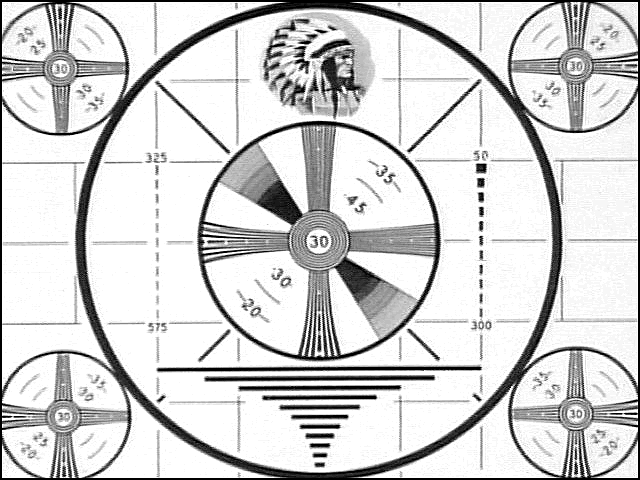
After 11:30 PM each television station would display a graphic like the ones below and issue forth a loud hum or ringing noise.  Sometimes I got up way too early and would observe these mysterious symbols and their humming on all three channels. They reminded me of what we might see and hear if Russia attacked us with atomic rockets.


off air television
After hours, mysterious symbols hummed on all three channels.

off air


Our favorite shows were on early Saturday morning. In addition to cartoons like Mighty Mouse, we watched The Lone Ranger, the Howdy Doody Show, Buffalo Bill, and Captain Kangaroo.  

On weekdays after school, we rushed home to watch the Mickey Mouse Club starring Annette Funicello. I loved Annette completely. She was the only female Mouseketeer to have boobs.


Annette funicello 2
Annette Funicello

Next to Marilyn Monroe — who everybody knew about but no one had ever seen (she wasn’t allowed on television) — Annette Funicello was the most desirable female on planet Earth at that time. But, by fourth grade, a terrible tragedy struck. Though not reported by television or newspapers (kids didn’t read newspapers, anyway), every child somehow learned that Annette had died from bubblegum asphyxiation — a tragedy to rival the Kennedy assassination years later.

Much later — in college during the 1960s — we learned Annette Funicello didn’t die. Media reported that she was alive and well and living somewhere in California.

The knowledge helped to ameliorate the pain of other deaths that were reported in the newspapers and on television back then — John and Bobby Kennedy; Martin Luther King; Malcolm X; Otis Redding; Jimi Hendrix; Janis Joplin; Marilyn Monroe; Che Guevara — and many others. Maybe it was possible,  just possible — we hoped against hope — someday, someway — we would learn that these unusual people didn’t die, either.

By my third-grade year, the biggest event in everyone’s lives was the night Elvis Presley appeared on television for the first time — on the Ed Sullivan Show. Everyone — adults and kids alike — dropped everything to see Elvis. Words cannot express how huge this event was in the history of America. Those who didn’t have a television went out and found one. The entire country watched.

Everyone knew about the controversial movements Elvis Presley made with his legs and hips — they were reported in all the magazines and newspapers — but no one could imagine what these moves actually looked like. We needed television to show us.


Elvis 1956
Elvis Presley, 1956

And what did television do? In a spectacle that would be repeated again and again for decades after, television dropped the ball and disappointed its huge viewing audience. The camera focused on Presley’s face and upper body. No one saw his infamous lower-body machinations. After all the psychic energy invested by everyone to finally learn the secrets of this unusual man’s success, television left us wondering.

Elvis sang a song that night we had all heard many times before on the radio: Hound Dog. Seeing the song performed — not just hearing it, like on the radio — was exciting enough to make most everyone forget about what they had missed.

You ain’t nothing but a hound dog — cryin’ all the time. You ain’t nothing but a hound dog — cryin’ all the time. You ain’t never caught a rabbit, and you ain’t no friend of mine. When they said you was high class, well that was just a lie. When they said you was high class, well that was just a lie. You ain’t never caught a rabbit, and you ain’t no friend of mine.

No one who experienced the magic of his television appearance could imagine in their darkest nightmare that someday Elvis would die, too.

On a brighter note: advertising revenue for the show set an all-time record; viewership set an all-time high. It seemed clear to all that television was here to stay.

Billy Lee