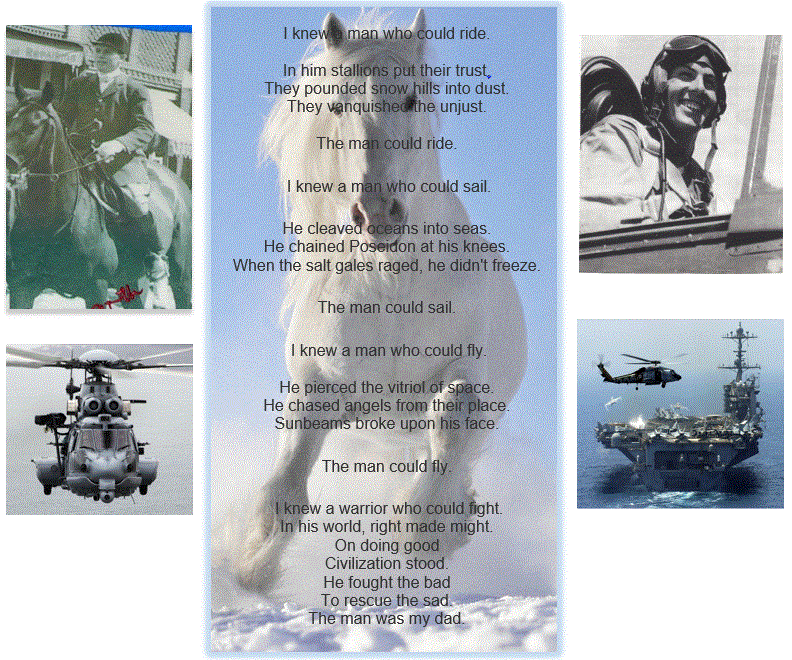
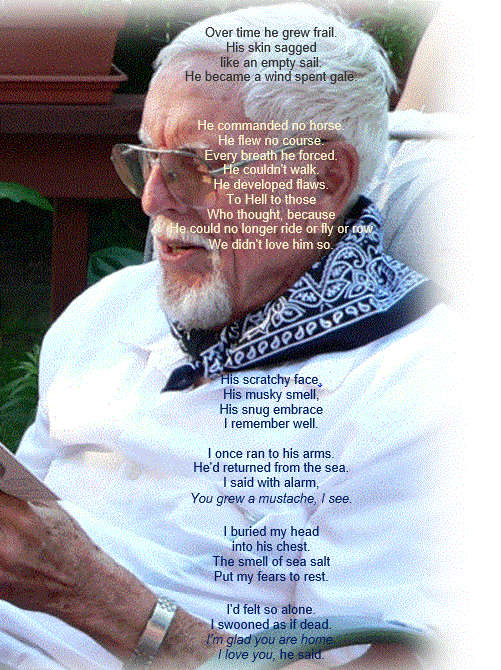
In his world, right made might. On doing good, Civilization stood.
. . . . .
Click pics to enhance text for reading.The Editors
Captain Bryce Lee (USN) on his 85th birthday.Billy Lee read a version of his poem, Warrior, to his father at his party. Bryce never said he liked it. The Billy Lee Editorial Board
Bryce Lee helped stand-up the National Security Agency in the 1950s when the agency helped track atom bomb materials and components loaded aboard foreign ships.
He played a prominent role during the Cuban Missile Crisis when he led an anti-submarine jet-helicopter squadron based near the confrontation.
Because of their sensitive nature, some of the Captain’s accomplishments will never be known outside of government.
Bryce spoke Russian and French. In his mind, integrity was the most important quality a person could have. He did well for a farm boy from Michigan.
Bryce Lee passed peacefully at home with family present a few days before his 91st birthday in 2011.
The Billy Lee Editorial Board
In his world, right made might. On doing good, Civilization stood.
[A New Year’s Message to our readers from the Editorial Board]
January 17, 2015 marks the first anniversary of the Billy Lee Pontificator. During the past year we published more than fifty posts on over thirty topics of interest to Billy Lee — like economics, history, humor, politics, religion, gay rights, literature, race, music, culture, technology, science and many others.
Billy Lee celebrates his blog’s one-year anniversary.
WordPress, our blog-site administrator, reported in year-end statistical summariesthat readers clicked on Billy Lee’s Pontifications 7,000 times.
Although some people might consider the number small compared to the tens-of-thousands of hits received each day by commercial web-sites, Billy Lee prefers to compare his numbers to what he might expect were his articles posted on the front of his refrigerator with little door-magnets.
It’s unlikely that more than a handful of visitors to his kitchen would take the time to read even a few of his posts during the year. Measured this way, it is clear to the Editorial Board that the Billy Lee Pontificator has been a spectacular success.
Billy Lee sometimes tells people he started his blog to entertain and inform readers. Not true. We know him. We work with him. He created his blog, because he needed a reservoir for his crazy ideas.
Billy intends to leave behind a public anthology of utter nonsense to his loved ones. He is convinced that the heart-palpitations he experiences every time he writes will kill him someday, probably prematurely. He doesn’t want to leave an empty legacy of a wasted life.
But let us face some harsh realities. Writing a blog is agonizing, thankless work. A famous person once said: no one who blogs is ever happy (or famous). Bloggers can sometimes suffer criticism, but more often than not, people ignore them. And it hurts.
The public seems not to care about bloggers and the useless self-indulgent crap they write. Blogsters who believe in what they do (and that includes Billy Lee) writhe beneath the stab-wounds of rejection every time they push the publish-button and sit glued to their computers to wait anxiously for their site-stats to dribble-in.
Most of the time the numbers confirm their worst fears — they really do suck at what they do. They bleed. They suffer. And everyone knows they self-inflict their own self-righteous agonies.
No one does it better than Billy Lee. Only when a blogger stops blogging, does the bleeding stop. Billy Lee has suffered and bled for twelve months now. Yes, he bleeds, but no, he’s never bled-out.
It seems that more and more blogsters are abandoning their sites and moving on to other meaningless projects. We hope Billy Lee never does. As boring and irrelevant as he is, we still want our paychecks! Stand up, Billy Lee. Keep on blogging!
Sincerest Regards,
The Editorial Board
P.S. One more thing. Some readers may have heard the news by now. Security guards arrested Billy Lee during his speech last night at the “New Year’s Eve Homage to Year One” Gala and Ball. The Board hosted the plaid T-shirt affair at the exclusive Rubber Chicken Dinner Club in Metamora.
Billy Lee has apologized.
Guess what?
We don’t care!
A transcript of his remarks is reproduced below.
Helloooo, everybody! Happy New Year!
(burps loudly, spills drink)
(audience applause)
I’m Billy Lee, the Pontificator, and I’m drunk as a skunk!
(Audience laughter, applause)
What’s my New Year’s Resolution for 2015? Who wants to know? Yeah? Oh yeah? You’re all a bunch of gnarly swamp rabbits…That’s what I think! I’ll pickle ur… Whoaaa! Easy big fella. Not you. Not you.
(Scattered laughter. Room quiets)
Ok, Ok… it’s an easy one, my comrades. Hold on. I’ll tell ya. I’ll tell ya.
(Stares wildly into the room)
I resolve… I resolve… in two-thousand one five… to be sexy all the time! Two – oh – one – five! I be sexy all de time. Yeah!
(hiccups, burps, takes a drink)
(gasps from audience, a few catcalls)
I resolve to be of good cheer, most of the year, and for god sakes don’t tell ’em I’m qu…
(stumbles, grabs podium)
Don’t tell ’em I’m qu…
(twirls a 360 and throws drink glass, shattering it)
Don’t tell ’em I’m qu…
(falls into microphone setting off loud reverb)
Don’t tell ’em I’m qu…
(sprawls onto stage floor, face down, butt in the air)
don’t tell ’em… don’t tell ’em…
(scattered screams, folks covering their ears, expressions of outrage in audience)
Note to our readers: Let’s just say, things escalated. Billy Lee decided to belt out a slurred and soggy rendition of Take Me to Church. He demanded that male volunteers come up on stage to kiss him on the lips.
Some in the audience rioted. People began throwing things, including chairs and salt shakers. Finally, marshals stormed in to escort BillyLee out of the building. He was hand-cuffed and dragged. He began bawling like a baby. Some say he mouthed the words, worship like a dog! worship like a dog! as the marshals threw him into the paddy-wagon.
An hour or so later, members of the Editorial Board — they shall remain unnamed — posted BillyLee’s bond, and all of us, together, asked that he submit his formal remarks — in writing — today. We demanded that he include an apology.
Billy Lee complied. We have attached his written “homage” (an e-mail) below. The Editorial Board.
January 1, 2015
To: the Billy Lee Pontificator Editorial Board
May I offer my profoundest apologies to anyone I offended last night by my outrageous behavior, inappropriate comments, and lewd singing? I am so sorry.
I am so ashamed.
I know it’s the tradition for people to drink small amounts of alcohol on New Year’s Eve, but last night I clearly exceeded the reasonable and customary limits of insobriety.
Under the influence of what some said was “excessive” consumption of liquor, it seems I offended both the gay community and those Christians in the audience who prefer to drive gays to suicide. For this, I am truly sorry. I said and sang stuff I didn’t mean.
My question to the board members is this: Can you forgive me? Or will you use my weakness as your excuse to torment, humiliate, scandalize, censor, and shun me?
Your silence seems to speak for itself. You forgive me. And you torment, humiliate, scandalize, censor, and shun me. Thank you so very much.
Let me reassure you. I am not myself gay, nor have I ever been. Do you believe me? Again, your silence speaks for itself.
You don’t believe me. I feel it.
And you shun me. I feel that, too. Ok, then. Now that it’s settled, can we move on?
And again, may I prodigiously apologize for playing the fool and making you hate me?
I am grateful for each of you: for each member of our illustrious Editorial Board and the over-weighted bureaucracy that supports you and makes up the backbone of the Pontificator team.
Thank you to the staff of sycophants, apple polishers, and suck-ups who inspire all of us to do our best work.
And thanks also to our black janitor and the two sluts who hang out in the parking-lot before work every morning. Thank you to everyone.
It is now my pleasure to present my homage to our first year and to discuss many of the articles I wrote that might have enriched all our lives had you taken the time to read them.
It’s no secret to me that you didn’t read my articles. Yet you call yourselves the “Editorial Board” !!! The only thing you edit is your paychecks. I’ve caught more than one of you erasing “ones” and “twos” and writing in “eights” and “nines”. It’s not right, people. Can’t you see that?
Well, enough apologies. I’m admonished and chastised. I get it. And no. I’m not dropping my pants, so you can spank me. It’s enough, already, Editorial Board! Let’s move on to my Homage to Year One!
I’ve included the following written transcript of the remarks I would have made last night had I not been drunk. And I made some changes to more accurately express my feelings after your reaction to last night’s sorry debacle and my role in it.
By the way, I’m thrilled to reveal the five most read Pontificator articles for 2014. Can you guess? They are… (May we have the envelope, please? Drum roll…)
Since you’re reading this report in your e-mail, Editorial Board, click on the links and read all five, right now!
The best article of 2014 (and far and away my favorite) is Bell’s Inequality. It packs a huge wallop for those who dig science. Not to totally pander to science freaks, but a close second is Conscious Life. Site stats say few people have read them. I know the Editorial Board didn’t read them.
Read them now!
Our best (worst) day of the year was May 3rd, when church leaders — alarmed by my famous Gay Love post — swarmed our site and eventually shut it down — for six weeks!
I never suffered emotionally in my life like I did during those weeks — they turned into months! Details of that unnerving fiasco are described and preserved in Writing Free.
Of course, I can’t expect any of you to read it. It’s 2,000 words. It has paragraphs!
Many people told me the post they liked best was Hearing Loss. It is a true account of real-life exchanges between me and my hill-billy wife, Beverly Mae. It is always good for giddy guffaws and lots of laughs. Next July, when you are all taking your six-week vacations, why not set one week aside to read it, Editorial Board?!
Another funny post, at least to me: Why Do Humans like Music? I belly-laugh every time I revisit it. It’s that good. You wouldn’t know!!!
I don’t know how many of you Board members know this, but The Billy Lee Pontificator got it’s start, believe it or not, from a desire to showcase an article I wrote titled, Horemheb, Exodus Pharaoh? I loved that essay. I loved the title. Wow. Horemheb, Exodus Pharaoh? Really? Everybody will read that one!
To my amazement, and through the tears of self-humiliation, I discovered — after I published it on my blog-site — Horemheb needed a re-write. Some family members may remember how much the re-writing of Horemheb dragged-on during its prolonged infancy on Facebook, before I blog-published it. It’s why we hired our Editorial Board team.
Maybe someday some of the Editorsmight want to read Horemheb to see if I missed something. If it’s not inconvenient or too much trouble, Editorial Board!!!
Anyway, sloppy execution of my article, Horemheb, led to the policy elucidated on our Billy Lee Process Page, best summarized as follows: re-write it ’till it’s right. People hate the policy, but I like it. In my bad heart, I know it’s right. And since my Editorial Board — yes, that’s you! — won’t spell check my stuff, I have no choice.
To sum-up: I can’t say I enjoyed my first year blogging, but I’m proud of the articles I wrote. I’m glad some people say they read them — even if my Editorial Board refuses. I regret the controversies, but it’s how we stay alive, stay engaged and grow. Does anyone agree?
The entertainment industry learned a long time ago that the way to appeal to the most people is to embrace ambiguity.
Ambiguity permits each consumer to put their own meaning on the art they buy; on music, paintings, theater, books, movies, shows, personalities, and stars.
Ambiguity, when combined with strictly enforced copyright laws — like those of the United States — can help establish a large paying audience, huge money, and wide-spread exposure and influence.
No facial expression is more ambiguous or popular than that of Mickey Mouse. It is vigorously protected by copy-right law.
People like to feel they are part of something bigger than themselves. Ambiguity promotes mass participation in cultural processes. This mass participation can alleviate the ennui of alienation for many people.
Elvis Presley created mass hysteria in the USA. Some religious people thought his first name was a scrambled version of the word, Evils.
Elvis Presley sang, you ain’t nothing but a hound dog. What did he mean by it? No one knows, and everyone knows.
The same is true with Bob Dylan who sang, Hey Mr. Tambourine man, play a song for me. In the jingle-jangle morning I’ll come following you. No one knows what he was singing about. Yet everyone can tell you what he meant.
The ambiguity of these two artists — one from the nineteen-fifties, one from the nineteen-sixties — permitted both to accumulate the largest fan bases ever, until the Beatles.
John Lennon once said the Beatles were more popular than Jesus.
The Beatles established an ambiguous sexual identity by wearing their hair long — unusual at the time. They deluged their fans with ambiguous lyrics such as, yeah, you’ve got that something, I think you’ll understand, When I’ll say that something, I wanna hold your hand… and hey Jude, don’t make it bad, take a sad song and make it better. No one knows for sure what they meant, but everyone knows what those lyrics meant to themselves when they first heard them.
Jesus presents ambiguities about himself which have attracted the largest following of worshippers in world history. The most obvious ambiguity is the concept of the Trinity. Is Jesus God, or not? No one knows. Everyone knows.
The Trinity is the central ambiguity of Christianity. God is somehow a combination of person, spirit, and creator.
The concept of the Trinity presents the central ambiguity of Christianity. It has drawn the attention of a spiritually hungry world for two thousand years. It confounds us with a dilemma of logic and meaning which to this day fuels the faith-wars of Christians who, in their quest for certainty, have segregated themselves into over 40,000 denominations.
Every attempt to define the Trinity, to remove its ambiguity and establish certainty, seems to result in a new denomination, a new religion.
The Holy Spirit is sometimes portrayed as a white dove. The olive branch recalls the dove who gave Noah the evidence that the great flood (of judgment) was over.
Of course, many other ambiguities in the Bible have spawned controversies. Abortion isn’t mentioned in the Bible — and homosexuality is barely mentioned — yet both have divided countless churches. Gifts of the Holy Spirit — which are discussed at length in the Bible and should be non-controversial to believers — have divided churches. Some denominations discount gifts altogether, in contradiction to Scripture.
In the 21st century, those Christians who detest ambiguity and worship certainty war with one another in a kind of theater of the absurd. 40,000 denominations?
Really?
Instead of embracing a small amount of ambiguity to unify Christians, a few leaders advocate from time to time certainties of thought and Bible interpretation which divide the faithful. Unity is the last thing these modern Christians seem to want. They lust for certainty.
Certainty is not foundational, according to quantum physics.
Certainty is not biblical, it’s not Christian, it’s not even Jesus. Jesus didn’t stone the woman caught having sex with her married boyfriend, though the logic of the law demanded it. He reasoned with her, encouraged her, and forgave her. He wasn’t logical. He wasn’t dogmatic. He admonished the woman and gave her hope. He acted with all the stupidity and uncertainty of true love, based on a relationship with a messy human being who would never be certain of anything.
The most unambiguous statement Jesus made was this: Here I am! I stand at the door and knock. If anyone hears my voice and opens the door, I will come in and eat with that person, and they with me.
No one knows for sure what Jesus was talking about when he made this statement. Yet everyone seems to know for sure what he meant. As unambiguous as the statement is, it can’t be literally true today.
No modern person has ever opened their front door and found Jesus standing on the front porch. Not one. Jesus’s meaning is uncertain. To different people, his words mean different things.
For Jesus, his statement had a meaning known to him, but it seems reasonable that his meaning might have nuances depending on the specific person he was talking to. And Jesus was talking to a lot of people, it turned out.
The amount of faith required to access Heaven is small, but uncertain.
The Bible plainly says that we are saved by faith. But no one has perfect faith.
So how much faith does it take to get into Heaven?
Jesus said the amount of faith required to do anything was on the order of a grain of mustard seed, about the size of the period at the end of this sentence. How many people have this much faith? Not very many, it turns out. It’s not possible for us to be certain about the quantity of faith required to enter heaven. The amount is small, but uncertain.
In their demand for certainty, many churches fight over doctrine. They fight, because they are populated by people. If history is a guide, we can say with certainty that people love to fight.
One of the amazing things Jesus said was this: God is kind to the wicked and the ungrateful. As someone who has been wicked and ungrateful pretty much everyday of my life (and not proud of it), I love pondering those words. They give me assurance, not certainty, that God will be more gentle with me than I deserve.
God protects the boat and the people it leaves behind in the harbor.
Recently, my church friends, God love them, voted to leave our mainstream denomination to join a conservative denomination of the South, born in the Confederacy of the civil war. People unwilling to get on the boat for unchartered waters face the danger of becoming spiritually adrift. They face an uncertainty that might result in the loss of their religion.
I am one of those who have to face the unpleasant decision to get on that boat or face the dangers of remaining on shore. It’s not a good choice for me. My health has suffered under the stress of a change in my old age I didn’t see coming. The good part is this: people who love Jesus are in the departing boat and on the shore. And Jesus is protecting both the boat and the land it leaves behind.
Sharing a meal with Jesus, and being reassured by him that everything will be set right someday, is a central hope of most Christians.
The comfort Christians enjoy is Jesus, himself, in their homes, eating with them and sharing their life. That’s it. Jesus is all there is for those of us who suffer in this life, and he’s enough. Inside our private spaces, Jesus reasons with us, encourages us, forgives us, admonishes us, and gives us hope. He helps us endure and embrace the will of God, which is almost never our own.
Billy Lee
Postscript: On July 1, 2015 Billy Lee resigned his church and aligned himself with a non-denominational congregation. The Editorial Board.
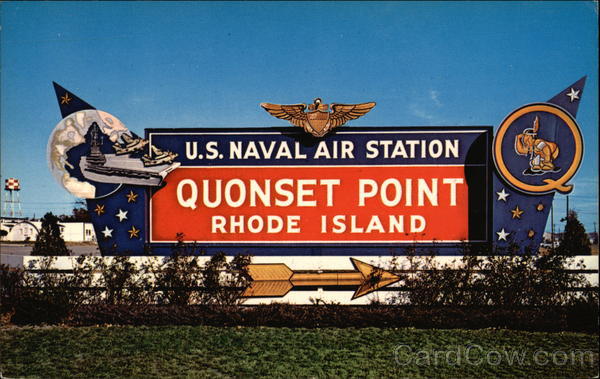
In 1958 when I was a fourth grader our family moved to Quonset Point, Rhode Island where my dad was soon promoted to lead HS-11, one of the Navy jet-helicopter squadrons defending the east coast from attack by Russian submarines.
We moved to Quonset Point with some trepidation because Hoskins Park — the housing project for military families in those days (now sold, redeveloped, and renamed Wickford Point) — had a long waiting list; we didn’t know where we would live or if we could afford off-base housing.
As it turned out, we got a lucky break. A Navy Lieutenant — who was a Negro — moved his family into Hoskins Park. Some white officers found out and decided their families weren’t going to live in non-segregated housing. As a result, vacancies popped-up, and we got in; we moved-in next door to the Negro officer and his family.
In 1958, my family moved to Quonset Point, Rhode Island. Inexpensive on-base housing was overcrowded. We didn’t know where we would live, or if we could afford to live anywhere.
Lieutenant Brown, his wife and two daughters, lived in the two-story, condo-style apartment on the other side of a thin concrete wall from us.
Despite the custom that white and black families didn’t fraternize in those days, eventually I had encounters, conversations, and interactions with all the members of the Brown family.
Over time, I came to understand how traumatized they were, each in their own way, living in a country that, basically, isolated and mistreated them.
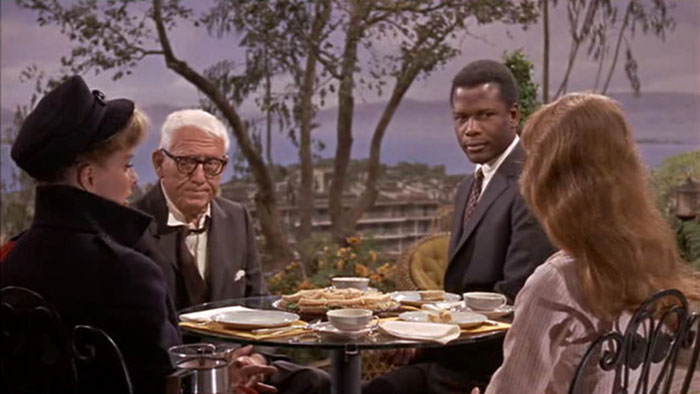
My parents accepted an invitation to the Brown’s for dinner — an event that had all the drama of the movie, Guess Who’s Coming to Dinner, released nine years later, in 1967.
One encounter involved my parents. The Browns invited them for dinner to get acquainted, and after agonizing about it, Mom and Dad accepted. I think Dad wanted to check them out; to make sure his kids would be “safe” living next door.
After the meal, Dad reported that the Lieutenant’s wife, Jean (Alston), was a good cook, but he couldn’t shake a queasy feeling in his stomach, which spoiled his appetite. He had never interacted with negroes, except servants(everyone called black people negroes in the 1950s); he certainly had not eaten food at the same table. And, unlike my dad, Mr. Brown was a graduate of the Naval Academy.
In that sense, the lieutenant kind of outranked him. According to dad, Academy graduates favored one another and worked hard to help each other achieve promotions. They put non-Academy graduates (like dad) to great disadvantage in the competition for rank, which was fierce inside the Navy.
A black Academy graduate presented a dilemma. Brown was a graduate of the elite Naval Academy with all its privileges and protections; at the same time, he belonged to a race that was, to put it politely, undervalued both by the Navy and the country at large. It was unfamiliar terrain for dad and made him uncomfortable. I remember my parents writing a thank-you note to the Brown’s for their hospitality but as far as I know, they didn’t return an invitation.
Another incident occurred a few weeks later that changed the way I thought about people and what they sometimes go through. It happened on a day when my fourth-grade teacher decided to punish me for violation of good-citizenship. I sassed her, she claimed, because I insisted — in a loud voice before classmates — she couldn’t tell me what to do!She wasn’t my parent!
In my mind, it made sense. To show how wrong I was, she kept me after school to clean the blackboard. She forced me to practice my reading. I left school an hour late.
When I arrived home, I saw Billie — Lieutenant Brown’s sixth-grade daughter — standing on her porch a few feet from ours, crying, and shifting back and forth on her feet in a puddle of — I took a second look to be sure — her own pee. I couldn’t believe it; I didn’t know what to say or do. I ran inside our condo to tell mom.
I wish I could say that Mom brought Billie into our place, helped her clean-up, and gave her a secure place to wait until her mom got home with a key. But mother did nothing like that. Instead, she became animated and began to marvel about how such an embarrassing calamity could befall a sweet girl like Billie. I became annoyed. Why didn’t she ask us? I interrupted. We would have let her use our bathroom!
Maybe she was afraid to ask, mom said. Maybe she was afraid we would say, no.
So afraid she let her stomach burst? I yelled.
1957. Daisy Bates tries to enter Central High in Little Rock, Arkansas. President Eisenhower sent the 101st Airborne Division to rescue her and eight other students from angry whites. It was the following year that our family moved to Quonset Point, Rhode Island.
Some weeks after, I stood alone in the playground behind our building when Billie walked up. We didn’t speak but sat down together on the ground to draw pictures in the gray clay beneath us — clay the housing complex we shared was built on.
It didn’t seem right to sit with someone and not talk but I couldn’t think of anything to say. Billie was a couple of years older. We had little in common, it seemed. We concentrated for a while, in silence, on our art.
Then, she looked up. She fixed her eyes on mine. I didn’t look away. I tried to hold her gaze. Finally, she whispered. She said simply, I hate being colored.
I felt the blood drain from my face. Hate was a bad word. We didn’t use the word hate in our family.
To hear Billie whisper, hate, about herself — hate about something she had no control over or responsibility for, which she couldn’t change, wish away, or escape — upended my internal world. In that moment, the ground shifted beneath my feet.
Somehow, hearing her speak those words — and the mental image I had created in my memory of the day she danced in a pool of her own urine — conflated in my mind. As Billie waded ankle-deep in her own bodily fluids, I heard her screaming. I hate being colored!!! I hate it!! I hate it!I hate it.
In my imagination, I took my place beside her. I raged against God and all the earth for making her colored; for allowing white people to be so insensitive, so mean, so un-caring, so ill-tempered, so prejudiced.
—————
Billie’s father supervised a motor-pool near, but outside, the Quonset Point military base. According to friends of my mom, he was some kind of gas-station attendant. One warm day, he saw me playing outside and asked if I wanted to take a ride with him in his new convertible. I said sure.
He said he wanted to show me something. He was in charge of something and wanted to show me what it was. He wanted to show me what he did.At his work.
I thought, this is a crazy request. After all, I didn’t know what my own dad did. He’d never taken me to work or showed me anything having to do with what he was about when he wasn’t home.
So, I climbed into Mr. Brown’s convertible, top down, and off we went. It turned out that he was good at small talk. I listened happily to his resonant voice and enjoyed the sun and warm breezes as we rambled along. We passed through some old guard shacks, a few barbed-wire-topped chain-link fences, and entered an area so remote and wild, it was hard to believe we were still in Rhode Island.
We drove through a dense grove of trees and up onto a hill. Mr. Brown slowed the car and stopped. The sun blazed into the open convertible. Look, he said. He frowned, then nudged my shoulder and pointed. Look down there.
There were more military vehicles under Navy Lieutenant Brown’s command than I imagined there were cars in the entire world. This photo of a military motor-pool in a western state reminds me of what I saw in Rhode Island.
Below us for as far as my eyes could see, in a valley that stretched to the very edge of Earth, sat thousands of green and gray trucks and jeeps; armored personnel carriers and tanks; military vehicles of every stripe and size, all neatly parked in long straight lines. As a naive fourth grader, I found the view hard to take in. There lay spread below us more vehicles than I imagined existed in the entire world.
It was the second time a member of the Brown family stunned me. I was speechless. Then I said, you’re in charge of all of those trucks? Navy Lieutenant Brown smiled, sadly, I thought, then looked at me like Billie had.
I am, he said.
Billy Lee
Editor’s Postscript: This story is grounded in the memories of a fourth grader of events that occurred almost sixty years ago. The make of Mr. Brown’s car and the nature of the installation visited may or may not be accurate.
After writing this article, Billy Lee learned that Mr. Brown, sadly, passed away on May 22, 2012, at age 85 from cancer. After reading old press releases, he discovered that historian Robert J. Schneller had published a book in 2005 about Mr. Brown’s experiences at the Naval Academy called Breaking the Color Barrier. In 1949, it turns out, Midshipman Brown became the school’s first black graduate.
Unknown to Billy Lee, Wesley Brown had become an historical figure. Billy Lee has asked the Editors to add biographical notes to his post.
In 1958, neither Billy Lee nor Mr. Brown’s neighbors knew that the young Naval officer owned the distinction of being the first black midshipman to graduate from the Naval Academy. In the racial climate of the 1950’s, an achievement like Mr. Brown’s would have been seen as the exception that proved the rule: Negroes were inferior. It would have been bad taste in polite society to call attention to Lieutenant Brown’s achievement.
None of Wesley’s neighbors, Billy Lee recalls, had any idea of the hell he went through to become a Naval officer. In any event, white people in 1958 were so blinded by racism that they would have thought, had they known: Wesley’s accomplishment was of no consequence; it was not worth mentioning or even thinking about.
It’s hard to believe now, but white Americans in 1958 didn’t know their country had a race problem.
Wesley Brown was the first black graduate of the Naval Academy. Because no white midshipmen would share a room with him, he lived alone during the four years it took to earn his engineering degree. When classmates blocked his admission to the academy choir, Wesley joined the cross-country track team where future President and upperclassman, Jimmy Carter, befriended him.
Wesley Brown became the first black American to survive the racial hazing at the Naval Academy and graduate. I knew him to be a happy person with a charitable attitude toward all people. He was a kind and gentle neighbor who, during the year of 1958, made me feel good each time I saw or spent time with him.
His wife, Jean (Alston), led our church choir and taught me to sing. We did a television show under her direction. His daughter, Willetta (Billie), transformed my view of the world with a single sentence. I read somewhere that Carol, the youngest daughter, did well in life.
After our families parted ways, Wesley’s family grew to include sons. Eventually, Wesley Brown and Jean divorced; Wesley married Crystal Malone in 1963. He rose to the rank of Lieutenant Commander before retiring in 1969 to pursue other interests.
As my story tells, it was racism in the Navy that made it possible for me to know the Browns. Midshipman Wesley Brown changed America for the better. He suffered to accomplish it, but he kept his pain to himself and his closest friends.
I am proud to say that once, I knew Wesley Brown and he knew me.
In an effort to bring common sense to government, citizens of the United States voted yesterday to restore control of the Senate and House of Representatives to the Republican Party. Barack Hussein Obama, the Kenyan usurper — the first modern president to misplace his birth certificate — called the vote, idiotic.
Kenyan Usurper Barack Obama (KUBO)
Republicans have vowed to quickly demonstrate their ability to lead by promising to impeach both President Obama and VP Joe Biden so that sobbing John Boehner — the House Majority Leader (and next in line) — can ascend to the Oval Office.
Boehner, for his part, pledged to repeal the Affordable Care Act and return health-care in America to what it has always been — unaffordable.
Sobbing John Boehner
The Grand Old Party promised to eliminate taxes on anyone earning over one-million dollars per year to “free up the economy” and bring prosperity to America — like was done in 2008, at the end of the Bush administration.
The GOP pledged to improve racial segregation by offering low cost loans to gated communities, exclusive golf resorts, and home-schoolers.
Triumphant GOP honchos guaranteed they will annihilate ISIS, totally eradicate diseases like Ebola and the dreaded GAY, and make Ted Cruz a household name. They pledged to intensify the national campaign to improve racial segregation by offering low-interest loans to gated-communities, private golf-resorts and home-schools.
And — in a bold election year tip-of-the-hat to Alaska, Wisconsin and Michigan — they swore to raise the temperature of planet Earth to a more comfortable setting by ignoring silly scientists who are always belly-aching about global warming.
GOP leaders agreed to work with Democrats to fund firearms training for preschoolers.
GOP paladins vowed to construct a half-mile wide oil-filled ignite-able moat (you know, the kind they dig around castles) to stop the huddledMexican masses yearning to breathe free from ever crossing the border into the United States again.
Last (but not least) they agreed to work with Democrats to fund firearms training for preschoolers.
Not Jesus.
Christian leaders praised today’s election results: it pleased Jesus, it really did, to learn that responsible, rich people with good values were finally going to fix things in America.
No more Muslim presidents, GOP preachers asserted confidently. Nor brown-skinned, another giggled.
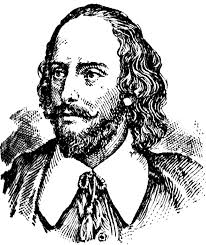
I know almost nothing about the man, William (Will) Shakespeare. Over the centuries, scholars have questioned many of the details of his life including his birth, circumstances of his death, his sexuality, and his authorship of various works. It seems it might not be possible for any modern person to know anything they can fully trust about the man himself.
I’ve yet to take a college course on Shakespeare or perform in one of his plays. I have attended theatrical performances and watched movie enactments. Mostly, I’ve read his plays and his poetry, not much more. His work is suffused in unique hues, which easily identify his authorship. When reading Shakespeare, my interest is always in his unusual use of language, which appeals to me more than that of any other English-speaking writer or poet.
Shakespeare, whoever he was, had a gift for language which seems to have seduced nearly every person of letters I’ve ever met. He had a talent for drawing attention to the nuances of meaning through a peculiar juxtaposition of his singular syntax with unexpected context.
Shakespeare’s pen tugs and pulls on the corroded wires in our brains to make new schematics. His ink flushes out the rust and lubricates the synapses to enable fresh and completely radical transformations of our internal world. Best of all, his complex literary architecture provides a grand space where readers can safely explore many of the raw subtleties of life, love, power, sorrow, decline and death.
I love Shakespeare. Shakespeare’s language thrills me. I agree with Poet Laureate, Donald Hall, who once observed that Shakespeare’s writing is among the most densely strewn (with gems) of any literature in the world.
In this article are collected — from Shakespeare’s Sonnets — over one-hundred and fifty of his brightest jewels and most dazzling gemstones. I don’t much care about the size or carat of a crystal — or its clarity. Color and cut are what fascinate me. If the excerpt doesn’t sparkle, it isn’t on my list.
The scintillas in this sample are in order of their appearance in the Sonnets. They make up a kind of Reader’s Digest abridgement, which should enable readers to glean some of Shakespeare’s best lines without having to spend several hours reading all one-hundred and fifty-four chapters.
…making a famine where abundance lies, thyself thy foe, to thy sweet self too cruel.
When forty winters shall besiege thy brow, and dig deep trenches in thy beauty’s field, thy youth’s proud livery, so gazed on now, will be a tatter’d weed, of small worth held.
Thou art thy mother’s glass, and she in thee calls back the lovely April of her prime.
Die single, and thine image dies with thee.
…sap check’d with frost and lusty leaves quite gone, beauty o’ersnow’d and bareness everywhere: then, were not summer’s distillation left, a liquid prisoner pent in walls of glass…
…thou art much too fair to be death’s conquest and make worms thine heir.
Sweets with sweets war not…
Is it for fear to wet a widow’s eye that thou consumes thyself in single life?
Is it for fear to wet a widow’s eye that thou consumes thyself in single life?
The world will be thy widow and still weep…
But beauty’s waste hath in the world an end, and kept unused, the user so destroys it.
For thou art so possess’d with murderous hate that ‘gainst thyself thou stick’st not to conspire, seeking that beauteous roof to ruinate which to repair should be thy chief desire.
Make thee another self, for love of me.
…violet past prime, and sable curls all silver’d o’re with white…
…barren rage of death’s eternal cold…
Thy end is truth’s and beauty’s doom and date.
…wasteful Time debateth with Decay to change your day of youth to sullied night…
…my verse…is but as a tomb which hides your life and shows not half your parts.
Sometime too hot the eye of heaven shines…
Pluck the keen teeth from the fierce tiger’s jaws, and burn the long-lived phoenix in her blood…
Yet, do thy worst, old Time: despite thy wrong, my love shall in my verse ever live young.
An eye more bright than theirs, less false in rolling, gilding the object whereupon it gazeth; a man in hue, all hues in his controlling, which steals men’s eyes and women’s souls amazeth.
With sun and moon, with earth and sea’s rich gems…
…not so bright as those gold candles fix’d in heaven’s air…
For all that beauty that doth cover thee is but the seemly raiment of my heart…
For at a frown they in their glory die. The painful warrior famoused for fight, after a thousand victories once foil’d, is from the book of honor razed quite, and all the rest forgot for which he toil’d.
…thy soul’s thought, all naked… …puts apparel on my tatter’d loving.
…thy soul’s thought, all naked… …puts apparel on my tatter’d loving, to show me worthy of thy sweet respect…
And keep my drooping eyelids open wide, looking on darkness which the blind do see…
…like a jewel hung in ghastly night, makes black night beauteous and her old face new…
But day by night, and night by day, oppress’d? And each, though enemies to either’s reign, do in consent shake hands to torture me…
For thy sweet love remember’d such wealth brings that then I scorn to change my state with kings.
Then can I drown an eye, unused to flow, for precious friends hid in death’s dateless night, and weep afresh love’s long since cancell’d woe, and moan the expense of many a vanish’d sight…
Thou are the grave where buried love doth live…
Though thou repent, yet I have still the loss: the offender’s sorrow lends but weak relief to him that bears the strong offence’s cross. Ah! but those tears are pearl which thy love sheds, and they are rich and ransom all ill deeds.
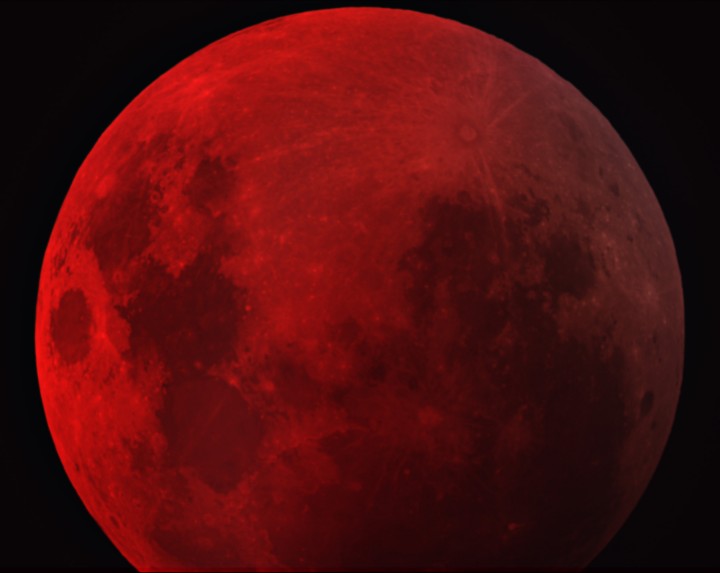
…clouds and eclipses stain both moon and sun…
Roses have thorns, and silver fountains mud; clouds and eclipses stain both moon and sun, and loathsome canker lives in sweetest bud.
I do forgive thy robbery, gentle thief, although thou steal thee all my poverty; and yet, love knows, it is a greater grief to bear love’s wrong than hate’s known injury.
Lascivious grace, in whom all ill well shows, kill me with spites; yet we must not be foes.
…thy beauty and thy straying youth, who lead thee in their riot even there where thou are forced to break a twofold truth; hers by thy beauty tempting her to thee; thine, by thy beauty being false to me.
If I lose thee, my loss is my love’s gain, and losing her, my friend hath found that loss; both find each other, and I lose both twain, and both for my sake lay on me this cross; but here’s the joy; my friend and I are one; sweet flattery! then she loves but me alone.
And darkly bright are bright in dark directed.
When to unseeing eyes thy shade shines so!
All days are nights to see till I see thee, and nights bright days when dreams do show thee me.
For nimble thought can jump both sea and land.
These present-absent with swift motion slide.
A closet never pierced with crystal eyes…
Mine eye’s due is thy outward part, and my heart’s right thy inward love of heart.
Or heart in love with sighs himself doth smother…
…my jewels trifles are…
But thou, to whom my jewels trifles are, most worthy of comfort, now my greatest grief, thou, best of dearest and mine only care, art left the prey of every vulgar thief.
Against that time when thou shalt strangely pass and scarcely greet me with that sun, thine eye…
To leave poor me thou hast the strength of laws, since why to love I can allege no cause.
For that same groan doth put this in my mind; my grief lies onward and my joy behind.
So am I as the rich, whose blessed key can bring him to his sweet up-locked treasure, the which he will not every hour survey, for blunting the fine point of seldom pleasure?
The rose looks fair, but fairer we it deem for that sweet odor which doth in it live.
They live unwoo’d and unrespected fade, die to themselves. Sweet roses do not so; of their sweet deaths are sweetest odors made…
So true a fool is love that in your will, though you do any thing, he thinks no ill.
I am to wait, though waiting so be hell; not blame your pleasure, be it ill or well.
…show me your image in some antique book…
O, that record could with a backward look, even of five hundred courses of the sun, show me your image in some antique book…
Like as the waves make towards the pebbled shore, so do our minutes hasten to their end; each changing place with that which goes before, in sequent toil all forwards do contend.
Time doth transfix the flourish set on youth and delves the parallels in beauty’s brow, feeds on the rarities of nature’s truth, and nothing stands but for his scythe to mow…
O, no! thy love, though much, is not so great: it is my love that keeps mine eye awake…
Sin of self-love possesseth all mine eye and all my soul and all my every part; and for this sin there is no remedy, it is so grounded in my heart.
But when my glass shows me myself indeed, beated and chopp’d with tann’d antiquity…
And all those beauties whereof now he’s king are vanishing or vanish’d out of sight, stealing away the treasure of his spring…
…against confounding ages cruel knife, that he should never cut from memory my sweet love’s beauty, though my lover’s life…
When I have seen the hungry ocean gain advantage on the kingdom of the shore…
When I have seen the hungry ocean gain advantage on the kingdom of the shore, and the firm soil win of the watery main, increasing store with loss and loss with store…
Ruin hath taught me thus to ruminate, that Time will come and take my love away.
Since brass, nor stone, nor earth, nor boundless sea, but sad mortality o’ersways their power, how with this rage shall beauty hold a plea, whose action is no stronger than a flower?
O, how shall summer’s honey breath hold out against the wreckful siege of battering days, when rocks impregnable are not so stout, nor gates of steel so strong, but Time decays?
O, none, unless this miracle have might, that in black ink my love may still shine bright.
…right perfection wrongly disgraced…
Why should false painting imitate his cheek and steal dead seeing of his living hue?
They look into the beauty of thy mind, and that, in guess, they measure by thy deeds; then, churls, their thoughts, although their eyes were kind, to thy fair flower add the rank smell of weeds…
For slander’s mark was ever yet the fair; the ornament of beauty is suspect, a crow that flies in heaven’s sweetest air.
When I perhaps compounded am with clay, do not so much as my poor name rehearse, but let your love even with my life decay…
For I am shamed by that which I bring forth, and so should you, to love things nothing worth.
…when yellow leaves, or none, or few, do hang upon those boughs which shake against the cold…
…when yellow leaves, or none, or few, do hang upon those boughs which shake against the cold…
…as after sunset fadeth in the west, which by and by black night doth take away, Death’s second self, that seals up all in rest.
…the coward conquest of a wretch’s knife…
The worth of that is that which it contains, and that is this, and this with thee remains.
…for the peace of you I hold such strife as ‘twixt a miser and his wealth is found…
Why is my verse so barren of new pride, so far from variation or quick change? Why with the time do I not glance aside to new-found methods and to compounds strange?
Thou by thy dial’s shady stealth mayst know time’s thievish progress to eternity.
Thine eyes that taught the dumb on high to sing and heavy ignorance aloft to fly…
…being wreck’d, I am a worthless boat…
When all the breathers of this world are dead; you still shall live — such virtue hath my pen — where breath most breathes, even in the mouths of men.
…making their tomb the womb wherein they grew…
…upon thy side against myself I’ll fight, and prove thee virtuous…
Thy love is better than high birth to me…
Thy love is better than high birth to me, richer than wealth, prouder than garments’ cost, of more delight than hawks or horses be; and having thee, of all men’s pride I boast: wretched in this alone, that thou mayst take all this away and me most wretched make.
But what’s so blessed-fair that fears no blot? Thou mayst be false, and yet I know it not.
In many’s looks the false heart’s history is writ in moods and frowns and wrinkles strange…
How like Eve’s apple doth thy beauty grow…
They that have the power to hurt and will do none…
…who, moving others, are themselves as stone, unmoved, cold, and to temptation slow…
They are the lords and owners of their faces…
Lilies that fester smell far worse than weeds.
O, in what sweets dost thou thy sins enclose!
O, what a mansion have those vices got which for their habitation chose out thee, where beauty’s veil doth cover every blot…
The hardest knife ill-used doth lose his edge.
As on the finger of a throned queen the basest jewel will be well esteemed…
How many lambs might the stern wolf betray, if like a lamb he could his looks translate!
The teeming autumn, big with rich increase, bearing the wanton burden of the prime, like widow’d wombs after their lord’s decease…
…hope of orphans and unfather’d fruit…
…roses fearfully on thorns did stand…
…eternal love in love’s fresh case…
Give my love fame faster than Time wastes life…
The mortal moon hath her eclipse endured…
So that eternal love in love’s fresh case weighs not the dust and injury of age, nor gives to necessary wrinkles place, but makes antiquity for aye his page…
…mine eye is in my mind…
My most true mind thus makes mine eye untrue.
Such cherubins as your sweet self resemble, creating every bad a perfect best…
If it be poison’d, ’tis the lesser sin that mine eye loves it and doth first begin.
But reckoning time, whose million’d accidents creep in ‘twixt vows and change decrees of kings, tan sacred beauty, blunt the sharp’st intents, divert strong minds to the course of altering things…
Love is not love which alters when it alteration finds…
Love’s not Time’s fool, though rosy lips and cheeks within his bending sickle’s compass come: love alters not with his brief hours and weeks, but bears it out even to the edge of doom.
Bring me within the level of your frown, but shoot not at me with your waken’d hate…
…to prevent our maladies unseen, we sicken to shun sickness when we purge…
…drugs poison him that so fell sick of you.
What potions have I drunk of Siren tears, distill’d from limbecks foul as hell within…
O benefit of ill! Now I find true that better is by evil still made better; and ruin’d love, when it is built anew, grows fairer than at first, more strong, far greater.
For if you were by my unkindness shaken as I by yours, you’ve pass’d a hell of time…
…how hard true sorrow hits…
‘Tis better to be vile than vile esteem’d…
For why should others’ false adulterate eyes give salutation to my sportive blood? Or on my frailties why are frailer spies, which in their wills count bad what I think good?
Unless this general evil they maintain, all men are bad, and in their badness reign.
Our dates are brief, and therefore we admire what thou dost foist upon us that is old…
To this I witness call the fools of time, which die for goodness, who have lived for crime.
…black beauty’s successive heir…
…fairing the foul with art’s false borrow’d face…
…none knows well to shun the heaven that leads men to this hell.
The expense of spirit in a waste of shame is lust in action…
…as a swallowed bait on purpose laid to make the taker mad…
Before, a joy proposed; behind, a dream. All this the world well knows; yet none knows well to shun the heaven that leads men to this hell.
And in some perfumes is there more delight than in the breath that from my mistress reeks.
Thou art as tyrannous, so as thou art, as those whose beauties proudly make them cruel…
…a torment thrice threefold thus to be cross’d.
The sea, all water, yet receives rain still…
…thus far for love my love-suit, sweet, fulfil.
Make but my name thy love, and love that still, and then thou lovest me, for my name is Will.
…to put fair truth upon so foul a face…
When my love swears that she is made of truth I do believe her, though I know she lies…
And wherefore say not I that I am old? O, love’s best habit is in seeming trust, and age in love loves not to have years told: therefore I lie with her and she with me, and in our faults by lies we flatter’d be.
…the manner of my pity-wanting pain…
As testy sick men, when their deaths be near, no news but health from their physicians know…
Only my plague thus far I count my gain, that she that makes me sin awards me pain.
…my female evil tempteth my better angel from my side…
Two loves I have of comfort and despair, which like two spirits do suggest me still: the better angel is a man right fair, the worser spirit a woman color’d ill. To win me soon to hell, my female evil tempteth my better angel from my side, and would corrupt my saint to be a devil, wooing his purity with her foul pride.
Yet this shall I ne’re know, but live in doubt, till my bad angel fire my good one out.
Those lips that Love’s own hand did make breathed forth the sound that said I hate.
I hate from hate away she threw, and saved my life, saying not you.
So shalt thou feed on Death, that feeds on men, and Death once dead, there’s no more dying then.
For I have sworn thee fair and thought thee bright, who art as black as hell, as dark as night.
O, how can Love’s eye be true, that is so vex’d with watching and with tears?
The sun itself sees not till heaven clears.
…all my best doth worship thy defect, commanded by the motion of thine eyes…
But, love, hate on, for now I know thy mind; those that can see thou lovest, and I am blind.
Who taught thee how to love thee more the more I hear and see just cause of hate?
…the bath for my help lies where Cupid got new fire…
For all my vows are oaths but to misuse thee…
For I have sworn thee fair; more perjured I, to swear against the truth so foul a lie.
I, sick, withal, the help of bath desired … but found no cure: the bath for my help lies where Cupid got new fire — my mistress’ eyes.
People hate me. People have hated on me my whole life, but never more than now, it seems, in my old age, when I need their love so bad. If they only knew how their hatred weakens me and any hope I have for happiness. Maybe they’d relent and welcome me into their friendly world.
But I don’t think so. If they knew how much I hurt, they’d hate me more, shun and isolate me even further, just to watch me suffer.
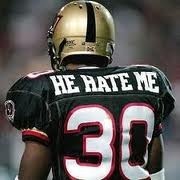
Rod Smart was the leading rusher for the Las Vegas Outlaws of the short-lived XFL. His career took him to both the CFL and NFL, where he played in Super Bowl 38 for the Carolina Panthers. On the last play of the game, with the Panthers trailing 32-29 and only 4 seconds left on the clock, Rod Smart received the New England Patriots kick-off. He was unable to score the game-winning touch-down.
As Torrold DeShaun “Rod” Smart, the would-be NFL star, once said: I feel as if everyone hates me, from my mom to my dad and even my brothers and sisters; everyone ”Hates Me.”
All hope abandon, ye who enter here…
The first time I learned people hate me was at the Army boot-camp for officer-candidates at Fort Benning, Georgia during the summer of 1968. I went there to train after becoming an officer candidate to avoid the military draft during the Vietnam War.
It was a period in our history when the government conscripted hundreds of thousands of young men to fight in Vietnam. Exemptions from the draft (called deferments) had been given to college students for years, but no longer.
Students across the country began competing to get into Army ROTC training programs, because they were the only sure way to stay in school and avoid military service, at least temporarily. At my school, I was one of only eighteen students (out of a pool of several thousand applicants) who qualified for officer training.
I felt lucky, because now I could finish my education. Maybe, by the time of my graduation, the war would be over.
Cadets who enjoyed push-ups (and were good at them) thrived in officer training camp.
At officer boot-camp that summer, in the humid choking heat of Georgia, the training began. The recruits were, like me, the cream of the crop, the best of the best, from some of the finest colleges and universities in the USA and around the world. I’ve not been with smarter, worthier people than those who shared my summer of ’68 at Fort Benning.
We found ourselves trapped in the grasp of some of the most ignorant, mean-spirited drill sergeants I’ve ever encountered. Their mission was to squeeze each recruit through a juice-grinder to see what we were made of and to prove to the military how strong (or how weak) were our minds and bodies.
They cursed us, abused us, deprived us of sleep and dignity, and told us we were over-privileged swamp scum, not worthy of the army. They convinced me they meant every word.
Drill-sergeants ask a young recruit whether he prefers caramel or strawberry syrup on his French soufflé.
In chow-lines, gnarly swamp-people with missing teeth menaced and taunted us by swearing, shoving and pointing fingers. One officer forced recruits to eat their own cigarettes.
During a month-and-a-half of hell, I watched people go beserk on the firing range, collapse with seizures due to excessive heat and lack of water, quit the program, and go mad.
All I thought about during those forty-two days in Hell was this: it can’t last forever. I can survive, I can hold on, I can sleep again with my sweet girl-friend, Mary-Ann, who loves me. All this pain, this agony, will fade to an unpleasant memory, nothing more, in good time.
Studies conducted on young men adept at crawling through mud beneath barbed-wire show that they enjoy the taste of dirt more than cadets who lack this skill.
But, of course, I was naïve. Every dinner has its dessert, its crème-de-la-crème, its grand-finale, its coup-de-grace. Boot-camp was no different.
Two days before the end of training, the Army announced that each cadet in every forty-three-man platoon would participate in mandatory peer-reviews of their fellows. Drill Instructors — armed with notepads and pencils — ordered every officer-candidate to rank every other officer-candidate, from top to bottom.
Worst of all, the DIs forced each cadet to write an explanatory paragraph about each soldier they placed in the bottom-five. I think I remember trying to say something nice about each one of the five I chose.
As it happened, the evening after the peer-review, one of the cadets broke into the administration building and stole the reviews. Word got around, and soon a few dozen cadets, including me, gathered outside the barracks to rummage through them, their summaries and explanatory comments.
I discovered that my fellow cadets ranked me third from the bottom. I couldn’t grasp it, it seemed so unreal, so I read the comments. Apparently, I lost equipment, stole things, went AWOL, and was generally unprepared and unkempt.
I lacked the intelligence required to lead, lacked problem solving skills, etc. etc., on and on. I kept checking the name to see if it was mine. Nothing written about me was true.
This photo, retrieved from the Army Archive, shows Billy Lee on his last day of boot camp. He is the cadet lying on the stretcher, apparently too drunk to walk the quarter-mile to a waiting bus.
It occurred to me that all of it — all the negativity and cruelty; every last hateful condemning word — was going to be part of my permanent record, my profile, which would follow me forever in the army and beyond.
Why, I asked myself over and over, would people who I thought were my friends write nasty, untrue, career-ending things about me? I couldn’t work out the answer.
Officer training camp broke me. I spent the next two days drunk, sobbing silently inside myself. On the last day, while the other cadets scurried to leave, I writhed on the floor by my bunk, unable to pack my things or police my area. Psychological trauma and grief immobilized me. The pain of being hated ruined me. I never recovered.
Billy Lee
Editor’s note:This article has been a fictionalized compilation of actual events, which occurred during two training camps — the first at Fort Benning, Georgia; the second at Fort Riley, Kansas the following summer. The stolen peer-reviews incident occurred at Fort Riley during the summer of 1969.
Incidents in the two camps have been conflated by Billy Lee to make a more comprehensible read. The incidents are true. The order is true. But events happened over consecutive camps — basic training and advanced infantry training the following summer.
P.S. Since writing this article, some people have asked me if, over the years, I might not have garnered some insight into why my ROTC compatriots at Fort Riley rejected me. (At Fort Benning, peer reviews weren’t conducted.)
The answer is yes, but these insights weren’t included in the article, so that readers (who might not know me well) could experience the wonder I felt. In truth, (allow me first to lie; the truth is too painful) I was well-connected and proud. People hate arrogance, and that is what I was. I received special treatment from higher-ups. That, and my attitude, didn’t go over well. (Will you permit me to do some preliminary blame-shifting?)
General Boatwright was two months older than my dad. Like my dad, he was a Warrior who dedicated his life to the defense of the United States of America.
General Boatwright, the base commander at Fort Riley — who knew my dad — gave me an escort on his private plane to camp. I boasted about it. Later, he flew to our bivouac-site with a half dozen helicopters and called me out of formation (as I remember it, with a bull-horn) to interview me in front of everyone about camp conditions. I remember he asked about the food and how we were treated. I told him everything was great.
The General invited me to what I think I remember was his daughter’s birthday celebration, which meant I had to abandon my buddies to harsh camp conditions, while I partied.
Later, I wrote a thank-you letter to the General, which a drill instructor somehow managed to intercept. He read it aloud at morning reveille to my gathered platoon. In front of everyone, the outraged DI tore up my letter, while he explained so that even a child could understand: cadets don’t write letters to Generals.
None of these incidents helped me get a good peer review. (Listen to me shuck and jive over these irrelevant incidents. Patience, please. I’m working my way to truth, but it’s hard)
The most damaging things that happened were self-inflicted. I remember bragging about myself to others. (Here comes partial self-serving approximations of truth.) I told wildly exaggerated stories to hide the truth about myself from others. The truth was, I hated the choices I made. I bragged about myself, but I bragged about things no one should be proud of — like the details of my sex-life.
I self-destructed. Yes, I hated the Army. Yes, I hated war. Yes, I trapped myself in a place I didn’t want to be. I made it embarrassingly obvious to everyone. I hated myself.
Yes, I hated the Army. Yes, I hated war.
I couldn’t believe the terrible decisions I’d made. I couldn’t believe what a coward I was; how I caved to the powerful idiots who took us into the genocidal killing-field that was Vietnam for no other purpose than to test our newest equipment and evaluate our effectiveness to wage war. (More tangential bullshit is on its way.)
I found myself in a space I didn’t want to be, doing things I didn’t believe, for reasons that made no sense. I was scared to pay the price that came with resisting the evil I saw so clearly once I immersed myself in it. I had abandoned my point of view, my sense of what was right and wrong; my identity; my sense of self; my integrity. (If only any of this were true!)
Why, under the stress of basic training, did I turn on myself? Why did I manipulate others to turn on me? Why did I work so hard to bring the Universe of judgment and condemnation down on my pathetic-loathing-self? I would have to wait until many years later in therapy to learn the answers. (And I can never share them. Why don’t you understand? It’s killing me. I’m so afraid.)
I became obnoxious and inauthentic. It must have been obvious to everyone but me. It’s a wonder one of the cadets didn’t shoot me. They turned on me, because to them I was a sick puppy and a phony to boot. I wouldn’t own up. I was a coward. I refused to embrace the truth about myself.
Today, it’s clear to me that way back then in the fevered heat of officer training camp my peers would have ranked me at the very bottom of the pile had it not been for a couple of loving, perceptive souls who shared my pain and placed me, mercifully, carefully, near the very top.
Their act of kindness meant that when the scores were averaged, two other cadets would suffer the excruciating shame of being hated even more than me. Imagine. Hated more than me! HaHa! HaHaHa! Burp.